






Ready to Flip? The NFT project party may try the "lock-up schedule"


This article comes from Spartan LabsThis article comes from
In order to motivate investors with a long-term vision to join the whitelist, and prevent whitelist addresses from flipping quickly (the behavior of selling short-term profits). The NFT lock-up schedule (Vesting Time Lock) came into being, similar to the token lock-up schedule, Mint's NFT from the whitelist will face some form of lock-up. Screen the most loyal NFT collectors for the NFT project party to add value to the project.
secondary title
Existing Solutions - Staking
For example, Moonbirds has a "soft stake" mechanism, where your NFTs are not locked, but if you don't stake, you will lose accumulated reward points. This is similar to the voting escrow model. In the incentive mechanism, you can accumulate non-token points to obtain higher-level rewards, and the incentive mechanism can be adjusted to incentivize long-term stakers. To prevent or deter dumping, whitelisted wallets can be issued according to a tiered system, where users who mint at a lower price will be locked for a slightly longer period of time after Mint ends.
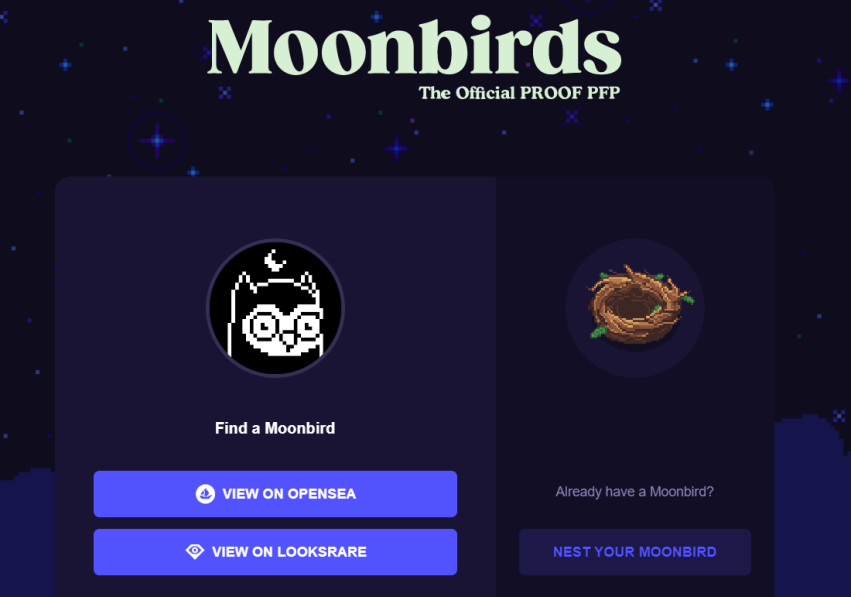
image description
The NFT project 10KTF also provides an innovative method of staking through gameplay, as the name suggests, staking takes place in the game. By giving NFT rewards in game tasks, NFT holders can complete the task and get the NFT as a reward.
secondary title
Problems with existing solutions
Therefore, for projects that need to lock supply, implementing a lock-in mechanism may be a better solution.
secondary title
Improved Design Decisions
We believe that NFT does not only represent a simple PFP, or Flipper (collectors who sell for short-term profits) to make quick money. In order to help the long-term development of the NFT space, we must consider how to align the long-term interests of the NFT community with the project.
Here are some guiding points we use when coming up with solutions:
Alignment between the accretion value of NFT projects and the accretion value of NFTs: This will help incentivize people to hold their NFTs for a long time. Often times, however, the growth of NFT projects may not lead to a corresponding increase in the value of holding NFTs, which causes people to dump their NFTs.
V God's "Soul Binding" NFT: We also believe that we can get inspiration from the discussion of V God's "Soul Binding" and the tried-and-tested lock-up process, so as to coordinate the incentives among stakers. The identification aspect of soulbinding becomes increasingly important as NFTs develop use cases beyond just avatars, but to represent real-world entities (such as subdivided real estate).
secondary title
"Hard and soft" solutions
In order to create a true community of believers, we believe some form of staking or locking will align incentives appropriately.
Our solution is a "hard and soft" solution, in which we will introduce a dual reward system (timed lock recognition) and penalty system (NFT lockup) to better coordinate the incentive mechanism between whitelist and NFT projects .
secondary title
Penalty system: basic NFT lock contract
However, despite the above-mentioned flaws, the basic NFT lock contract is still the basis for more advanced time-locking patterns, which we will conceive to solve the design problems mentioned earlier.
secondary title
NFT Staking - Rewards whitelisted users for locking their NFTs
The following two diagrams illustrate how the lock-up mechanism aligns incentives among stakers:
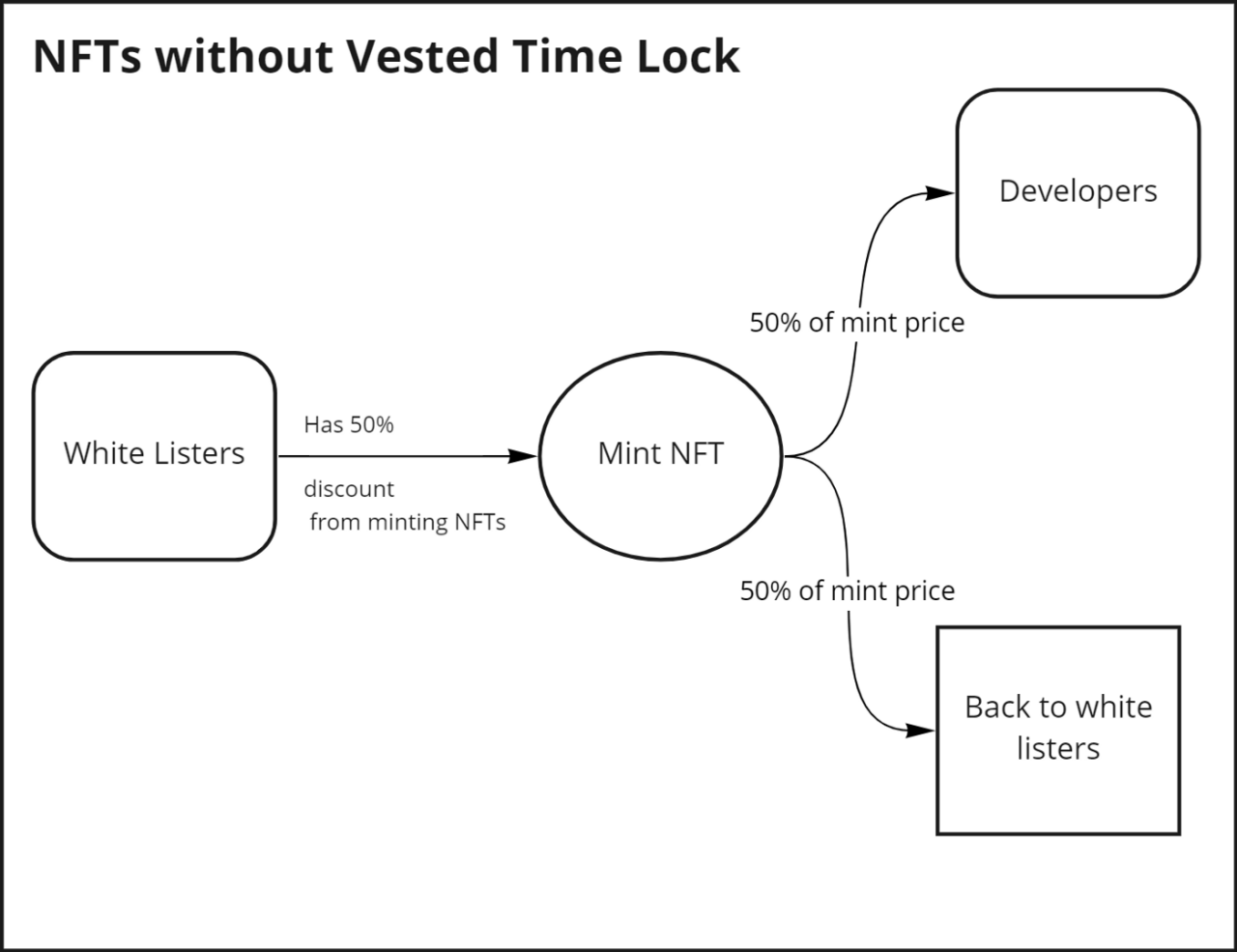
NFT with no lock-up period
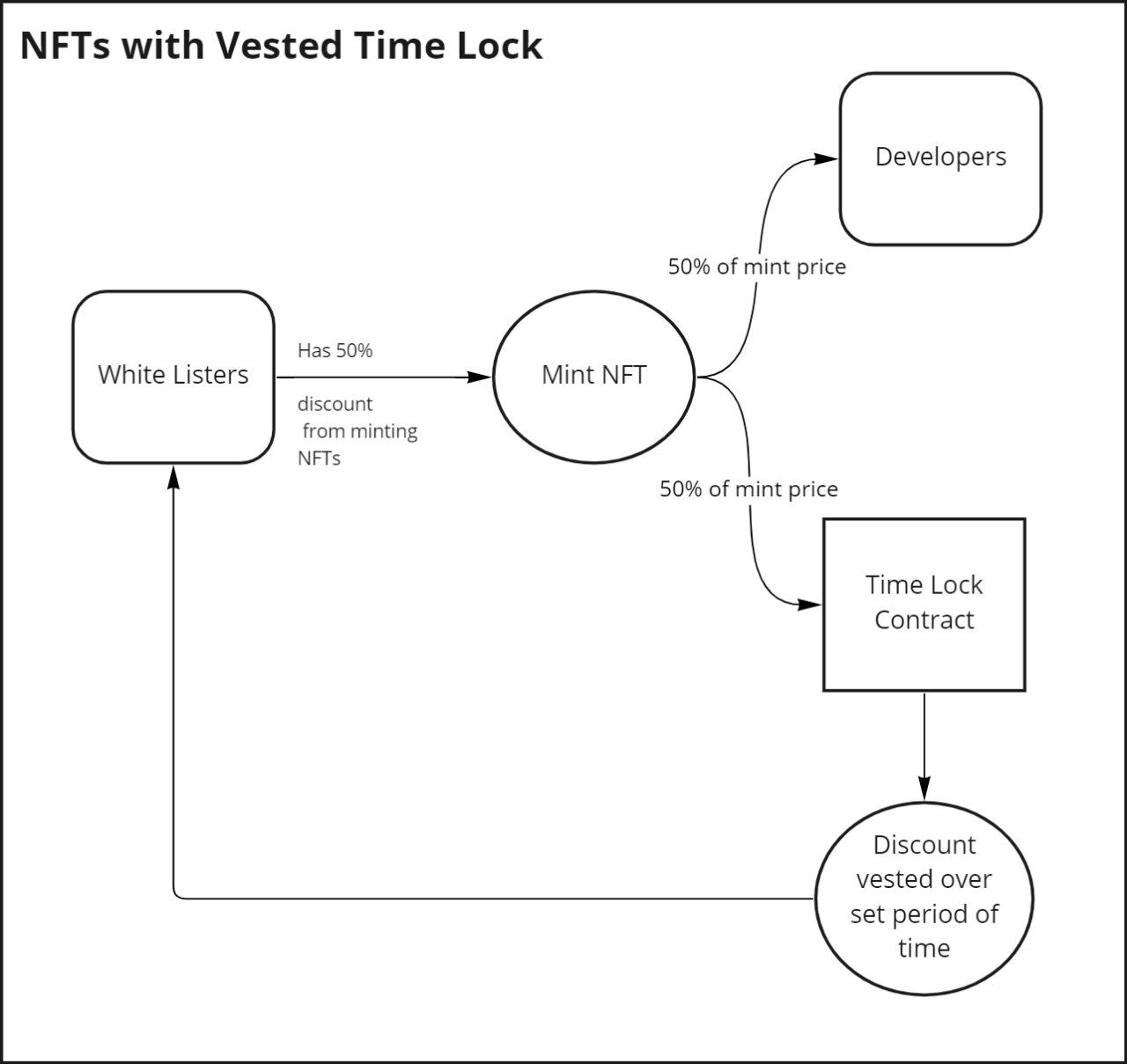
image description
NFT with a lock-up period
For example, an NFT costs 1 ETH, and the project offers a 50% discount to whitelisted users who support the project. After these whitelisted users mint the NFT, said NFT will enter the lock contract, and upon initial lock (for a given NFT item) 0.5 ETH (per NFT generated) will be issued to the developer. Whitelisted users must then wait for the cliff lock period (the minimum amount of time an NFT can be locked for) to end.
In traditional finance, the cliff vesting period (cliff vesting: cash out a larger share in installments each period) refers to a period of time during which shares cannot be granted before a certain date. After the cliff period, the contract enters a lock-up period during which the discount will start to increase. The accrual discount rate depends on the bonding curve set, as well as the lockup period.
Different types of lock-up curves will affect the discount users get after unlocking.
For example, if a user locks their NFT and unlocks it after 1/2 of the maximum lock time. The amount of ETH received under different lock-up curves is shown in the figure below:
Under the curve lock, 0.5 ETH belongs to the developer, and less than 0.5 ETH belongs to the user. There will be heavier weights at the end, increasing exponentially.
Lockup Curve Type
text
Hedging curve types include interval-based, linear, and curved (convex and S-shaped) hedging curves. One of the curves is more suitable for the project's use case:
Interval based staking: Expect to have a fixed staking schedule with discounts for items that are unlocked regularly after the cliff period.
Linear lock: It is used for projects that do not want to discriminate the length of time the lock object is locked after the cliff period, and want to continue to increase the lock period.
Curved lock: for projects that want to reward long-term locks and punish short-term locks. This might work for projects that want to reward long-term behavior.
Convex Stake Curve: A project with the highest ceiling requirement is required when locking objects to achieve maximum discounts or locking objects to achieve maximum probability of discounts.
However, staking as a mechanism is not sufficient to align incentives, as whitelisted users are still able to sell at the end of the staking. Therefore, we had to introduce another method to incentivize whitelist members to continue to be locked over time.
secondary title
Double Reward System: Lockup Recognition
Currently, some projects offer incentives for staking NFTs. While this might help temporarily spot real backers of a project, this lock-in is usually short-term, and in the long run it doesn't help distinguish backers from Flippers.
secondary title
different identification levels
When we explore the motivations for locking NFTs outside of the monetary realm, a huge number of possibilities open up.
As a community, we can differentiate between different lock levels and identify supporters accordingly (from high to low):
Level 0 - whitelist lock from initial airdrop;
Level 1 - locked for longer than the initial airdrop period;
Level 2 - unlocked beyond the initial airdrop period;
Level 3 - unlocked and sold X times;
Level 4 - Unlocked, sold X times since last traded on the market;
Level 5 and above, more attributes.
Additionally, on-chain and off-chain recognition can be used for other projects to incentivize or reward these individuals through airdrops. For backers, this identification could be an important status symbol that could go beyond the monetary value of the NFT held. Ultimately, this recognition is important to incentivize long-term thinking and buying and selling within the community.
secondary title
recognition performance
When holders lock their NFT, rather than simply losing the NFT, the contract can be extended to be bound to a wrapped (wrapped) NFT or a "soul bound" NFT.
For example, when an NFT is locked in a lock, the locked object may still wish to demonstrate that they actually own such a locked NFT. However, reference-locked NFTs are weird from a developer perspective. As a result, the "soul-bound" tokens could represent the amount of time a user locks up an NFT for their entry into the Hall of Fame leaderboard. When unlocking, non-transferable wrapping tokens need to be burned to unlock the NFT, and the locked object will no longer have "Hall of Fame" status.
secondary title
In order to distinguish who is locked, projects may wish to incorporate the non-transferability of tokens to verify that an account address is a genuine backer. This could be important as it will allow projects to reward genuine backers. There will still be people who mine these tokens and sell accounts to buy and sell non-transferable "status" tokens, but such behavior will be curbed.
secondary title
secondary title
in conclusion
in conclusion
In this article, we review the issues surrounding current NFT issuance design and propose an uncommon alternative solution - staking (time locking). In fact, there is a lot of synergy with timelock solutions between staking solutions and staking, and between NFTs in the marketplace. Projects can continue to use the staking mechanism of tokens/NFTs to create popularity and strong communities in the beginning, while providing stakers with different privileges to incentivize long-term holding.


