Tornado is sanctioned, what other protocols/tools can meet privacy requirements?


On August 8, Beijing time, the news that the U.S. Department of the Treasury's Office of Foreign Assets Control (OFAC) included Tornado Cash in the Sanctions List (SDN) swept the entire Web3 world. Following the sanctions, all U.S. individuals and entities are prohibited from interacting with Tornado Cash or any Ethereum wallet address tied to the protocol.
The information disclosed on the official website of the U.S. Department of the Treasury shows that since its establishment in 2019, the Ethereum currency mixing platform Tornado Cash has been used in virtual currency money laundering activities worth more than $7 billion.
Many physical companies also responded by banning related accounts and addresses. Circle froze more than $75,000 worth of funds from 81 sanctioned lists, while GitHub shut down the project's home page and blocked developer access. Currently, Toranado front-end official website has been banned from access.
This sanction is historic for the decentralized Web3 world. As the CEO of Circle said: The regulatory intervention in this case has crossed an important threshold in the history of the Internet, and it is also an important threshold in the history of decentralized finance: the government of a large country forces all parties to completely block and restrict the operation of open source software on the Internet .
It is true that the design concept and operating logic of encryption projects have challenged the decades-old regulatory framework from all aspects, but there is no original sin in privacy technology and privacy requirements, and some encryption KOLs have voiced that the existence of Tornado Cash is not only used by hackers, V God Speaking of it, he had used Tornado Cash to make private donations to Ukraine for the purpose of protecting Ukrainian aid recipients.
secondary title
Umbra
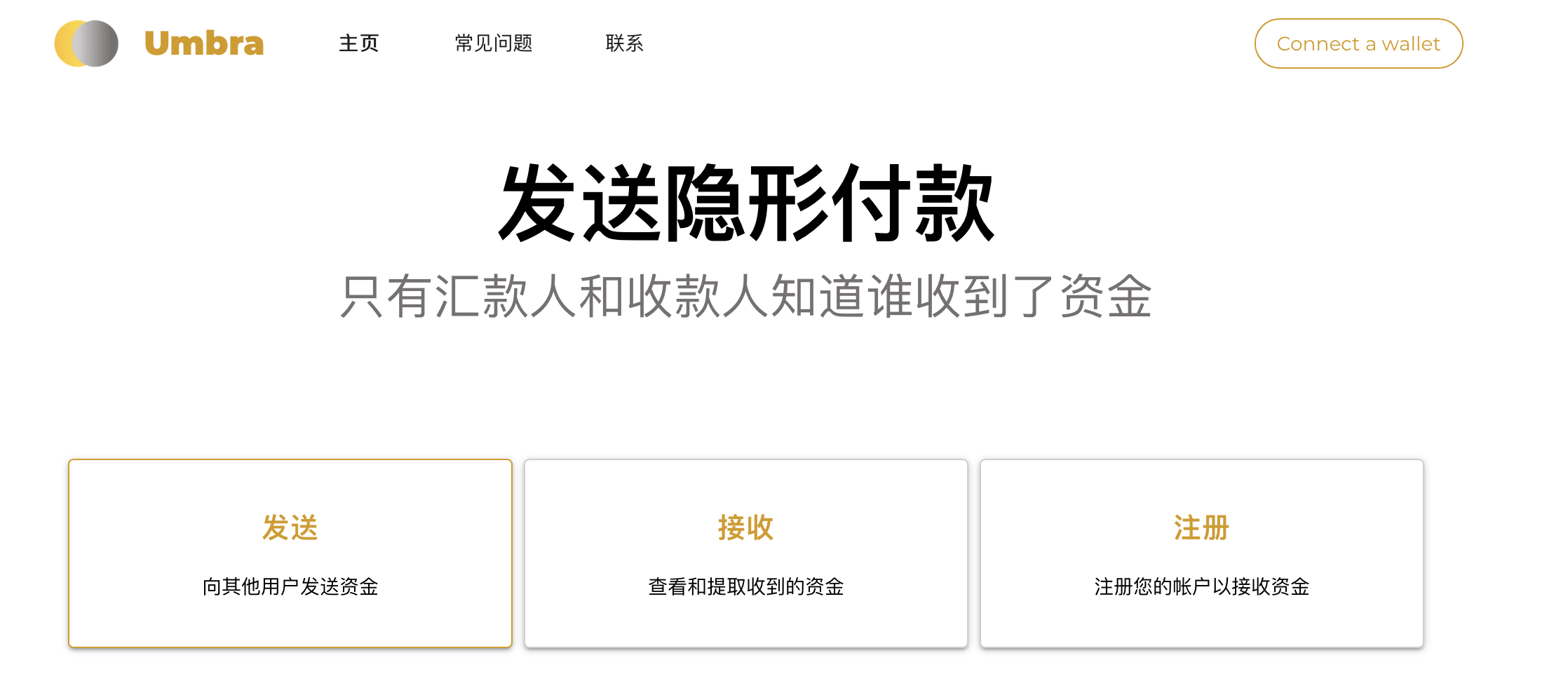
Similar to what Tornado provides,UmbraIt is also a protocol that allows users to transfer money invisibly on Ethereum. The difference is that the recipient can know who sent the transfer.
In terms of specific product implementation logic, Umbra is different from Tornado Cash. The logic of the Umbra protocol is to first authorize and map a private new address by the transfer recipient (the new address does not need to be backed up, and is directly controlled by the private key of the original address). When the sender makes a transfer, just enter the real address of the receiver, Umbra can automatically identify the new private address; after the user receives the funds, transfer from the new address to a safe address (such as an exchange address or another new address) , to achieve privacy protection.
Currently, Umbra supports the four major networks of Ethereum, Polygon, Optimism, and Arbitrum, as well as the four major tokens of ETH, USDC, USDT, and DAI.
In contrast to Tornado Cash and Aztec, Umbra does not use zero-knowledge proofs, but is based on ordinary elliptic curve cryptography. Instead of breaking the link between sending and receiving addresses like Tornado does, Umbra makes that link meaningless.
secondary title
Aztec Network
Aztec NetworkIt is a privacy-focused ZK-rollup project on Ethereum. This project is not only a privacy project, but also on the L2 track. It can hide the transaction behavior of encrypted users, so that the user's transaction information will not be grasped by external observers, thereby protecting user privacy.
As a L2 project, Aztec has scalability unmatched by dApps. The working principle of Aztec is similar to that multiple users put their own balls into a pool anonymously, and then take them out in batches and indefinitely. Funds are transferred between accounts without disclosing the amount transferred in each transaction, making it impossible for outside observers to deduce the subsequent flow of deposits to Aztec.
Another highlight of Aztec is that the project uses Huff, its homegrown EVM programming language. The language is an assembly-like language, which is closer to a machine language that can be directly "understood" and executed by a machine. Developers are allowed to program directly in the EVM machine code. Compared with Solidity and Vyper, writing smart contracts in Huff language can reduce the gas fee by up to 80%.
secondary title
ETH-Mixer
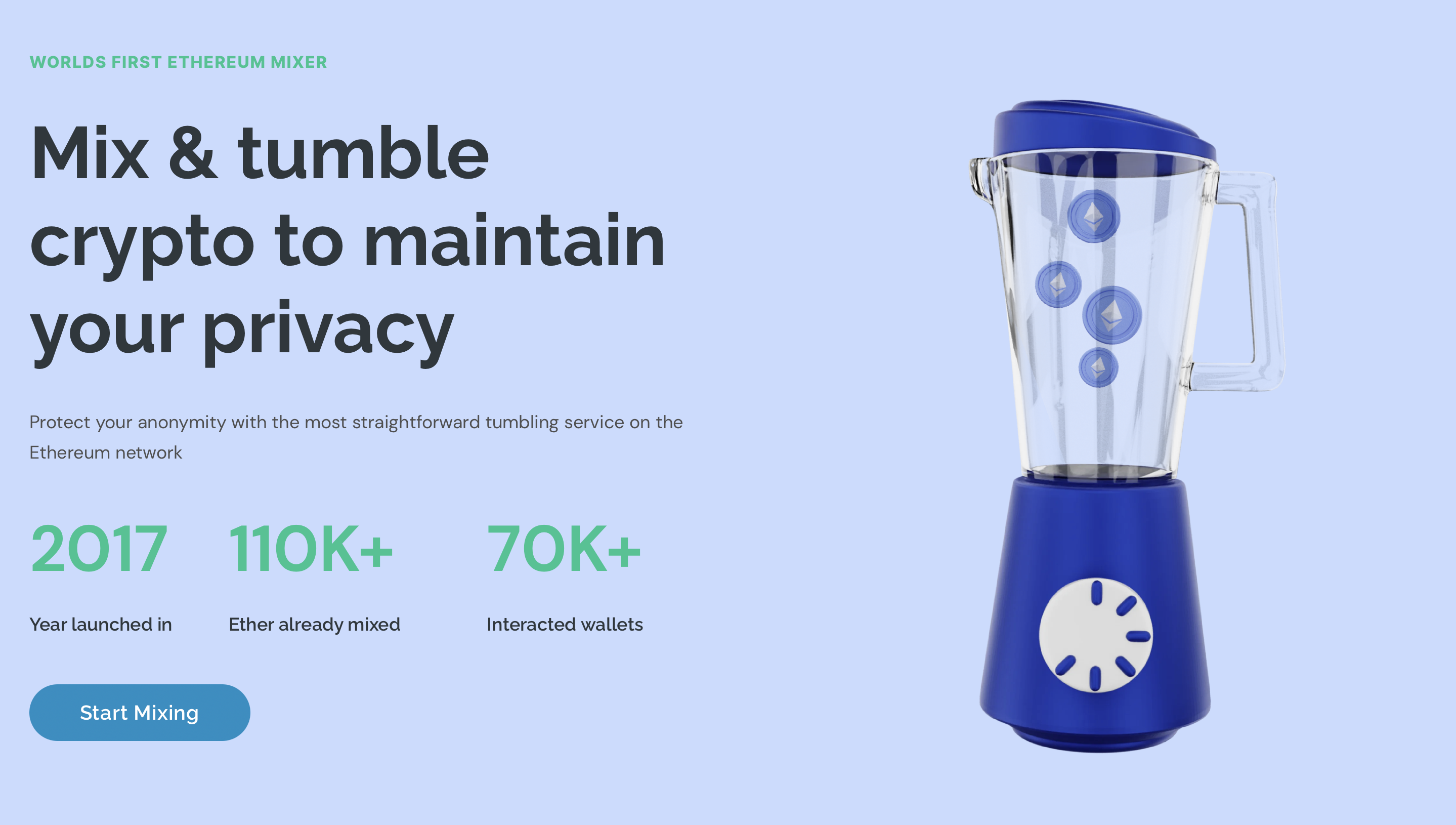
ETH-MixerIt is an "ancient" currency mixing tool that has been in operation since 2017. In addition to the Ethereum network, the tool also launched "BTC-Mixer" which supports Bitcoin mixing.
This tool is the first coin mixing tool on the Ethereum network, and its basic principle is the same as most coin mixing tools.
secondary title
CoinJoin
CoinJoinIt is one of the oldest coin mixers, but it is far less famous than Tornado Cash. This may be due to the fact that it serves a completely different scenario than Tonado, CoinJoin was developed for Bitcoin (BTC) and Bitcoin Cash (BCH).
As an ancient open source anonymous transfer tool, CoinJoin initiates a multi-party transfer through multiple parties jointly signing a smart contract, and mixes the transactions of all parties in the multi-party transfer. This is also the basic principle of the coin mixer that continues to this day. In this way, a private transfer effect that is almost untraceable by the outside world can be achieved.
secondary title
Cash Fusion
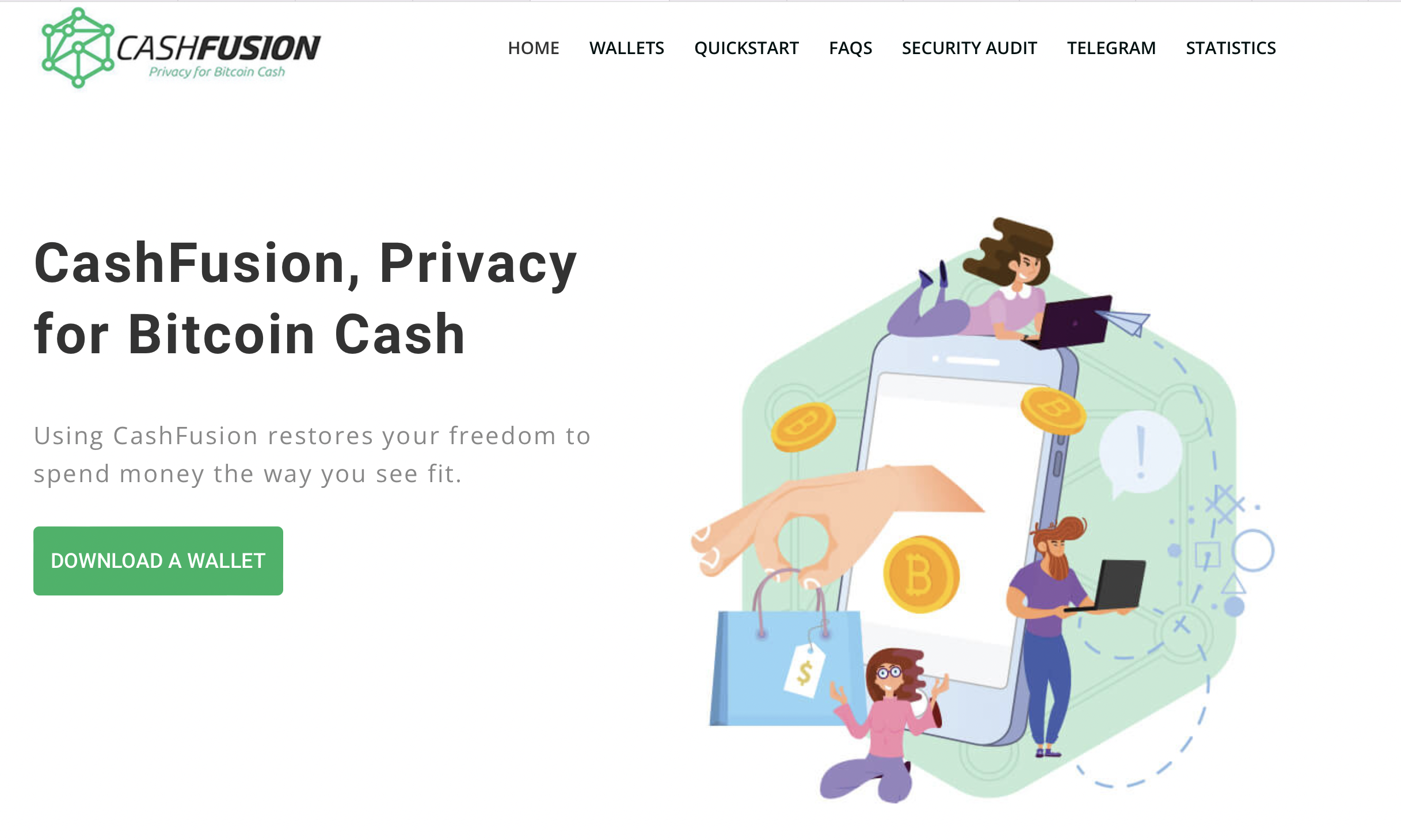 Different from common currency mixers developed for mainstream chains,Cash FusionIt is the "heterogeneous" among similar products. This is a privacy transfer tool developed based on BCH. In the official introduction, they said frankly that "CashFusion's goal is to realize the function of CoinJoin on the basis of BCH."
secondary title
Privacy public chain
In addition to common privacy transfer tools, privacy computing as a track has not been out of the market's attention for a long time, and it has appeared in the discussion of the encryption community from time to time as a staged hot spot. If you do not only transfer mainstream assets such as ETH and BTC anonymously, some public chains for privacy computing are available.
Monroe, Dash... These names are a bit far away from users in the current DeFi era, but privacy chains and tokens have always been the direction that many developers are committed to.
After the baptism of the industry cycle, these slightly outdated products may not have attracted much attention, but Zcash is the first privacy project to adopt zk-SNARKs on a large scale, and has guided the development of subsequent privacy products. In addition to the Aztec we mentioned above, encrypted privacy networks such as Secret Network and Thorchain are also constantly building and expanding ecological applications.
In the Web2 world, user data is endlessly abused, and the centralized Internet lacks constraints on giants. This is also one of the roots of people's admiration for Web 3 values. We value the importance of privacy to personal safety and business security. Therefore, the concepts of data autonomy, data privacy, and user sovereignty are constantly mentioned and researched, and privacy projects continue to emerge. No matter what the ultimate fate of Tornado Cash is and what measures the regulator will take in the future, there is no doubt that this track has never been and will not be abandoned by the encryption world.