Bankless: Ethereum vs Cosmos


Original Author: Uncle Red Army
This article is from IBCL, reprinted and published by Odaily with authorization.
text
Translator presses
1. The author's understanding of Cosmos focuses on the individuation of the consumption chain and staking, and the value of IBC and the interoperability based on this are less elaborated.2. However, it is good to use L2 and modularity as a contrasting perspective. This is also a variable part of the future Cosmos, and this story has not yet begun. The beginning part is actually IBC and a series of interoperability stories based on it
first level title
text
text
Monolithic blockchains were still available in the past.
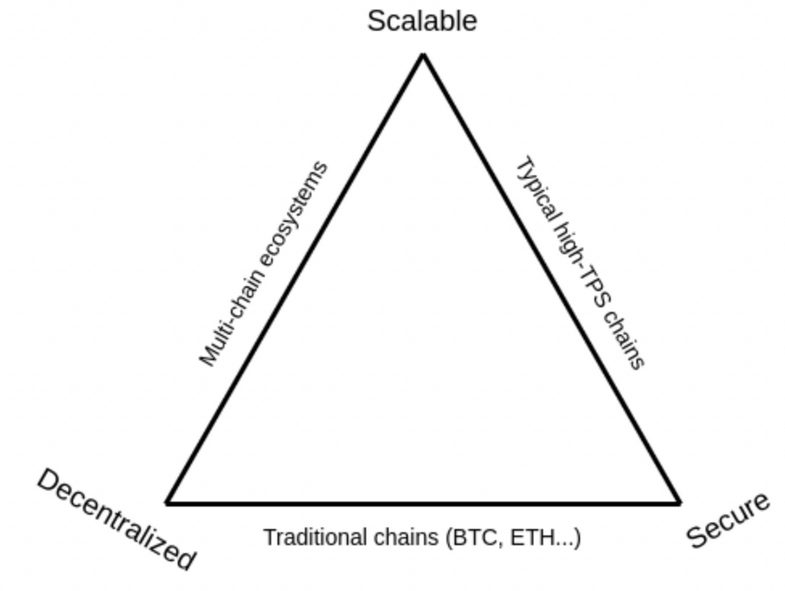
Want to be secure and decentralized? Need to get used to slow. Safe and fast? Decentralization cannot be guaranteed.
Modular BlockchainModular Blockchain
[1] circumvents this problem by layering different roles.
In this way, scalability can be directly achieved without weighing the above three elements.
Leading the way in this modular race are Ethereum and Cosmos.
— Bankless Team
Ben breaks down the key differences between the two.The future of blockchain is[2].
Modular
Users and new players have learned that during the bull market in 2021, whether it is the sky-high gas fees, or congestion and stability issues, the monolithic blockchain is no longer suitable for a few elites, let alone billions of people around the world demand.
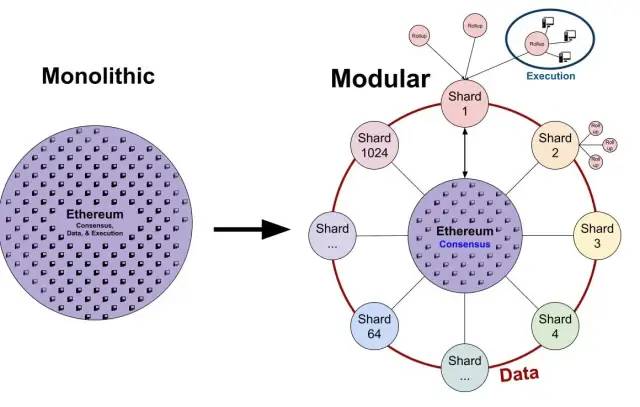
Thankfully, many forward-thinking developers have long anticipated these challenges, committing to execute on roadmaps capable of creating modular blockchain networks, two of the most prominent being Ethereum and Cosmos.
Ethereum and Cosmos have been around for a while, are relatively grassroots and decentralized, and have far less influence from venture capitalists and investors than other ecosystems. Both are building similar but different visions of this modular future.
On the other hand, Cosmos is looking forward to building an "internet of blockchains", or an application chain with interoperability and sovereignty.
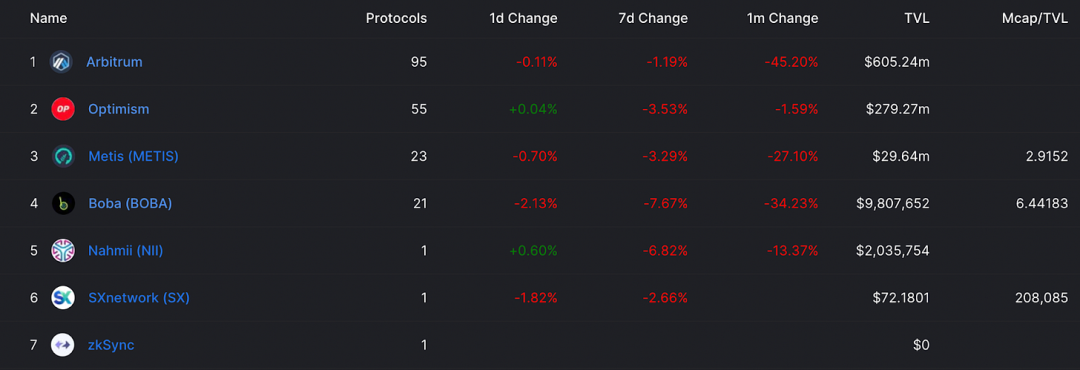
image description
Both ecosystems are in their early stages. Ethereum L2 accounts for 1.58% of DeFi’s total TVL, while the Cosmos chain’s share is 0.82%.
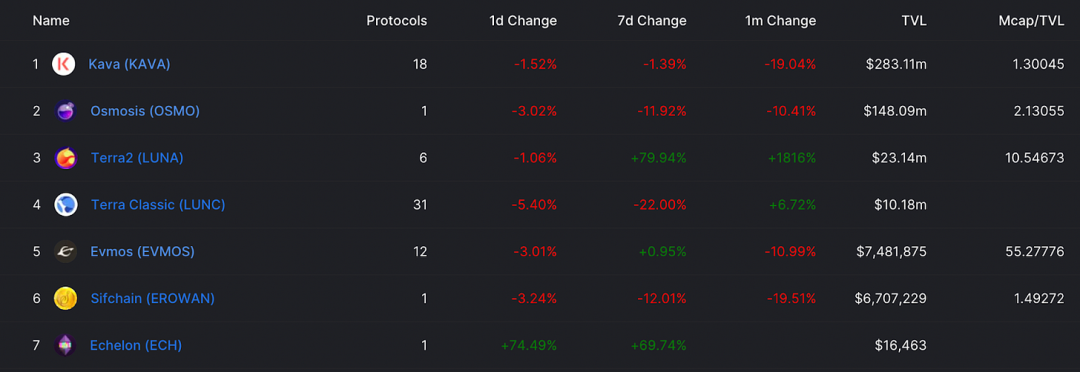
image description
Cosmos Ecological TVL - Source: DeFi Llama[4]But the competition is heating up, and the leading order book application on Ethereum L2 in the near futuredYdX Official Announcement
[5] They will build their own V4 sovereign chain on Cosmos.
This raises the question...are these ecosystems complementary or competing?
Let’s see if we can answer these questions by comparing the technical capabilities of each ecosystem, and their ability to serve as trusted neutral settlement layers.
mdnice editor
Let's start by exploring some of the design features of Ethereum L2 and Cosmos to better understand the strengths and weaknesses of each.
mdnice editor
Ethereum L2 Capabilities
L2 uses Ethereum as the consensus and data availability, and the execution part is off-chain, that is, the rollup environment. Afterwards, Rollup compresses the relevant data in batches and submits the transaction proof to L1. In this way, the cost can be amortized by L2 users to indirectly reduce the overall cost.
This allows Ethereum to scale by accommodating more transactions in the same amount of block space, enabling the network to scale while maintaining economic sustainability and maximum decentralization, as users can still easily Run a node to verify the state of the chain.There are two types of L2, Optimistic Rollups using fraud proofs, and zkRollups using validity proofs. Compared with zkRollups, it has better performance, but it is still challenging to implement in production, and lacks EVM compatibility, which means[6]。
The latter is more likely to be Ethereum's primary scaling solution for the foreseeable future
Nonetheless, there are many scaling solutions at both L1 and L2 levels, such as call-data data compression, proto-danksharding, and EIP-4488. In addition, the fractal expansion through L3, that is, settlement to L2 Rollup instead of directly to L1, will further improve scalability and open up new design space for application-specific Rollup.L2 also offers a fair degree of composability, as general-purpose rollups such as Optimism and Arbiturm have a large and rapidly growing ecosystem of protocols and applications. This composability is expected to be realized in the future by adopting[7])While enhanced, these protocols increase interoperability between rollups, albeit introducing new risks and trust assumptions.
mdnice editor
Cosmos Chain CapabilitiesCosmos is ideal for building application-specific blockchains, or Appchains. These are chains optimized to run a single application, such as exchanges like Osmosis, TVL's largest Cosmos chain, and the aforementioned[8]。
This is made possible through the Cosmos SDK, a blockchain development framework that allows developers near-total control over their design. Because of this, Cosmos chains are considered sovereign.
For example,For example,Builders can choose whether their chain will use the account or UTXO model, what language the state machine will be built in, and various other parameters
[9]. This is much more flexible than a network such as Ethereum, where these parameters are already set and all developers must abide by.
The increased customizability of Cosmos also extends to governance and security, as each chain can launch their own independent validators, starting approximately in the third quarter of 2022, utilizing a feature called cross-chain security, like Ethereum Like L2, this will allow chains to outsource their validators to other networks such as the Cosmos Hub. Cross-chain security could prove to be a key feature of Cosmos chains, as starting validators is difficult and could lead to reduced security leading to cyberattacks.Cosmos chains can use the IBC cross-chain protocol to obtain local interoperability capabilities. It is already enabled in the current network[10]。
Light clients to build minimal trust bridges and messagingAnother recently deployed upgrade is theCross-chain ledgersecondary title
summary
Both Ethereum L2 and Cosmos bring enormous value. Ethereum L2 enables low-cost applications with the highest level of security, while Cosmos currently provides a greater degree of customizability, interoperability, and sovereignty for independent applications.
first level title
Comparison of Ethereum and Cosmos Hub as a settlement layer
Let's see how each fares in this regard.
secondary title
Ethereum L1
The Beacon Chain currently has 404,125 validators, and each node needs to deposit 32ETH (about $33,632), which is the threshold required to participate in the consensus and earn staking rewards and transaction fees. While no specific number was given, according to Ethereum Foundation researchers, the theoretical maximum number of validators is around ~4 million.
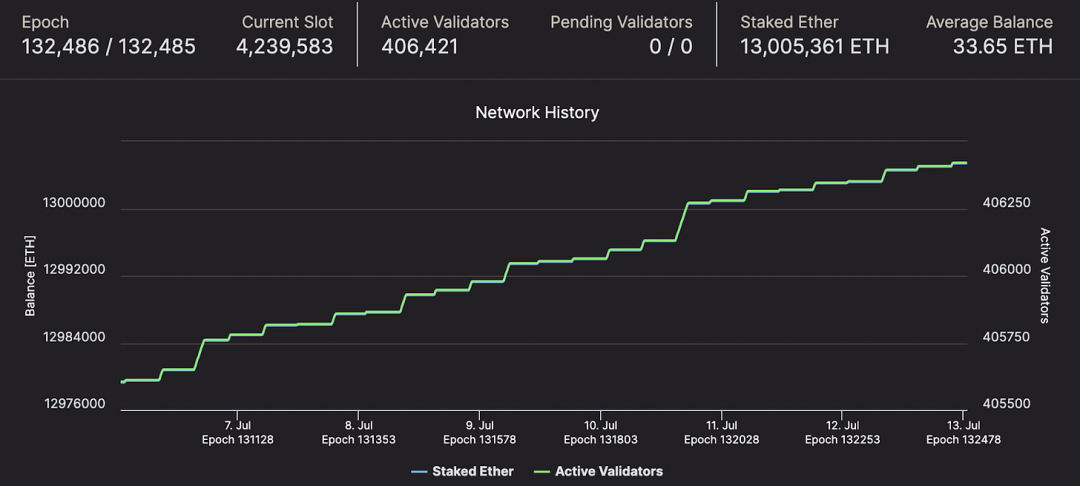
image description
ETH staked on Beaconchain - Source: Beaconchain.in[12]
Instead of adopting native staking delegation as a way to address the high cost of running validators, Ethereum democratized staking rewards through an open market. This can be through custodial exchanges like Kraken, or non-custodial services like Lido issuing liquid staking derivatives.However, the derivatives of liquidity staking have a strong network effect, which has allowed entities like Lido to accumulate a large amount of sharesCurrently holds 31.7% of the Beacon Chain
[13]. Whether staking will become more widely distributed after going live remains to be seen.
Ethereum does not decide network changes through token holders' voting, but manages the off-chain network through a rough consensus. This means that all stakeholders of the network, such as core and application developers, users, and ETH holders, must be on board for major upgrades. This spreads governance power over a wider group, increasing Ethereum's credible neutrality by limiting the possibility of plutocrats emerging.
Cosmos Hub
secondary title
The Cosmos Hub has 175 active validators, which is a maximum cap set through governance. The network does employ Delegated Proof of Stake (DPOS), where token holders can delegate their stake to one of these validators in order to earn rewards associated with securing the network.
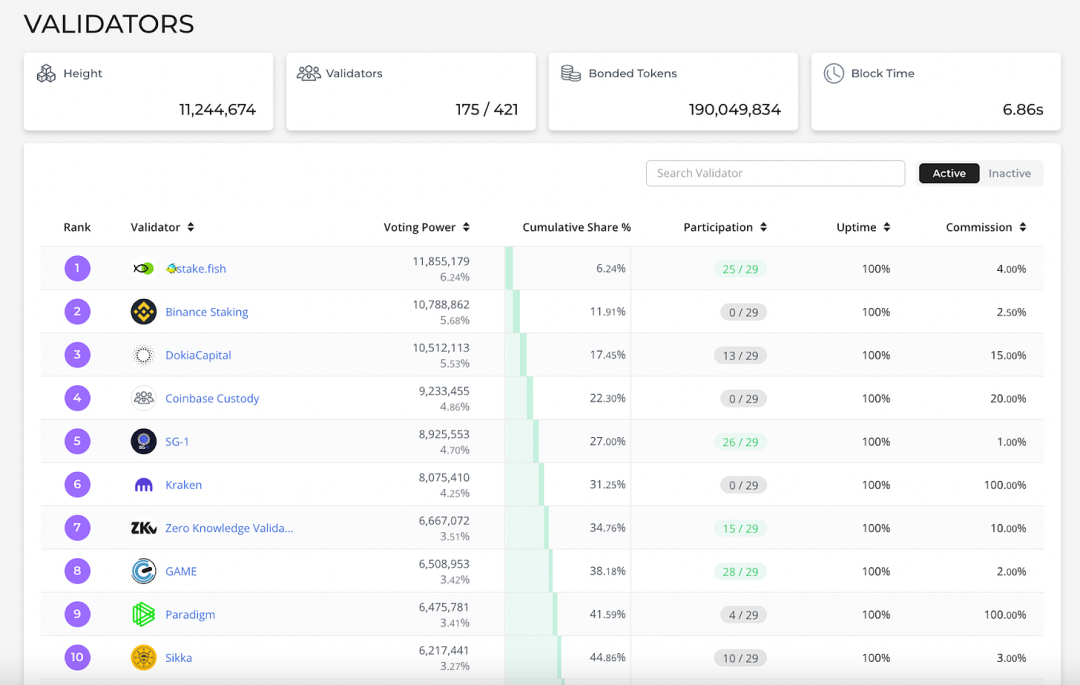
image description
Cosmos validator staking ratio - Source: Mintscan
While Cosmos staking is more decentralized, due to the use of on-chain, token-based governance, there is a greater risk of power being concentrated in the hands of validators on the Cosmos Hub. This increases the ability of large players to impose their will on-chain, forcing through proposals that may not be approved by all stakeholders within the ecosystem, which in turn threatens the Cosmos Hub's trusted neutrality.
secondary title
As we can see, Ethereum L1 is more secure than Cosmos Hub and has a larger and more open validator mix. Although Cosmos Hub staking is more widely distributed, the presence of on-chain governance puts far more power in the hands of token holders and validators relative to Ethereum.
first level title
Are they competitors?
As we can see, both Ethereum and Cosmos are moving towards a similar vision. While Ethereum offers a higher level of security and a more trusted neutral settlement layer, Cosmos chains are more flexible, interoperable, and optimized for some use cases.
While the largest ecosystems can only have one winner, with billions of users and trillions of capital set to be incorporated into Web3, it seems like Ethereum and Cosmos may end up being complementary, serving different use cases, rather than direct competitors.
Related Links
Related Links
[3] DeFi Llama
[4] DeFi Llama
[5] Modular
[6] dYdX Official Announcement
[7] The latter is more likely to be Ethereum's primary scaling solution for the foreseeable future
[8] Common messaging protocols (such as Layer 0 and Nomad)
[9] dYdX chain
[11] Light clients to build minimal trust bridges and messaging
[12] Beaconchain.in