






"Ten Questions and Ten Answers" The Difficulties and Prospects of Blockchain Games


Original source:Incuba Alpha Labs
Original source:
With its innovative carbon-neutral concept and "Move-to-Earn" model, STEPN has injected a surprising potential into the long-dormant GameFi or Web 3.0 games. We have seen more exploration of the X-to-Earn model by practitioners, as well as their in-depth thinking on the mutual empowerment of complex game play and token economy. We are even more surprised that the chain game project has started to move from the simple and short-lived mining-for-skin model to GameFi 2.0, which has rich gameplay, sophisticated production, economic system and precise values.
Since then, many game manufacturers and project parties have started the exploration of Web3.0 games. These game teams all have impressive resume backgrounds, outstanding historical achievements, and pioneers in Web3.0 to provide consultants. Although the recent market downturn has made everyone wonder whether Gamefi 2.0 is a false proposition, we firmly believe that this is only the beginning of industry transformation. We also hope to use these discussions to present our views and ideas on Web3 games.
This article brings together ten questions that we have discussed with many game teams recently, and tries to answer one theme: What problems need to be solved to create a successful Web 3.0 game?
Question 1: How did games in the GameFi 1.0 stage slowly lose attention?
Now that the market has passed the most FOMO stage of GameFi, people can easily sum up the reasons why many star projects in the GameFi 1.0 stage fell into the sand, for example, the lack of gameplay, the lack of in-game asset consumption mechanism, and the speed of gold production Too fast, excessive fluctuations in token prices lead to abnormal game equipment or output prices, inflation destroys the game economic system, lack of new players to maintain Ponzi, etc.
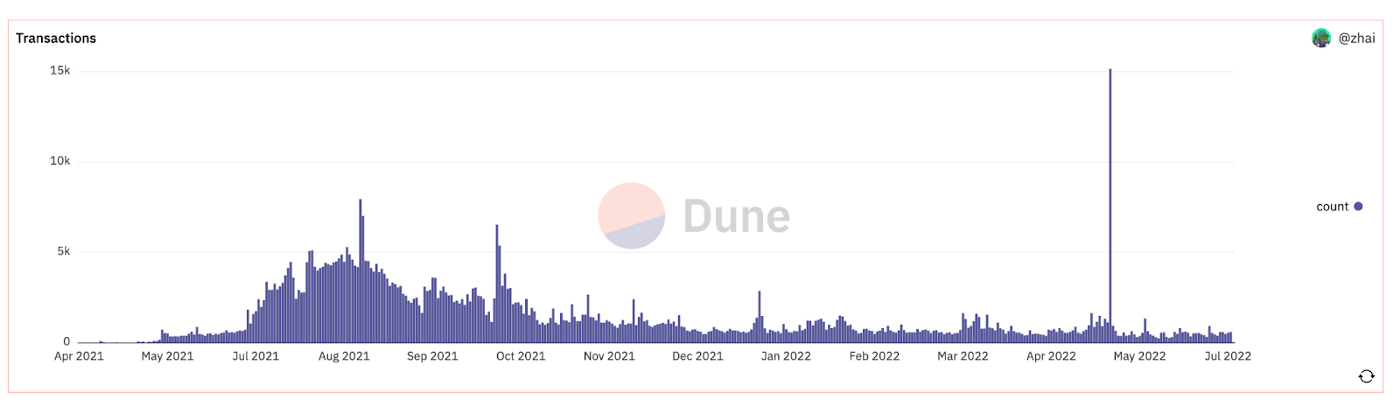
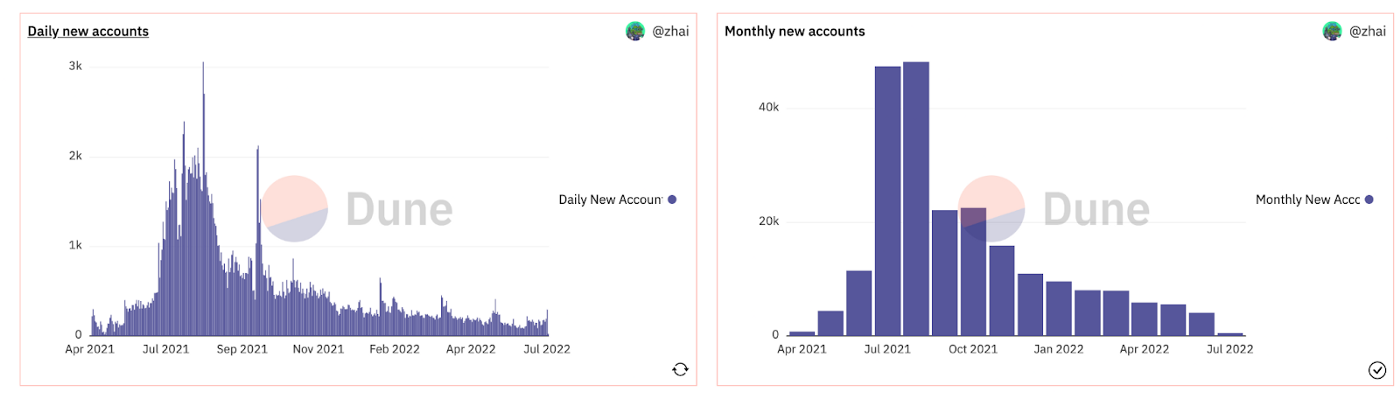
Changes in Axie Infinity's trading volume and new accounts since April 2021
image descriptionhttps://dune.com/zhai/Axie-Infinity-(AXS)-onchain-analytics
These reasons are of course objective, but our perspective is more intuitive. Examining these games with the concept of national economies, their successive fall is exactly the same as that of countries that once fell like domino bones in the financial tsunami (such as: South Korea, Vietnam, Malaysia, Russia, etc.). These countries have had a short-term economic take-off, but it was accompanied by a huge increase in external debt and the influx of foreign capital. These countries use high foreign exchange reserves to support their currency exchange rates, but when hot money flows out without control, they can only be forced to face the consequences of sharp exchange rate depreciation and asset price declines. The game projects that were briefly brilliant in the GameFi1.0 stage have also experienced this process in person.
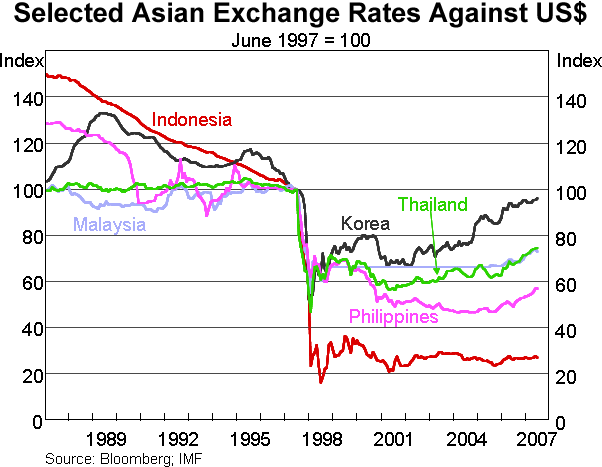
image descriptionhttps://www.rba.gov.au/speeches/2007/sp-gov-180707.html
source:
We believe that the biggest failure lesson of these projects is the neglect of the "impossible triangle" of classical monetary theory.
The "impossible triangle" simply means that a country's currency cannot simultaneously achieve the following three points:
stable currency value
independent monetary policy
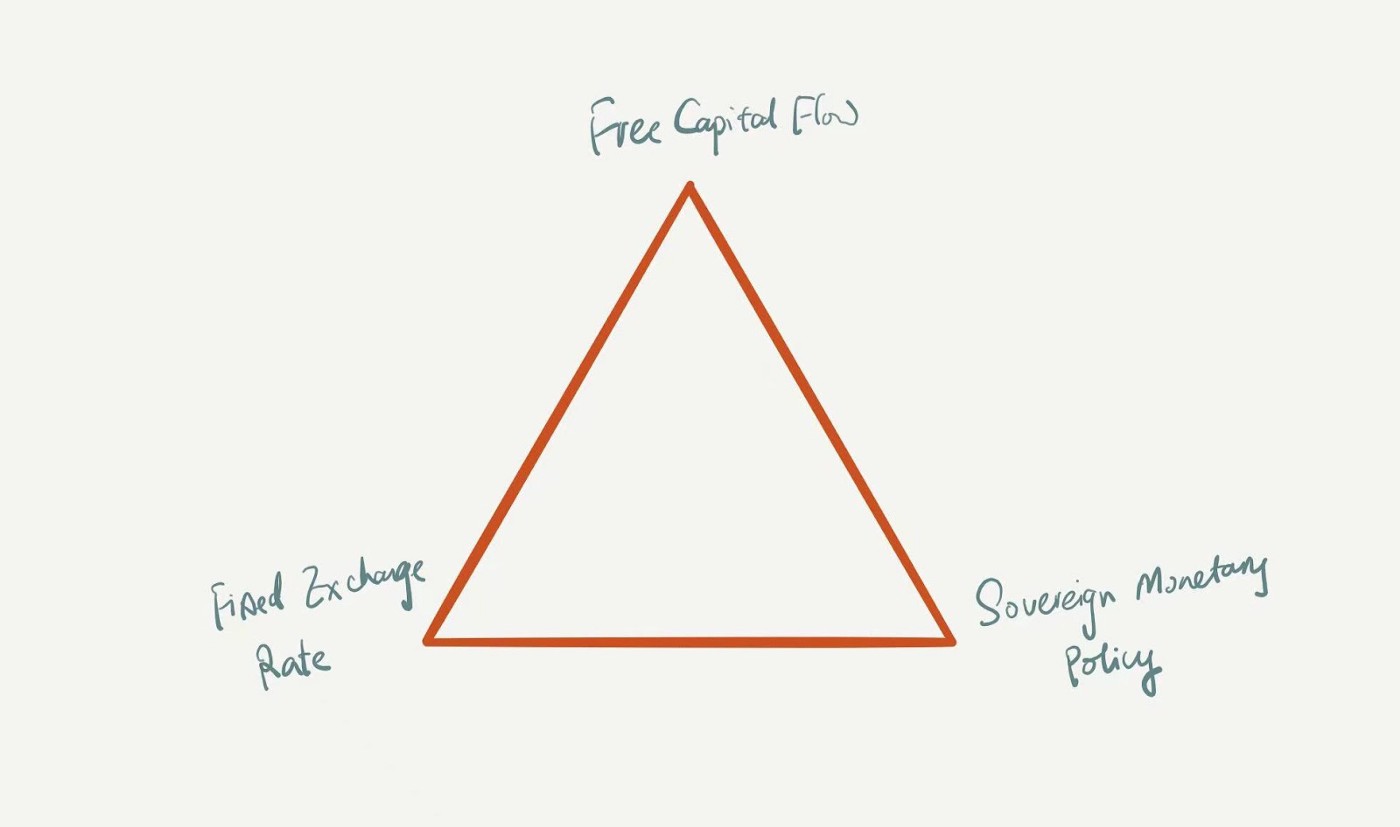
free movement of capital"
The original intent of most GameFi 1.0 projects is to:
Guarantee the free movement of capital. Taking AxieInfinity as an example, players can freely use ETH to buy or sell SLP/AXS and NFT inside the game.
independent monetary policy. Each game has its own token output, consumption, and unlocking and release rules, which is equivalent to the country's desire to implement an independent and independent monetary policy that does not depend on other countries.
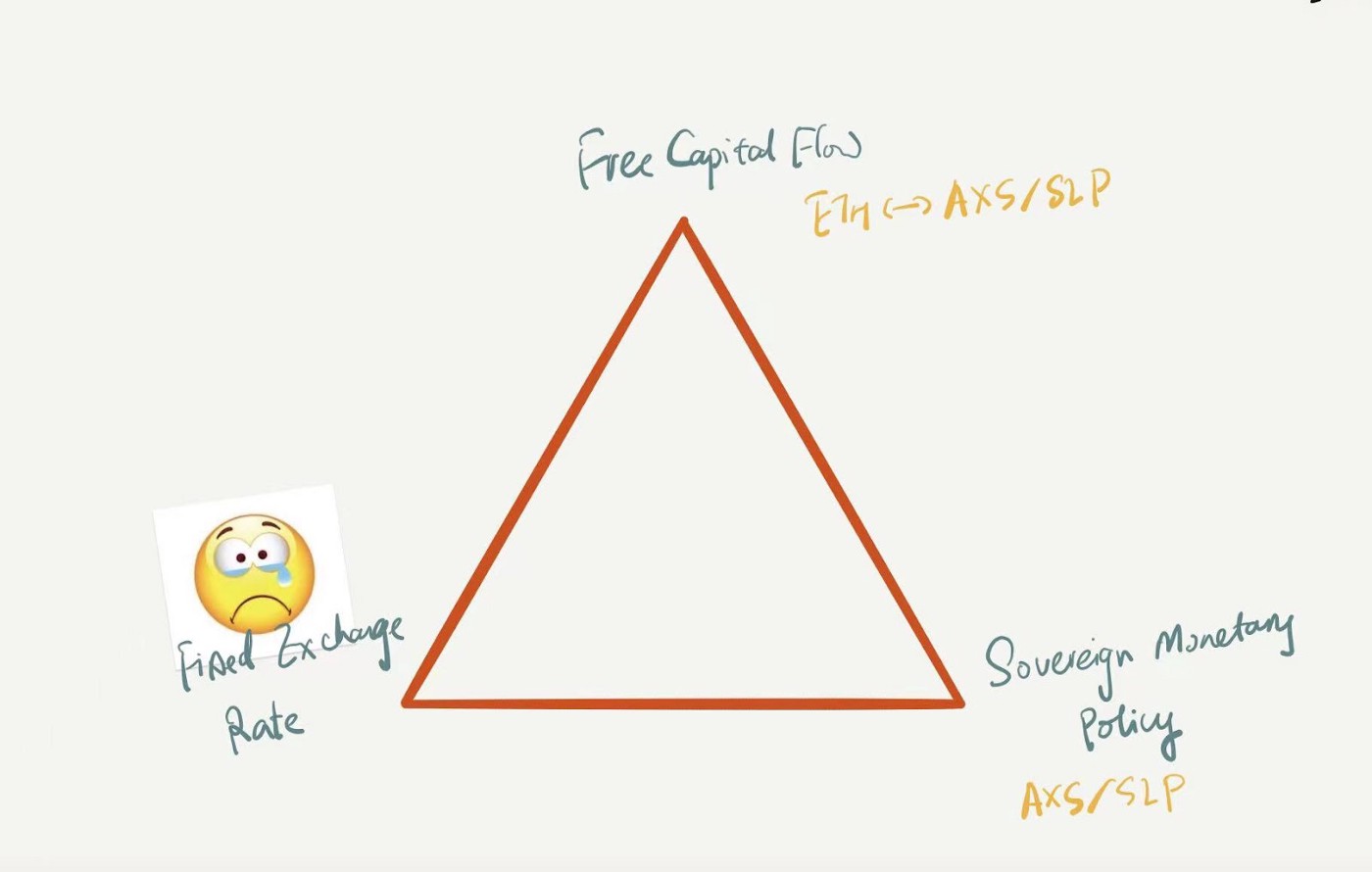
Stable currency value. However, due to its independent monetary policy, the token prices of many games inevitably fluctuated greatly due to the inflow and outflow of players and hot money, and finally fell into a financial crisis and ended up in a mess.
Therefore, to create a successful Web 3.0 game, it is by no means simply replacing the equipment or resources in the Web 2.0 game with NFT, or issuing the original points pass of the game into Token.If you look at it from another angle and look at it from the perspective of "blockchain games are the national economy", traditional games can basically be understood as a "closed economy" or "open economy", while Web 3.0 games, due to the characteristics of the blockchain,Naturally, it is an "open economy"
, whether it is the design of NFT or Token, it is essentially the process of "reform and opening up". The issuance of NFT or Token is like a closed and self-sufficient economy trying to open industries, introduce foreign capital, bear foreign debts, set exchange rates, and modify monetary policies. , which is a brand new impact on the game numerical model that was already complete in a closed state. Therefore, simply replacing the original currency or credits in the game with Token will cause the economy to be severely impacted and unbalanced by free-circulating capital.
Question 2: What will GameFi 2.0 look like? Which games are suitable for making Web 3.0 games?
We believe that MMORPG games will be the main game type leading the GameFi 2.0 phase, and it is also one of the most suitable game types for Web 3.0.If it is comprehensively classified according to player input cost, content depth, difficulty of gameplay, etc., it can be roughly divided into
Heavy Gaming, Moderate Gaming, and Light Gaming.
Heavy games mainly include familiar 3A masterpieces, such as GTA, which is often called Game Takes Ages by players; moderate games can cover most role-playing games, sports competitions, strategy SLG, real-time strategy RTS, card games, etc.; The degree game can be compared with casual games such as matchmaker.
For Web 3.0 games, the collage screen and experience are definitely not as good as traditional 3A heavy games from major manufacturers. The light games are mainly aimed at the fragmented entertainment needs of players, consume less time, money and attention of players, and the system also lacks the circulation of multi-layer assets, so this type of game is more suitable for being designed as a PvP "casino" mode, which is beyond the scope of this article's P2E discussion. . Therefore, we believe that the most suitable game category for innovative Web 3.0 transformation should be concentrated in the category of moderate games.Among such games, MMORPG is the category that we think is most timed to transition to Web3.0 games. Compared with traditional 3A games, it has social attributes,
And has a very complex in-game economic system.
MMORPG (Multiplayer Online Role-Playing Game) is a massively multiplayer online role-playing game. This type of game has the characteristics of rich world view, strong playability, full sense of social experience, and very mature and complete game development and design mechanism. The overall gameplay of MMORPG is relatively mature, and has an economic system that is extremely rich, close to reality, and has a long life cycle. The core of the game is "trading", emphasizing the asset and economy of the game. The equipment in the game is the player's asset. The in-game transactions are very active, and the equipment and props stores opened by some individual players in the game have turnovers as high as 1 million U.S. dollars within half a year. These advantages make the life cycle of MMORPG games longer than other types of games. Well-known games such as World of Warcraft and Fantasy Westward Journey have been running stably for 19 years, and there are also many MMORPG games in Roblox that have been running for 9–10 years with considerable income.
The most important thing is to refer to the development of traditional games. We believe that the current GameFi is closer to the market stage before the explosion of MMORPG games after 2000.Compared with the simple and crude mining mode of GameFi 1.0, GameFi 2.0 is a real practice of the Play-to-earn (P2E) mode. The most important mission of GameF 2.0 is to make chain games have bothEntertainment attributes, social attributes and economic attributes
, Asset ownership truly returns to players, so that players can obtain truly sustainable benefits through the in-game economic cycle system while gaining game experience.
In fact, for traditional MMORPG players, P2E is not a trendy vocabulary, nor is it unique to Web 3.0 games. Perhaps since ten years ago, a large number of players of World of Warcraft or Fantasy Westward Journey have already known how to make money through games. , and at that time there was already a website that could display the price of WoW Gold (World of Warcraft gold coins) against the US dollar. Of course, although the official encourages players to earn in-game gold coins, the RMT (Real Money Trading) behavior of trading game gold coins into legal currency will also be severely suppressed by the official. The specific reasons will be discussed in detail later.
Combining the successful experience of the predecessors, how to develop these "closed economy" MMORPG games into "open economy" Web 3.0 games will be the key question we need to answer.
Question 3: How many tokens should there be in Web 3.0 games?
Conclusion: We recommend that game manufacturers build a three-coin or four-coin system in Web3 games.After decades of development, traditional games have basically formed a classic three-coin or four-coin model in closed economies: includingCoins, Silver Coins, Gems (and Points). But it should be noted that in an economy, the flow of different currenciesmust be unidirectional
, can only form a one-way exchange mechanism from legal currency to gold coin to silver coin to gemstone.
The user's legal currency (such as: RMB and US dollar) can be recharged into gold coins first. As the first entry currency of the game, gold coins are the unit of account representing the purchasing power of legal currency. Gold coins cannot be converted back into legal currency.Gold coins can be exchanged for silver coins at a certain rate. Silver coin is the main circulation currency in the game, which can be produced by playing the game to make gold, and it is also the consumption currency of major activities such as upgrading, repairing, and refining in the game. Silver coins are the most important currency medium in the game economy.
Silver coins cannot be exchanged for gold coins.
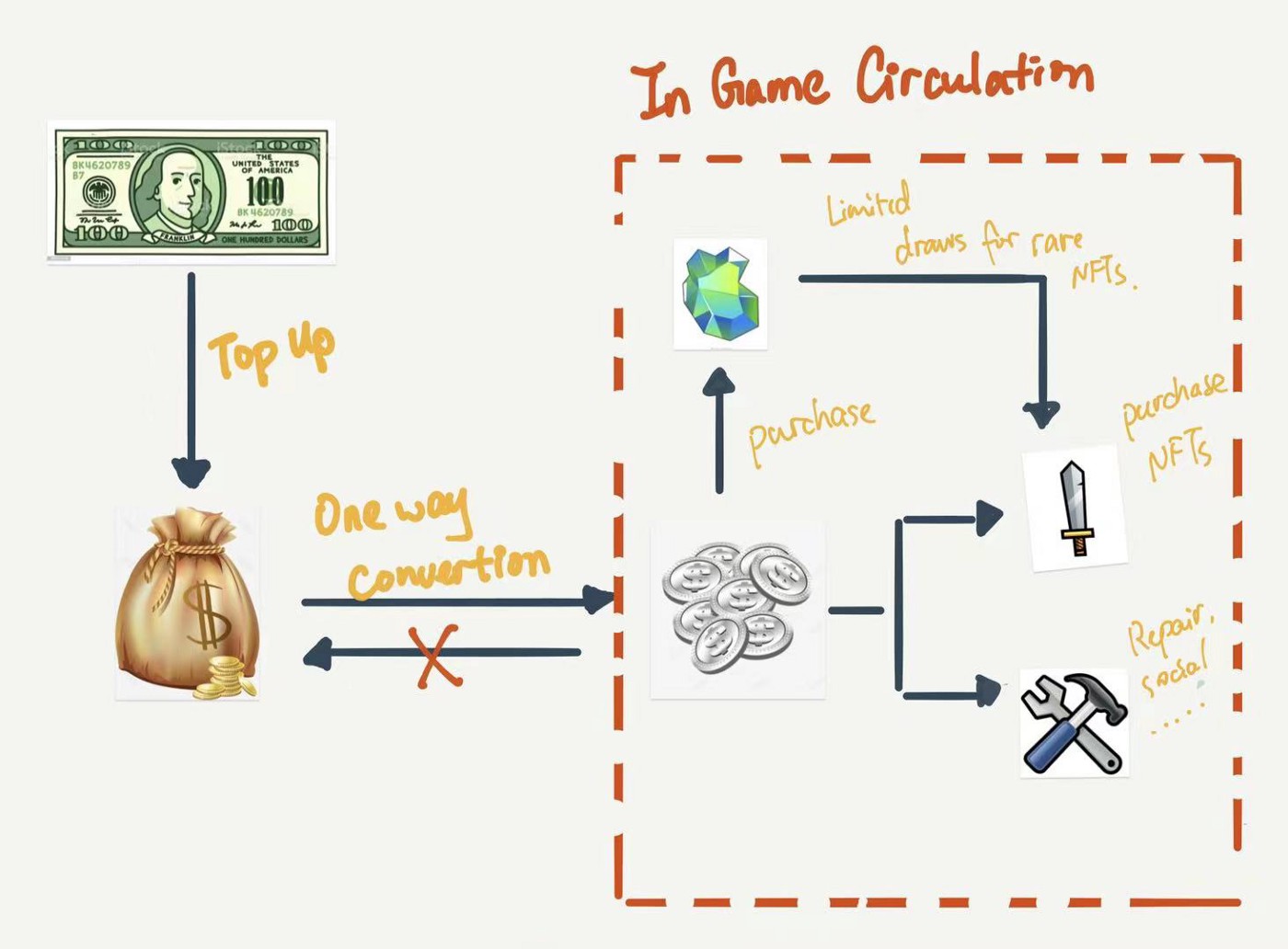
Silver coins can be exchanged for gems, which can be used to extract treasure chests in the official store, buy top-quality props, and buy limited skins for a limited time. Gems can only be used in in-game shops, and cannot be reversed into silver coins, let alone transferred out of the game. The one-way flow of silver coins into gemstones is to encourage the consumption of silver coins by launching scarce high-end equipment, and to achieve the deflation of gold output through consumption.
Some games have a fourth currency - points. Points are generally obtained through daily active tasks (such as: logging in, meeting the specified game duration, etc.). Points can be exchanged for gems for in-game consumption; however, they cannot be exchanged for gold or silver coins, cannot be transferred to others, and cannot be converted into legal currency. This is done to prevent players from earning points by logging in a large number of trumpet accounts, and exchanging points for silver coins, causing a lot of selling pressure on silver coins.RMT(Real Money Trading)mentioned above
, refers to the process in which the user reversely converts the silver coins earned in the game into gold coins or even legal currency. The reason why the official strictly guards against this link is to prevent many gold players from opening trumpet accounts to obtain more silver coins, and through the channel of converting silver coins to fiat currency, the selling pressure of silver coins will cause inflation in the game and disrupt assets. The price, also ruins the gaming experience.
The one-way flow of silver coins into gems is also to encourage the consumption of silver coins by launching scarce high-end equipment, and to achieve the deflation of gold output by means of consumption;
In particular, points cannot be exchanged for silver coins or gold coins, in case players earn points by logging in a large number of trumpets, and exchange points for silver coins, which will generate a lot of selling pressure on the price of silver coins.
The economic mechanism of Web3.0 games is quite different from traditional games. Before proceeding with the following argument, we first draw a conclusion: We recommend that game manufacturers build a three-coin or four-coin system in Web3 games, but the economic model cannot simply "copy and paste" traditional games, otherwise they can only is a failure.
Since Web 3.0 games force the game economy to shift from a "closed planned economy" to an "open economy", the specific functions of each token (asset) in the game will be quite different from those in traditional games. Let's abstract a token framework first:
1. The role of gold coins in traditional games will be played by pricing tokens (eg ETH/BNB/SOL) in Web3.0 games. Users generally need to spend denominated tokens to purchase some kind of NFT to enter the game. For example, running shoes in StepN.
2. The main currency in the game - silver coins, similar to the in-game consumption tokens of Web3.0 games, such as $SLP in Axie Infinity, $THC in Thetan Arena, and $GST in StepN. This type of token is mainly circulated in the game and assumes the most important function of the circulation medium, and the total amount of issuance is unlimited;
3. In Web3.0 games, gems in traditional games are replaced by governance tokens with a circulation limit, such as AXS/THG/GMT. Governance tokens are an important innovation of Web 3.0 games. Compared with gems that are only used to purchase props in official stores, governance tokens also undertake important functions such as economic circulation outside the game, player participation in governance, and game rewards. Governance tokens are also the proof of rights of game players, which is a very important symbol of Web3.0.
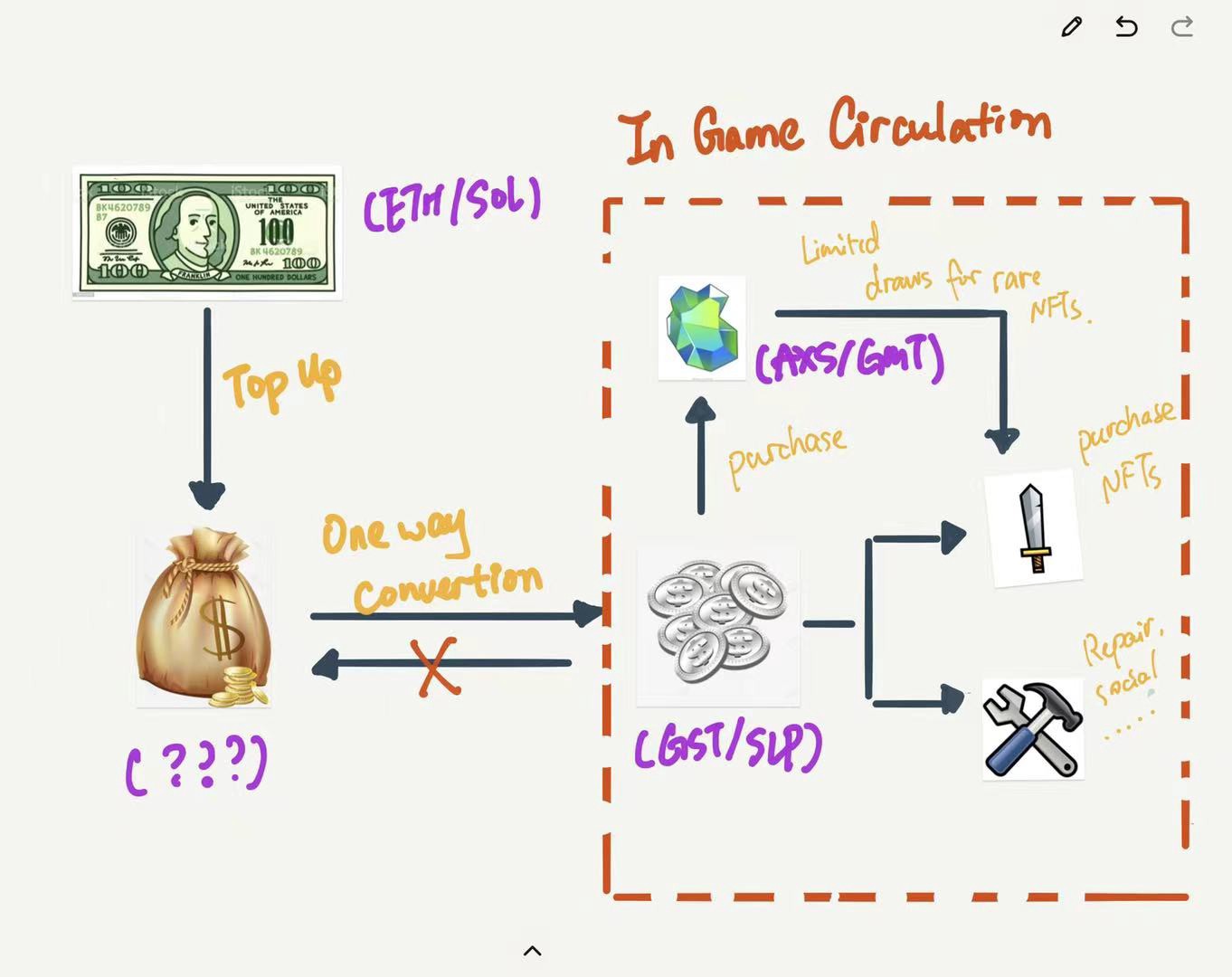
4. Most of the point functions in traditional games are absorbed by silver coins (eg SLP/THC/GST) in Web 3.0 games.
On the surface, it seems that Web 3.0 games can mirror or transfer the token design system of traditional games. However, the seemingly simple transfer process is the most likely to cause the collapse of the Web 3.0 game economic system.
As mentioned above, traditional games strictly stipulate the one-way circulation of funds, that is, the circulation path of legal currency-gold coins-silver coins-gemstones. However, in Web 3.0 games, since the assets on the chain can be traded in the secondary market, the project party has no right to interfere with the free trading of ETH, BNB or SOL and other denominated tokens and NFTs, and cannot restrict consumption tokens such as SLP or GST. currency trading. Many exchanges have launched trading pairs for consumption tokens (although I think this is not a good thing for game project parties), and governance tokens have been wildly hyped by users.As you can imagine, in Web 3.0 games,A large amount of hot money capital freely impacts the game economic system in any link
, which is equivalent to seriously destroying the law of the "impossible triangle", if the game wants to maintain free capital flow (players cannot be prohibited from trading tokens and assets on the blockchain), and independent monetary policy (the game has its own inflation control mechanism), then it can only be forced to give up the stable currency value, and in the end, the game consumption currency and governance token can only usher in a large-scale depreciation.We can also think about a brain hole. If the game project party changes the consumption tokens issued by itself to USDC or Eth/Sol, so that players can earn real money, it will be better for Web 3.0 games ?
Who will pay the bill for the real money earned by players?
Combining the above experience, we believe that the token design of Web 3.0 games requires three kinds of tokens, which are:
Game consumption token (a game consumption token)
Game governance token (a game governance token)
It is also possible to increase the design of active points according to the situation. The specific design will be discussed in the following issues
first level title
Question 4: Are Web 3.0 game tokens destined to die?
Before getting into the specific design, we would like to clarify the ultimate goal of token design. Is there a design that can truly build an "infinite game" that never crashes?Our conclusion is that both Web 2.0 games and Web 3.0 games have their life cycles. According to economic law,
Inflation will inevitably occur in game consumption coins, but we can design a scientific economic model to control the inflation rate of tokens and extend their life cycle as much as possible.
There are many reasons for the continuous depreciation of game consumption coins, such as:
Some inherent flaws in economic models that cannot be ruled out. For example, there are many output paths for game consumption coins, but few consumption paths; there are multiple alternative currencies in the game, resulting in a long-term oversupply of game consumption coins and a drop in prices;
The long-term operation of the game is insufficient, the gameplay is weakened, and a large number of players leave the pit, resulting in the depreciation of consumer coins and various equipment;
The game has entered too many gold-making studios and brushing workshops, resulting in excessive short-term output of game consumption coins.
As the game continues, there will be more and more high-level players in the game, the gap between rich and poor will widen, the growth rate of productivity will decrease, soaring prices and currency devaluation may be the inevitable outcome.
Of course, we have also seen many MMORPG games that have lasted for more than ten years and have a stable economy. In addition to the precise calculation and control of the operation team in the process of game development, they also have a complex enough in-game economic system to support the game. long life cycle. We believe that Web 3.0 games will also have the opportunity to explore a set of token economic models with a long life cycle, but continuous numerical control and operation and maintenance are essential.
Question 5: How are Web 3.0 game tokens circulated?There are three types of tokens in our envisioned Web 3.0 game:Game consumption currency, game governance token and game regulation currency.
Among them, the game consumption currency is the most important currency medium in the entire economic system.
The circulation of game consumption currency is mainly realized through its output and consumption:The output (supply) of game consumption currency is mainly determined by the gameplay of the game, and the common gameplay is mainlyGrowth system (such as: PvP battle and PvE adventure), social system (marriage, friendship or gang formation) or daily fixed tasks in the game;
The consumption (demand) of game consumption currency mainly comes from player development, and the main development methods include the cost and probability refinement required to upgrade levels, equipment and skills. A healthy game economy needs to achieve a relative balance between output and consumption.
To achieve a balanced state between the output and consumption of game tokens, it needs to be obtained through numerical planning and calculation. The biggest challenge of Web 3.0 game design is to shift from a "closed economy" to an "open economy", which introduces many external uncontrollable variables.
Therefore, we believe that a healthy Web 3.0 game should have the following core goals:The value of all assets in the game should be determined by the player's "socially necessary labor time" instead of simply relying on the time the player spends in the game(Note: Marx's "Das Kapital" pointed out that socially necessary labor time refers to the labor time required to produce a certain use value under the normal production conditions of the existing society and under the average labor proficiency and labor intensity of the society)
. Therefore, the most important economic mechanism in the game is to make the output types of each game activity as diverse as possible, and to make the game behavior of each player consume as much as possible, whether it is time, money, or other resources, so that the game All assets in it have a loss mechanism;As the most important circulation medium in the game,The game consumption currency should adopt some mechanism to ensure the currency price is relatively stable.
The ideal state is neither a sharp rise nor a sharp fall. The large fluctuations in game consumption currency are very harmful to the game, so it is necessary to design a mechanism for output and consumption balance as much as possible to ensure that the game consumption currency is in a state of slight deflation or slight inflation;
Increase the transaction friction of the outflow of in-game assets as much as possible, such as raising the threshold for exchanging game consumption currency into external assets such as ETH/SOL; setting up "foreign exchange control" measures to achieve the purpose of "all the money earned in the game is spent in the game";
Governance tokens should find usage scenarios with natural purchase needs, and increase the leverage of governance tokens for game players;
Establish continuous numerical monitoring and analysis capabilities, and flexibly adjust currency circulation policies according to system changes.
Question 6: How to achieve the above goals, and how to stabilize the currency value after consumption tokens circulate?
According to the "impossible triangle" theory in economics, it is impossible for a country to achieve the three goals of currency stability, independent monetary policy, and free capital circulation at the same time.
Corresponding to the economy of Web 3.0 games, the main goal of the game project party should be to ensure the stability of the currency value of the game consumption currency and implement an independent monetary policy.
First of all, the project party must implement strict capital controls, restrict the free circulation of funds in the game, create some friction costs for the outflow of funds, and try to keep the player's capital flow in one direction. For example, the player's gold output must have a certain withdrawal lock-up period, increase the transaction fee for NFT of game assets, and stipulate the upper limit of the amount of consumption currency held by the player's backpack, etc.
Second, regulate the output and consumption of game consumption coins. The first is to set output constraints. STEPN sets user invitation codes, diminishing marginal output of running shoes, wear and tear of running shoes, etc., which are typical ways to control the output of $GST (game consumption currency).
In addition, the project party needs to increase the consumption level of game consumption currency, which is the most important and core means to control the stability of currency value. In STEPN, the wear and tear of running shoes, upgrades and synthesis of new shoes can effectively increase the consumption of $GST on the basis of calculated values. If the game itself is entertaining and addictive enough, it may allow players to consume more than gold output, which is more conducive to a virtuous circle.
On this basis, games often need to set up some special consumption mechanisms for high-level players. Many games design new team battle dungeons, PVP, summit games, and cross-server fights to continuously increase the consumption of game currency by high-end players and slow down inflation in the game economy. On the one hand, it can improve the game experience as a whole, and on the other hand, it can also maintain the balance of the player ecology.
Speaking of which, you might find that the so-called X-To-Earn model isn't what's driving StepN's success. If you explore StepN's token economy, the consumption of multiple channels and the effect of a steady increase in GST may be the secret of its success. Although StepN is an APP, its economic logic does not seem to be fundamentally different from MMORPG games such as World of Warcraft.
We believe that many current Web 3.0 games are designed to lack the monetary policy and fiscal policy combined with the characteristics of Web 3.0 games. Introducing the combination of official store (NFT Marketplace) + game regulation currency is a necessary component to realize the basic central bank and monetary policy in the game.
NFT Marketplace
secondary title
First of all, Web 3.0 games currently have a built-in NFT Marketplace idea on the roadmap, mainly to provide services for players to trade in-game equipment.
We believe that the NFT market in the game should have two basic functions:
Complete peer-to-peer transactions in the player's field, and the market can only trade with game consumption coins;
The official store of the game serves official and high-level players. The main purpose is to trade limited-time and limited-edition premium equipment, pets, props and other high-level scarce game assets. The third currency game control currency can be used for transactions.
The official game store is an important supplement to the peer-to-peer trading market for players, and it is also an important means for game officials to actively implement monetary policy and adjust inflation in the game. The official store should have game project parties and high-level players who meet certain standards participate. The game project party formulates rules and puts top-quality materials in the game. High-end players can use game control coins to trade or auction these top-quality materials in the official store.At the same time, we believe that some low-end assets with a large supply in the game, such as Xingyao, fragments, etc.,These assets are usually not scarce, and can be made into ordinary assets in the game, lowering the entry threshold for ordinary users. Or make it in the form of FT, allowing players to quickly trade with the game as the central liquidity counterparty through the AMM (Automatic Market Maker), which also facilitates the game project side to more directly control the economy.
secondary title
game regulation currency
We suggest that the game control currency is best designed as an "over-collateralized stable currency" similar to the DAI or sUSD model. The stable currency here does not necessarily need to be linked to the US dollar. The core goal is to build a relatively stable currency. Adjust the supply and consumption of the medium to digest the fluctuation of game consumption currency.
The generation of regulatory coins must pledge certain governance tokens and meet certain "loyalty conditions" (such as pledging a certain amount of governance tokens or meeting the pledge period), and then coins can be minted through over-collateralization for transactions in game stores , the over-collateralization rate can be dynamically adjusted with the development of the game economy. Here, the in-game achievement "NFT" system can also be combined. For example, high-achieving users can obtain better pledge coinage conditions.
This kind of stable currency is mainly used to support the transaction of the game's official store, and can also be used to cooperate with the deduction of some titles or achievement scenes in the game. In addition, the game should also encourage users to directly purchase the stable currency with the external token of the ecology (ETH/SOL) or other stable currency, but it cannot or is difficult to reverse sell after purchase.
This is designed so that the token can absorb the fluctuations caused by the phased supply and demand imbalance in the game.
If the output of too many game consumption coins leads to too fast depreciation, the official game store can launch more limited advanced equipment, encourage users to mint the consumption coins they hold or purchase algorithmic stable coins for consumption, and increase the lock-up and purchase of consumption coins ; Or directly adjust the gold mining output model, so that part of the output will automatically become a regulation currency, reducing the selling pressure of consumer currency.
At the same time, the upper limit of the game control currency should be set according to the game level of a single player, or the part exceeding the upper limit will be motivated by some mechanism to lock or destroy the user. For example, the number of gold coins in the personal backpack in Fantasy Westward Journey has an upper limit. The part will be temporarily stored by the official, and the player can take out the consumption after the specified time arrives. In the design of Gamefi, non-linear pledge parameters can be used to exchange scarce NFTs and other methods to encourage users to lock or destroy tokens above the amount of the rate-decreasing interval in exchange for NFTs. The total issuance of game regulation coins should also set an upper limit. The upper limit is anchored to a certain multiple of the in-game transaction volume. When the leverage ratio in the game reaches a certain level, no additional game regulation coins can be issued to prevent the volume of game regulation coins from being released. Excessive impact on the original economic system.
secondary title
Game Governance Token
At this stage, the VE model (voter escrowed) is already a relatively popular governance token design. It solves the problem of 1 Token = 1 Vote through the mechanism of locking Tokens, and prevents giant whale users from participating in malicious voting. But we believe that the rights and interests of governance token holders need to be more closely tied to the game economic system.
As mentioned earlier, MMORPG and mid-range games are most suitable for being transformed into Web3.0 games. These games have high investment costs, long development cycles, relatively high failure rates, and a lot of cost for acquiring customers after the game is launched. The single customer acquisition cost of traditional games is around tens of dollars. In Web 3.0 games, game manufacturers can acquire customers by issuing governance tokens and game NFT assets, and even recover part of the development costs in advance. Compared with traditional games, this method is an important innovation of Web3.0 games in terms of customer acquisition.
In our thinking, the utility of governance tokens should have more in-game usage scenarios in addition to game revenue distribution, buyback, and lockup incentives. For example, if a high-level player wants to open a store in the game's official store, he must pay governance tokens as a store opening fee and promotion fee, which will consume a considerable amount of governance tokens; players holding governance tokens or pledge conditions meet the " "Loyalty conditions", which can give the game title or enhance the game attributes; open the parameter authority in the game, so that players can actively participate in governance voting.
A successful Web 3.0 game can be considered a giant exchange. Different exchanges have the right to control seats, formulate trading rules and seek rent. Game governance tokens turn rent-seeking rights into assets. These assets have financial attributes and are an important "leverage" in the operation of Web 3.0 games. We expect more creative project parties to design more innovative mechanisms to leverage levers.
Question 8: In addition to DeFi, what innovative ways do Web 3.0 games have?
This is a brain hole question, but we might as well start some scientific deduction.
In the previous question, we actively discussed the monetary policy of the game, but in fact, there is another important pillar outside the game economy, which is fiscal policy. In a national economy, fiscal policy is an important path to intervene in the economy. There will be income, such as tax income, or fund income (income from land sales), and there will also be expenditures, or policies to adjust income distribution.
MMORPG games are games with trading as the core gameplay, and there will be a large number of trading behaviors and trading volumes in the game. Behaviors such as NFT sales, NFT and token transactions, resource production and capital circulation in the game will bring huge financial revenue, tax revenue and asset sales revenue to the game. As the number of users increases, the entire game will evolve into a huge exchange, and the volume of these transaction revenues will also become huge. In traditional games, these huge economic benefits will be captured by game manufacturers, but in Web 3.0 games, the game revenue is included in the national treasury, shared with game participants, and community governance.
In addition, the game project party can also use financial revenue to balance the game value, or adjust the gap between rich and poor players, and provide financial support to some highly active small R players or some merchant unions.
We also observed that many MMORPG games have many local servers, and each local server has a different economic model and inflation level. We believe that the game project party should allow giant whale players to open up new land resources in the game ecology, build their own country, define various monetary policies and economic parameters by themselves, and bring more game experience. At the same time, the new continent opened up by giant whale players needs to pay part of the income to the project party in the form of governance tokens, which will also provide a wealth of land asset gameplay for the game.
Game project parties should also pay more attention to the customization needs of players, such as allowing players to customize NFT (face pinching system), opening up game editors, allowing players to perform UGC content or customize exclusive props, etc. These highly customized needs need to consume governance tokens to complete. UGC equipment also has the form of NFT, and royalties can be paid to the original creators for each transaction to stimulate the creativity of players in the game system.
Question 9: How should your target game users be portrayed?
Healthy gamer structures generally exhibit a pyramidal shape. The rare high-level players at the top only krypton but not liver, the middle players have both krypton and liver, and the bottom players only have liver but not krypton. The game needs to rely on the high consumption of the top senior players to obtain the main income.
The Play To Earn model that Web 3.0 games have always emphasized, the core problem is that everyone is playing gold to make money. So, who is paying for the player's money? In the GameFi 1.0 stage of the game, there is only one person who pays the bill — the transaction user in the secondary market.
In the process of transferring blockchain games to the GameFi 2.0 stage, we hope that more users will participate in the game because of the entertainment of the game itself, and gradually form a healthy pyramid structure, so that Play-To-Earn can be transformed into Free-To-Play and Skill-To -Earn.
We expect that there will be three groups in GameFi 2.0 who will pay for players’ P2E, one is of course secondary market trading users, and the other two are: game users who pay for entertainment experience and status symbol and advertisers outside the game system, E-sports events, media platforms.
In the process of discussing with many game project parties, there are two problems that are inevitable between investors and project parties.
First, what are the target players and the corresponding market strategy?
The same is true for traditional game players. Some traditional games have tried to add NFT and FT asset mechanisms to the game, but they have not been sought after by traditional players. Ubisoft also introduced the design of NFT in the game, but it was severely resisted by mainstream players. They are ideologically disgusted with the appearance of NFT, and believe that NFT will lead to relatively bad hype of game assets. After the classic game MIR4 launched by Wemade went online, it changed the way the original game was free and items were paid to encourage players to play to earn. The balance of the economic system, market feedback and asset price movements are not satisfactory.
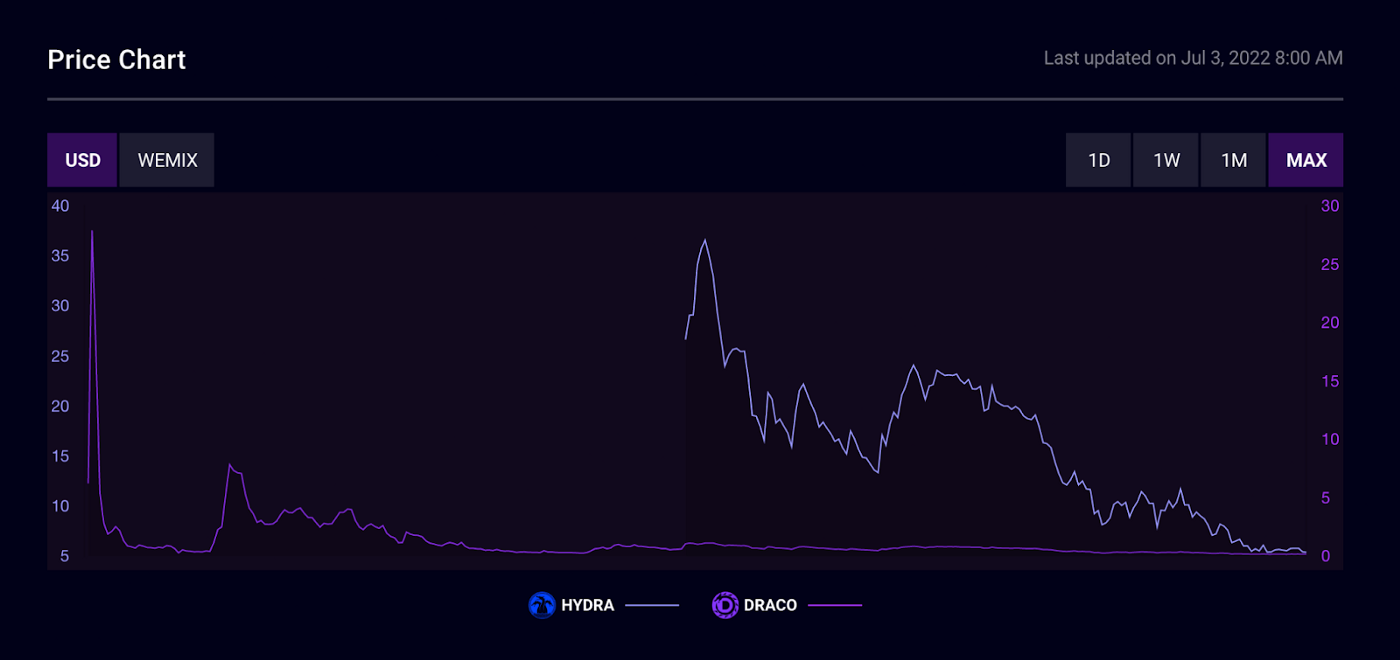
image description
MIR4 DRACO / HYDRA Price Chart
Therefore, rashly launching a Web 3.0 game with high Web 2.0 quality will make the game fall into a vortex between two different groups of people, and in the end it will be impossible to please either side of the users.
We believe that at the specific time stage of GameFi 2.0, Web 3.0 users still do not have much game consumption value, but they have considerable cold start value.
In the early stage, the game project party should use PFP, land NFT, etc. to gather seed users, complete the early game test and cold start, and give early governance token rewards.
However, the real target players of the game itself should still focus on traditional game players, and the positioning of the game itself should help traditional game users enter the Web 3.0 world more smoothly, so the promotion idea of the game should still be "consensus on Web 3.0 first, After breaking the circle in Web 2.0, the activity and combat effectiveness of the Web 2.0 game professional player community are even far better than many so-called Web 3.0 communities.
Second, what kind of cooperation will you have with the game guild?
Intuitively, the necessity of cooperation between Web 3.0 games and Dajin Studio is relatively low.
In traditional games, we need to make some distinctions between guilds. For professional player guilds, the game project party will provide official support, while for Dajin studios, restrictions such as title bans, control, and alarms will be implemented.
At present, all the guilds in the GameFi market are basically gold-making guilds. It is a bit embarrassing, and it may not be a good thing for the gold-making guild to enter GameFi 1.0. The gold-making guild hoards more production materials NFT at a lower price than ordinary players. Quickly produce game consumption coins, do not consume them in the game, and simply create more selling pressure. The gold fighting guild is actually not an active role in the GameFi model.
Not only that, but the game also needs to have a certain anti-whale player mechanism to avoid the excessive gap between rich and poor in the game from destroying the experience, and to prevent giant whale players from hoarding more production materials to accelerate the output of game consumption coins.
Games in the GameFi 2.0 stage should still follow the principle of restricting gold-making guilds and encouraging more advanced player guilds and professional merchants.
The living space of a gold-making studio with a single function will become more and more single, and there is no great cooperation value. On the contrary, some game guilds with the ability to invest, participate in governance, provide auxiliary operation assistance, carry out user education, assist in expanding the game community, or data marketing platforms that combine in-game data and achievements have higher cooperation value in the early start-up stage, and can also Appropriately give official financial or policy support.
For MMORPG games, if a guild can cultivate more players who are good at management and business, it will be the most valuable partner for game types that focus on trading and assets. Or in the not-too-distant future, some guilds will be able to independently purchase a piece of in-game land and build their own game space, which is also the development direction we expect.
Question ten: Open questions?
The greatest charm of Web 3.0 games is that they cannot be defined, and it is even impossible to imagine their full picture now. We still have many questions to find answers to, such as:
The game industry is highly complex, and the skill tree of game practitioners is completely different from that of blockchain project entrepreneurs. Is it still necessary for traditional game manufacturers to take the lead in self-reform in the field of Web 3.0 games?
Or will Web 3.0 grow its own native game manufacturers?
Web 3.0 games involve NFT interoperability issues. How should the technical design of the chain and off-chain be weighed?
Special thanks to
Special thanks to
Alex (@looksrare_eth), our Web2 friend F, Sarah from impossible finance and MixmarvelDAO Venture


