






Diagram of Gitcoin DAO: governance process and operating model


Author: Alex Wagner
Original translation: Sig|
This article is from the WeChat public account The SeeDAO.
first level title
01
Introduction: Diagram DAO
"DAO #1 Diagrammed" is the first in a series of articles we plan to publish in which we will introduce the governance and operational processes of a particular DAO. In the first article, we chose GitcoinDAO for illustration.
As the self-proclaimed "operations nerds" at Sobol, we created these public posts to educate everyone about DAO operations and governance. We hope to provide a reference for the best governance processes and models for today's DAOs by illustrating the governance and operation processes of some successful DAOs.
secondary title
How to best diagram a DAO?
This series grew out of a conversation between Alex Wagner (Community and Content at Sobol) and Bryan Peters (co-founder of Sobol). We noticed that most of what happens in DAO is text-based. When scrolling through a DAO's Discord server or forum, the text seems endless.
image description
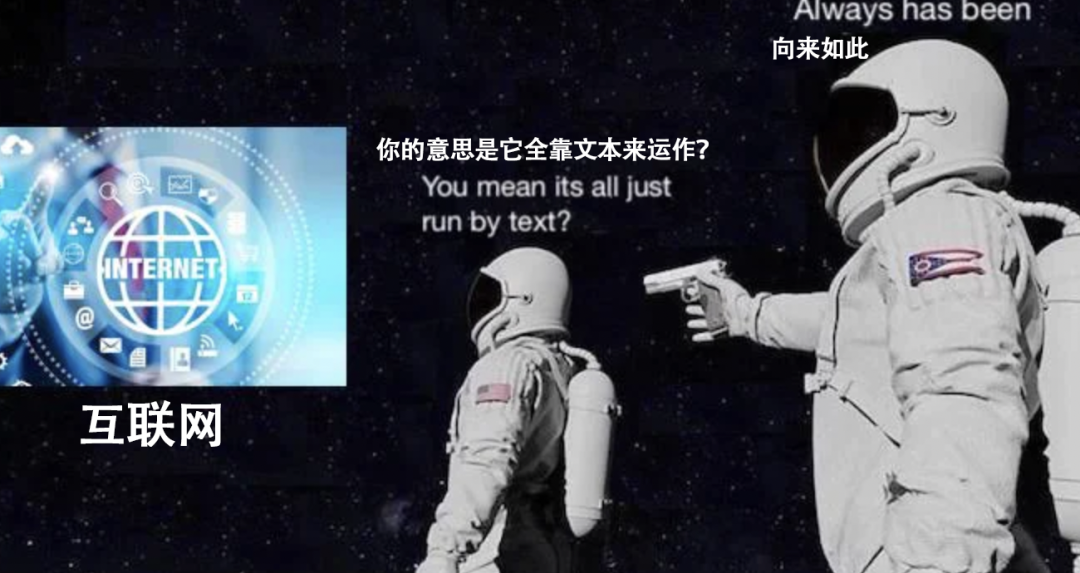
As the Bible says:"In the beginning there was a way"。
If you want to learn more about how text as a technology shapes human thought and perception, Erik Davis' book TechGnosis explores this in depth.
The use of texts has given us technologies such as accounting, books, libraries, computing and complex financial systems.
secondary title
How do DAOs work? - Show and tell
In this series, we're going to explore how DAOs work. Instead of stating the answer to this question, we strive to present it visually.
We believe that visual tools such as tables and diagrams can communicate an organization's structure and responsibilities more powerfully than white papers, forum posts or slideshows.
At Sobol, we've spent five years building a tool that provides organizations with a layer of visibility to help them run a flatter, more efficient, and more transparent organization. Based on our experience working with enterprises and DAOs, we predict that this (visual) organizational model will represent the future of work.
We believe that the next evolution in the DAO space is the evolution of vision. Organizations need to embrace a form of design thinking in order to more effectively communicate their work processes to their members and contributors.
Optimistically, we see text as the primordial foundation from which larger, more transparent, more visually driven organizations will emerge.
secondary title
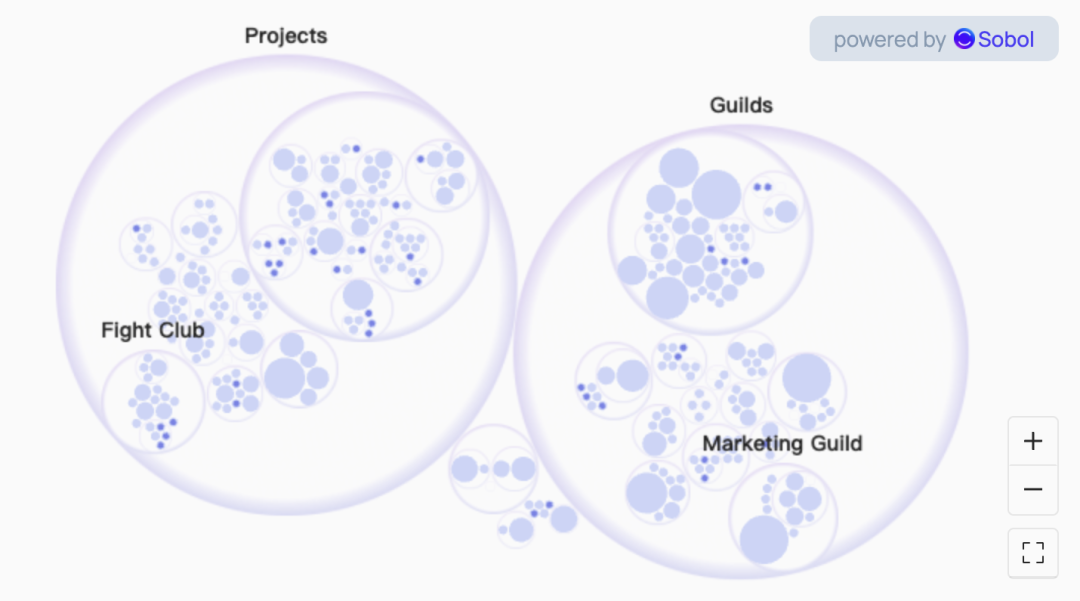
Contributors, Workflow and Governance
When we talk about "Illustrating the Governance and Operations Process of a DAO", we will draw flowcharts to illustrate the three categories mentioned in the title.
Here's a diagram we've drawn to illustrate GitcoinDAO's public flow chart.
Click the "+" sign embedded in the lower right corner to move and navigate the chart with the mouse.
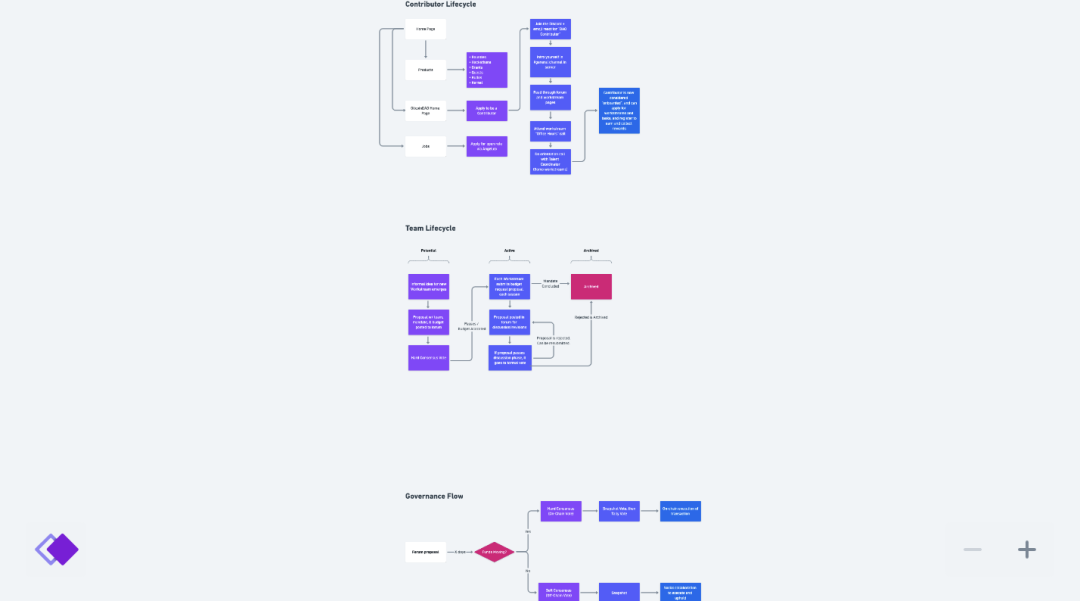
In this series, our analysis will start at the “individual level” (contributors) and move to the “whole” (governance).
Contributor lifecycle (from newcomer in a DAO to active contributor)
Team lifecycle (in GitcoinDAO they use the term "workflow", from the initiative of a workflow to the formation of an active workflow)
Governance process (how consensus is established in the DAO)
Another aspect of "Illustrating a DAO" is to understand the diagrams, tables, and flowcharts that already exist on the DAO's public page. You can find them in the DAO's forum, Discord server, Snapshot voting, Notion page, etc. These can be Help us map the flow in DAO more efficiently.
The amount of content created by any one DAO is enormous. While we won't be able to read every governance and workflow proposal in the DAO we care about, we do our best to faithfully present the information flow of Gitcoin governance/operations.
Our goal is to provide an overview of what a new, potential contributor might experience when joining and navigating the DAO. We hope that this informal study of the governance and operational processes within each specific DAO we observe will help not only those wishing to join and work within a DAO, but also the DAOs themselves.
To put it simply, we hope that through these posts, we can more truly reflect a DAO space.
secondary title
What is GitcoinDAO?
Gitcoin was originally a "public goods" DAO.
Their mission is to "build and finance digital public goods." Gitcoin is an"A community of builders and creators building protocols for an open web ecosystem"。
As of the time of this post, Gitcoin announced that it has funded $57.5 million worth of open source projects, benefiting 312,000 developers and 2,410 projects. Click here to learn more about their mission.
The Gitcoin project was launched in 2017. In May 2021, they issued an ERC-20 governance token named Gitcoin ($GTC), and GitcoinDAO was established accordingly. GitcoinDAO and $GTC provide a way to get from"Gitcoin Core"first level title
02
image description
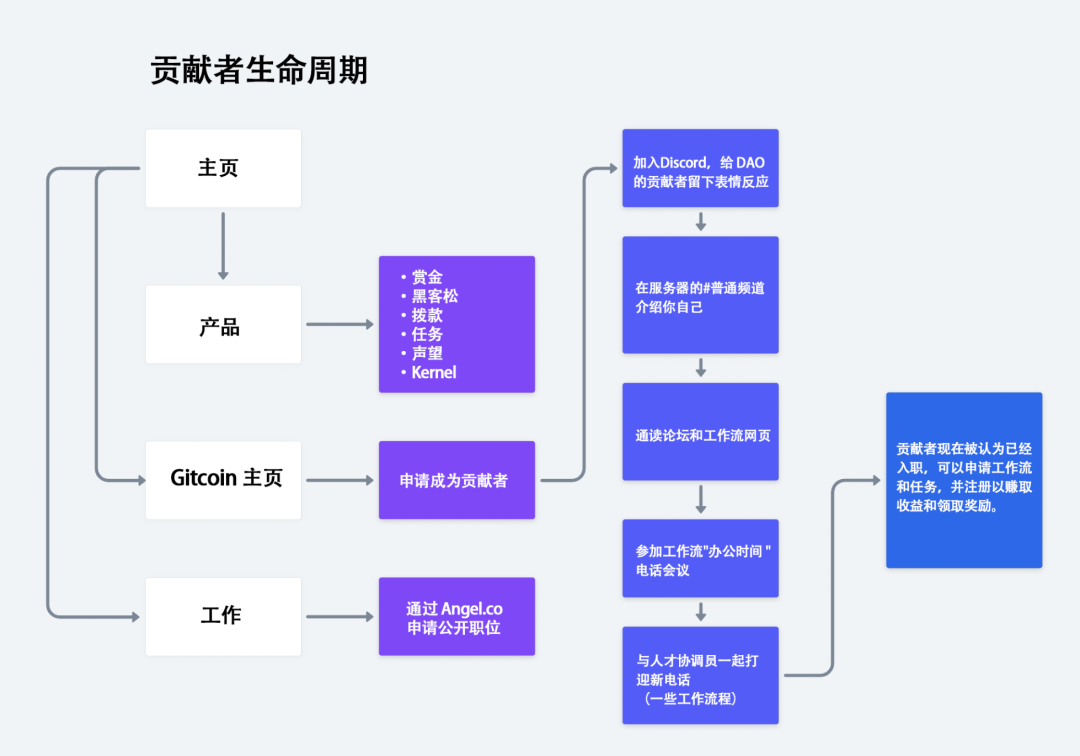
GitcoinDAO's Contributor Lifecycle
product
product
Career Opportunities Page
Apply to become a GitcoinDAO contributor
Products include Bounty Boards (where Web3 projects create bounties, mostly for developers), Hackathons, Quests (a learning-earning platform for Gitcoin, currently in beta), and Kernel (a Web3 accelerator). Those interested can also apply for open positions at Gitcoin via the "Jobs" link in the footer of the home page.
Since this series is called "The DAO Diagram", we'll focus on a third path: how to become a GitcoinDAO contributor, or in this series it's also called "The Contributor Lifecycle".
In Gitcoin, the lifecycle of a contributor is relatively simple. For new members who want to contribute to the DAO, there are two ways to get involved.
The first way, they first find Discord. New members join the Gitcoin Discord server, ask questions, and are then advised to go to the GitcoinDAO homepage to fill out the contributor application form, and join the organization on their own through this "Learn about DAO" newcomer onboarding document.
The second way, they first apply to be a contributor. From the "What's Possible" drop-down menu on the Gitcoin homepage, new members can find ways to become a contributor, click on the "DAO" link, and they will be taken to the GitcoinDAO homepage. There, there's a contributor application form, newcomer onboarding documentation, and a Discord link.
Both approaches are similar and lead to the same organizational acquisition funnel. Eventually, contributors will show up in Discord and must go through a self-guided onboarding process to become a contributor.
Once a new member becomes a contributor, he can see the work channel on the server and participate by joining voice calls and text discussions.
From the figure we can see that to become a DAO contributor, a new GitcoinDAO member must:
Join the Gitcoin Discord server and get the status of "DAO Contributor" there;
Fill out the new contributor application on the GitcoinDAO homepage;
Join the organization yourself by reading the "Understanding the DAO" document, and spend time browsing Gitcoin's governance forums;
Join the bi-weekly community call and express interest in joining an existing workflow or proposing to activate a new one.
Additionally, in some workflows, newcomers can schedule a call with a talent coordinator to help them complete onboarding faster.
All in all, it was a relatively straight-forward process, which reaffirms our philosophy: the best way to get involved with any DAO is to barge into meetings!
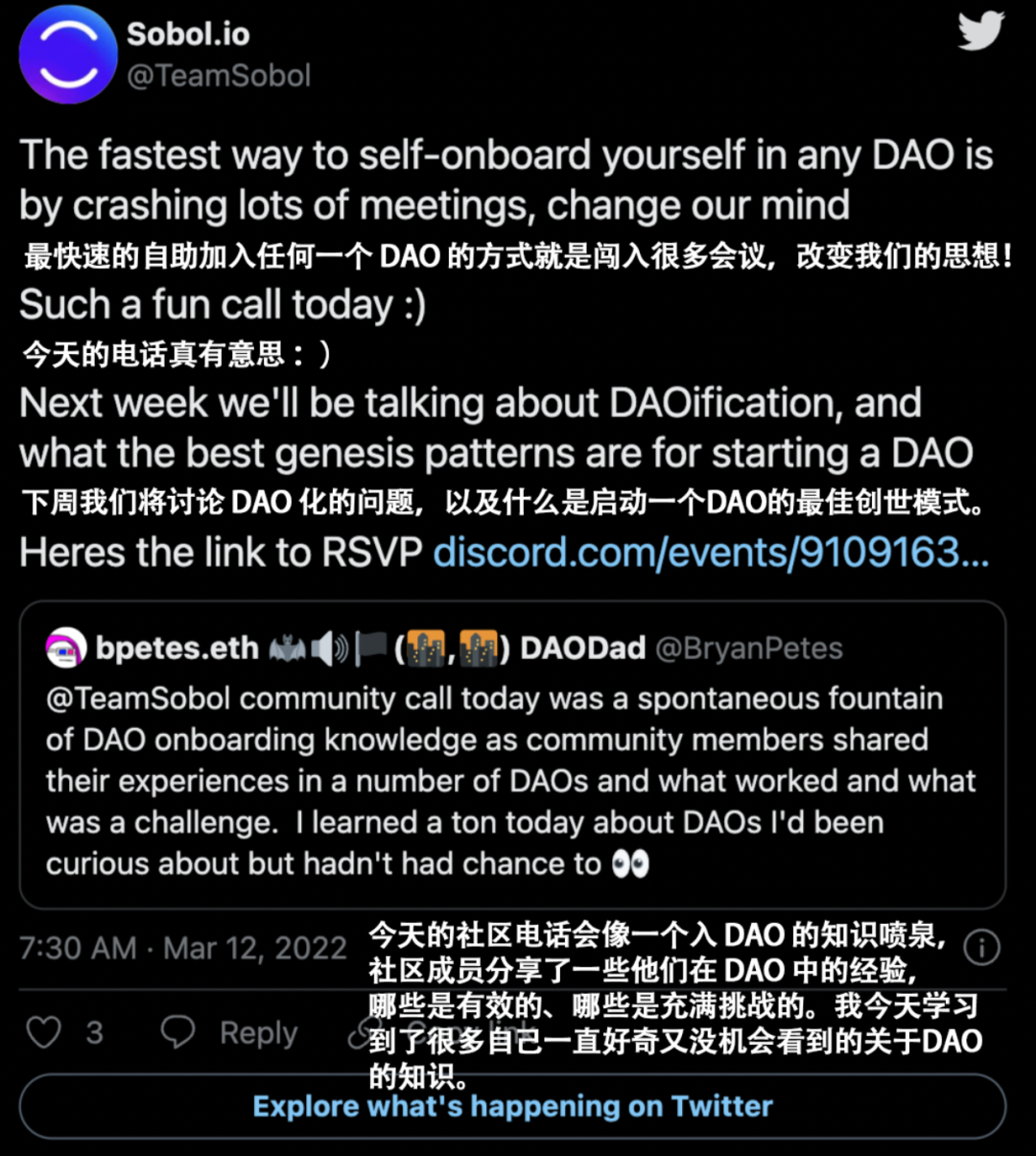
For example, in GitcoinDAO, once contributors are on board, the way they get involved in the DAO is by joining a workflow call and expressing tasks they would like to accept, or specific teams or projects they would like to participate in.
Chase Chapman's says:
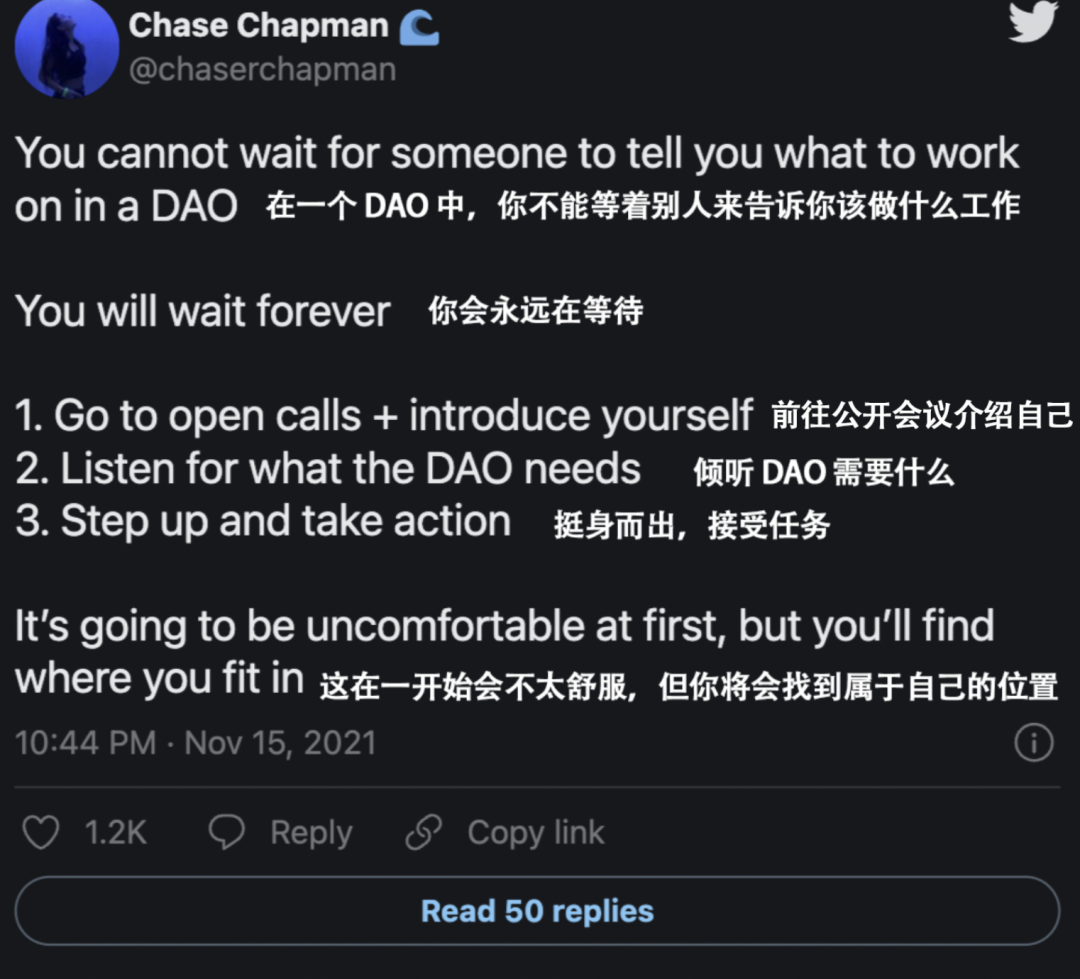
We recently discussed the"How to Find Paid Jobs in The DAO"first level title
03
Part 2: The Gitcoin Team Lifecycle
image description
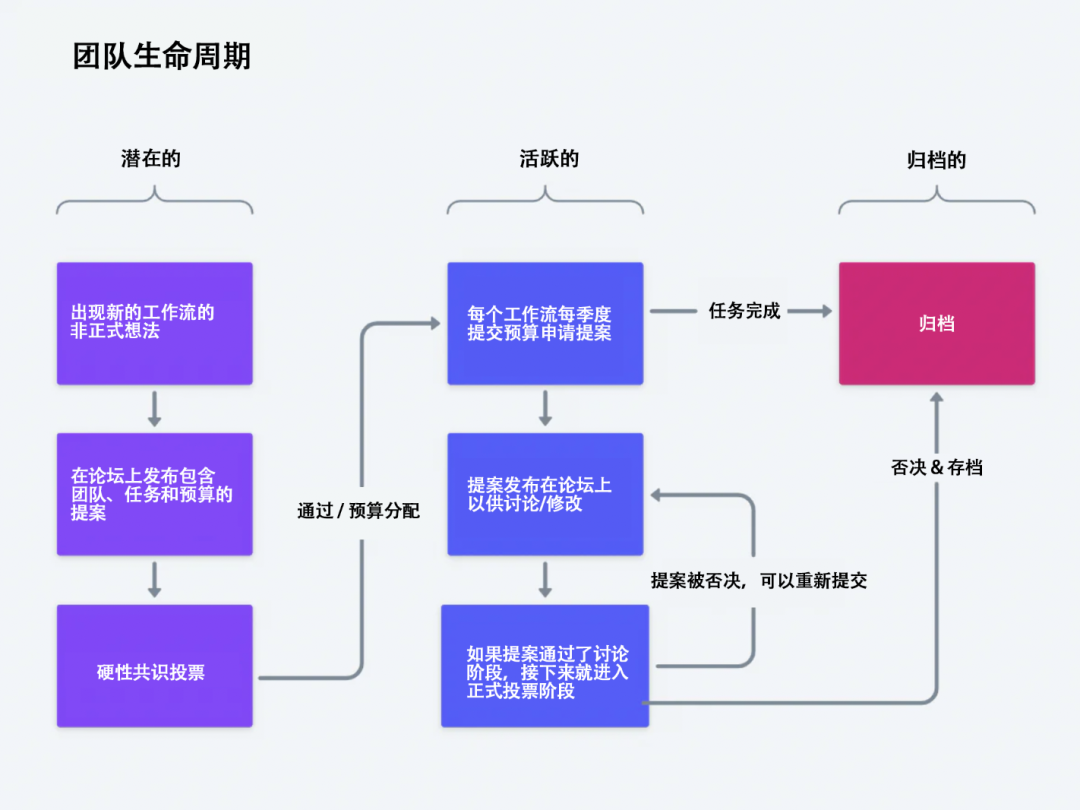
GitcoinDAO's Workflow Lifecycle
Below is a brief description of each workflow.
Moonshot Collective is a workflow for rapid prototyping of DAOs;
Public Goods focuses on our mission of funding public goods;
Fraud Detection & Defense is responsible for preventing fraudulent Gitcoin Grants (fundraising);
Decentralize-gitcoin is a mechanism for the gradual decentralization of Gitcoin;
Memes, Merch,& Marketing is the marketing department of DAO;
dCompass is building a DAO-native positioning tool.
You can view the pages for these workflows on the GitcoinDAO homepage.
image description
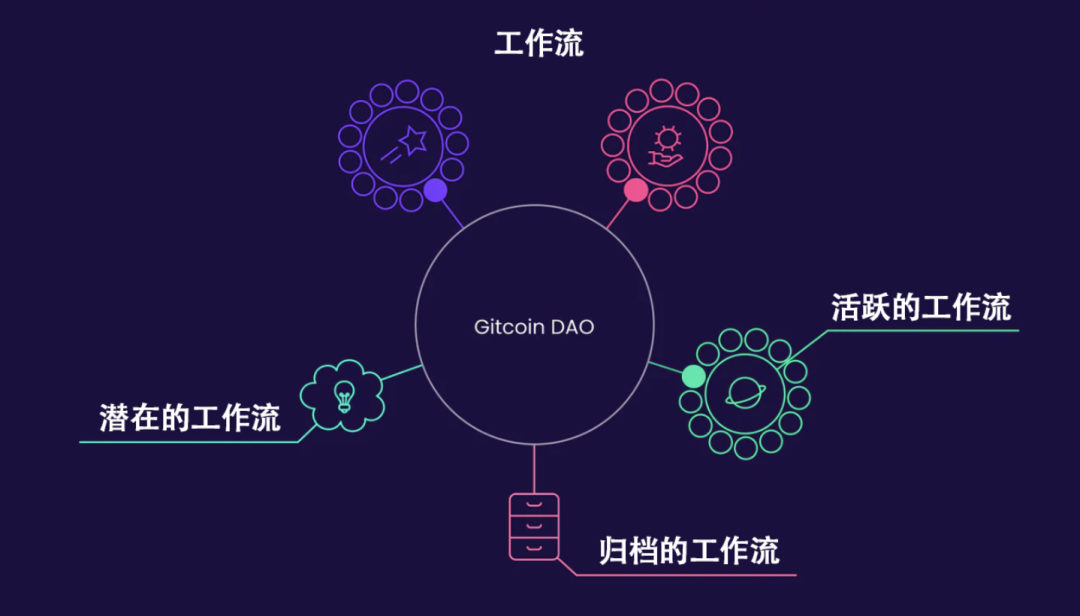
image description
Thanks: Simona Pop (@sim_pop on Twitter)
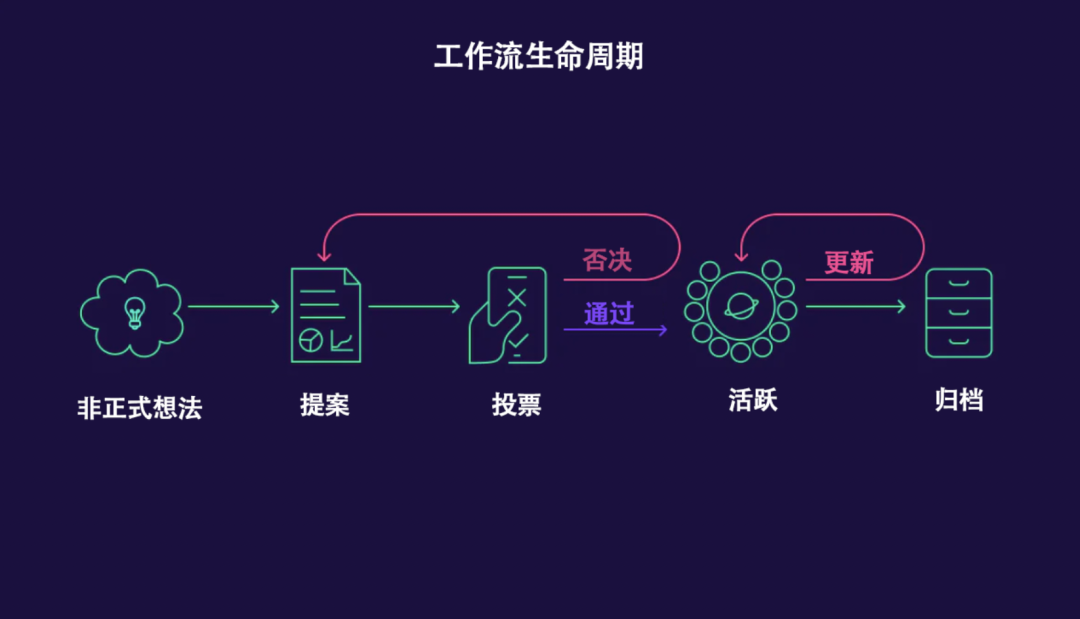
From the figure above, we can see that Gitcoin's workflow starts from a "potential workflow". If the workflow proposal is voted and passed, the potential workflow will become an "active workflow".
secondary title
The Journey of a Workflow Proposal
To activate a workflow in GitcoinDAO, start with the Gitcoin Forum's"proposal discussion"column publishes a new proposal, contributors must use this proposal template to generate a proposal.
Before you start writing your proposal in earnest, it's a good idea to get some feedback and interest in your proposal. Generally speaking, it is a good idea to form a short outline of your proposal first, discuss it with everyone in Discord, or discuss it in a conference call, so that members of the DAO can understand your thinking.
Pro Tip: When it comes to proposal writing, context is everything. Long-term DAO members can provide insight and clarity to your proposal, help your proposal fit the needs of the DAO, and provide you with solutions. By getting feedback from DAO members, you can greatly increase your chances of getting your proposal to the voting stage, getting the required number of votes, and being approved by the DAO.
Typically, workflow proposals follow the "budget request" mechanism. An approved budget request equals a funded workflow. In the case of GitcoinDAO, Gitcoin ($GTC) grants funding once a proposal is voted on in a Tally or Snapshot.
$GTC is Gitcoin's governance token, launched in May 2021, as both a governance token and used to incentivize contributors and fund workflows.
from Gitcoin"Getting started with GitcoinDAO"page:
When proposals are approved by community representatives, the Gitcoin DAO treasury provides resource support for the workflow and other special initiatives. Workflows use these GTCs to incentivize contributors.
In order to stay afloat for the coming quarters, each workflow needs to submit a budget proposal, also known as an "updated proposal," before the start of each quarter. If the budget proposal request is rejected, the workflow is archived.
Also, if a workflow has "completed the task" (see the"Governance Process"), that is, achieving its original stated goals, this workflow is also documented.
first level title
04
Part III: Gitcoin’s Governance Process
Gitcoin's governance process consists of defined roles (delegates, delegators, contributors) who participate in codifying the governance process (discussions, proposals, and workflows).
image description
secondary title
Roles in GitcoinDAO
In GitcoinDAO, there are three roles involved and form governance: contributors, delegators, and representatives.
These roles are not mutually exclusive, but in terms of governance, delegates are the most powerful of the three because they represent the voting power of their delegators. Delegators are simply contributors who choose to delegate their voting rights to a delegate.
Here's a breakdown.
Contributors are a group of community members who contribute their time, talent, and expertise to a workflow to help it achieve its goals.
The delegator entrusts the GTC voting rights he holds to represent the participation in the voting within the scope of DAO, and exercise the entrusted voting rights.
secondary title
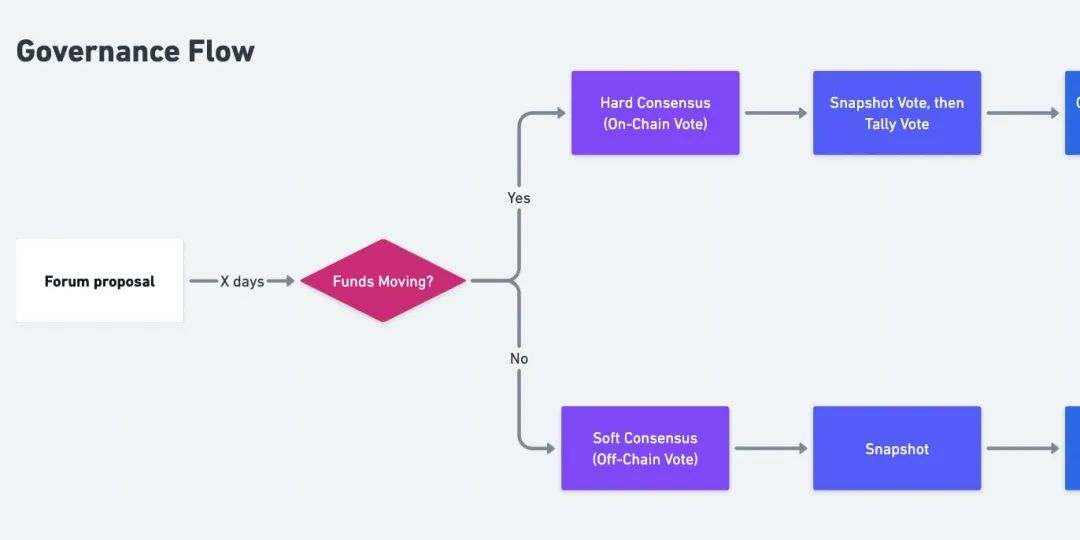
Governance Process of GitcoinDAO
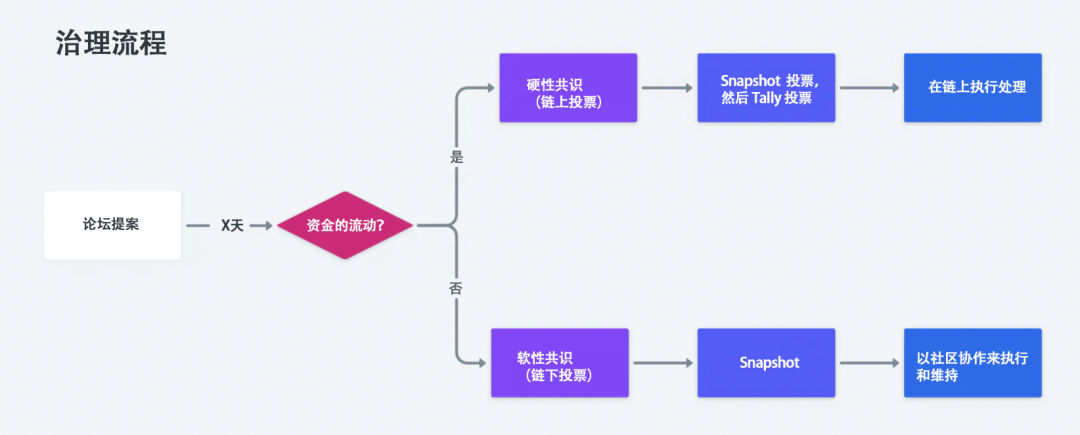
We can assume that Gitcoin uses two processes to reach consensus, since for proposals that require funding, more caution must be exercised. In addition, using Tally can be done more automatically (for example, put "A" in the DAO), because once the vote passes the hard consensus check, Tally will automatically run an on-chain transaction.
There is more risk when funds have the potential to move, so GitcoinDAO wisely chose to host votes on Snapshot first and then on Tally.
secondary title
What other DAOs can learn from Gitcoin
Regarding the governance and operating process, we think other DAOs could benefit from studying GitcoinDAO's process:
Clear, Actionable Onboarding Process for New Hires (View Diagram)
Meticulous, structured, discussion-driven proposal process (synopsis here)
in conclusion
05
in conclusion
GitcoinDAO has clearly spent a lot of time thinking about governance and operations issues, thirteen quarters to be exact.
As they continue to innovate here, we expect they will come up with new and creative ways to handle the contributor and workflow lifecycle, and the governance process of the DAO.
Check out their proposal discussion forum for more information.


