Mirror DAO Leader's Self-Report: Why He Chooses to Resign All In Web3



Original Author: Rafa
This article is from the WeChat public account The SeeDAO.
This article is from the WeChat public account The SeeDAO.

This article is about the mental journey of Rafa (Mirror DAO leader) before All in Web3. It describes in detail how he chose to resign to re-understand the connection between himself and the world, and how to guide the past to the future. A practical guide to life orientation and spiritual enlightenment, no matter whether you end up all in web3 or not.
On February 12, 2020, I boarded a flight from London to Puerto Rico, my childhood home. My partner and I sold almost everything we owned (not much) and faced an empty schedule about the future. Then start the exploration period of 6-9 months after ten years of standardized career path.
first level title
predicament
My partner and I have discussed the concept of taking time off for years. I thought at the time that what drew me in was being shot through a curated Instagram aesthetic—beautiful landscapes and a carefree state of being. Of course, this is just a cloak for escapism.
We put off vacations for almost two years. Everyone has a reason to procrastinate: a promotion, a bonus, some important event. Finally at the end of 2019, we launched the furlough program. Looking back, there were many fears that led to procrastination. As I distinctly recall, the main worries revolved around a stagnant career, diminished retirement savings, and just generally"Life"Goes on hold. Of course, all of these are obviously standard rhetoric, and can also be regarded as company propaganda.
It turned out that no one I spoke to ever regretted taking the time off, or was financially or professionally affected by it. So, at least anecdotally, my fears don't seem to have any basis in reality. About two years later, I can confirm that my experience was similar to theirs. My finances, health and life have all improved.
AbstractFairy tweeted about layers of ambition this weekend, and I immediately realized I had undergone a profound change that I hadn't been able to articulate before. Specifically, before the vacation, my ambition level was Tier 1, and now I'm Tier 2.
image description
me at the time of writing this article
Various experiences during the sabbatical awakened a mad curiosity in me, and this tweet from AbstractFairy articulates it well:"Fuck the money, we're here to do brand new things and create greatness (the bottleneck is imagination and skill, not money)"。
When I first thought of curiosity many years ago, I always associated it with asking questions and seeking answers.Now, I think it's much more than that: Curiosity is an orientation to the world, rather than an activity or personality type.
similar to what edel said"The enemy's gate has collapsed", the curiosity is"The world is here waiting for us to explore". By awakening curiosity, I changed the game. Instead of a life-and-death competition, it became an open-world MMORPG (massively multiplayer role-playing game).
first level title
don't have to carry a load
Today, I find it incredible that the average American only gets 2 weeks of vacation per year. Things are a bit better in Europe, where most countries have 20-30+ days off each year. If our intention is to try to avoid burnout, how much time does it actually take to reset? How much time does it take to unwind from the constant stress of work?
First, let's decipher"lighten the burden"the concept. Having experienced it, I can describe my experience now, but I could not describe it before I was on vacation. Below is an extremely simplified comparison.
Before:
My mind is too busy thinking about emails, events, chores, online chats, text messages, family issues, and more.
A vague (or intense?) sense of anxiety, anticipation, stress
Behaviors include constantly planning, making lists in the morning, and compulsively thinking about what has happened and what will happen.
Obsession with: Productivity
Key feature: full focus
After vacation:
My mind is kind of boring. I can't remember the last time I checked my calendar. Except for some key big events, I almost forgot all the work and family chores.
I have been sleeping 8-10 hours a night for more than a month. I stopped drinking coffee because it has been proven that when you are well rested the cravings subside.
Behavior included marked slowness in walking, rambling, thinking before speaking, and prolonged sitting.
Obsessed with: observing
Key Feature: Boring
For me, this process lasted 3 to 4 months during the curfews and restrictions during COVID. I'm not sure when it was done because it's been a bit of an incremental experience. By the end of May, a de-burden mentality dominated my life. Below is a rough schedule.
February 12 to March 13. Back on the island, almost all time is spent running errands or visiting family. Very"Busy", but has nothing to do with work. Start taking swimming lessons.
March 13 to mid-April. During the quarantine, I spent 6-8 hours a day playing "Zelda Breath of the Wild". Offline most of the time (no Twitter). Work was largely forgotten and all stimulants (coffee and alcohol) stopped. Work out twice a day and decide to do a triathlon. why not.
Sometime mid-April to May. Start reading, take a long nap or sleep. It's boring. Cravings for alcohol and coffee have completely subsided.
It must be noted here that during that time there was nothing"special"things happen. Or to put it in a better way, specifically do nothing. I remember looking at myself in the mirror,"What's the matter, I don't have bags under my eyes anymore". My partner laments:"I haven't felt a break like this since high school"image description
first level title
repositioning
The whole world is watching COVID and no one is really stressing me out"start working again", which feels a bit strange. From the second month on, the boredom gave me a new kind of anxiety. Being the worst reviewer myself, I've been trying to find something to do. However, someone I spoke with reminded me:"Get used to boredom and make sure you get over it. So, I did it.
While waiting for the boredom to subside, and not realizing how unburdened I was, I started looking around for things to do. I started reading a few books (quickly gave up) and noticed the house was full of stuff people made. This is the first example of spontaneous curiosity. I raised the question:"Wondering what history the island has in terms of artisans". It turns out that over the years, I had forgotten about my curiosity, which had all but been replaced by algorithmic suggestions of interests.
The state of boredom reset forgotten spontaneous curiosity, and my original interests resurfaced. It is only in boredom that curiosity emerges. At first, it's not very refined ("What would it be like to run today?""Why is this photo faded?"). Over the course of a month or so, the problems became more complex.
The complexity of curiosity triggered a realignment of my worldview. Initially my questions about artisans sparked a book-buying frenzy, but more complex thinking started to change my behaviour.
There is a special moment at the end of May or beginning of June that can serve as an example:
I was reading a large picture book about artisans, flipping through some gorgeous photos. Each photo is a full page or larger and is accompanied by a description of the craftsman. There is no doubt that these handicrafts contain soul. I thought while reading the name of the artisan"i wish i could talk to them". Then in that boring time, in that imaginative space, I thought"image description"。
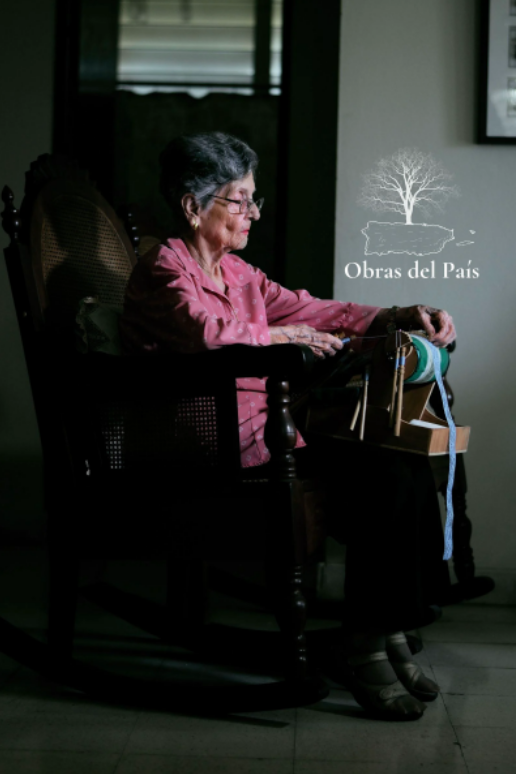
image description
(Translator's Note: The author later established a website about the artisan heritage community)
As it turns out, I can. If I can talk to them (which I have done many times since), I can help them. If I can help them, I can make the world a better place. I remember this epiphany: I can do it. I can act in the world based on what interests me. This is a rebirth of a personal carrier. How did I live so long without understanding that I could reach out and touch the world? Maybe I understood it once, but forgot?
Before this, I had thought of the different levels of ambition as concentric circles of consciousness. I think of the levels as a sort of ladder. I have to have a business first, then I will want enough money, and then, after I have all the money I need, I will be free.
I realize now that this was the wrong frame.Every level of ambition is a different direction. Level 0, work, is about"get and keep a job". Level 1,"Money/wealth going to NM",its about"gain and grow wealth". level 2,"We're here to do things that haven't been done before", I am the leader of the game.
This sabbatical, rather unexpectedly, gave me the space and time to find games that I was naturally interested in. And this, which can only happen through the guidance of curiosity, is not trivial. if think it"it just happened"That would be silly. There were things I did that definitely helped increase the chances of it happening -- even if I didn't know it at the time.
Minimize notifications
Create long undisturbed leisure time
keep a good rest
encourage yourself to imagine
By mid-June, I was doing things that would later become my two main endeavors. The first is about artisans and helping preserve local culture. The second thing is something I've been interested in for a long time -- organizational design and Internet subcultures. In both things, I play by the same rules of the game:
read interesting articles and books
Go back to the source and find the original thinker/artist
Reach out to them via cold emails, phone calls, and direct messages
Create something (writing, website, organizing a project)
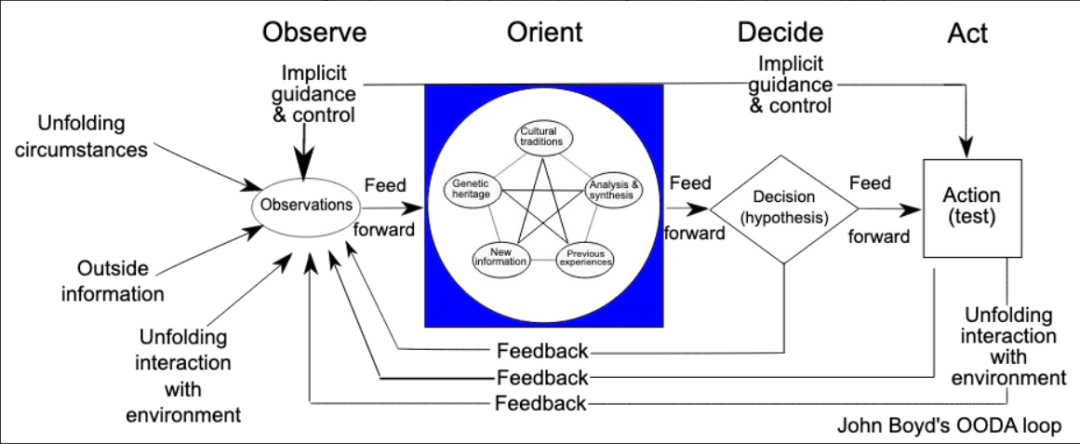
I'm not sure what the cost of communication was 50 years ago. Now, the magic of the web is that the barriers to connecting with others are unbelievably low. For example, I listened to Venkat's podcast on organizational design (organization design), then found their homepage (ribbonfarm.com), joined an experimental online community (yakcollective.org), and then participated in a regular reading group.
The process from audience to engagement took less than a week. I'm still amazed at how easily professional information is available online. By talking to people I admire, I become thoughtful, like awakening for the first time in a long decade of professional development:"I can make my curiosity my career. I can make my hobby my life."
image description
first level title
accumulate and build
But it took more than just one direction to make curiosity and interest my vocation. I need to build up over time and turn it into something that I can get paid for. As everyone said,"hindsight"。
Here's what I've learned.
You need to become an expert (takes time,"not so difficult", requires willpower).
You need to mold your specialization into something useful ("Disaster")。
Most people get stuck because they only focus on gathering niche knowledge and then get frustrated when that expert knowledge isn't recognized or financially rewarded. It's especially frustrating if you can't make your passion your full-time job. At least for me, that was the case for the first ten years of my career.
Over the past two years, I have finally learned that I need three pieces to complete this puzzle:
collect information of interest
learn to be an expert
image description
first level title
collect data
The secret of collecting information is not in the aggregation of information (collecting and reading books/links), but in the organization of information sources and the integration of common themes. Keeping up with the latest information may be the wrong goal! Instead, focus on exploring, reading, and researching the most influential works -- and curating a stream of works of the highest quality.
A few things have helped me: moving to a place with nature, playing video games without ads, limited internet.
I can't stress this enough though - this needs to happen after a long uninterrupted break/boredom. The magic of gathering information is only revealed by connecting new curiosity with your stockpile of knowledge.
"You can't connect the dots in the future. You can only connect the dots looking back. So you have to trust that the dots will somehow connect in the future. You have to Believe in something: your courage, destiny, life, karma, anything.
— Jobs
Also, importantly, the volume of information is not as important as the method used to collect high-quality information. it's not about"Know", but about crafting a solid repository. what you want is not"know everything", but"first level title"。
become an expert
I didn't realize the importance of the second thing until much later. It turns out that curiosity is not satisfied by gathering knowledge, it is rewarded by actually understanding those longings.
You can name a bird in every language in the world, but when you're done, you still know absolutely nothing about the bird. You just know people in different places and what they call this bird.
— Feynman
There are two benefits to being a true expert. First, it satisfies curiosity in a way I can't put into words. Second, and importantly, it creates credibility. This credibility will come in handy later when you ask to be paid. With enough credit, you don't even need to ask to get paid -- people will pay you.
How do you become an expert?
Well, I suggest two steps (these two steps are carried out in parallel).
Create a continuous study path
Interact with other experts
The path to research is different from gathering information. Research requires two parts: (a) creating a theoretical framework; (b) synthesizing what you've learned so far into something you can communicate to others. Both are done by learning to write essays and sharing what you learn with family, friends and other peers.
Interacting with other experts is well understood. You need to make a lot of phone calls and send a lot of cold emails/direct messages. The tricky part is that you need to be comfortable with not being competitive enough. We are often taught that our worth is based only on the knowledge we can demonstrate to others. This is not correct.
**Common interests have great potential and value. **Don't let anyone tell you another set. That's why there's a multi-billion dollar hobby industry. Therefore, at the heart of connecting with other experts should be a shared yearning (curiosity!), not a bargaining purpose.
Next, I propose a three-part communication:
The original intention of exchanging stories - how did you become curious?
Find common ground - what are you currently interested in?
Comments sought -- what resources would you recommend? Who else should I talk to?
I really think I'm misunderstanding the value of interacting with experts. I think pop culture and the media's portrayal of "competence erotica" has corrupted my brain. Our goal should not be to improve"productive forces", but join a network powered by love. You share your passions and not do it by exchanging information about the latest research.
If you do these things, you will eventually become an expert-the title of expert itself is not the original intention, but to satisfy curiosity through (research) and share (dialogue). It's a bit like an academic PhD with separate activities. The goal is not peer-reviewed publication, but a peer-supported venture.
"I have heard people compare knowledge of a subject to a tree. If you don't fully understand it, it's like a tree without a trunk in your head - without a trunk, when you learn something new about the subject - a new branch or leaf - there's nothing to hang live, so it falls. When everything becomes fundamentally clear, I build a trunk in my head, and from then on, all new information can hold onto, making the subject ever more interesting and productive. And I often find that a lot of what I have in mind is"boring"The topic of the show is really just a fog for me - like watching episode 17 of a good show, without the backstory and characters to back it up, it's certainly boring. "
Source: Wait but Why
first level title
create practical
image description
Me while discussing business strategy with my partner
It was during this exploration that I realized that the last decade of work wasn't a waste of time - I had the skills. I'm just not using them for self-actualization - I'm using them for other people. Now is the time to use my curiosity to serve others and get paid for it.
This last step of thinking explains why so much love leads to starving artists. You can't be afraid of money, take a fee, and use your newfound knowledge to change the world (this is no joke, it's pretty serious).
In the Internet age, there are two ways to solve this problem:
You need to package what you've learned (graphic design, website, blog, report, PDF, physical object, etc.).
But most importantly: you need to solve the allocation problem.
I think that's definitely the hardest part of the whole process. Getting in touch with your curiosity and maintaining it is hard, but this part is even harder. I'm still figuring out how best to do this, and I'm not sure I understand the two parts of the game.
For now, I recommend talking to someone who knows this piece better than I do. I ended up blogging as a way to package what I had learned and followed a sort of amateur independent consulting path. In theory, though, I can imagine this could translate into an actual product (physical or software).
first level title
blind spot
I have mentioned many times how lucky I am to go through this process. It's not easy and I hope this walkthrough helps others. That being the case, I must reiterate that I'm not sure if this is the correct pattern. I think it's useful, but probably far from"correct". Maybe I'm missing something, and I hope others will fill in the gaps by sharing their own stories.
first level title
let yourself go
I'm still exploring on this journey. But one thing is for sure - I no longer feel limited by the script of the profession. I've deeply realized that I'll be happier (and richer) by channeling my curiosity into all areas of my life.
appendix
appendix
Between 2017 and 2019, I underwent psychotherapy for about a year and a half. I'm not sure this journey would have been possible without some work on insecurities, communication, and conflict resolution.
It took nearly a decade to save up vacation money. In total, it cost about $25,000 for two people, plus lost wages during that time. A big part of that is international flights for each of us (we finish our vacations to a new country), luggage costs, and our cats.
first level title
second chapter of the story

I'm quitting Web2 (and you should too). In my personal quest over the past year, I've looked at the state of artisans in Puerto Rico, nascent online organizations on Discord, and through this unlikely intersection, I've found the future of work.