Partner at NGC Ventures: How does the metaverse promote the development of the creator economy?



Author: Andrea Chang, Partner, NGC Ventures
Original compilation: PANews

Source: Unsplash
The creator economy is defined as an economic model around independent content creators, with a market size of more than 100 billion US dollars. It has always been the backbone of existing social platforms, creating a lot of opportunities for creators themselves, as well as employees and cooperative brands.
As we said in previous articles, the creator economy is crucial to the operation of the Metaverse, and it is closely related to other components such as avatars/avatars, virtual economies, and games, and it will have an impact on the product development of both startups and mature companies. Influence.
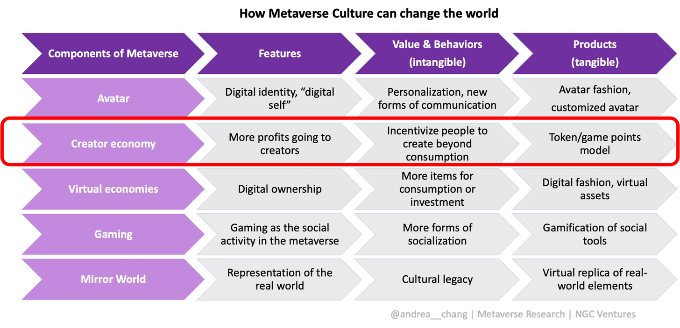
image description
first level title
Key Elements of the Metaverse Creator Economy
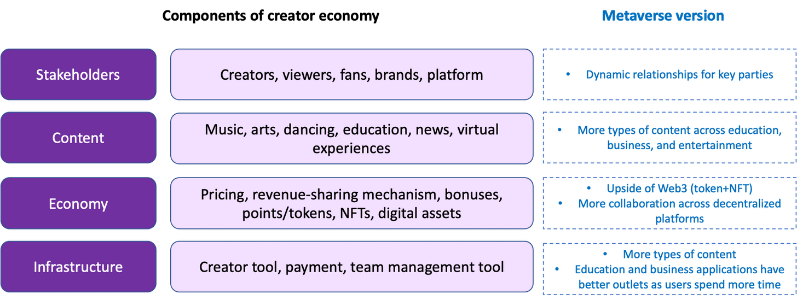
financingfinancingOne of the most metaverse games, "The Sandbox", provides a variety of tools to help developers build games, 3D assets and sell NFT. Creators can get 95% of the sales.
An interesting difference compared to current social media is that audiences have more opportunities to interact with creators and even become partners to pursue team goals together, such as playing games together and promoting social tokens/digital assets, etc.
secondary title
Broader content categories
Compared with existing platforms, the main difference brought by Metaverse applications is that creators can construct their own content in a virtual space, whether it is virtual land or virtual buildings, which creates new demands for 3D artists. As we covered in our previous article on Metaverse culture, virtual assets such as avatars/avatars and digital clothing are expected to spawn new classes of creators. Among them, we expect more demand for infrastructure and content related to music and games, and some existing platforms have already shown such trends.

Source: GWI
secondary title
Reduce reliance on branded sales
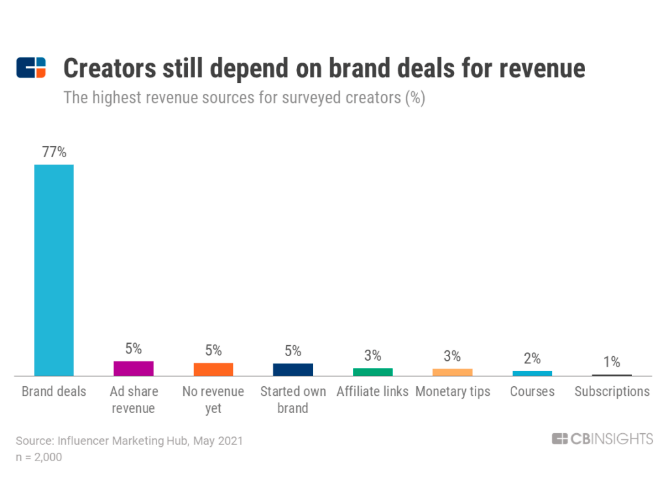
Creators are highly dependent on brands for income. The main reasons are: brand negotiation terms are more flexible, top stars have an advantage (luxury brands that cooperate with celebrities have rich budgets), and most platforms have strict profit-sharing restrictions (creators need to touch a certain amount. audience to meet the basic revenue sharing criteria). However, with new forms of activities and virtual participation methods, metaverse applications are expected to change this highly dependent situation. For example, creators can build their own in-metaverse economy and have more opportunities to sell virtual items to fans.
Provide creators with a higher return-to-investment ratio
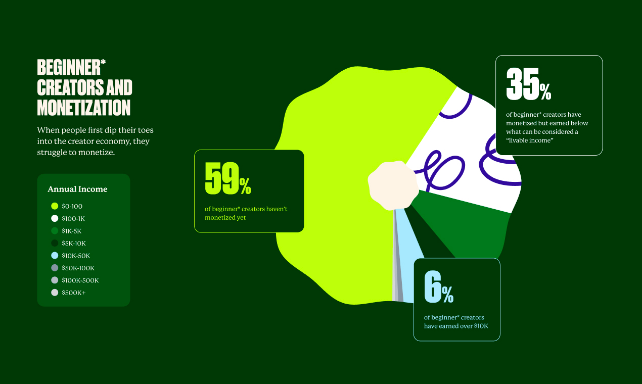
According to the latest survey by Linktree, a digital identity management service provider, in April this year, only 12% of full-time creators earn more than $50,000 a year, and 46% earn less than $1,000 a year. For example, Instagram's latest "badge" allows creators' live viewers to purchase and use additional features, but only if the creator has at least 10,000 followers, and Apple's App Store takes a 30% cut. On Youtube, after the platform charges 45% of advertising revenue, creators with 20,000 monthly views earn about $500 a month.
decentralizeddecentralizedThe advantages of metaverse applications are rewarded through considerable token sharing and NFT sales.
first level title
Inspiration: The decentralized metaverse of Web 3.0 will unlock more opportunities for creators
fundfund, a large percentage of which will be allocated to content creators and early community members.
Creators holding these tokens are like shareholders of emerging platforms, and they are more motivated to promote related services and create content.For example, Web3 platforms such as Rally allow creators to design their own social token economy for free, so that fans of creators can not only support their creativity, but also become shareholders by holding tokens and share the benefits of social tokens ( or share the risk). In the metaverse environment, this mechanism is expected to be further deepened, because digital asset rewards can be extended from tokens to virtual land,NFTartwork and more. Open metaverses such as Decentraland have their own land economy, where creators can buy land, build virtual places, and then rent or sell them to others.
In a decentralized metaverse, the relationship between creators will also be different.The attention economy of mainstream social platforms is often a zero-sum game. Each creator is more or less a contender for the audience’s attention. On the decentralized Metaverse platform, creators are ultimately shareholders of the new platform.Therefore, we expect more cross-border cooperation to further expand the content diversity of the decentralized metaverse.
Although it is too early for these decentralized metaverse applications, including games, social spaces and metaverse platforms, to talk about competition with centralized platforms, in the long run, as more options and benefits emerge, they as a whole are expected to Incentivize creators to migrate to other platforms. After all, every new wave of technology spawns new categories of consumer applications.