






Bankless: A must-have guide to DeFi mining in the crypto bear market


Compilation of the original text: The Way of DeFi
Compilation of the original text: The Way of DeFi

A defining feature of the 2020-2021 crypto bull market is the ability to earn incredibly high yields in DeFi. The safest stablecoin farms will earn 40-50%+, while many 2 pools will give farmers triple or even four digit annual returns. These yields feel unrealistically high -- users can outperform every major TradFi hedge fund in the world by simply clicking a few buttons and sitting back.
This is largely due to the composition of these yields, many of which are driven in large part by the release of the original tokens of the yield mining projects. Yield farming works well in bull markets when exuberant buying pressure can offset selling pressure from farmers harvesting their inflation-based rewards.
While profitable at the time, these high gains proved unsustainable over extended periods of time, compressing sharply as market conditions weakened.
image description
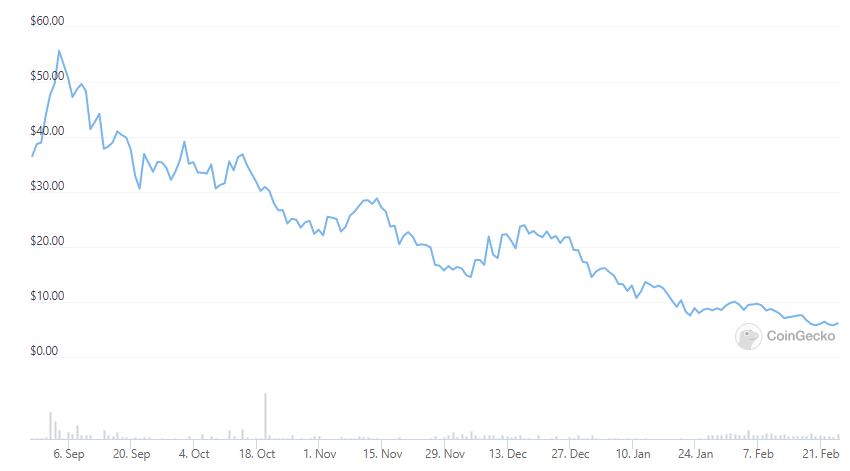
6-month liquidity mining release
However, for the savvy farmer, there are ways to use alternative strategies that are not based entirely on token releases to generate yield. While these strategies are more complex and may require more active management than the one-and-done traditional farming strategies (TradFarm, if you will), they allow farmers to generate income in a more sustainable manner using strategies that can Function in any market condition.
Additionally, these strategies are often well suited for bear markets, unlike common TradFarm strategies such as LPing on AMMs. They generally do not require users to take inventory risk, i.e. the price risk of the assets they farm.
Let's take a look at some of these strategies and see what the opportunities are.
1. Basis trade
Policy overview
A yield generating strategy that is not based on token releases is"basis trade". Market makers and hedge funds often employ this strategy, which revolves around taking money payments from perpetual futures (perps) contracts.
Experienced crypto traders probably know that perpetual futures or"perps "Is a continuously rolling derivatives contract, meaning that unlike traditional futures, there is no expiration date. For perps, traders pay"funds rate", the hourly interest paid to incentivize traders to keep the price of the derivative in line with the price of the underlying spot asset. When the price of perp exceeds the spot price, that is, when the funding rate is positive, the longs need to pay to the shorts. Conversely, when the price of perp is lower than the spot price, the shorts need to pay to the longs.
An important factor to be aware of when employing a basis trading strategy is that the purpose of the market participant is to collect the return paid for by the funds without taking the price risk of the asset itself. To hedge against this price risk, market participants can take"delta neutral"(Note: In finance, a portfolio is delta-neutral if it consists of related financial products whose value is not affected by small price changes in the underlying assets. The composition of such a portfolio usually includes option and the corresponding underlying asset, let the delta cancel positive and negative, so that the price of the portfolio is relatively insensitive to the price of the underlying asset), that is, they have no risk of price changes because they are long and short on a particular asset Take a position of equality and offset. Applying this to basis trades, farmers can achieve delta neutrality by being long or short perp, depending on whether the funding rate is positive or negative, and take the other side of the trade by long or short an equivalent amount of the asset spot.
herehere。
The funding rate strategy is an effective and more sustainable alternative to the traditional, token release based yield farming strategy as it is based entirely on the price action of the market rather than the total supply of tokens.
While the returns won't be as high when the market is calm or conditions are volatile, the strategy can be highly profitable during extreme bull or bear market conditions because the rate of return paid by funds is based on the market's need for leverage, which Meaning they are necessarily not dependent on the price increase of a particular token.
How to set up this policy
While this may seem intimidating at first, setting up a basis trade is relatively simple. However, it should be noted that this strategy requires much more active management and monitoring of positions than the average farm.
Deposit collateral into a perpetual exchange.
Open a perp position collecting funds (long if funds are negative, short if funds are positive).
Open an opposite long or short spot position for hedging purposes.
Learn more about setting up perpetual positions with BanklessDAO's perpetual protocol guide.
Strategy Specific Risks
Liquidation Risk - Users must ensure that they maintain the necessary amount of margin to avoid liquidation.
Interest Rate Risk - Funding rates can be volatile and must be monitored on an ongoing basis to ensure they do not work against you (for example, you are initially long with a negative funding rate, but it suddenly becomes positive).
current opportunity
(Note - these yields are very volatile and vary by asset)
dYdX(StarkEx): 10-30% vAPR
Mango Markets(Solana): 5-20% vAPR
Drift Protocol(Solana): 20-60% vAPR
2. Delta Neutral Staking
Policy overview
The second yield generation strategy that is not entirely based on token release is"delta neutral stake". This strategy is similar to benchmark trading, because the core of delta neutral staking is to separate the yield from a specific unilateral staking pool without the price risk of the underlying assets being pledged.
As with benchmark trading, in order to achieve delta neutrality, users will buy and pledge the spot asset, and then use a perpetual exchange or money market to short the same amount of the asset.
However, this strategy differs from benchmark trading in that it may sometimes not be fully executed on-chain. Depending on the opportunity, delta neutral staking can be a"CeDeFi"strategy, as users can sometimes use centralized exchanges, such as FTX, to hedge when pledged assets cannot be shorted on-chain.
Let’s take NFT marketplace LooksRare and its LOOKS token as an example to see how this works and why this strategy is somewhat more sustainable than traditional yield farming.
As we know, the income earned by holders of LOOKS tokens consists of the ETH transaction fee paid by the platform and the amount of LOOKS released. Combined, these two currently have a vAPR (variable annual percentage rate) of 253%. That's a pretty solid yield - however, to get it, LOOKS tokens must be purchased.
A savvy farmer can hedge the price risk of holding LOOKS by shorting the asset’s perp on FTX. Although they will incur costs in doing so, because the funding rate is deeply negative, about -127% annualized, it still means that if investors take delta neutral, they will get a net vAPR of 126%, and there is no LOOKS The risk of tokens, it is reported that LOOKS tokens have fallen by more than 75% in the past two weeks.
While this yield is partly driven by token releases, it shows that this strategy allows users to capture inflation and/or platform fees from any similar staking pool without needing to be exposed to the price volatility of the underlying token.
How to set up this policy
Buy spot assets on DEX and stake them.
Short the perp of the asset on DEX or CEX, or spot on the currency market.
Strategy Specific Risks
Liquidation Risk - Users face liquidation risk when they hedge their short spot or perp positions.
Interest Rate Risk - Staking yields and funding rates can be volatile. If staking yields compress and/or funding rates rise, users have the potential to experience net negative returns.
and
andMango MarketsandTulip Protocol): 31% vAPR
3. Option Vault
Policy overview
A third sustainable yield generation strategy that is not entirely based on token releases involves utilizing option vaults (Vaults).
While there has been debate as to whether this strategy qualifies as earning income, option vaults enable users to earn income in a way that does not rely on token releases.
This is accomplished by automatically selling out-of-the-money (OTM) options to market makers, usually through strategies such as covered calls or cash-secured puts. In doing so, these vaults collect the premium and return it to the user through compound interest.
These vaults can provide a valuable service to users because they abstract away a considerable amount of the complexity of dealing with options. For example, an options vault will handle the risk management of a position by algorithmically selecting strike prices, the prices at which options are exercised on behalf of users.
While convenient for users, this choice of strike price is the greatest source of risk for option vault depositors. For example, in the case of a covered call option, if the option sold by the vault is exercised, meaning that the chosen strike price is greater than or equal to the price of the underlying asset at expiration, the user will perform worse than simply holding said asset , as they will sell their upside.
How to set up this policy
Deposit assets into option vaults.
That's OK.
Strategy Specific Risks
Strike Price Risk - As mentioned above, if the strike price chosen by the vault is exercised, i.e. if the out-of-the-money option comes in-the-money, then depositors are exposed to the risk of upside from selling their holdings.
Risk of illiquidity - User's deposit in the option vault is locked for a period of time, usually a week to a month, depending on the platform and asset.
in conclusion
Ribbon Finance (ETH, AVAX, wBTC, SOL on Ethereum, Avalanche, and Solana) - 15-30% APY
Dopex (ETH, AVAX, wBTC on Ethereum and Avalanche) - 7-12% APY
Katana (ETH, wBTC, SOL, USDC on Solana) - 20-45% APY
Friktion (ETH, wBTC, SOL, USDC on Solana ) - 20-45% APY
in conclusion
While traditional yield farming (TradFarm) strategies fueled by token releases have proven to be very profitable during bull markets, they are not suitable for use when the market turns bearish.
However, users can choose a yield generation strategy that is not entirely based on token release. While they come with a new set of risks and often require more active management, they enable farmers to obtain a more sustainable source of income, regardless of market conditions.
The high yields in DeFi are still there, you just need to know how to find them.


