






Dialogue with Penn Law Professor Tonya Evans: Can the law keep pace with cryptocurrencies?


image description
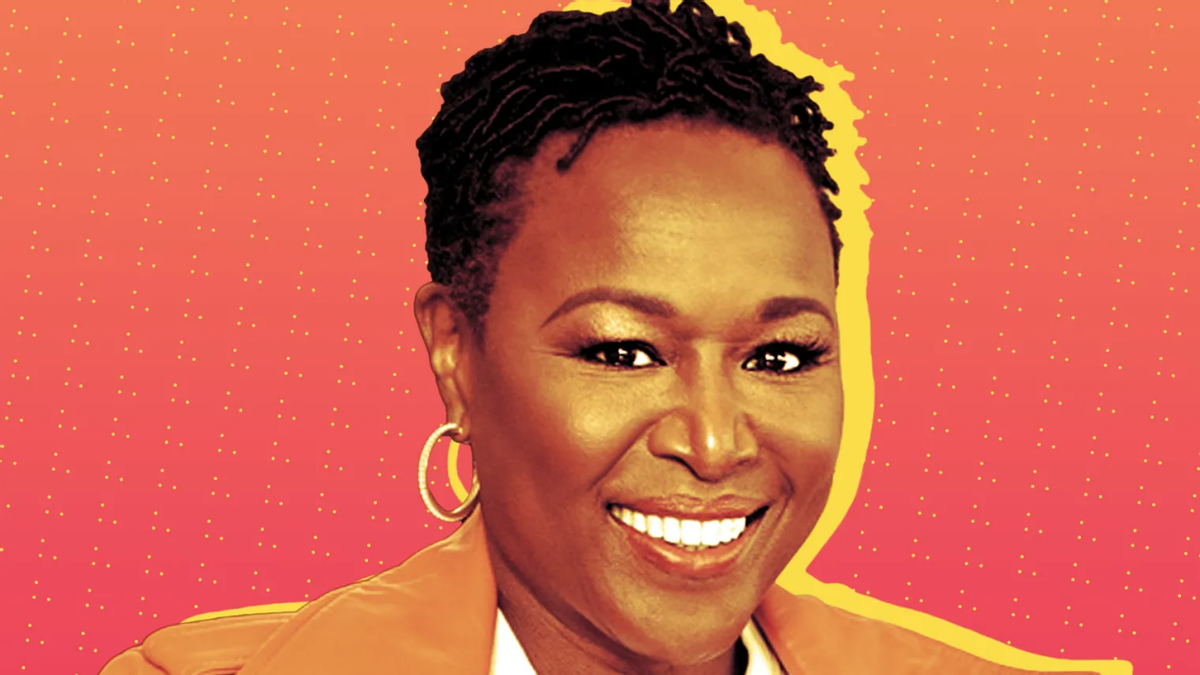
Demystifying the Laws of the Internet with Cryptocurrency Professor Tonya Evans
This article is compiled from the featured column of TheVerge Decoder.
I'm going to tell you a Decoder secret: At the end of last year, I asked our producers to find a better way for us to cover cryptocurrencies and Web3 on Decoder. I think it's no secret that I'm fairly skeptical about cryptocurrencies, but I want to be honest about that skepticism - on the other hand, I want to make sure I see the opportunities and benefits clearly. We've done a few episodes on Bitcoin and DAOs (Decentralized Autonomous Organizations), and we'll be doing more over time.
A lot of Web3 ideas seem to feed directly into the existing legal system in complex and sometimes very interesting ways. The NFT world seems to have an impressionistic understanding of copyright law. DAOs are not actually considered legal entities in most states. So technically they can't do anything in the real world. But all these things still exist, and at some point the law will have to catch up.
So, today I spoke with Tonya Evans, a law professor at Penn State Dickinson School of Law. She teaches intellectual property law, copyright and blockchain. She also hosts the Tech Intersect podcast, covering the intersection of law and technology. She spends a lot of time thinking about crypto assets and how they interact with the law. Tonya's point is that we shouldn't abandon many of the legal frameworks we have today - she just wants them to fit this new internet.
As a law student I couldn't resist impressing the law professors, here are some minutes:
Tonya and I referred to the "four corners" of the agreement. It's a lawyer's slang term for what a contract specifically covers.
We talked a lot about "partnership law," the legal treatment of different types of corporations. A "general partnership" is the default form -- everyone in the firm is an equal partner, responsible for everything the firm does; an LLC is one that protects the settlor from liability for what the firm does. Right now, most states don't recognize DAOs as corporations of any kind, which means they'll be treated as general partnerships, and everyone in the DAO will be liable for the actions of the DAO.
We also talked a lot about copyright law: the current copyright law in the United States was passed in 1976, with some updates in 1998 as part of the Digital Millennium Copyright Act (DMCA). You'll hear us talk about the "Supreme Principles of Copyright," which is that copyright should cover a lot of things, that right holders should have a lot of power over how their work is used, and that there's a "right to reproduce""”,Believes that people should be able to use and modify works more freely for the public good.
It seems like a lot, but trust me it's a lot of fun.
This article has been lightly edited for clarity.
Professor Tonya Evans is a professor of law at Penn State Dickinson School of Law, where she teaches entertainment law, intellectual property law, and blockchain—which has a lot of intersection with our show. Welcome to Decoder.
Thank you so much. It's a pleasure to be here.
We have a lot to talk about, but I think I'll start with you. You are both an attorney and a professor with a long-standing background in teaching intellectual property and entertainment law. How did you start teaching cryptocurrencies and NFTs?
Back in 2017, I fell down the fabled rabbit hole trying to figure out what exactly a blockchain is and how it relates to crypto assets. More broadly, the focus is on the concept of cryptocurrencies, but I'm using the broader term cryptoassets. I don't believe in the magic pixie coins somewhere on the internet. I have licenses in four states - if it has anything to do with illegal activity, I don't want to have anything to do with it because I want to protect my four licenses. Personally, I've always been an early adopter of technology, even though I don't have a scientific or technical background per se. I think it's important for me to at least figure out what all of this is and what it means for the next wave of lawyers who really have to serve businesses and technologists who are really creating the future today.
I started paying more attention to distributed ledger technology, which is a fancy way of describing blockchain. I also work at the intersection of intellectual property and blockchain, especially copyright. It was really interesting to me when there were a lot of open source projects and you had these public-facing digital records of transactions and balances. I started getting calls from people who wanted to build on top of blockchain layer one infrastructure. They want to monetize it, so I want to be familiar with the technology so I can give the best advice to people - mostly entrepreneurs and startups in the space. I also hope to be able to educate the next wave of lawyers to really understand the intellectual property issues that will arise in what we now commonly call Web3.
So that was in 2017. By 2022, I'd say your predictions are correct.
Is such that.
There are many issues at play. It appears that the legal framework has not caught up with us, complicating some of these issues. Culturally, the phrase "Web3" is here to stay. Everyone is talking about it. It's a few days after the Super Bowl and you and I are talking about crypto ad city. From what you've been tracking for five years or so, is cryptocurrency mainstream? Is this the tipping point where everyone has to understand it? Or are entrepreneurs, tech journalists, and lawyers building a framework to make cryptocurrencies mainstream?
It's still early days. The first blockchain was the Bitcoin blockchain which was first launched in 2009. We are transforming, but it is still too early. There are many more than technologists or cyberpunks, or those on the technological or financial fringe. We have more mainstream crowd. That’s why millions of dollars were spent on the Crypto Bowl (also known as the crypto commercial during the Super Bowl, some truly epic pieces from Coinbase, FTX, and Crypto.com). I'm not getting paid by anyone.
But that's when you know it really hits the common spirit: when advertising dollars are used to reach more people who aren't on the fringes. Cryptocurrencies are still a very small part of the larger financial market. Although big banks and traditional financial institutions have known about this technology for a long time, they have not been forced to really pay attention to it until now. Now crypto is a customer service issue; they want to secure their market share and their control over their customers. Financial institutions want to ensure that if a new hot product emerges, they can bridge the gap between those who do not understand cryptocurrency and technology, so that customers can continue to use their financial products.
These are all financial products. One of the things that strikes me about all tech companies is that the way to disrupt incumbents is simple: you ignore the regulatory environment that makes incumbents pay. The example I often think of is YouTube, which dominated the video streaming space in its early days by ignoring the existence of copyright law. I'm going to take Viacom: Viacom can't build a YouTube because they're the incumbent. Their lawyers block them, so they can never post content to the site they created. YouTube was like, "We don't have lawyers. We're just a bunch of people."
“Lawyer-schmawyer”,Right?
right. The cost of compliance and the lawsuit against Viacom is worth it for the overwhelming profits they now generate in this space. This is just one example of how internet companies are built. Do you think this is what crypto companies are doing with banks right now? Do you think they ignore their regulatory environment and say, "We're going to pay the price in the end, but it's worth it to get what we need?"
It's funny because when I think about life in crypto before corporations, it was all about decentralization - not having a centralized, more formal structure to actually deliver the "product". It's against the origins, the original spirit and the spirit of cryptocurrency, it's like, "We may not know each other, we don't trust each other. We don't trust governments. We don't trust big business. We trust code. We're going to This common code is shared between all these different computers, and then it will be immune to attack. It will function outside of the legacy system.” That’s how parts of the Internet and Web1 and Web2 are built as well. When you're talking about the impact of regulation, or the perception that the regulatory environment is missing, I don't quite agree. I know if I have a crypto wallet and you have a crypto wallet, we can exchange value on a peer-to-peer basis in the same way as MP3 files - but I don't think so because I'm an IP lawyer, so I Don't believe in "sharing".
See, I'm a lousy copyright attorney because I defend kids who get sued for using Kazaa.
And then I thought, "This is so frustrating. I need to do something else with my life."
Right? I read all these great examples and we thought of Napster, Grokster and Kazaa. But your point makes a lot of sense. I attribute it more to start-ups and entrepreneurial endeavors where you move fast and break everything and figure out how to fix it. The costs and overhead of doing business are of course not just for traditional corporate structures, but more likely for entrepreneurs. Technology is developing at an astonishing pace right now. I almost liken it to labor pains. We're getting closer to some truly epic events. It's moving so fast that we don't really have time to sit 2, 3, or 10 years out and wait for Congress to pass legislation or judges to make a decision. Such is the speed at which technology develops. This is no exception, as this is a technological innovation that has impacted and disrupted financial markets in some form or fashion, as well as pretty much every other area. Blockchain and/or cryptoassets are having an impact, and very quickly.
I think you made a good distinction between cryptocurrencies and crypto assets. Bitcoin, Ethereum, and other ways of storing value in money need to be regulated like money. But when you talk about crypto assets, you mean including NFTs, including other crypto products, including DAOs. To me it's a gold rush: you're threatening the big banks, you're threatening the U.S. federal government. The action is on and the train is on its way. You threaten our country's normative copyright system. Maybe nothing will happen for a long time before you piss Disney off. They do nothing.
To me, this seems to be where I see NFTs and DAOs stumble again and again: when they hit existing regulatory structures. When NFT products are exposed to copyright law, when DAO is exposed to general partnership law, some bad things will happen. Why do you think there is a gap between entrepreneurs and their ability to innovate?
I don't think we're doing well enough. And by us, I mean big business and all intellectual property issues, copyright issues in general, and copyright issues in particular. In the world of Web2, peer-to-peer technology brings all the copyright violations. There are many terms for sharing. I think it's ridiculous, especially with lawsuits from the music industry and beyond.
These are all things I defend.
exactly.
I think they are pretty ridiculous.
It's unbelievable. We're going to sue you no matter how old you are, which is really bad for the music industry. This is a classic example of winning one battle but losing the whole war. You'll see the rest of the industry watching from the sidelines, and they'll see that even though technically they're right about the law, it might be scary for business that they go after it. There are other concerns - perhaps about trademarks, where you have a definite responsibility to monitor your trademarks. When it comes to copyright, you have no clear obligation, and there are many acceptable levels of infringement in order to appeal to consumers. We see a lot of this in Web2, but also set the stage for ordinary people's understanding and relationship to copyrighted information.
There is a complete lack of understanding of what fair use or public domain works mean when they are terms of art. You and I both know they're terms of art. They have a specific definition. But some would argue that if it's on the internet, it must be free: "If I can right-click and save it, then I can use it." The advent of social media allows us to copy and share things. When you think about the 106 rights to be able to reproduce, to copy, to distribute, to prepare adaptations, all of these adaptations or what we call derivative works, or the ability to display or perform publicly, all of this is done through social media. I don't think most people understand the relationship between ownership and the ability to license and use.
image description
Tune in to Decoder, a show about big ideas and more, hosted by The Verge's Nilay Patel.
So one of our main points here at The Verge comes from our features editor Sarah Jeong: The only law that works on the internet is copyright law. It is the only legal system that everyone acknowledges exists and can produce real results. You want YouTube, Facebook, or Twitter to remove something, but if you start with anything other than copyright law, your chances of success are not guaranteed. If you go through copyright law to get around this, you can just open the DMCA portal and request a takedown, which YouTube probably does. This law has real power over the internet that almost every other law doesn't have. Anything gets filtered by copyright, whether it's appropriate or not. We see this pattern repeated over and over again.
I think we're seeing consumers doing that as well. I think the average consumer knows more about YouTube's DMCA policy or TikTok's music rights policy than they do about their local traffic laws because they encounter the application of the regulatory system time and time again in their lives.
This takes a long time to achieve. Obviously, the platforms don't want to do this because they feel it's bad for business and they don't want to be the copyright police. We've been through all of these, 6 times, maybe 3 times. But about the DMCA ad - people might not even know what it stands for, but they sure know the acronym because a lot of people got DMCA taken down for all the stuff they shared. Coupled with the fact that people don't read terms and conditions, this connection makes people very real exposure to pure contract law or other types of regulatory or legal systems.
They can have all the ads in the world. No one cares unless there are consequences. This has a major impact on the platform. They want to take advantage of the safe haven (of the DMCA), so they push it on consumers. They try to be friendly, but then you get a notification. After several notifications, not only can you not access the product or platform, but you can't access the Internet.
This is the DMCA. By the way, you are right. We didn't even say what it stood for.
Digital Millennium Copyright Act. Anyone who listens now can get an A today. If you really didn't get anything out of this interview, find out what the DMCA stands for.
But put it together with NFTs - everyone knows about copyright law.
That's right.
As most people have experienced, you can make a strong case that copyright is the only valid law on the internet. NFTs are like a gold rush: people copy NFTs from each other. There is also copy casting, where as soon as an NFT starts, someone takes all the files and copies them. There is a common phenomenon of willful disregard for copyright law in some NFTs, that is, project leaders just use other people's trademarks and works to make NFTs. Then they went to lawyers and complained about the scrutiny they had received.
It's crazy to me, but it's true. Why do you think someone would willfully ignore underlying copyright laws? In a way, that’s the value of NFTs — you can limit the right of your work to be copied.
Yes. It's just a lot of speculation and pure greed for money. When you think about art for art's sake, there's a definitive part of the NFT space that's culture-focused -- not just art-focused, but value that just comes from owning something of value that you want to collect, And not just like another token. We have a lot of speculators in the non-fungible token space, which means that the Bitcoins and Ethereums of the world are just meant to be fungible. So if you take US dollars as an example, even though they both have a serial number, it doesn't matter which one is because they all have the same value. Non-fungible tokens are unique and have the potential to be of extraordinary value. We've seen some sell for $69 million, and everyone's clamoring for that. It's easy to do. Since the late 90's with digital technology, peer-to-peer technology, the internet, these developments have made it very easy to make these near-perfect or perfect digital copies and also sell them quickly on the OpenSeas of the world.
There are several different types of minting and selling platform environments, each with its own method of selling. We're doing DMCA takedowns, but it's taking a long time.
By then, the NFT may have already sold. This kind of NFT related to infringing artworks is very popular in many cases. Our problem is that they cannot be easily identified; while cryptocurrencies and having public wallets are anonymous, they are overwhelmingly non-anonymous, so it is a matter of misunderstanding.
This is already happening in the Web 2.0 space: photographers got together last year and filed a class action lawsuit. There are many famous photographers who are concerned about people being able to share their photos on the website. People can pull an image from Instagram and put it in the background of an article, which mostly happens in the entertainment world. The photographer said, "I want to share it on social media, but not on your website." They came together to say that this is an infringing pattern and behavior, that Instagram does not adequately guard against this rampant infringement, and almost Every photographer is susceptible. I think these types of class actions could have a positive impact on these minting platforms. It's not something we can talk about today, but there are enough concerns about OpenSea that we may see similar cases emerge in the near future.
The case of Instagram is really interesting. The Verge reported on the matter; it's a class-action lawsuit against Instagram by a group of photographers. Basically, the photographers claim, "you allow people to embed our Instagram posts and get value out of them."
I think most people on the Internet will say, "What are you talking about? It's an Instagram. Of course anyone can embed it. The whole point of a post is to share." These photographers are now suing not only to change the norms of the Internet, but also To set a precedent. The only reasonable outcome is that Instagram has to add a control stating that this post is not embeddable, or that if you want to embed this post you have to pay us and we're going to pass that money to - I don't know about it Where will it be used.
Yes. good luck.
right. But suing someone to get someone to do something - at least when I was in law school, I was told you could get damages, but you could never get someone to do something. No court will order someone. This is the most difficult thing. Suing Facebook to get them to add controls to their software seems really hard.
But to take a step back, the work of these photographers is being used for free. How to fix this problem? I don't know how to fix this problem with Instagram. Do you think there is any Web3 or blockchain product that can solve this? That’s the promise I keep hearing, right? Turn everything into money and money will flow more freely, especially to creators.
A good example of this is the NFT space, the stuff that sits and gathers dust on the proverbial IP shelf. NBA Top Shots would say, "Hey, I think we can monetize in the NFT space," and they gave it a second life. Creating value and value streams is important. I don't think there is anything we can do. Does the technical power exist? The short answer is yes - but at what cost to the platform? Because it's an added business cost. Of course they don't want to do that. Let's compare it to privacy, the same companies say, "We can't use our technological capabilities to protect you from all kinds of privacy threats and stuff like that." But when you go to European countries, the same Companies will ask you, "Do you want our cookies? If you don't, that's fine. You can turn them off." When you're using a VPN or you're in a European country vs. the US, you have a completely different privacy experience.
This means that technical capabilities are present. Companies do this when they are forced to do something in order to operate in a specific geographic area. I bring this all the way back to our discussions in the NFT space and copyright: if they're asked to do it in order to do business, they'll do it. They wouldn't do it if they didn't have to. That's why we've seen a lot of companies spend a lot of time lobbying in Congress to make sure they're being asked to do as little as possible. Once they're asked to do something, it's a slippery slope from a regulatory standpoint.
Again, I think we see this in privacy law, antitrust law, and of course market law. Do you see that in copyright law? It's the slowest moving area of the law, but also the one that affects everyone the most. That disconnect has always been fascinating to me: You're trying to get a group of internet users to change their minds about how the internet works in a way that you'll probably never be able to. There’s a group of creators who are saying, “Hey, I’ve been scammed all this time,” and platforms in the middle that are saying, “Yeah, we’re getting rich.” There’s more income than ever on Instagram and YouTube .
Maybe you build some Web3 technology that enables people to get paid a small amount of Bitcoin when their work is featured. That's a big promise, and none of these platforms seem to be able to deliver on it.
Yes, it is like that. This one is a little bit slower. Now in the world of Ethereum, there is a token standard, I think it is 1155. Now there are maybe five platforms that use it instead of ERC 721 (ERC 721 is one of the original NFT standards, a piece of code in a smart contract).
So, take these token standards as an example: you have these lines of code, and as long as you use these codes, you can build on top of them, but the core will create ERC 721 or 1155. But 1155 is creating what you call minting power -- not only participating in downstream revenue on the same platform, but cross-platform. If I sell something on Rarible or SuperRare, and the next buyer takes it and sells it on another platform, as long as the other platform also recognizes the 1155 standard, that person can continue to get paid. The problem is that someone can only get paid if they sell it on the same platform that minted it. What really changes the game is that you can cross-platform and be able to buy, sell, and trade these NFTs.
But it's happening. It is operational on some sites. More minting platforms recognize this additional standard, which will allow these micropayments you mentioned on the NFT side. I think it's a very important thing for creatives, and I also think we'll start to see some changes because there are more and more creatives now and not just consumers. That's what Web 2.0 is all about: a point in time when there's a bigger marketplace for selling pretty much anything -- obviously, you're attaching it to an NFT. So what are we attaching NFT technology to?
In addition to creativity and collectability (which is what's all the rage right now), we'll see not just ordinary uses, but extraordinary uses representing credentials and identities. I just left school for a few minutes. If I had to go back to my high school to get my diploma, it could cost money and time. Who has time for this? However, it could be really cool if diplomas could be represented in NFT technology. We're not quite there yet, but these are things to come.
Going back to your original point about consumers being creative: Once people say, "You know what? I want to make money from what I create," they start caring. If they're consuming without the necessary connection to be creative, they won't get it. Because they want to use it, they don't want to pay for it. That's it. But when people are selling something, they don't want it to be plagiarized - and that's when you start drawing people's attention to what copyright actually protects, what it means, and how they can take advantage of it.
I don't think I'm pessimistic. I'm more of a skeptic about it. We live in a world where everyone who participates in the internet is a creator in some way, right? People tweet; they post on Facebook; they shoot TikToks.
But not for value.
That's right. They're not doing it for the money, but they're also getting into the field.
Controversy surrounding the TikTok dance: Who gets paid when a TikTok dance becomes famous and Epic Games turns it into a Fortnite emote? "Hey, somehow this video game turned this cultural moment that everyone had for free into real money. It should be returned to us," a swarm of netizens said. And then a string of cases ensued. Alfonso Ribeiro, the actor who played Carlton in "The Fresh Prince of Bel-Air," performed a famous dance. He tried to sue Epic Games and said, "You ripped off my dance." To me, it was like -- no, the goal isn't to maximize copyright law and take everything you do in the world Little things become potential infringements, but the value of somehow sharing these shared cultural moments and having more. This is what you really want. You want a richer cultural life.
You come from copyleft, where everything wants to be free.
This is who I am, and I always have been.
But I don't see balance, and I certainly don't see any movement to change the actual law. Correct me if I'm wrong, but what I hear from you is this: Eventually more people will engage with the values, and our norms will change. The way we interact with the law will change because more people will understand what the law means, what their rights are, and how they should interact. I'm not pessimistic, I'm just skeptical. I mean, I think the law needs to change. And I don't see any movement towards legal changes to take into account what's happening with NFTs and what's happening with the internet more broadly.
So why on earth do you think we should change (the 1976 copyright law), with a few tweaks here and there? What exactly makes you think we need a new law in 2022 when we have a 1976 The perfect legal case?
DMCA from Millennium. Maybe only 20 years old.
Yes, it was 1998. I remember wrongly.
But even then, they didn't take into account how the Internet would evolve.
Absolutely not.
What do you think needs to change?
Our governance system has been slow to build. Congress builds up slowly, even in the best of times. Technology is not. From the days of the piano roll all the way to our present, technology has advanced without adequate protection. When you think about copyright law historically, it's not for the common man. Initially, it was just earning creators money for publishers. It has "evolved" over time, but that's about it. We've made some progress over time. We've got more subject matter, but the expansion of that subject matter, to your point, hasn't really given ordinary people a sense of the extent to which they want to take advantage of these rights.
You've worked with a lot of people who believe that as long as you probably have some type of attribution - some don't even care about attribution. I think social media has fueled that. From your point of view, maybe we're moving further away from that. But that's the way the law is. Whether it is enforced, how and in what manner - these are all likely to change over time. But I see a force within the creative NFT community -- not a dramatic one. People are very upset about what's going on in their work, while also doing a lot of self-discipline and self-policing. You can put something plagiarized from someone else on an NFT. You can make all the infringing NFTs you want. Once the community finds out, and bombards you on #cryptotwitter or #NFTart, it's game over. Your tokens are meaningless and worthless. They've called a halt before anyone can file a small claim in copyright court. Is this a thing? I never kept up. It should be this year's thing.
They say it's coming. That's exactly my point. We were discussing this issue two years ago. I teach this every year, and I honestly don't know the state of the small claims copyright court. Who has time? Even in order to sue, one must first register their copyright. People don't do that. They can only police themselves within the community. Thankfully, the creative space for NFTs is built on community. That's how you see all these PFP items that sell out in 15 minutes, or you have these great one-shot items that sell out. This is a community that supports it, and if someone is a rogue participant in that community, their tokens will end up being worthless. Perhaps this is the norm we'll see: the lawless, which is probably the best outcome to avoid over-regulation, which can also be problematic in the area of copyright.
Are there any cases that you're following that actually make it into the court system?
I haven't seen it yet. It's so early. We're just starting to see the fungibility side of things, we've got an agreement with the SEC for crypto loans. You can see some of these cases and enforcement actions from a securities standpoint. We see that the Commodity Futures Trading Commission is waiting in the wings. The SEC has taken some enforcement actions, but much less in the NFT space.
NFT has happened in the past two years, so we are only starting to see the attention of ordinary people. You'll see regulators trying to figure out what's going on in this space. I saw that Commissioner Hester Peirce — who is known in the SEC as the “mother of cryptocurrencies” — recently wrote that the SEC needs to take a closer look and maybe have a look at NFTs and when they might be considered securities Provide some guidance. They have yet to pass enforcement, let alone go to federal court.
What controversies are brewing that could make meaningful changes to the law?
These programs in particular, they do run against the boundaries of securities: you send someone a bunch of money, you trust them, they promise you that they will give you a return on their investment at some future date. This really starts to violate the rules and regulations of the SEC. But, there are a lot of projects that are also close to DAOs that come together in order to raise funds, like the Constitution DAO trying to buy the Constitution or something. Getting together to buy something sounds a lot like crowdfunding. Crowdfunding is very different from securities, but making money through advertising and hoping to get a profit through the efforts of others is definitely against securities.
Something that looks like a DAO, is a really cool idea to buy -- if it starts splitting interests, does it start violating SEC rules? We have these subdivided non-functional testing projects. It's one thing if it's still around and you want to buy one. Let's all buy a Mona Lisa. But if we all want to invest money in this ordinary business with the purpose of getting a return on investment someday in the future, there is a problem.
I want to talk about DAO right away, but let me summarize the NFT piece. We invited Scott Belsky, Adobe's chief product officer, to be in charge of Decoder. He told us that they will allow people to prepare NFTs for minting in Photoshop. This is what they're rolling out.
You mentioned OpenSea. They are the largest NFT platform. It's actually quite interesting. We came across the first fake NFT here at The Verge, and I went to our lawyers, and I was like, “What are we going to do?” But they just had a DMCA portal, and they filed the request — very simple. It's the same with other social platforms. Do you think these companies have more responsibility than they currently have to monitor intellectual property and copyright issues? Do you think they are in the right area? Do you think the right amount of pressure is being put on them?
At the very least, they must abide by the laws that already exist. Many of them didn't. They thought: "This is awesome. We'll allow you to mint coins. You'll be free to mint coins and we'll all make money and live happily ever after."
Then people started knocking on the door: "Oh, but it's actually mine." It became problematic. We’ve heard the same sentiment in the past from internet providers and online service providers: “We’re just facilitating. We’re connecting people and letting them do their thing, and we have nothing to do with it — except we’re making money.” .”
This is where secondary responsibility comes in. From a legislative standpoint, it's a push to at least give them some chance to avoid secondary liability if they do certain things, and these minting platforms are no different. For your question, what measures would be appropriate other than the standard DMCA notice and takedown? There is one notable difference: for minting platforms that store files on IPFS, this means that the file will persist . Deleting it on the public facing part is one thing, but as long as it exists on IPFS, is it really deleted? I don't have an answer to that question right now, but that question doesn't exist where files are stored centrally , because where files are stored centrally, not only can they be easily removed from public view, but they can also be double-deleted. Obviously, this is behind closed doors. When we talk about Web3 vs. decentralized file storage, it's not as easy as it is in Web2.
For me, this is one of the most complicated things. I'm glad you asked this question. In almost every other non-blockchain case, the state can take something if you use the power of the state in your dispute: you illegally copied my photo and hung it on your wall, I sue you. I can take it away. It's out of the system; I can destroy it. If you do a lot of money laundering and get a lot of money that you shouldn't have, the government can go to your bank and take the money out of the system.
You have disputes on the blockchain, and as far as I know, no one can delete anything from the blockchain. It feels like it has changed not only our relationships, but our society as well. Have you seen any legal or philosophical reflections on this?
With blockchain, we are talking about timestamped records of transactions and balances. Sometimes, in the remarks column, you'll see references to other files, but separate from the record of what happened at any given time - in some cases compared to this scattered file storage problem, It won't be as controversial or problematic as we say, which brings us back to BitTorrent. Some aspects of it will persist over time.
But to your point: what if we have an inaccurate record of what happened? Accuracy means this was recorded on a specific date and time, but what if it has something to do with something being inaccurate?
Or it is illegal.
Or it is illegal. How do you deal with this problem? But the record of an event's occurrence is not the same as the event itself. I don't know if it's documented that much wrong. In fact, considering illegal activity: the public-facing blockchain is a terrible place to record (illegal activity), as you know (from recent reports: a nasty rapper Pin Forbes contributor allegedly Billions of dollars in stolen bitcoins were found).
Have you heard any of their rap songs?
I try not to do this because I want to protect my ears. I want nothing to do with it. I don't want the internet police to know I'm listening.
We're going to let Decoder stream Razzlekhan.
Maybe it's playing in the background and I don't even know it right now.
We do not buy these rights.
All right. very good. It will be difficult to contact them now, unless you have direct access to prison.
Do you own non-functional wood?
I can neither confirm nor deny, but I do own my ENS (Ethereum Name Service) domain because even if I don't use it, I want to make sure no one else uses it, so I had to buy it all with Tonya Evans Something very similar. Like my domain name. I buy as many as I can think of. I can think of: Tonya Evans, Tonya M. Evans, IP Prof Evans. I had to buy them all.
Yes.
Yes.
One last question, and then I want to make sure we're talking about DAOs. Let's say you're just in charge of the US justice system. What changes would you make to copyright law now to account for what we're seeing?
Um. There are too many. OMG, we should have started asking this question 30 minutes ago. First of all, as you said before, it has to be related to the level of technology and our norms of information exchange. The copyright law we rely on today is not even possible to take into account our creation, dissemination and adaptation of literary and creative works at this level. what is done, and how we can do it quickly and easily. It's interesting. Still others are doing more to protect users' rights. Canada is a great example of actually codifying protections for users in certain circumstances. There may be a way to set up this system. Think of the music industry and mandatory licensing, or some cap that pays nothing.
I just want to make it easier and safer, because most people, given the right information, actually want to do the right thing - but not under the 1976 law that Mickey Mouse wasn't happy about has been revised several times. We have to fundamentally protect users while also maintaining this balance of time-limited protection. I also feel that copyright lasts too long, since copyright lasts the lifetime of the author plus 70 years after the author's death. That is a long time for the "limited time" referred to in Article 1, Section 8, Clause 8 of the Constitution. I think it's gone on for far too long - especially given the current state of the art and the speed with which it's evolving.
You see, now you sound like a plagiarist.
Me? I'm a professor now, but when I was making the big bucks, I sang a different tune for the first 10 years, but I also had a very strong belief in what I was doing.
I don't do anything now. I just talk to people who are smarter than me. It's a nice job.
Let's talk about DAOs. They are attractive. We actually did have Jonah Erlich from Constitution DAO as a guest Decoder - interesting conversation. It looks like DAOs are really good at what I call database activities. You put together a DAO. You are going to transfer some funds in the database. All will vote on what happens in the database. This is great. My theory is that the DAO experiences a fatal event as soon as it encounters reality. Bad things happen when you try not to do database activity.
This is Constitution DAO. Their payouts are capped; another person outbids them. Our senior reporter Adi Robertson is currently writing about the Spice DAO. It's funny that they bought a book and didn't realize it didn't give them the rights to Dune. Every time they interact with reality, something bad happens and they die. Part of it is that we don't know what kind of company they are. They are not limited liability companies, nor are they partnerships. None of this is the corporate law you learn in law school. Except in Wyoming.
They passed a law saying that a DAO registered in Wyoming can be an LLC, but a DAO recognized in any other state is not allowed to do business in Wyoming, which is amazing. This is a big question for anyone trying to do business in Wyoming. What is the correct framework for a DAO? Because I don't think the general partnership -- for the unfamiliar audience, means that everyone who buys the DAO is responsible for everything the DAO does -- I don't think it's something that people think they're buying into, but it's is the default in most states, at least as far as I understand it.
What is the right framework and how do we move across it?
Well, I like the way Wyoming handles this: They have over 20 laws that in some form or fashion regulate or provide regulatory clarity to people who want to do business. When people come together for the purpose of a DAO, they always want to be rewarded. They don't want any disadvantages. They will assume that if something goes wrong, the original organizers of the DAO (whether they know their names or not) will be held accountable. By default, this doesn't happen. We're going to start seeing that happen.
The Constitution DAO you mentioned is interesting because once they are unsuccessful in the purchase, then it becomes a chore of "how do we get people to get their value back" "what do we do next?" "" but It all happened so quickly, maybe a week. Think how long it takes most corporate entities to get up and running, all these protocols, etc. Again, it's the "move fast and break everything" entrepreneurial ethos.
I like that Wyoming at least gives a meaningful frame. We often see things brewing at the state level until there is a tipping point that requires a response from the federal government. You have to have some type of vault, and in case something goes wrong, you have to have some way of protecting yourself from harm. Whatever the potential hazards that we've seen with any management structure, any management structure that involves more than one person, you've got to provide some protection for them and the other people with whom they interact and do business. That doesn't mean the technology is flawed, but what you want is regulation or legislation around potential harm to investors, to consumers, not the technology itself.
Of course, we have to identify hazards, but right now, if I create a car-buying DAO and I'm not in Wyoming, that DAO can't buy cars. The DAO doesn't exist - it doesn't have legal status as an entity. I have to buy a car and everyone in the DAO has to trust me. If they vote that I should sell the car or drive it off a cliff, there's no legal mechanism outside of plain old contract law that would actually allow me to do it.
Is there anything wrong with traditional contract law?
Isn't that the whole reason we have DAOs - to get out of the shackles of boring old contract law?
Not for me, but I'm a conformist. It's not appropriate to talk to me about it. You need someone who breaks the rules.
This again illustrates a point: it is illegal to take someone else's money and not do what was agreed to be done. It doesn't have to be on paper - are people still using paper? I don't know - but "sufficiently permanent", is an inappropriate use of language in copyright law. When you use a verbal agreement, people's understanding of the agreement becomes very vague, or you have an agreement that is not documented, but a lot of it is documented.
When you look at the organizational tools that DAOs tend to use, they use Discord or whatever, to communicate around the content of the protocol. So it's not accurate to say that no one -- the courts, if they come in and try to unravel everything, say, "What's the mutual agreement and what's wrong with it?" That's not accurate. I'm more concerned with its enforcement than with the existence of a potentially legally binding agreement. I'm also concerned about jurisdiction. These things worry me more than whether there is a default. Well, we have a default, now what do we do? I am more concerned with jurisdictional issues and enforcement issues than with an enforceable agreement, which is a contract.
I have this scenario: Discord chat logs are shown to judges.
"There are differences on all four sides of the agreement," the judge said. I agree with you. It's crazy. I feel like we could spend an entire hour debating whether this is possible.
I like this.
Assuming, of course, that because of Discord logs and whatever else you're using for the DAO, you can prove you have a contract.
They also use Twitter. This has happened. It's actually one thing.
Yes.
Yes.
I have to quit Twitter.
Yes. You can't use your cell phone, right? No email. No more tweeting now.
Yes.
Yes.
Most of these DAOs are interstate commerce. Where would you go to sue someone?
I wrote a short article, we had to cross this bridge, no pun intended, in the world of Web2, with all these cross-border agreements, you have to deal with the enforceability of cross-border agreements, the short answer is: There is an existing structure that supports cross-border contracts. How this will be overlaid onto this technology is unclear, but at least there is a framework. We are not dealing with cross-border agreements from scratch, because we already do it to some extent. This technology takes it to the next level.
What is this framework?
There are many international treaties and conventions that govern how a person identified in one country can be recognized in another country, as long as there is a country that is a signatory. It is also problematic if a country is not a party to a particular treaty or convention. We consider that most countries are already meaningfully engaged and already have existing structures to resolve these cross-border disputes. I can't think of a specific treaty and convention right now, but there is a copy of that particular paper on my website, ProfTonyaEvans.com,
It starts to decipher various international treaties and conventions, and how we can overlay this into the blockchain world.
Yes.
Yes.
I'm a regular guy and saw Jonah and his friends trying to buy the Constitution. I think that's fine. I'm going to throw some money at this. Now I have to go to ProfTonyaEvans.com and download a paper on my international treaty framework which could lead to liability. No one seems to actually do it. It looks complicated. To the average person, crowdfunding may seem like a new venture. How is this reconciled?
This is the existential crisis they may find themselves in: "Down with the man!" and "Down with the intermediary!" Until we need an intermediary. Are there intermediaries in a system, or do we reimagine the role of intermediaries so that they don't just seek rent and demand a premium, but add value. When things aren't going your way, you need a middleman who does something to navigate.
It's not a question of if, it's a question of when: we're not all here to be altruistic, to protect each other, to make sure everything goes well. Laws and legal frameworks are there for when things go bad. We have a whole bunch of jokes about lawyers, and they're all funny. What kind of protections and frameworks don't over- or over-regulate the space, but protect consumers and investors in a meaningful way to allow innovation to continue while not hurting people in the process?
You say you're a rule-follower, so maybe it's a layup issue for you, but I think it's also very interesting philosophically. There is an underlying feeling that NFTs, DAOs, and smart contracts work better than the legal system because the law itself is code. This view holds that contract law is not actually a legal system: it is just a code. Anyone can see these codes. You can audit it - maybe someone will build a front end to audit it for you in a more friendly way. Code is law. I don't think the U.S. government is going to step back and say, "Yes, code is law." We still have laws, and you can easily make code do things that are illegal, as we've seen time and time again. Can this tension be resolved?
The way I approach this is that this technology didn't develop in a vacuum. It develops within the framework of these laws that we all believe in. Not everyone agrees. But when you need the police or fire, or you pull over to a stop sign, you're obeying the law. Regulation is ubiquitous in many different ways at the state, local, and federal levels.
Technology doesn't exist in a vacuum, which means it has to comply with the laws we all agree to abide by. If we don't want to do that, then you change the law. But when there's more than one or two or three people in a society, it's the way we all interact and co-exist in relative peace, without killing or hurting each other in the process, whether intentionally or not. Therefore, technology must conform to the law, and as it continues to evolve and contradict existing laws, the question is: do we adjust and amend? Is there some mixing? Are we going to make whole, self-contained laws, something entirely new? I think we're in a technological age and we're going to need some new laws to usher in the day because the future is now.
All right. That's the best closing line I can think of. The future is now. Tonya Evans, thank you so much for coming to Decoder.


