






Discuss several key factors affecting the potential value of NFT


Original translation: Block unicorn
Original translation: Block unicorn
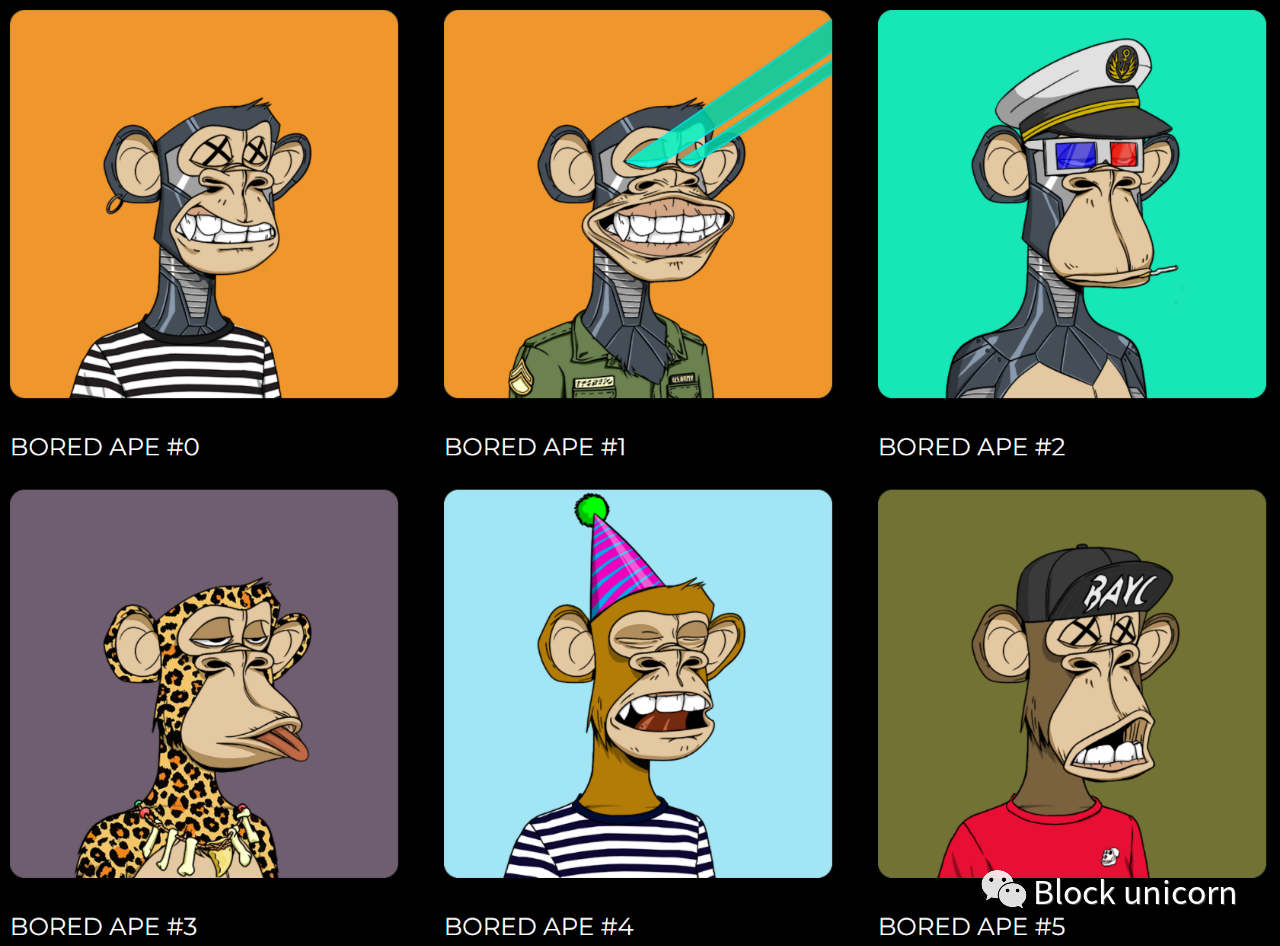
Why can NFT sell for hundreds of thousands of dollars, there must be more reasons behind it?
When my family and I showed my uncle a bored ape on OpenSea, his initial reaction was confusion and shock. "How is that monkey worth $200,000?" he exclaimed.
For many, it can be difficult to understand how NFT art sells for hundreds of thousands of dollars, and without a clear understanding of what's going on behind the scenes, they can be confused about what's really going on in the NFT space. Many people ask the question of aesthetics, does it really matter? Certainly not if a few pixels cost thousands of dollars. Or is there something more fundamental behind the collectible psychology, why they attribute value to the NFTs they make and there must be more substance behind it?
The answer is yes...
The potential value of NFTs is enriched by many important variables, including ownership, identity, scarcity, aesthetics, community, technology, and role. Each value is important in its own right and contributes to the desire and value of a certain NFT.
In this article, we explore these questions and the logic that collectors apply when collecting NFTs, in particular the factors that affect value and why they matter.
value of ownership
First let's consider how NFTs add value, how is this possible? Well, they are valuable for many reasons, many of which go beyond the art itself.
While the intrinsic value and exchange of money takes centuries, cryptocurrencies are rapidly challenging the status quo, which is that NFTs provide a way to channel and capture the public's attention through an irreplaceable form. For the first time, NFT provides proof of ownership of digital assets through the use of blockchain. Each NFT contract has a token ID number and then an address belonging to the owner. In a web 2.0 world where digital ownership of something is hard to ascertain, the term "ownership" is multifaceted and can be interpreted in a number of ways. For example, someone could right click and save an image and claim that they own it, which they would technically do since it now belongs to the download on their PC, but is that really true ownership?
Importantly, NFTs are a brand new asset class and are also inherently non-fungible, meaning they are 1/1 and unique. They cannot be duplicated or duplicated because they are stored on the blockchain, a public distributed network that tracks provenance and transactions. Anyone can then find out information such as who first owned the NFT, how much it was bought and sold, and when it was first minted. As a result, we can easily determine what is genuine and what is fake, so we can also assign value.
NFT has metadata, which is arguably another source of value, and information can be inserted through attributes. The most widely used are description, image and name. In addition, not only images belong to the category of NFT, but various media forms such as GIFS, text, video, music and games can be minted and sold as NFT.
It is also important to note that blockchains are trustless, meaning that no psychological trust is required in any interaction or transaction, it is decentralized, automated by computer technology, and no one owns or directs them. This is the main difference between web 2.0 and web 3.0.
To recap, NFTs are stored on the blockchain, they have well-defined owners, and they point to metadata files that link to the creation itself. So these 3 components will allow you to buy and sell NFTs. Essentially, you can buy ownership and transfer it to another owner without the influence of a centralized platform or third party. Therefore, this form enables NFT true ownership to add value.
membership value
Not only creating value for informal institutions that issue NFTs, membership is equally important.Humans have cultures, tribes, and a desire to communicate. Community is a concept that is inherent in all of us, something that everyone aspires to, or is part of in some way. Whether it's a small interest, hobby or friendship, we all have our own circles where we meet like-minded people. It could be in the real world, or it could be in digital form online.
NFT is one of the tools to cultivate the community, and many NFTs serve as membership tokens. NFTs provide us with a way to record in the community that members of the community own specific NFTs. In the case of BAYC, anyone who can prove they own a boring ape, they're invited into a community of many different utilities. Having access to private clubs, they are invited to social events and parties, and their investment provides them with opportunities to network with other BAYC holders.
Not only that, but they also have the chance to earn additional tokens via airdrops, including the Boring Apes Club and Mutant Apes Yacht Club. Many NFT collectibles reflect this same concept, buying an NFT gives you an exclusive ticket into that particular community, the holder has the opportunity to enter the ecosystem and benefit from the community they are part of, socially and economically, people without NFT will Don't get the same access or ability to network, build your brand, and monetize your collection.
Clearly, value comes from the micro level, much deeper than the art of NFTs illustrates. Value can be created in a close-knit group of 100 collectors, and the community can help maintain value, depending on how committed they are.
value of status
Like community, our identity is inherently important to our everyday lives, and in many ways, it is intertwined with status. We present ourselves to the world in such a way that they understand who we are and what our background is. We might wear an expensive watch, we might style our hair a certain way, or we might even grow a bushy beard. All of these things are conscious decisions that we often maintain in an attempt to tell the world something about ourselves. Although NFTs are abstractions and not physical, they work in the same way we use NFTs to tell the digital world things about ourselves. Whether it's a valuable 1/1 painting to display in your virtual world gallery to express your taste, or an avatar picture you set as your profile.
Subsequently, many collectors began to attach NFTs as their digital identities, and it was this active identity that expanded the ecosystem and encouraged NFTs to flourish. I use a boring ape as my avatar on Twitter and Linkedin, it's how I see myself and present myself to others. Also, it's an effective networking tool that verifies that I'm part of the BAYC community and that I benefit from it.
For example, cypherpunk holder Richerd turned down a $9.5 million offer for his NFT, preferring the longevity of his identity over the coveted sum. Obviously, in some cases, the identity woven into our NFTs proves to be invaluable, so brand value and community seem to be more important than anything else. When discussing this with Richerd, he said:
"You can prove that our online identities are just as powerful—if not more powerful—than our real-life personas. You can be whoever you want if you choose to be online, and the Metaverse doesn't discriminate by age, gender, or race. So for a lot of people, you can actually express yourself more freely."
secondary title
background
background
NFTs are valued directly by the community, and only they can give monetary value and share this agreement with each other. Subsequently, it is up to the community and the market to decide what is valuable and what is not. But this is not just a reflection on the artwork itself, there are many factors that can be considered about the art and the artist. For example, we can find out how much their previous work has sold, we can see how long they have been creating, we can see who owns their work, we can compare it to other art forms, so we An informed choice can be made about whether an artwork is valuable or not.
scarcity and rarity
Collectors find beauty in the number or size of a collection, for example 1/1 seems more valuable than 10,000 NFTs in a collection given that only 1 NFT will ever be created. Take Andrew Wang, a cool cat collector who bought a 1/1 Upside Down Cat, for example. As the project became more popular, its value exploded within a few months. This is why he rejected the $1 million offer, proving that scarcity is a fundamental factor in the value of NFTs.
Influence
Influence
text
The value of royalties
Unlike the web 2.0 world where artists had to enforce copyright laws to maintain ownership of their work, web 3.0 and NFTs ensure that the art is essentially their creation and ownership only changes when it is transferred.
Artists often suffer, so making money from their art in the traditional world has proven difficult. Platforms have maintained their influence over the art world for a long time, and those who are able to make money from their craft have been taken a fortune by these third-party platforms. Now, however, NFTs are increasingly appealing to the art world because of the opportunity to profit from your work through automatic royalties. Artists, for example, can sell NFTs, and from there, they also earn royalties for each transaction, which increases in value. Subsequently, if the artist becomes more famous, the artwork becomes valuable and the artist receives an increased share of wealth.
therefore,
therefore,Perhaps one of the most important utility of NFT value growth is contributors.While the entire focus of value was on the art when NFTs were first realized, this has changed significantly in recent months, taking many other factors into consideration. That is, what the team has come up with in their roadmap, their vision for the program, and what they can offer the community. The most talked about NFTs provide utility through airdrops, real-life events that can only be accessed through NFTs, access to Metaverse, governance through DAOs, and even opportunities to mint other projects. As a result, these benefits and programs make NFTs more valuable, so it's clear why NFTs like the Boring Ape Yacht Club can fetch hundreds of thousands of dollars. It is the accumulation of all the factors discussed in the article so far. Ownership, membership, status, rarity, scarcity, utility and beauty. They make NFTs more meaningful and help deepen emotions and attachments, both of which make NFTs harder to use for financial investment.
The applications for NFTs are endless, and recently, the intersection of DeFi and NFTs has become more prominent, with collections offering the ability to stake NFTs in exchange for tokens. Collectors then have the opportunity to earn passive income without having to do anything except invest in NFT projects.
However, as the demand for more utility grew and collectors diverged from the value seen in the artwork. The community is less and less satisfied with the prototype roadmap and expects more from the team itself, whether it's just an artist or not. The problem is, sometimes those expectations are unrealistic. The greatest franchises succeed based on ideas that are new, exciting, and unique, and once that's done, spinoffs struggle to maintain the same pattern for long, becoming repetitive. Given the velocity and high stakes on the table, it's also difficult to estimate what the space will look like a year from now, and what's trendy last week could quickly become obsolete a week from now, hence the utility of guessing versus assigning value.
final thoughts
final thoughts
Looking at all the above, the value does not only come from the art itself. While this is equally important and possible, adding the most value to NFTs is the utility and factor behind the art. Projects that combine these in terms of features like membership, identity, ownership, royalties, etc. are the most successful. Without one or more of these elements, it is impossible to create a long-term collectible item that hopes to retain value,And the fact that some of the biggest blue-chip collectibles continue to transcend art is a testament to its worth.


