How to lead to the future of "interoperable blockchain games"?


This article comes fromNaavik, the original author: Matt Dion, compiled by Odaily translator Katie Ku.
image description
Source: Lisk.com
As our world becomes increasingly networked and interconnected, having open standards, protocols, and formats will facilitate the free flow of information, efficient upgrading and maintenance of the digital space, and standardization of toolsets and capabilities. Interoperability has the potential to revolutionize numerous consumer and enterprise applications.
The blockchain gaming industry also has interoperability issues
text
Underpinning this vision of interoperability are NFTs that form the backbone of many blockchain games' virtual economies. NFTs give players ownership, and it is this verifiable ownership that sets them apart from other virtual items in "traditional" non-blockchain games. While most virtual assets are trapped within walls created by developers, the verifiable ownership of NFTs allows players to leave the game with these assets and enter another game or app (at least in theory).
Interoperability is a worthwhile goal for gamers. Being able to carry earned or purchased digital assets from one game to another, or even out of the game entirely, can provide players with far more value and ownership than today's free-to-play model.
However,However,
For large developers and publishers with IP and fan bases, the incentive to interoperate is not strong. These incumbents tend to protect their interests rather than open up their ecosystems to outside influence or allow their intellectual property to be used elsewhere.
But for others, interoperability has the potential to have a "raising tide lifts all boats" effect. Robbie Ferguson, co-founder of ethereum-based card trading game company Immutable, spoke about this in a blog post on Gods Unchained:
While this compounding value may hold true in the long run, there are still many hurdles to overcome before the value of interoperable items exceeds the value of digital assets today.
secondary title
The "blocker" of interoperability developmentIn practice, interoperability presents a major challenge. The level of coordination between stakeholders (including developers, creators, Internet service providers, hardware manufacturers, etc.), and getting all parties to agree will be a difficult task.
Looking ahead to a Web 3.0-driven, metaverse-style scenario, where various other technical requirements are agreed upon to achieve large-scale interoperability, cooperation itself may be the biggest obstacle.
Which mainstream game IP is willing to give up control of the brand, story or protagonist, and let other IP enter the game. What good is it for them?I can buy thousands of dollars of gear in Fortnite that would be useless to me in other games.
The real vision of interoperability is for me to be able to bring these things and other things into any other digital sandbox.Furthermore, there are many technical reasons for interoperability beyond the willingness of IP owners to participate.
To illustrate this, here's a hypothetical scenario:
Rendering in-game assets across multiple blockchain games is a huge challenge because there are many moving parts.
Even more important to NFT interoperability is the data contained within the NFT that governs its property and ownership.
text
So far, we have only focused on the visual representation of NFTs. But what if it's an NFT weapon or item instead of a simple skin? How do other games handle item utility? Will the benefits of doing so outweigh the costs of solving the problem?
Additionally, developers must first allow NFTs into their gaming ecosystems. Today's crypto-native games rely on a variety of blockchain technologies, which may or may not be compatible with each other. From Axie Infinity to Sorare to Star Atlas, NFT transactions need to bridge different blockchains (Ethereum, Solana) and sidechains (Ronin, StarkWare) and verify the origin of all blockchains. Even though there are use cases for supporting NFT transactions in every application, there are different standards in use, each with its own properties.
All in all, developers looking to build for interoperability must consider a multitude of possibilities, including file formats, visual representations, design choices, project utilities, various blockchain technologies, and token standards. On top of that, other creators and IP holders have to be willing to “delegate” to do so.
from 0 to 1
We may not achieve true interoperability any time soon, but I still believe that NFTs will achieve some level of interoperability on a broader gaming basis.
For Web 3.0 gaming companies, there are many ways to create a greater wave of interoperability. In the near future, I foresee two possible development paths:
Composable ecosystem.
secondary title
Individual publishers (such as Axie Infinity)
A more viable first step in the direction of game NFT interoperability is for games to interoperate across a single publisher's portfolio.
For companies operating multiple blockchain games under the same franchise, the prospect of porting NFTs from one game to another is much easier. In Axie Infinity, players create spin-off mini-games utilizing existing Axis NFTs in new and different ways. These are small-scale examples of interoperability, but they are directional indicators that this approach has potential. What incentive is there to help each other interoperate?
While many technical hurdles to interoperability remain, these challenges will be more easily overcome through the unilateral allocation of funding and organizational resources from a single company, rather than relying on ad hoc collaborations between competing developers.
I believe that a decentralized approach to NFT interoperability like the case above will be the most likely outcome for developers and issuers who want to profit from the explosion of NFTs. However, with new blockchain-savvy game developers getting funding seemingly every week, other approaches are sure to emerge soon. One such approach is "composable ecosystems," which are already being used in the fast-growing crypto gaming space.
secondary title
Composable ecosystems (like Loot)
Given the decentralized nature of blockchain development and crypto culture, another potential outcome could be the formation of different interoperability alliances or ecosystems between developers with a unified community, philosophy, or technology stack that could form An interoperable NFT ecosystem.
A new example of this is the Loot ecosystem. Loot relies on the "composability" of NFTs to drive new experiences. Composability allows NFTs to act as building blocks for further applications and derivative programs. In the case of Loot, the entire project ecosystem is supporting everything from currency to character generators to generative art, and even entire games. This bottom-up approach not only enhances the value and utility of NFTs, but also decentralizes the entire development process beyond the reach of any issuer, studio or vision holder.
Of course, this model also has challenges. Creating a great game requires a certain level of centralization, and how it is distributed among contributors, will have a major impact on the speed and efficiency of development for each game. I predict this will be a major hurdle for the composable ecosystem to overcome, as this is very foreign to traditional game development models.
Blockchain game developers do not need to rely on the original visual representation of NFT. It can actually open up many creative possibilities for game designers. The underlying data of an NFT can be completely repurposed for its purpose in another game.
secondary title
Interoperability Framework
To illustrate these possibilities, I would like to propose a framework for developers seeking to interoperate with digital assets of other blockchain games or applications. Help you to clearly understand how to integrate external NFT into your chain game.
NOTE: The most important question any developer should ask themselves before and after exploring this framework is "does interoperability make sense?"
Question 1: What is valuable in your game economy?
Many blockchain games today build their economies around some scarce NFTs: such as plots of plots, characters, ships, cars, horses, or other items. Developers should keep this scarcity in mind when considering interoperability, as there may be implications for the value of these scarce resources. Introducing NFTs in your game should have a lower value or utility than your most valuable native asset, lest your commodity depreciate, no matter how scarce it is.
An interesting shift in this regard is to consider the total value of interoperable NFTs among individual publishers of games. If a player imports an NFT from another game, what are the trade-offs to the original game's economy? Is the company cannibalizing its own revenue, or will there be a net gain from cross-promotion and a shared user experience across the two games? A lot depends on the design of the business model, but it's an interesting topic to consider and illustrate the importance of overall planning before jumping on the NFT hype train.
While the answer to this question may be the same as the previous one, in some cases it is different. An example of this is the visual economy, where the "value" depends on each player, and digital assets have little impact on core gameplay or competitive balance. This could be an ideal area for interoperability experimentation. For example, recreating image-based NFTs as new collectibles should have little impact on the game economy, but could provide additional utility to players' existing collections and allow them to easily express themselves in-game digital identity.
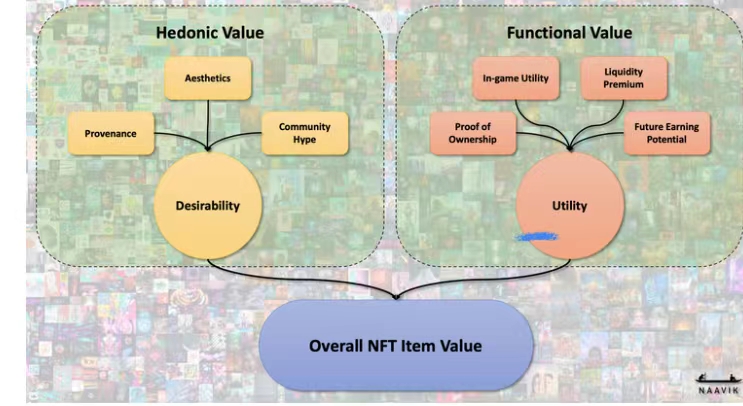
image description
Source: Naavik
Question 3: How do you want to present the introduced NFT in the game?
In other words, will you try to reproduce the NFT in your game in a way that resembles the original representation? Will my skin in game A be imported as a skin in game B?
Another approach is to avoid any kind of duplication altogether. In this case, the game team may create a completely new output based on the input of a given NFT. This is useful for generating character images, avatars or avatar pictures, or even names or titles. In a non-game context, a good example is the Mutant Ape Yacht Club collection, which applies different "serums" to Bored Ape Yacht Club NFTs to create entirely new "mutant" creations.
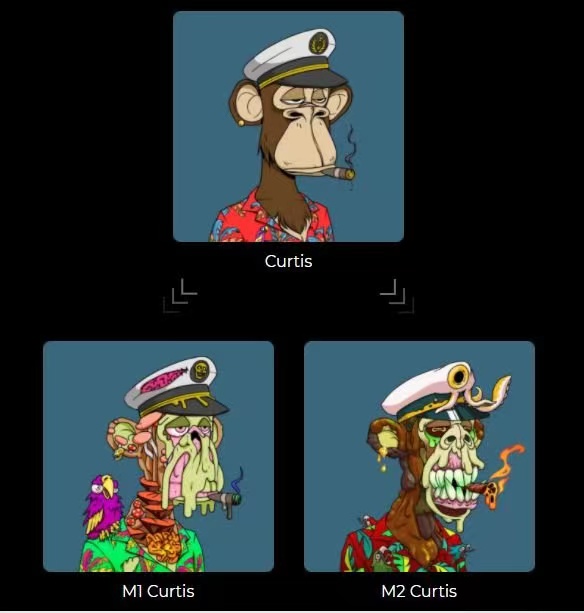
image description
secondary title
Summarize
SummarizeDesigning for interoperability should never be underestimated, it requires a lot of planning and coordination.
In many respects, interoperable chain games can be seen as a classic example of the "innovator's dilemma", where due to associated costs, low short-term ROI, poor applicability to existing value networks, and new The market is small, and incumbent leaders face many obstacles in exploring the path of innovation. At the same time, industry newcomers were able to capitalize on opportunities and gain a foothold in an otherwise established competitive field. Whether or not this happens in the gaming industry, only time will tell. But given the surge in funding for blockchain gaming startups (and Web 3.0 companies), it's clear that more and more policymakers see this as a meaningful business opportunity.Interoperability does not happen overnight. More likely, progress has come in fits and starts, manifested in various incremental innovations in design, engineering, art, and product management.