






Dualism in the Virtual World: How Matter and Spirit Present and Reconcile in the Metaverse?


This article comes from ArtGee Research Institute, Odaily is authorized to reprint and publish.

In the previous article, we discussed the nature of the metaverse as a medium carrying digital information from the perspective of information, and what changes it will bring to our physical world. It is true that the metaverse is closely related to our real life. But the vision of the metaverse is obviously more than that. Taking the metaverse as a reference object, many long-standing questions will have new answers, and the metaverse will also help us better understand our own limitations and find new ones. direction of evolution. Therefore, in the next series of articles, we will put aside the specific technology and explore the meaning of metaverse from a philosophical point of view. This article starts with one of the most essential philosophical topics—dualism, to discuss the relationship between matter and How spirit manifests and is attuned in the metaverse.
What is the most resilient parasite? Bacteria? A virus? An intestinal worm? An idea. Resilient, highly contagious. Once an idea has taken hold of the brain it's almost impossible to eradicate. An idea that is fully formed, fully understood, that sticks, right in there somewhere.
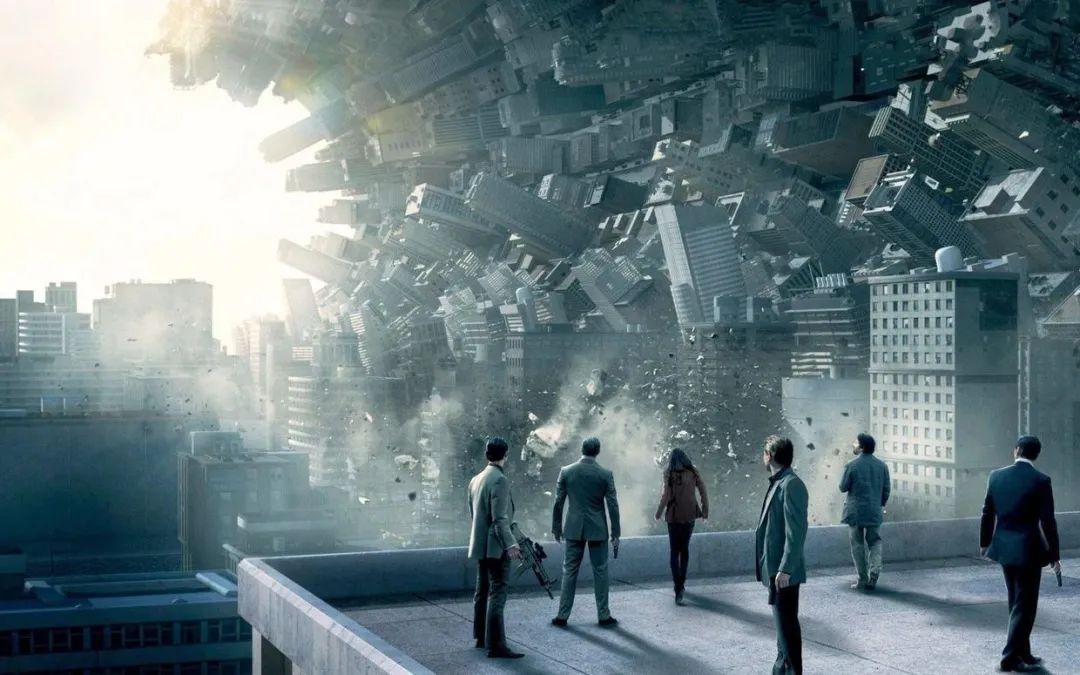
In "Inception", Cobb brought a wonderful statement that the easiest thing to spread is not a virus or a parasite, but an idea. Once an idea occupies our minds, it is difficult to be removed. Mind has such powerful energy, so what kind of existence is mind, or spirit? Is spirit derived from matter, or is it independent of matter? From Plato to Descartes to modern philosophy, the discussion on matter and spirit has never stopped.
Spirit and matter are opposed, so let's talk about matter first, matter is the physical existence that can be seen and touched, and spirit is a more metaphysical invisible and intangible existence. Descartes is the proponent of dualism, he believed that both the material world and the spiritual world exist, but the two are juxtaposed and distinct. In our simple cognition, most people agree with dualism more. Whether it is the pursuit of the soul world or the yearning for free will, they essentially regard the spirit as independent of matter, then If spirit really exists, does matter determine spirit, or does spirit determine matter?
However, Descartes demonstrated dualism from the perspective of epistemology. The only thing we can be sure of is that we are thinking, and the existence of "I" can be deduced from our own thinking, but I cannot determine whether my body exists, so I Not equal to my body, something I think is my mind, so my mind is not equal to my body, which is the famous "I think, therefore I am". The key to this argument is the asymmetry we have about our state of mind and our state of body—I can be sure of what my state of mind is like, but I can't be sure of my state of body.
But there are loopholes in this argument. If the existence of "I" as the spirit does exist, and everything outside the spirit is "non-self", then the material world cannot be fully recognized, that is, There is a false possibility that the spiritual and physical worlds are of course different based on this fundamental difference. But whether it is "spiritual certainty" or material uncertainty, it is judged subjectively by the subject. Whether the material world is doubted needs to rely on the subject to exist, not to doubt itself. Without the subject of doubt, doubt is meaningless Then, it is impossible to judge whether spirit and matter are certain, whether they are the properties of the object itself or the properties endowed by the subject, so Descartes' deduction of dualism is not so firm.
In contrast, Spinoza's pantheism is undoubtedly different from Descartes' dualism. He believes that both spirit and matter are part of the unity of nature, that is to say, matter and spirit are just different manifestations of the same thing in different situations. This is the point of view of "monism". For the supporters of monism, they believe that there are certain a priori laws in nature, which are above all. For natural science, it is all kinds of axioms and theorems, and everything in nature must follow its laws dominate. In a sense, this law itself can be regarded as "God". God has no personality and no emotion, and all things operate according to this established rule. So far, we have seen some shadows of the Metaverse. Press the button and continue discussing monism.
For the supporters of monism, there is only one ultimate existence in nature, not the coexistence of matter and spirit as Descartes said. Then, in terms of the relationship between matter and spirit, obviously, supporters of monism either support that the world is made of matter, and that spirit is just an extension of matter, which is materialism; or they believe that spirit is the ultimate existence, and matter needs to rely on It exists in the spirit, which is idealism.
Materialism is intuitive, and under the education system of modern natural science, most people are firm supporters of materialism. When we see an egg, it is an objectively existing substance that has nothing to do with the mind, brown, oval, solid, these properties are inherent, whether someone is observing it, the egg is objectively existing, it is made of The cell composition of the body, and further down are molecules such as proteins, nucleic acids, phospholipids, etc., and then down are atoms such as carbon, nitrogen, oxygen, and phosphorus, and then down are protons, neutrons, and electrons, and these have nothing to do with the spirit. The particles have not changed. Under the guidance of physics, we naturally believe that eggs are substances that exist independently of spirit.
Of course, materialism is more than that. This theory also needs to explain how consciousness and spirit are based on matter. With the help of modern medicine and neuroscience, we have a deeper understanding of the cerebral cortex and nervous system. In modern science Radical materialism believes that the essence of the so-called consciousness and spirit is a combination of a series of complex nerve impulses, which are triggered by the release of neurotransmitters between neurons and the potential changes of sodium and potassium ions. The transmission of electrical signals and the changes in the potential states of different neurons constitute our mental activities: perception, memory and consciousness. Whether free will exists or not, under this radical materialist viewpoint, the answer seems to be no. We will continue to discuss the issue of free will in the next article.
Back to this radical materialism, for example, when we see an egg, it is because the light signal reflected on the egg enters the photoreceptor cells through our visual system, making the photoreceptor cells of different colors enter an excited state, and causing a change in electrical potential , Release electrical signals, these electrical signals are transmitted along our nerves to the brain, stimulate the brain cells, and make the corresponding parts of the brain cells enter an excited state, thus producing vision, so I can see the color and shape of the egg.
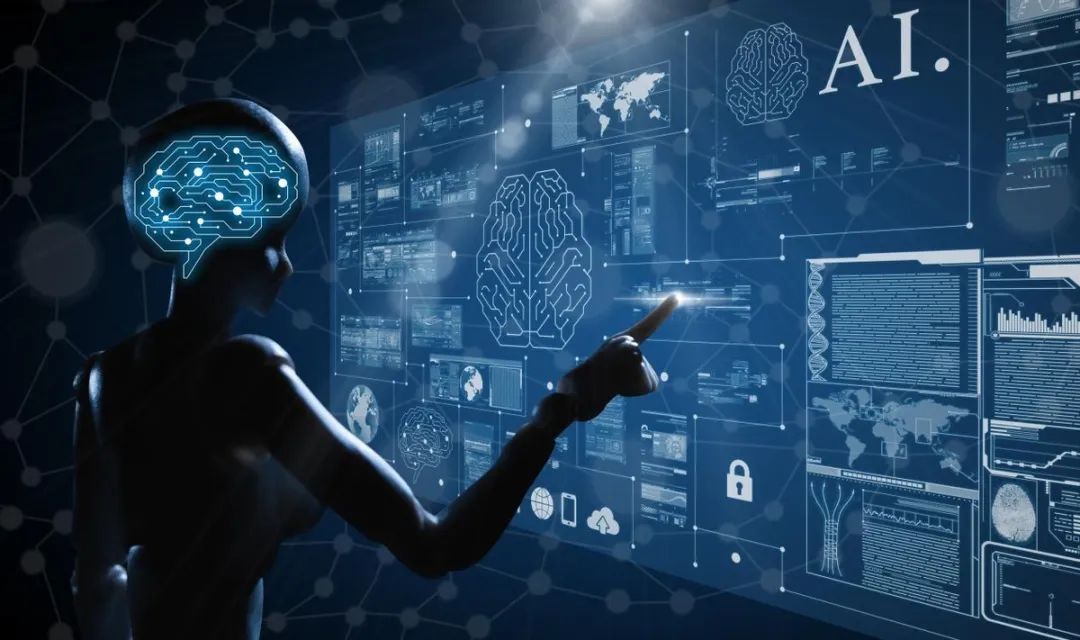
In recent years, with the development of computer science, the brain has become an important research direction. Scientists have begun to develop corresponding algorithms in artificial intelligence to simulate the thinking mode of the brain. In this computer neural network, all signals will be It is input into a model, which is completed by a large number of independent computing units to perform complex mathematical operations. The operation of a single node is very simple, just a simple judgment or probability, but different nodes have different connection methods , as the number of nodes increases, the complexity of the neural network will also increase exponentially. The connection mode and association strength of nodes determine the computing power and efficiency of the entire network. In this neural network-based machine learning process, the computing intensity of a single node and the degree of connection between nodes will be continuously adjusted and adapted with the input of information. Generally speaking, the more layers of the neural network, the better the output, but the greater the computing resources required.
Then in the neural network, any single node does not undertake the key calculation process, but all the nodes are connected through the neural network, and the cooperative processing of the problem can solve very complex problems, such as image recognition, natural language recognition, competitive game etc.
The development of neuroscience is still relatively limited. We don't know whether human mental activities are the same as neural networks, but there are many signs that there are indeed similarities between the two, for example
In AI, there is no one or more nodes as the computing center, but the overall realization of predetermined functions; there is no neuron or a group of neurons in the human brain as the computing center, but the entire brain cooperates to complete mental activities.
In AI, if a small number of neurons are damaged, it will basically not change the "character" of the entire AI. Neurons will die in the human brain, but it will not change a person's consciousness.
In the process of learning and strengthening itself, AI will not increase the number of computing nodes. The number of human neurons is fixed at birth, and will not increase in subsequent growth and development.
During the learning process of AI, the connection between computing nodes will be continuously updated, strengthened or weakened; the same is true for the connection of internal neuron cells during the learning process of human beings.
In the brain, neuron cells are connected by long dendrites, which pass electrical signals between them. When signals are transmitted frequently between certain connections, these connections will continue to strengthen and become permanent connections, which is long-term memory; Will get weaker and weaker, and eventually disconnect completely. Therefore, when we continue to obtain information from the outside world and the information is continuously transmitted between neurons in the brain, some connections will be strengthened while others will be weakened. Therefore, according to our own experience, different connections will be formed between neurons to adapt to our respective lifestyles and help us survive better. Over time, the brain has formed what it is now, including various perceptions, Memories, emotions, etc. In this process, the number of neurons does not change, what changes is the connection between neurons.
In the process of continuous growth and learning, the internal network of the brain changes gradually. When we were in the embryonic period, the neural network in our brain was very simple, and there were almost no connections between neurons, but after we were born, the baby began to obtain a lot of information from the outside world, just like the learning process of artificial intelligence. With the input of information, babies begin to learn by themselves based on this information, and the network between neurons in the brain also spreads rapidly and gradually becomes more complex. Before the age of two, the number of dendrites of our neurons will grow from 2,500 to 15,000 or so. Some experiences are repeatedly repeated, and the corresponding neuronal connections will be strengthened, while conversely, the connections corresponding to infrequently repeated experiences will slowly disappear.
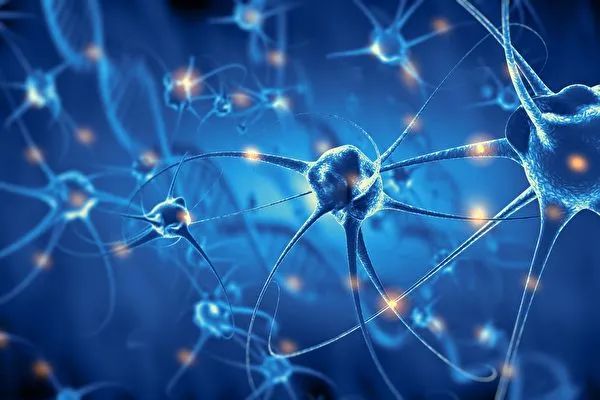
The propagation of neural signals consumes a lot of energy, and eliminating a certain number of links can save us from wasting too much energy on some insignificant experiences, thereby achieving higher efficiency. Around the age of six, the neural network in our brain is basically fully developed, and the number of dendrites per neuron drops to around 7,500. In this process, many basic survival skills, as well as the recognition of identity and the mastery of language, through continuous learning, the corresponding neurons have completed a permanent connection, and the brain has become a whole that can independently process information. system, which is why it is difficult for us to recall things before the age of two. In a way, we can argue that babies before the age of two do not have a full sense of self.
How similar the machine learning process of artificial intelligence is to the human brain. Based on the development of neuroscience, it is easy for us to doubt our consciousness and spirit. Our so-called "soul" may be a network of tens of billions of neurons in the brain. This unified network carries the spiritual world of each of us, and all neurons together form part of the spiritual world. Each neuron is mundane, no single neuron is more important on a microscopic level, but when viewed as a whole, there are certain areas that are more important and serve functions that contribute to the generation of our consciousness more important. Therefore, we can say that our subjective spirit is not defined by a specific neuron or a specific brain region, nor is it like the traditional dualism that says that there is something like a soul inside the brain, but It emerges in the form of a group when all neurons gather together. This is another name in cognitive science, the "emergence" process.
When we build a boat, when does the boat start being a boat? Is it when the keel is finished? Is it when the deck is built? Is it time to officially set sail? The boundary between quantitative change and qualitative change is often unclear, and it is difficult for us to define to what extent microscopic things can be called macroscopic things. Therefore, the boundary between spirit and spirit is also blurred, and it is difficult for us to find A certain standard to judge how many neurons can be called consciousness or soul when they gather together, just like a sand pile, one grain of sand is sand, and two grains of sand are also sand, then when the number of sand reaches how many can be called consciousness or soul Call it a sand pile? If there is such a definite standard, can one less grain of sand also be called a sand pile? Starting from a single neuron, it is also such a gradual process that it can be called spirit or consciousness after gathering to a certain scale.
We have experienced a sound education in basic physics and biology, and these views can be said to come naturally to us, but in the Western world that advocates Christianity and concrete gods, materialism is not so obvious, so the famous biology The scientist, that is, the discoverer of the DNA structure, Crick wrote a book, "The Astonishing Hypothesis", which is astonishing precisely because the content in the book subverts the teachings of many religions. In it, he said:
"The astonishing hypothesis is that your joys and sorrows and memories and aspirations, your proprioception and your free will, are really nothing more than the collective behavior of a large group of nerve cells and their associated molecules, as described in Lewis Carroll's book Alice in "You're nothing more than a bunch of neurons." This hypothesis is so incompatible with what most people think today that it can really be considered astonishing."
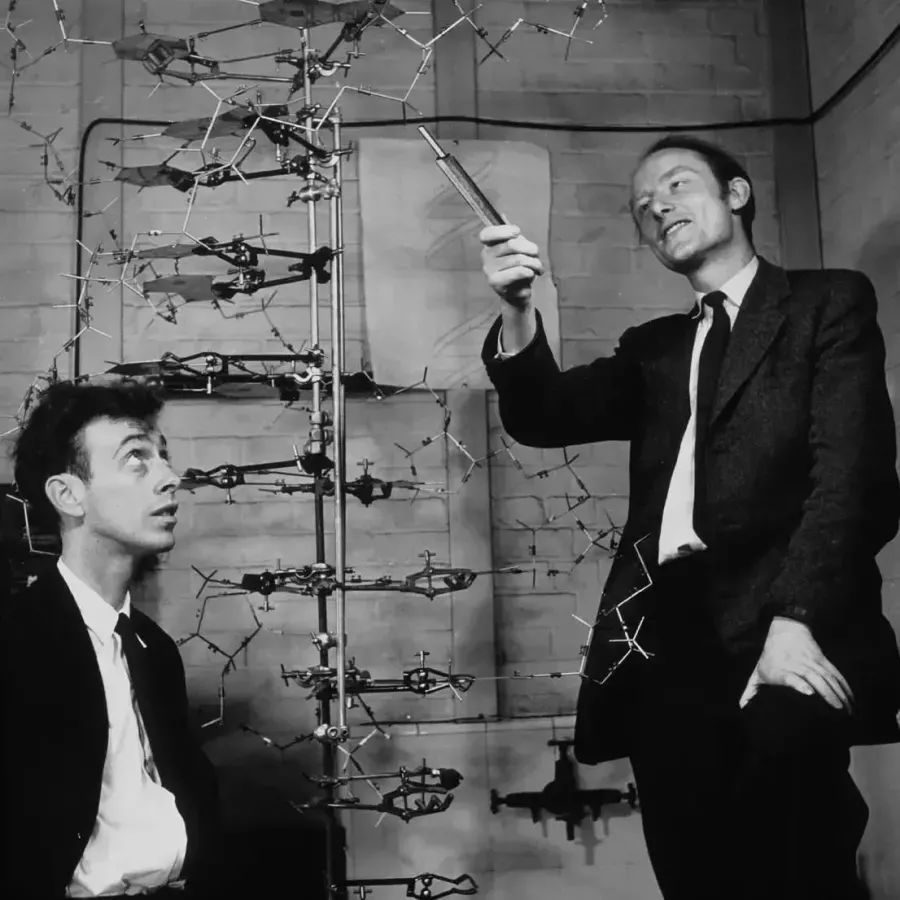
The development of modern science, especially the advancement of neuroscience, has indeed provided a solid theoretical basis for materialism. It seems that matter determines the spirit is already an objective fact, but this does not prove that the spirit is ultimately determined by matter.
First of all, if it is said that a sufficiently complex neural network can naturally emerge mental activities, then we have every reason to believe that after artificial intelligence is complicated to a certain extent, it will inevitably produce the same soul as us. In this regard, we have not yet reached a clear conclusion. The mainstream view is that no matter how advanced artificial intelligence is, it is impossible to produce self-awareness. Is this view sticking to the spiritual homeland of mankind, or is it just a kind of self-inflated humanism?
Although the current popular artificial intelligence systems such as Apple's Siri are far from reaching the level of intelligence comparable to human consciousness, or in other words, they are just a slightly more complex cold program that can produce mechanical responses to various external inputs. . But in this regard, the author has a positive attitude. The digital world can not only produce self-awareness, but can even produce virtual species parallel to our own. In subsequent articles, we will further explore this issue. Perhaps, just like when the steam engine and generator were earth-shattering and overturned the whole world, the virtual species that can reach the level of human intelligence will truly become a kind of life in this world one day, we will wait and see.
But on the other hand, we human beings can also be considered as more advanced programs, which are just as cold, but complex enough to deceive ourselves, that is to say, free will does not exist, and we are all some kind of overriding program. It is just a puppet of the rules of this world, which may be difficult for many people to accept. Moreover, while we are aware of external information, we also realize that we are aware of external information. "I think, therefore I am", a program that only responds to external stimuli cannot be aware of its own existence. It's hard to think of our self-awareness as a cold response to the outside world.
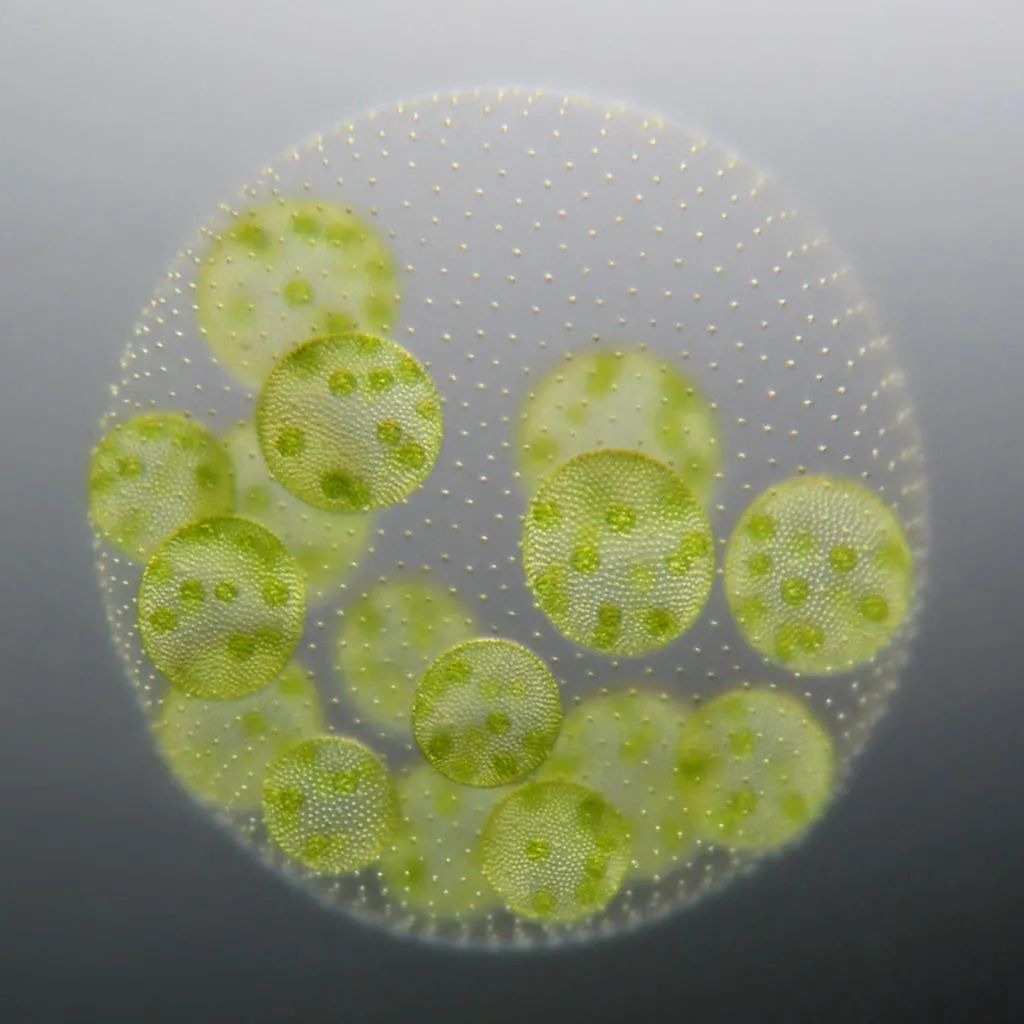
The evolution of life originated from the random generation of some simple proteins and nucleic acids. Nucleic acid constitutes the genetic information of life, and protein is the expression product of nucleic acid, which is used to build a material to protect its stable existence and effective replication environment. There are single-celled organisms. When many single cells gather together and obey the same set of rules at the same time, multicellular organisms are born, which can change their living environment more efficiently, and the materials for building and maintaining this environment become more and more diverse, becoming life. The core, genetic material, and the infrastructure for maintaining the core survival, various organs, tissues and systems, until the last human being. Including us human beings also have a certain degree of collective consciousness. Individuals are similar to the whole society, and neurons are similar to the nervous system. The collective is composed of individuals, but it can accomplish what the individual cannot. things.
The materialist view that "spirit is an emergent phenomenon of matter" has the greatest difficulty in the difficult-to-bridge gap between subjectivity and objectivity.
If we insist that mind is the emergent phenomenon of matter, theoretically, we must be able to describe all subjective mental behaviors only through the description of objective matter: we describe the objective matter that constitutes a person's nervous system - every neuron and The signals transmitted between neurons can describe all the subjective world of this person. But how is this possible? When I see an apple, I get a subjective impression of the egg: it's brown and round. Please note that the "brown" here, and even the "color" itself is a conceptual language, we establish a one-to-one correspondence between it and our real subjective feelings, and use it to sort out and express this feeling, but " The concept of "brown" is completely different from our actual subjective experience of "brown". This real experience is ineffable and belongs exclusively to our subjective.
In essence, everything we are talking about now, including the objective substances that determine mental phenomena, must contain information based on our personal subjective concepts. Without subjective experience, we cannot even describe information and understand the objective world . Then, wouldn’t it be unreliable to use this concept based on the subjective to talk about the objective world that is divorced from the subjective, and try to explain the subjective world with it?
On this issue, another kind of idealist view is that the spirit is the main object and the material is the object. Since our cognition of objective matter must be based on subjective spirit, we must admit that it is meaningless to talk about the material world separated from subjective spirit. These substances do exist, but have no meaning.
The idealist philosopher Berkeley has a famous saying: "To be is to be perceived". This is similar to what we mentioned before that the meaning of communication is to know yourself. We can only perceive the matter that we can perceive, and this part of the matter has the meaning of existence based on the subjective spirit. All substances that cannot be accepted by our subjective spirit do not matter at all.
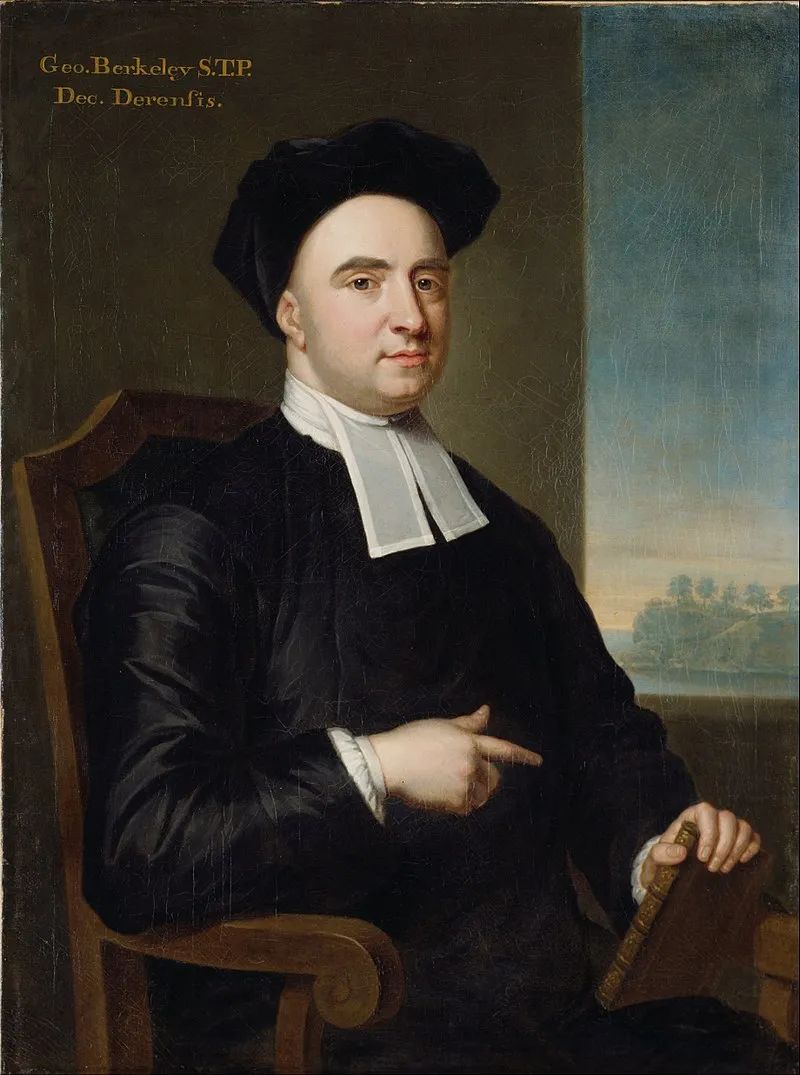
What we say "here is an egg" is actually inaccurate. We should say "I see an egg". We can only perceive what we see. As for whether what we see is an illusion, a false nerve impulse, or real existence, this is beyond the ability of our subjective mind, and we have no way to judge whether it is true or false. There is no point in talking about it.
To judge whether there is a material world other than the spirit, we can consider such a question: If "I" does not exist, will the external world continue to exist? This kind of idealist point of view believes that this question is meaningless, because it is a question raised by the subjective "I". Since the "I" itself no longer exists, then of course this question does not exist. the outside world?
We have seen the significant progress of modern neuroscience and information science in the study of the brain and nervous system. These are objective scientific conclusions that we must admit. So in the face of so many examples, has idealism been denied? In fact, it is not the case.
From the point of view of materialism, a large number of microscopic structures constitute the necessary building materials of the nervous system, such as proteins, and these materials form countless neurons. material world. And this form of neural network determines the thinking process of the brain, so matter determines spirit. We can tell this story in reverse: that is, these neuroscience conclusions do not mean that the spirit is determined by the neural network, but that the spirit can be realized with the help of the neural network.
Taking our daily computer system as an analogy, computer systems are divided into software systems and hardware systems. The software system includes all logic, data, commands, etc., and the hardware includes various carriers of the software, including CPU, solid-state hard disk, graphics card, memory, etc. We compare the spirit to a software system, and the neural network to a hardware system. When we play games, at the software system level, it includes various characters, character attributes, various operating instructions for characters, and the entire virtual world built by programs. At the hardware system level, there are various circuits, logic gates, memories, input and output devices, and so on. From a hardware point of view, we have built an extremely complex and delicate electronic system on the integrated circuit, electrons flow in different electronic components, data is recorded in the disk, etc., and what is finally shown is that the game is Interaction with a human on the output device. From the perspective of software, after the rules are set, the program is compiled according to the rules, and then the computer hardware is just a tool to realize these software functions. Which comes first? Who decides who?
In the process of human learning, we can say that the brain is constantly stimulated by external information, which makes some connections in the neural network stronger, so the structure of the neural network changes and leads to learning new knowledge; but we can also say the other way around, It is we who constantly seek the input of external information in order to learn, thereby constantly changing the material structure of the neural network, so that our learning results can be realized, and it is our learning that changes the neural network structure of the brain.
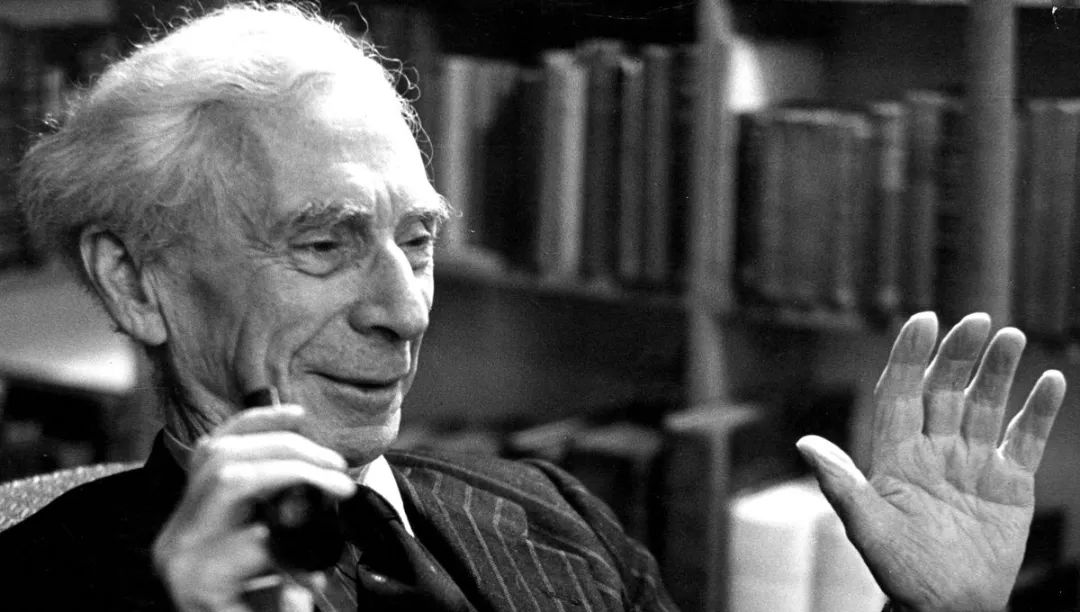
No one can prove himself or falsify the other party.
As Russell said, most of the basic questions about metaphysics are beliefs, rather than strict truth or falsehood. The same is true for the question of spirit and matter, and when the concepts of spirit and matter are extended to the digital world, everything becomes more interesting. How to define spirit and matter in the digital world?


