






DAOrayaki: Collective Action Within The DAO


Original Author: Paarug Sethi
Original: Collective Action within a DAO
DAOs are formed around consensus and solving common problems.
One of the problems Superteam DAO is trying to solve is how to bring people working on web2 into web3. It is this that inspired the Ground Zero project, which aims to help a new generation of web3-ready novices become experts by providing a resource library and a series of educational content.
Web3Education
A very easy mistake to make when thinking about this is to think of this shift as merely a technological upgrade. While somewhat true, the shift from web2 to web3 requires much more than that. It also requires updating our biological software — the way we think about technology and the world in general.
The demands on the technology, and the shift in mental models around it, resulted in a much steeper learning curve than we initially estimated. This is also a theme that we find missing when we study the existing education system.
The documentation of Web3 can be said to be very complete, but it is also fragmented.
This is the problem we have been seeking to solve, our goal is to optimize education, but at the same time take into account the relevant context, and do it without losing the human touch. The key is to be in"and"and"information overload"find a suitable path.
So it led us to design a framework to follow for each target area that needs to be covered, of course, this is due to Aditya Shetty, a brilliant member of Superteam DAO.
build a framework
First, the project had to be divided into several web3-related domain areas, so that a top-down approach could be adopted in the future when the depth of information needed to be deepened.
Each topic/area has to be covered through any number of Buzzfeed-like questions that a beginner might ask when first dabbling in the topic.
Since the "North Star" (goal) of any project is product optimization, we decided to limit the number of topics in the project to three:
Introduction to Web3
NFTs
DAOs
For each subtopic within each topic, provide relevant content in the form of short summaries, videos, blogs/articles, and tweets.
This serves three purposes:
Getting started with web3 can be intimidating. When learning a new topic, the problem of information overload should be avoided in the first place. Our goal is not to ask everyone to master every detail of a particular topic. Instead, the aim is to get them started and interested.
Curate > Create. There was once a famous story about a man who wanted to find a way to cross a river. He spent ten years learning how to walk on water. When he told the Buddha about his great achievements, the Buddha said:"Not bad, but five cents to do it via ferry...". As we all know, many excellent content creators provide a lot of material needed to learn web3. By collecting and organizing these contents in one place, on the one hand, it not only provides readers with high-quality contents, but also introduces them to excellent people in these different fields.
Everyone learns differently. They can choose to watch videos, read in-depth articles, or read through tweets, which provide room for different types of learners.
start working
One of the best things about working in a DAO is that you can always get help from all kinds of talented people.
The scarcity of talents is no longer a problem, but how to motivate, manage and reward talents is more challenging.
While different DAOs follow different mechanisms, our framework is based on Superteam DAO, thanks to the excellent Kash Dhanda and several other extremely talented members who came up with a reputation system for members of the DAO. Kash has written an article about how they built the system.
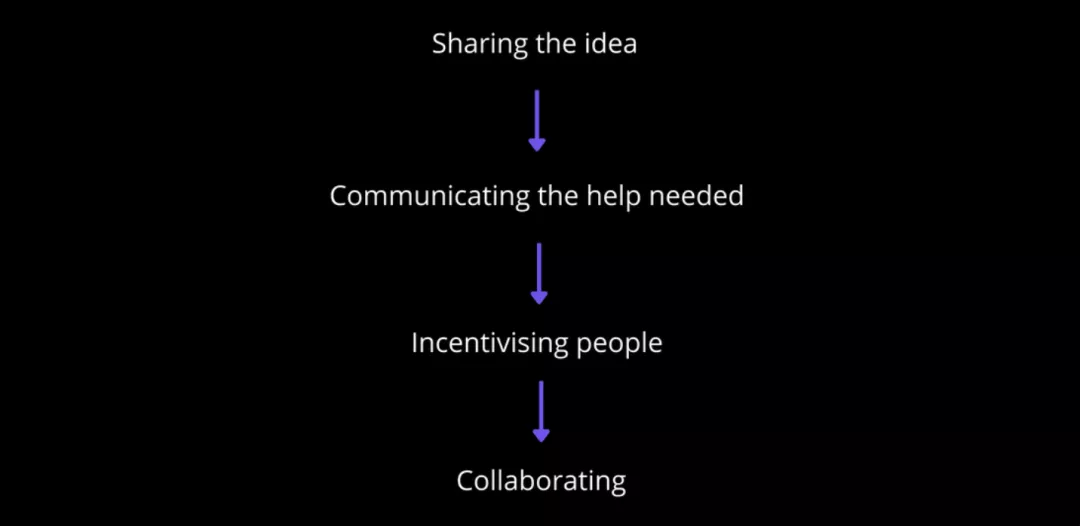
In short, we end up following a process of sharing ideas, communicating needed help, encouraging people to join, and finally collaborating on the project, all while tracking members' contributions accordingly.
share ideas
Completing a small task on time with a limited time frame, focusing on quality rather than quantity.

convey the help needed
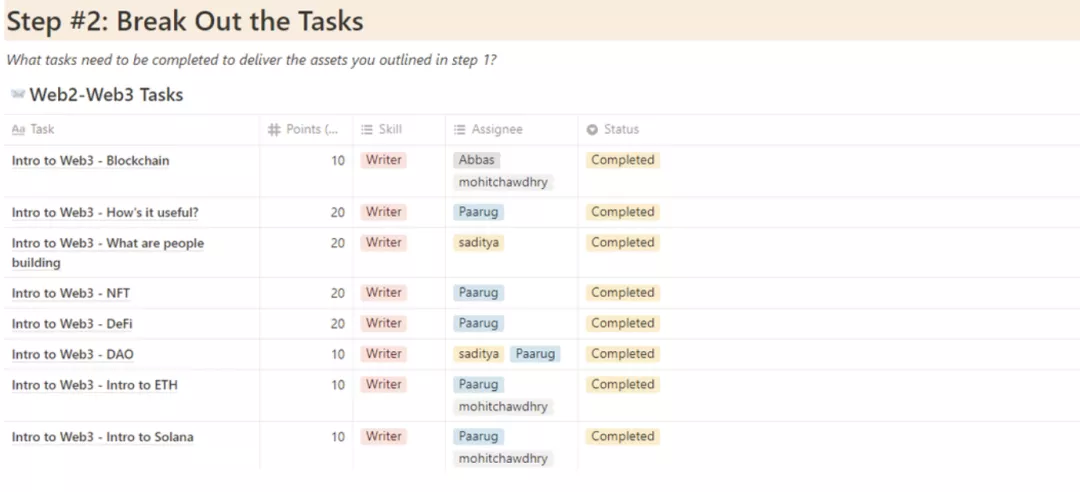
Break down larger tasks into small, identifiable tasks so people can"claim"they. This is also very much in line with the way a DAO should be.
motivate members
According to the importance of each task in the whole project, a certain amount of XP value is allocated to each task in proportion.
The XP value obtained by each person in each task is accumulated to form his XP value, and this information is published on the DAO contributor leaderboard.
contribute to the project
We initially used Notion, but have since moved the workspace to BIP.so because it allows open collaboration by every member in the DAO and simplifies the work of keeping track of contributions.
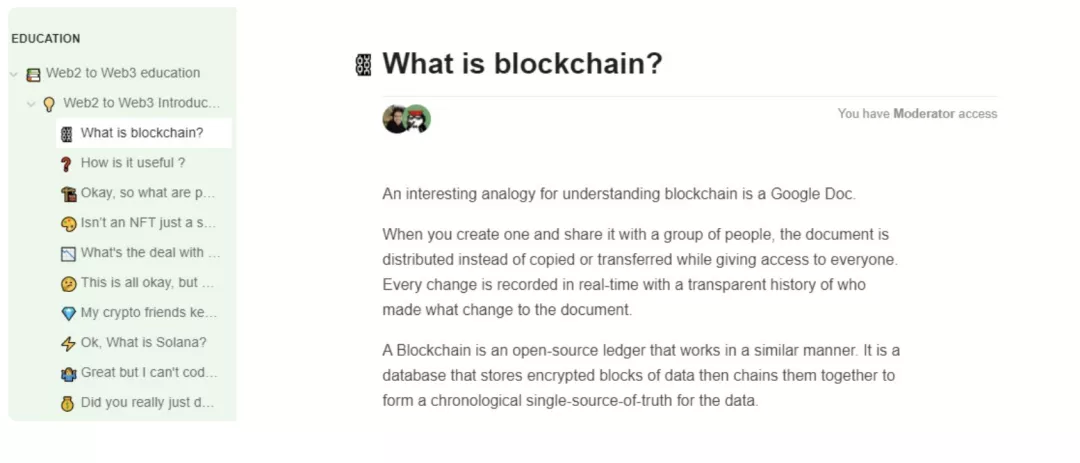
Krishna, another member of the Superteam, later exported the final version of the document to the Gitbook website, which made it possible for anyone to contribute.
enlightenment
In addition to the thrill of designing this product, it was crucial to me as it provided some important inspiration for the next iteration of the Ground Zero project as well as some collaborative projects.
Completely open-ended tasks don't work. After learning the hard way, I can safely say that if the tasks you need assistance with are not well-defined and loosely connected to the project you're building, then you probably won't get much help. Because only specific, measurable tasks are more in line with human thinking.
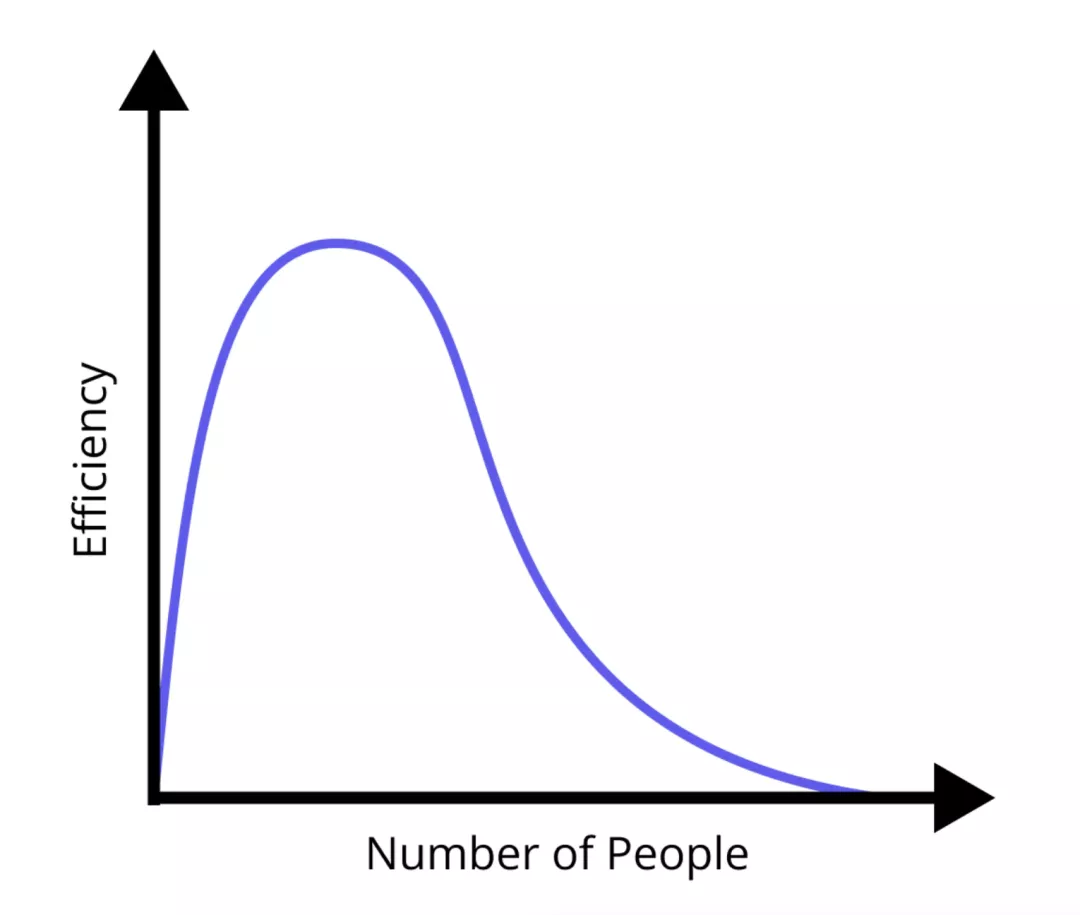
The relationship between workgroup efficiency and size presents a positively skewed bell-shaped curve. While it's clear that 5 people work better together than 2, 10 people are not necessarily better than 5. Because while trying to get help from a DAO's larger audience, you will find that communicating ideas and needs, and tracking member contributions is a daunting task in itself. So ideally the optimal size of the workgroup should be determined before starting to think about the tasks to be performed.
Set a time frame. The importance of setting a time frame for a project is one of the most underestimated aspects. In a project, setting a reasonable time frame in advance will facilitate the execution of many tasks and save a lot of time. We also realize this after going through the hard process and enduring the pain of procrastination.
This project is an unforgettable learning experience for me, I hope it can be seen and used by more people, so that they can better understand this emerging industry. We also hope to build the Ground Zero project into a deeper, more refined, and more beautiful product in the near future.
A DAO is often measured by the projects it generates, the amount of collaboration, and the atmosphere in the community. Building a product that can satisfy the public also needs to meet the above three conditions. Therefore, based on a sound reputation management framework, working in DAO is likely to be what the future work should be like.
If you want to share and discuss about work, DAO and web3, feel free to drop me a line @paarugsethi on Twitter. I would also love to discuss learning with you through similar conversations.
references
Hope this article helps you. Thank you for reading.
references
https://superteam.substack.com/p/how-we-built-our-daos-reputation


