






Breaking the record of CoinList registrants, how is the cross-chain DeFi protocol "Umee" different?



With the expansion of blockchain ecology, interoperability has become a rigid demand, and cross-chain projects are ushering in new development opportunities. Recently, a namedUmeeprojects caught our attention.
Umee is a protocol for building interoperable tools for DeFi users, built on the Cosmos SDK and Ethereum Virtual Machine, and aims to serve all types of users and projects throughout the DeFi journey. The Umee blockchain facilitates interoperability between the Cosmos ecosystem, the Ethereum network, sidechain architectures, layer2 solutions, and alternative base layer protocols.
As the underlying blockchain, applications and DeFi Lego can be built on top of Umee, but it is currently more focused on the construction of DeFi lending scenarios, helping DeFi lending assets to obtain cross-chain leverage and liquidity.
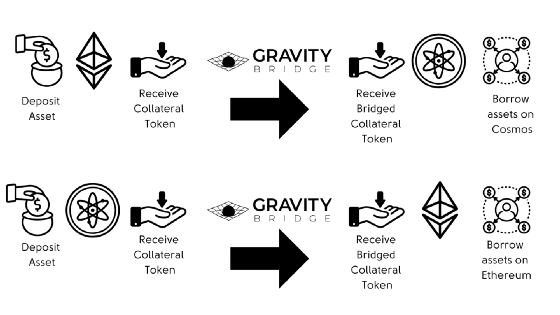
As shown in FIG, users on Ethereum can deposit assets into Umee and get uToken; uToken is an ERC20 interest-bearing token generated by Umee’s deposit of assets into the lending agreement on Ethereum, including principal + income; uToken can be bridged to the Cosmos blockchain through the Gravity Bridge cross-chain, and exists as an IBC compatible token; Once a Cosmos-based IBC token, uTokens can be traded on Dex and participate in various DeFi use cases, including being used as collateral for borrowing and lending.
In the same way,Holders of IBC assets in the Cosmos ecosystem can deposit to Umee to obtain meToken; meToken is an interest-earning token generated by Umee’s deposit of assets into Cosmos’ lending agreement. It is also an ERC20 token, including principal + income; Tokens are used as collateral to borrow native assets of the Ethereum ecosystem.
It should be noted that users can unbind at any time and withdraw pledge rewards, butThe unbinding process usually takes 14 to 21 days。
According to the official plan, Umee plans to launch the main network in mid-February 2022, and the beta network application will be launched in the next few days.
In terms of tokens, Umee's native token is UMEE, which is mainly used to pay gas fees and block rewards for transactions on the Umee blockchain. It is also the governance token of the protocol, which can set DeFi parameters on the application.
In December this year, UMEE made its first issuance through Coinlist, raising a total of 32 million US dollars, which will be officially released when the mainnet goes live next year. It is worth mentioning that the issuance of Umee is the largest number of registered people in the history of CoinList sales, reaching more than 920,000, and sold out within an hour; through this sale, an additional 64,000 tokens have been added to the Umee blockchain. currency holders.
Umee CEO Brent Xu said the team plans to use the newly raised funds to expand the engineering team. Umee hopes to build a team of 6-8 engineers for each blockchain network it connects, including system engineers, cryptography engineers and product managers, and hopes to connect 5 to 8 networks by the end of next year. In addition, Umee also hopes to expand its legal compliance resources through marketing, expand the underlying infrastructure and develop a global community.
In June of this year, Umee completed a $6.3 million seed round of financing, with Polychain, Coinbase, ConsenSys, Tendermint, CMS, Ideo Colab, Brian Kelly Capital Management, Alameda Research, and Argonautics Ventures participating. In November this year, Umee also established a strategic partnership with Titans Ventures, a Vietnamese blockchain venture capital institution.


