






Interview with CEO Micky Watkins in the World Mobile Team Series


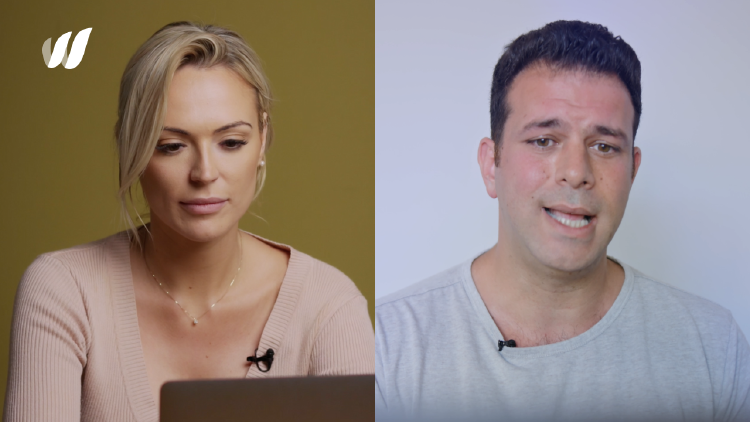
Jessica: Welcome to the World Mobile team interview series, I'm Jessica Walker. To wrap up the series, today I caught up with Micky Watkins, CEO of World Mobile. Welcome, Micky, how are you doing?
Micky: Hi Jess, nice to see you again, how are you doing?
Jessica: I am also very happy to see you again, and I am doing well recently! You've done a lot of hard work over the past few years, and the last few weeks have been a tough final push. I want you to start by telling the audience watching: what does World Mobile mean to you?
Micky: World Mobile is the new standard for Mobile Network Operators (MNOs) using renewable energy, blockchain and alternative spectrum to bring ultra-fast sixth-generation internet to rural areas around the world.
Jessica: The concept itself is fascinating, but I always feel that the story of the founders is also the same, so Micky, do you have any backstory that you can share with everyone?
Micky: For the past 20 years, I've been working in the telecommunications industry, mostly breaking down the web and pushing the boundaries, finding really cheap ways to connect people who don't have it. For the past five or six years, my focus has been on privacy-based solutions that reset the rights of consumers and regulators; then, I stumbled upon the fact that 3.7 billion people around the world still don't have the opportunity to connect to the Internet, and that became a big part of my focus. Focus, so there is today's World Mobile.
Jessica: In my opinion, with all the 20 years of experience you mentioned, World Mobile is really your calling?
Micky: "I don't know if World Mobile was my mission in the first place, but when you see a problem this big, you can't ignore it."
Micky: So when I found out that so many people were not connected to the Internet, I had a sense of mission. Because I see that Facebook, Microsoft, and Google have found solutions to actually reach the unconnected, but they never found a sustainable way. For example, I found a multi-million dollar Google Loon project with great potential. But in fact, it was running in East Africa, and in January of this year, the project stopped. So when I found out that you can actually reach these people, I discovered the new solution, the sharing economy.
Jessica: As you mentioned, with what we've seen over the past few years, and others trying to get into the space, how would you rate the state of the telecom industry today?
Micky: The telecom industry is in trouble right now, revenues are down, minute charges are gone; they have been replaced by OTA and OTT over the top apps, the same is true for SMS and data services, and data is getting cheaper and cheaper. There are 1,000 mobile network operators vying for half of the world, but no one company vying for the other half. So things are bad in the telecom industry and telecom companies are finding ways to innovate and generate more revenue internally.
Jessica: It's hard, sounds like a huge challenge. It sounds like certain areas have been all but neglected by the bulk of the market so far?
Micky: I know a lot of CEOs and managing directors of mobile network operators in Africa. It's not that it's being ignored, it's that traditional infrastructure doesn't support rural areas. If you look back 15 to 20 years ago, there were hundreds of companies in the space that were innovating and developing what we use as telecommunications today. Over the years, the oligopoly has monopolized control, and there are only four or five innovators in the field.
"So what we need to do is we need to innovate. It's not that telcos are ignoring it, it's that telcos are stuck in a situation they can't get out of."
They absolutely want to be able to connect the unconnected as it represents a future growth market that is far from saturated. Like I said, there are 1,000 mobile network operators operating in the connected half of the world, and not a single operator in the unconnected parts of the world. So even if three or four hundred people enter the field, it still won't be saturated for many years.
Jessica: Got it. If we look at today, 2021, what makes this the perfect time for change?
Micky: It's a perfect fusion of technology, regulation, philosophy, the United Nations, the World Bank. They've come up with their UN Sustainable Development Goals, and at least 11 of the 17 SDGs consider connectivity an absolute must. The World Bank, they made it a priority to connect the unconnected, and the problem is, while they made it a priority and focused on it, global coverage has only grown 1.3% over the past two years. So, you know, we've got a problem and we need to fix it. Technology works because Google, Facebook, Microsoft, big tech companies have proven it, just to find a sustainable business model.
Jessica: So, we've looked at the technology that World Mobile has, but when it comes to the importance of World Mobile and its customers, how important are they to World Mobile?
Micky: "Customers have always been considered valuable. Unfortunately, that's how mobile network operators operate at their core. World Mobile doesn't capture value from its customers, but by giving them partial ownership of the network itself. Create value for them."
We want to create a new relationship between connectivity and mobile network operators.
Jessica: This all sounds like fun. If we look to the future, as CEO of World Mobile, I'd love to hear your vision for the future.
Micky: For the past three years, we have been conducting proof-of-concept and feasibility studies in Zanzibar, Tanzania, and other parts of East Africa. We believe that the future of telecommunications is sharing and creating a sharing economy.
"Just like Airbnb and Uber disrupted related markets, we can lower the barriers to entry for people in the telecommunications market"
We can have people host an aerial node, which is a pole with a solar panel on top, a street light underneath, and then connected to a wireless access point, which uses a Raspberry Pi to connect to the World Mobile Chain network, and has a backup at the bottom Battery. We developed this device -- where you can install any type of wireless access point -- for less than $5,000. If we can make this a viable option for people in the village to host the node, as an alternative to raising livestock, or as a supplement to running a store, then we can have a great ROI.
"But the biggest ROI is the connection between people. At that moment, you have electricity, you have streetlights, you have internet connectivity, you can provide digital identity, then you can really serve every customer out there. A new world opens up."
Jessica: At this point, World Mobile is not just a concept, it's been integrated into the town, and the feedback and reaction has been very positive, but I want to ask if there is any feedback that may surprise you? Anything that comes up that might catch you off guard, something you didn't expect?
Micky: Of course, when we started our first feasibility study and proof of concept, I was personally shocked and a little embarrassed to say it, but it's true. I asked the team to bring equipment, mobile phones, assuming maybe one or two people in a village of hundreds of people would have a mobile phone. But it turns out that half the population in these villages has a mobile phone, which is their entertainment device, provides flashlights, provides downloadable videos that they can download when they go to work and bring them back. There is no Internet connection between the villages, but we think it is a big misunderstanding that they don't have mobile phones, because they generally have phones.
Another misunderstanding is that I didn't realize that there is no centralized energy supply in the village. I think they will at least have this. When we arrived, we found that they didn’t even have street lights, so in the equatorial region, especially in Tanzania in East Africa, it was dark every night at 7:30/8:00/8:30, and suddenly the noise of the villages followed. When it got dark and stopped, people went back to their houses. Some are lucky enough to have a small solar installation; solar and light in their home, others are not.
"What we found was where we put our air nodes, all of a sudden it became a market."
The ladies are sitting outside setting up their stalls and people are gathering. I don't mean this behavior is good or bad, but people extend their bedtime to 11:00/12:00. We also got feedback from people in the village, especially the ladies, that they feel safer moving around. So we managed to expand and build a lot of street lights in a village, and then form a mesh network to let the signal pass, which completely changed everything.
"We've also seen things like finance, essentially a revolution in finance, where people are being paid five, six times more than the fishing industry for being able to communicate."
Because of network communication, we have seen more beautiful things, such as the village chief saw China and India for the first time through YouTube. Of course, we're seeing some really good developments now that these people are getting online, starting to educate themselves and starting to fit in with the world. All this without an attached digital identity and without a full commercial license. These are feasibility studies.
"So when we launch in Zanzibar, Tanzania and Kenya, with digital identities and full business licenses, we're going to open up new worlds and we're going to see absolutely transformative things happen."
Jessica: Well, it's definitely an exciting thing, and when you explain the ripple effect that's been created, the things you've been able to achieve are beyond even my imagination. That sounds fantastic, and I'd love to hear more about how your project is progressing. Micky, thank you so much for speaking with me today.
Micky: Jess your interview was great, thank you so much! I look forward to the next interview with you.


