Binance delisted Korean won service, is it its own planning or a compromise to regulation?


Foreword:
Foreword:
This article discusses the root cause of Binance’s delisting of Korean Won services and its subsequent impact on the virtual currency trading market in South Korea. (This article has a total of 3308 words, and the reading time is about 7 minutes)
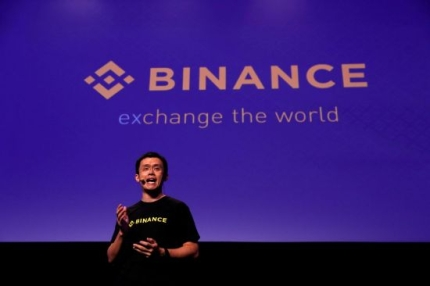
On August 13, Binance, the world's largest virtual currency exchange, terminated the Korean won trading service, and interrupted the Korean service previously provided, and deleted the digital currency (KRW) against the Korean won in the service currency setting. P2P KRW trading services have also been removed. Binance’s withdrawal from the South Korean virtual currency market is due to the amendment to the Specified Financial Information Act, which will be implemented on September 25 this year. According to the "Special Gold Act", the exchange must obtain a bank's real-name account, information protection management system (ISMS) certification, etc. to start the reporting process of the Financial Commission. Undeclared exchanges will not be able to provide virtual currency trading services using Korean won. Binance seems to find it difficult to meet the conditions required by the Financial Services Commission. In this regard, some people worry that the domestic virtual currency market in South Korea may be isolated from the world. Such concerns are not entirely unfounded. As of 8:00 p.m. on August 21, the 24-hour trading volume of Binance was 25.74816 billion U.S. dollars (approximately 30.4729 trillion won), which was about three times that of the Korean domestic virtual currency exchange. Many people worry that Binance's withdrawal from the South Korean market is the beginning of South Korea's isolation. However, will Binance’s exit really only bring losses to the domestic virtual currency market in South Korea? More and more countries have a negative view of Binance. Arguably, Binance operates in a form that would be unacceptable to almost any government, let alone the standards demanded by South Korean financial authorities. So, why are governments around the world so repelled by Binance?
Binance's Decentralized Dream
Binance is one of the exchanges that best embodies the core value of virtual currency and decentralization. It has undergone several relocations in order to avoid government inspection as much as possible. Binance was founded in Hong Kong, but moved to Japan under pressure from the Chinese government. However, Japan has also suffered a series of hacks of large virtual currency exchanges, such as the 58 billion yen (approximately 626.2 billion won) hack of Coincheck, Japan’s largest exchange. As Japan's regulations became more stringent, Binance couldn't bear it and moved to Malta, an island country in southern Europe. The ostensible reason for Binance to move to Malta, which is half the size of Seoul, is because it is a crypto-friendly country. In 2017, Malta officially announced that it would be the first country to adopt virtual currency and blockchain technology, and has since enacted the Virtual Financial Assets Act (VFA). According to the VFA, companies that want to publicly raise funds through a virtual currency ICO must disclose their white paper and financial structure. However, it has been speculated that its actual purpose is to escape regulation. Malta is a typical tax haven with many offshore companies. In 2017, Song Chengxi, known as the second generation of North Korean patriotic entrepreneurs, established an offshore company in Malta. Song is accused of using Malta to fund the North Korean regime while evading financial sanctions. However, Binance denied that it was registered in Malta. Last year, Binance business head Josh Goodbardi said, “Because Binance operates in a decentralized manner, the location of the headquarters is not clear.” Binance CEO Changpeng Zhao also called this fake news, saying It has no headquarters in Malta. In fact, Malta does not welcome Binance. The Maltese financial authority stated that even if Binance was established in Malta, it would not have the right to operate in the country.
Governments Around the World Hold Binance to a Standstill to Protect Investors
However, Binance’s goal of decentralization appears to be stymied. Not only South Korea, but governments of various countries have also begun to let Binance withdraw. In June, the U.K. said Binance could not operate without approval from financial authorities. Germany considered Binance to be suspected of violating European Union (EU) securities laws as early as April this year, and warned that it could pay fines. The United States, Japan, India, Thailand, and even Hong Kong, the birthplace of Binance, have all denied Binance.
But this does not mean that these countries are weakening the entire virtual currency market. Germany still maintains Kraken, a US-based virtual currency exchange. In the United States, cryptocurrency exchange Coinbase is already listed on Nasdaq, and Kraken is also pushing for a listing on the New York Stock Exchange. In other words, Binance is a target that has been paid special attention by the regulators of various countries.
Governments around the world regulate Binance because investors are not protected. Due to decentralization, Binance cannot protect investors. Avoiding the requirements of real-name account issuance and ISMS certification required by the Financial Services Commission can also be understood as Binance will not actively protect investors. During the Bitcoin plunge in May this year, the Binance application (app) was down for up to 1 hour (that is, it was inaccessible), and many victims appeared. However, the road to rights protection for victims is long and difficult. Because of the decentralization, Binance's location is not clear, so it cannot be held accountable. On top of that, Binance has shown no aggressive measures to compensate.
Binance Futures Trading Is Too Dangerous to Protect Investors"Investor protection is difficult, and Binance's service is risky. Unlike domestic cryptocurrency exchanges in South Korea that only offer spot trading services, Binance also allows futures trading. Futures trading is the buying and selling of a specific commodity at a future price in advance. In other words, it is not a recent transaction, but a transaction to sell or sell short in anticipation of the future price of the object. For example, the price of A token at a certain point in the future is expected to be 1,000 won, and investors conduct an auction. The coin is expected to rise above 1,000 won in the future. If the price of A token rises a lot, exceeding 1,000 won, the investor can earn as much profit as the difference. If the A token falls below 1,000 won, the investor will lose the corresponding amount of money. But what makes futures trading risky is that investors don't need a lot of money to get started. Unlike spot trading, which requires funds equivalent to commodity trading prices, in futures trading, investors only need to pay a margin to ensure that investors participate in futures trading, so investors do not need to get a lot of income like the Bitcoin market much money. Also, Binance’s multiple is too high compared to other exchanges. When trading Bitcoin futures on Binance, you can set a multiple of 125 times. In other words, if you lose the same money, you will lose 125 times that of others. Kraken also provides futures trading services, but only 50 times. For this reason, virtual currency futures trading is sometimes likened to betting, i.e. gambling, rather than reliable trading in predicting future prices. The problem is that derivatives trading, including futures trading, is what drives Binance. According to Coin Market Cap, a virtual currency market website, as of the 21st, Binance’s derivatives transactions amounted to 65.32178 billion U.S. dollars (approximately 77.3083 trillion won), which is more than twice that of spot transactions. Presumably, most of the South Korean investors who trade through Binance join Binance for futures trading. Since spot trading can be done on domestic exchanges like Upbit, Bithumb, Coinone, and Korbit, there is no reason to switch to Binance. Since Binance stopped providing Korean won services for spot trading, it has little impact on domestic cryptocurrency investors who trade futures on Binance. Investors who previously traded futures through Binance were known to trade virtual currencies such as Tether and Ripple, rather than the Korean won. Hong Ki-hoon, professor of business administration at Hongik University, said","The end of Binance’s Korean won spot trading service will definitely have a certain impact on the Korean domestic virtual currency market, but investors can transfer funds to exchanges with futures business after purchasing virtual currency on other Korean domestic exchanges futures trading"。
Virtual currency futures investors who trade futures on Binance will not be affected much and will continue to use Binance
Even without government regulation, the question remains, are cryptocurrency futures necessary?
In summary, it can be seen that governments around the world have driven out risky Binance without Binance protecting investors. However, since its core is futures trading, it is not expected to have a major impact on the Korean domestic cryptocurrency market. But a fundamental question remains, why trade virtual currency futures? The original intention of futures trading is to avoid the risk of loss (hedging). Usually, hedging can cover the risk of falling prices, but in practice this is not the case.
In simple terms, it goes like this: A baker is concerned that the price of wheat will rise due to a poor harvest due to drought. At this time, a farmer who was in desperate need of money offered the baker a contract to buy wheat at a fixed price in advance. The baker promises the farmer that he can buy wheat at a certain price so that he will not buy expensive wheat later. If the price of wheat rises to sky-high prices, it is tantamount to profiting from the difference with the predetermined price. In other words, futures trading exists to hedge against rising and falling spot prices."In Japan, the virtual currency futures market has survived even with the introduction of a whitelist system and other severe sanctions on the virtual currency market, and the risky virtual currency futures trading exists for human greed"。
Conclusion:
Conclusion:
Binance’s delisting of Korean won services is largely a compromise to South Korea’s supervision, and it can also reflect from the side how harsh the declaration conditions of South Korea’s "Special Gold Act" that will come into effect in September. From the analysis, we can see that Binance The focus is on futures trading, and futures trading generally does not use Korean won trading pairs, but this does not mean that Binance’s delisting of Korean won services will not have an impact on the Korean virtual currency trading market.