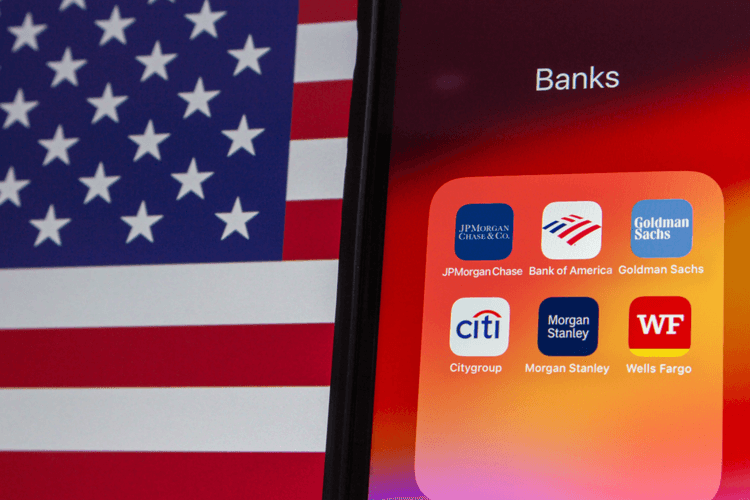
South Korean banks have entered the digital asset custody market


Foreword:
Foreword:
This article is translated and organized from the news network Kedglobal, Businessinsider, Atato, News.bitcoin. It introduces the digital asset custody business, Woori Bank will establish a digital asset custody joint venture with the financial technology company Coinplug, and the situation of digital asset custody services in other countries. (This article has a total of 3664 words, and the reading time is about 8 minutes)With the rapid development of digital currency,
What can we expect from digital asset custody?
Digital asset custody is a secure system for the independent storage of large amounts of digital assets. This is one of the most important innovations in the digital currency ecosystem, with the potential to attract and facilitate institutional capital into the industry.
Digital assets and their custody are still a nascent market, and there are currently many different approaches and strategies to do so. As the digital asset market grows, a common approach to custody is needed to bring regulators, service providers, and consumers closer together.Even if we exclude Bitcoinouter, measured by the total market value of digital currencies (excluding Bitcoin), the current total market value of the global digital asset marketover $1 trillion
. As early asset custody providers begin to shape the emerging global landscape, there is a need to agree on an appropriate regulatory regime.
In the long run, the evolution of digital asset custody into a trustworthy, accessible, affordable, and reliable service is critical to the development of well-structured and secure digital assets.
The emergence of custodial services is one of the key factors enabling the rapid growth of digital assets. As a growing user base finds new use cases for technologies and services, there is an increasing global demand for suitable custody services to help manage the use of digital assets. However, there are varying degrees of differences in the applicability of existing regulations to digital asset custody across the globe, which may hinder the development of global digital asset custody services.
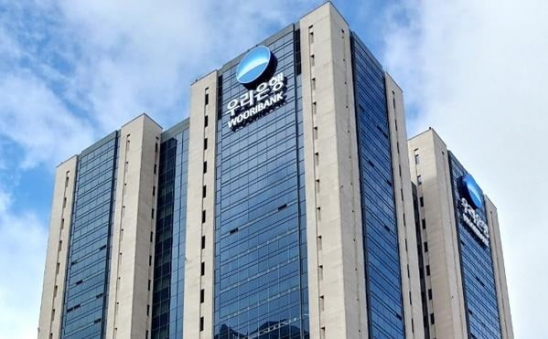
Woori Bank to form digital asset custody joint venture with fintech firm Coinplug
Woori Financial Group has become the third major banking group in South Korea to enter the Digital Asset Custody Service (DACS) market, following KB Financial Group and Shinhan Financial Group.
Woori Bank, the banking subsidiary of the financial conglomerate, has agreed to form a digital asset custody joint venture (JV) with Bitcoin-based fintech solutions provider Coinplug Inc., according to a July 11 banking news release. Coinplug will be the largest shareholder of the joint venture D-Custody, and Woori Bank will be the second largest shareholder.
In November last year, KB Kookmin bank, the largest bank in South Korea, together with Haechi Labs, a Korean blockchain company, and Hashed, a blockchain venture capital fund, established Korea Digital Assets Corporation (KODA), officially entering the digital asset custody service market. While more cryptocurrencies are planned for custody, the custody solution currently supports three cryptocurrencies:bitcoinbitcoin, Ethereum and KLAY (issued by KakaoKLAYTN blockchain networkgeneration
currency).
Likewise, Shinhan Bank joined the ranks earlier this year as a strategic investor in Korea Digital Asset Custody Corporation (KDAC). KDAC is another digital asset custody service company created by digital asset exchange Korbit.
Another major bank, NH Bank, announced on July 8 that it plans to launch a digital asset with Korea Information & Communications Co. and blockchain startup Hexlant Inc., which is developing digital wallet technology. business.
Current Regulations in South Korea
South Korea currently does not allow domestic entities to use services provided by digital currency exchanges. Therefore, companies and organizations in South Korea must keep digital currencies on their own storage drives, such as USBs, which means there is a high risk of theft or loss. In such a regulatory environment, institutions holding digital assets have been calling for the expansion of digital asset custody services.
Since banks have traditionally been highly reliable custodians, these institutions would ideally want Korean banks to take custody of their digital assets, but South Korean current laws also prohibit banks from directly entering the digital asset custody service market, which is why Korean banks establish digital Asset Custody Services joint venture with only partial ownership.
"In foreign markets, digital asset custody has become a successful and mature service among new services offered by banks," said an official from Woori Bank.
Unlike South Korea, banks in Japan and Switzerland directly provide digital asset custody services to organizations in need, and U.S. financial regulators also formally allowed the financial industry to provide digital asset custody services last year.
South Korean banking experts emphasized that the digital asset custody service market is inherently a low-risk business that can provide banks with another stable source of income. They emphasized that major banks in South Korea have been shying away from digital currency transactions due to the unpredictability and high financial risks of digital currency transactions, and that the working model of digital asset custody services is similar to traditional banking.
Cho Jin-seok, COO of KODA, said: “Digital asset custody contracts must comply with the same customer identification and anti-money laundering systems currently run by banks. Unlike digital currency trading businesses, which are highly uncertain, banks understand digital asset custody Businesses can be largely controlled by them and fall within their area of expertise."
How has custody become an important part of the digital asset space?
Instilling investor (user) confidence in digital assets is necessary to attract and maintain multiple investor groups from institutional investors, financial institutions, and general investors. The role of digital asset custody services is critical to making this happen.
The growing interest of investors in digital assets has stimulated the growth of demand for digital asset custody. As the market develops, various types of hosting services emerge, and new providers are looking to set up the structure that best suits their market.
The private key of digital wallet is sensitive and important, it is complicated and difficult to remember, and there are cases of digital currency hacking and theft. In addition to the custody services provided by traditional banks to customers, the main purpose of digital currency custody services is to protect digital currency assets.
There are mainly the following storage methods for exchanges or digital asset custody services:
1) Cryptocurrency Exchange Custody: Exchanges have made it clear that custodial services must be enhanced to attract potential institutional asset flows. To achieve this goal, some of these companies have developed cold storage solutions (such as BitGo and Gemini), Coinbase decided to cooperate with Electronic Transaction Clearing (ETC) to create a subsidiary custody dedicated to digital asset custody.
2) Special security protection solutions: Some providers have emerged to build specialized solutions, which usually rely on a mixture of technical and physical security to ensure the security protection of private keys and assets. (such as Xapo and Swiss Crypto Vault). With these solutions, the master key and assets are actually in an offline environment, in a physical vault protected by private police. However, it also creates other problems, such as not being able to access and transfer digital assets in a timely manner.
3) Professional Technology Providers: Hardware wallets such as Ledger and Trezor are representatives of this type of field. These solutions combine software and hardware to ensure that the master key and cryptographic address are kept securely in the physical device.
It’s also worth highlighting that regulation has played, and will continue to play, a role in making custody an important part of the digital asset space.
Who are the biggest players in this market?
In the digital currency ecosystem, very few mainstream banks offer custodial services, and custodial platforms help to eliminate any concerns investors may have, as they are designed to prevent savings due to stolen wallets, misplaced private keys, etc. designed to be lost. The main traditional custodian banks are: BNY Mellon, State Street, JP Morgan, Citigroup.
Additionally, quite a few banks are already testing and launching their own custody platforms. For example, Swiss bank Vontobel has launched a digital asset library, providing its clients with access to more than 100 banks and wealth management firms—primarily leveraging the institution’s existing infrastructure and regulatory environment for advice on the purchase, custody, and Transfer instructions are provided. Similarly, Deutsche Börse, State Street, and institutional-grade asset security provider Fidelity envision a future in which assets of all types are issued natively on blockchains or represented in tokenized formats. Provides a full-service, enterprise-grade platform to secure, trade and support digital asset investments.
Still, Coinbase dominates the digital asset custody market. One of the major players in the digital currency custody space is Coinbase, which entered the institutional-grade custody solution space with the acquisition of California-based registered broker Keystone Capital, as well as the institutional business of storage service provider Xapo. Coinbase custody accounted for 11% of all digital currency assets in 2020, and its custody assets reached nearly $90 billion in the last quarter of 2020. The deals make Coinbase Custody the largest digital currency custodian in the world.
The custody solution provided by Coinbase operates very similar to traditional custody services, provided by the same regulators, subject to the same capital requirements, and audited in the same way.
Woori Bank looks for a way to enter the digital currency industry
Under the Special Gold Act, all digital asset operators, including cryptocurrency exchanges and other digital asset service providers, must register with the Korean Financial Intelligence Unit (KFIU) to operate.
To register, businesses must be certified with an Information Security Management System (ISMS), ensuring customers have real-name bank accounts. In what could be seen as a crackdown on the digital currency industry, South Korean authorities have also decided that a previously announced tax on virtual asset transactions will begin next year.Currently, Upbit has signed contracts with K-Bank, Bithumb, Coinone and NH Nonghyup Bank, and Korbit has signed contracts with Shinhan Bank to issue real-name accounts. Four of the five largest banks in South Korea have entered the field of blockchain and digital currency, butOpponents
Some South Korean companies have consideredfile a lawsuitAgainst the government and financial regulators, accusing the new regulations. Banks will continue to pay attention to the risk of possible fraudulent transactions, which is a legal responsibility to bear. However, some are willing to experiment with new blockchain-based solutions, gradually groping their way through uncharted territory.
Conclusion:
Conclusion: