After El Salvador, Latin America may enter the era of cryptocurrency


The approval of the bill comes four days after El Salvador President Nayib Bukele announced plans to make bitcoin legal tender, making El Salvador the first country in the world to officially adopt a cryptocurrency as legal tender. El Salvador's President Nayib Bukele tweeted that the Salvadoran Congress passed the "Bitcoin Law" with an "absolute majority" on June 9, making the country the first country in the world to officially adopt Bitcoin as legal tender. .....
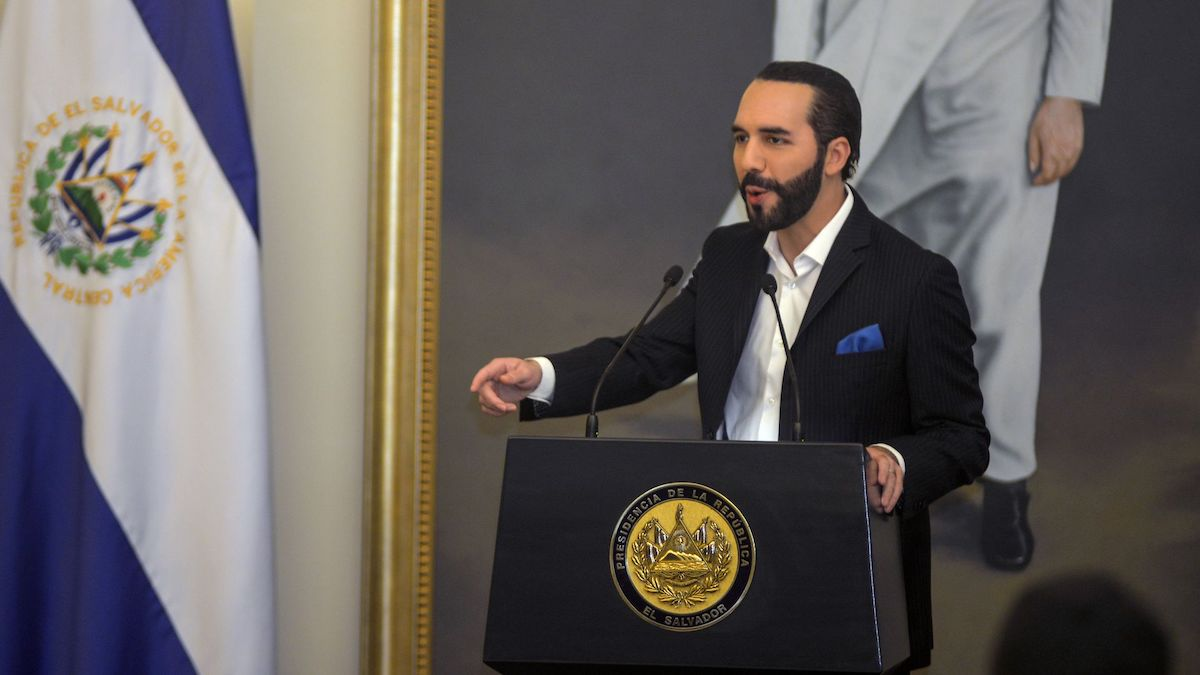
President Bukele, 39, known for breaking the mold, tweeted that 62 of 84 lawmakers voted in favor of the proposal. Meanwhile, El Salvador's Legislative Assembly also tweeted about the approval of the new bill.
Roxe Inc. Chief Commercial Officer Josh Li said: "Bitcoin as a legal tender is only the first step towards a central bank digital currency (CBDC). CBDC will make cryptocurrency a major catalyst for the mainstreaming of domestic and cross-border payments. With the right With advanced technology, CBDC can not only make payments faster and cheaper, but also enable greater interoperability between payment platforms and various financial institutions.”
At the Bitcoin 2021 conference in Miami, President Nayib Bukele announced via video that he would propose a bill to make Bitcoin a legal currency in El Salvador.
"In the short term, this will create jobs and provide financial inclusion to thousands of informal economies," President Nayib Bukele said in a video on June 5.
On June 8, Douglas Rodriguez, governor of El Salvador's central bank, said in an interview with state television that bitcoin is already used in the country and "people don't need to be afraid of it," adding that bitcoin will not replace the dollar.
The official document submitted by Nayib Bukele to the Legislative Assembly of the Republic of El Salvador stated: "In order to promote the economic growth of the country, it is necessary to approve the circulation of a digital currency whose value is fully in line with free market standards, capable of increasing the wealth of the country and benefiting the largest number of residents. .”
The legal document states that the exchange rate between Bitcoin and the U.S. dollar will be freely determined by the market, prices can be denominated in Bitcoin, and taxes can be paid in Bitcoin.
The above-mentioned document mentioned that the law will come into effect within 90 days after the government promulgates it. Currently, there is no official announcement as to whether newly-approved laws have been gazetted, but most are gazetted every working day.
Latin America Enters the Cryptocurrency Era
While El Salvador officially announced the adoption of Bitcoin as legal tender, other countries in Latin America have also shown support for the adoption of Bitcoin as legal tender.
Politicians from Brazil, Paraguay, Panama, Argentina and Mexico have expressed interest in and support for cryptocurrencies as well.
A day after Nayib Bukele’s video announcing the bitcoin legislation aired, Paraguayan congressman Carlitos Rejala joined in, becoming the first Latin American politician since El Salvador to express interest in adopting cryptocurrencies.
Rejala said in a tweet: "As I said a long time ago, our country needs to move hand in hand with the new era. This week we will start a major project related to Bitcoin to put Paraguay at the forefront of innovation in the world! The tweet was accompanied by a photo of Rejala with Retinazer showing support for Bitcoin.
On June 7, Gabriel Silva, a member of the Panamanian Congress, responded to Nayib Bukele’s tweet, saying, “This is very important, Panama cannot be left behind. If we want to become a true center of technology and entrepreneurship, we must support cryptocurrencies.” Silva added “We will prepare a bitcoin-related proposal to parliament,” without further details.
Brazilian Rio Grande do Sul state congressman Fabio Ostermann, Brazilian federal congressman Gilson Marques, and Mexico City senator Indira Kempis also posted photos of themselves with laser eyes, demonstrating their independent support for Bitcoin.
Iran Against Digital Assets
In the Middle East, far from Latin America, Iranian President Hassan Rouhani has taken a different stance on digital assets. Instead of expressing support, President Hassan Rouhani discussed the need to preserve and protect national interests in activities in the field of digital currencies and cryptocurrencies.
On June 8, President Hassan Rouhani stated that the risks of cryptocurrency transactions must be considered, adding: “In order to legalize cryptocurrency activities and protect people’s capital security in this field, we must come up with solutions as soon as possible, and Formulate and communicate the necessary laws and directives.” He also stated: “Cryptocurrency mining activities are strictly prohibited until the end of the summer, and the Ministry of Communications and Information Technology and the Ministry of Energy are responsible for cutting off the power supply of these centers.”
In May, the Iranian Ministry of Energy stated that due to the increase in domestic electricity consumption during the hot summer, cryptocurrency mining will be banned nationwide until September, and it is illegal to use civilian household electricity for cryptocurrency mining. If home miners are found Heavy penalties will be imposed.