


If Bitcoin ushers in a rising market in 2021, these 5 key factors may be the key to unlocking the Red Bull market


The price of Bitcoin (BTC) has been bouncing between $8,600 and $10,000 for the past two months. BTC has shown little volatility since May, after encountering upward resistance at the critical $10,440 level. However, five fundamental factors still point to a long-term uptrend in 2021.
first level title
image description
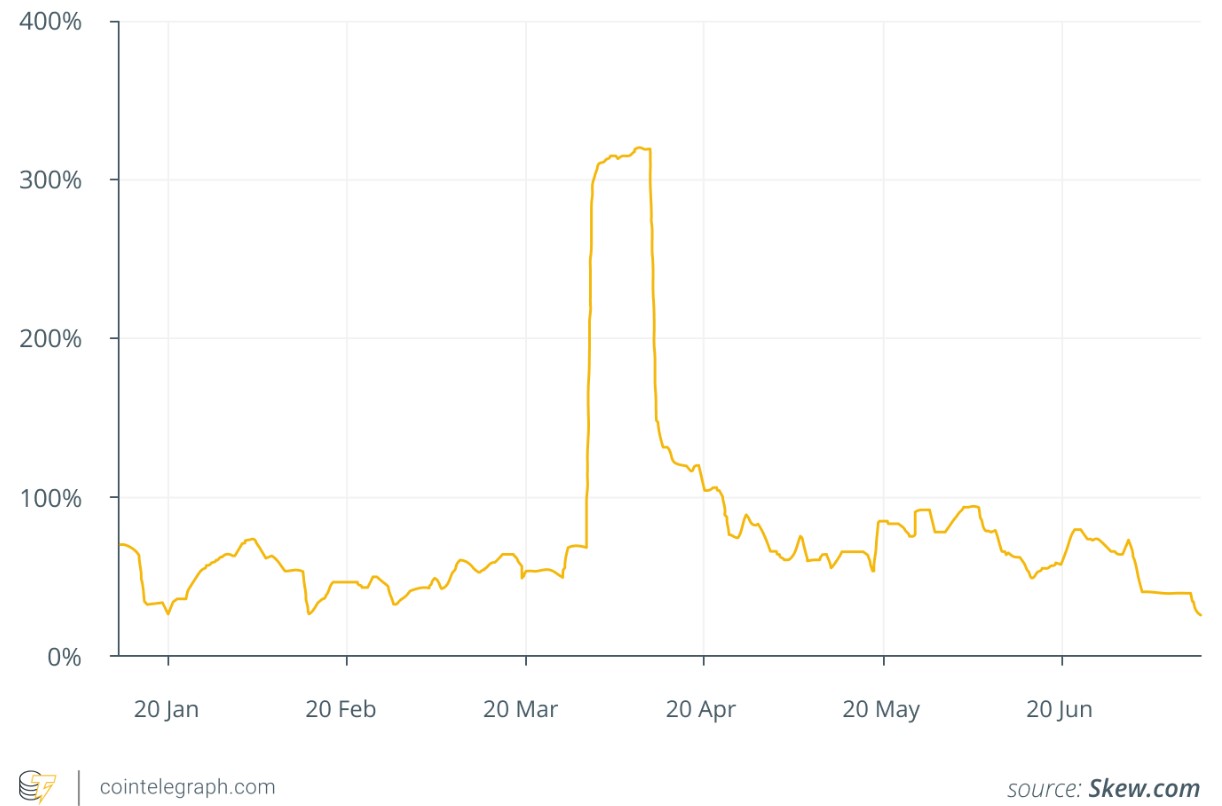
Bitcoin’s realized volatility hit a new yearly low on June 24. Source: Skew.com
Usually, most of the cryptocurrency traders and analysts in the market are optimistic or even partial to the medium-term prospects of the price of Bitcoin. In the short term, analysts see weakness in BTC and other mainstream cryptocurrencies due to external uncontrollable factors and variables such as the COVID-19 pandemic.
In the long run, strong macro factors suggest that BTC is poised for a steady recovery and rise. The most prominent piece of data supporting the bullish trend forecast is the rise in "HODLing" activity among investors.
first level title
2. A large number of bitcoins are accumulated and hoarded
According to Glassnode CTO Rafael Schultze-Kraft (Schultz-Kraft), various HODLing data show that investor confidence has improved. First, Bitcoin’s supply, which has not changed in a year, is at an all-time high of 61%. This shows a lack of willingness to sell BTC at current prices. Schultz-Kraft said:
“First, the obvious one: 61% (!) of Bitcoin supply that hasn’t moved in over a year — that’s an all-time high. Moreover, 44% hasn’t moved in 2+ years (approaching ATH), and almost 30% hasn’t moved in 3+ years. Loads of hodling here.”
image description
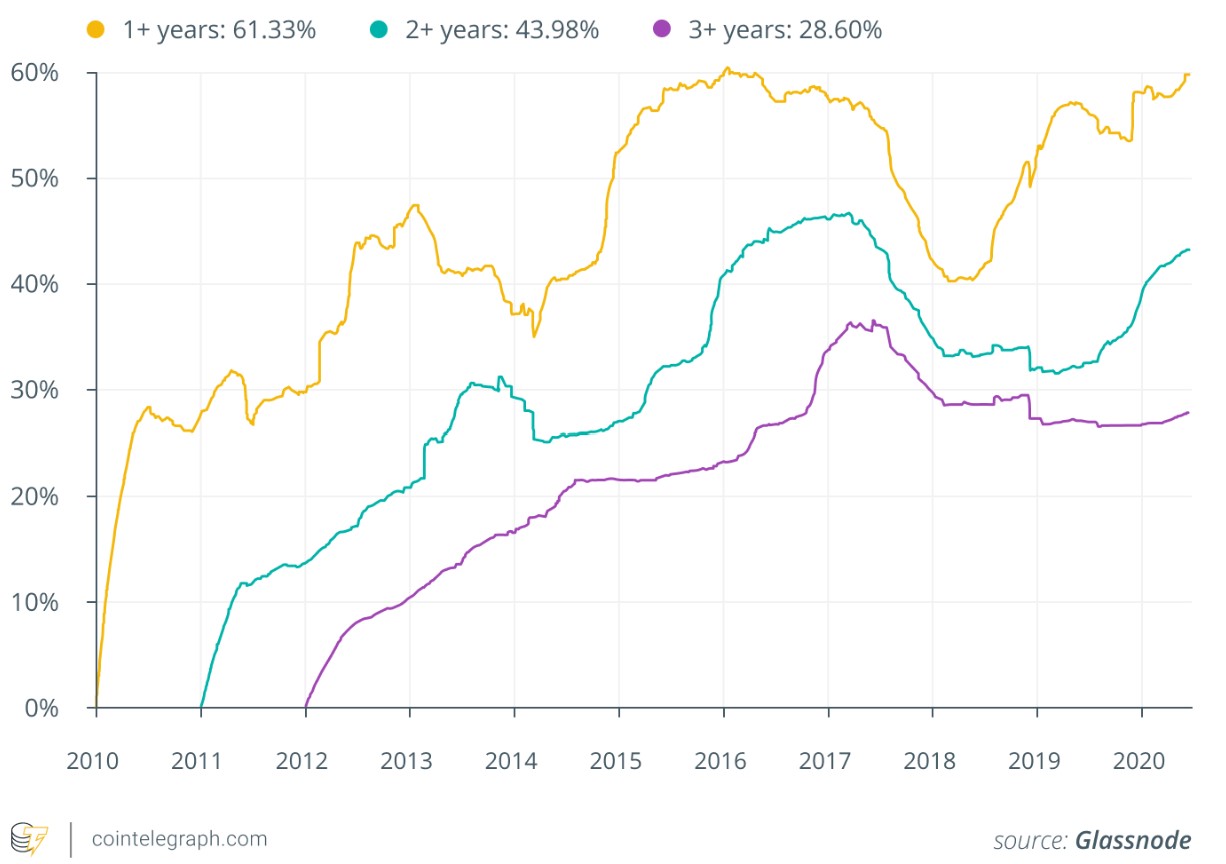
Bitcoin supply. Source: Glassnode Inc.
Schultz-Kraft further emphasized that an indicator called "HODLer (Hodler) Net Position Change" shows that investors have hoarded Bitcoin in large quantities in 2020. This data paints a picture of the reluctance of many retail investors to sell BTC, noting: “From the beginning of the year to date, the BTC-HODLer net position change has only been negative for 16 days.”
If the BTC-HODLer net position change value is still positive, it means that investors will not transfer funds from personal digital wallets to digital asset exchanges for sale. In March 2020, the price of Bitcoin on several major futures exchanges fell below $3,600.
Alistair Milne (Alistair Milne), chief investment officer of Altana Digital Currency Fund, suggested that if this decline cannot shake investor confidence, then there will not be many factors in the future. Milne said: “The last time a similar HODL was around $400 during the three-month consolidation period before the bull run of the past two months, and guess what this cycle will peak at 70%?”
image description
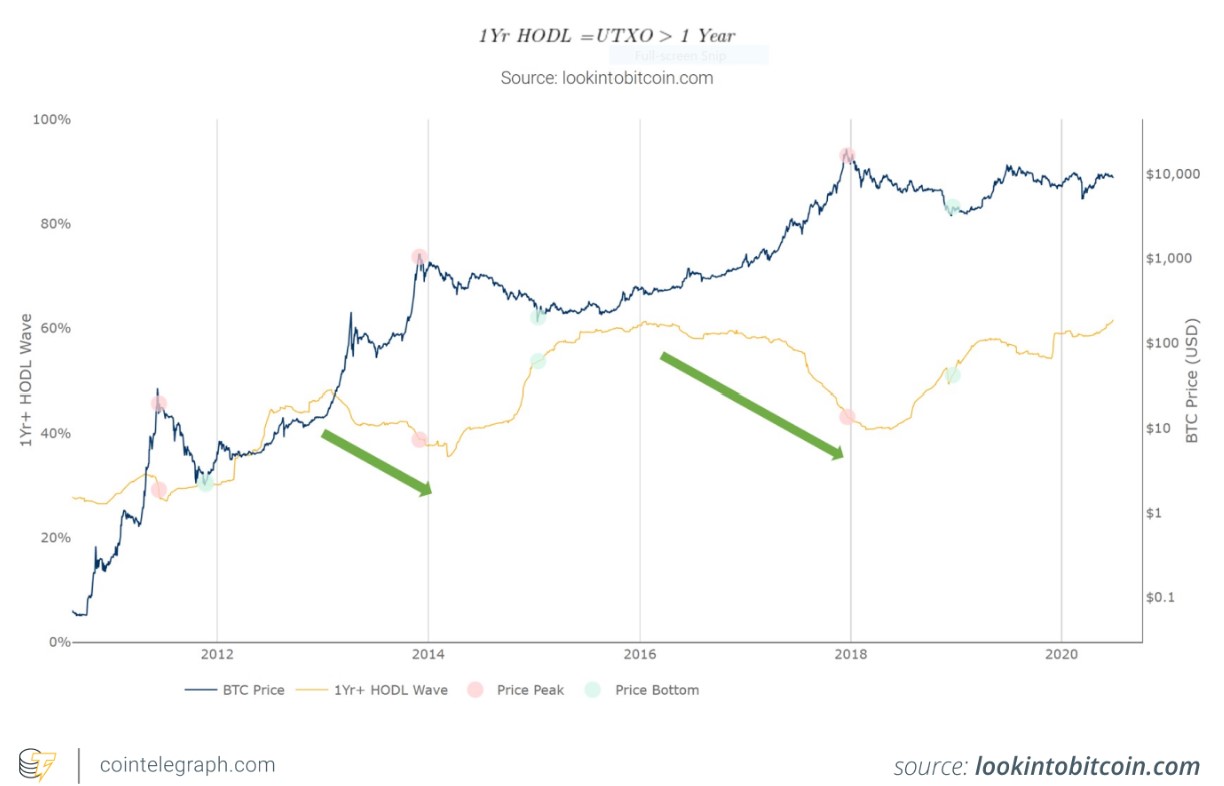
Correlation between Bitcoin HODL Wave and BTC price. Source: lookintobitcoin
first level title
3. Institutional investors continue to invest in Bitcoin
Since March 2020, the assets under management of the Grace Bitcoin Trust have increased from $1.577 billion to $3.541 billion. The sharp rise in assets under management suggests that demand from institutional investors is also accelerating.
Most specifically, the selection of investment vehicles available to U.S. institutions to gain exposure to Bitcoin is narrow. Without a digital asset exchange-traded fund, the Grayscale Bitcoin Trust would likely remain an investment vehicle for institutional investors.
In a positive measure, the Grayscale Bitcoin Trust’s assets under management are at an all-time high, while the price of Bitcoin is down more than 50% from its all-time high. This shows that institutions are confident in the long-term trend of BTC, and more confident than they were three years ago.
But, according to Messari researcher Ryan Watkins, reports of Grace buying most of the newly mined bitcoin may be overblown. Watkins explained that since the May 11 halving, Grace has only purchased 31% of all newly mined Bitcoin:
“Grayscale is buying Bitcoin in less of a way than many think. Considering “physical” purchases, Grayscale has only purchased 31% of all new Bitcoin mined since the halving, well below the 150%+ that many have reported. This Just one of many misunderstandings about the Grayscale Trust."
first level title
4. Optimistic technical structure
image description
Bitcoin six-month price chart. Source: lookintobitcoin
In addition to some favorable technical structures and macro indicators, futures data also suggest that the market is not overbought. Typically, when there is a sharp pullback in the price of Bitcoin, it is triggered by the capitulation of overleveraged buyers. On futures exchanges like BitMEX, buyers typically borrow funds with up to 100 times leverage to enter into long-term contracts on bitcoin. If BTC falls, it could lead to a cascade of liquidations and a sudden drop in price.
A technical analyst known as "Byzantine General" said that the funding rate of the Bit Exchange perpetual swap contract and the open interest rate show that BTC is not currently overbought. "At the peak of the last rally in February, there were a lot of very clear signs that the market was overleveraged and overbought. But we're not really there yet," they said.
Possibly due to Bitcoin’s positive medium-term trend, the number of high-net-worth investors moving funds from exchanges to personal wallets has increased in recent months.
first level title
5. Rising Hash Rate Brings All Macro Factors Together
When the block reward is halved on May 11, analysts expect the bitcoin blockchain network’s hash rate to drop significantly, as the event causes bitcoin mining to drop in half, costing most miners revenue overnight 50% reduction in between.
However, data from the "BlockChan.com" website shows that Bitcoin's bit rate has recovered to nearly half the level. Mining remains healthy despite the halving, which could further boost overall Bitcoin sentiment.
The large mining center in Sichuan, China, remains highly profitable. The rainy season causes electricity prices to drop, reducing the cost of mining BTC. Therefore, miners do not have much incentive to sell large amounts of BTC to cover costs in the short term. Typically, overleveraged miners are forced to sell after a halving as the cost of Bitcoin mining soars. This time around, the block reward halving was met with relatively low selling pressure.
Thus, the combination of low selling pressure from miners, a favorable long-term technical structure, increasing bullshit activity, more whales, and more institutional adoption raises the bar for the emergence of new coins by 2021. Possibility of a rebound.
original:





