


What Says Bitcoin Is Digital Gold? Where is Bitcoin worth?


Bitcoin provides an efficient means of transferring funds over the Internet, controlled by a decentralized network with a transparent ruleset, and we therefore propose an alternative to central bank-controlled fiat currencies. [1] There has been a lot of discussion about Bitcoin pricing, and here we set out to explore what Bitcoin's price might look like if it gains further widespread adoption.
secondary title
1. Why currency has value
A currency is used if it can store value, or in other words, it can be reliably used to maintain its relative value and not depreciate. In many societies throughout history, commodities or precious metals were used as a form of payment because they were believed to have a relatively stable value. However, instead of requiring individuals to carry cumbersome cocoa beans, gold, or other early forms of money, society eventually opted for minted money instead. Still, the reason many minted coins can be used is because they are reliable stores of value, made of metals with a long shelf life and little risk of depreciation. [2]
image description
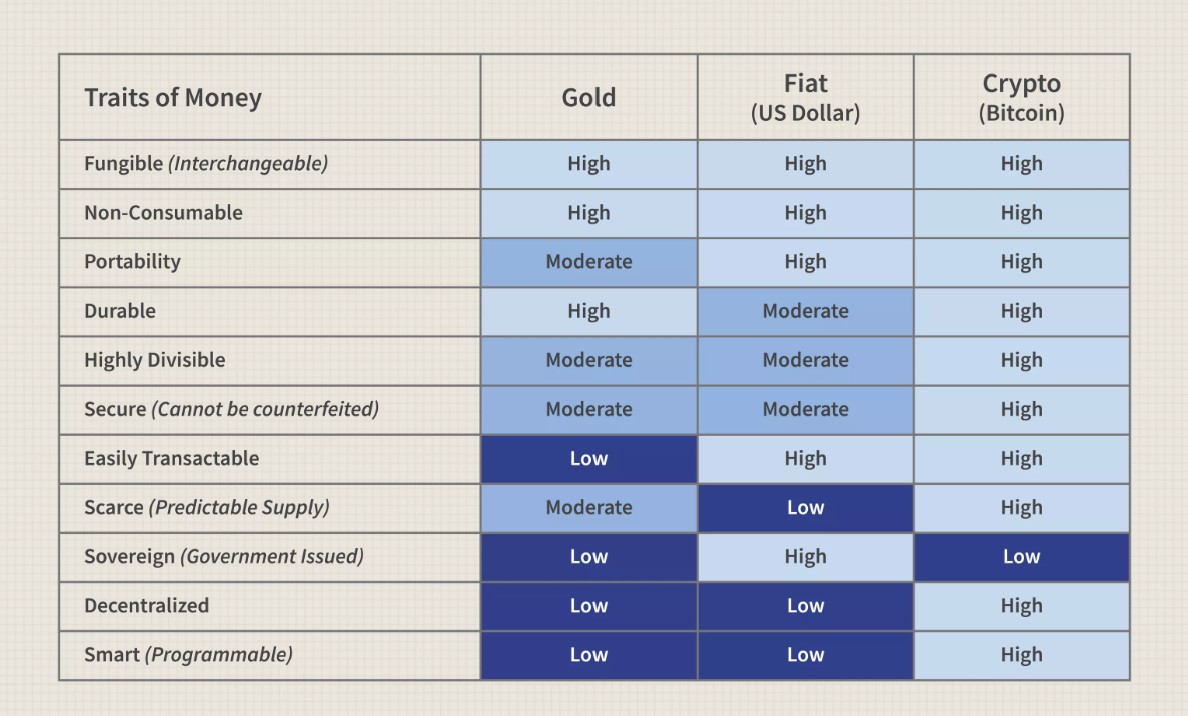
image description
secondary title
2. Scarcity, divisibility, practicality and transferability
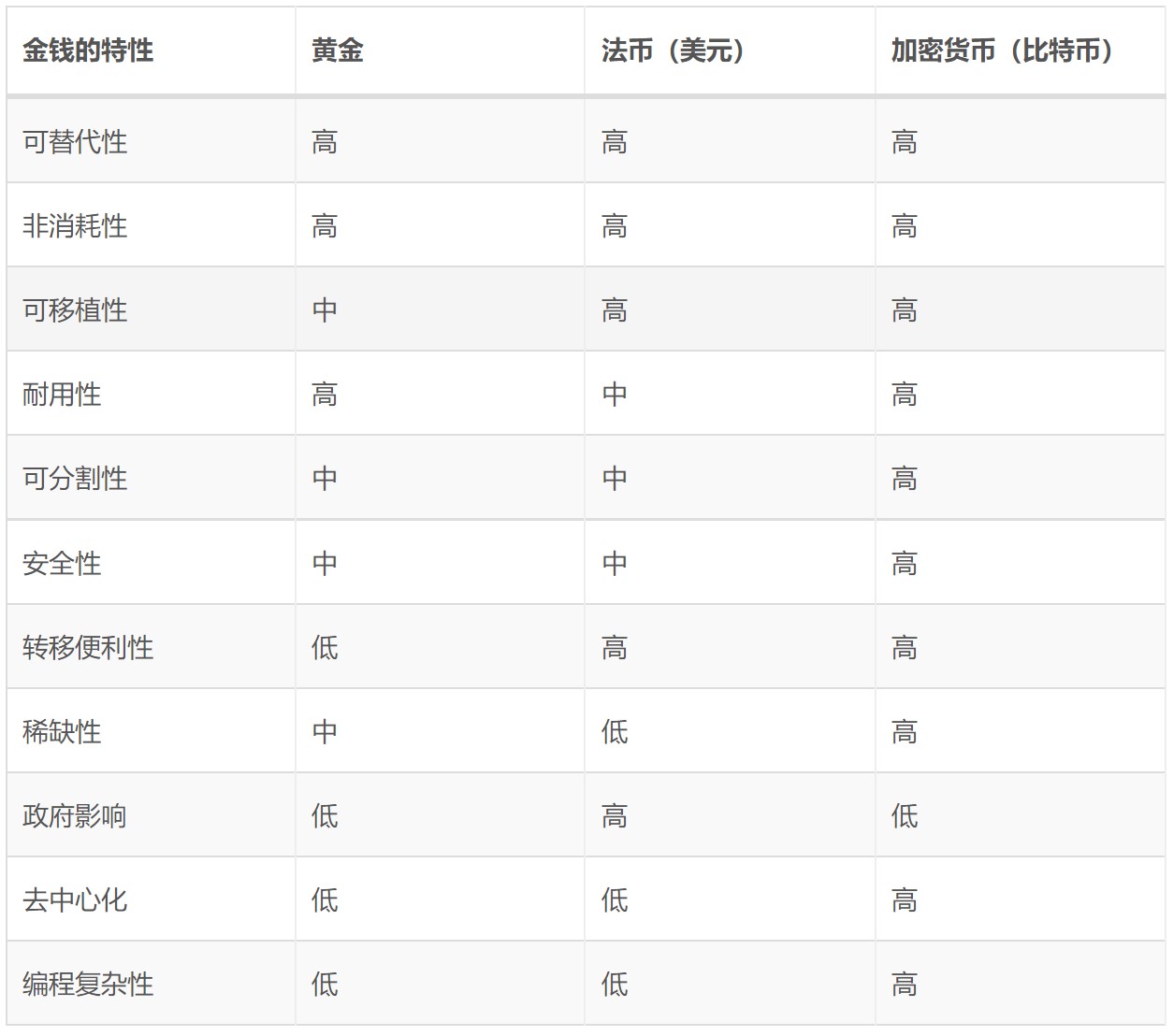
Aside from the question of whether or not it is a store of value, a successful currency must also meet conditions related to scarcity, divisibility, utility, transportability, durability, and forgeability. Let's look at these qualities one at a time.
1) scarcity
The key to maintaining the value of a currency is its supply. An excess money supply can cause commodity prices to skyrocket, leading to economic collapse. Too little money supply can also cause economic problems. Monetarism is a macroeconomic concept that seeks to address the role of the money supply in the health and growth (or lack thereof) of an economy.
In terms of fiat currencies, most governments around the world continue to print money to keep scarcity in check. Many governments operate with a preset rate of inflation, which causes the value of fiat currencies to drop. In the US, for example, the rate has historically hovered around 2%. [4] This differs from Bitcoin, whose issuance rate varies over time. [5]
2) Divisibility
Successful currencies can be broken down into smaller incremental units. In order for a single monetary system to serve as a medium of exchange for all types of goods and values within an economy, it must have the flexibility associated with this divisibility. Money must be sufficiently fragmented to accurately reflect the value of every good or service available across the economy.
3) Practicality
Currency must have utility to be effective. Individuals must be able to reliably trade units of currency for goods and services. This is the main reason why money was developed in the first place: so that market participants can avoid having to barter directly. Utilities also require the easy movement of currency from one location to another. Heavy precious metals and commodities do not easily meet this requirement.
4) Transferability
For an economy to be useful, money must be easily transferable between economic participants. Expressed in fiat currency, this means that the currency unit must be transferable through exchange within the economy of a particular country and between countries.
5) Durability
To be effective, money must be durable, at least to some extent. Coins or bills made of materials that are easily mutilated, damaged, or destroyed, or that have degraded over time to the point that they are unusable, are not sufficient.
6) Forgery
Just as currency must be durable, it must also be difficult to counterfeit in order to remain effective. If this were not the case, malicious parties could easily disrupt the monetary system by flooding it with counterfeit notes, negatively affecting the value of the currency.
secondary title
3. Comparison of Bitcoin and Fiat Currency
When Bitcoin launched in 2009, its developers specified in the agreement that the supply of the token was capped at 21 million. [5] At some point, the current supply of bitcoins is about 18 million, and the rate at which bitcoins are released drops in half roughly every four years, and the supply should exceed 19 million by 2022. [6] Assumes no protocol changes. Note that changing the protocol would require the concurrency of a majority of computing power participating in Bitcoin mining, which is impossible.
Bitcoin employs a different supply method than most fiat currencies. People generally think of the global fiat money supply as being divided into M0, M1, M2 and M3 differently. [7] M0 refers to currency in circulation. M1 is M0 plus checking deposits (such as checking accounts). M2 is M1 plus a savings account and a small time deposit (called a certificate of deposit in the US). M3 is M2 plus substantial time deposits and money market funds. Since M0 and M1 are easy to use in commerce, we will consider these two buckets as a medium of exchange, while M2 and M3 will be considered as money to be used as a store of value. As part of their monetary policy, most governments maintain some flexible control over the supply of currency in circulation, adjusting it for economic factors. This is not the case with Bitcoin.
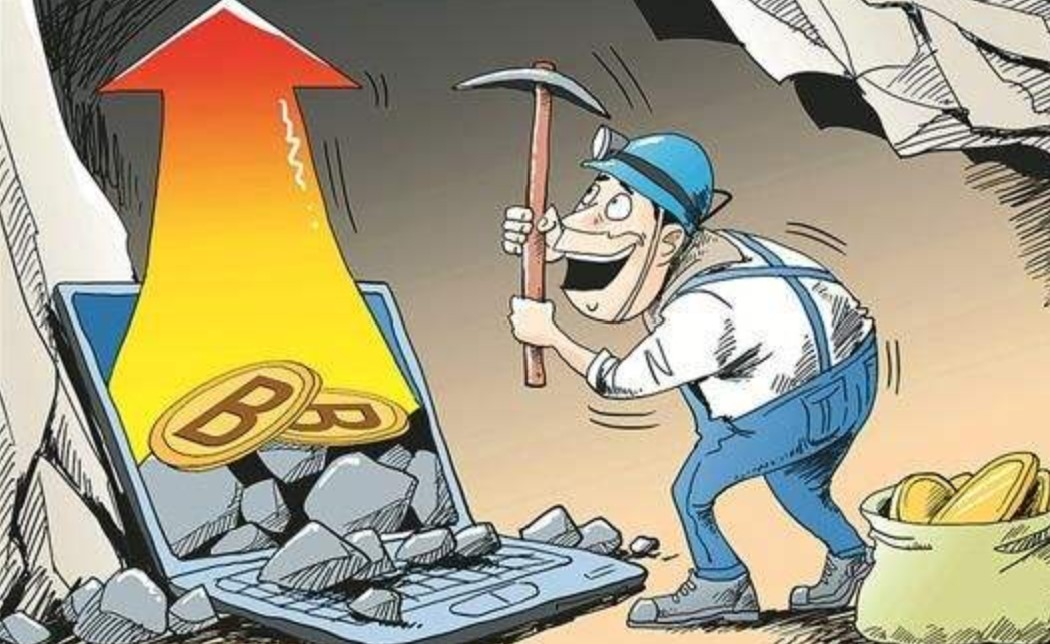
The continued availability of more coins that can be generated has encouraged a strong mining community so far, although this could change significantly as the 21 million coin limit is approached. Exactly what will happen then is hard to say. As an analogy, imagine the U.S. government suddenly stopping production of any new bills. Fortunately, the last bitcoins are not scheduled to be mined until around 2140. [8] Often, scarcity can drive value up. This can be seen with precious metals such as gold.
Satoshi NakamotoSatoshi Nakamoto’. This allows a single unit of Satoshis to reach a trillion times, which can be distributed throughout the global economy.
A bitcoin is much more divisible than the U.S. dollar and most other fiat currencies. A dollar can be divided into cents or 1/100 of a dollar, and a "Satoshi" is only 1/100,000,000 of 1 BTC. It is this extreme divisibility that makes Bitcoin's scarcity possible. If bitcoin continues to increase in price over time, users who own only a fraction of their bitcoins can still participate in day-to-day transactions. Without any divisibility, 1 BTC would cost $1,000,000, which would prevent the currency from being used for most transactions.
One of Bitcoin's biggest selling points is its use of blockchain technology
Blockchain is a decentralized and trustless distributed ledger system, which means that none of the parties participating in the Bitcoin market need to have a trust relationship with each other for the system to function properly. This is thanks to a well-established checking and verification system, which is essential for maintaining the ledger and mining new bitcoins. Most importantly, the flexibility of blockchain technology means it has utility outside of the cryptocurrency space as well. [11]
Thanks to cryptocurrency exchanges, wallets, and other tools, Bitcoin can be transferred between parties in minutes, regardless of the size of the transaction, and at very low cost. The transfer process in the current system can take days at a time and requires a fee. Transferability is an extremely important aspect of any currency. Although mining bitcoins, maintaining the blockchain, and processing digital transactions requires a lot of electricity, individuals generally do not hold any physical representation of bitcoins in the process.
Durability is a major concern in the actual form of fiat money
A dollar bill, while strong, can still be torn, burned, or otherwise rendered unusable. Digital payment methods do not suffer from these physical injuries in the same way. Therefore, Bitcoin has great value. It cannot be destroyed like a dollar bill. But that's not to say bitcoins can't be lost. If a user loses his or her encryption key, the bitcoins in the corresponding wallet may be permanently unusable. [12] However, bitcoins themselves will not be destroyed and will continue to exist on the blockchain for record.
Thanks to the sophisticated, decentralized blockchain ledger system, Bitcoin is extremely difficult to counterfeit. Doing so would actually require confusing all participants in the Bitcoin network, which is no small feat. The only way to be able to create counterfeit bitcoins is to perform what is known as a "double spend". This is when a user "spends" or transfers the same bitcoin in two or more separate setups, effectively creating duplicate records. While this is not a problem with fiat currencies (it is impossible to spend the same dollar bill in two or more separate transactions), it is theoretically possible to use digital currencies.
secondary title
4. What is the value basis of Bitcoin
In addition to the reasons for the value of Bitcoin based on its own characteristics that we introduced to you above, we also mentioned that everyone's beliefs are also one of the reasons why Bitcoin has value. When all participants in the market have reached a general consensus that Bitcoin has value, has currency attributes, has payment attributes, and can become a currency similar to legal tender for purchasing and redeeming goods, then Bitcoin Bitcoin has value. If all participants in the market do not agree with its value, Bitcoin has no value.
In addition to recognizing the value of Bitcoin, the circulation and trading of Bitcoin in the market also requires market participants to reach consensus on two other aspects. The first is the rules. Everyone generally agrees on the mechanism of Bitcoin generation. The core agreement and data format and other content, when the participants in the system agree with these rules, can communicate and agree with each other.
secondary title
5. Bitcoin Challenge
Generally, Bitcoin performs quite well in the aforementioned categories compared to fiat currencies. So, what are the challenges facing Bitcoin as a currency?
One of the biggest questions is Bitcoin's status as a store of value. Bitcoin's utility as a store of value depends on its utility as a medium of exchange. We are based on the assumption that for something to be used as a store of value, it needs to have some intrinsic value, and if Bitcoin doesn't succeed as a medium of exchange, it will have no real utility and therefore no intrinsic value, Nor would it be attractive as a store of value. Like fiat currencies, Bitcoin is not backed by any physical commodity or precious metal. Throughout most of Bitcoin's history, Bitcoin's current value has been driven primarily by speculative interest. Bitcoin took on the characteristics of a bubble, with massive price increases and frenetic media attention. That number may drop as Bitcoin continues to gain greater mainstream acceptance, but the future remains uncertain.
secondary title
6. How much is Bitcoin worth compared to fiat currency?
In order to determine the value of Bitcoin, we need to predict its market penetration in various fields. This article will not say what the market penetration is, but for the sake of assessment, we will choose a rather arbitrary value of 15%, whether it is Bitcoin as a currency or Bitcoin as a store of value. We encourage you to form your own opinion on this forecast and adjust the valuation accordingly.
The easiest way to adopt this model is,View the current global value of all mediums of exchange and all stores of value comparable to Bitcoin and calculate the value of Bitcoin's predicted percentage. The primary mediums of exchange are government-backed currencies, and for our model we will only focus on them.
Roughly speaking, M1 (including M0) is currently worth about $4.9 trillion, which will be our current medium of exchange for global value.
M3 (including all other buckets) minus M1 is worth about $45 trillion.USD, which we use as a store of value comparable to Bitcoin. In addition to this, we will provide an estimate of the global value of gold as a store of value. While some might use jewelry as a store of value, for our model we only consider gold bars. The US Geological Survey estimated that at the end of 1999 there were about 122,000 metric tons of usable gold in the ground and 48 percent, or 58,560 metric tons, was in the form of private and official gold stocks. At the current estimated price of $1,200 an ounce, that amount of gold is worth more than $2.1 trillion today. Since the supply of silver has been in short supply in recent years and the government has also sold silver bars in large quantities, our rationale is that most silver is used in industry rather than as a store of value, and silver will not be included in our model nor will we deal with it other precious metals or precious stones. In total, our estimate for a global store of value comparable to Bitcoin (including savings accounts, small and large time deposits, money market funds, and gold bullion) amounts to $47.1 trillion.
Thus, our estimate of the total global value of mediums of exchange and stores of value is $72.1 trillion. If Bitcoin were to reach 15% of that valuation, it would have a market capitalization of $10.8 trillion in today's money. If all 21 million bitcoins were in circulation, the price of 1 bitcoin would be $514,000.
This is a fairly simple long-term model. Perhaps the biggest question it rests on is how much adoption will Bitcoin really gain? Putting a value on bitcoin's current price would involve pricing bitcoin as a currency at risk of low adoption or failure, which could include being replaced by one or more other digital currencies. Models often take into account the velocity of funds, often arguing that because Bitcoin can support transfers in less than an hour, the future velocity of funds in the Bitcoin ecosystem will be higher than the current average velocity of funds.
epilogue
epilogue
references
references
[1] "A CFTC Primer on Virtual Currencies," p. 4, p. 6.
[2] Congressional Research Service. "Cryptocurrencies: Monetary Economics and Certain Policy Issues," pp. 2-3.
[3] Congressional Research Service. "Cryptocurrencies: Monetary Economics and Certain Policy Issues",Pages 3-4.
[4] Board of Governors of the Federal Reserve System. " Frequently Asked Questions"。
[5] Bitcoin. " common problem"。
[6] Buy Bitcoin worldwide. "How many bitcoins are there?"。
[7] Federal Reserve Bank of New York. "The Money Supply".
[8] Bitcoin on Wikipedia. "Controlled Supply".
[9] Bitcoin.org。“ FAQ” 。
[10] Bitcoin on Wiki. "Help: FAQ.".
[11] Congressional Research Service. “Blockchain: Background and Policy Issues,” p. 1.
[12] Consumer Financial Protection Bureau. “Risks Posed by Virtual Currencies to Consumers,” p. 2.
[13] Bitcoin. "51% Attack, Majority Hash Rate Attack.".
[14] National Science Foundation. “Attack Surface Analysis of Permissioned Blockchain Platforms for Smart Cities,” p. 1.
Statement: This is "New Aspects of Blocks (chengwf.com)"The Wikipedia entries compiled based on the opinions of famous academic or authoritative institutions at home and abroad on various aspects of Bitcoin value are purely objective and not subjective analysis opinions.
original:
original:New Aspects of Block | Why is Bitcoin valuable? (WIKI Encyclopedia)





