


Peer Customer Data Analysis Report: What is the relationship between the top 100 bitcoin holding addresses and the market price?


Peer Data has recently conducted a detailed historical analysis of the top 100 "big addresses" with bitcoin balances as of the end of February 2020, hoping to find the overall statistical law of the address balance data, and combine historical market price comparisons to find more A bitcoin supply and demand model of value. These addresses all have bitcoin balances close to or above 10,000.
By pattern recognition and classification of the balance history curves of these large addresses from before the bitcoin price plummeted at the end of 2018 to the present, we found that a large part of the top 100 large addresses have their transfer histories subject to non-market transactions by unknown holders or institutions. Factors have a huge impact and are not suitable for price-related market analysis. The pattern of such unfavorable transfer history curves is well represented in the figure below:
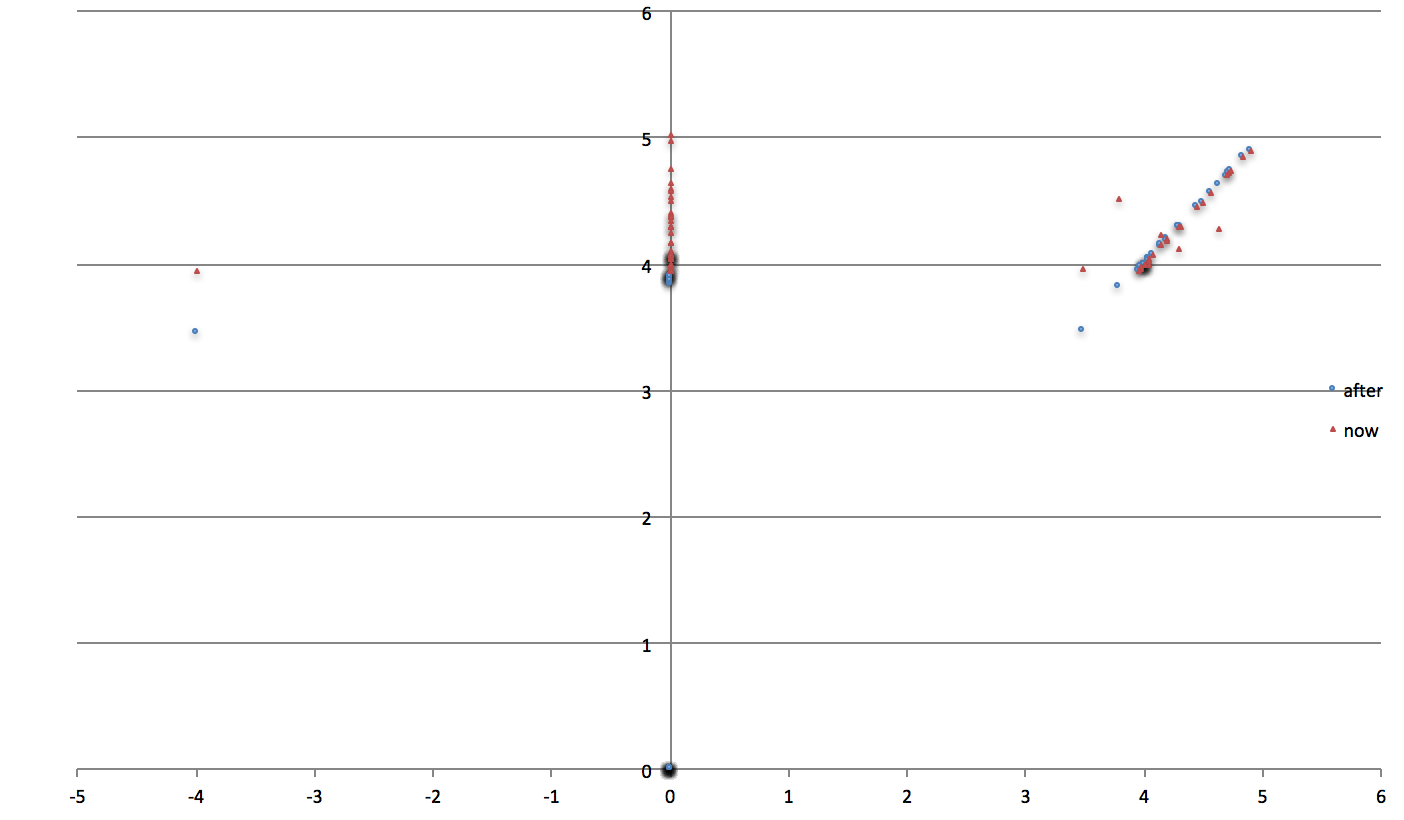
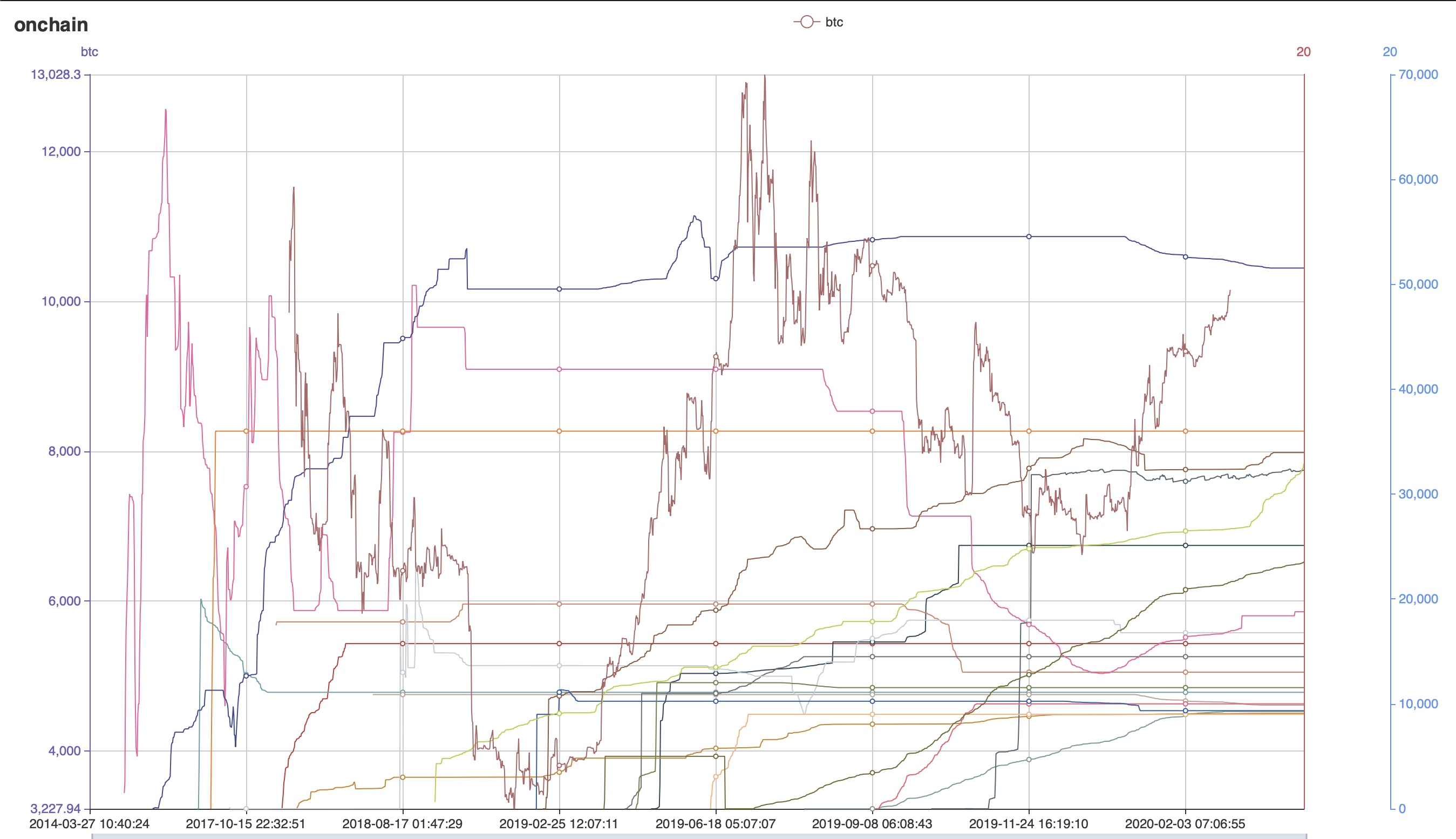
We compared the address balances at three time points, and displayed them on the plane map with the log values (X, Y1, Y2) of the balance before, after, and the current balance at the end of 2018 as coordinates. It is not difficult to find that after the sharp drop at the end of 2018, the balance of many new addresses suddenly jumped from 0 to the same positive value (the blue icon close to "4" above the Y axis); there are also many addresses that have never changed since the first time they had a balance (For example, the blue dot and the red dot on the 1:1 diagonal line in the upper right area belong to the same address). The special behaviors of these addresses do not have a clear market price analysis value. Therefore, we have excluded all addresses with highly consistent transfer behavior (jumping from 0 balance to the same positive balance) since the end of 2018 and all addresses after obtaining the balance for the first time. There have been no changes to the address so far. In fact, after screening, we only have 20 large addresses remaining in the sample for our further analysis. The balance historical curve combined with the Bitcoin price curve is shown as follows:
Unfortunately, the only 20 remaining sample addresses are distributed in different time periods for the first time on the stage of history (the first time to get the balance):
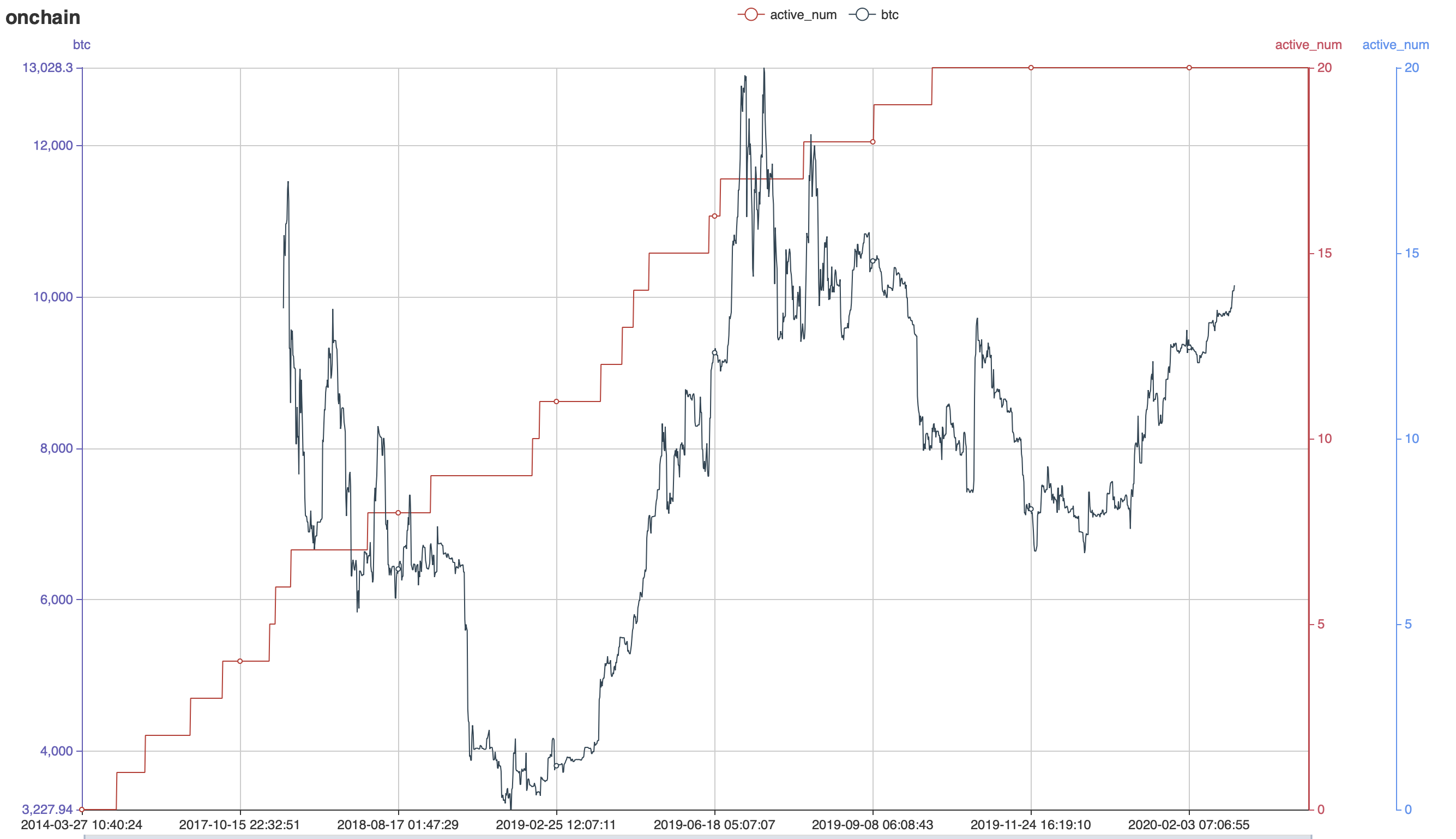
This poses a challenge to our research on the stability of the overall currency holding law of large addresses.
However, we still analyze the average currency holdings of these large addresses that have been selected and activated at a certain point in time since the end of 2018:
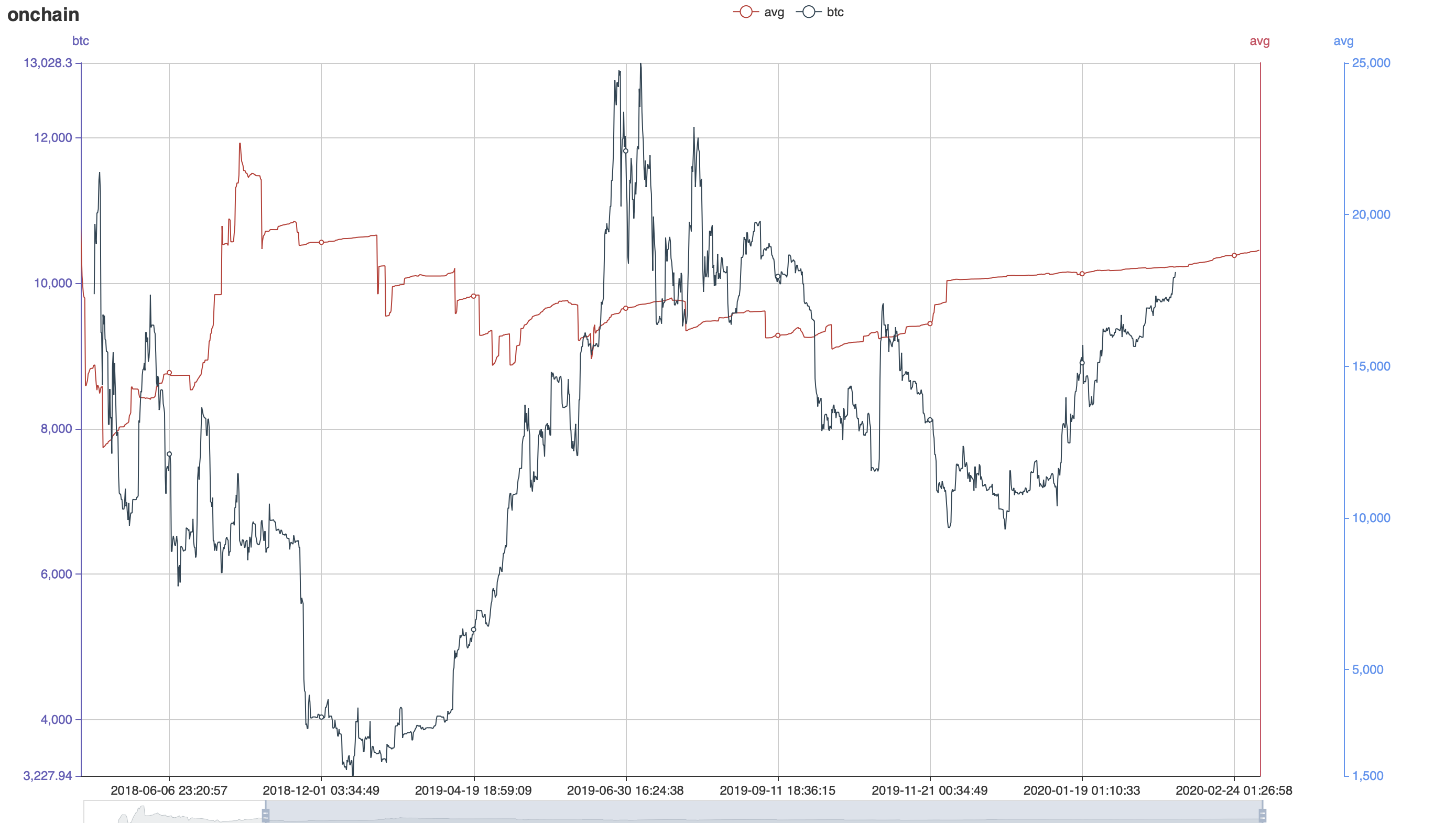
Our conclusion is that the large addresses that were already active before the sharp drop at the end of 2018 first experienced a sharp increase in currency holdings, and then significantly reduced their holdings after the sharp drop. Note that the number of large addresses at this stage has risen rapidly, so the average amount of currency holdings has also decreased. It is related to the number of selected addresses. After the sharp drop, the price rose sharply again and broke through $10,000 again in the middle of 2019. During this period, the average currency holdings of large addresses in the sample were generally stable and fluctuated within a narrow range, but it was far below the level before the sharp drop at the end of 2018. By the fourth quarter of 2019, all 20 large addresses had been activated. Since then, the average currency holdings of all 20 large addresses have risen steadily, but as of the end of February 2020, when this data is updated, it has not yet reached the level before the sharp drop at the end of 2018.
We tried to verify (or falsify) the correlation between the average currency holdings of large addresses and the market price, but due to various complex factors, we only got a preliminary conclusion that the average balance of 20 large addresses has increased steadily since the fourth quarter of last year. Further verification of more primary addresses and accumulation of longer transfer history after activation will be essential.





