Is the upcoming ST (Security Token) honey or arsenic?



Recently, the birth of the first STO (Security Token Offering) on Ethereum has further intensified the popularity of STO. On October 13, Beijing time, tZERO, a blockchain platform owned by the American e-commerce giant Overstock, completed the issuance of security tokens (STO). The continuous participation of traditional enterprises has made STO move from a small circle of blockchain to a broader public. world.
In addition, the U.S. Securities and Exchange Commission (SEC) has always been obsessed with security tokens and brought them into supervision; Nasdaq has paid full attention to STO and wants to create a new platform for securitization; …It can be basically predicted that 2019 may become the year of the outbreak of STO, or the first year of STO.
As I said in the previous article, ST is a financial practice of securities tokenization. Since it is a practice, there are many uncertainties. Think about it, just over a year ago, how many people cheered with the popularity of ICO, how many people got rich overnight, and how many grassroots completed the counterattack in an instant and realized the freedom of wealth. But in just a few months, the situation has changed, from thinking that IPO can be replaced to no longer having a legal status in many countries; from people flocking to avoid it; from the huge wealth effect to now % break rate.
So, whether the Security Token, which is becoming more and more popular, will repeat the same mistakes, or it will be reborn; and for all stakeholders, whether it is honey or arsenic, this is probably the question that every blockchain practitioner must ask. Questions for deep thought.
1. In my opinion, in terms of securities, Security Token is a gift from God and the latest solution for asset securitization. It will inevitably change the entire securities industry and bring a new imagination to asset securitization.
We all know that in Marx's theory of currency, there is a very famous saying, which is called "gold and silver are not currency by nature, but currency is naturally gold and silver". The previous sentence refers to the fact that gold and silver appeared on the market initially as common commodities. When commodity exchange develops to a certain historical stage, a fixed commodity of equivalent value is needed as the medium of exchange, that is, general equivalents; when general equivalents are concentrated on gold and silver, Gold and silver are money when they serve as general equivalents in a fixed way, so gold and silver do not become money as soon as they come into the world. The latter sentence means that gold and silver should be used as currency by nature, or that gold and silver are born with excellent characteristics as currency, which is determined by the natural properties of gold and silver.
In the same way, at least from the current level of technology,We can say that "ST is not a security by nature, but securities are naturally ST".Why do you say that, because the so-called Security Token is just the classification of Token by the US Securities and Exchange Commission, and the Token itself is generated along with the blockchain, and has nothing to do with securities. The US Securities and Exchange Commission believes that it has the relevant attributes of securities Only then forcibly decided to include it in securities regulation and named it Security Token. However, when the process of asset securitization was limited by the current securities carrier and attributes, it was discovered that the Token generated by the blockchain can actually perfectly carry such functions, and its attributes are open and transparent, distributed storage, and non-tamperable Naturally matched securities, especially asset securitization.
We know that Token is the certificate of rights in the blockchain world, and Coin is its form of expression. According to the US Securities and Exchange Commission, under the classification of utility tokens and security tokens, all Tokens except Bitcoin and Ethereum have the characteristics of securities. In this context, security tokens are issued to tokenize many assets, commodities and financial instruments. This means that smaller companies have the opportunity to quickly raise funds from global investors without incurring high issuance costs. For example, in the United States, companies using frameworks such as Reg D and Reg A+ in the securities law for financing can guarantee compliance with their regulations or laws and regulations without hiring a lawyer.
Just because securities are naturally ST, various STOs have sprung up like mushrooms in just a few months. Let’s take a look at a few successful cases: 1. tZERO, through large-amount security token financing, raised funds of 134 million US dollars, and the funds were used to build and develop security tokens. After being officially approved, tZERO STO can adopt a method similar to equity crowdfunding. Raise funds by means of a certain percentage exchange of equity and Token. 2. HydroMiner (H3O), the first security token financing in Europe that fully complies with regulations, has successfully completed the pre-sale of USD 2.5 million security tokens, and the funds are used for the operation of large-scale and environmentally friendly electronic currency mining projects. 3. Templum Markets launched a security token "Aspen" for a resort in Colorado, which represents the resort's stock.
It can be said that the biggest reason why STO will not repeat the mistakes of ICO is that the assets represented by STO are real. It actually puts valuable assets on the chain and tokenizes them, which has equity attributes and profits. The nature of traditional securities such as distribution and voting rights, and external fundraising through non-public offerings and public offerings, can basically be linked and anchored to any form of investment and assets, including stocks or commodities. Regulatory authorities in various countries have also been trying to legalize it.
At present, Security Token has the following four forms:
1. Tokenized VC Funds (Tokenized VC Funds), a tokenized venture capital fund provides token holders with the right to claim compensation for fund shares.
2. Share-like Tokens, which can have characteristics such as ownership shares of an entity, LP shares, voting rights, dividends, profit shares, or interests in an entity that will be successful in the future.
3. Asset-Backed Tokens, which can be used for fungible or non-fungible assets, in which case the asset may require a layer of abstraction. This layer takes distinct assets and bundles them together, similar to how home mortgages are grouped together to create securities.
4. Encrypted bonds (Cyprto-Bonds), eliminate middlemen and registration agencies, reduce settlement time and reduce operational risk.
2. The emergence of new things will inevitably break the old pattern. ST’s securities attributes have triggered changes among the participants. Everyone is faced with the problem of choice. For blockchain practitioners, the choice is more direct. They will face left or right. The question to the right is to implement application scenarios in a down-to-earth manner, or to embrace the attributes of securities and completely use the blockchain as a carrier or tool.
According to relevant statistics, there are already more than 20,000 STO issuers queuing up, waiting to issue their own security tokens. The development of a new generation of security tokens will enable better identity management, cross-border transactions through KYC (know your customer rules) and AML (anti-money laundering) mechanisms. The emergence of securities trading organizations in the second half of 2018 will make it possible to trade securities tokens unlocked by Reg D restrictions in 2017, and we will see more and more U.S. token products that comply with SEC regulations.
However, the number of 20,000 issuers is really shocking. On the one hand, it proves the popularity of STO, and on the other hand, it shows a huge bubble crisis-in front of interests, more and more people want to get a share . However, when the regulatory policy is still unclear, the implementation of the implementation has not been carried out effectively, and the market cultivation has not yet been carried out, all relevant parties should act cautiously.
For a long time, I have not been so fanatical about the blockchain. As an underlying technology for reconstructing production relations, I believed that its breakthrough point was in the 1+3 field at the beginning of this year, and 1 refers to the financial field. 3 refers to the fields of right confirmation, Internet of Things and intellectual property. Today, the popularity of STO makes me more confirmed the judgment made at the beginning of the year, and also makes me think that blockchain practitioners have reached a critical moment when they need to make a decision. However, this choice should depend on the project itself, team structure, regulatory policies of the host country, financial strength, and past experience in the financial/securities field, rather than blindly following the STO craze.
1. Whether the project itself fits is the biggest prerequisite, and you must see where your competitors are. For example, a public chain needs to focus on technical standards or trading platforms. The new proposal ERC1400, submitted by developer Stephane Gosselin on GitHub on September 11, is seen as a sign of the imminent outbreak of STO - no blockchain giants have participated in STO before, which shows the status of Ethereum in the blockchain field Still unshakable for now. But this also means that other public chain projects that want to enter STO as technical standard exporters will face extremely powerful opponents.
2. Whether the financial strength matches determines how far the company can go in the competition, which is especially critical during the capital winter. Compared with ICO, which can raise funds with just a white paper, the threshold and requirements of STO are much higher. After witnessing the downturn of ICO and the difficult situation of small and medium-sized blockchain enterprises, various institutions and bosses with capital in hand, I will have a more cautious attitude towards blockchain projects that enter STO, so if there is not enough capital support, but I want to rely on STO to make profits in the capital market, there is basically no hope.
3. The regulatory policy of the host country is the biggest uncertain factor, but legal compliance is the basic bottom line. Although the U.S. Securities and Exchange Commission has relevant requirements for ST, there is still a shortage of truly compliant STO trading platforms, especially when the market targeted by STO has shifted from digital currencies with a volume of hundreds of billions of dollars to millions of dollars. When there are billions or even trillions of dollars worth of assets, it is impossible for any country to underestimate it. However, the global nature and free flow of the blockchain make it impossible for any country to carry out local supervision; and in the face of huge interests, and even profound securities reforms, countries must guard against each other. Therefore, how to seek legal compliance in complex supervision is the most uncertain factor that project parties who want to get involved in STO need to pay attention to.
4. Experience in the financial/securities industry is a prerequisite for taking the lead, and talent reserves are crucial. It is undeniable that most of the current blockchain practitioners come from the Internet/technology field and less in the financial field. Naturally, there is no problem in dealing with the underlying technology of blockchain, but it is obviously insufficient to integrate into big finance/securities. Therefore, project parties who want to intervene must absorb more people from the financial/securities industry. It is foreseeable that in the not-too-distant future, the upsurge of STO will make the blockchain project parties gather together in Silicon Valley to gather in Wall Street.
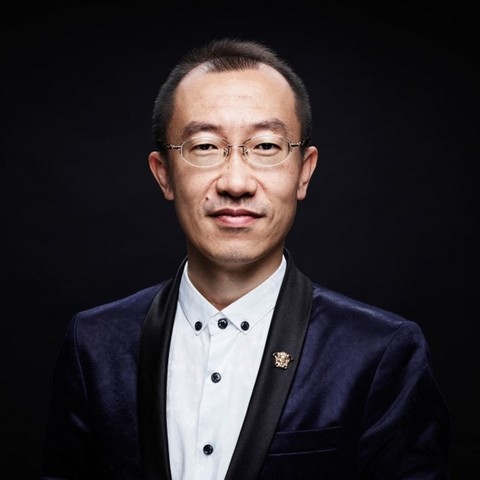
About the author: Sun Jiantao, CEO of Digital China, serial entrepreneur, founder of Goopal Group, angel investor; deeply involved in the payment industry, has successively founded and participated in brands such as Times Jiecheng, China Pay, Qiandaibao, and Zhangzhong Technology.
(to be continued)
About the author: Sun Jiantao, CEO of Digital China, serial entrepreneur, founder of Goopal Group, angel investor; deeply involved in the payment industry, has successively founded and participated in brands such as Times Jiecheng, China Pay, Qiandaibao, and Zhangzhong Technology.