







Odaily: Analyst Jukan posted on X that Nvidia chips remain in short supply, but to sustain the scarcity premium, the company needs to continue supporting emerging cloud service providers (Neoclouds). If the new CEO takes a more cautious approach to this business model, it could put pressure on GPU spot prices, reduce cloud service providers' profit margins, and push them to turn to alternatives such as AMD or Google TPU, thereby weakening Nvidia's market dominance and supply chain control.
Jensen Huang has been working hard to maintain Nvidia's growth flywheel, which not only helps expand chip demand but also ensures compute utilization for emerging cloud service providers. He reportedly hoped to gradually step back once Neoclouds were able to independently order next-generation GPUs, but it remains uncertain whether the successor CEO is willing to wait. According to The Wall Street Journal, the current CEO appears to lack such patience.
Previously, Nvidia (NVDA.O) interim CEO and Chief Financial Officer Colette Kress had repeatedly raised objections to high-risk deals pushed by Jensen Huang. People familiar with the matter said Kress may adopt a more prudent operating strategy than Huang. She had previously opposed Nvidia's plan to provide up to $250 billion in credit support to OpenAI; the deal was ultimately split, and Nvidia currently only committed to providing about $100 billion in credit support. With data center projects delayed and cloud computing deals canceled, Kress had already begun diversifying Nvidia's financial risk exposure to a small number of customers.

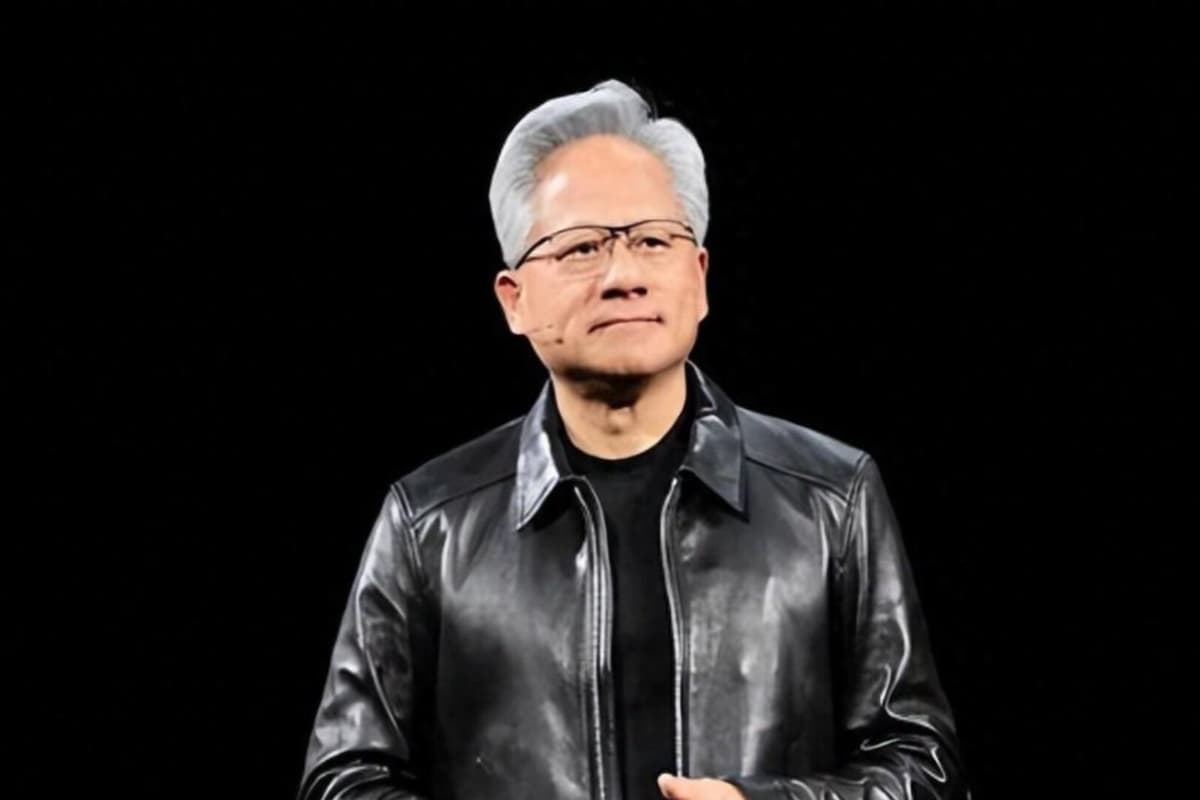
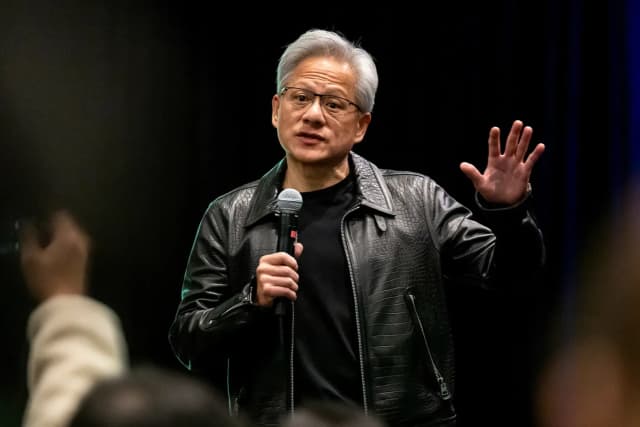
Odaily reports: Jensen Huang officially announced last night that he is stepping down as president, chief executive officer, and board member of Nvidia. Although Chief Financial Officer Colette Kress has become interim CEO, Nvidia is also commissioning an external executive search firm to find a successor.
Bloomberg published an article this morning listing 8 potential candidates who could ultimately succeed Jensen Huang as permanent CEO.
There are two internal candidates:
1. Colette Kress: the current interim CEO. She is a good transitional choice for the moment, offering investors a familiar face and financial stability, but she lacks an engineering background.
2. Ian Buck: Nvidia vice president and inventor of the CUDA architecture (joined in 2004). He is one of the strongest technical candidates within the company and is mainly responsible for the hyperscale AI hardware and software business.
There are six external candidates:
3. Rene Haas: current CEO of Arm, who previously oversaw Nvidia's computing product business. He is one of the most frequently mentioned external candidates and is very familiar with Nvidia's business and the broader semiconductor ecosystem.
4. Lisa Su: current CEO of AMD. As the head of a long-standing competitor, she has extremely strong management and leadership experience in the chip industry.
5. Johny Srouji: senior vice president of hardware and chief hardware officer at Apple. He joined Apple in 2008 and led the development of in-house chips ranging from the A-series chips for iPhone to the M-series chips for Mac.
6. Matt Garman: CEO of Amazon Web Services (AWS). He is familiar with how cloud service providers procure and deploy large-scale computing chips.()
7. Sanjay Mehrotra: CEO of Micron Technology. He has extensive experience in the memory chip field, and high-bandwidth memory (HBM) is precisely an indispensable key link in the supply chain for current AI processors.
8. Amin Vahdat: a Google computer scientist and a core executive responsible for Google's TPU (Tensor Processing Unit) project. He has exceptionally high technical expertise in custom chips, data centers, and network architecture.
Odaily reports: Quantitative trading investment firm Renaissance Technologies disclosed in its latest Q3 2026 13F filing that it made substantial adjustments to its US equity holdings, cutting its Nvidia stake by 99.7% compared to the previous quarter, which had a market value of approximately $1.42 billion. Meanwhile, the firm significantly increased its holdings in semiconductor and memory chip-related assets, including a 5,451% increase in SanDisk, a 619% increase in Micron, a 140% increase in AMD, and established a new SpaceX position worth approximately $621 million.
It is reported that Renaissance Technologies' top ten holdings include Micron ($1.62 billion), AMD ($1.21 billion), United Therapeutics ($908 million), Intel ($835 million), and Google parent Alphabet ($828 million), among others. Overall, the firm notably reduced its positions in tech stocks such as Nvidia, Meta, Apple, and Amazon, shifting toward memory chips, semiconductors, and other assets.
Renaissance Technologies was founded by "Quant King" James Harris Simons, and the fund has achieved an astonishing average annual return of nearly 40%. Unlike Buffett's "value investing," Simons relies on mathematical models and computers to manage his massive funds, using mathematical models to capture market opportunities and letting computers make trading decisions.
Odaily reports that “White-Haired Stock Oracle” Serenity posted on X, saying: “After Jensen Huang resigns, I will no longer have confidence in Nvidia’s future. At least for the next few years, Nvidia’s existing revenue and product roadmap may still be able to support the company’s development. But looking further ahead, I do not see enough appeal in Nvidia. It was Jensen Huang’s visionary leadership that had kept Nvidia ahead of AMD and even left competitors such as Broadcom behind. Without him at the helm, I am no longer optimistic about Nvidia’s long-term prospects.”
Odaily: According to sources, following Jensen Huang's departure, an anonymous executive at a cloud service provider that has been purchasing Nvidia chips has revealed that the company is considering procuring alternatives from companies such as Google and AMD.
The executive stated that the company had previously considered diversifying as well, but was worried about offending Jensen Huang. (The Information)
Odaily reports that “Big Short” Michael Burry has issued a warning, advising investors to exit Nvidia (NVDA) stock as soon as possible, citing several risk factors:
1. Without Jensen Huang, customers may slow transactions, delay purchases, renegotiate contract terms, or even turn to competitors;
2. Nvidia provides financing support for customers to purchase chips through special financing instruments and hidden debt, which could create massive leverage across the entire market;
3. Jensen Huang has threatened to cut customers' future chip allocations to push them to buy chips they do not urgently need in advance;
4. Nvidia's future growth may slow, and more critically, profit margins may decline.
Michael Burry added that Jensen Huang's departure would give Nvidia bulls another rare opportunity to exit.
Odaily reports: On Thursday, U.S. Senate Banking Committee Chairman Tim Scott requested that Huang Renxun, who has stepped down as NVIDIA CEO, and U.S. Commerce Secretary Lutnick testify before the committee next month to explain the matter of Huang Renxun's extramarital affair. Scott sent separate letters to Huang Renxun and Lutnick on Thursday evening local time, requesting their attendance at Senate Banking Committee hearings. This move signals that two high-profile oversight hearings will be held next month. (Politico)
Odaily: Duan Yongping, commenting on Xueqiu about Jensen Huang's departure and Nvidia's future development, said that this decision may be the board's final decision and will not affect Nvidia's business in the short term, but the company's performance in the coming years will depend on whether it can find an excellent CEO. Jensen Huang is a leader who works extremely hard and has vision for the prospects of AI, and such talent is very hard to find.
Duan Yongping believes that Nvidia's business model requires the support of an excellent management team; otherwise, in 3 to 5 years, the company may no longer be as outstanding as it is now. However, the AI industry is still in its early stages of development and is expected to have good room for growth over the next decade. He also said that if the reasons for Jensen Huang's resignation still exist, the possibility of his return is not high, but he does not rule out the company inviting him to serve as an advisor or in a similar role, continuing to exert influence akin to a "shadow CEO" without formally bearing signing responsibilities. The relevant situation may not reach a clear conclusion before the hearing, and the final outcome may still require some time.
Odaily: U.S. President Trump once urged Jensen Huang to fight to keep his position. (The New York Times)
Odaily Report: After stepping down, NVIDIA CEO Jensen Huang will forfeit approximately $108 million in unvested equity compensation. However, this amount represents only a small fraction of his total wealth. According to the Bloomberg Billionaires Index, Huang's current net worth stands at $138.4 billion, and the forfeited equity awards account for roughly 0.08% of his net assets. (Jinshi)
Odaily reports: Nvidia (NVDA.O) shares have fallen sharply recently, with its forward P/E ratio dropping to about 12x, the lowest level since 2012. After Jensen Huang's resignation, Nvidia shares fell more than 4% on Thursday, bringing the cumulative decline this week to about 11% and a drop of more than 30% from the all-time high set on October 6. In addition to the management change, the market is also concerned that AI data center construction may slow. Nvidia Chief Financial Officer Colette Kress is currently serving as interim CEO, and the company is searching for a permanent successor. Analysts are still maintaining expectations for Nvidia's strong earnings growth, anticipating that chip demand will continue to outpace supply.
The market expects Nvidia's October-quarter revenue to grow 92% year over year, with net profit exceeding $60 billion, up 89% year over year. Nvidia will report earnings next Tuesday, and investors will focus on Kress's comments on the company's future performance outlook, as her guidance may draw more attention than the earnings report itself.
Odaily reports that Nvidia (NVDA.O) is facing an antitrust investigation by the US Department of Justice. (US financial news outlet Semafor)
Odaily reports that Nvidia's (NVDA.O) interim CEO is not the leader of the company's major decisions and is not responsible for setting the company's major decision agenda. (The Information)