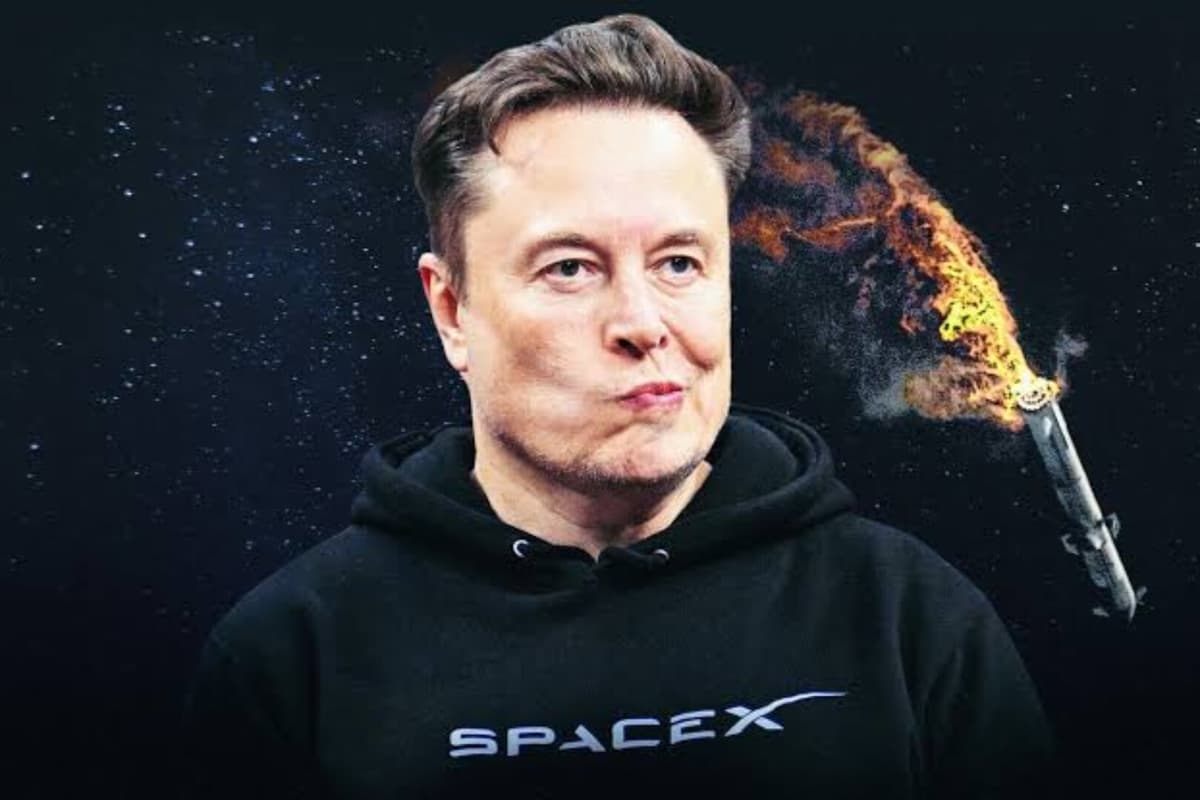
Odaily Report: SpaceX released its third-quarter financial results after U.S. stock market hours this morning. During the investor call following the earnings release, Elon Musk discussed the progress of Starship.
Elon Musk stated that the 15th test flight is expected to take place next month, at which point the company will attempt to recover both the booster and the spacecraft. If successful, this would mark the first full recovery of an orbital launch vehicle, representing a significant technical milestone.
Elon Musk: "We expect Starship to achieve weekly flights at some point in the first half of next year, then reach twice per week in the second half of next year, and possibly even more frequently by the end of next year. As we solve the challenges of rapid and full reusability, Starship's launch frequency will increase substantially."



Odaily reports: SpaceX released its third-quarter financial results after U.S. markets closed early this morning. During the investor call following the earnings release, Elon Musk discussed SpaceX's superintelligence (SI) business.
Elon Musk stated that people are now beginning to realize that the main constraint on SI deployment is actually power, cooling systems, and infrastructure—not chips. One thing SpaceX has done is apply the capabilities of a spaceflight team to the deployment of ground-based computing infrastructure—among the total mass of all payloads entering Earth orbit globally, SpaceX's market share is already close to 90%... The results this team has achieved are an order of magnitude higher than the combined performance of all other competitors worldwide in the space sector. Now SpaceX will devote this same team to the deployment of ground-based computing infrastructure, which is somewhat like having the New York Yankees play in a children's baseball league... The result is that SpaceX deploys power and cooling infrastructure far faster than anyone else, and may even at some point exceed the combined total of all other competitors.
Elon Musk added: "Recently, I have personally devoted a great deal of time to Terafab, often spending four days a week there, busy from morning to night getting Terafab's supercomputing cluster up and running. At the current pace, we will be able to add deployment of approximately 200,000 GB300 GPUs every month for the rest of this year, and we will maintain this pace next year as well. Next year's computing resources will mainly use the Vera Rubin platform. At present, I am quite confident that we can add 10 gigawatts of compute by 2027. That does not include the roughly 3 gigawatts of compute expected to come online before the end of this year, or rather 2.5 to 3 gigawatts. In other words, if by the end of next year we have less than 13 gigawatts of compute online, I would actually be surprised."
Odaily reports: SpaceX released its third-quarter financial results after the U.S. stock market closed early this morning. During the investor call following the earnings release, analyst Adam Jonas asked Elon Musk about "whether SpaceX has already purchased lithography equipment and the progress of its in-house chip manufacturing."
Elon Musk responded: "We are still figuring out chip manufacturing technology. I can share our internal expectations, though these expectations obviously carry great uncertainty, because we don't yet know whether we can actually achieve the goal. But our internal target right now is to try to produce the first fully functional test chip around May or June of next year. It will only be something like an SRAM chip, mainly used to test the entire production line. It will be completed at our research fab in Austin. Our goal is to achieve large-scale mass production at the Terafab main site at Gibbons Creek by the third quarter of 2028. Of course, these timelines are very aggressive. To achieve this goal, we are very grateful to ASML and all other suppliers for their support in accelerating equipment delivery."
Odaily reports: Musk stated on the SpaceX conference call that Terafab, a chip manufacturing joint venture established by SpaceX and Tesla, plans to achieve mass production in the third quarter of 2028. Terafab's internal goal is to produce its first test chip using static random-access memory (SRAM) circuitry at its R&D base in Austin around May or June of next year, and to have it function properly. (STAR Market Daily)
Odaily: Musk revealed on Tuesday during SpaceX's (SPCX) quarterly earnings webcast that SpaceX and Tesla (TSLA) have formed special committees and begun exploring a potential transaction. This marks an important step from market speculation to formal evaluation, though the two sides have not yet reached agreement on the terms of a deal.
Both companies rank among the world's most valuable enterprises. SpaceX is currently valued at approximately $2 trillion, while Tesla's market capitalization is close to $1.5 trillion. If a merger ultimately materializes, based on a simple sum of the two companies' current valuations, the assets involved would be approximately $3.5 trillion, and the potential transaction could set a record for the largest corporate merger ever. Musk serves as chief executive of both companies, and said at the meeting: "I do think there's a lot of value in combining the two companies. By working together to develop superintelligent software, we can gain a lot."
However, the transaction is far from being finalized. Musk said that because he leads both companies and has a conflict of interest, he will not participate in the special committees' discussions. Currently, the two committees have not reached agreement on the terms of the deal.