


After 18 months of preparation, Solana's largest consensus upgrade in history, Alpenglow, activates tonight


- Core Viewpoint: Solana activated its largest consensus upgrade in history, Alpenglow, on October 21, 2026, compressing on-chain final confirmation time from approximately 12.8 seconds to 100–150 milliseconds and freeing up about 75% of block space for user transactions, with the goal aimed directly at global-scale financial infrastructure.
- Key Elements:
- Prepared by the Anza team over approximately 18 months, SIMD-0326 passed with 98.27% approval; over 90% of validators have already met the conditions for switching.
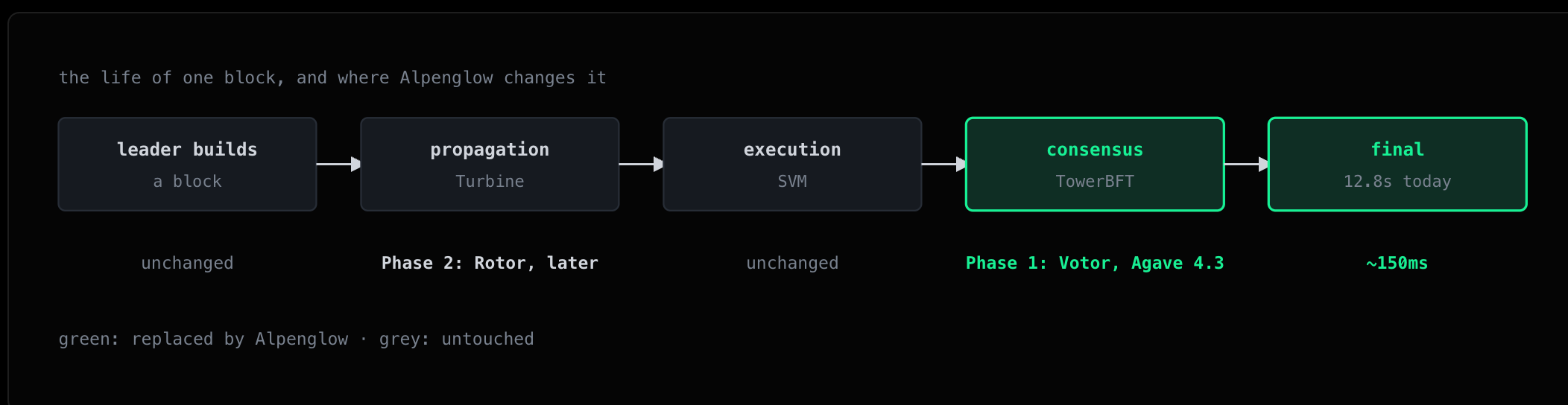
- Votor replaces TowerBFT, with voting changed to lightweight broadcasts of BLS aggregate signatures, and certificates of approximately 1KB recorded on-chain; Rotor is deferred to a subsequent proposal.
- The fast path reaches final confirmation with a single round of ≥80% stake voting (about 100ms), while the slow path requires two rounds of ≥60% (about 150ms).
- The core consensus role of PoH is removed, replaced by local timeouts plus fixed 200ms slots; it can tolerate 20% malicious stake plus 20% offline.
- Validator costs are reduced from approximately 1 SOL per epoch to a fixed 0.8 SOL admission fee that is burned, amounting to approximately 290 SOL annually, a decrease of about 60% from the previous approximately 790 SOL.
- The execution layer SVM, transaction format, and fee mechanism remain unchanged, and ecosystem applications and wallets basically require no modifications; during the migration period, only three types of Agave-series clients are supported.
- Unlike Ethereum's PoS upgrade path: the mainnet switches over without downtime, focusing on confirmation real-time performance rather than the production mechanism, taking the high-performance L1 route rather than the L1 settlement plus L2 scaling route.
Original|Odaily (@OdailyChina)
Author|Wenser (@wenser 2010)
In 1786, modern mountaineering was officially born. In the decades that followed, the Alps—known as the "Roof of Europe"—entered their golden age of climbing.
240 years later, today, October 21, Solana is about to begin the largest consensus upgrade in its history since the mainnet launched in 2020. The upgrade is codenamed after the Alps: Alpenglow, meaning "the glow of the Alps." As AI scales countless technological peaks, Solana has also set its sights on a more ambitious vision—an L1 blockchain network with faster transaction confirmations, higher block space utilization, and lower validator costs. On its path to becoming a "high-performance global computer," Solana is entering deep waters.
When exactly will the Alpenglow consensus upgrade take place? What does it include? What impact will it have? Odaily addresses these questions in this article for readers' reference.

Decoding the Alpenglow Consensus Upgrade: 18 Months in the Making, Unlocking ~75% of Block Space for User Transactions
The upgrade is led by Anza, a core development team spun out of Solana Labs. Since the whitepaper was published in May 2025, preparations have spanned nearly 18 months, with the following milestones:
- May 2025 — The Anza team formally proposed the Alpenglow upgrade plan, intending to replace TowerBFT and Turbine with Votor and Rotor respectively, and to move PoH out of the core of consensus, with the goal of reducing final confirmation time to 100–150 milliseconds.

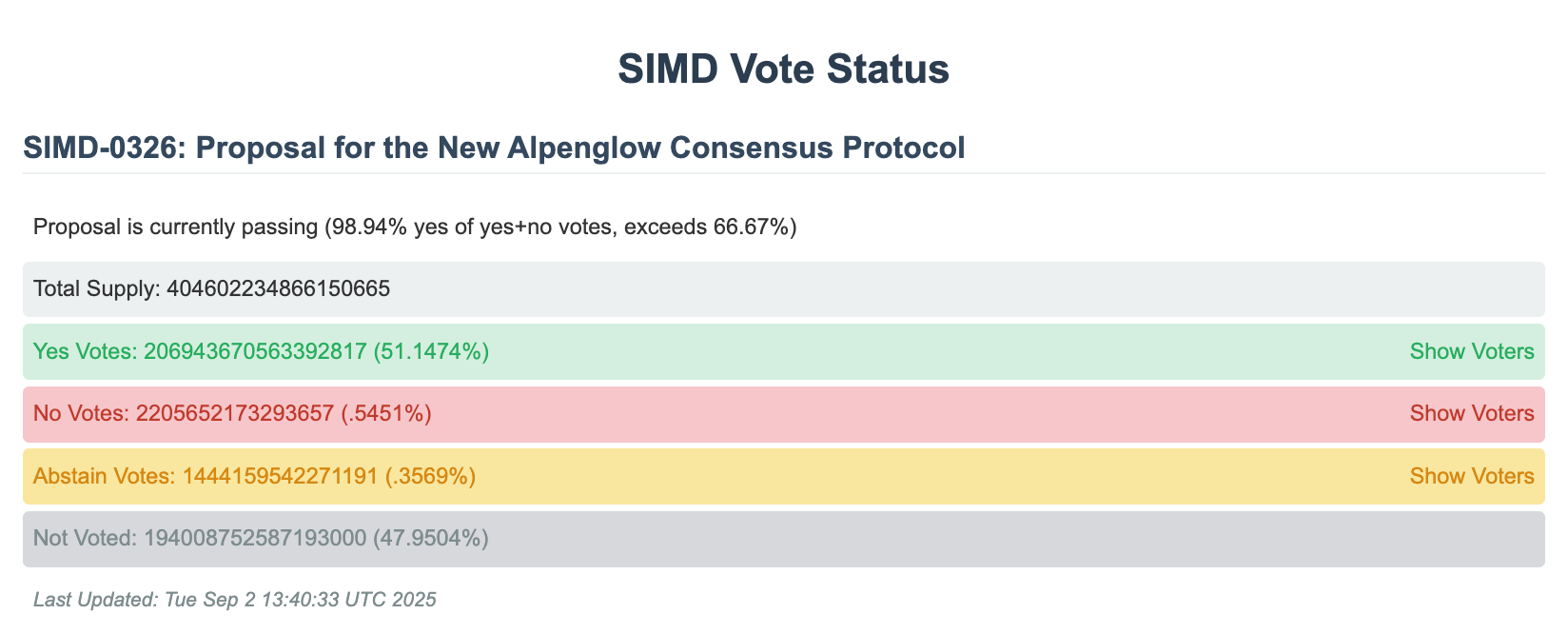
- September 2025 — Validator governance approved SIMD-0326 with 98.27% in favor (validator participation rate was approximately 52%);
- December 2025 — Public demonstration at Breakpoint.
- May 2026 — Launched on a community test cluster, including a live "Alpenswitch" migration from TowerBFT.
- July 8, 2026 — On-chain BLS public key registration was enabled on mainnet (SIMD-0387); July 22 — Validator Admission Ticket (VAT, SIMD-0357) was enabled on mainnet, and validators without registered BLS public keys no longer participate in consensus from that point on. Both are prerequisite components of Alpenglow.
- September 2026 — Alpenglow was successively tested on testnet and devnet.
- October 9, 2026 — Slot time was reduced from 400 milliseconds to 200 milliseconds via an independent upgrade.
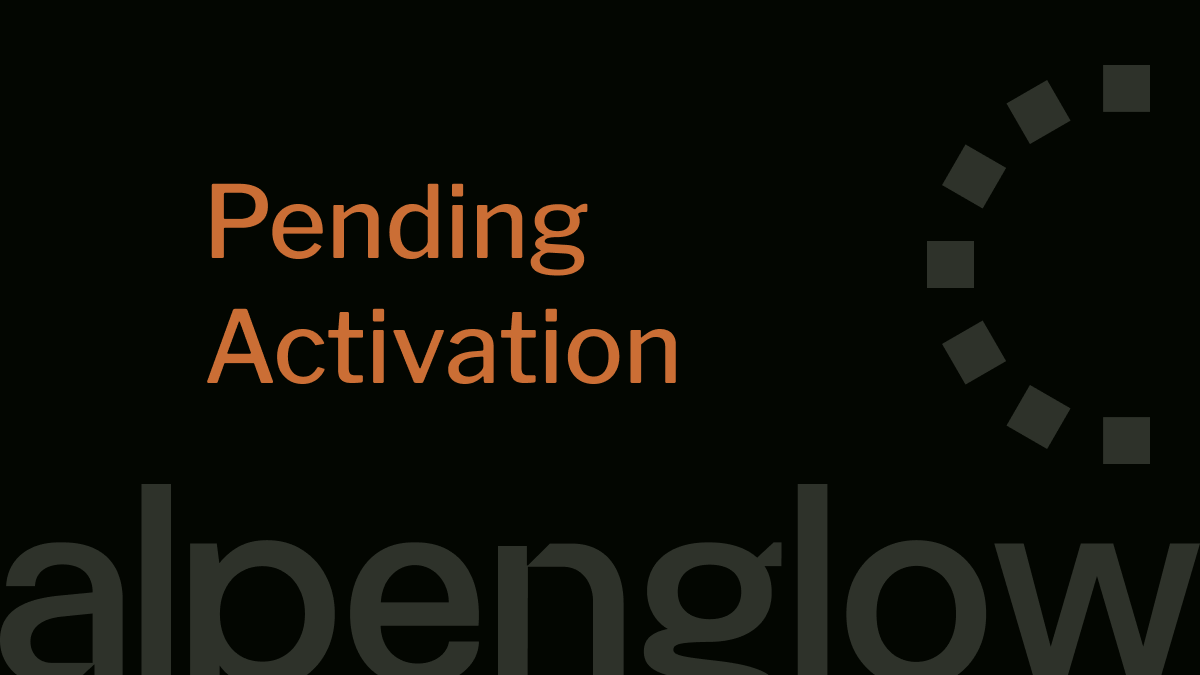
- October 21, 2026 (expected) — Alpenglow mainnet is expected to activate at epoch 1064 (according to the Anza team, the specific time is approximately 10–11 PM Beijing time).
According to Solana's official documentation, the Alpenglow consensus upgrade will proceed in two phases. Votor is the voting and finalization engine already being implemented, replacing the previous TowerBFT; Rotor (the block propagation layer replacing Turbine) has been deferred to a subsequent independent proposal, and Turbine is still in use for now. The most important goal of this upgrade is to dramatically reduce on-chain final confirmation time from approximately 12.8 seconds to about 100–150 milliseconds (median target), and to completely restructure the voting and finalization mechanism.
Key changes include:
- Voting mechanism: From on-chain vote transactions (currently accounting for about 75% of block space/on-chain transaction volume) to lightweight messages broadcast directly between validators (technically known as BLS aggregate signatures). Once a threshold is reached, a certificate of about 1KB is generated to anchor it on-chain.
- On-chain transaction finalization paths (running concurrently, whichever completes first): 1) Fast path: single round, ≥80% stake votes → direct finalization (target near 100 ms); 2) Slow path: two rounds, ≥60% stake → finalization (target about 150 ms).
- Time and PoH: Remove Proof of History from its core role in consensus, replacing it with local timeouts + fixed slot times (slot time has already been reduced to 200 ms via an independent upgrade).
- Fault tolerance model: Can tolerate 20% malicious stake + an additional 20% offline/crashed (totaling approximately 40% non-responsive redundancy), sacrificing the 33% Byzantine fault tolerance of traditional two-round BFT in exchange for single-round fast finalization and higher crash tolerance.
- Execution layer unchanged: SVM, transaction format, programs, and fee mechanism remain completely unchanged; applications and wallets in the Solana ecosystem basically need no modifications.
- Validator readiness: According to the latest data from SolanaFloor in the early hours of today, over 90% of validators currently meet all requirements for the switch (running a client built on Agave 4.3.0, registered BLS public keys, and sufficient balance in the vote account).
- Client restrictions: During the migration, only three clients based on Agave 4.3.0 are supported: Agave, Jito-Solana, and Harmonic Salsa; Firedancer and Frankendancer do not support this migration, and affected validators need to temporarily switch clients.
- Admitted validators: Capped at 2,000, prioritized by stake amount, far exceeding the current number of active validators.
- Validator costs: After the upgrade, each validator must burn an admission fee (VAT) of 0.8 SOL per epoch, deducted from the vote account in the preceding epoch of participation.
Three Key Points: Shorter On-Chain Final Confirmation Time, Lower Validator Costs, and Becoming Infrastructure for Global-Scale Financial Systems
It is worth noting that the Alpenglow consensus upgrade's on-chain final confirmation time will be reduced from the original 12.8 seconds to 150 milliseconds (i.e., 0.15 seconds); unlike the more market-watched TPS (transactions per second), its purpose is not to increase TPS but to move vote transactions—which originally accounted for about 75% of on-chain transaction volume—out of blocks, thereby increasing the block space available for user transactions. The associated benefits include reduced reordering risk, with payments, trading, DeFi settlement, and high-frequency scenarios standing to benefit; ledger size will also shrink, and the cost of MEV delay strategies will rise. These are all expectations at the upgrade design level.
Regarding validator costs, validators previously paid per vote transaction, amounting to about 1 SOL per epoch; Alpenglow changes this to a fixed admission fee (VAT) of 0.8 SOL per epoch, deducted one epoch in advance from the vote account and burned directly. On a per-epoch basis, this is a reduction of about 20%, but since slot time halving reduces each epoch from about two days to about one day, the annualized figure is approximately 290 SOL, compared with the previous approximately 790 SOL—a reduction of about 60%.
Finally, there is the core vision of the Alpenglow upgrade. Solana co-founder toly previously stated that Alpenglow aims to make Solana faster, more predictable, and more secure at the core level. For users and developers, this means shorter final confirmation times (i.e., knowing a transaction is permanently complete) and a more reliable foundation for building applications, with the focus shifting from throughput to consistency and timing precision—which is critical for financial applications, since even milliseconds can affect trades. According to Anza, Alpenglow's goal is to push Solana toward becoming global-scale financial infrastructure.
Solana Alpenglow vs. Ethereum's PoS Upgrade: Different Goals, Different Processes, Different Impacts
For the crypto market, this Alpenglow upgrade—hailed as "the most important consensus upgrade in Solana's history"—easily brings to mind Ethereum's PoS upgrade back in the day, which was likewise a milestone turn for its ecosystem.
But in terms of details and planning direction, the goals, processes, and ultimate impacts of the two upgrades are entirely different.
In terms of upgrade goals, Alpenglow aims to replace the consensus mechanism and compress on-chain final confirmation time by nearly a hundredfold, thereby improving on-chain transaction processing efficiency, enhancing user trading experience, and meeting the high-efficiency, irreversible confirmation needs of institutional users and products; Ethereum's PoS upgrade, by contrast, aimed to change Ethereum's issuance mechanism, shifting from mining to staking, drastically reducing energy consumption while changing the security model.
In terms of upgrade process, Alpenglow uses SIMD voting + feature gate live network switching, with no mainnet downtime, but retains an approximately 18-minute TowerBFT parallel window as a fallback; Ethereum's PoS was completed through a hard fork coordinated by core developers.
In terms of ultimate impact, Alpenglow reduces on-chain confirmation time to the 0.1–0.15 second range, greatly advancing real-time performance, block space release, and the goal of a single global high-performance state machine, bringing L1 public chain user experience to a level somewhat close to that of centralized networks—even able to compete with Web2 infrastructure in terms of responsiveness; Ethereum's PoS upgrade had little impact on on-chain final confirmation time, which remains at the minute level (typically about 12–15 minutes), and its long-term goal is to serve the objective of "L1 as the settlement and data availability layer for L2 networks."
Alpenglow Upgrade Impact: SOL Price, Institutional Adoption, Traditional Finance Positioning
It should be noted that although the Alpenglow upgrade has been nearly 18 months in the making, its actual performance remains to be verified.
For SOL price, although short-term fine-tuning of validator thresholds and incentive mechanisms has been made, the number of tokens burned does not necessarily increase, so the effect is more about boosting market confidence and ecosystem usage sentiment to some extent; it is difficult to have a direct impact on SOL price. Going forward, if the upgraded Solana's on-chain final confirmation speed and stability are recognized by the market, it will help enhance Solana's competitiveness in payments, high-frequency trading, and institutional scenarios, potentially supporting the valuation narrative of SOL and the Solana ecosystem.
For institutional adoption, the Alpenglow upgrade is undoubtedly a shot in the arm, highlighting the Solana ecosystem's investment and determination in building infrastructure layers and improving user experience. A faster, more certain on-chain final confirmation mechanism will powerfully drive institutional payments, stablecoin settlement, post-trade processing, and other scenarios, greatly reducing the technical friction and adoption costs for institutions entering the Solana ecosystem.
For traditional finance positioning, the upgraded Solana will have settlement capabilities closer to real-time, facilitating DeFi business development, on-chain RWA asset transformation, and the building of stock tokenization platforms, and may be embraced by more traditional financial institutions.
For users and developers, this is undoubtedly an upgrade that enhances user experience and the development environment, and can also greatly reduce the frequency of MEV attacks while raising the cost of malicious MEV operations. Solana, firmly committed to the "high-performance L1 network" development path, has thus embarked on a new route distinct from the Ethereum ecosystem's "L1 settlement + L2 scaling" approach, which in the long run benefits the overall development of the crypto market and the realization of technological diversity.





