


SignalPlus Macro Report Special Edition: A Trillion Here, a Trillion There...



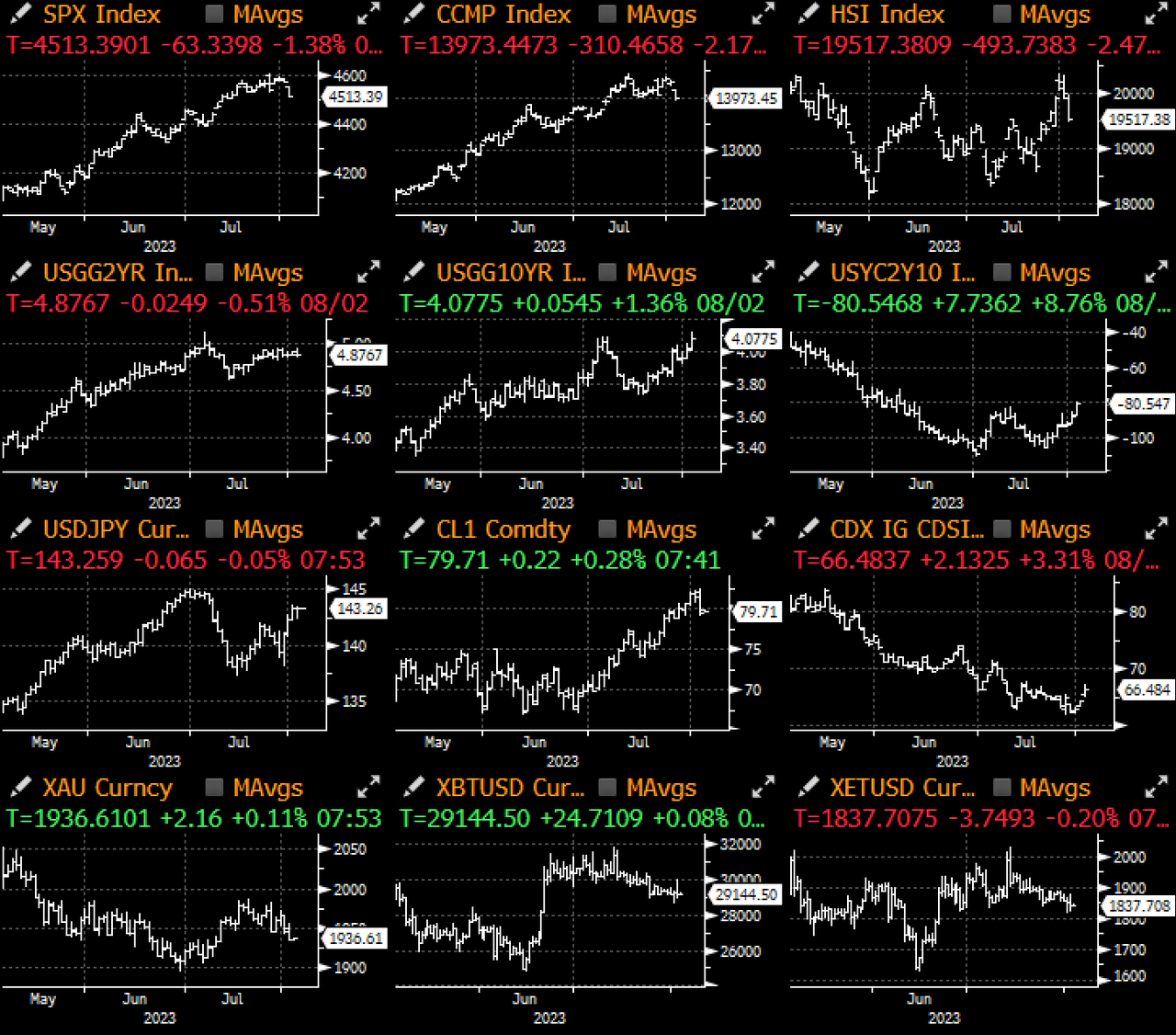
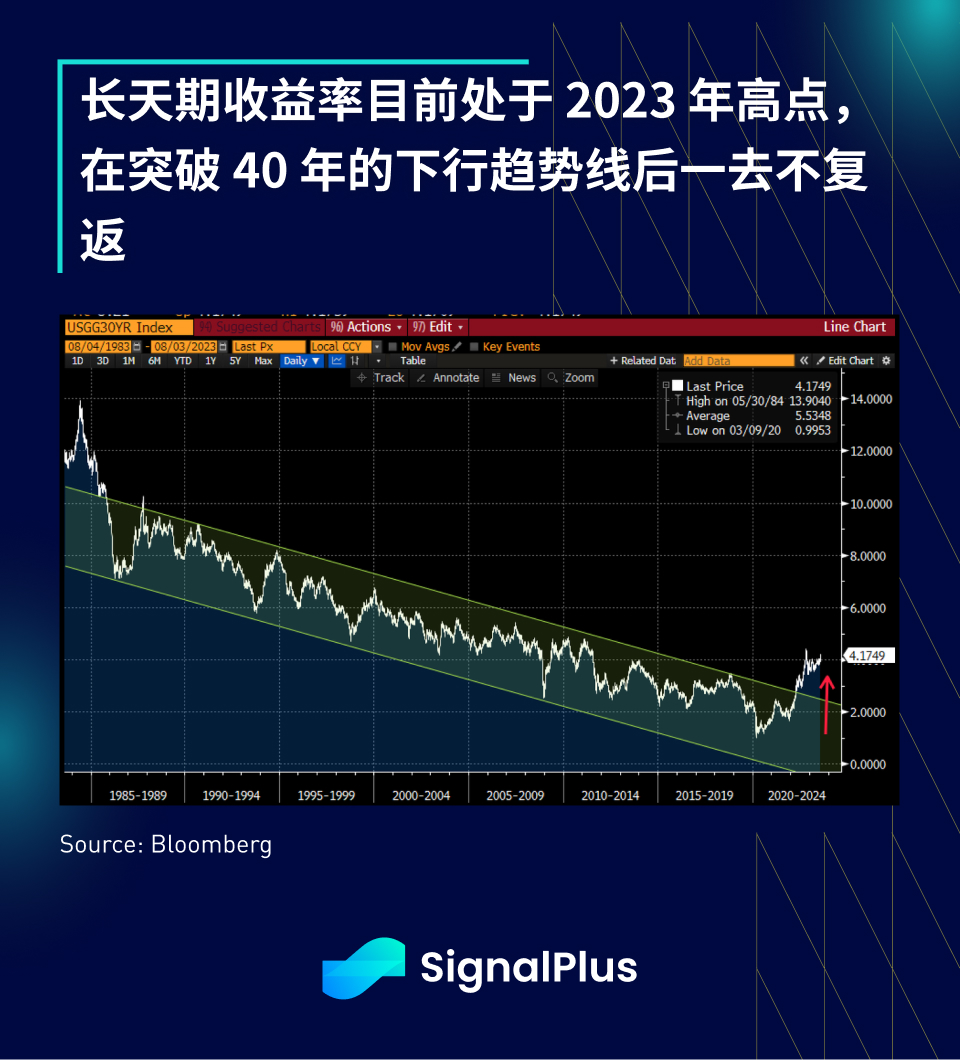
Yesterday the market suddenly realized that the sharp increase in the estimated amount of borrowing by the Ministry of Finance means that there will be a large (really a lot) number of bonds for sale. The 30-year bond yield rose 9 basis points yesterday, and no matter how you look at it, overall US bond yields are currently at their highest point since 2023. Some may attribute the sharp decline in the bond market to Fitch's untimely downgrade or the exceptional ADP employment data (July employment increased by 324,000, higher than the expected 190,000; after a strong increase of 455,000 last month, the service industry added another 303,000), but we are more concerned that under the expectation of a significant increase in supply, this could be the beginning of a rise in long-term real yields.
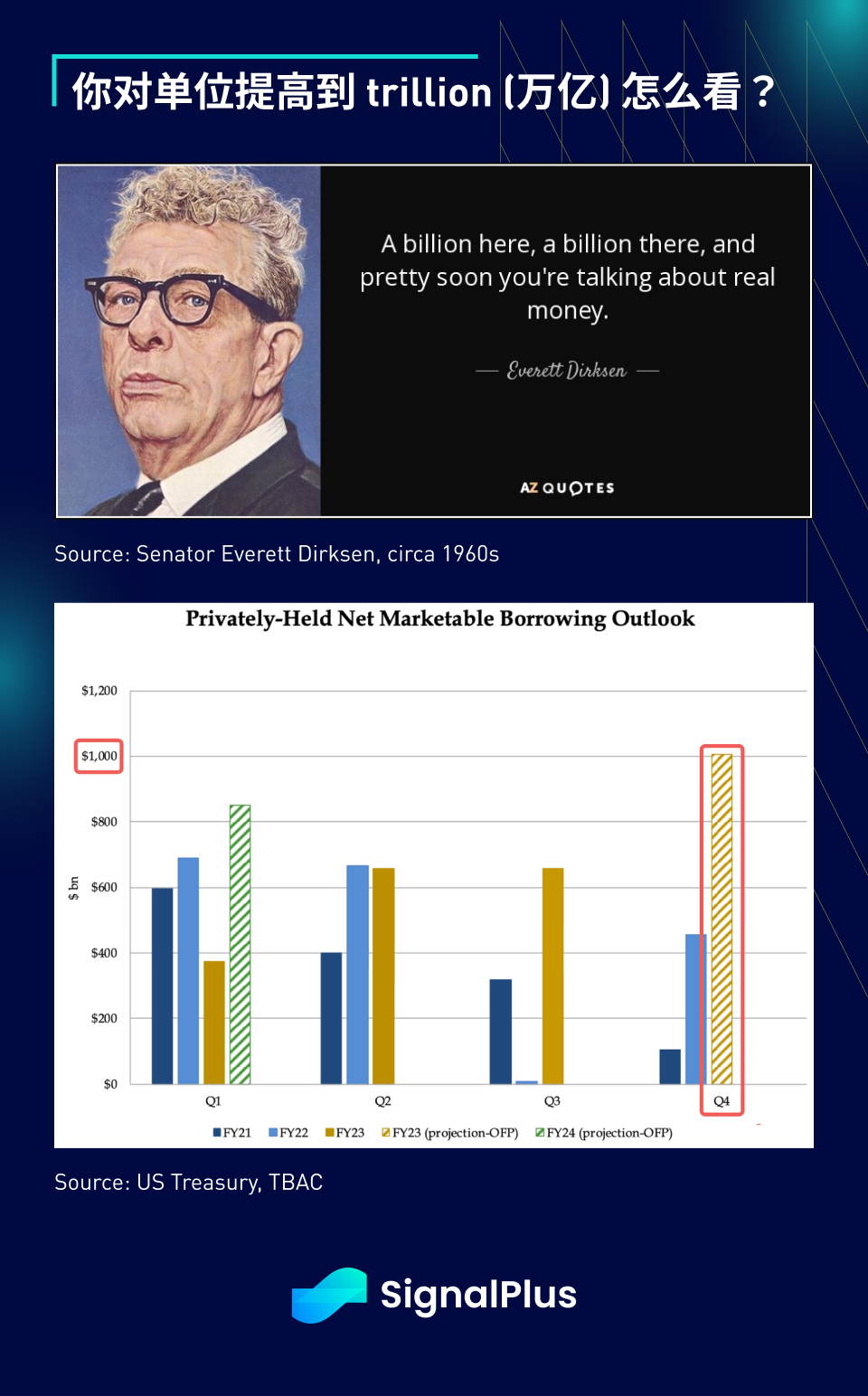
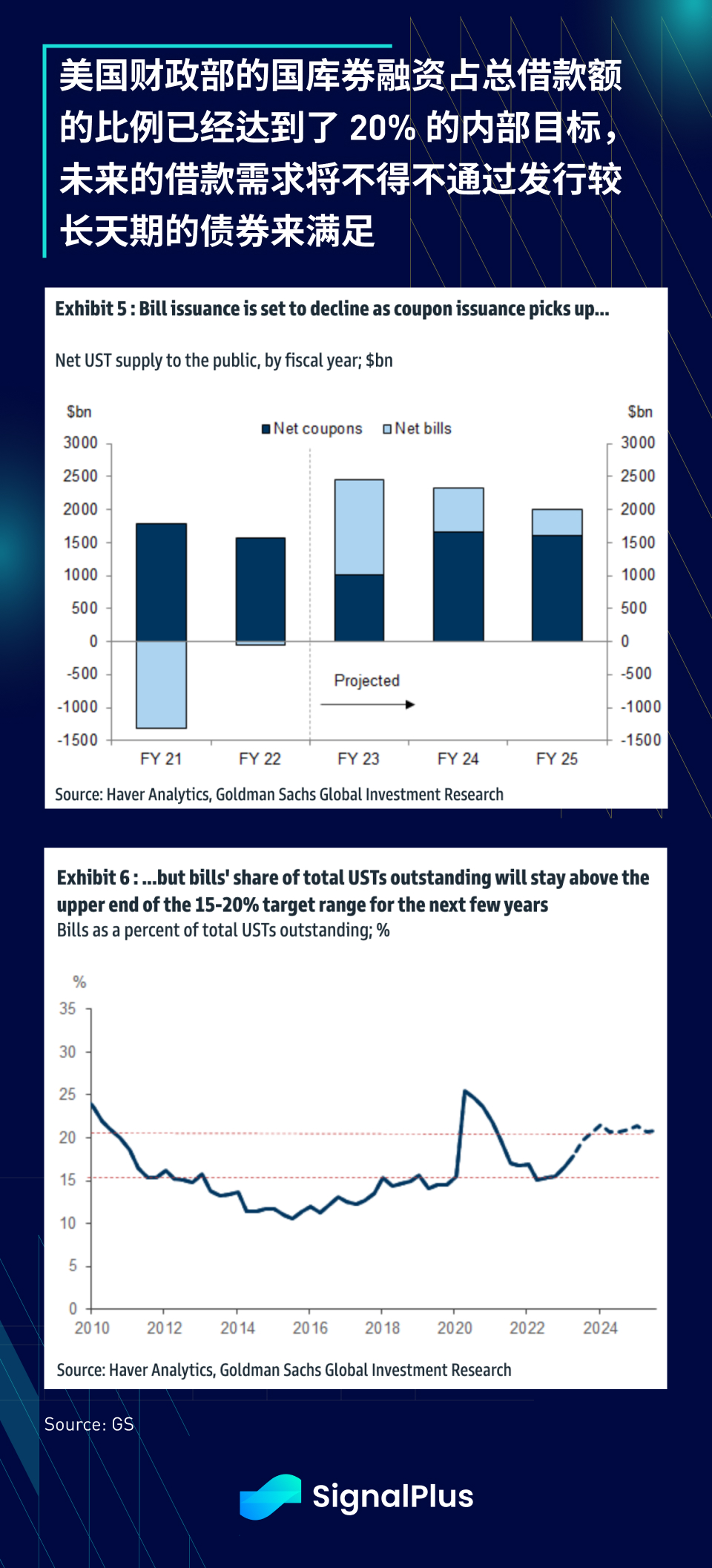
In short, the Ministry of Finance announced a significant increase in the estimated net borrowing amount for the quarter (about $1 trillion in the fourth quarter). At the same time, the bond auction size next week will increase by more than $7 billion, and the "Treasury auction size will further increase moderately." And the worst is yet to come because based on current borrowing forecasts, the size of the 5-year bond auctions will rise from approximately $43 billion per month last month to $70 billion per month by April 2024 at the fastest, which is a significant increase in bond supply even by US fixed income standards.
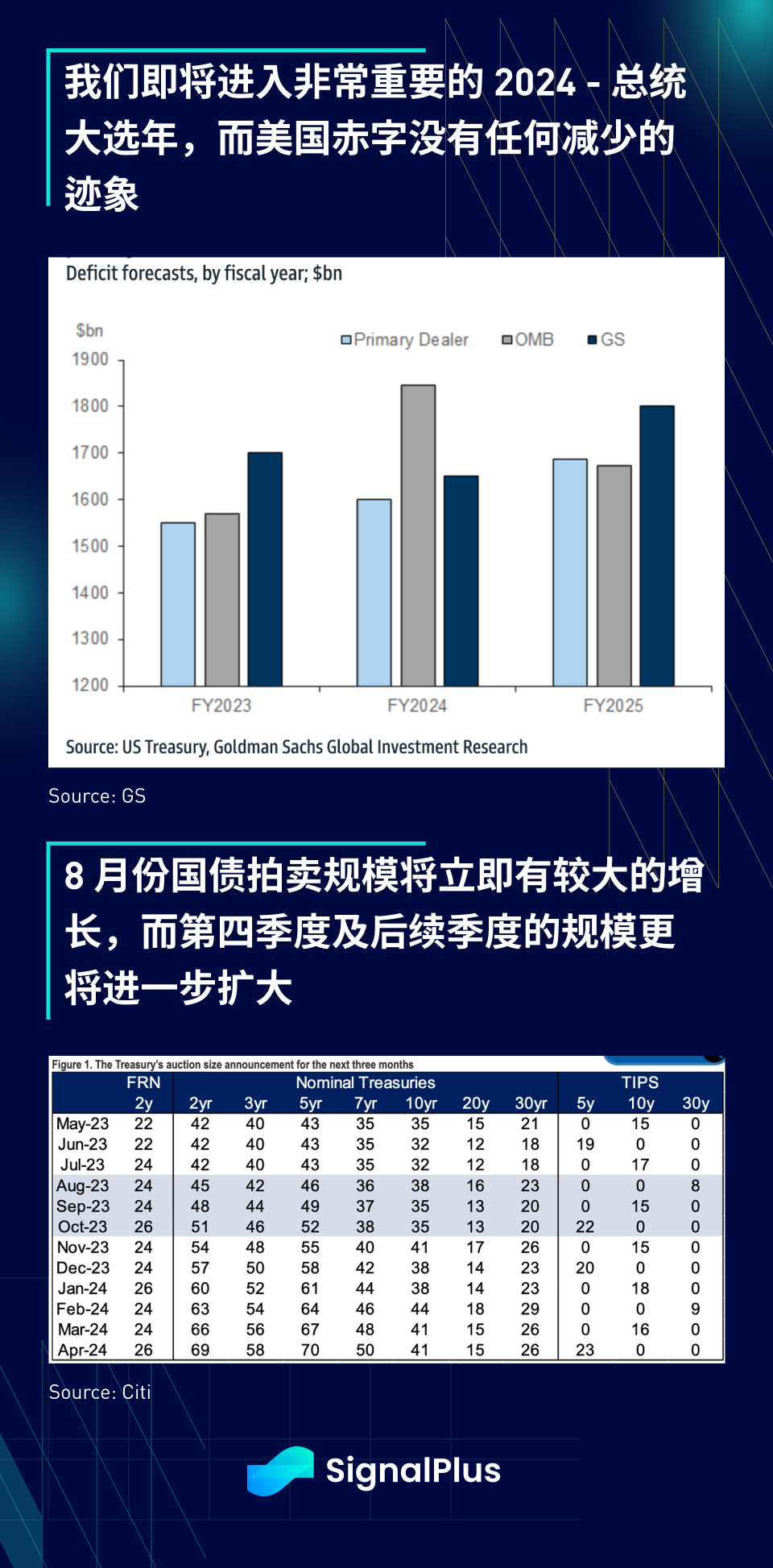
In addition, due to the cash flow constraints experienced by the Ministry of Finance during the recent debt ceiling battle, they have announced that they will maintain a higher proportion of cash position in order to better manage liquidity, and will continue to meet their borrowing needs through more flexible short-term treasury bonds. However, compared to longer-term bonds, the Ministry of Finance currently maintains an internal limit of 20% for treasury bond financing, and this limit has already been reached. Therefore, additional funding needs will have to be met through the issuance of longer-term bonds.
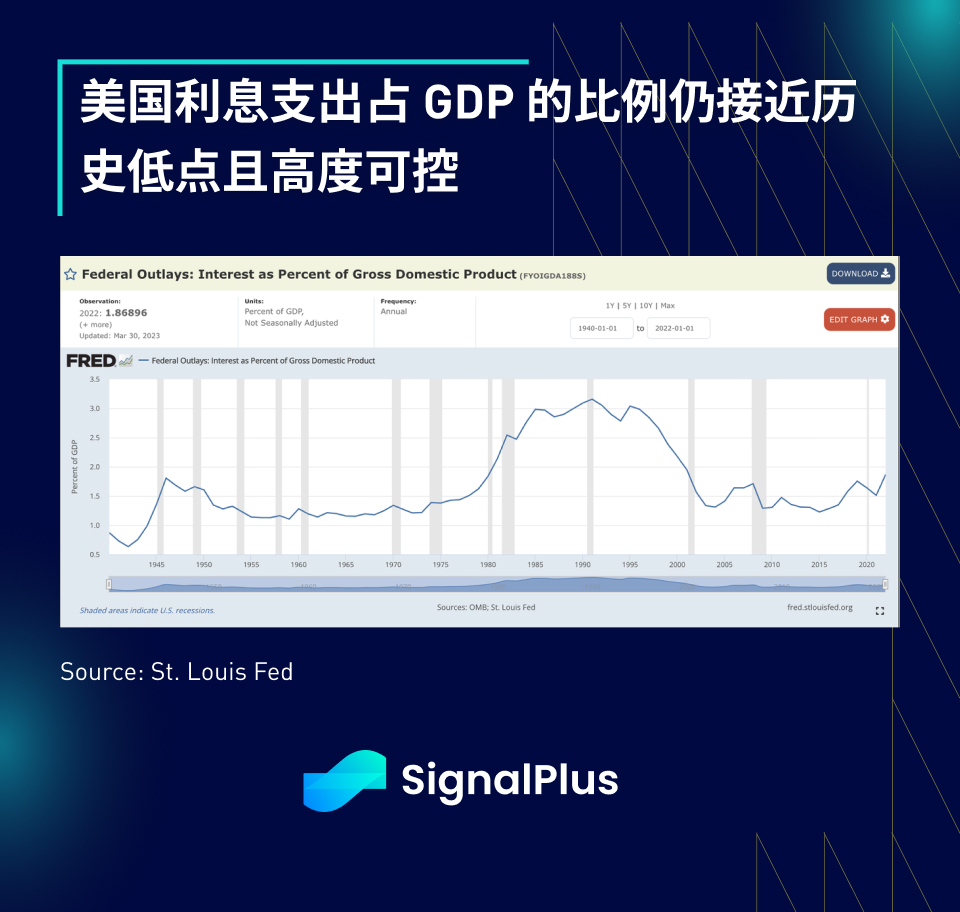
Nevertheless, as we have mentioned multiple times before, there is absolutely no solvency or liquidity issue in the US market. It is merely a consideration of asset reallocation. Objectively speaking, even at the current higher interest rate level, the proportion of US government interest payments to GDP is only 2% and is close to a historical low since 1940. Even if interest rates double from the current level, this proportion will still be below 5%. From the perspective of solvency, there is hardly anything to worry about.
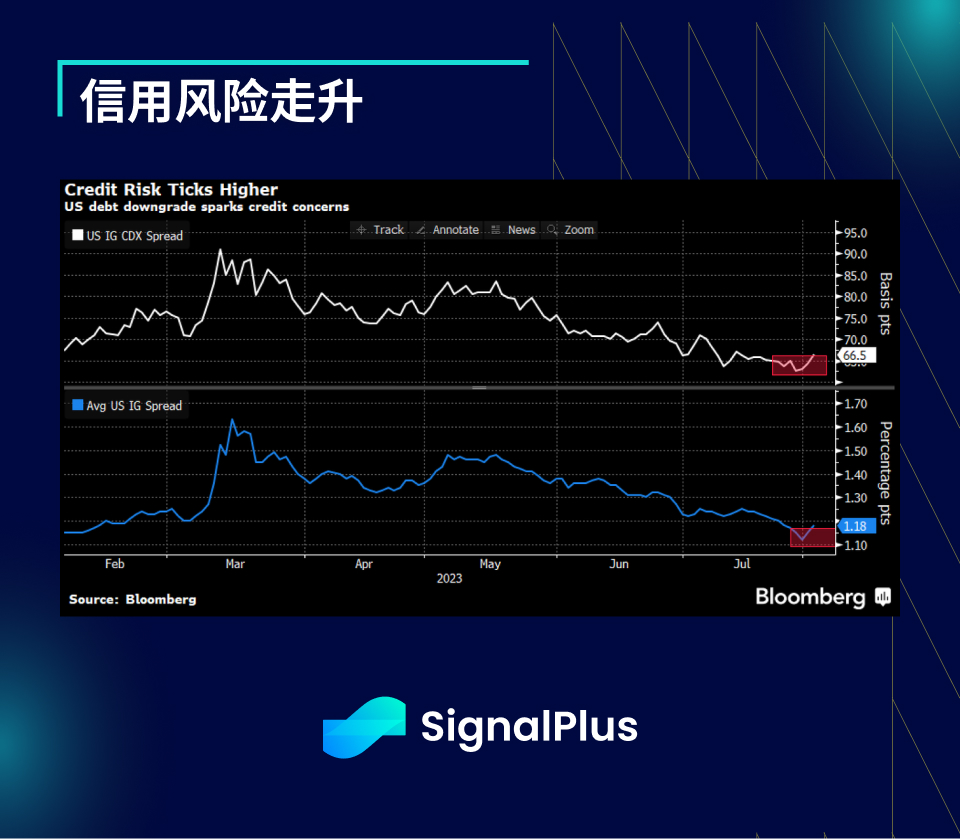
What is more concerning is that even if we assume full reinvestment of fixed income, the quarterly issuance of $1 trillion in bonds is still a large amount of money, especially considering that monetary tightening is still ongoing and may accelerate in the remaining time of this year. In addition, instead of worrying about the credit status of the US federal government, it might be better to worry about the US bond market. The average spread for investment-grade bonds has fallen to a cyclical low point, and the flood of government bond supply and rating downgrades are likely to further negatively impact spreads, especially considering the current relatively tight spreads.
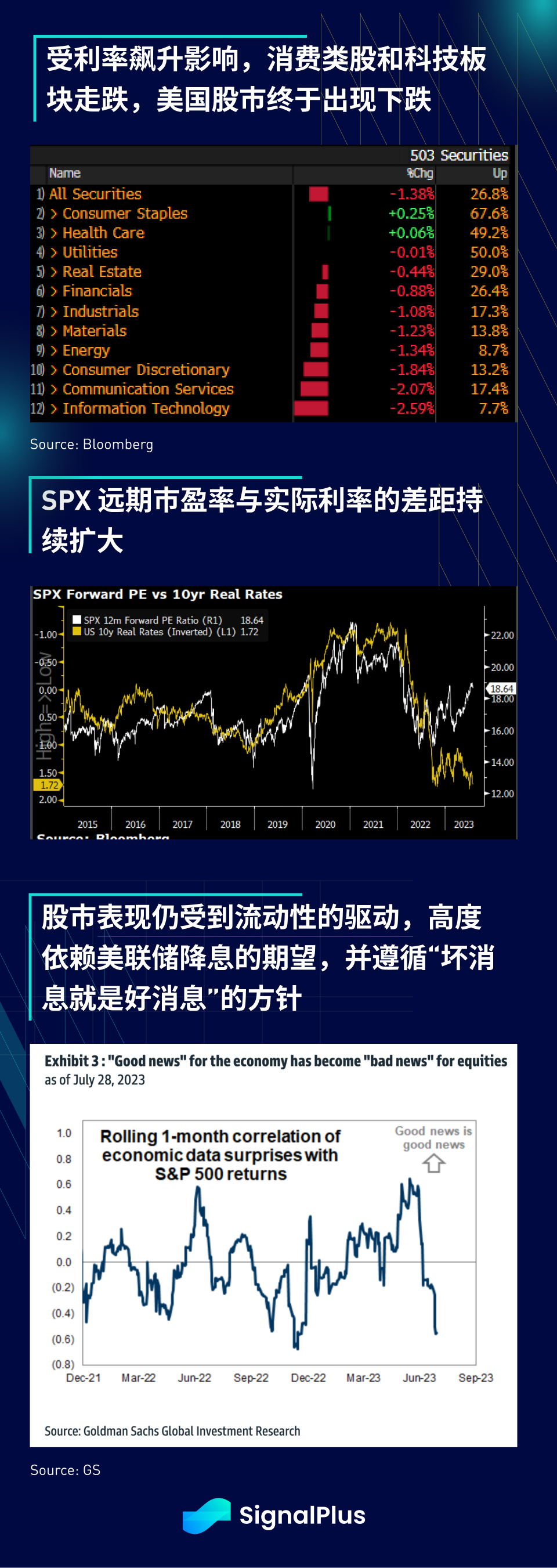
The expansion of real interest rates in the US has intensified the divergence between different assets and stocks, which is reflected in the continuous widening gap between the forward P/E ratio of the S&P 500 and real interest rates. However, the US stock market has finally experienced a decline, with the S&P 500 index closing down 1.4% yesterday, mainly due to the sharp rise in bond yields leading to weakness in technology and consumer stocks. However, the larger price movement in the future may depend on the performance of the non-farm payroll data released on Friday, as well as the financial results of the giant Apple, which will be announced after today's closing.
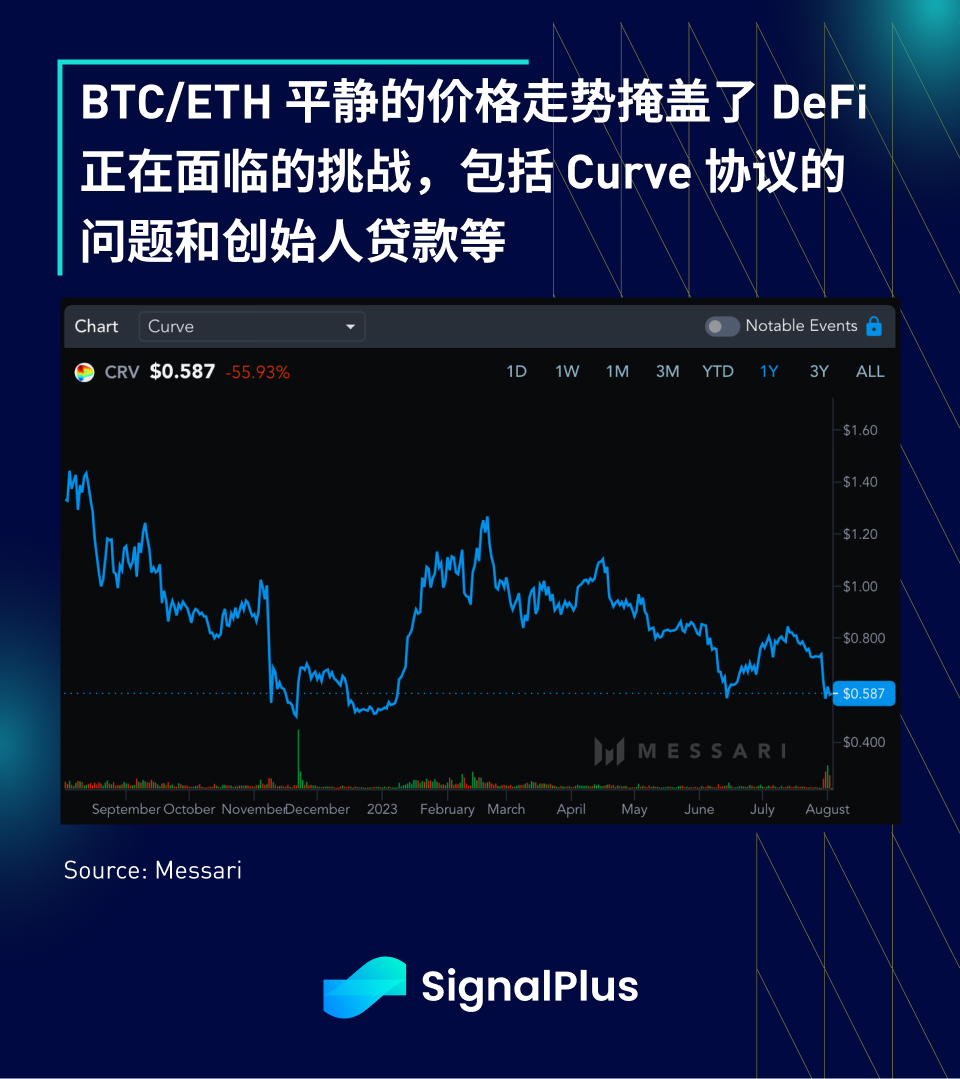
In terms of cryptocurrency, the prices of major currencies have not fluctuated much. BTC and ETH are priced at approximately $29k and $1.9k, respectively. However, there is a storm brewing in the DeFi sector, related to recent concerns of the Curve (CRV) hack and margin cascade liquidation. Furthermore, after celebrating a favorable ruling by Judge Torres in the XRP case, cryptocurrencies suffered a setback yesterday. In the case against Terraform Labs (Luna), Judge Rakoff made a ruling in favor of the SEC, suggesting that the Terra-USD (TUSD) stablecoin may be considered a security when sold to retail investors.
The regulatory stance still seems unclear, and we appear to be back to square one. Coinbase's stock price also dropped by 9.5%. It looks like the court itself will need more time to debate the question of whether it is a security or not.

You can search for SignalPlus in the ChatGPT 4.0 Plugin Store to get real-time cryptocurrency information. If you want to receive our updates instantly, please follow our Twitter account @SignalPlus_Web3 or join our WeChat group (add the assistant's WeChat: chillywzq), Telegram group, and Discord community to interact and communicate with more friends.
SignalPlus Official Website: https://www.signalplus.com





