Web3 practitioners' perspectives on the Worldcoin controversy?


On July 24th, Worldcoin, a cryptocurrency company founded by OpenAI CEO Sam Altman, announced the launch of its WLD token. Worldcoin focuses on helping people verify their credentials in person through iris scan verification and prove their identity online. Data shows that approximately 2 million people have completed iris verification so far, and WLD will be distributed to these users. In response to the controversies surrounding Worldcoin's founding vision, token issuance, and privacy concerns, crypto influencers have expressed their viewpoints. BlockBeats has compiled their opinions.
Related readings: Exclusive Interview with Worldcoin Co-founder: Integration with ChatGPT within 10 years, In-depth Analysis of Worldcoin Whitepaper: How are WLD tokens distributed and released?
Ethereum Founder Vitalik Buterin
I've seen the rise of a larger, more ambitious project called The Proof of Humanity: Worldcoin. However, people are mainly concerned about four risks:
Privacy: The registry of iris scans may lead to information leaks. At the very least, if someone scans your iris, they can check against the database to determine if you have a World ID.
Accessibility: Without a sufficient number of orbs easily accessible to anyone in the world, World IDs cannot be reliably accessed.
Centralization: The Orb is a hardware device, and we cannot verify its construction or ensure that it has no backdoors. Therefore, even if the software layer is perfect and fully decentralized, the Worldcoin Foundation still has the ability to insert backdoors into the system, allowing it to create arbitrary fake human identities.
Security: Users' phones may be hacked, and they may be forced to scan their own irises while presenting someone else's public key. Additionally, it is possible to 3D print "dummy" humans who can obtain World IDs through iris scanning.
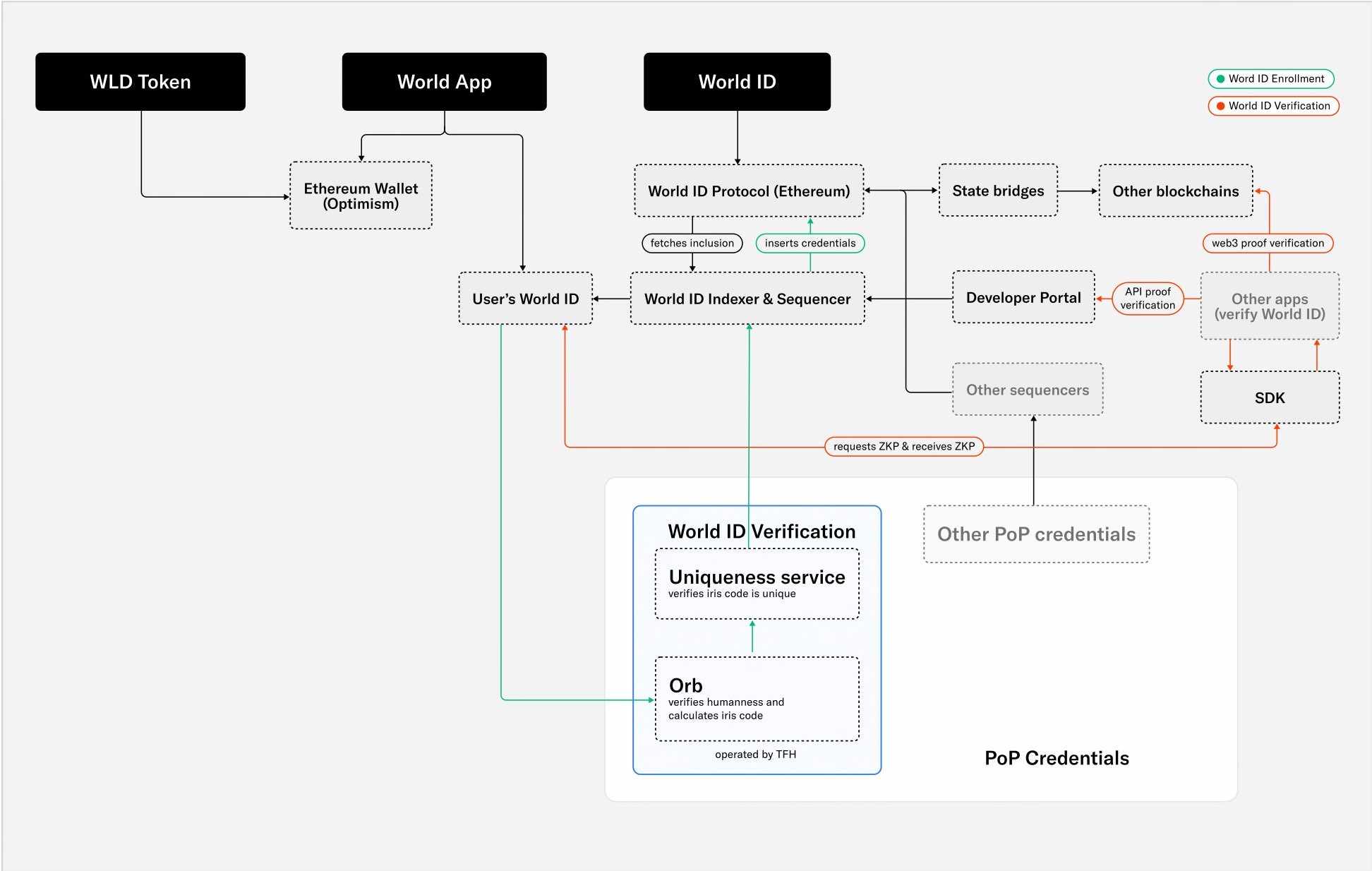
But the actual leakage should be much more limited: Orb computes locally and only publishes a "hash" of each person's iris scan. This hash is not like a conventional hash such as SHA 256; instead, it is a proprietary algorithm based on machine learning Gabor filters. In addition, the iris hash may leak a certain amount of medical data (gender, race, perhaps even medical conditions), but this leakage is much smaller than what can be captured by almost any other large-scale data collection system in use today (e.g., street surveillance cameras). Overall, for me, the privacy provided by storing the iris hash seems sufficient. Read more: Vitalik on Worldcoin: How Will Biometric Identity Proof Reshape the World?
Independent Researcher Jason Chen
There are mainly two opinions about WorldCoin:
1. Evil organizations collecting irises, using Sam's halo and UBI vision to harvest the SB project worldwide.
2. Human socialist warriors fighting against witches and UBI with high costs.
The main questions about collecting irises are:
1. Why irises instead of faces or fingerprints?
2. Will iris information leak or be sold for malicious purposes?
Iris recognition is a biometric identification method that is not widely used in society currently, mainly due to its high difficulty, high threshold, and high cost. It took me a total of 3 to 5 minutes to complete to scan Orb, needing to keep my eyes open and face Orb at close range for a long time to complete the recognition. In contrast, faces and fingerprints do not require special devices, and any smartphone can complete the recognition in a few seconds. They have low difficulty, low threshold, and low cost, and even have a broad social foundation. If WorldCoin really wants to collect human information for sale on a large scale or wants to harvest the whole world, why not use faces and fingerprints? They don't need to produce expensive Orbs and hire employees to operate this machine in each country. Instead, they only need to download an app for each person to handle it themselves. The deployment speed would multiply exponentially. Why not? How do you think about this question?
In my communication with the WorldCoin team, I obtained two answers. First, facial recognition and fingerprint recognition still cannot guarantee long-term uniqueness and effectiveness. For example, as we age, our facial features change and become unrecognizable. There is also a high risk of facial and fingerprint theft, especially when someone is asleep. On the other hand, iris recognition has lifelong uniqueness and effectiveness, and it is also very difficult to deceive. As I mentioned before, it would be very challenging to open one's eyeball and scan it in front of a device for a long time.
Another issue is the cost and entry barrier of iris recognition. Currently, it is not widely used as a biometric identification technology. Suppose your face is used as an identifier (as many apps we use daily, including the popular Meitu app, have already collected our facial information). Once it is leaked or used for malicious purposes, the threshold is very low. Since facial recognition is already widely used, the impact and scope of its misuse, such as identity theft or face swapping, are extensive and uncontrollable. However, most people have never used iris recognition for any purpose. Therefore, even if iris recognition is leaked, it would only have a limited impact in a specific environment.
The second question is whether iris data collected will be leaked.
I discussed this issue in an article about WorldCoin six months ago. When the Orb device collects data, it generates a meaningless and irreversible hash code as a unique identifier for each person's iris. This hash code is then uploaded, instead of directly uploading the iris information. For example, if I have your ID number, what I actually see in the background is a number like Y 62 fS 21, which is irreversible and corresponds uniquely to your ID number. I have no knowledge of what Y 62 fS 21 represents, and if it leaks, it would be meaningless. Additionally, this hash code is not a universally recognized algorithm but rather generated by Orb's proprietary algorithm. Suppose another company also obtains your ID number and generates a hash code using a different algorithm. It would be something like Wf 32 N 12.
Of course, the above assumptions are based on the premise that the Orb device will not be tampered with or modified in a way that violates WorldCoin's principles. This is a consideration since there is still a risk of malfeasance, although WorldCoin's operations are difficult to tamper with.
Therefore, WorldCoin has invested a significant amount of money to produce thousands of Orb devices separately and transport them to various countries. Then local employees or partners are hired to promote them. This investment cost is substantial. If someone really wanted to engage in malicious activities, they would not need to go through all this trouble. However, it should not be assumed that high costs prevent malicious behavior. Nonetheless, high costs make it difficult to engage in malicious activities, which is a fundamental principle of Bitcoin and even blockchain.
Furthermore, WorldCoin has also made a significant investment in the field of ZKML (Zero-Knowledge Proof Mechanisms Language), but I won't go into detail on this, as it has already been acknowledged by Scroll.
Regarding UBI (Universal Basic Income), I believe there are only two achievable forms:
1. Implementing transfer payments through positive external income.
2. No payment relies on philanthropy, otherwise it will end up being worthless
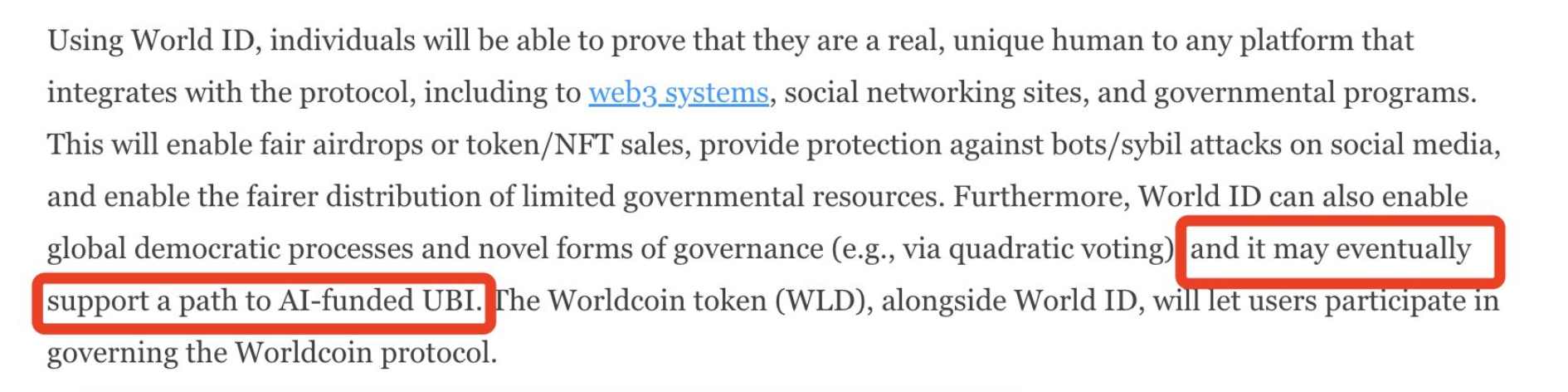
Worldcoin's UBI must be built on these two foundations. The white paper also roughly describes their way of earning money through wallets after establishing a globally unified identity and financial system. The first point is clear, and the second point is quite interesting. The white paper says "it will eventually move towards AI-funded UBI," leaving plenty of room for speculation... Source
SlowMist Founder Cycles
I think if Worldcoin succeeds, it will be an evil creation, but it is highly likely to fail. The iris is almost the most stable and durable unique identifier for humans, much more reliable than face and fingerprint verification. The promises in the Worldcoin white paper are indeed good, but we still need to remain vigilant.
Many people think that the iris is hashed and uses zero-knowledge proofs to create a PoP (proof of personhood) with good privacy. But from a hacker's perspective, even if I only have the hash, I might still be able to construct your profile. Don't forget, what I want to build is World ID, there will be a lot of future players, and they could be very diverse. Source
Binance Creator Rocky
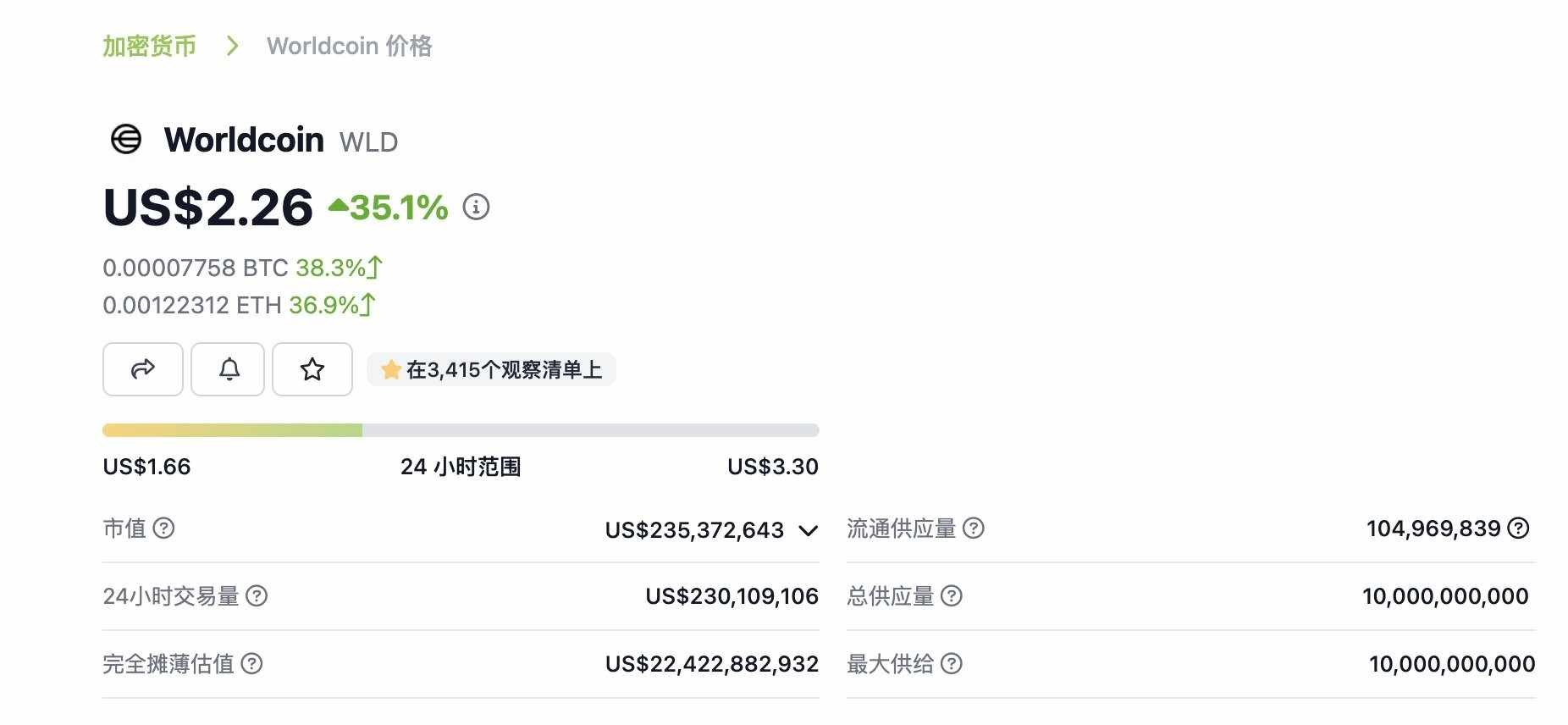
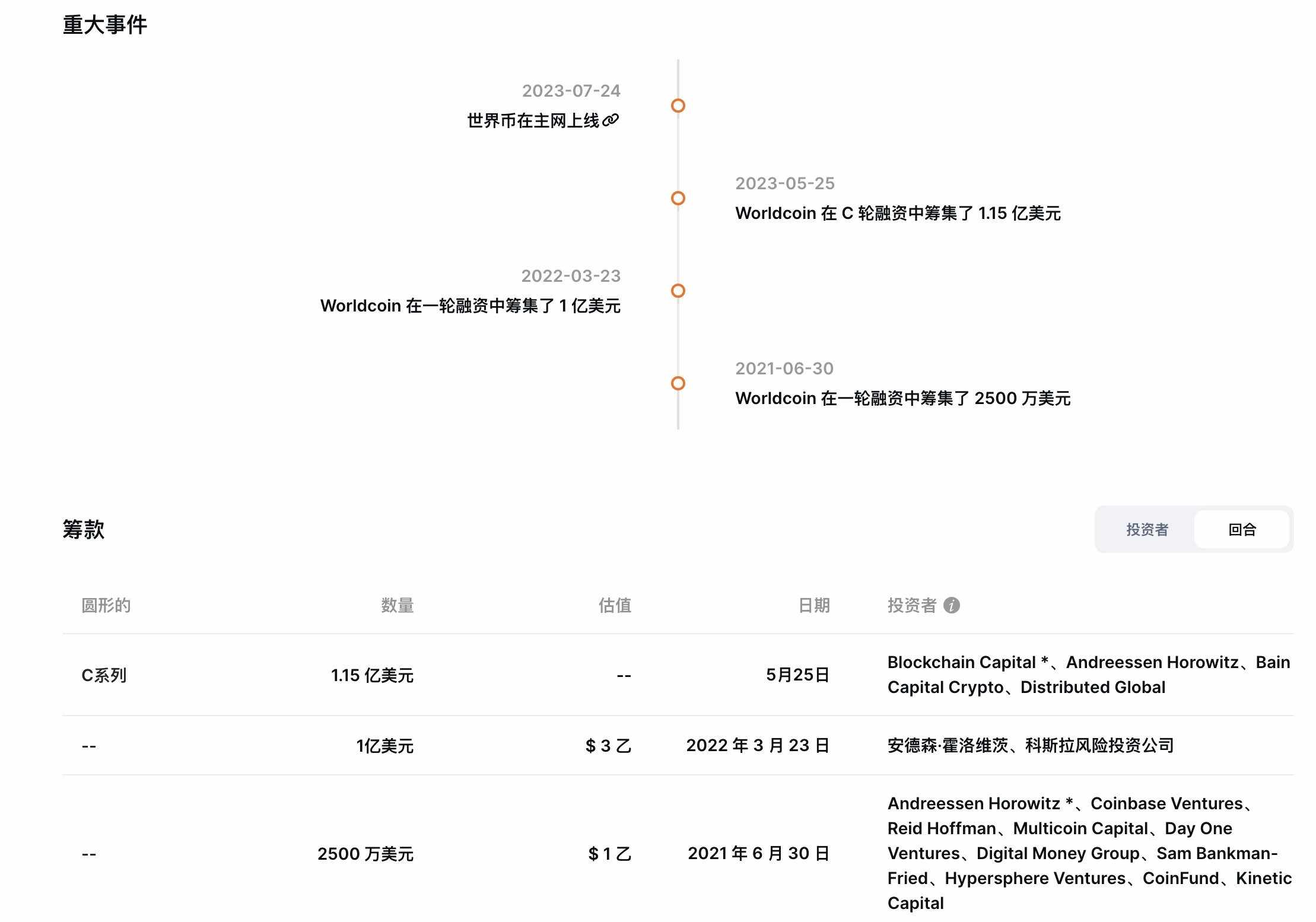
Worldcoin officials show that the current FDV is 22.4 billion US dollars, and the circulating market value is also 230 million US dollars. The FDV market value has surpassed many old public chains, such as MATIC, TRX, SOL, etc. I remember the last financing valuation was only 1 billion US dollars, and it raised 115 million US dollars at that time.
In just a few months, the valuation has grown 20 times, which is truly terrifying! Currently, as one of the trilogy of Ultraman's human plan (AI, controlled nuclear fusion, global communism), Worldcoin is one of the key links to open up the financial lifeline. It is also a great optimization solution in the distribution and redistribution of productivity and production relations. It must only be allowed to succeed, not allowed to fail.
But based on the current logic, the support for such a large valuation is still relatively early. I believe it is probably preparing for the next round of Series D financing. After all, the cost of promoting this iris certification globally is very high. (Currently mainland users can go to Hong Kong to scan) From an investment perspective, the short-term valuation of WLD is too high and can be left aside for now. However, projects related to the DID track that have now fallen to the bottom are worth paying attention to.Source of Opinion
Cryptocurrency Blogger BITWU.ETH
Worldcoin has already been supported in Hong Kong, now with real products, real user growth, and reasonable business logic. Will utopia come true?
Some people feel insecure and may think, who would give their own iris biometric data to someone else for no reason? No one would do that, right? Do you feel like this operation is familiar?
Do you remember the time when someone wanted to stab our throats and we just obediently did it? As a bystander in the storm, you actually have only 3 choices:
1. Ignore it and continue doing other things.
2. Surrender and go for scanning, just like surrendering to the nucleic acid kiosk.
3. Buy some WorldCoin.
The fact is, there are already 2 million people around the world who have done this. On average, over 40,000 people register for verification every week, most of them in developing and underdeveloped countries. But it is not as important to dwell on whether this behavior is safe.
View source: source
Encryption KOL Xiyu
It shows that most people don't know their privacy should be more valuable. There are several flawed logics that I think are wrong.
1. I'm a Nobody, so my iris is not valuable. Nobody may become the second generation of Satoshi Nakamoto after three years.
2. Without binding my information, you can't find me at all. As long as it is a unique iris, you are the iris, and the iris is you.
3. It has already leaked on Apple or Android phones. This is not a cause-and-effect relationship. Just because it leaked before doesn't mean you can disregard it in the future.
Selling irises for $75 is too cheap. Selling privacy is also a transaction, after all, you can even sell your kidneys, but the price is too low. Your iris can be more valuable. With a total of 10 billion coins, giving you 25 coins for one verification, isn't that stingy? Imagine if there was a brc-20 coin, with a total of 10 billion, giving me 25 coins. I wouldn't sell them. I would consider it when it reaches $75,000. I would at least exchange them for two Bitcoins.
View source: source
Loki, New Fire Technology
WLD has two anchors for its price. Short-term: arbitrage cost. If the value of the coin that can be obtained through arbitrage is greater than the cost of finding someone to brush, then someone will continue to brush and continue to sell. Long-term: Global poverty population average consumption * n% / single person's daily output coin price. Because UBI does not support lazy people, it can only guarantee that you won't starve (and also needs the project to be more successful than imagined).
There are a few doubts:
1. Why does the UBI team need to reserve tokens? Does the team need to eat 1/10 of the world's food to survive?
2. Now registering gives 25 tokens, but the real impoverished people may not have time to claim them. After you capitalists claim and hoard them in bulk, who will UBI give them to?
3. Where did PI lose? Source of opinion