Macro Market Weekly Report (7.17): Big test for US Q2 earnings, sell the fact or buy?



The further easing of price pressure, US consumer prices in June recorded the smallest annual increase in more than two years, and the producer price index recorded the slowest growth in almost three years. Although it is still not enough to stop the Fed's interest rate hike this month, it has increased people's confidence that July will be the last interest rate hike. At the same time, most economic indicators show continued resilience, including the index of US consumer confidence reaching its highest level in more than two years.
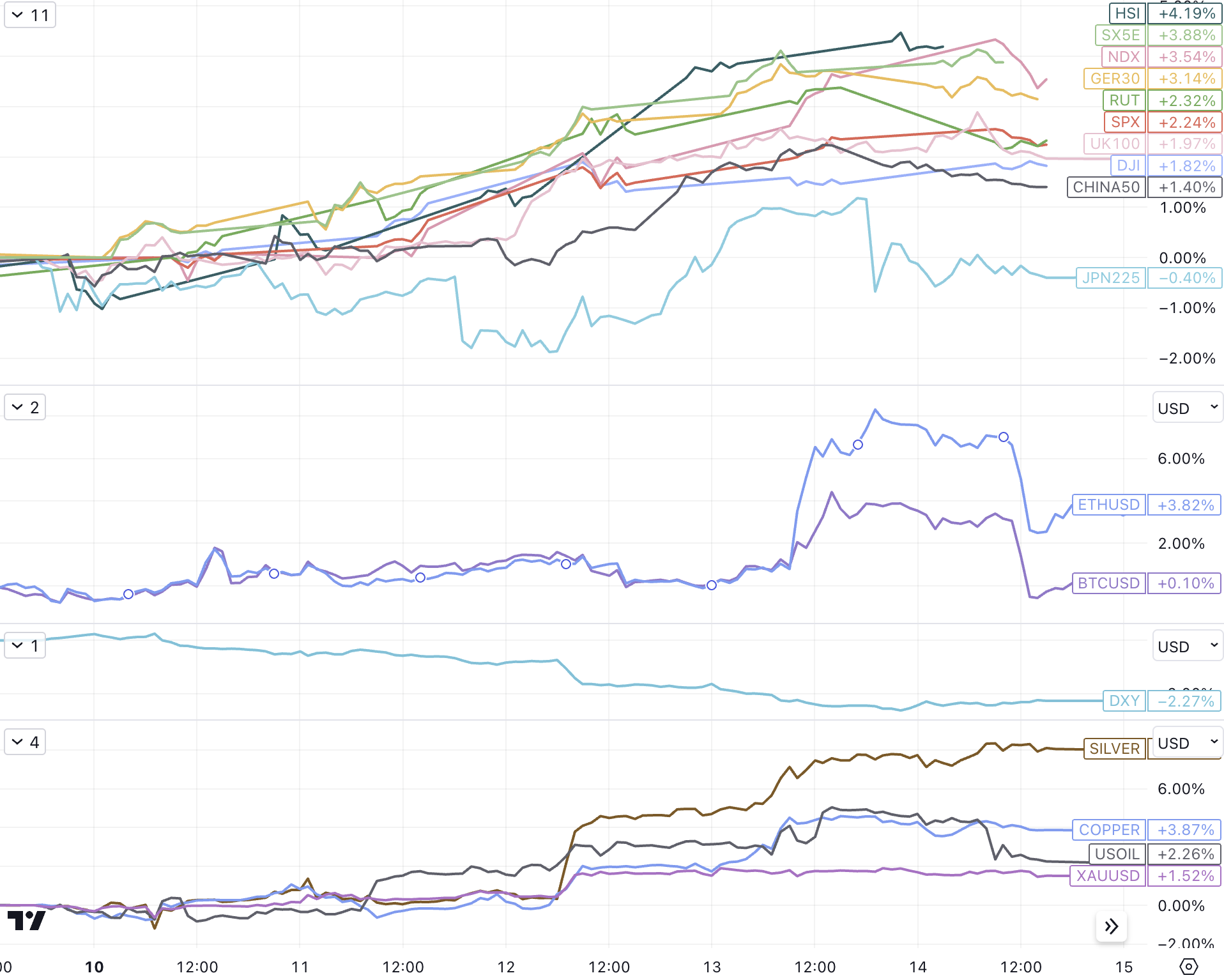
This is a very optimistic macro environment for global risk assets. Global stock markets have also seen a wave of optimistic gains, bond yields have fallen, the US dollar has plunged to its lowest level in 14 months, gold has risen to a one-month high, oil prices have risen for the third consecutive week, and the VIX has fallen to a level slightly higher than the multi-year low reached on June 22nd. Cryptocurrencies have rebounded and then fallen again.
Last week, major stock indexes in most countries were strong, except for a decline in the Japanese stock market due to a stronger yen. Bitcoin briefly exceeded $31,700, but later fell back to around $30,000, giving back all of last week's gains. Ethereum briefly broke through $2,020, then fell back to around $1,920, ending the week with a 3.8% increase, mainly due to the positive news that Ripple and its founder's XRP were determined not to be securities or investment contracts in certain sale scenarios, as well as the plunge of the US dollar. Coinbase's stock broke through $110 last week, hitting a one-year high and rising 3%.3%, with a market value of $250 billion, compared to BNB's market value of $378 billion.
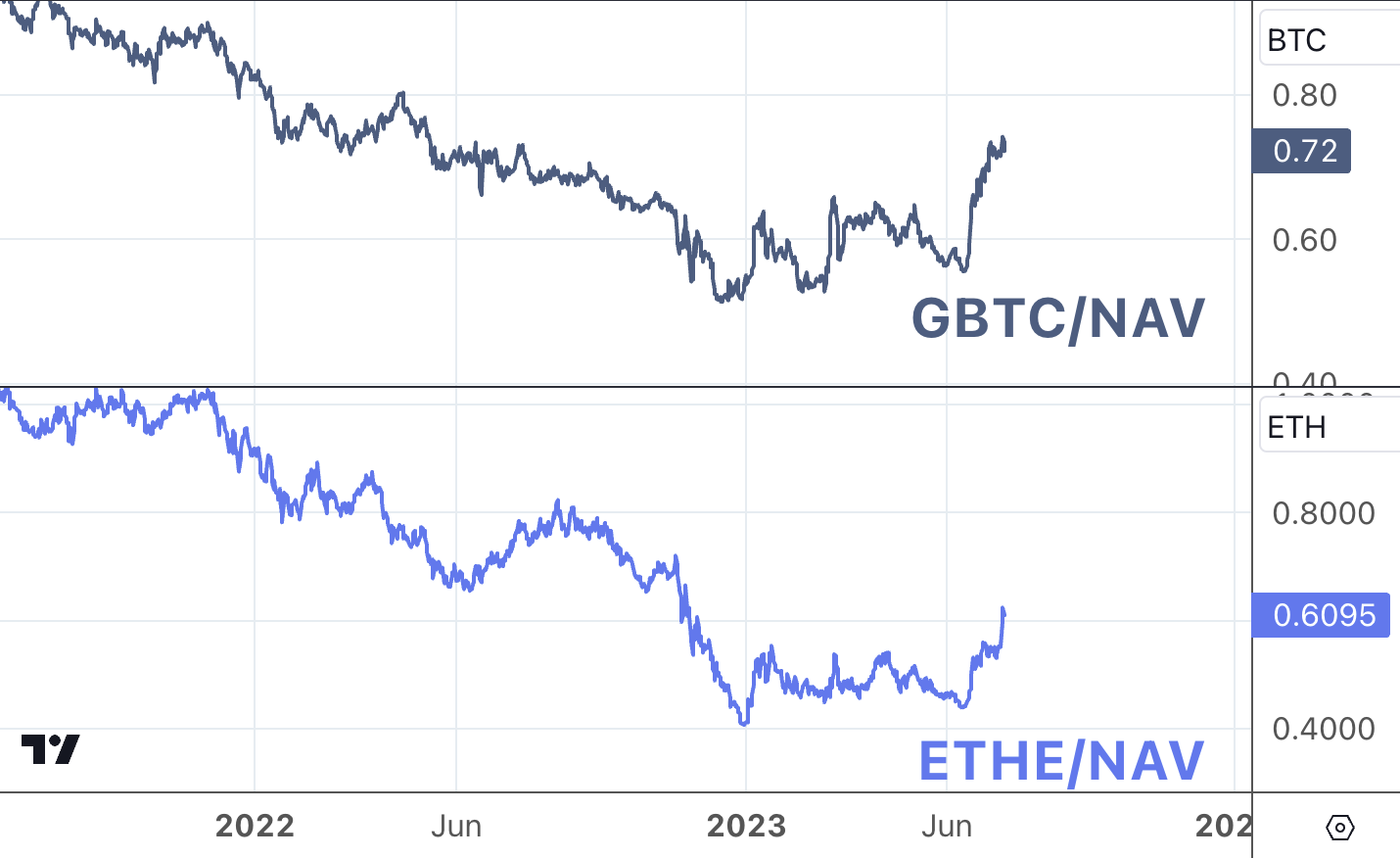
The market's optimistic attitude towards SEC regulation has led to a sharp narrowing of discounts for ETHE and GBTC:
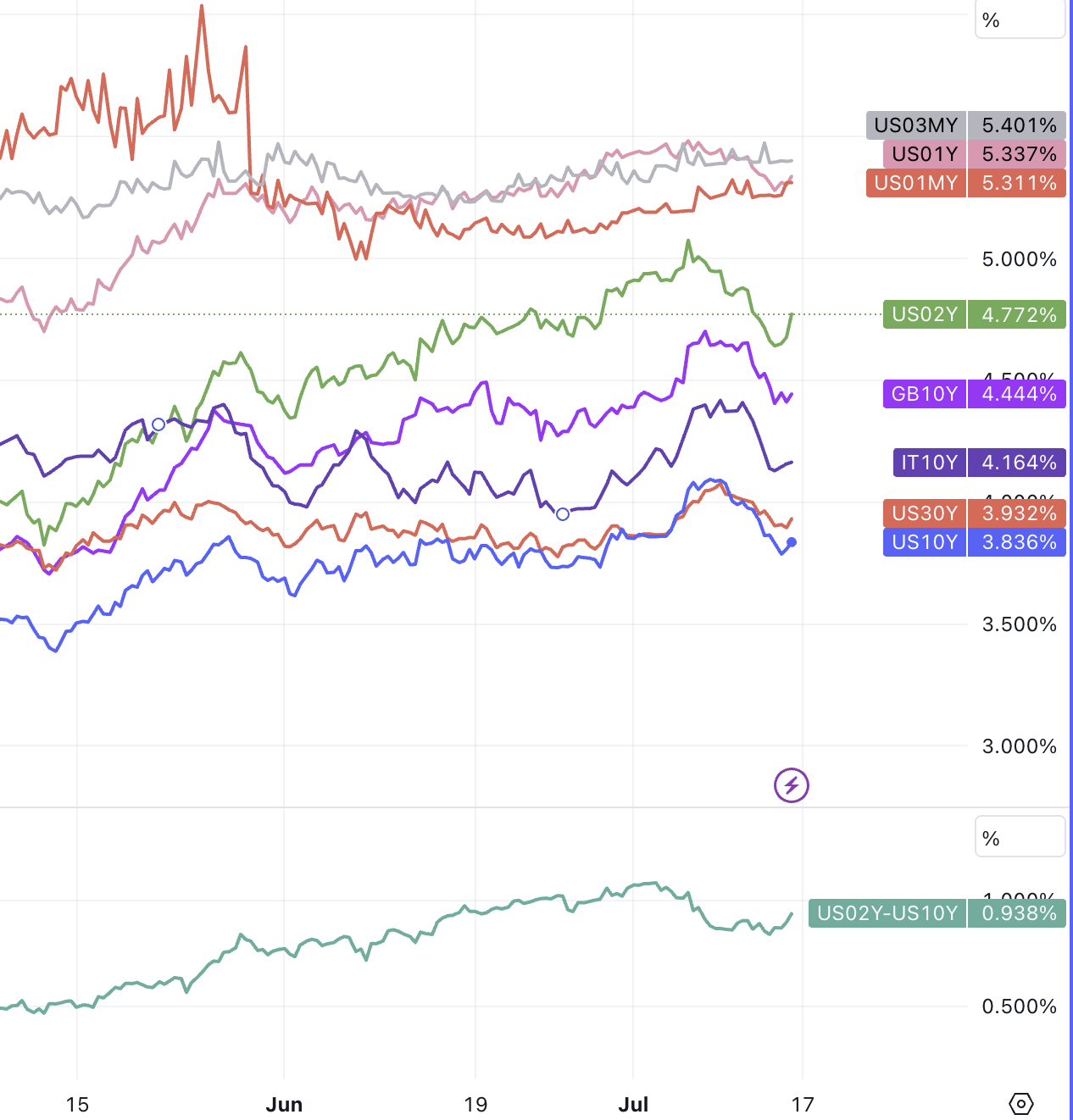
Last week, the yield on US 10-year Treasury bonds fell from 4.05% to 3.82%, and the yield on 2-year Treasury bonds fell from 4.94% to 4.73%, which is also positive for risk assets.
Focus 1: Rapid slowdown in inflation, when will rate cuts come
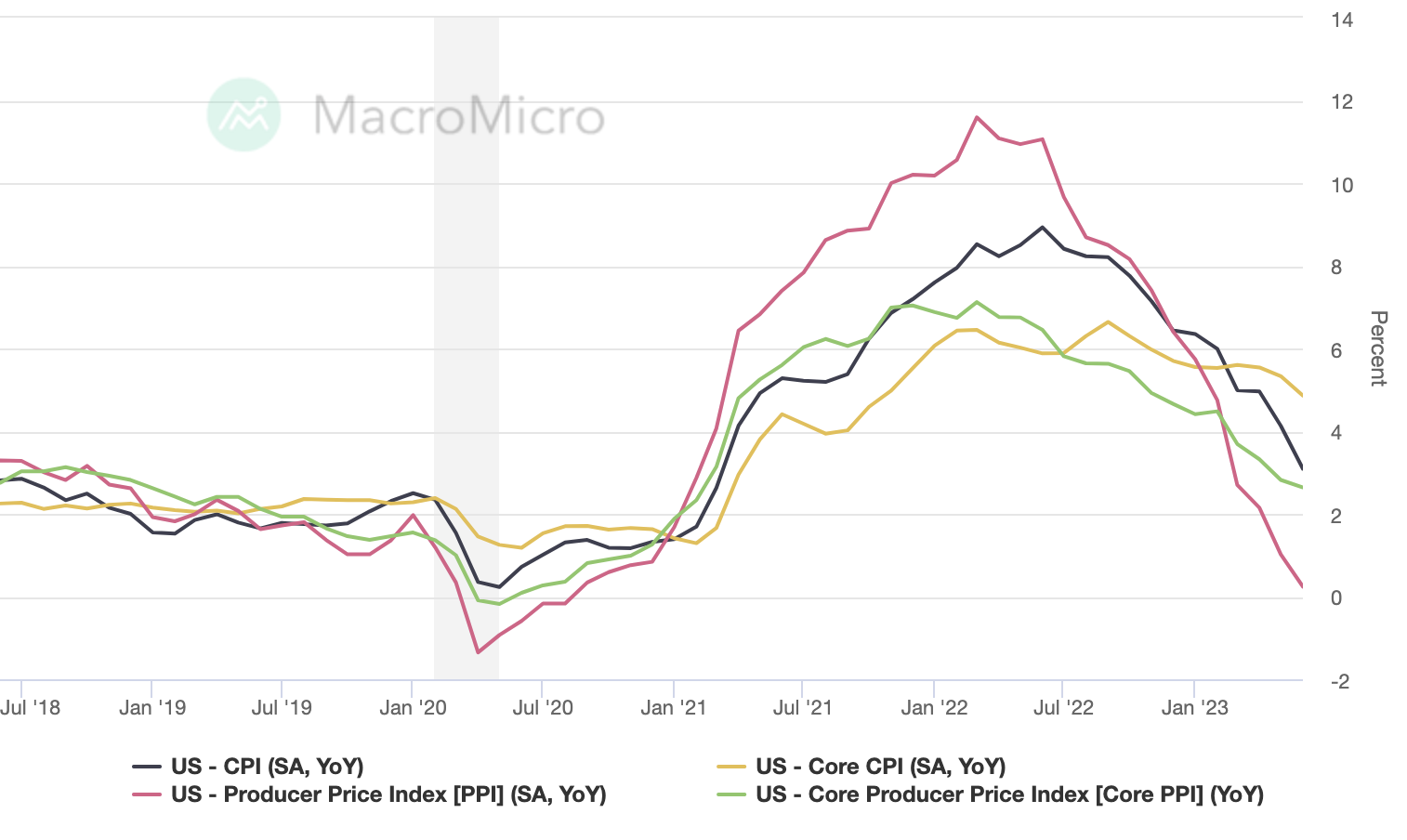
Although consumer prices and producer prices are both slowing down, unless the recent wage growth rate of 4%-5% also slows down significantly (unless there is a recent surge in workforce, otherwise it is unlikely), the help of commodity prices to the deflation process is unlikely to be sustained.
Recent employment reports show that although employment growth continues to slow down, the pace still exceeds sustainable levels. In addition, the unemployment rate remains low and wage growth has not shown signs of sustained slowdown. The chart below shows that wage growth in the service industry has accelerated this year, while wage growth in the manufacturing sector has remained relatively flat:
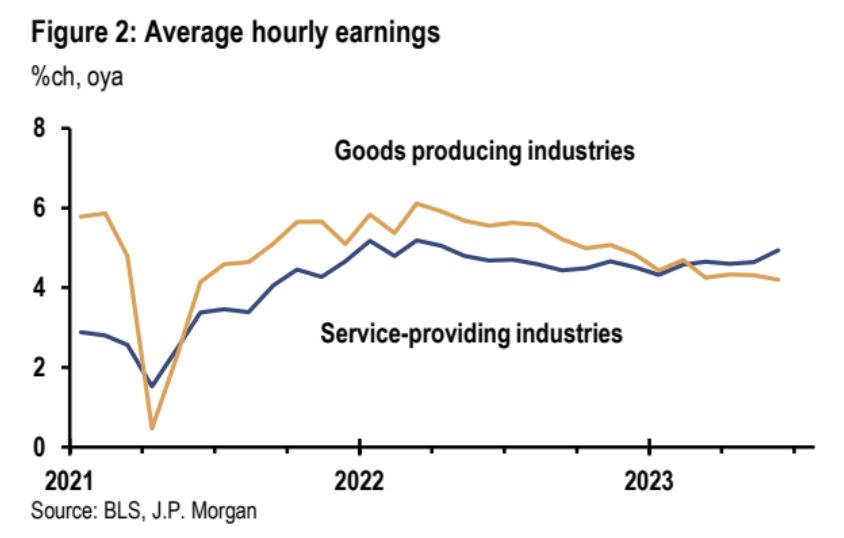
Therefore, employment market data will have a greater impact on the Fed's decisions than inflation, especially when it comes to the timing of rate cuts that the market is concerned about.
The market consensus is that the Fed will raise interest rates at least once before the end of the year. According to CME interest rate futures, there is over a 95% probability that the Fed will raise rates by 25 basis points to a range of 5.25% to 5.5% in July, with a 23% probability of another rate hike after that. The first rate cut is expected to occur in March 2024, and rates may be lowered to 3.75% to 4% by November to December.
Focal Point 2: Optimistic Start to Q2 Earnings Season for US Stocks, "Sell the Fact" or Buy?
The second quarter earnings season had a strong start last week, with 6% of S&P 500 index constituents reporting, 80% of which beat earnings per share (EPS) expectations. This is higher than the 77% 5-year average and 73% 10-year average. Overall, reported earnings were 8.8% above expectations, higher than the 8.4% 5-year average and 6.4% 10-year average. Financial sector companies reported strong positive earnings.
first level titleHowever, overall profits still declined by 7.1% year-on-year, the worst since the second quarter of 2020 when COVID-19 caused a 31.6% profit drop. Market expectations before the earnings report season was a 9% decline, but it was influenced by the two "old economy" industries (energy and materials).
There are 7 industries reporting (or expected to report) year-on-year revenue growth, with finance and consumer durables industries leading the way. On the other hand, there are 4 industries reporting (or expected to report) year-on-year revenue decline, with energy and materials industries leading the way.
Looking ahead, Wall Street predicts profit growth of 0.1% and 7.6% for the third and fourth quarters of 2023, respectively. Analysts predict a profit growth of 0.6% for the entire fiscal year of 2023.
From a trading perspective, is it a "sell the fact" or a buying opportunity? Given that stock valuations are at historically high levels, this means that profits need to exceed Wall Street's conservative expectations by a larger margin than usual in order to sustain the upward trend, so it is necessary to closely monitor the extent to which star stock earnings reports surpass expectations. However, subjective investors generally like to chase the market's rapid rise after an event has occurred, and the positions of these investors are not currently extreme.
Focus 3: Why does bearish sentiment persist despite the rebound in the US stock market?
This round of rebound is almost entirely driven by valuation expansion (PE rise). Profit must now climb in order to drive the subsequent rise in this year. If the analysts' forecasts are true, the second quarter will mark the most severe quarterly decline in earnings for this cycle, so cautious investors throughout the second quarter are reluctant to take action.
Unless uncertainties such as monetary policy, economic indicators, and inverted yield curves of government bonds are resolved, market sentiment will always find pessimistic points and will not completely turn optimistic.
The AI boom may lead to overvaluation of technology stocks, and the market volatility is decreasing, especially in cases of liquidity tightening, many people are concerned that the volatility may jump at any time.
Focus 4: Is the risk of overvaluation of the Magnificent 7 worth worrying about?
The total market value of the seven technology companies (Magnificent 7) has reached $11 trillion, contributing 73% to the return of the S&P 500 in the first half of 2023. The valuation of the S&P 500, excluding the seven companies, is about 15 times EPS, while the valuation of the top seven companies is 40 times.
However, it is important to recognize that from the perspective of artificial intelligence, scale is crucial. The commercialization of AI depends on who owns a larger dataset and user base. It is more difficult for small companies to compete with giants in this area.
In terms of financial reserves, large tech companies have a net cash of $200 billion, while small and medium-sized tech companies have a net debt of $2 billion. Faced with the cost of model training that is openly priced, the financial advantage of large companies is overwhelming.
In addition, larger companies can afford regulatory crackdowns, and may even welcome them, as it creates a barrier to entry and threatens competitors.
Regarding the secondary market, core stock indices are generally market value weighted, which leads to more funds flowing into already large companies when new index funds are added.
In conclusion, it is still advisable to hold stocks of large technology companies as market leaders in the foreseeable future.
Focus 5: Will the weakness of the US dollar continue?
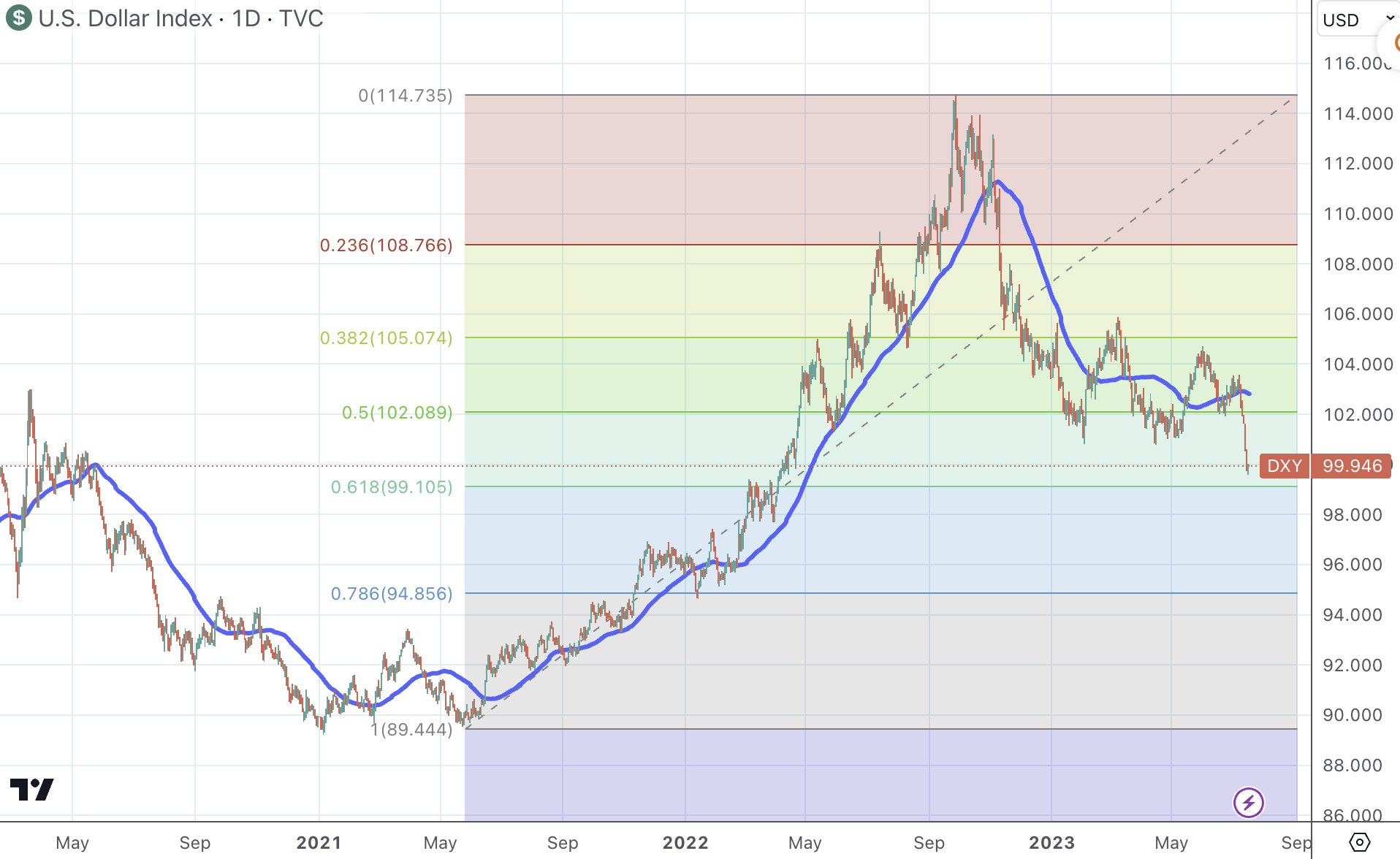
The US dollar index fell by 2.25% last week, marking its largest weekly decline in eight months. DXY fell below 100 to its lowest level in 14 months, down nearly 4.8% since its peak on May 31. This is mainly due to the mismatch in inflation and monetary policy cycles between the United States and other major developed countries.
Although the market as a whole is bearish, from a technical perspective, the recent decline seems somewhat excessive. DXY is expected to test the support level of 99.1, but there is limited downside potential near the current price, which could prompt profit-taking this week.
Focus 6: Impact of High Capital Requirements on the US Treasury Market
Higher capital requirements related to Basel III are gradually approaching. Michael Barr, Vice Chairman of the Federal Reserve responsible for regulation, said last week that Basel III will primarily affect "the largest and most complex banks". Barr stated that many banks already have enough capital to meet the new regulations, which means that the proposed provisions may not immediately generate costs. However, higher requirements will further limit capital, which has been a long-standing resistance by the banking industry.
For the US Treasury and financing market, this at least means that it is unlikely to have any looser policies, but it is also unclear whether the increase in capital requirements will lead to a tightening of spreads, thus affecting the overall level of tension in the financing environment.
Global Fund Tracking
According to EPFR data, the global fund flows for the week ended July 12th are:
Global Equity Funds: Net inflows of $11.6 billion. Developed market equity markets attracted net inflows of $9.7 billion, with the US equity market attracting $9.9 billion, Japan $1.4 billion, while Western Europe saw net outflows for the 18th consecutive week. Emerging market equity funds also saw net inflows of $1.8 billion. Mainland China stocks saw positive inflows. Over the past four weeks, South Korea had the strongest inflows relative to total assets in emerging markets. In terms of sectors, defensive equity funds saw net outflows of $1.5 billion, while cyclical equity funds attracted net inflows of $1.9 billion.
Global Fixed Income Funds: Net inflows for the 16th consecutive week. US fixed income funds saw net inflows of $11.3 billion, with 28 consecutive weeks of net inflows. Meanwhile, emerging market bond funds saw net outflows of $0.1 billion.
Money Market Funds: Outflows of $17.6 billion, with the average inflow numbers for money funds becoming more moderate in recent weeks.
This week's focus:
United States: RetailSales and industrial production data will be the focus of the week, which will help gauge the resilience of American consumers, including trends in goods and services consumption, as well as the recent impact of the weakness in the Manufacturing Purchasing Managers' Index (PMI) on the economy.
The market has optimistic expectations for these two data points: total retail sales increasing from 0.3% to 0.5%, core retail sales increasing from 0.2% to 0.3%, and industrial output for June expected to go from -0.2% to 0%.
China: Investors will be waiting for more stimulus measures to address the current weak growth, including second-quarter GDP, Medium-Term Lending Facility (MLF), and loan interest rates. However, so far, policy changes have been relatively mild, disappointing the market.
UK and Japan: Inflation data will be the focus in both countries. Particularly in Japan, market expectations for policy adjustments in July are increasing, and it is expected that the June CPI report will further fuel this trend. It is possible that after the July 28th meeting, the Yield Curve Control (YCC) upper limit could be revised from 50 basis points to 100 basis points.
US earnings season: Key earnings reports this week include Tesla, Netflix, andTSMC. Although the benefits brought by AI may not be immediately evident in every company, investors are eager to learn more about how to translate AI into cash flow information. In addition, large US banks such as Bank of America, Morgan Stanley, Capital One, as well as some healthcare companies such as Johnson & Johnson, Abbott, and Novartis, will also release reports.
Institutional View:
Goldman Sachs: Increased Difficulty in Late Cycle Trading
Tony Pasquariello: "The market has been dominated by a nearly singular narrative in the past year, but this year's trading environment is more diverse and rapidly changing. This means that there are multiple different narratives coexisting in the market, and few narratives develop as expected, with many strongly held views being overturned. For example, many people generally expected the US economy to enter a recession, or China's recovery to drive a rise in commodity prices. In contrast, few predicted the significant rise of US real estate developers (during a period of significant interest rate hikes by the Federal Reserve), or Germany entering an economic recession when the situation in Europe slightly improved (however, the EURO STOXX 50 index is close to pre-pandemic highs). These events help me understand why trend-following strategies have underperformed this year (in contrast, diversified strategies have performed well)."
Although some strong trends have reappeared recently, it is not easy tactically to navigate these trends. I suspect that as summer officially arrives, liquidity and risk transmission will only worsen, meaning that fund flows will have greater influence. For example, just last week, Goldman Sachs' prime book recorded the highest level of net stock purchases since October last year, mainly achieved by closing out macro short positions. From a broader perspective, most of 2023 reminds us of an old adage: late cycle trading is difficult. I say this because in the aftermath of"In the era of the epidemic, who knows which stage of the cycle we are in, and whether traditional market wisdom is applicable. Nevertheless, it is difficult for me to consider a 3.6% unemployment rate as belonging to the 'early' stage of the cycle."
CICC: Liquidity support for US stocks in Q3 weaker than Q2; It is too early to be completely bearish on the US dollar
The expansion of the US financial liquidity indicators in the second quarter is mainly due to: 1) Incrementally, the Federal Reserve providing a large amount of short-term borrowing such as BTFP to support the liquidity of troubled banks; 2) Decrementally, the debt ceiling constrains the issuance of Treasury bonds. Looking ahead to the third quarter, as bank crises gradually subside, reducing loan demand and approaching maturity, and the resolution of the debt ceiling, both of the above will reverse. We estimate that the financial liquidity indicator will decrease from the current $5.62 trillion to $5.47 trillion, returning to the level at the end of last year.
Due to the probable weakening of financial liquidity in the third quarter, the support for US stocks from this perspective alone will be significantly weaker than in the second quarter. From the perspective of the US macro environment, our judgment on the US is that the growth rate will slow down but not be very weak in the third quarter. It is a stage where the growth weakening cannot provide upward support for profits, but it is not bad enough to immediately generate expectations of interest rate cuts. Correspondingly, there will be volatility in US bond interest rates, and there will be another wave of rapid downward movement in core inflation as a "hedge". In the fourth quarter, there will be a slight increase in inflation and greater growth pressure. At that time, pushing down US bond interest rates through expectations of easing will be a hedge against the tightening of financial liquidity.
US stocks may be somewhere between the "strong" of the second quarter and the "weak" of last year in the third quarter, and there may be stage pressure before successfully pushing for expectations of easing in the fourth quarter, followed by a rebound. As for the US dollar, the current oversold condition and the potential tightening of liquidity in the third quarter may still provide support for the US dollar, but it is too early to judge the turning point of the trend.
Morgan Stanley: US summer travel demand remains strong
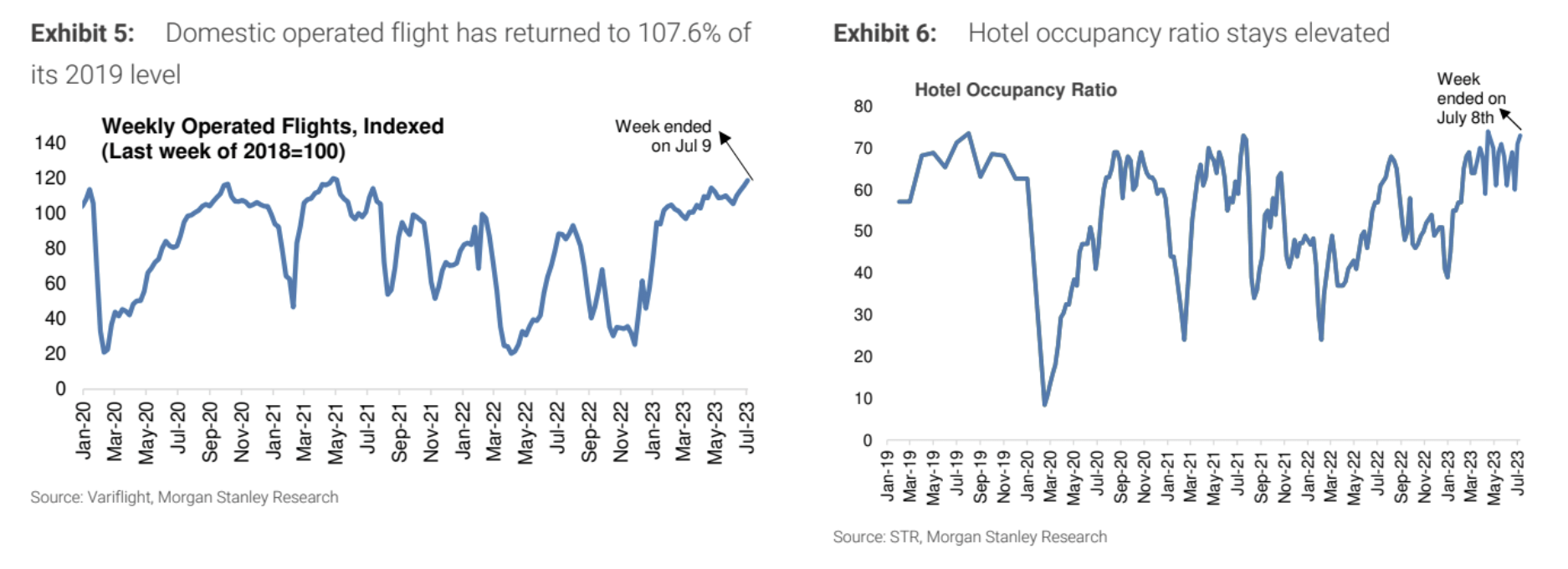
This summer, domestic operating flights have recovered to 107.6% of the 2019 level (compared to 105.2% in June), and hotel occupancy rates have risen to the second highest level of the year, demonstrating the resilience of travel consumption.