






In the ChatGPT ecosystem, how can startups tap into the opportunities brought by the open internet?


With only two or three months of development time, the information dissemination protocol RSS 3 successfully developed a new plugin "Web 3 User Activity" and officially launched it on the ChatGPT Store recently. This plugin greatly fills the gap in on-chain data in the AI field, allowing ChatGPT users to freely access massive on-chain data from the open web, enabling them to have a more comprehensive and easy understanding and participation in the Web 3 ecosystem.
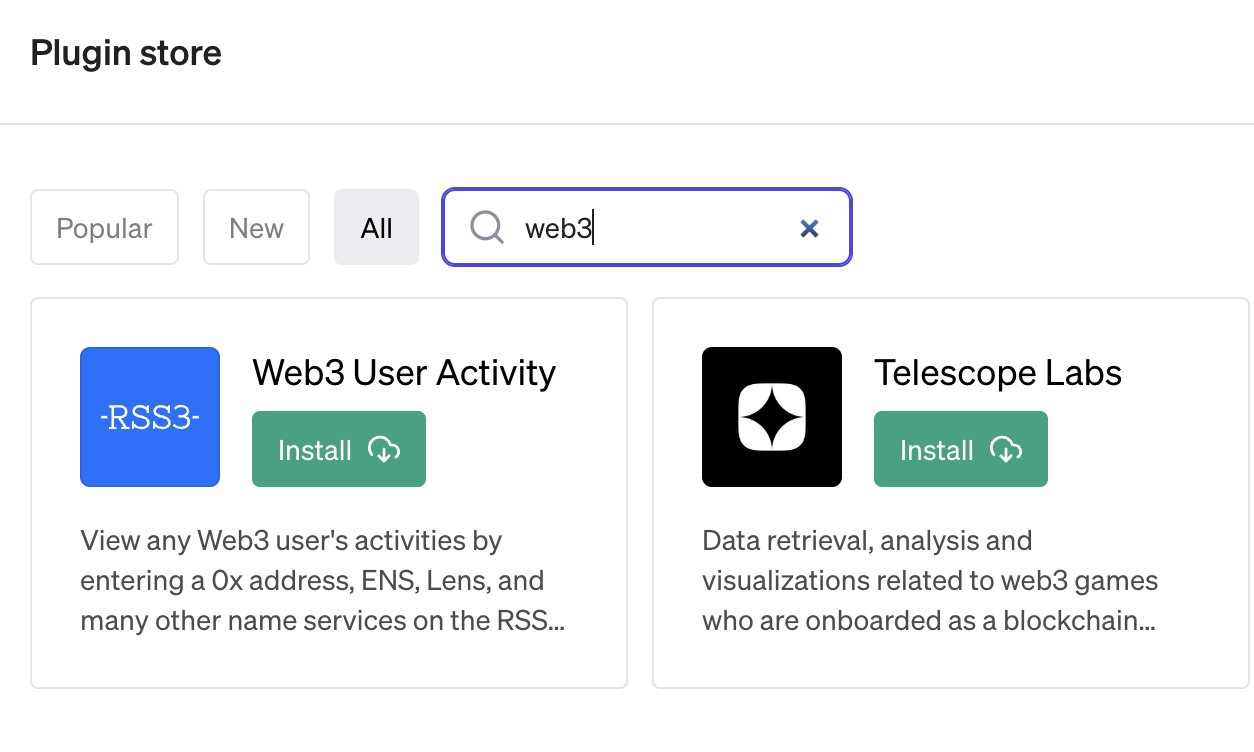
The launch of this plugin is of great significance as it combines with ChatGPT to open the door to the open internet for users, allowing them to experience the fairness and decentralization of the open internet more conveniently, and have a broader space for information acquisition and communication. In this context, R 3 PO interviewed Joshua, the founder of RSS 3, a seasoned serial entrepreneur in the traditional social field. Joshua stated that after navigation, search engines, algorithm recommendations, and other information distribution methods, large language models are expected to become the next-generation information distribution method for the open internet. Moreover, by using AI to interpret and convey information, large language models can communicate with people in a more user-friendly manner.
Three years ago, when Joshua realized that a single application could not solve the problem of monopoly in traditional internet content, he resolutely turned to the open internet and founded RSS 3, aiming to achieve the freedom of the open internet, which is efficient and secure information flow. This idea has also received support from well-established investment institutions such as Coinbase and GGV. In our conversation with him, we explored how AI influences the internet and Web 3, and also discussed where the opportunities for entrepreneurs lie in the current bear market, hoping to bring some insights to practitioners in the Web 3 and AI fields and help them find new breakthrough opportunities in this rapidly developing field.
Part 1 Opportunities for Web 3 Startups in the ChatGPT Ecosystem
Since OpenAI released the ChatGPT plugin, many have compared it to Apple's App Store. Jim Fan, an AI scientist at NVIDIA, tweeted that if the emergence of ChatGPT is like the "appearance of the iPhone," then the release of the plugin feature is like the "iOS App Store" event. He believes that the App Store is just the beginning, and OpenAI's overall plan is to become an "everything has it" application - it can read documents, connect to various applications in real time, and have an impact on the world.
Packy McCormick, the founder of Not Boring Capital and a consultant for a16z's Web3 fund, delved into how OpenAI challenges the positions of Google and Meta and becomes the preferred gateway to the future internet in his article "Attention is all you need." He believes that ChatGPT has much greater potential than the App Store, as it not only attracts consumer attention but also captures the imagination of developers. Currently, about half of YC entrepreneurs are using OpenAI's API to build products. "With the browsing plugin, it will do everything search does and more customization; with third-party plugins, it becomes a platform, and all vendors will add more functionality to the platform."
A global wave of AI innovation and entrepreneurship is on the rise, with not only giants like Amazon, Google, Alibaba, and Baidu entering the game, but also AI startups gaining momentum. According to research firm PitchBook, in 2018, when OpenAI first released its initial version of the GPT model, the total funding for the entire generative AI field for the year was only $408 million. After the release of ChatGPT last year, this number skyrocketed to $4.5 billion in 2022. And this year, in just the first quarter alone, entrepreneurial companies in the generative AI field have announced approximately $11.6 billion in transaction financing, involving 46 deals.

For the AI field, these transactions are just the first step of the long march, and this capital boom has also spread to the Web 3 field. There have been many financing transactions related to AI and Web 3 this year, but the market generally has doubts about the integration of AI and Web 3.
The launch of the RSS 3 plugin on ChatGPT further demonstrates the potential of combining AI and Web 3. Joshua shared his views on this trend and explored the potential ways of integrating AI and Web 3. He said, "Wherever liquidity is, people will be attracted. This is a real situation. Especially for smaller projects, they are more likely to be attracted by liquidity changes."
He proposed three possibilities for combining AI and Web 3. The first is to use Web 3 to solve the AI computing power problem by converting dispersed computing power into computing power for training AI. The second is to use game mechanisms to solve the problem of training data by involving domain experts in the generation of training data, making the training data more aligned with their preferences. The third possibility is to use Web 3 as an information source and feed it back into AI models, which is what RSS 3 is currently doing. Initially, this may mainly serve applications in the Web 3 ecosystem, but as the amount of information in the open internet increases, it will gradually break through limitations and bring about greater imagination.
So, will this scenario be exclusive to big corporate giants? Where are the startup opportunities for small companies? Joshua believes that although large companies have advantages in terms of users and information, small companies have a clearer positioning in certain core technologies and scenarios. For example, compared to the general language models of big companies, RSS 3 has a stronger competitive edge in handling and distributing decentralized and open information. It is believed that in vertical fields such as finance and healthcare, small companies will also have their own advantages.
"Big companies currently have advantages in terms of traffic, and this advantage will not disappear immediately." Joshua said. As an example of people's need for information aggregation and redistribution, the emergence of social media has not weakened the demand for search engines. Different tools solve different problems. Generative AI may be able to handle the needs that traditional projects have already met, but there are still technical challenges. For example, current language models cannot accurately identify the specific context and needs of user requests. When you ask "What is apple?", the model may not be able to determine whether you are referring to the fruit, the phone, or the technology company. This requires further research and technical support.
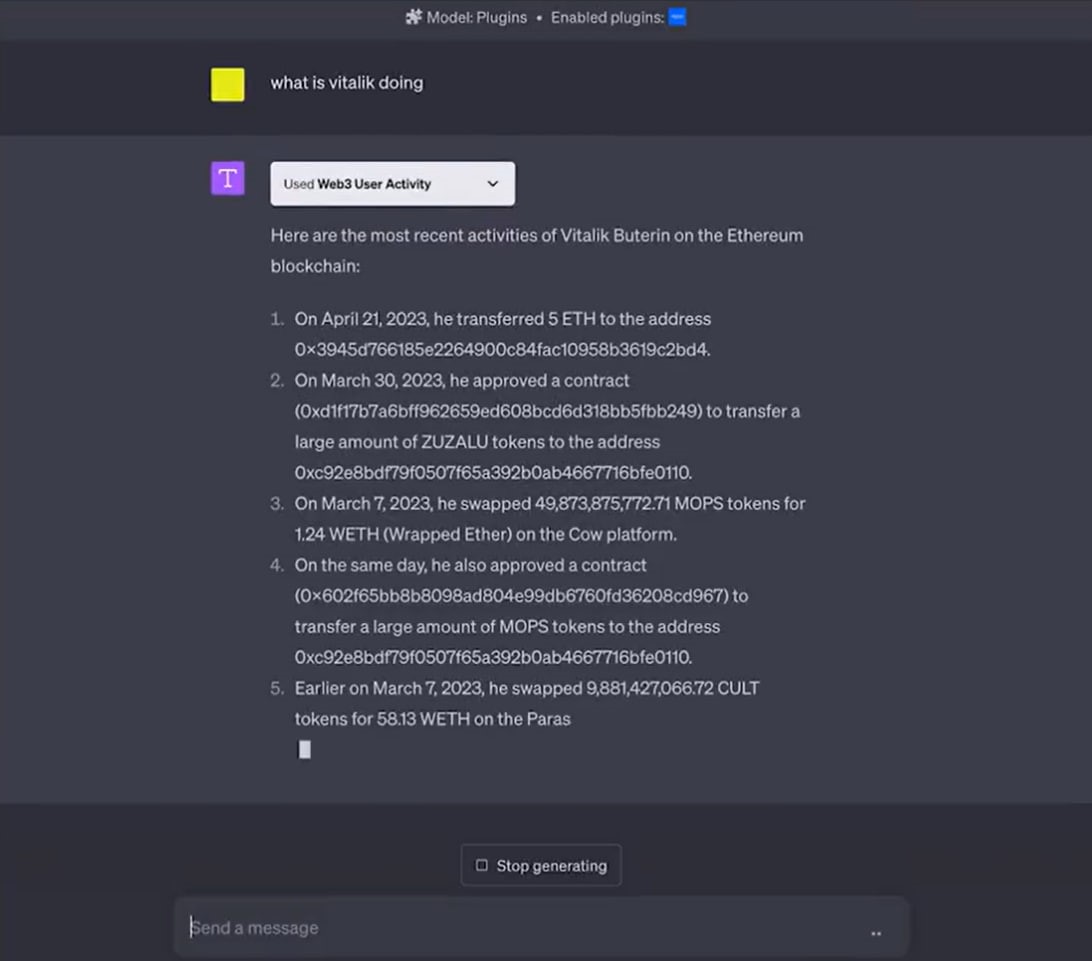 However, RSS 3 can now accurately track on-chain data, such as when you ask who Vitalik is, the answer is no longer limited to the wiki and his recent news, but instead, it is Vitalik's recent activities on the chain.
Part 2 Breaking the Monopoly, RSS 3 Creates a New Era of Open Internet Information Distribution
RSS 3 is one of the few companies that combines Web 3 with AI in the early stages of entrepreneurship. "When we had an AI team, there was still some conflict between Web 3 and AI, as Web 3 was considered decentralized, while AI required centralization," Joshua recalled. Although the situation was not ideal at the time, it has proven that we are doing the right thing, and we have seen the value of persistence.

As an experienced serial entrepreneur in the traditional social field, Joshua deeply realizes that relying on one or two applications cannot solve the problem of internet content monopoly. Over the past twenty years, a handful of super companies have monopolized content and controlled user data, resulting in a centralized environment and stifling the vitality of innovation—even if the application design is excellent, it cannot compete with the data monopolists. In contrast, blockchain technology ensures the security and privacy of data through encryption and the principle of "code is law." With the rise of Web 3, people are increasingly eager to break free from the control of traditional centralized platforms and have the right to create, disseminate, and distribute information.
To improve the efficiency and freedom of information flow on the internet, three years ago, Joshua decided to invest all his resources into the open network and founded RSS 3. RSS 3 positions itself as an information platform for the open internet. Unlike traditional centralized platforms, RSS 3 does not directly participate in the encryption process of information but plays a role more similar to that of a courier or transportation tool to ensure absolute ownership of information and data security.
In an interview with Joshua, he mentioned three core aspects of the company's future development: data coverage, information distribution methods, and decentralization level. Firstly, RSS 3 aims to comprehensively cover the data scope of the entire open web, ensuring that the covered information is readable and effective. Secondly, in addition to information flows, search, and large language models, RSS 3 will continuously improve and develop information distribution methods to meet user needs. Furthermore, RSS 3 aims to achieve a higher level of decentralization while ensuring the openness and fairness of nodes.
Joshua revealed that RSS 3 plans to open external nodes in August, and in the early stages there may be restrictions on the number of nodes for RSS 3. Then, gradually reach a dynamic balance. In the early stages when the number of nodes is limited, there may also be some soft requirements, such as early participation in testing for those related to the project or active participants in the community. However, these requirements will not be overly strict, and RSS 3 hopes to attract more participation from spontaneously operated nodes.

Regarding the business model, RSS 3 is similar to Chainlink and The Graph. Their network structure can be compared to Ethereum, where Ethereum nodes ensure the security and confirmation of transactions, while RSS 3 nodes index information and provide it to users in a specific way. Once the nodes are developed and opened to the outside, they may charge a certain fee to provide information services.
As for future financing plans, Joshua values cooperation with investors who have a strong sense of mission and vision for the development of the open internet, rather than just financial investors pursuing short-term profits. In terms of fund usage, RSS 3 plans to focus on node and community building, as well as continuous investment in user experience and development tools to increase user numbers and enhance user stickiness.
Part 3 Web 3 Entrepreneurship Insights: Trends are unpredictable, persist in doing the right thing
In the past few years, the cryptocurrency market has experienced significant volatility and challenges. Joshua has shared his feelings and experiences. He pointed out that in the past, people generally believed that Web 3 represented concepts such as decentralization and ownership. However, with the emergence of various projects, people have started to see Web 3 as a new stock market or investment opportunity, leading to a shift in narrative from decentralization to a focus solely on tokens. This to some extent reflects the changes in the market and people's pursuit of speculation.
However, "smart choices in the short term will often not be particularly helpful." Joshua gave an example that at the time of our entrepreneurship, traditional social media projects like Clubhouse were hot in the investment field. As the founder of the Chinese version of "Clubhouse," Joshua was also sought after by many well-known domestic and foreign venture capitalists. If Joshua had chosen to engage in these projects at that time, it might have seemed like a wise move, but as time went on, these projects quickly faded away. On the contrary, projects like RSS 3 thrived in the Web 3 field.
"Throughout the entire entrepreneurial process, including myself, we all face various temptations. Sometimes, we consider pursuing things that may bring short-term benefits or follow the current trends, but in the end, we don't do so." He emphasized that even if these opportunities may bring benefits in the short term, they do not belong to the entrepreneurs themselves in the long run.
The characteristic of entrepreneurs is that they are not only entrepreneurs but also in pursuit of themselves. As an entrepreneur who has been committed to improving information flow efficiency and freedom in the open network, Joshua emphasizes that in the era of Web 3, short-term temptations and trends should not be the basis for entrepreneurs' decision-making. Instead, they should take a broader perspective and focus on long-term social impact and value creation, and society will naturally bring rewards.
"Many entrepreneurs in the Web 3 field did not anticipate the explosive popularity of cryptocurrencies. Similarly, practitioners in the field of artificial intelligence did not anticipate the sudden popularity of large language models." Joshua said that in fact, before the rise of language models, the field of artificial intelligence had experienced seven to eight years of silence. Whether it is cryptocurrencies or artificial intelligence, the changes in trends are unpredictable. Therefore, entrepreneurs should maintain independent thinking, adhere to their beliefs, and persevere.

Currently, the cryptocurrency market is in a bear market, which requires entrepreneurs to have patience and perseverance. The short-term liquidity or market volatility will not significantly impact the overall development of the industry. Although the growth rate may vary, the widespread adoption of cryptographic technology and the open internet will continue to expand.
What entrepreneurs need to do at this time is to stick to their values, focus on long-term social impact and value creation, rather than blindly following short-term temptations and trends. As Joshua said, "We must persist in doing what we believe is right and beneficial to society. If we are lucky, we may get returns early; if we are unlucky, we must persist even longer."
Copyright statement: For reprints, please contact the assistant on WeChat. Unauthorized reproduction or plagiarism will be subject to legal liability.
Disclaimer: The market carries risks, and investment should be cautious. Readers are advised to strictly comply with local laws and regulations when considering any opinions, views, or conclusions in this article. The above content does not constitute any investment advice.





