






LD Macro Weekly Report (2023/06/19): The market sentiment is improving, and the global increase in positions is in progress



Summary
Summary
The digital currency market fell sharply last week after the FOMC sharply raised interest rates by 50 bp, but sentiment improved after Friday and basically recovered the decline, and the overall correlation with the stock market further declined. A large number of Fed officials' speeches this week, including Powell's testimony, will allow the market to conduct a round of more precise pricing of "+50 bp".
market performance
market performance
Benefiting from the Fed's decision to pause interest rate hikes and data showing rising U.S. consumer confidence and spending, the S&P 500 ended last week higher for a fifth straight week, its longest weekly winning streak since the fall of 2021, before the Fed began hike. The tech-heavy Nasdaq Composite rose for an eighth straight week, its longest winning streak since early 2019.
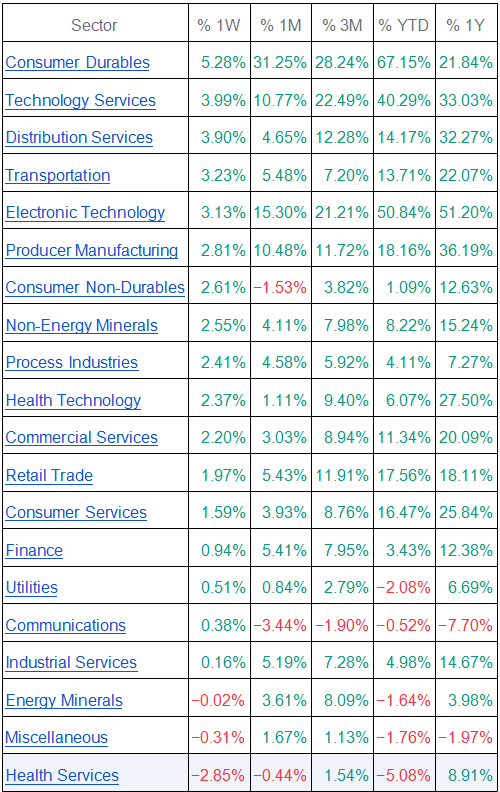
Last week, most sectors of the U.S. stock market rose. The worst performer was the healthcare sector, which fell 2.85%. The best performer was still durable goods, which rose 5.28%. The technology sector regained momentum:
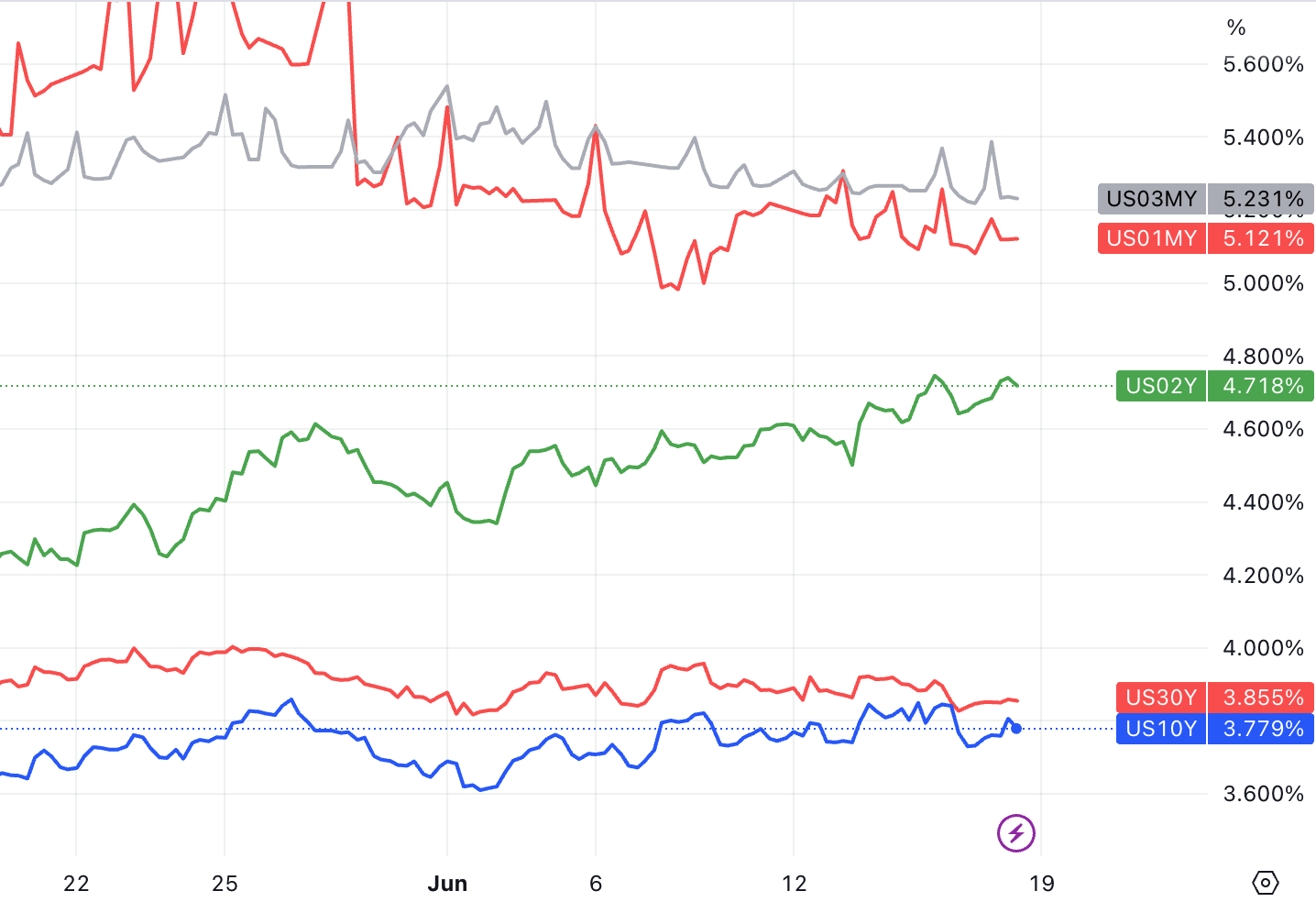
In the interest rate market last week, the 1-3M ultra-short-term bond yields fell slightly, the 2-year period rose (mainly because the Fomc raised the end-point expectation of this year’s interest rate by 50 bp), and the 30-year and 10-year period basically remained flat:
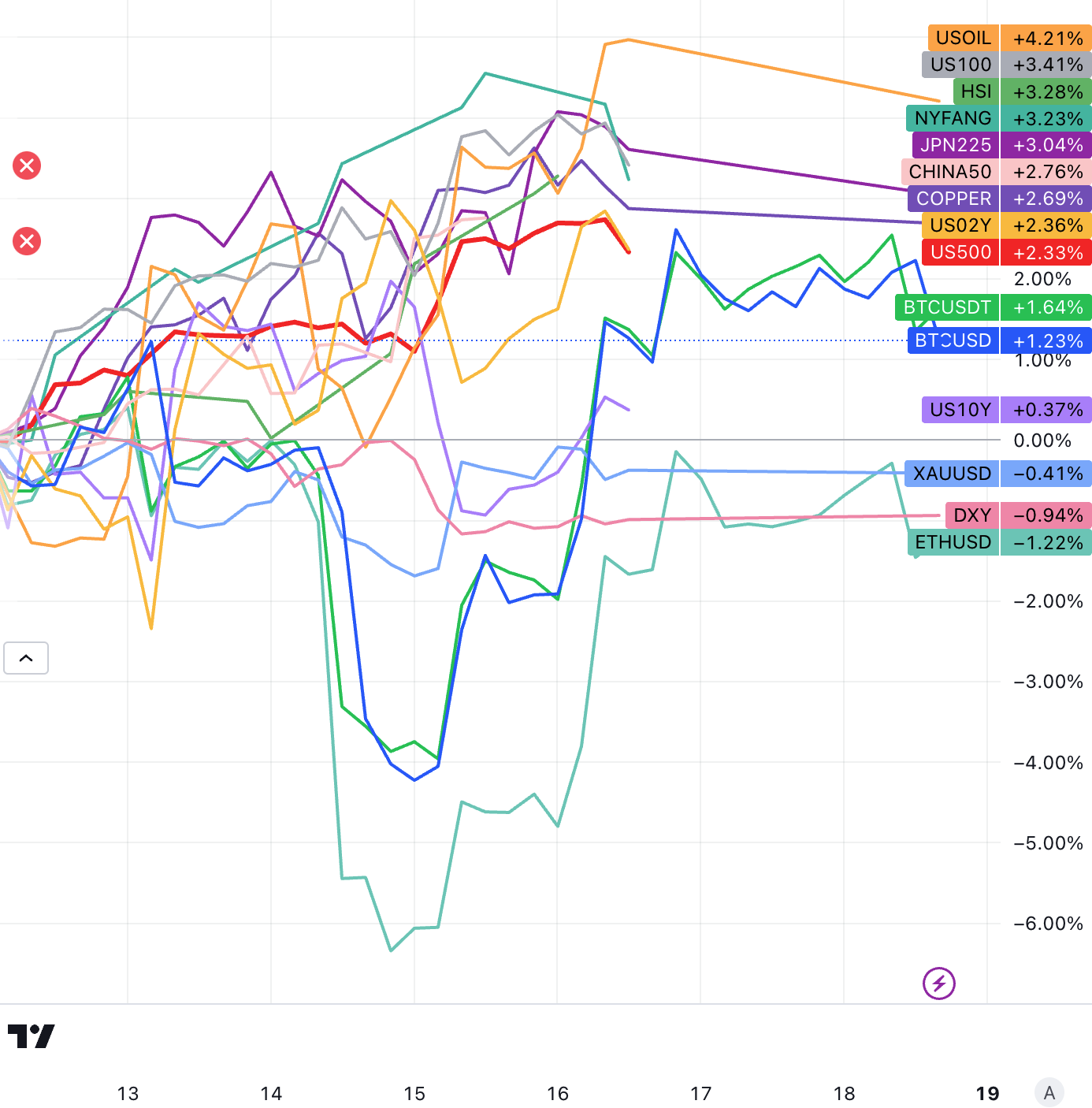
In other markets, Japanese stocks, Hong Kong stocks, Chinese stocks, copper, crude oil rose, the U.S. dollar index gold fell, and digital currencies fell sharply after the suspension of FOMC hawks, but basically recovered their losses after Friday:
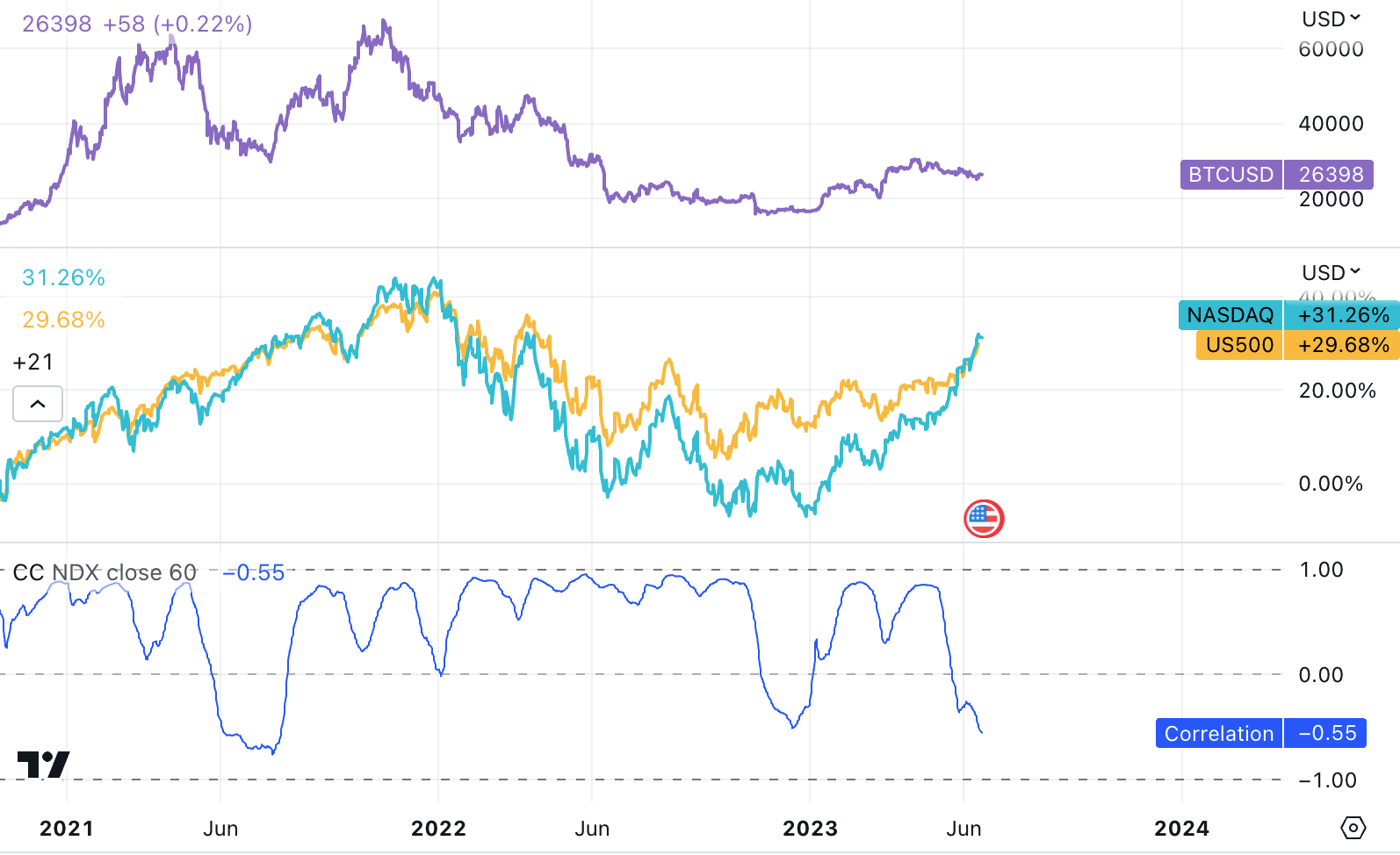
The rolling 60-day correlation between digital currencies and stocks fell further, hitting its lowest level since July 2021:
Money flow, positions, emotions
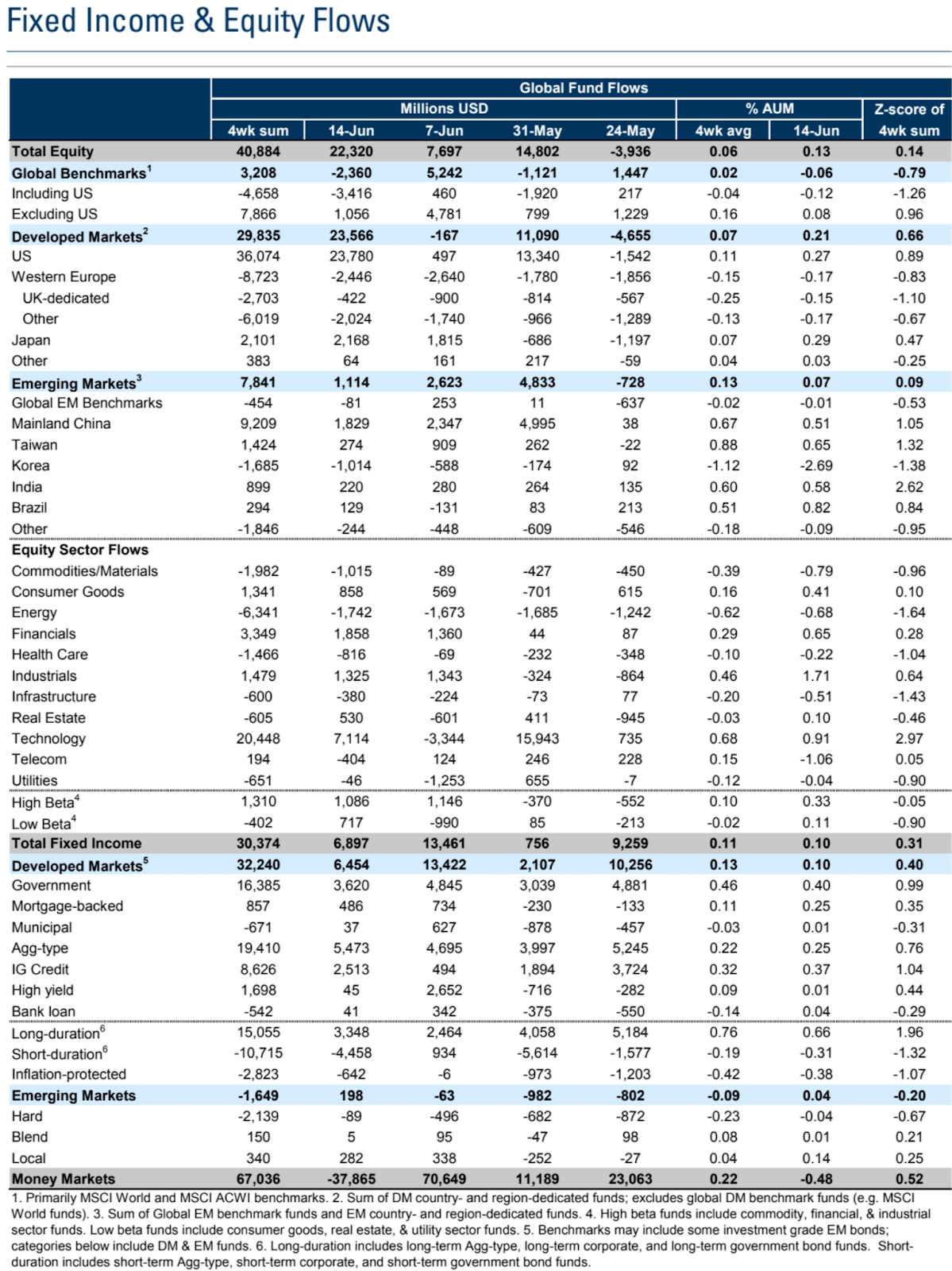
EPFR International Fund Flow
According to EPFR data, the flow of global funds in the week ending June 14, in short, US stocks, especially technology stocks, have inflowed substantially, Chinese and Japanese stock markets have flowed in, European stocks have flowed out, monetary funds have flowed out, and bonds have flowed in:
Both equity and fixed income funds saw net inflows, with net inflows into global equity funds increasing to $22 billion, up from $8 billion earlier.
This net inflow is mainly due to demand for US stocks, especially large-scale inflows into US technology sector funds. However, outflows from Western European equity funds continued, while inflows from Japanese equity funds increased.
Among emerging markets, mainland Chinese equity funds received net inflows, while outflows from Korean equity funds deepened. At the sector level, inflows to tech funds remained high, especially compared to other cyclical sector funds such as energy.
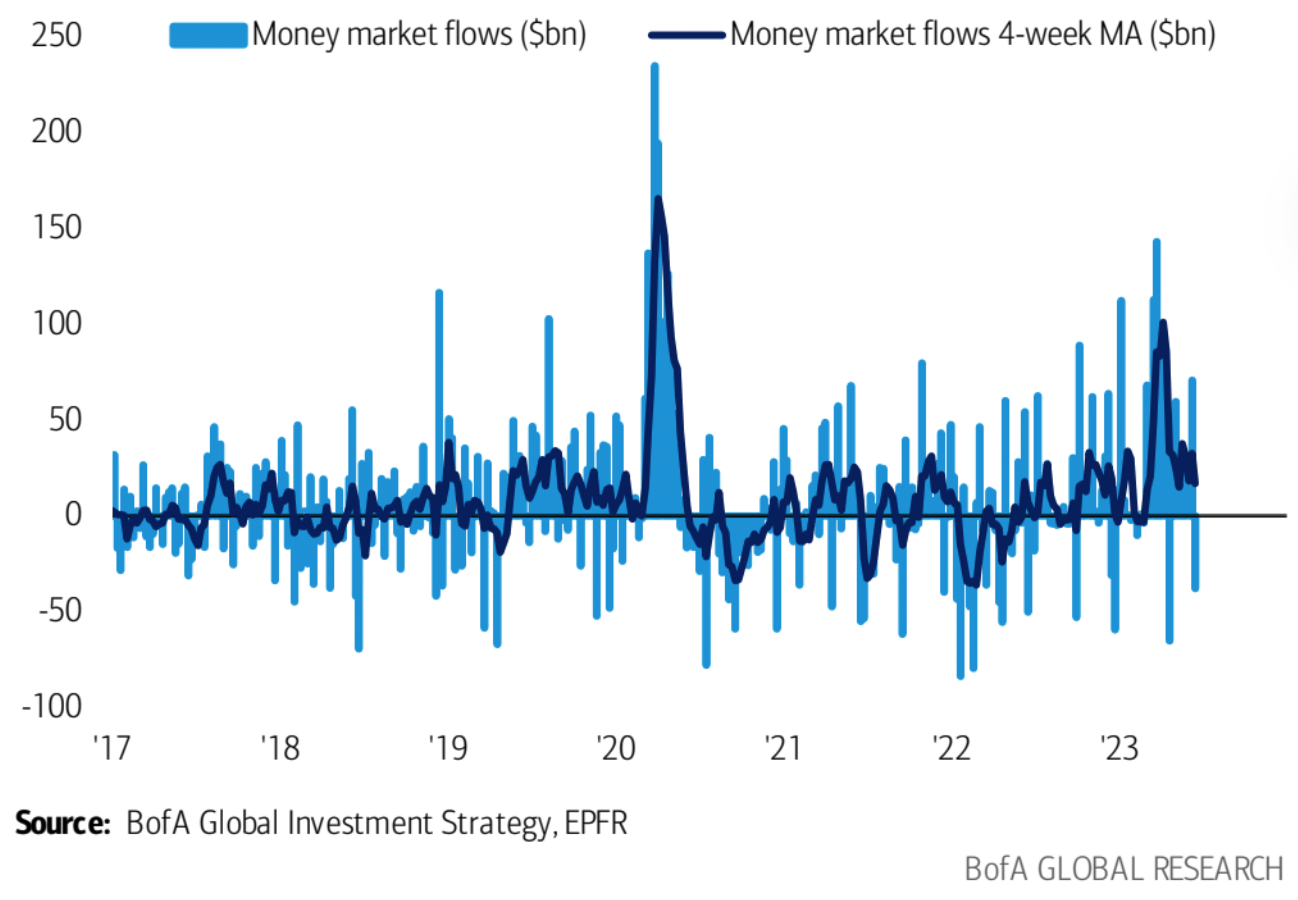
Notably, money market fund assets fell by $38 billion, the first net outflow in eight weeks.
Deutsche Bank's consolidated position data
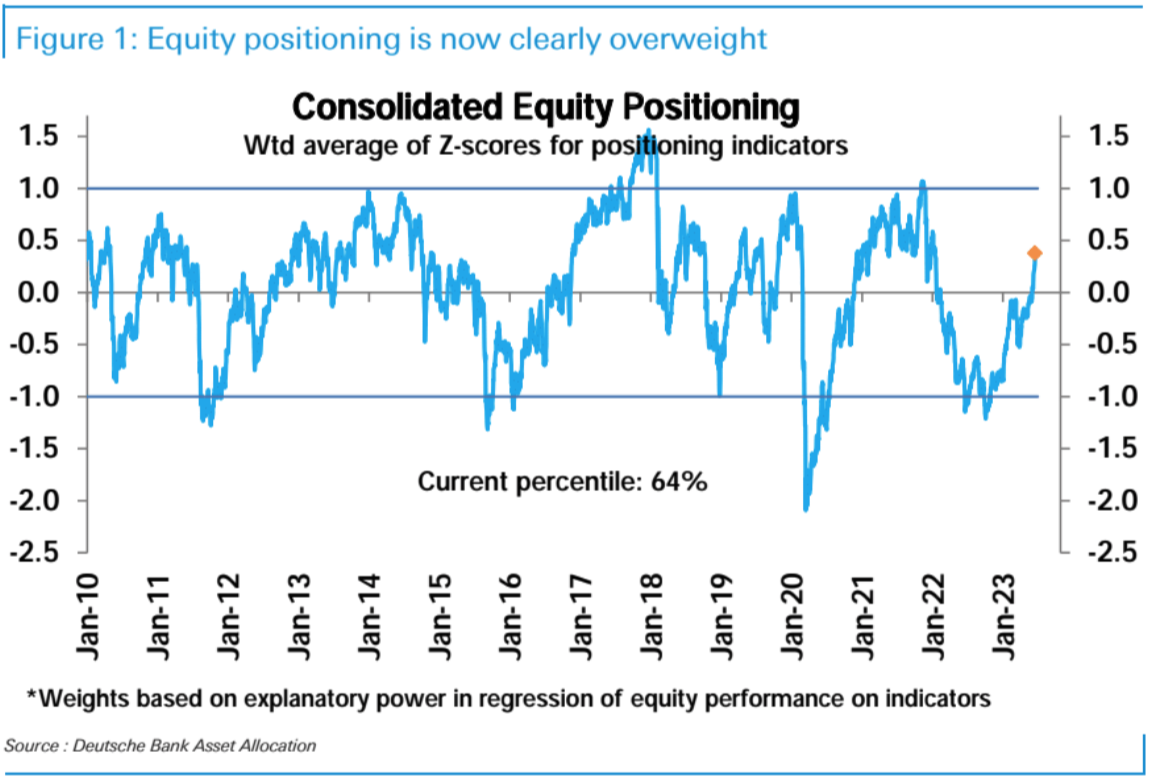
According to the summary of Deutsche Bank, the position allocation of US stocks rose further last week, moving to the overweight area (z Score 0.38, historical 64th percentile), reaching the highest level since January 2022. Considering the data lag and the optimism of the market sentiment in the past two weeks, the current actual position may be higher. Among them, the positions of subjective and institutional investors jumped at the same time, and subjectively dominated the increase in positions in the past two weeks.
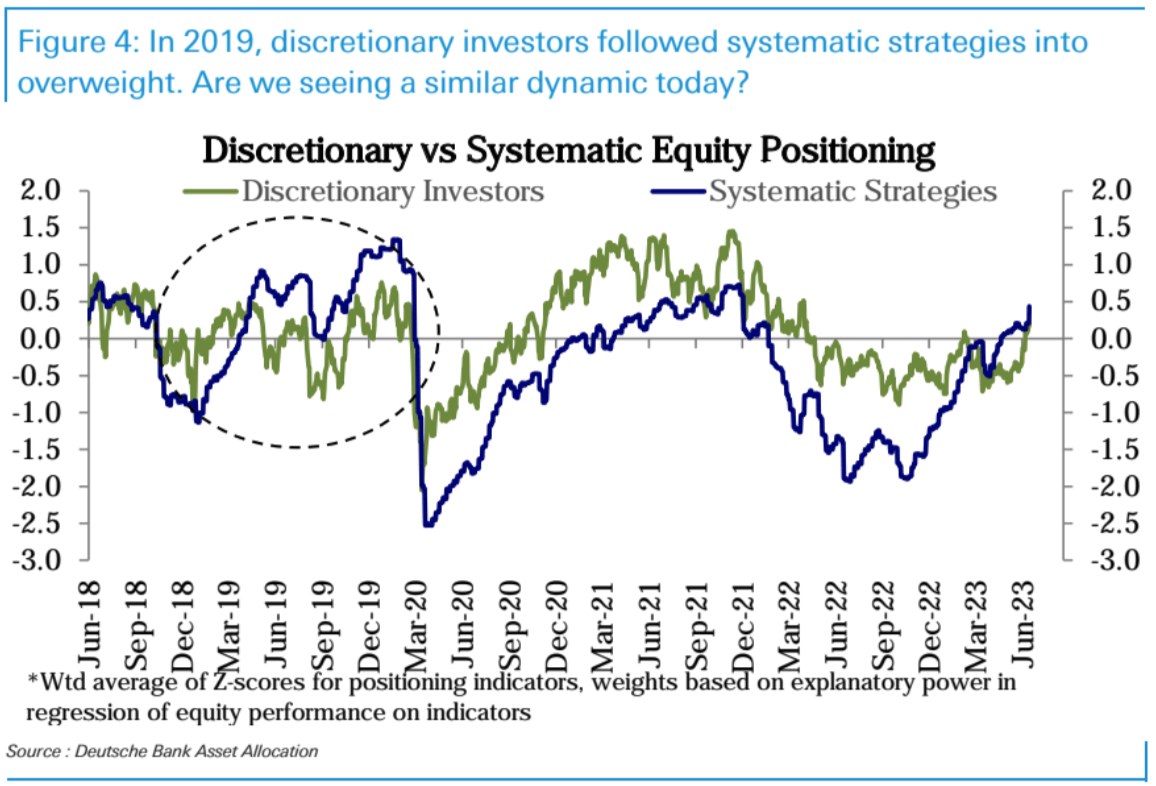
As can be seen from the figure below, the so-called Systematic investors (that is, funds with systematic investment strategies, mainly institutional investors) have taken the lead in increasing their positions since March this year, but in the past two weeks it has been the Discretional investors (subjective investment funds) Or, because these investors are easily affected by emotions, you can understand that they are driven by the positions of retail investors). Similar institutions first increased their positions, and the subjective strategy follow-up scenario can be traced back to 2019, and the two began to resonate from the middle of the year until the arrival of the new crown in early 2020.
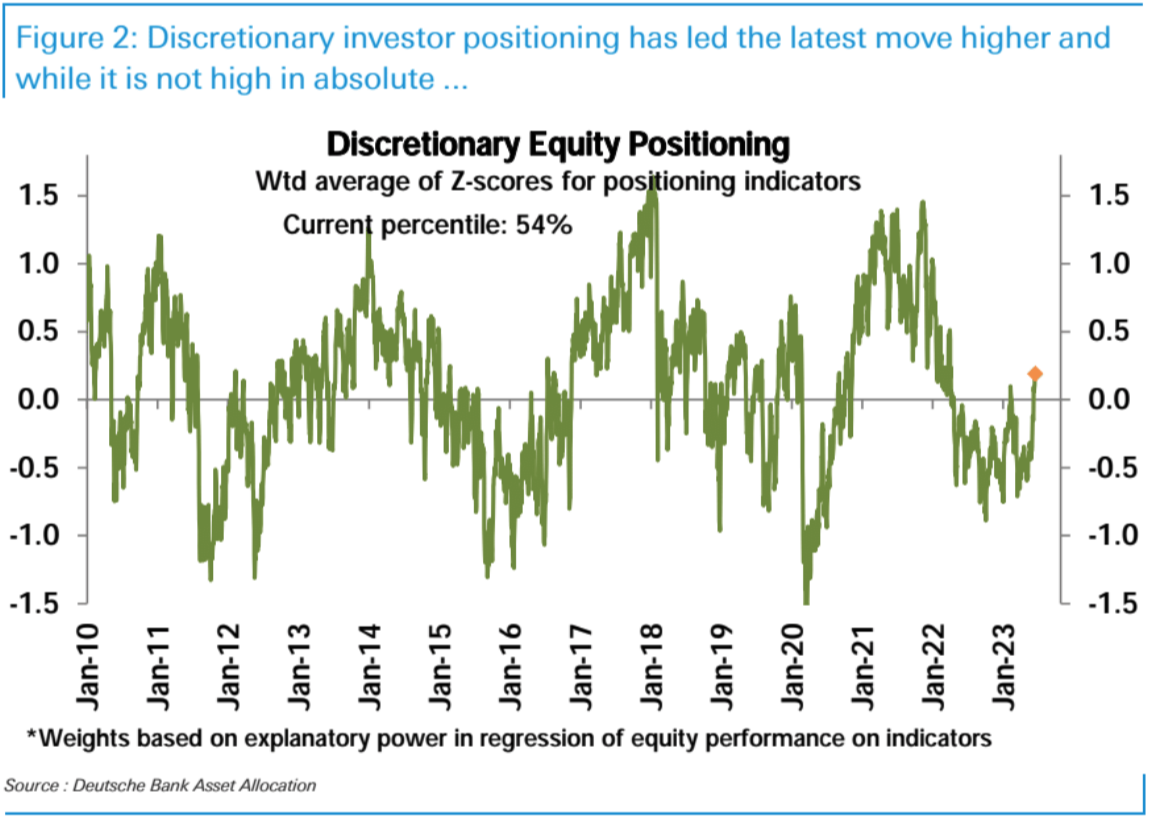
It can be seen that from the whole of last year to the end of May this year, subjective investors have been firmly maintaining a low allocation. With interest rate hikes, liquidity recovery, and economic momentum slowing down, new pessimistic views continue to emerge in the market. But as time passed, the stock market did not sell off, but rebounded steadily, and then subjective investors finally changed from underweight to overweight last week. At the same time, the market finally jumped out of the big technology stocks and showed a general rise. It boosted its positioning further last week, to the highest level since April 2022.
Compared with historical data, the current subjective investor position level is at the historical 54th percentile, which is at a neutral level, and the institutional position is relatively high at 74%, which is on the high side. The high level of sex shows that the current position is not too extreme, and there is room for further growth.
The evolution of positioning this year has similarities to 2019. In early 2019, as volatility fell from extremely high levels, institutional investors led the way by increasing their exposure, driving the market higher, while subjective investors used the rally to trim their exposure and shift into underweight stocks. Back then, just like today, there were plenty of things to worry about, such as trade wars, an inverted yield curve, weak U.S. and Chinese data, and money piled into big tech companies.
By early October 2019, subjective investors were still substantially underweight, even though institutions had increased exposure to overweight territory. However, as the stock market continued to stabilize, subjective investors began to increase positions significantly, turning overweight long before any growth indicators rebounded, driving a strong rebound in the last quarter of 2019, and then until the outbreak of the epidemic came to an abrupt end in 2020 end.
CFTC Futures Data
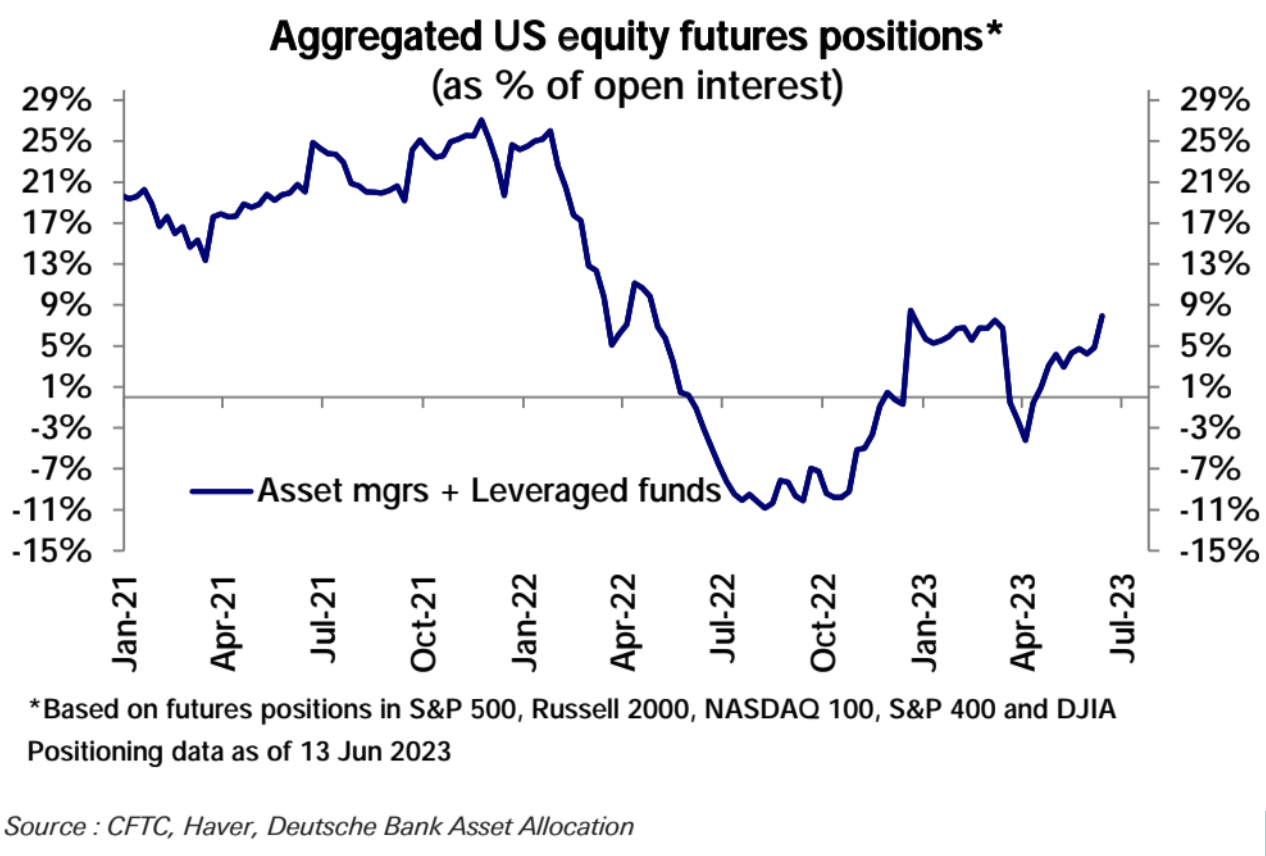
Last week, the net long position of US stock futures rose further to the highest level since the end of last year.
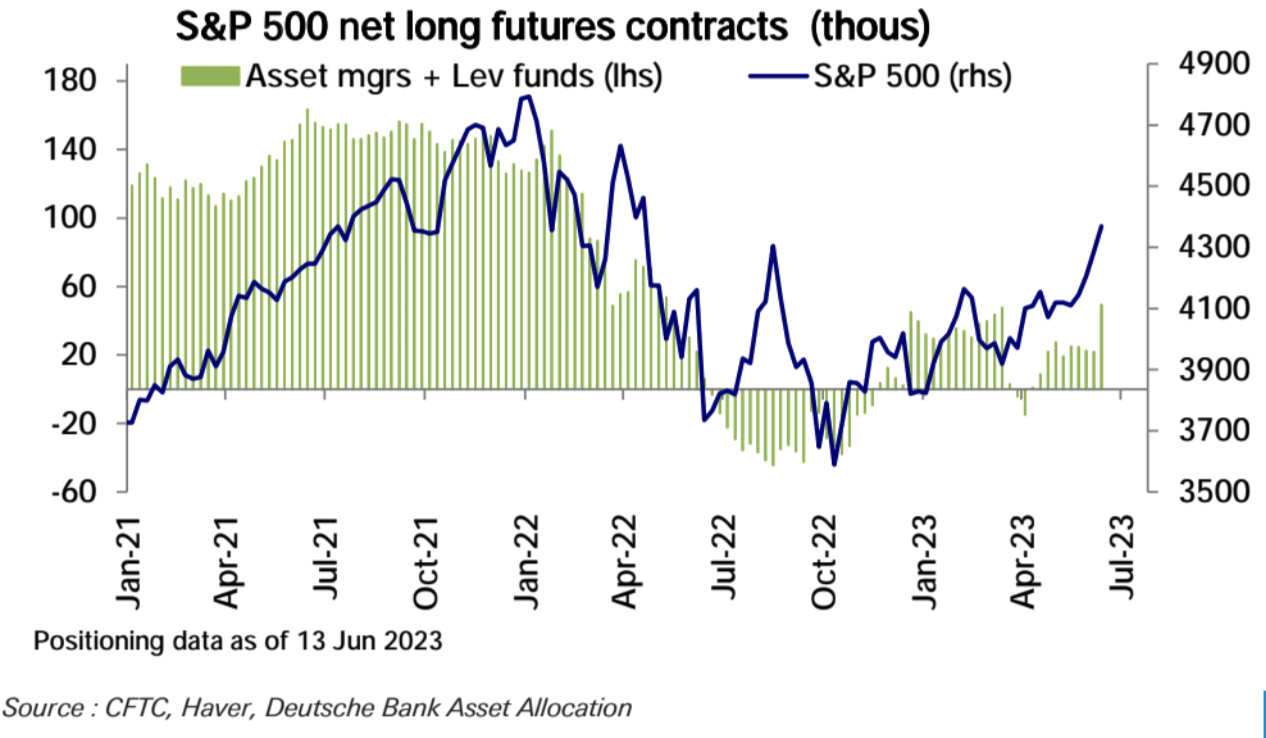
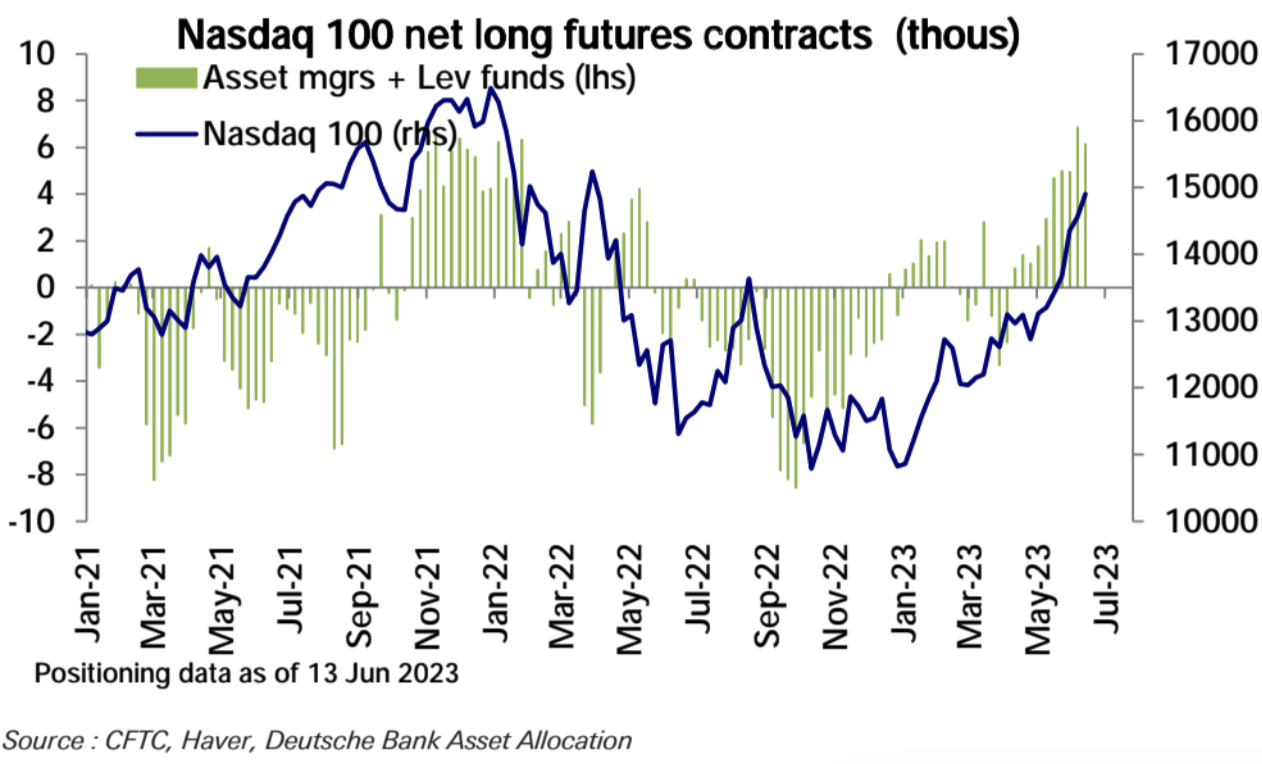
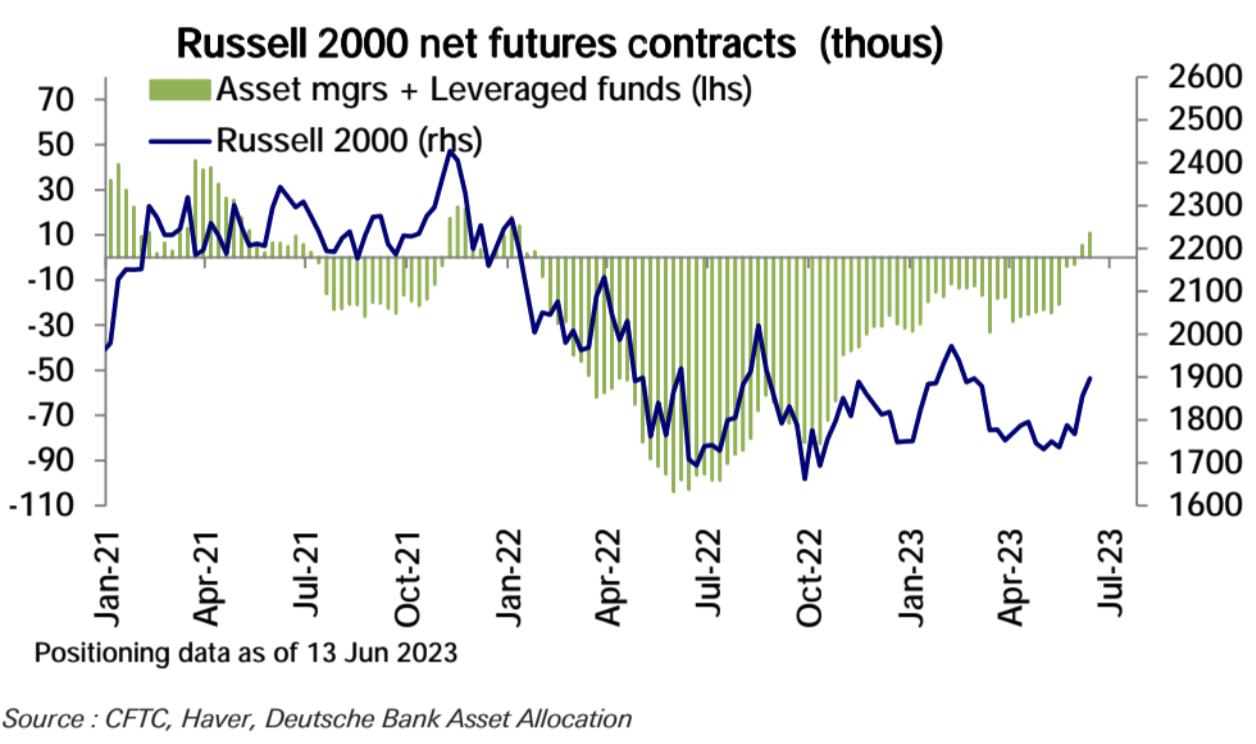
Among them, large blue chips represent the largest increase in S&P 500 net long positions, technology stocks represent a slight decline in Nasdaq 100, and small cap stocks represent Russell l2 000 turning into net short positions:
Investor Sentiment Indicators
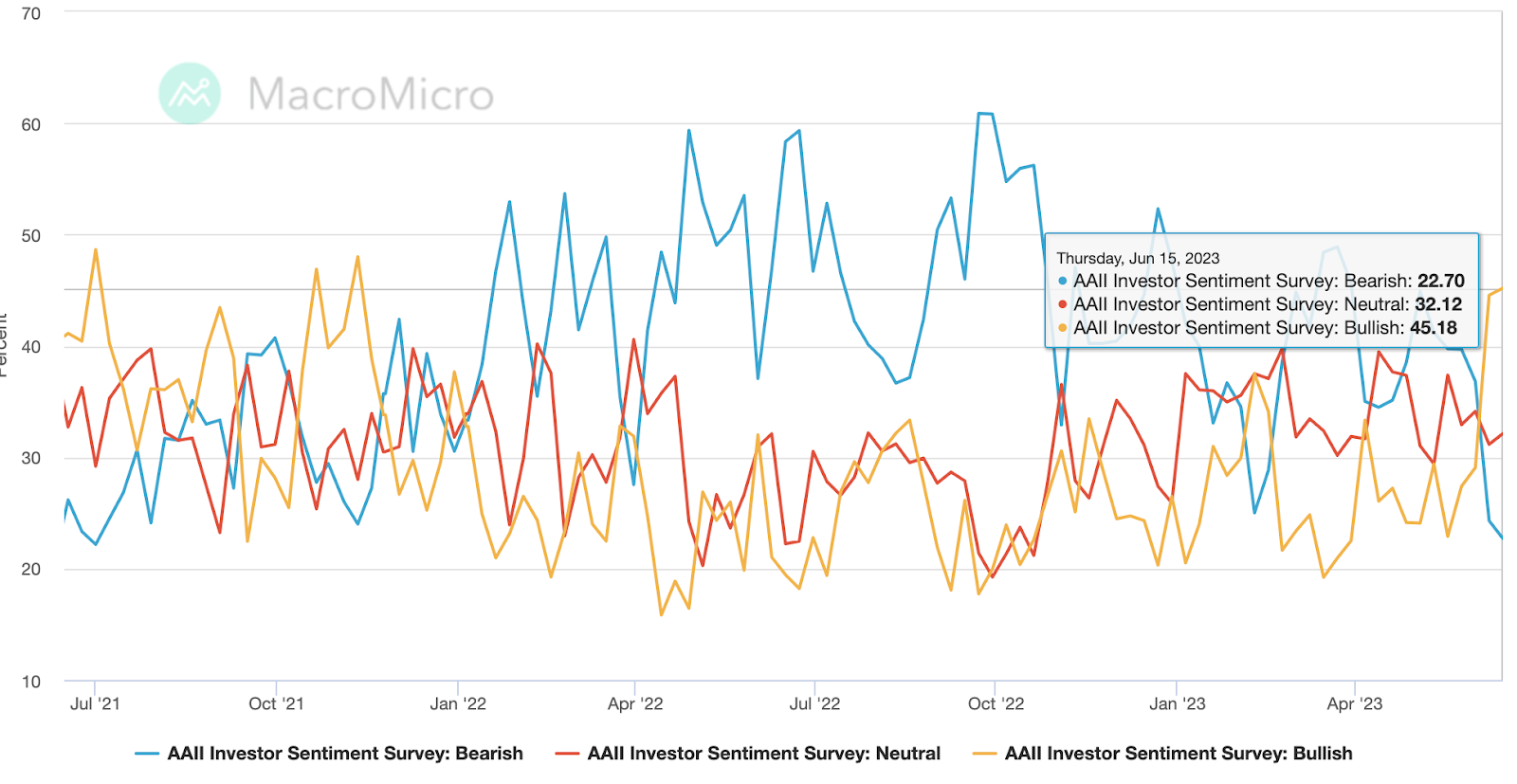
The AAII indicator of investor sentiment continued to turn positive, with the proportion of bears falling slightly and the proportion of bulls inching up to the highest level since November 2021:
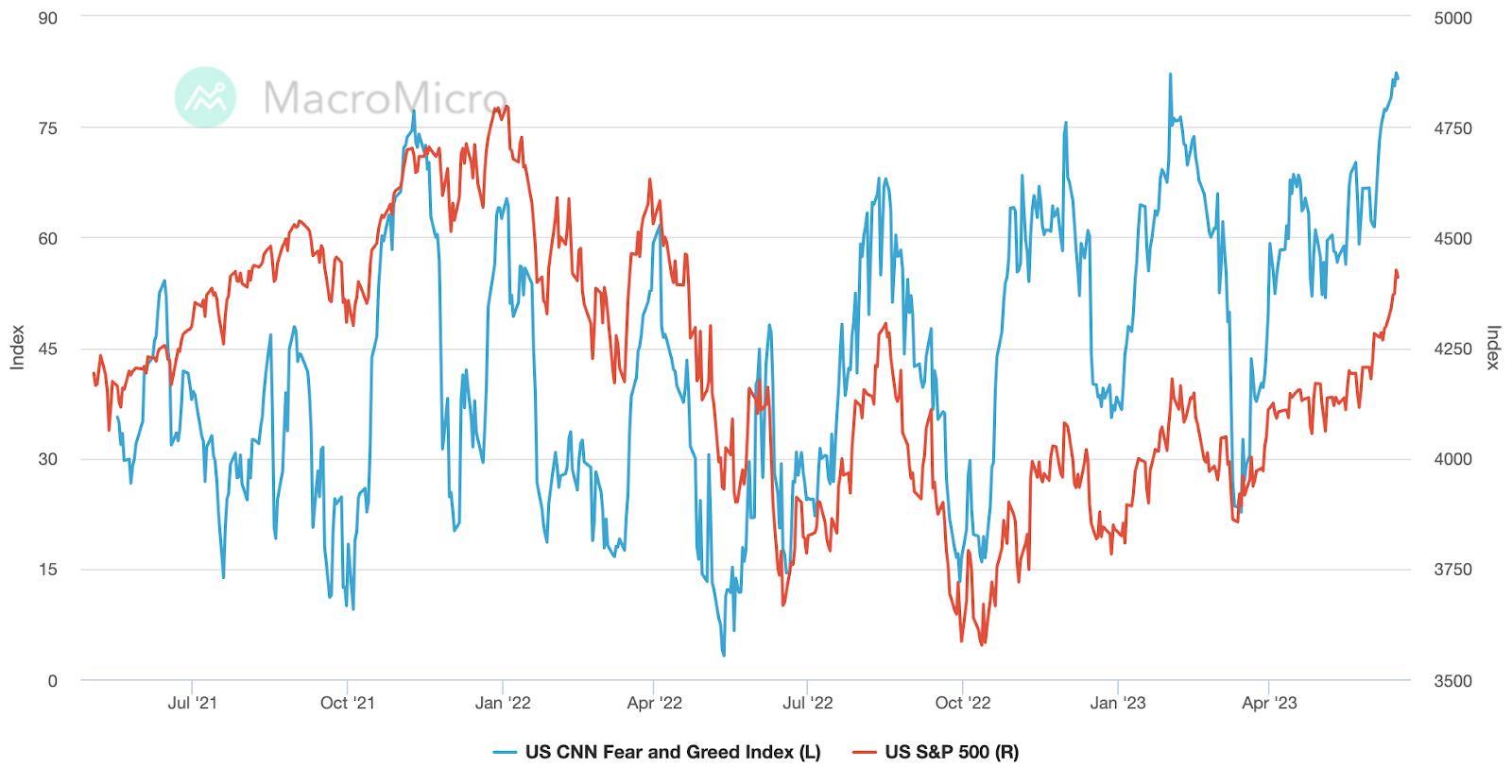
CNN's Fear & Greed Index refreshed the record high set in February this year, and has continued to maintain at the extreme greed level since June 6 (above 75 is extremely greedy):
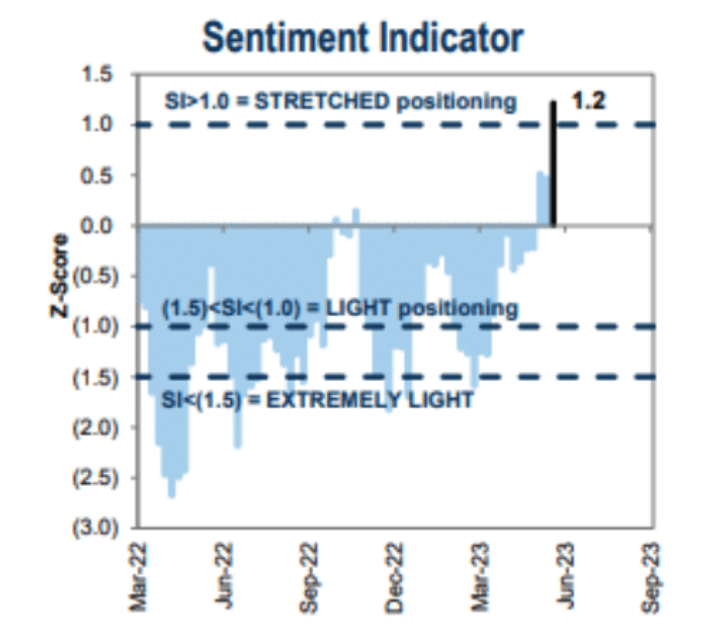 Goldman Sachs' positioning sentiment indicators have risen sharply and are now entering overweight levels:
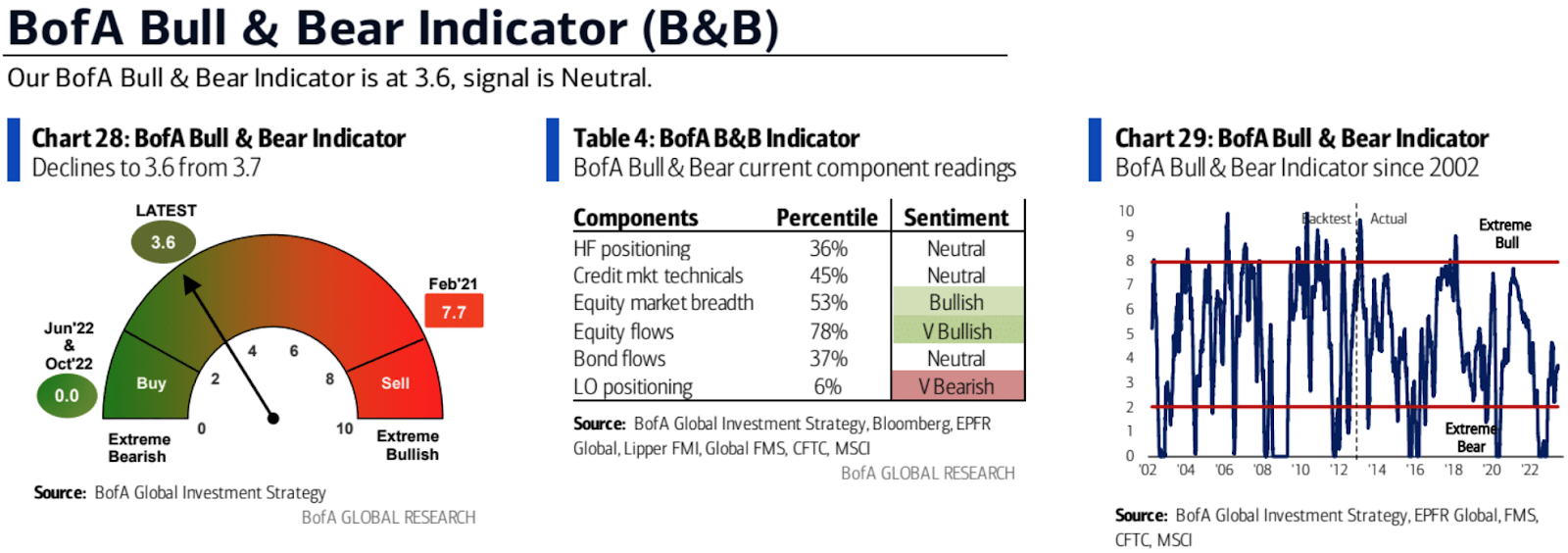
Bank of America's bull and bear indicators rose slightly last week and are still in a positive but not extreme range:
Goldman Sachs Prime Book data
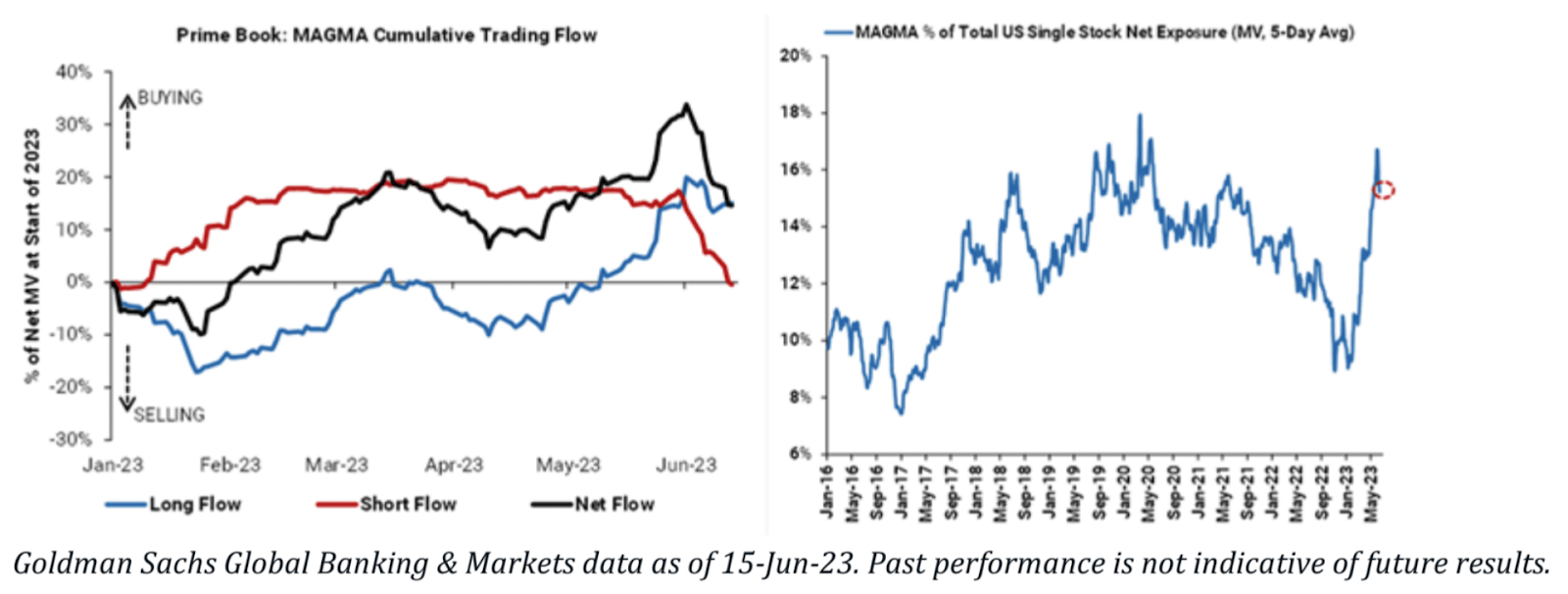
Hedge funds were aggressively betting on big tech stocks at the start of the year, but by June they ramped up their shorting and net inflows began to stagnate. MAGMA — Microsoft (MSFT), Apple (AAPL), Google (GOOG), Facebook (META), Amazon (AMZN) — now collectively make up about 15.2% of the net exposure to individual U.S. stocks on the Prime book, though that’s down from a week earlier. It was down slightly from 16.7% in March 2020 to a peak of around 18%. MAGMA accounted for the currency of investor positions in Goldman Sachs PB statistics also began to decline.
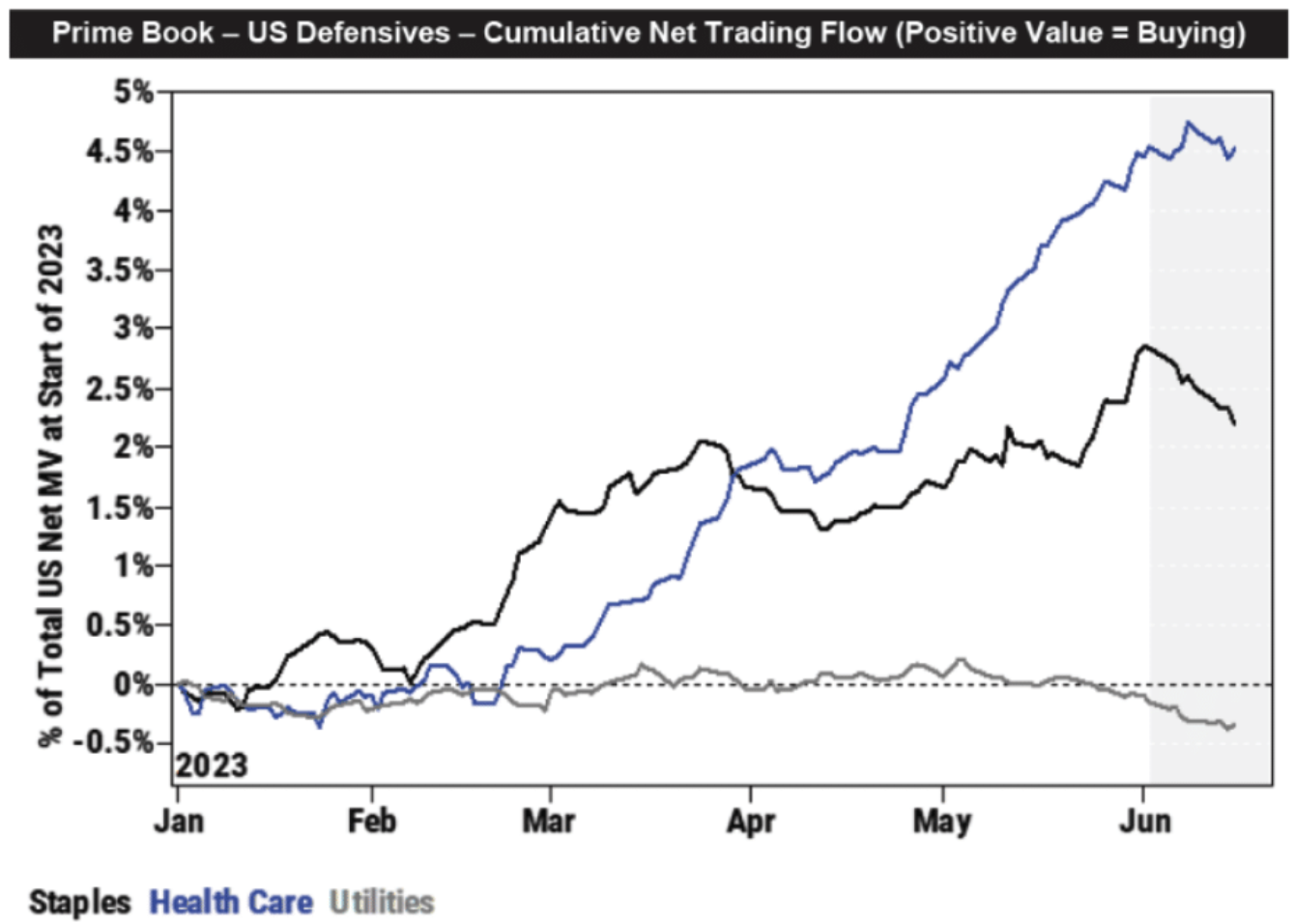
Defensive stocks typically hold up during economic downturns because people want products and services in these industries regardless of economic conditions. The current turn of optimism towards the overall macro backdrop can be seen in the withdrawal of funds from the sector.
our review
our review
The rebound of small-cap stocks and value stocks (stocks with relatively good cash flow and low valuation multiples) has finally begun to show leading momentum, and then should continue to switch positions or stick to technology stocks, which is the recent focus.
The recent general rally in the market may have been driven by the capitulation and unwinding of a large number of short positions before, but it does not mean that the market is entering a new cycle. before acceleration), mainly because economic growth in the United States was not strong.
Although the risk of U.S. recession is declining, the current and short-term U.S. economic growth rate is between 0% and 3%. To achieve U.S. growth of more than 3%, technological innovation is needed. During this period, value stocks And small-cap stocks may be difficult to really attract a lot of money in the allocation. In addition, the decline in inflation is beneficial to technology stocks. During periods of low inflation, stocks related to technology stocks usually perform better. In addition, although the valuation of technology stocks continues to expand, considering the high growth brought about by themes such as AI and robots, the current valuation is not exaggerated. It is difficult for funds to find exciting investment hotspots in other themes.
Of course, the premise is that the economy continues to grow moderately and there is no systemic crisis. If the credit crunch resurfaces or inflation re-accelerates, value or defensive stocks could outperform.
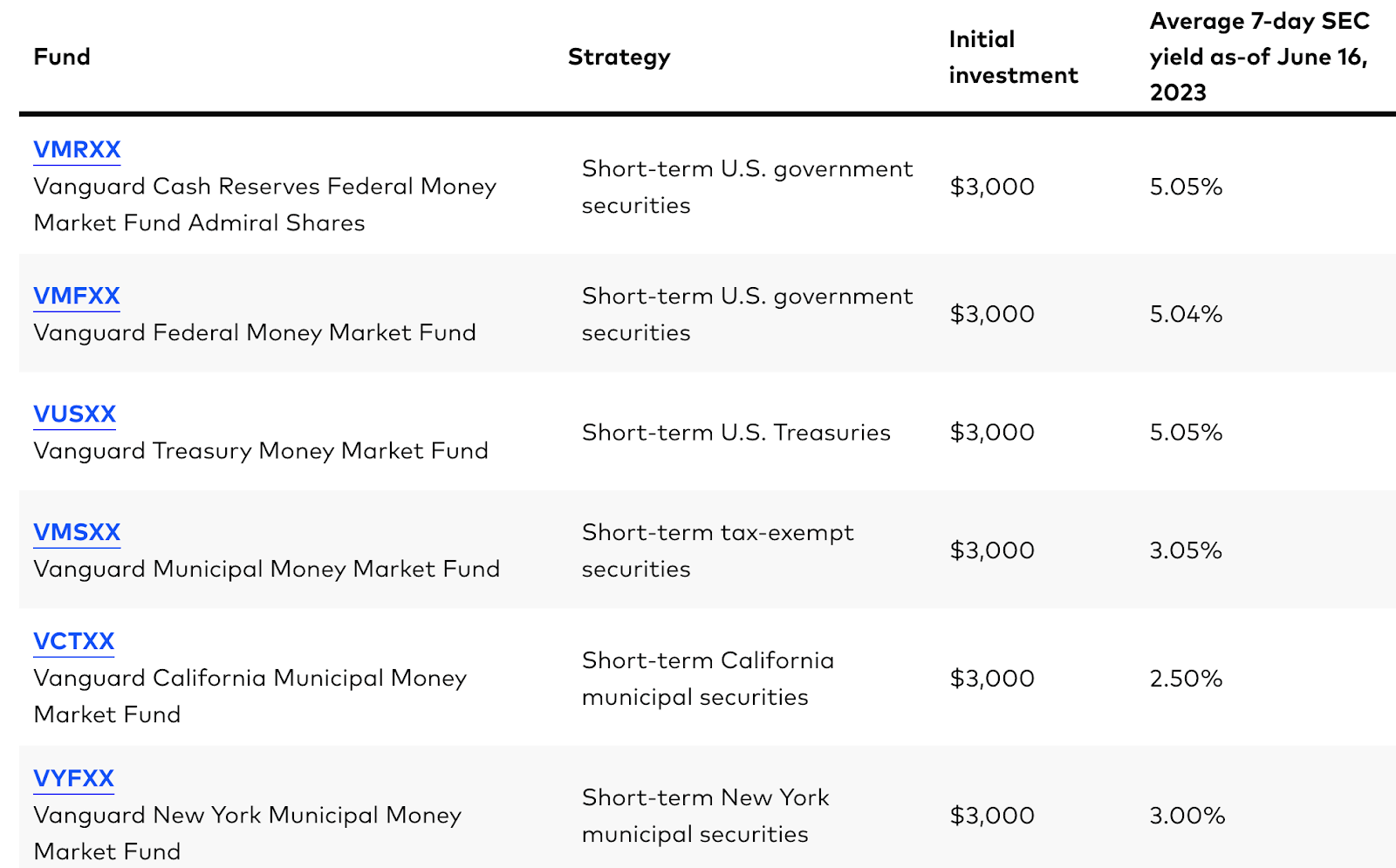
In the digital currency market, MakerDao raised the Dai deposit (DSR) interest rate to 3.49%, which is already higher than the rate of return of tax-exempt money funds in the United States (about 3.2%), although it is not as good as the general 4.2% of money funds that are subject to tax deductions~ 5.1% yield.
This is a very smart move. Some previous blockchain projects want to move the risk-free income of the Federal Reserve subsidy to the blockchain. They need to set up a private equity fund structure. Investors need strict kyc and a minimum of $100,000+ Buying threshold, and Maker uses the user's USDC to take off-chain financial management, and the interest earned is subsidized to DAI holders through DSR, forming a product similar to a money market fund in disguise. The most important thing is that there is no kyc and no minimum purchase entry threshold. This solves the problem of how to obtain real-world risk-free returns in the encryption industry. In theory, it is a move that can change the existing pattern of the industry.
In addition, some people may worry that this is considered an "interest rate increase" in the currency circle, which may affect the liquidity of the market? We think this is over worrying. Because DAI is a product of over-collateralization and leverage, and it is not a stable currency mainly used in the market, DAI’s backflow DSR pledge has limited impact on market liquidity, and some idle USDC or USDT may be exchanged for DAI for financial management, which is beneficial to MakerDao It is a big plus for the project.
Follow the week ahead
Federal Reserve Chairman Powell will appear in Congress this week to attend the semi-annual monetary policy report hearing. At that time, members of Congress may challenge Powell on why the Fed believes that another 50 basis points in interest rates are still needed to address inflation, and that further rate hikes may lead to the risk of rising unemployment.
With the end of the Fed's June policy meeting, many officials will deliver routine speeches, including Fed Governors Waller, Bowman, New York Fed President Williams, St. Louis Fed President Bullard, etc., you can pay attention to the Fed's internal policy stance latest statement on .
Monday: The U.S. market is closed for June Day (stocks, bonds, and futures are all closed), and market liquidity is expected to be poor
Tuesday: RBA Minutes, NBH Bulletin, Germany May PPI, US Building Permits May
Wednesday: Bank of Canada Minutes, UK May CPI, Powell House hearing
Thursday: Bank of England announcement, Swiss National Bank announcement, Norges Bank announcement, Turkish central bank announcement, Bank of Mexico announcement, Bank Indonesia announcement, Powell Senate hearing





