






LD Macro Weekly Report (2023/06/13)



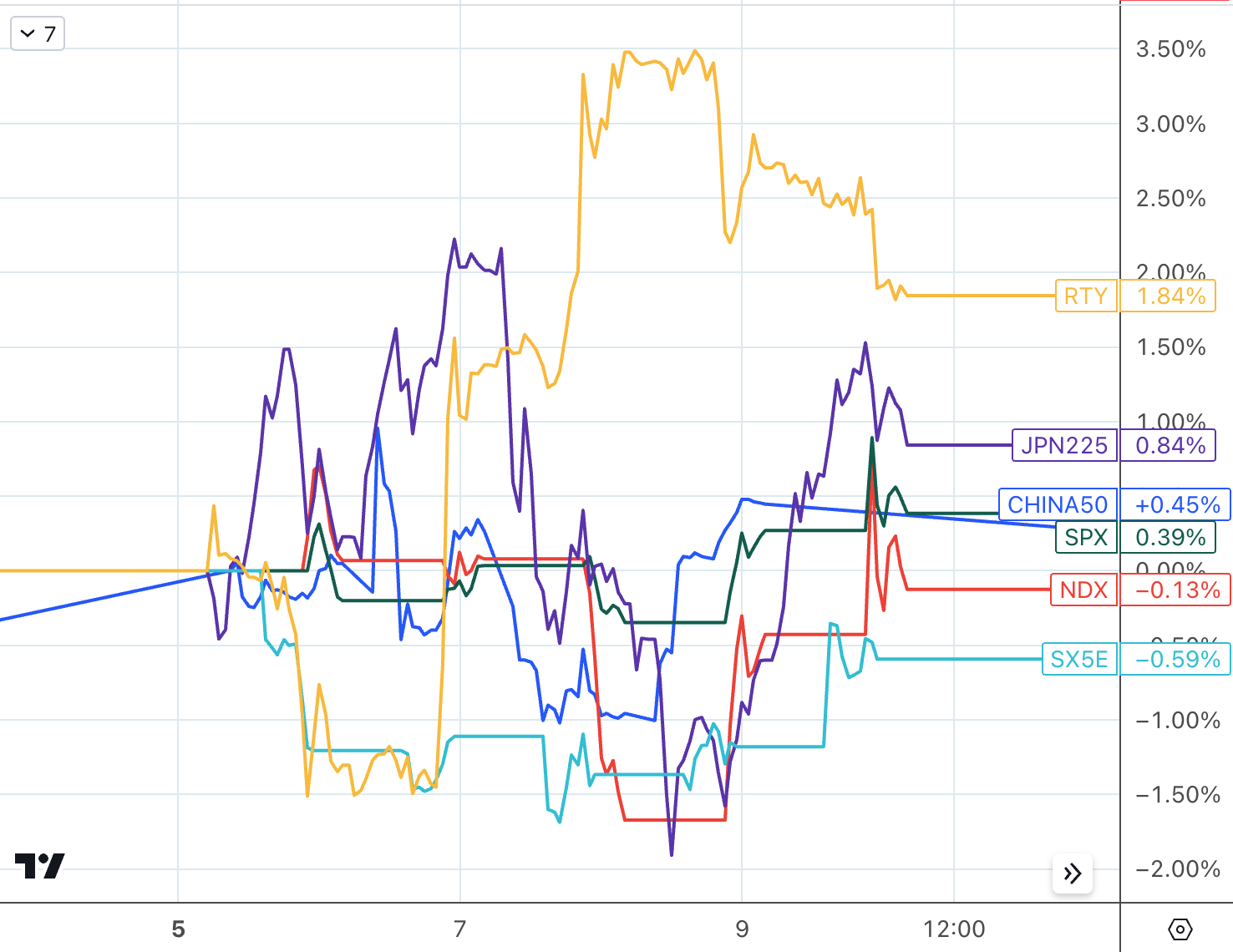
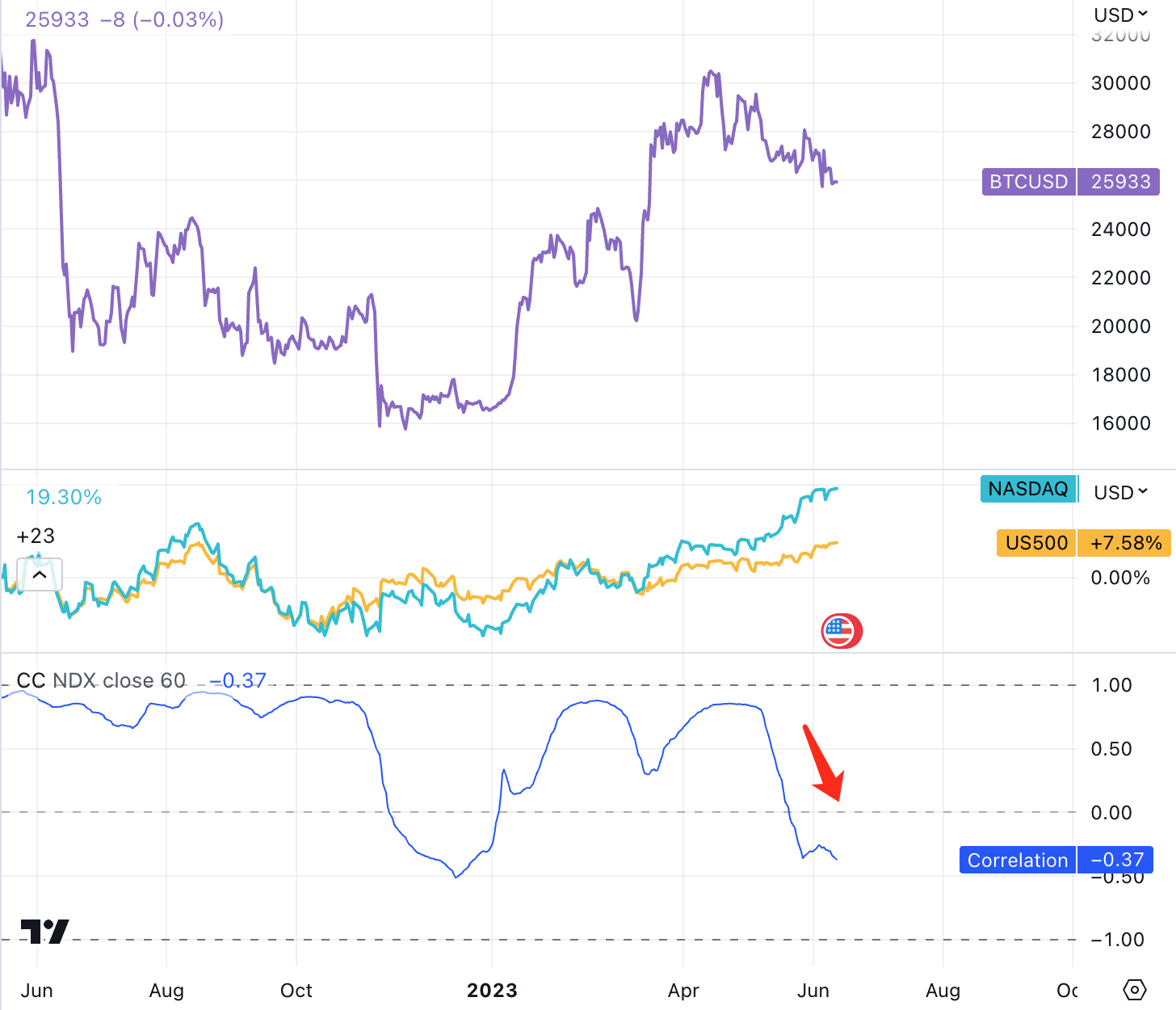
Although the encryption industry was hit by the SEC and caused a sharp drop across the board, the wealth effect of the U.S. stock market appeared last week. Except for the correction of technology stocks, other sectors rose almost across the board, and the S&P returned to a technical bull market;
The main events this week are the May CPI and the Federal Reserve meeting; the market expects prices to continue to decline, but the decline in core inflation is limited and the chain remains high;
The market expects the Fed to keep interest rates unchanged for the first time since early last year, however, possibly signaling a hawkish stance by raising the dot plot;
We think that it is unlikely that prices will further exceed expectations. After the Fed, the focus of concern may shift to the excessive tightening of the credit market, but it is not expected to happen within a cycle of 1 to 2 months;
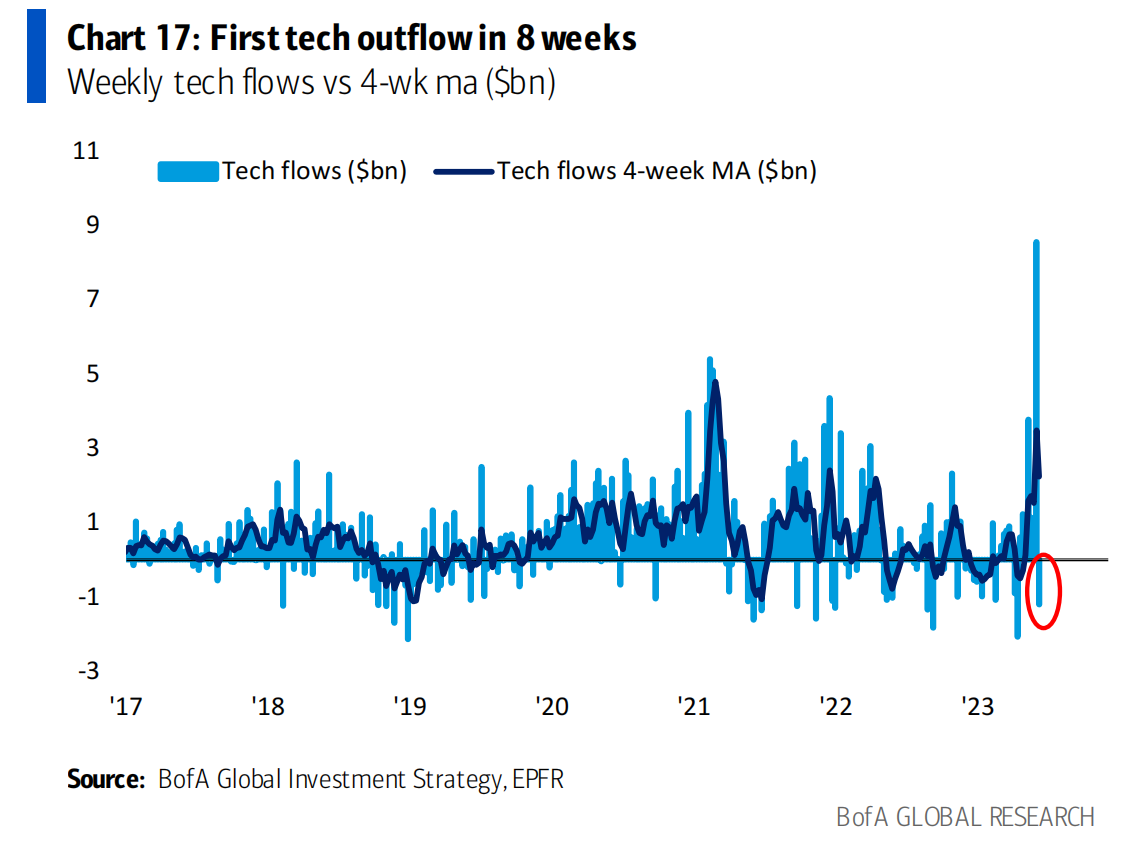
U.S. fixed-income and equity markets saw inflows last week; emerging-market bond outflows, but equity inflows picked up again, especially in China; technology stocks didn't last, with 8.8% inflows following a record $8.5 billion inflows the previous week. First weekly outflows of the week ($1.2 billion);
The recent optimism in the traditional market is expected to continue. Last week, the U.S. stock market got rid of the shadow of big technology stocks and showed a general rise. During the same period, the optimism of institutions did not change much, but the optimism of retail investors jumped;
text:
text:
Although the encryption industry was hit by the SEC and caused a sharp drop across the board, last week was a relatively quiet period in the traditional financial market. Except for the correction of technology stocks in the US stock market, almost all other sectors rose. The main events of this week will be the May CPI and the Federal Reserve meeting.
Last Wednesday, the three major US stock indexes closed up across the board, with the S&P 500 up 0.39%, the Dow Jones up 0.34%, and the Nasdaq down 0.13%. Russell 2000, a small-cap stock, rose 1.84%, with the S&P 500 returning to a technical bull market, rising more than 20% from its lows to 4,300. Over the same period, Chinese and Japanese stock markets rose, while European stock markets fell.
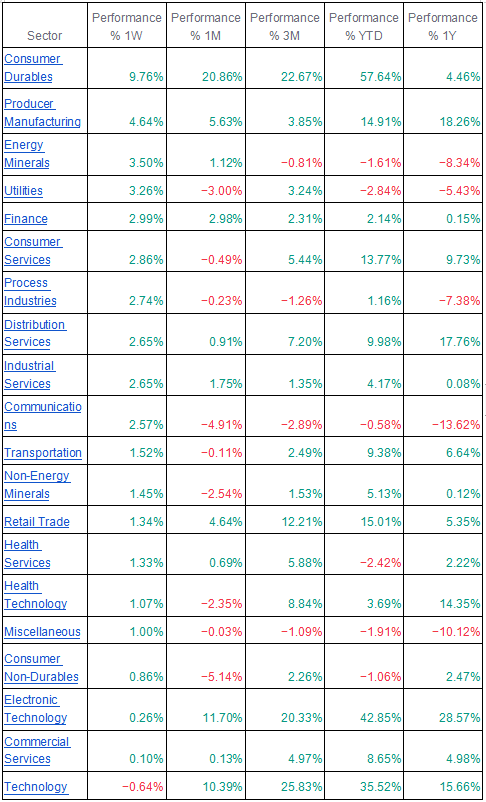
In terms of U.S. stock sectors, almost all sectors rose, and the rotation effect was obvious. Tesla led the durable goods sector to rise by more than 9.7%, and utilities rose by 3%. The previously popular technology sector led the decline by 0.64%.
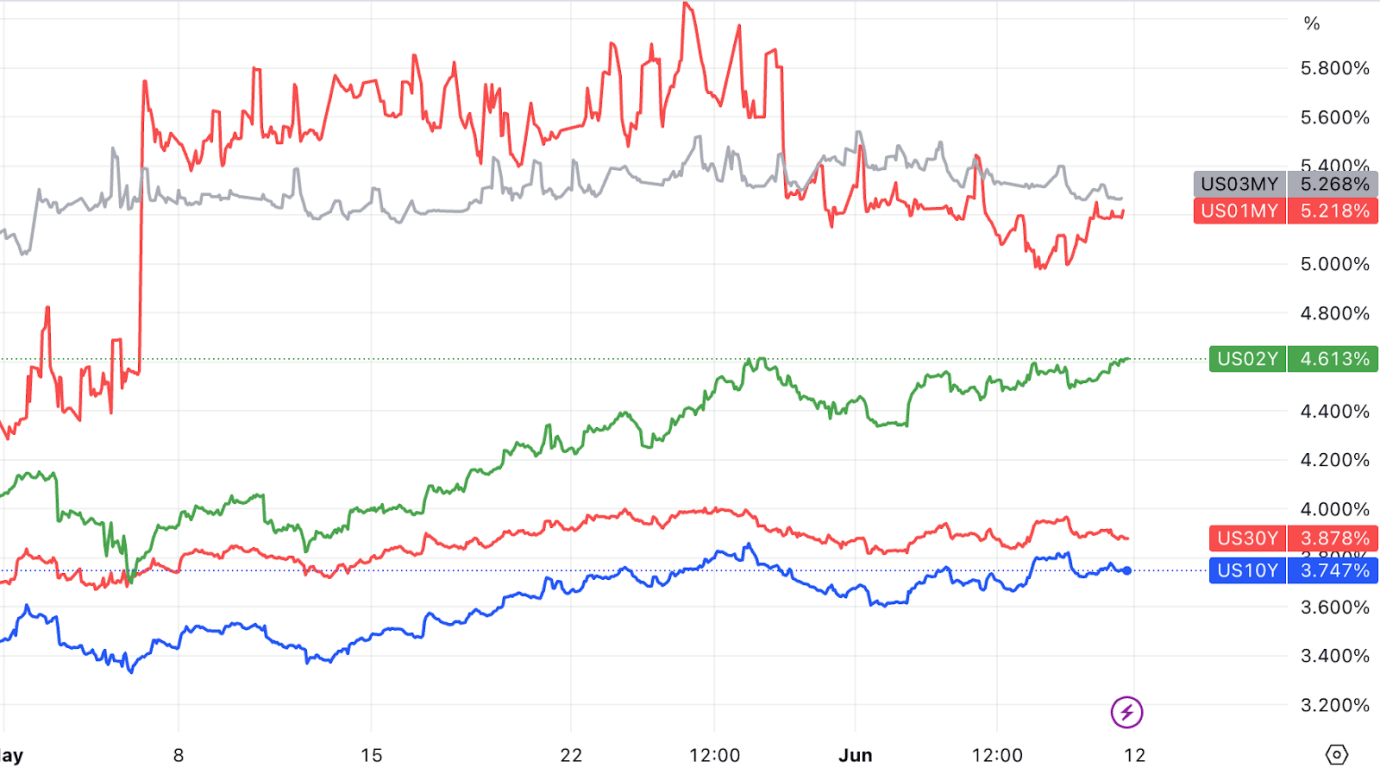
In terms of interest rates, the price of treasury bonds has declined as a whole. The yield of 2-year treasury bonds rose to 4.61%, the highest point since the banking crisis, and the yield of 10-year treasury bonds closed at 3.74%.
Oil fell 2.16% last week to settle at $70.29 a barrel, the dollar fell 0.47%, and DXY settled at 103.55.
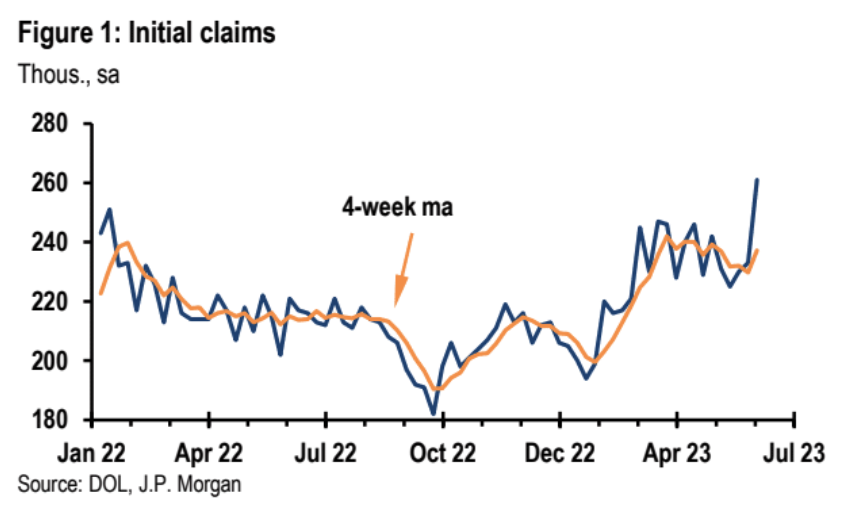
The most impactful data last week was the weekly jobless claims report, as it jumped to its highest level since late 2021. Unlike a few weeks ago when the reported numbers were distorted due to data fraud in Massachusetts, this week's report has no human factors. But the seasonal adjustment for the holiday week (the reference week includes anniversaries) may have added some noise, so wait until this week's report to make a judgment.
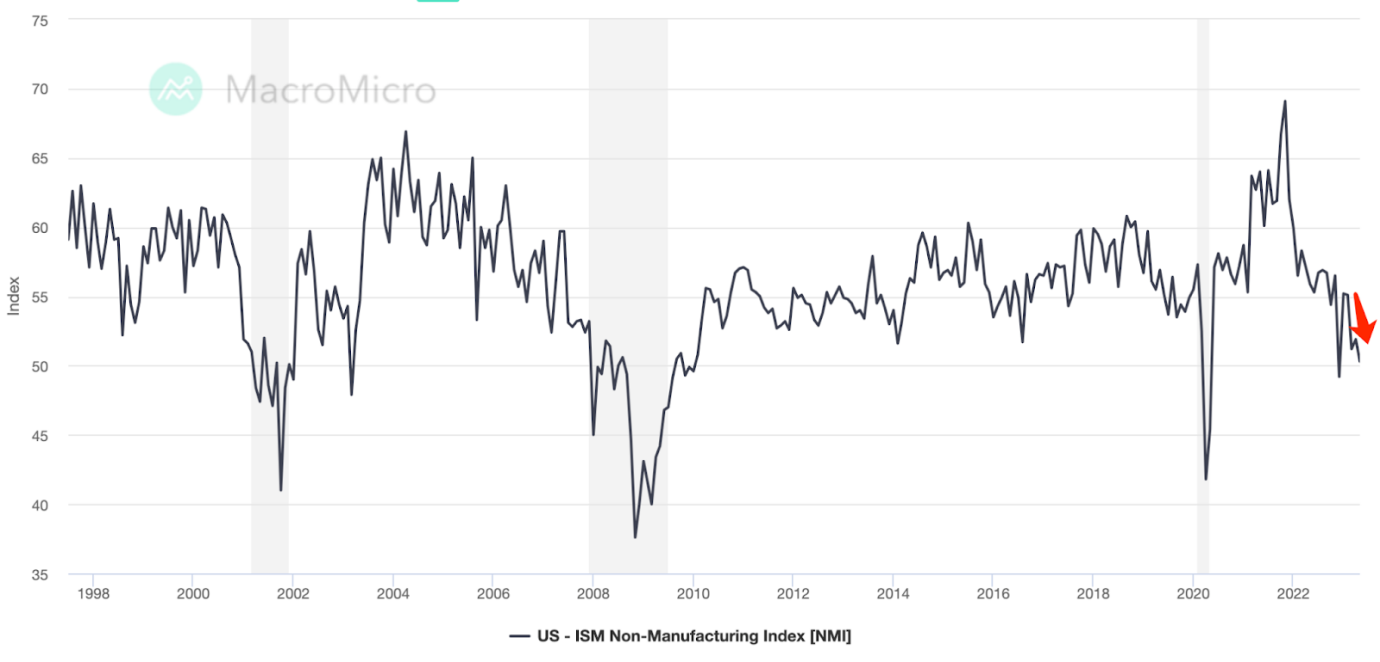
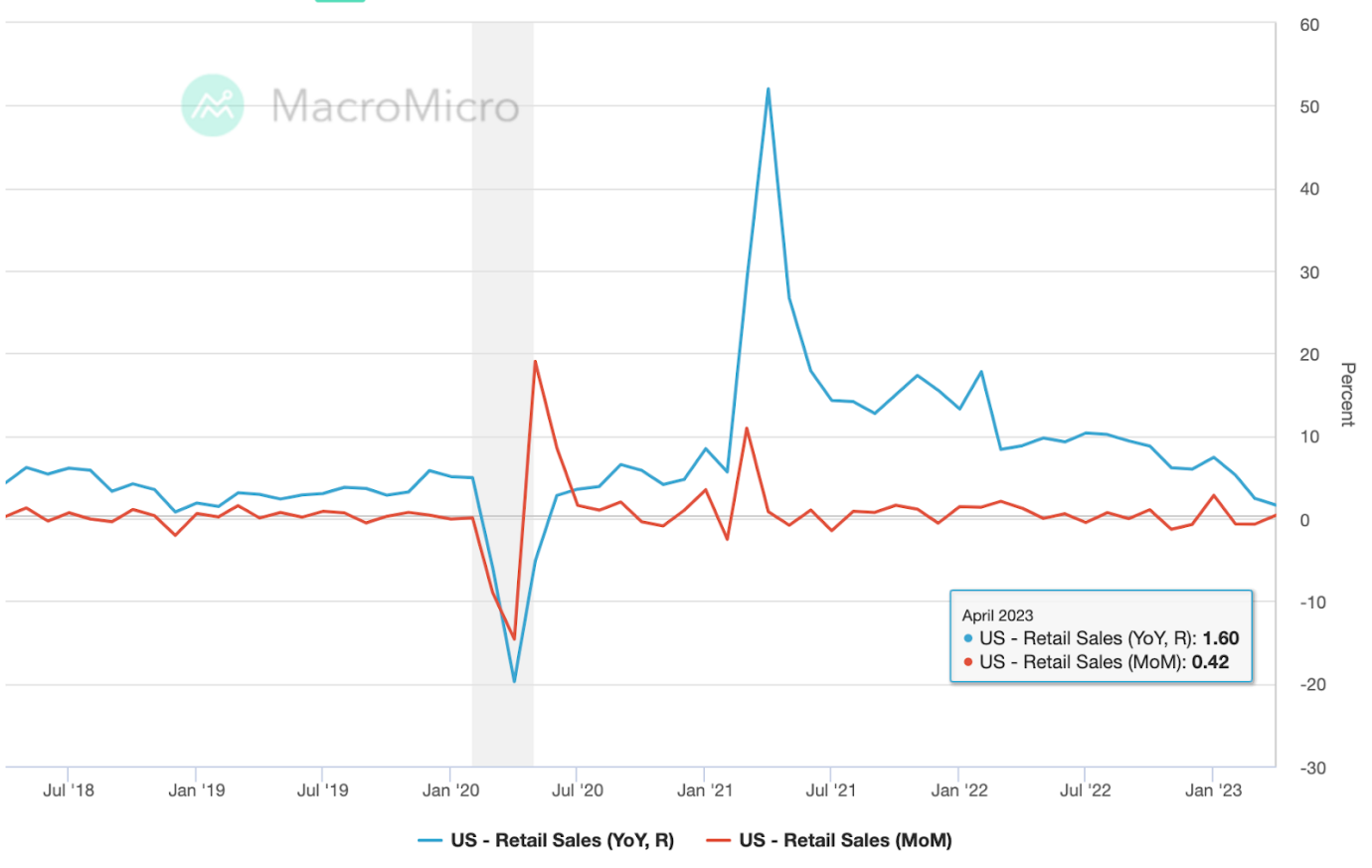
On a macro level, the economic expansion continues. Real GDP was reported to have grown at a 1.3% annualized pace in the second quarter, although growth was slowed by volatile inventory investment, and trade data released last week suggested that figure could be revised up a bit. Private consumption data, which accounted for more than 70% of GDP growth, remained solid overall. Before the epidemic, the actual consumption growth rate in the United States was lower than 2%. After the epidemic, the actual consumption growth rate in the United States has climbed to around 3.1%. Leading indicators such as actual consumer spending, retail sales month-on-month, new home sales, car sales, and personal consumption expenditures also show that the overall consumption of the United States has remained stable since the second quarter of this year. However, economists generally continue to believe that the road in the second half of the year will be more difficult. Businesses agree, as last week's ISM services report for May fell to a watershed level.
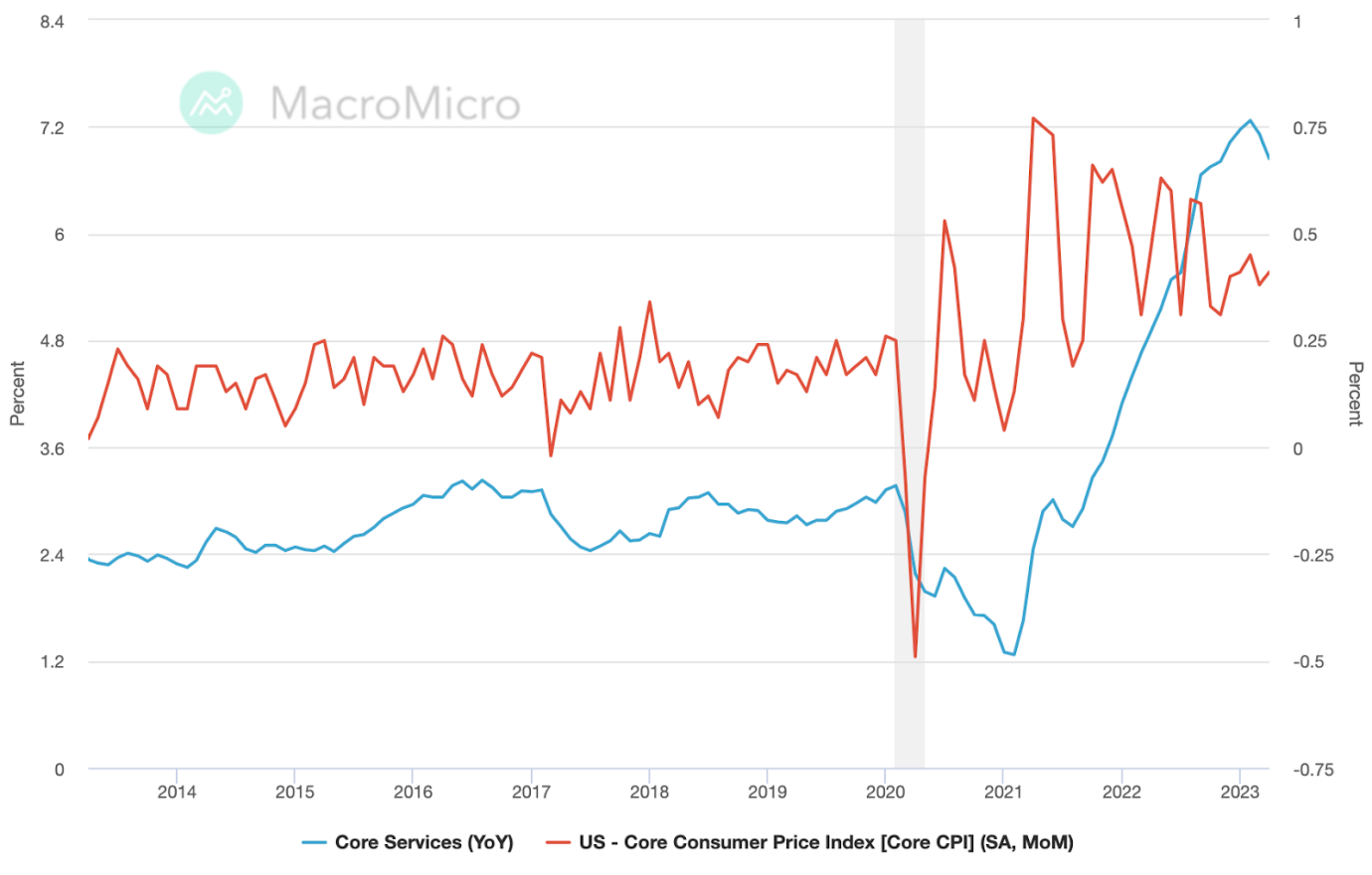
There will be more information on tracking economic growth this week. In addition to the aforementioned jobless claims, the market expects the May retail sales report to show that consumers are continuing to spend (even though auto sales fell last month). The market expects the industrial production figures for May to show that the manufacturing sector will continue to remain sideways. However, the price data that the market is most concerned about, that is, the CPI report for May on Tuesday, is expected to maintain the core inflation rate at +0.4% month-on-month, which is a high level that the Fed does not feel comfortable with.
More important than the data is Wednesday's Federal Reserve Monetary Policy Committee (FOMC) meeting. Markets expect the Fed to keep interest rates unchanged for the first time since early last year. However, Fed officials have repeatedly warned that the pause does not necessarily mean the end of the rate hike cycle. This information will most likely be reinforced by upregulation of the dot plot. Since whether the Fed resumes rate hikes in July will largely depend on the employment situation in June, we will start with the discussion of unemployment claims data in detail.
secondary title
The inflection point of the labor market is becoming more and more obvious
Initial jobless claims for the week ended June 3 also surprised us after the May non-farm payrolls report gave mixed signals of rising employment and the unemployment rate. Applications rose sharply, up 28,000 in the week to a total of 261,000, the highest level since October 2021. The one-week jump was also the biggest change since July 2021. Looking at the data submitted at the state level does not reveal any particular outliers leading to an overall increase. So that's not the same as the outlier we had in April because of unemployment claim fraud in Massachusetts.
We may still have some holiday week noise in the seasonally adjusted data, but the magnitude of the change is significant and far exceeds consensus and our expectations. Since September 2022, the latest figures show a 43% increase in initial jobless claims. The flatter four-week average has also risen about 25% over the period.
secondary title
Services PMI falls to crisis levels
secondary title
Household debt growth slows
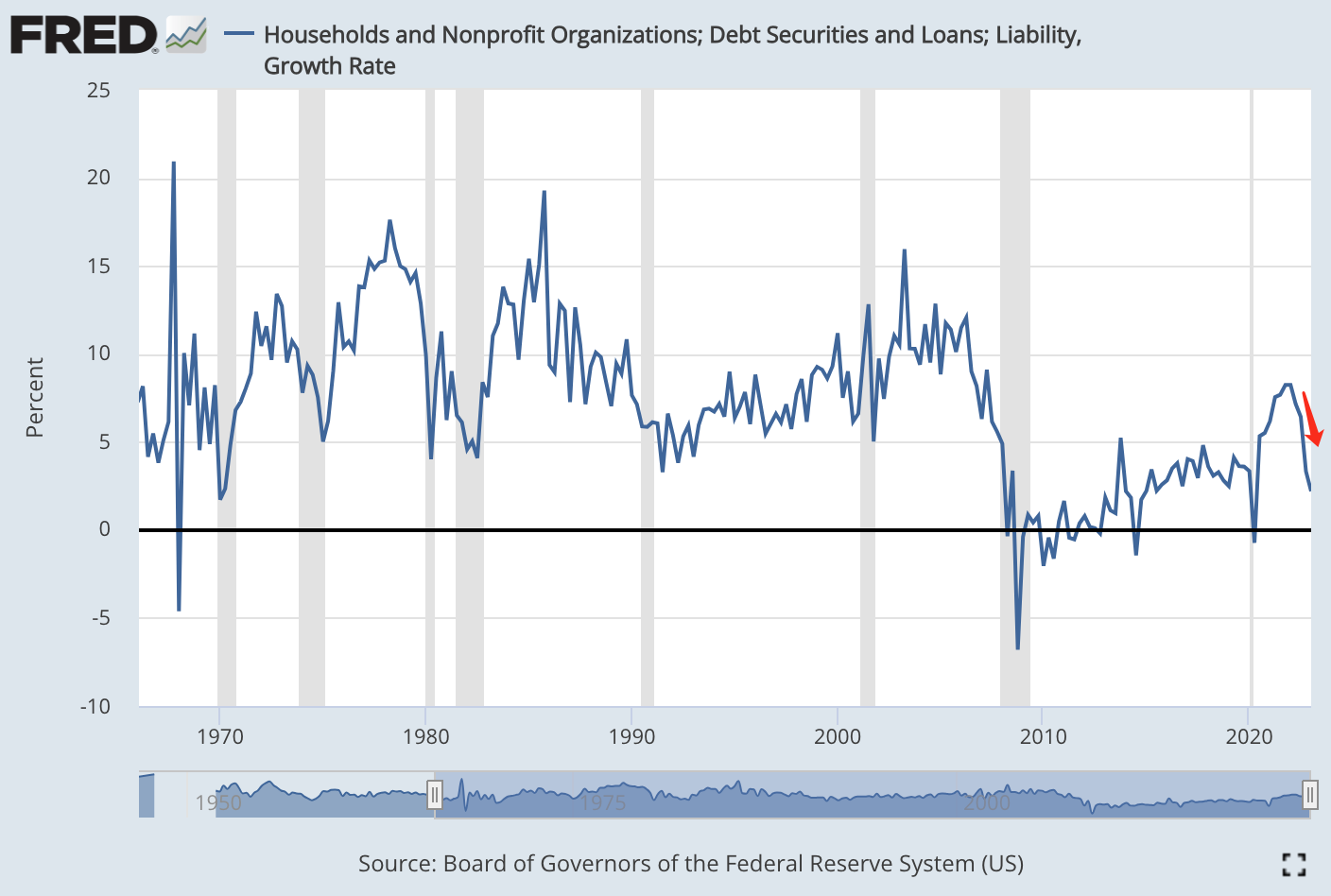
In the first quarter, U.S. household debt grew at a slower rate, at a 2.2% annual rate. This is the slowest pace of growth since the pandemic recession. The most recent data was the slowest pace since 2015, excluding the surprise slump caused by the new crown in 2020. The reason behind this slowdown could be higher borrowing rates, as well as tightening credit conditions.
secondary title
Tuesday CPI
The market expects the CPI in May to increase by 0.2% month-on-month, compared with the previous value of 0.4%, and a year-on-year increase of 4.1%, compared with the previous value of 4.9%. That would be the lowest reading since March 2021. Mainly due to a 3% drop in energy prices, will drive headline CPI lower.
secondary title
Fed policy statement on Wednesday
secondary title
U.S. retail sales Thursday
secondary title
China retail sales and industrial production on Thursday
secondary title
ECB rate meeting on Thursday
The market expects the ECB to hike another 25 basis points, bringing the deposit rate to 3.5%. Looking back at the last meeting in May, the European Central Bank adjusted the increase to 25 basis points from the previous 50 basis points. Simply put, it is necessary to observe the impact of raising interest rates too quickly.
Since the last meeting, headline CPI in the euro zone has fallen to 6.1% from 7.0%, while the "super core" CPI has fallen to 5.3% from 5.6%. Also, the ECB's consumer expectations survey for April showed that 1-year inflation expectations fell to 4.1% from 5.0% and the 3-year outlook fell to 2.5% from 2.9%.
secondary title
Fund Flow Analysis
Investors appear to favor bonds and stocks in developed markets, especially the United States. Meanwhile, activity in emerging markets has been mixed, with bond outflows but a resurgence in equity inflows, especially in China.
Investors put most of their money into fixed-income products in the week to June 7, with developed country bonds seeing the most inflows at $13.4 billion, most of which was absorbed by the U.S. at $10.3 billion, EPFR data showed.
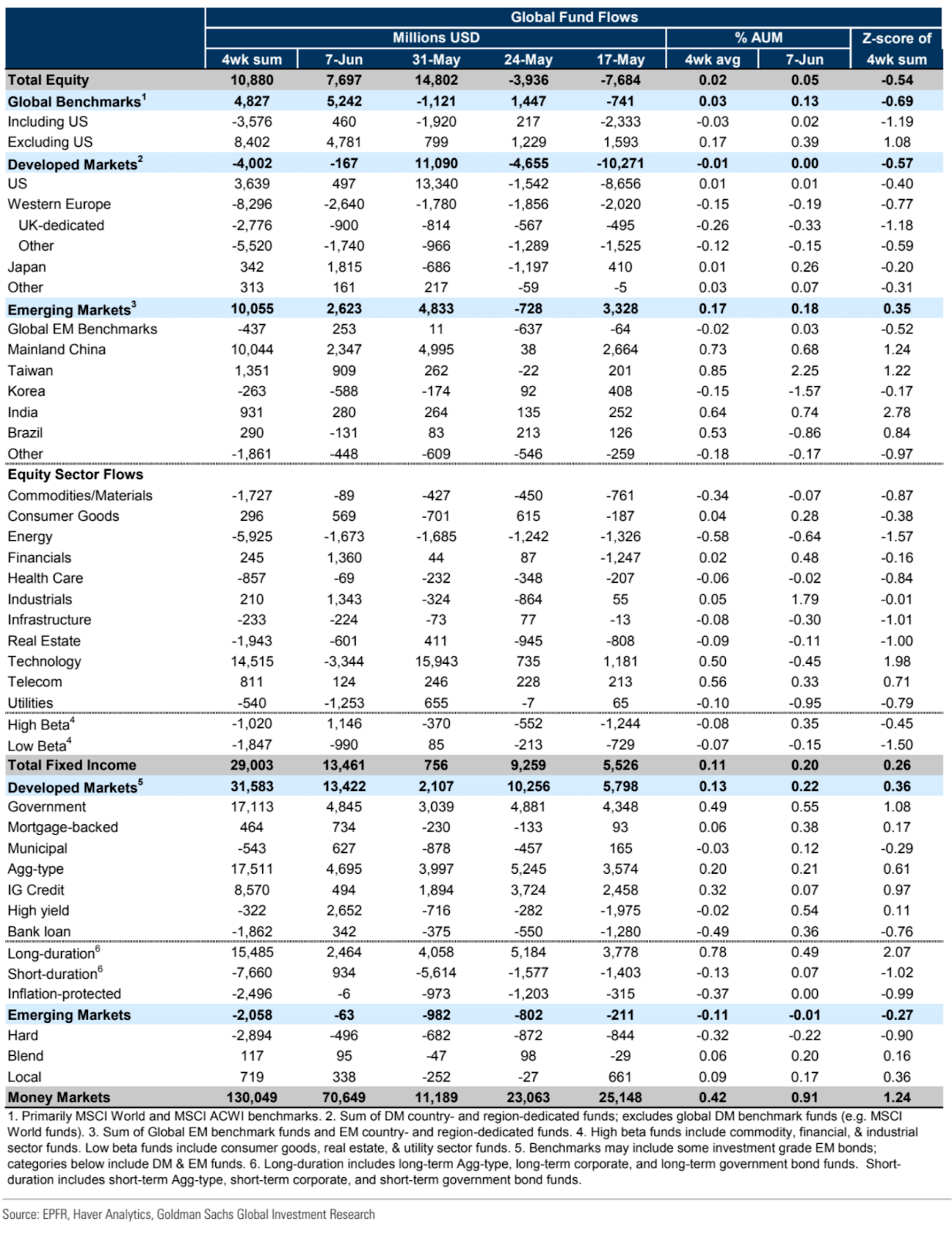
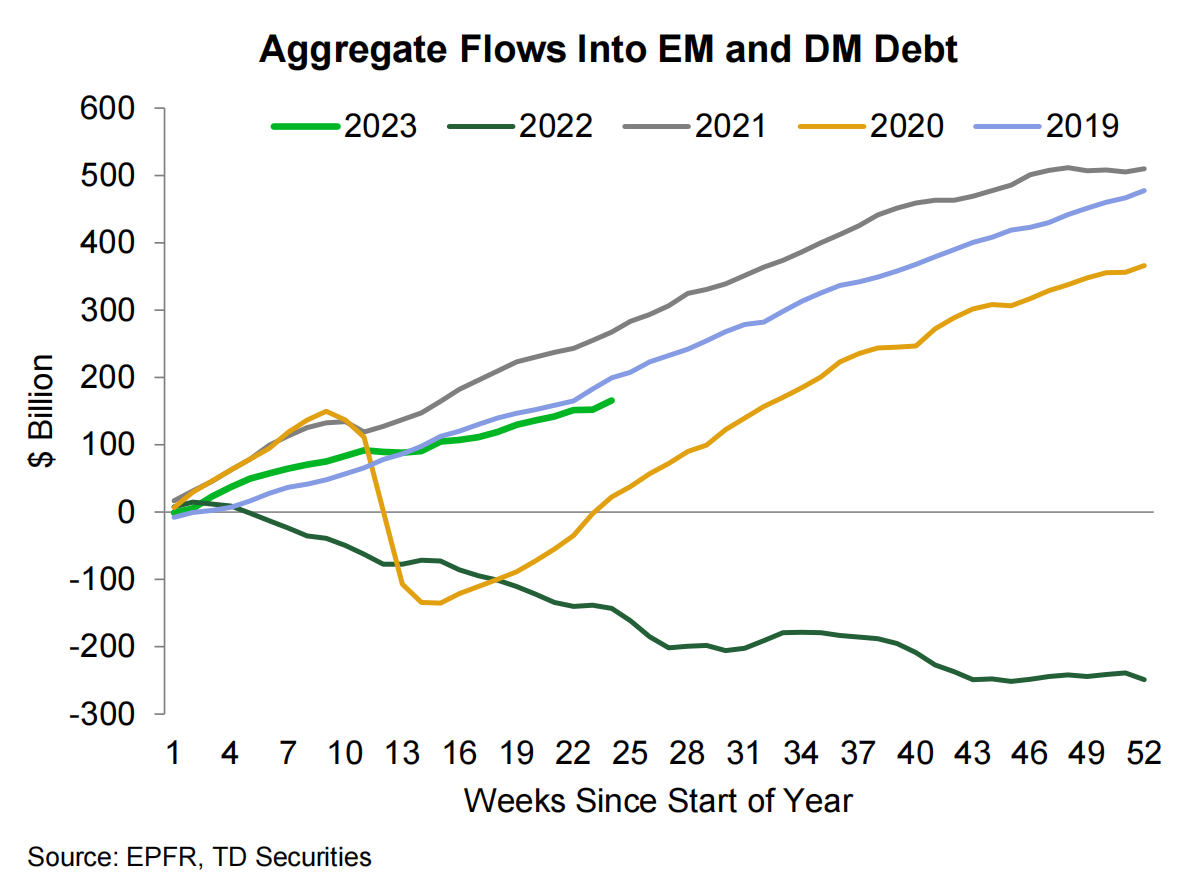
In stark contrast, emerging market bond funds are seeing outflows for the fifth straight week, with outflows of $67 million in the week ended June 7.
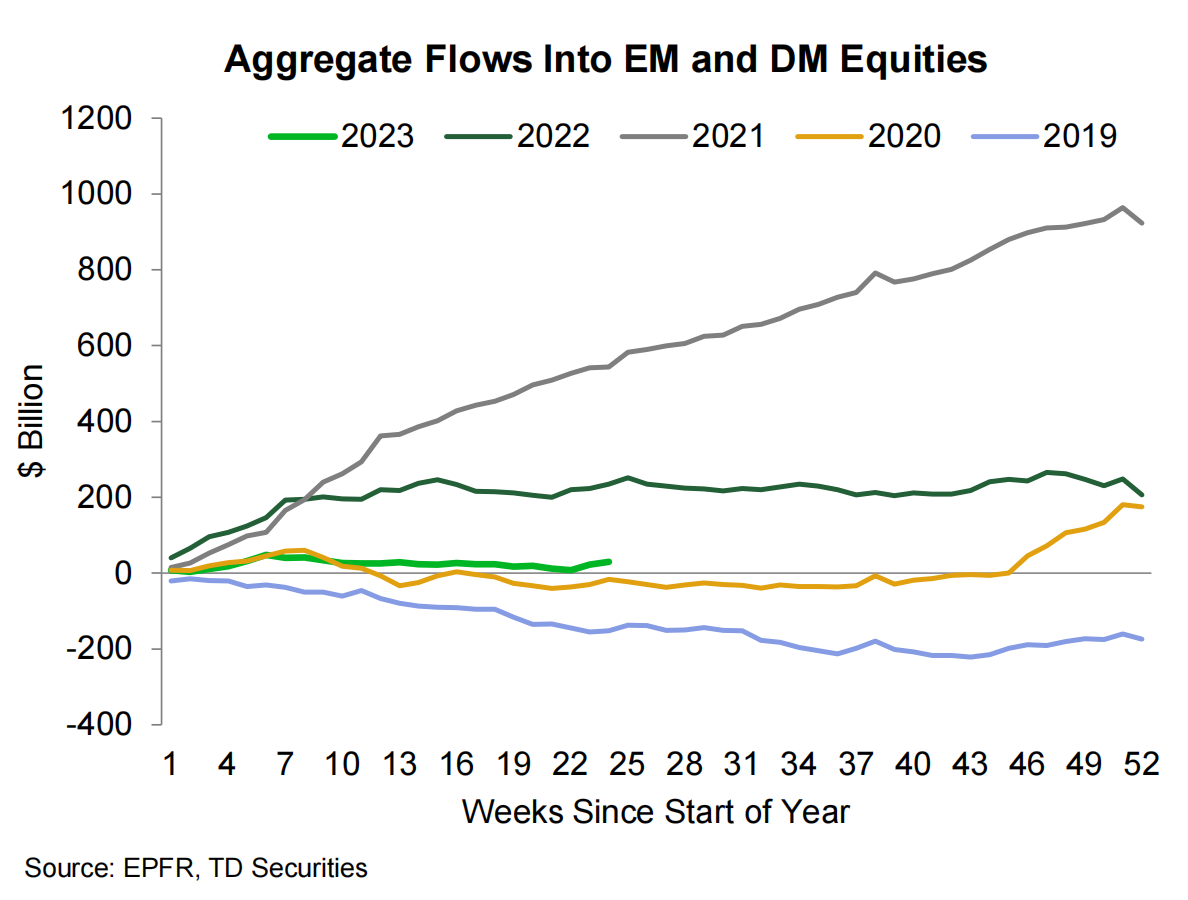
 Global equity inflows for the second week in a row totaled $7.7 billion compared to +$15 billion the previous week, so the pace of growth actually slowed. Both developed and emerging markets experienced inflows. Interestingly, China's equity inflows unexpectedly led emerging markets at $2.3 billion. Outflows from European equities rose to $2.6 billion.
 However, tech funds posted their first weekly outflows ($1.2 billion) in eight weeks, following a record $8.5 billion inflows the week before, as investor interest in artificial intelligence stocks surged.
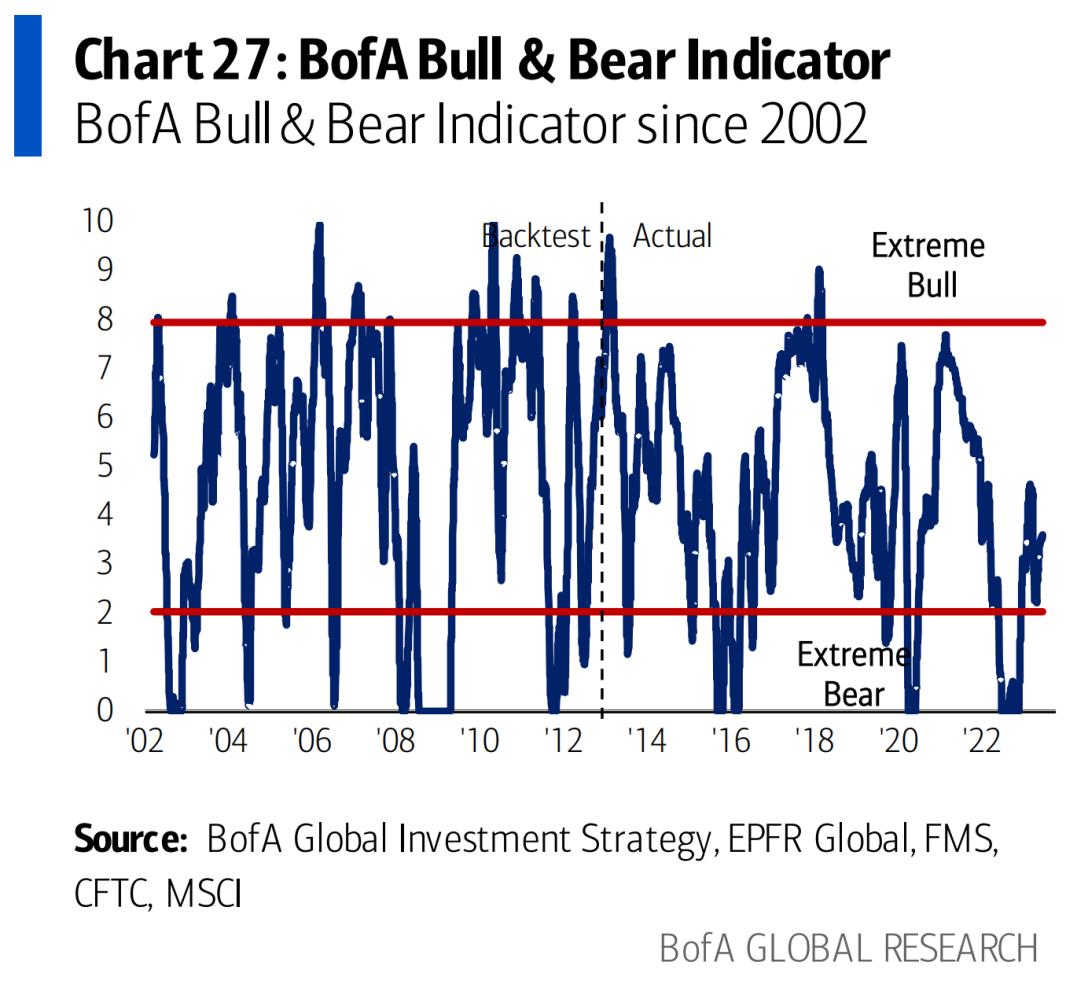
 Bank of America's bull-bear gauge, which measures investor sentiment, rose to 3.6 from 3.5 on improving credit technicals and steady emerging market equity inflows.
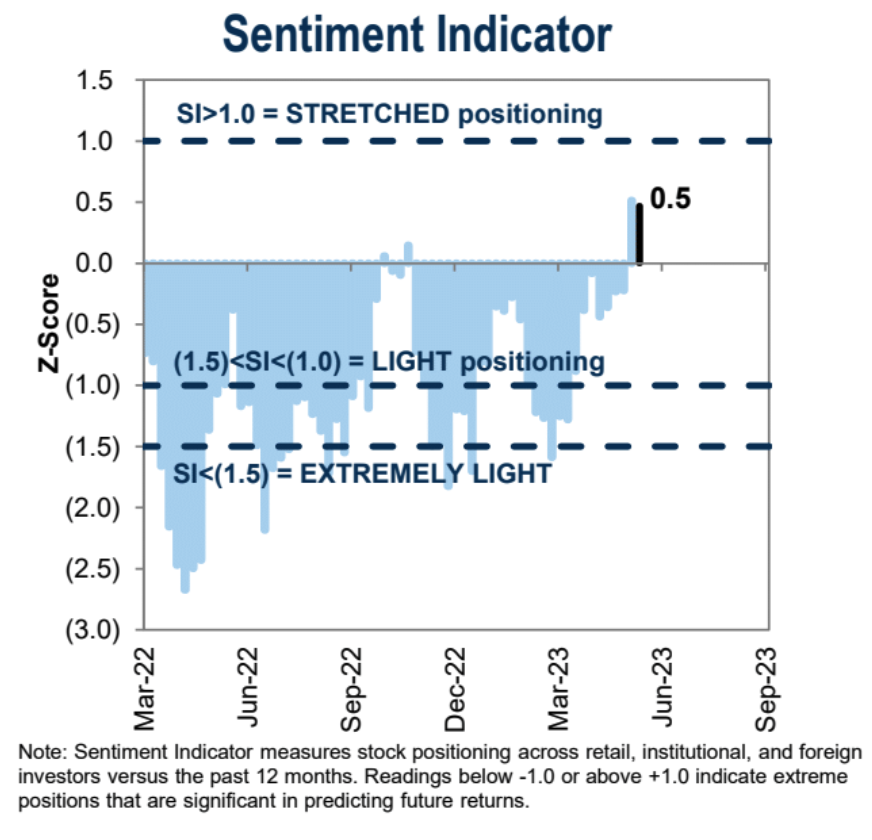
 Goldman's gauge of investor sentiment eased slightly from the previous week, but remained in positive neutral territory.
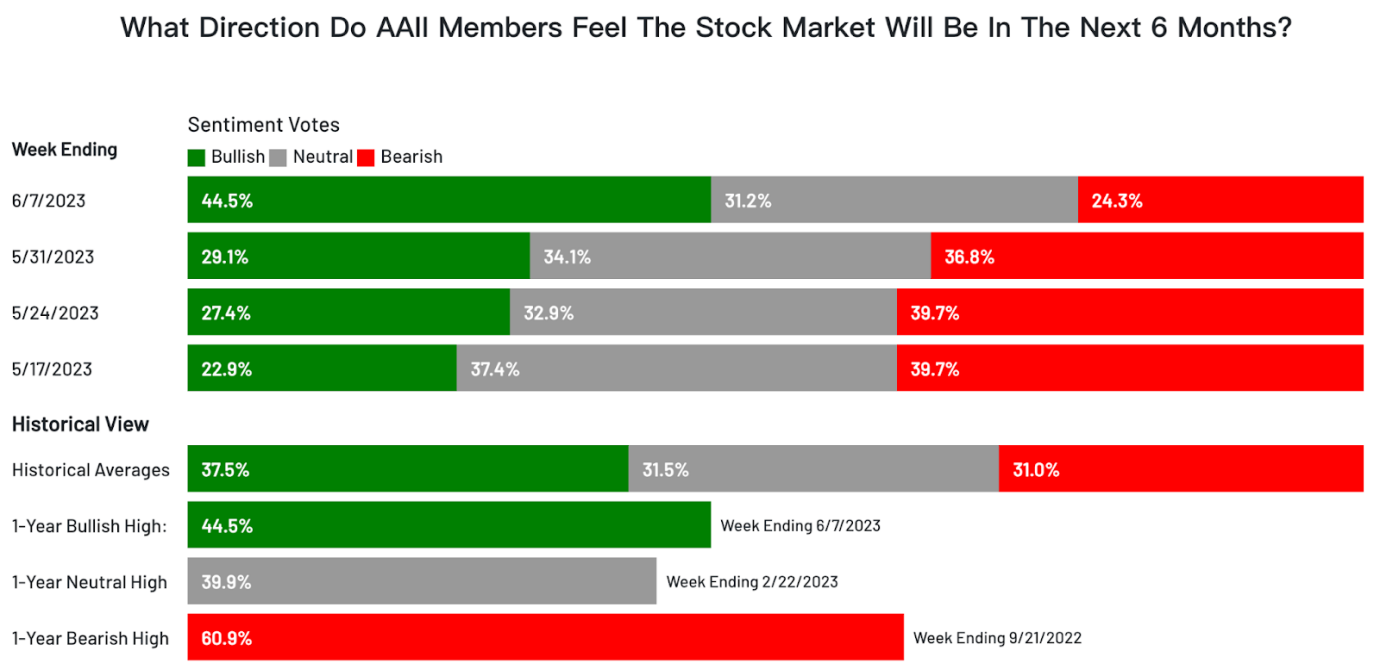
 The AAII indicator of investor sentiment turned positive sharply, with the proportion of investors who were bullish jumping from 29.1% to 44.5%, the highest level since late 2021.
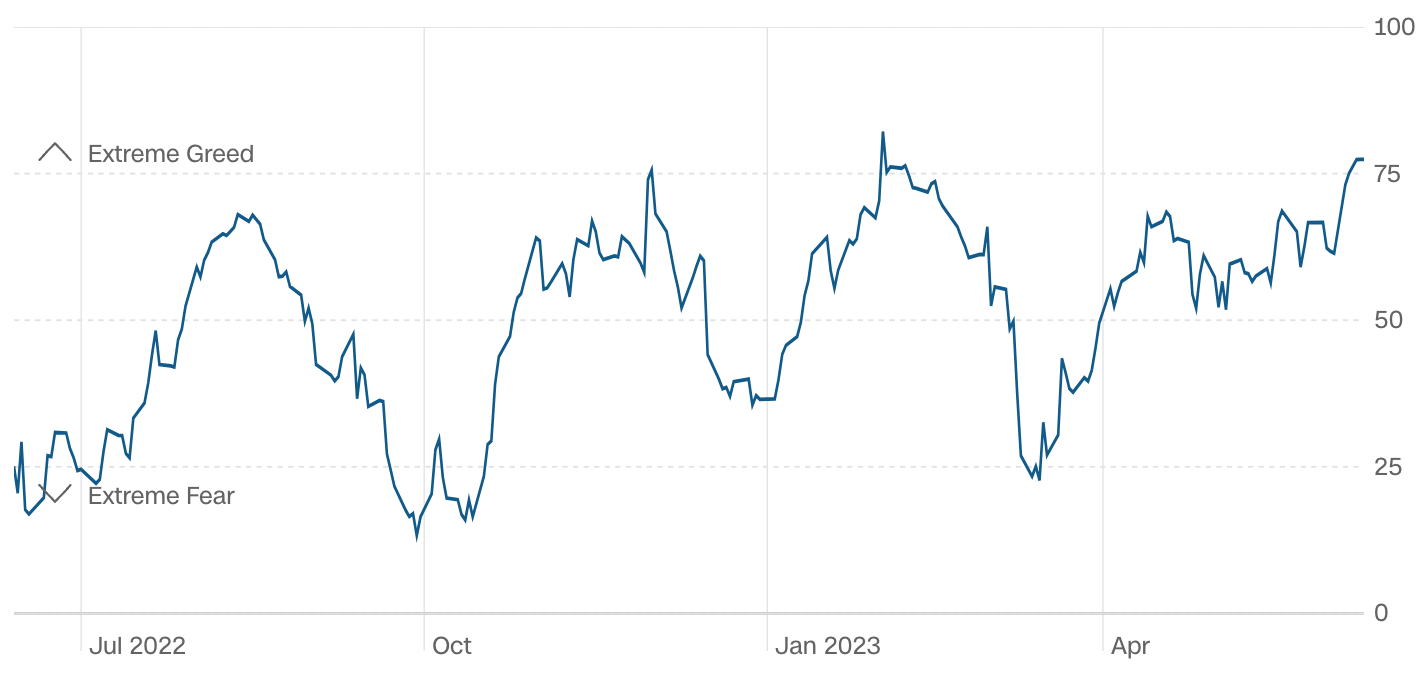
 CNN's Fear & Greed Index refreshed a new high since February, reaching the level of extreme greed:
 Our comments:
Recently, many institutions have recently lowered their recession expectations, because recent data show that the downside risks to the economy have reduced. The job market has shown more resilience than expected, but with the decrease in labor shortage and the cooling of wage growth, the process of a soft landing seems inevitable, that is, the market hardly expects that the economic plane will accelerate upward in place, but a continuous The process of decreasing height and speed.
Although the core PCE inflation rate fell less than expected, as long as the overall downward trend in prices remains unchanged, Fed officials will have no more reason to worry. The downward trend is difficult to reverse, so it is difficult for its behavior to significantly increase prices to the point of threatening the inflation process, so the focus of the Fed's subsequent concerns may shift to the excessive tightening of the credit market, but it is not obvious to maintain this sign at present, and it is not expected to Occurs in a 1-2 month cycle.
The recent optimism in the traditional market is expected to continue. Last week, the U.S. stock market got rid of the shadow of big technology stocks and saw a general rise, which brought a wealth effect that more people can perceive. The above-mentioned AAII and CNN sentiment data statistics include more individual investors, and the results are significantly different from the statistics of Goldman Sachs and Bank of America for institutions. This is also consistent with the general rise in the market other than technology stocks last week. emotions were finally ignited.
secondary title
Institutional view
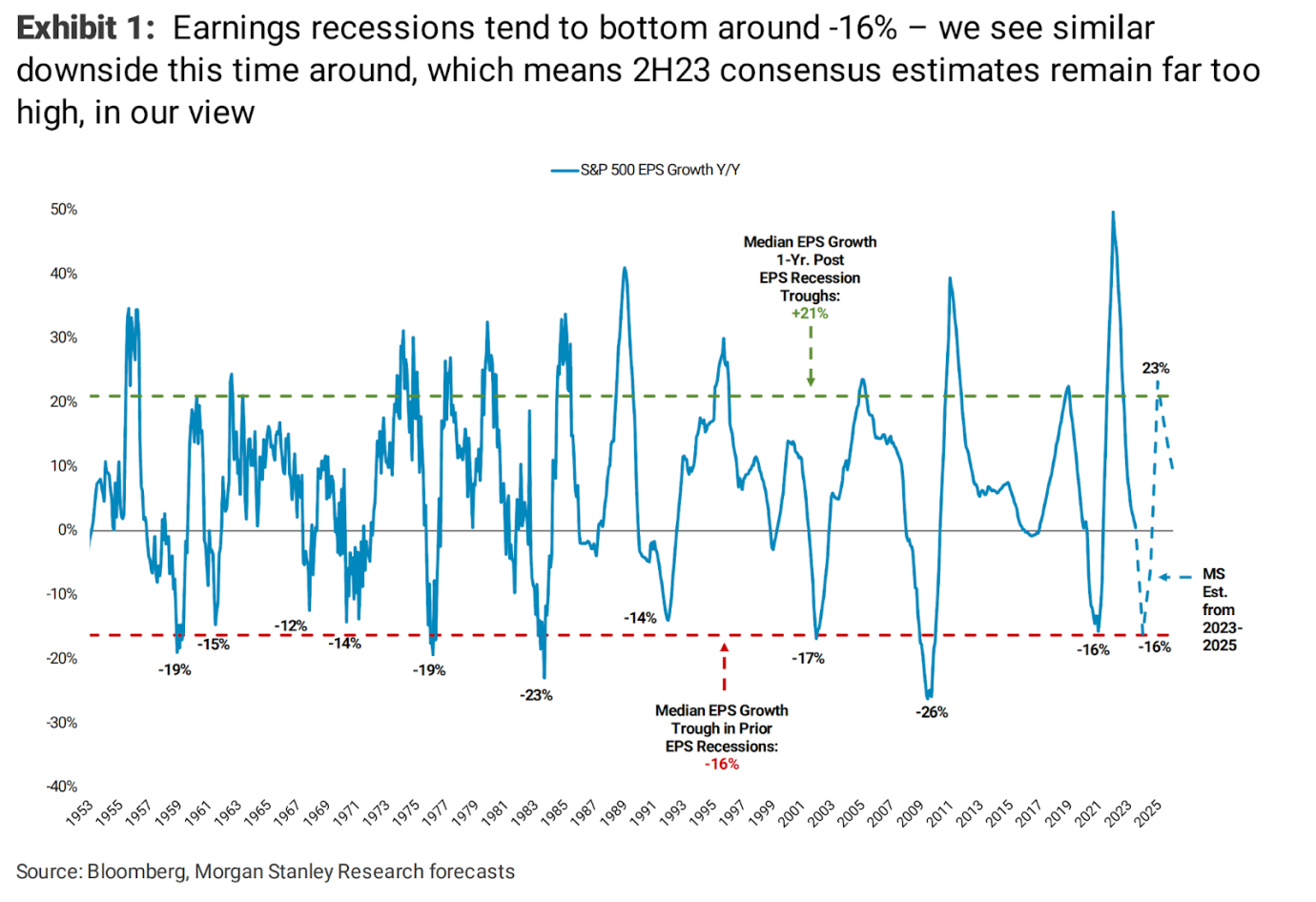
Morgan Stanley's Michael J Wilson: U.S. earnings recession won't be over anytime soon
Many investors may incorrectly assume that the impact of higher interest rates on growth has passed, and that several areas of the market (including consumer cyclicals, technology, and communications services) experienced their own earnings recession last year, even as the rest of the market suffers pressure, it is also possible to see an acceleration in earnings growth.
secondary title
Goldman Sachs Chief U.S. Equity Strategist David Kostin Joins Bulls
In his latest report, David raised his 2023 forecast for the S&P 500 to 4,500 from 4,000, representing a 5% upside from current levels.
Kostin sees a 2023 EPS forecast of $224 in the event of a soft landing for the U.S. economy, well above the consensus forecast of $206.
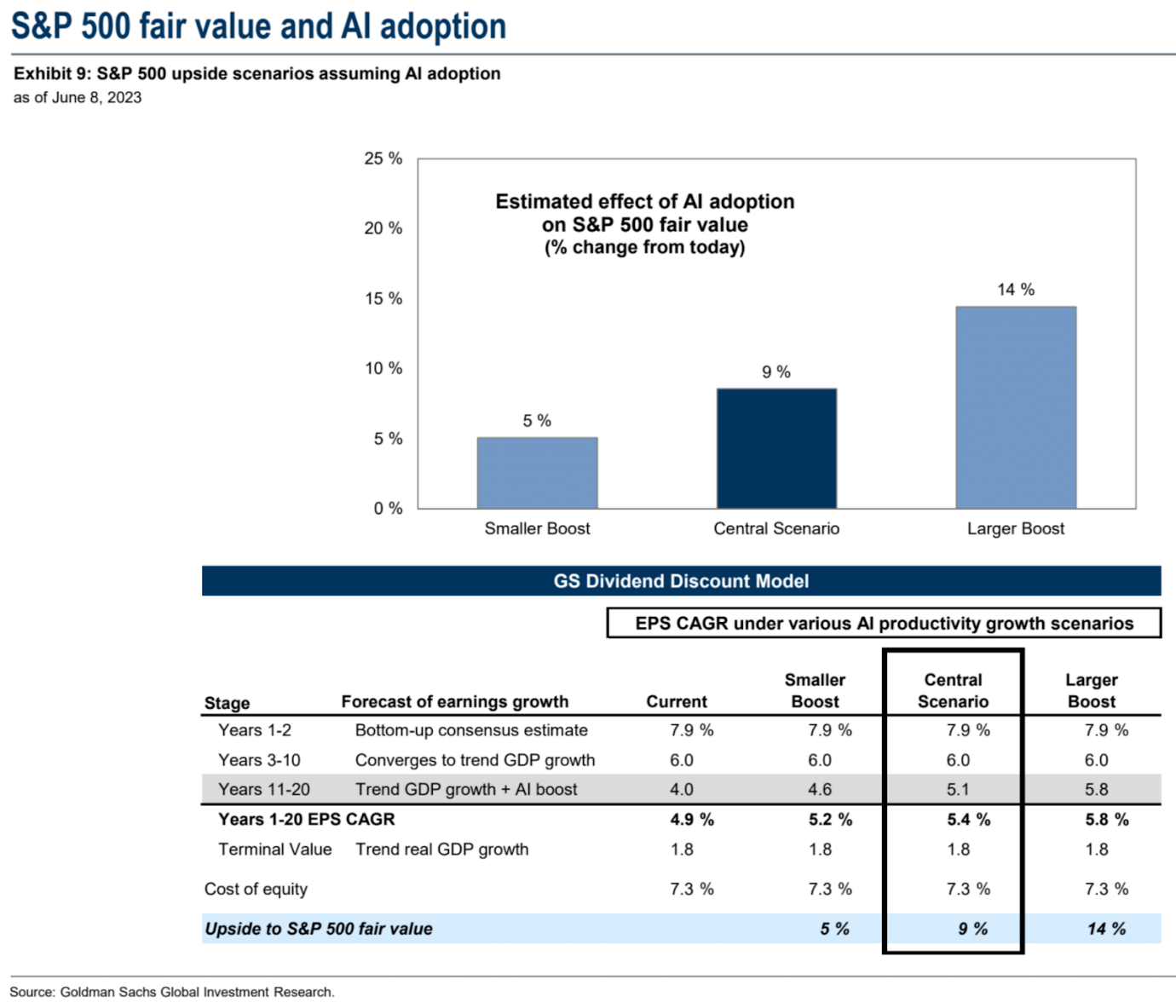
Regarding the logic that U.S. stocks will continue to rise in the future, Kostin gave two points. One is that AI provides support for corporate profit growth, and the other is that the low probability of recession will also bring upward momentum to U.S. stocks.
In terms of AI’s support for U.S. stocks, Kostin noted in the report:
Our estimates of AI-enhanced productivity suggest that AI could boost S&P 500 EPS growth to 5.4% per annum over the next 20 years, 50 basis points above the current dividend discount model. At current discount rates, this additional growth would boost the S&P 500's fair value by 9%. The recent narrowing of market breadth and current valuations of some AI benefits suggest that some of the future gains are already priced in. Overall, the recent cyclical and defensive performance appears to reflect improved growth expectations, in line with our forecast for US real GDP growth of 1.7% this year.
Additionally, another bullish support for Kostin is the low recession probability forecast:
Our economists see a 25% chance of a recession in the next 12 months, compared with a median market forecast of 65%. In the "soft landing" base case, S&P 500 earnings per share are expected to rise 1% in 2023 to $224, well above the consensus forecast of $206.
After the Q1 earnings season, we still think the worst of the earnings season is over, and the trajectory of analyst earnings estimates has indeed improved in recent weeks. For 2024, we think the consensus estimate of $246 (+11%) is too high, and we have a roughly 4% downward revision to our 2024 EPS estimate of $237 (+5% growth).





