






LD Macro Weekly Report (2023/05/29)



TLDR:
secondary title
Market Summary: The debt ceiling crisis continued to plague markets at the start of the week, however, notable progress was made in the second half of the week. Nvidia's better-than-expected profit report triggered the market's pursuit of core technologies such as AI and chips, leading to a surge in US stocks. Meanwhile, defensive targets fell as funds focused on the technology sector.
Economic indicators: PMI data showed that the economy diverged in May, with continued strength in the services sector and a rebound in manufacturing. Durable goods sales data and PCE reflected that inflation remained stubborn and the economy remained firm, leading to a jump in expectations for a June rate hike and a disappearance of expectations for a rate cut this year.
Cryptocurrency market: Driven by extreme optimism in the technology sector, the cryptocurrency market also rebounded. However, the rising expectation of the end of the interest rate coupled with the expectation that the TGA will draw market liquidity has set a headwind for the persistence of its rally.
Debt Ceiling Negotiations: US President Joe Biden and House Speaker McCarthy reached a budget deal in principle to raise the debt ceiling by 19 months. The focus of the market has shifted to whether the Senate and the House of Representatives will vote on Wednesday and Friday. As funds are expected to run out on Friday, the voting process should not be surprising.
Viewpoint: June-August is a critical time window as the four major contradictions will become very apparent. The four major contradictions include the issuance of new treasury bonds, the extreme divergence of the stock market, the Fed's interest rate end point, and the strong attraction of fixed income to funds.
The development of AI is expected to reduce investors' reliance on changes in interest rates, valuations are already expensive but still not outrageous, and there is still room for its bubble stage. The optimism is sure to spill over to the cryptocurrency market, as unlike established industries, both have huge potential for adoption, but liquidity and regulatory concerns hanging over the digital currency market may limit its gains.
Weekly market overview:
With progress in talks to raise the U.S. debt ceiling and optimism about artificial intelligence, global stock markets diverged last week. fall.
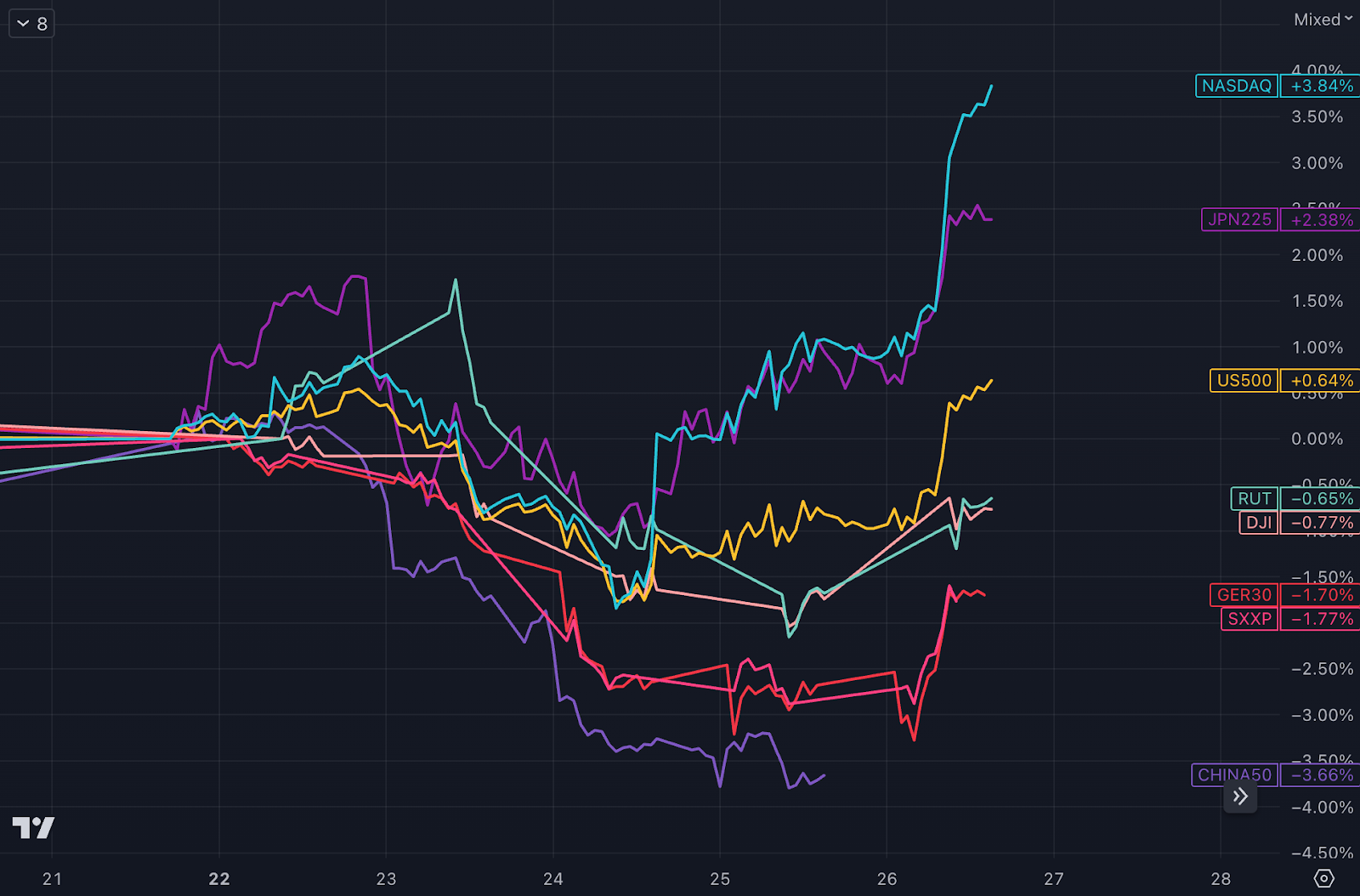
In terms of U.S. stocks, AI is undoubtedly the hottest theme this week. The technology sector rose by more than 5%, the communication exchange rose by more than 1%, and the necessities and materials sectors led the decline, both falling by more than 3%. It shows that funds continue to flee defensive targets and instead invest in industries with higher growth potential.
Last week's strong economic data and hawkish comments from central bankers have sounded the alarm on interest rate expectations amid a realization that inflation will remain sticky for longer. This caused U.S. Treasury yields to continue to climb across the board:
l The 30-year Treasury yield hit the 4% mark, the highest level since the end of last year;
l The yield of 10-year treasury bonds rose from 3.66% to 3.81%, and the yield of 2-year treasury bonds rose from 4.24% to 4.57%, both hitting the highest levels since March this year;
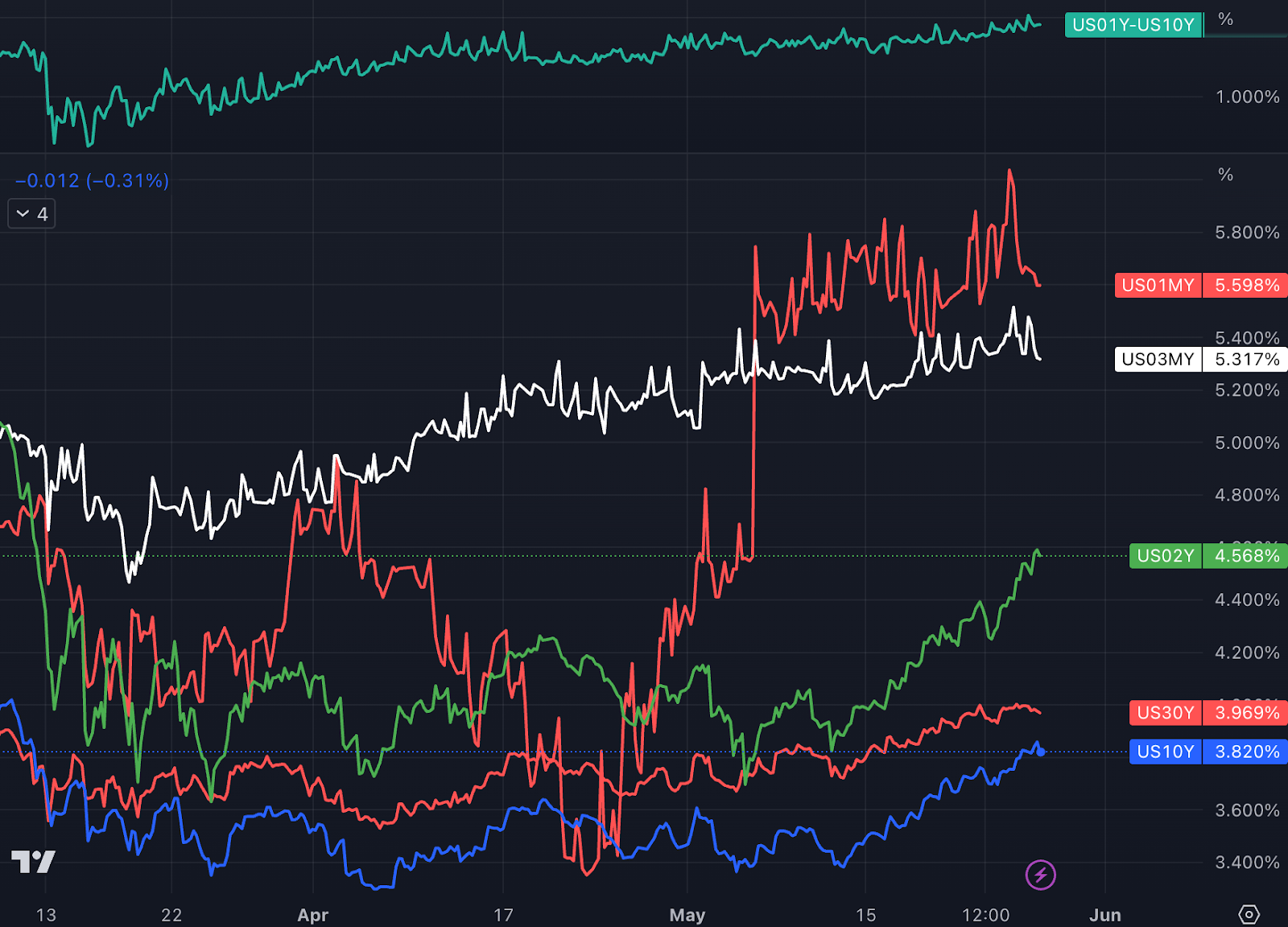 l 1-month and 3-month short-term government bond yields fell slightly, indicating that the market's concerns about the risk of the debt ceiling have declined.
Elsewhere, U.S. crude rose 1.2 percent to $72.67, after major oil producers released conflicting messages last week about future supply adjustments.
Spot gold prices rose slightly by 0.33% to $1,946.69 per ounce, mainly because the debt negotiation crisis continued to cool down and the market’s bet on the Fed’s interest rate hike again reduced the safe-haven demand for gold, and the rise in real interest rates was also negative for gold. Non-interest-bearing assets, which theoretically will also form potential pressure on the price of BTC.
Changes in CFTC futures positions:
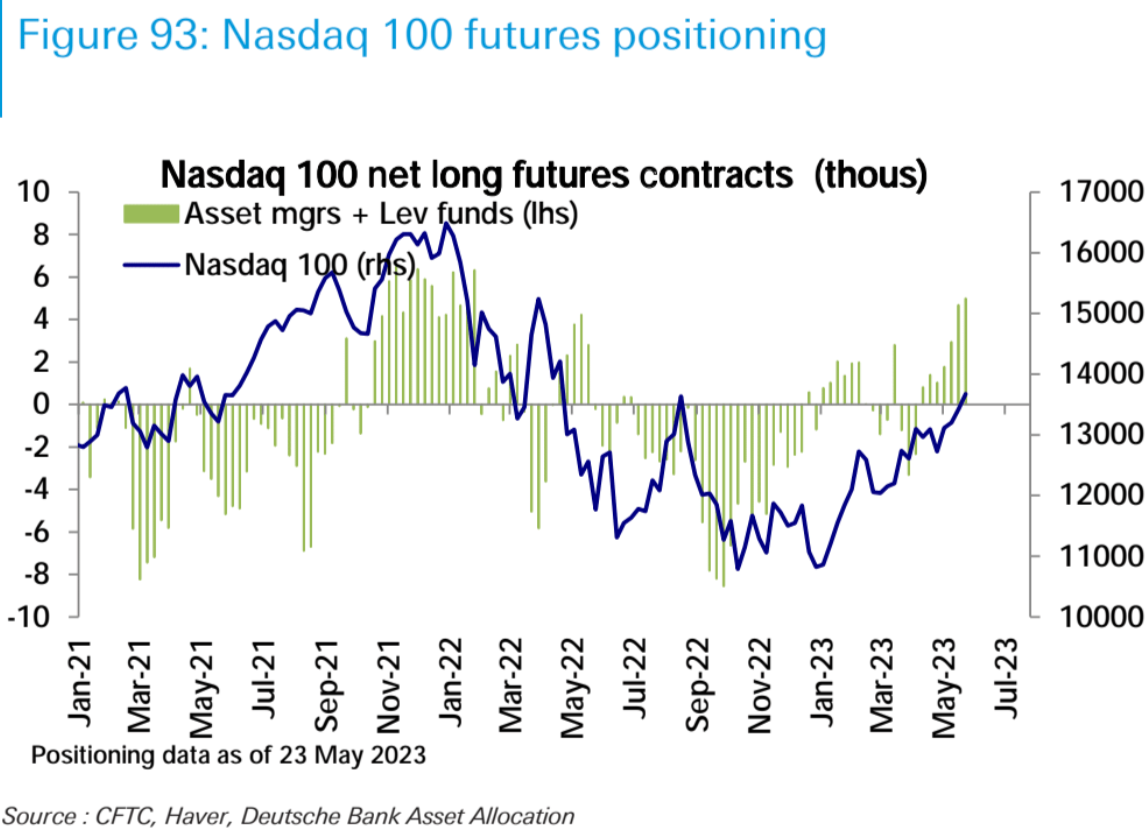
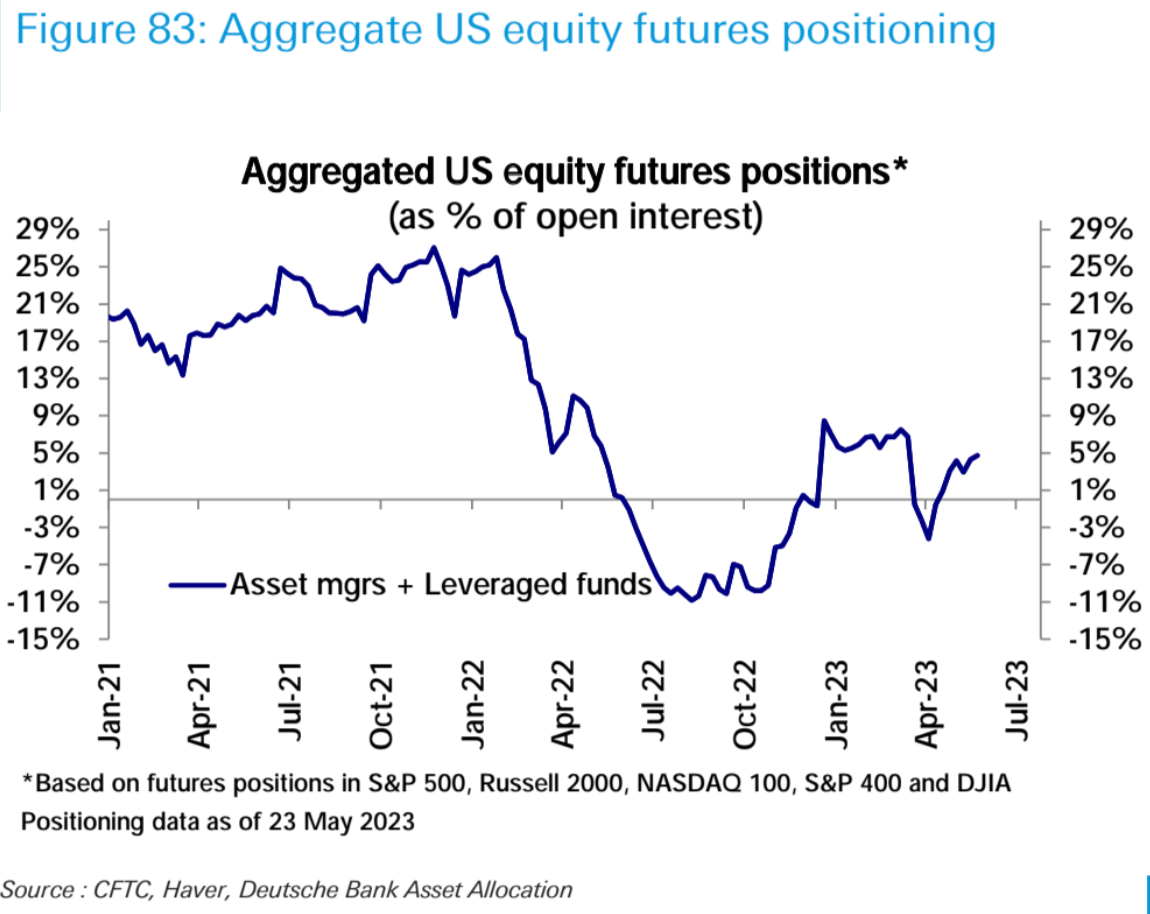
In general, the net long position of U.S. stocks (Asset manager + Leveraged funds) rose slightly again last week, but the three major stock indexes diverged significantly. Bulls are down slightly. Net shorts on the Russell 2000 have shrunk significantly and are now almost back to neutral. Such position changes are consistent with the spot market trend.
In the bond market, net short positions increased to almost record highs, with net short positions rising in 2-year, 5-year and 10-year maturities, while net short positions in 30-year maturities fell. In FX markets, dollar net shorts fell slightly, largely due to a slight reduction in euro net longs.
Global Equity Fund Flows:
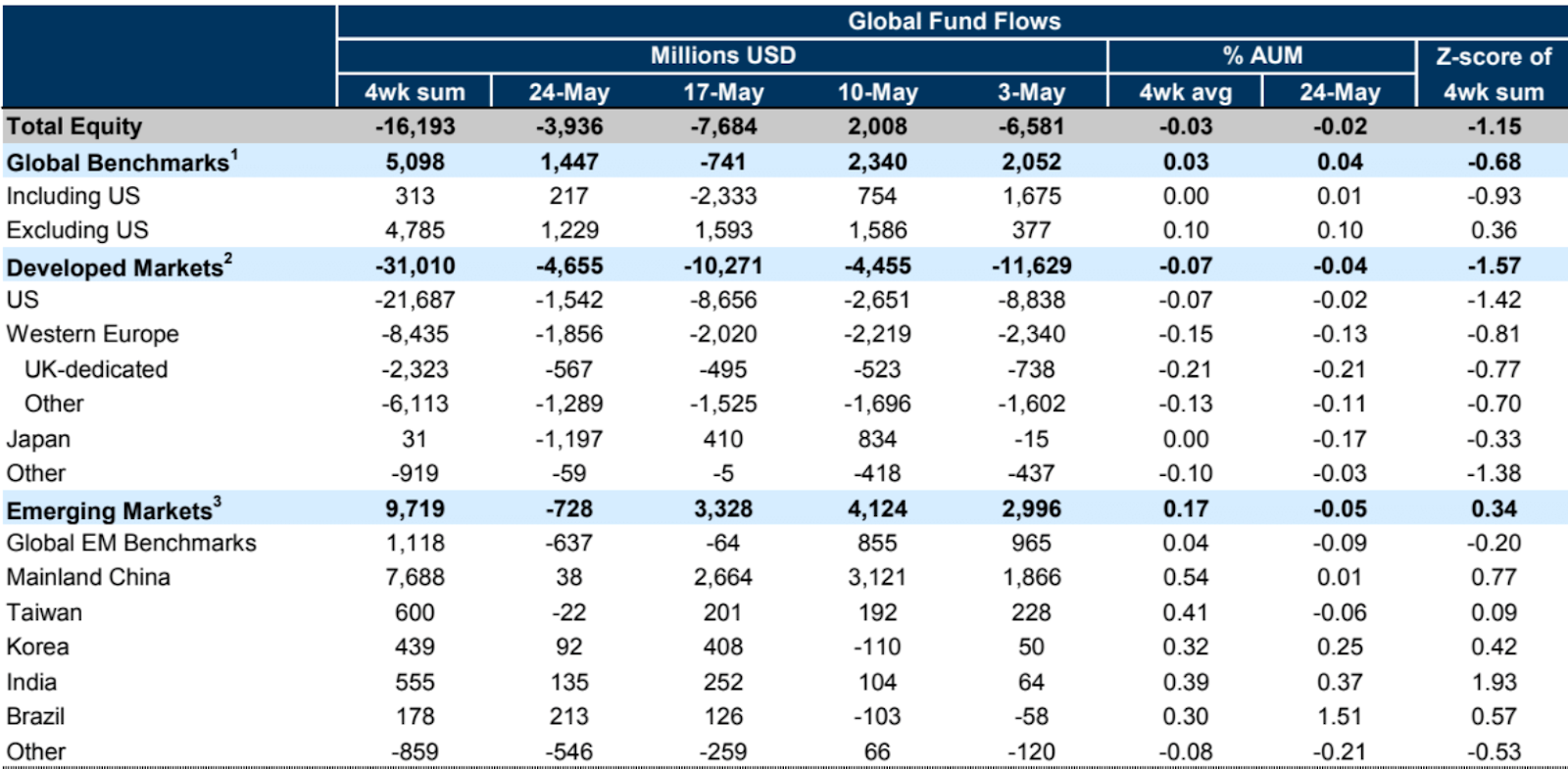
EPFR data: As of the 24th, net inflows of global equity funds remained negative, at -$4 billion this week, an improvement from last week's -$8 billion. Developed-world equity funds dominated outflows, with U.S. equities seeing outflows for a sixth straight week, but at a sharply slower pace than the previous week. Emerging market equity funds also saw net outflows.
Debt Ceiling Negotiations:
U.S. President Joe Biden and House Speaker McCarthy have reached a budget deal in principle to raise the debt ceiling for 19 months to 18 January 2025. Because the agreement represents a compromise, and any compromise plan will almost certainly lose the opposition of the far left and far right, the focus of the market will turn to whether the Senate and House of Representatives will vote this week.
Leaders of both parties are currently expressing confidence that the debt-ceiling deal will pass, which requires 218 votes in the House and 51 votes in the Senate. President Joe Biden has strongly urged both houses of Congress to pass the U.S. debt deal immediately, and he does not foresee any potential disruption to the deal. McCarthy, for his part, claimed 95 percent of his party's lawmakers were "thrilled" with the deal, but acknowledged that the bill "didn't get everything that everyone wanted, but in a divided government, that's where we end up."
Yellen updated the date for the government to run out of funds to June 5 (four days later than originally expected) and asked Congress to quickly reach a negotiated outcome and avoid a debt default.
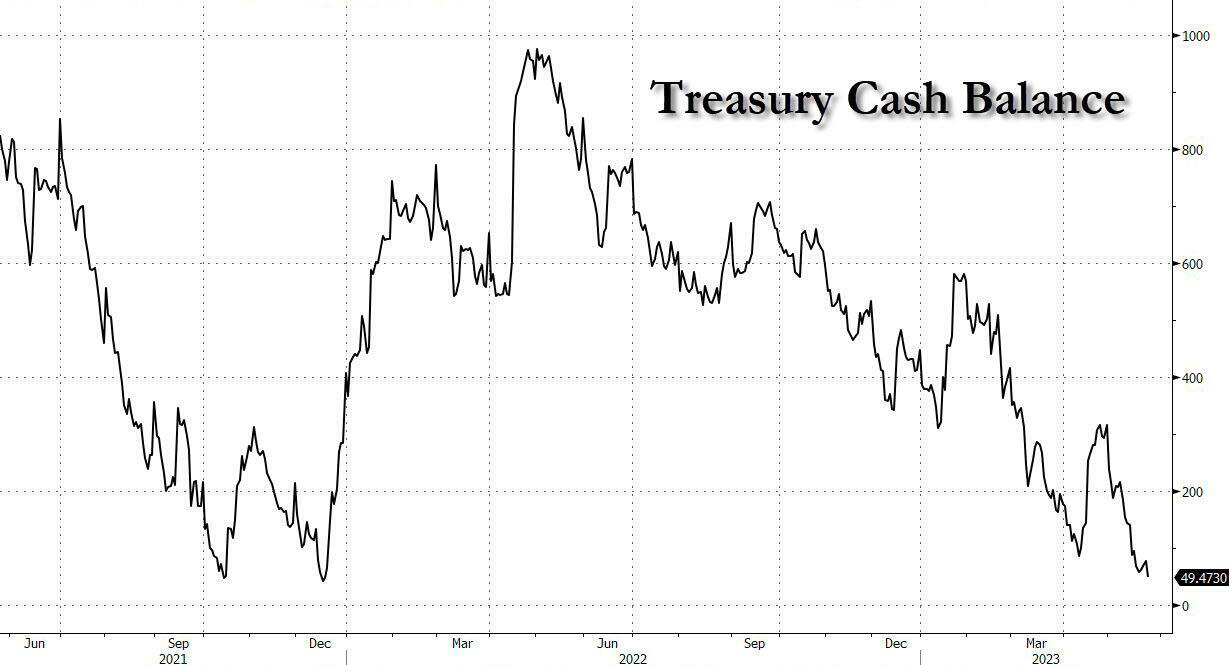
The Senate is expected to vote on the bill on Wednesday and the House of Representatives as early as Friday, because Friday is already the last date for the Treasury Department to expect to run out of cash, so there is no room for error in this week's progress, although it seems that there may be surprises at present. Minor, but any surprise in the voting process that could push the bill past the X-Date and into next week would add to market uncertainty.
Important economic data from last week:
Friday's PCE price index and durable goods sales data were the most influential, showing that inflation remains stubborn, the economy remains strong, and expectations for a rate hike in June have increased.
The PCE rose 0.4% month-on-month in April, beating expectations of 0.3% and the previous month's 0.1%. The 4.4% year-over-year gain was also ahead of expectations for a 4.3% gain and last month's 4.3% gain. Excluding the food and energy core, PCE also rose 0.4% mom, beating expectations for a 0.3% gain and up from 0.3% the previous month. The year-over-year gain was 4.7%, beating expectations for a 4.6% gain and the previous month's 4.6%.
Clearly this data shows that inflation is still stubborn. Since December last year, the Federal Reserve has raised interest rates by 125 basis points, but the core PCE has not declined around 4.7%. This data further supports the Fed's expectation of further interest rate hikes in the future.
As soon as the actual data came out, CME interest rate futures immediately priced the probability of raising interest rates at the next FOMC meeting to 70%, which was only 17% last week. rest.
There are still several important data in the future, including non-agricultural employment and CPI in May. If any of these two reports are hot, the hope of suspending interest rate hikes in the June and July meetings will become increasingly elusive. Considering Consumers will also travel intensively in summer, which will further boost consumption and stimulate inflation.
In addition to inflation, data on Friday also showed that Americans' income and consumption were also rising, with income rising 0.4% from the previous month, up from 0.3% in the previous month. Consumption rose by 0.8% month-on-month, compared with only 0.1% in the previous month. In terms of service consumption, it is driven by financial services, insurance and medical care, while on the commodity side it is driven by new cars and medicines.
On the other hand, the savings rate fell again, from 4.5% to 4.1%, which is further evidence that American consumer confidence remains high.
Speaking of strong consumption, Friday's durable goods report reflected the same result: April durable goods sales rose 1.1% month-on-month, against expectations for a 0.8% decline, and March's rise was also revised up 0.1% to 3.3% month-on-month . The surge in March was mainly driven by Boeing’s large orders. If military equipment and airliners are excluded, sales of durable goods have declined, but the April data is a real rebound. Sales of durable goods, excluding military equipment and technology, rose 1.4% in the report, well above the 0.6% decline in March and the 0.2% decline in February. Among them, the manufacturing industry, which accounted for the largest proportion, rose by 1.7% month-on-month, machinery and equipment rose by 1.0% month-on-month, and automobiles and parts fell by only 0.1%.
Other data highlights from last week:
The final value of the University of Michigan consumer sentiment index rose to 59.2 in May, exceeding the initial value of 57.7.
U.S. Initial Jobless Claims came in at 229,000, missing expectations for 245,000 from a previously revised 225,000. Continuing Claims came in at 1.794 million for the week ended May 13, below expectations for 1.80 million and from 1.799 million previously.
The initial value of Markit manufacturing PMI in the United States in May was 48.5, lower than the expected 50, the previous value was 50.2, the initial value of the service industry PMI was 55.1, higher than the expected 52.5, the previous value was 53.6, and the composite PMI was 54.5, higher than expected 53, the previous value was 53.4.
Watch this week:
Watch this week:
Monday is Memorial Day in the United States and a spring bank holiday in the United Kingdom, and the stock markets in the two countries will not open
U.S. Consumer Confidence Index for May on Tuesday
Debt Ceiling House Vote on Wednesday
U.S. ADP employment data for May on Thursday
U.S. stock earnings include HP on Tuesday, Salesforce, C 3.AI, Chewy on Wednesday, Dollar general, Macy’s, Bilibili, lululemon, and Dell on Thursday.
Our comments:
Our comments:
June to August is a critical time window, because there are four major contradictions that will be very obvious (here only discusses the United States, and subsequent articles will discuss more such as Japan’s monetary policy, European inflation and China’s progress).
Contradiction one:
At present, the market expects that about 500 billion to 700 billion US dollars of new government bonds should be issued within three months after the debt ceiling agreement is reached. This is a negative pumping of liquidity and should marginally restrain the performance of risky assets.
One possible source of funds for receiving new treasury bonds is the balance of money market funds and reverse repurchase agreements (RRP), and another possible source is the decline in bank deposits. It would be a good thing to see a decline in these data, indicating that liquidity pumping has been hedged.
And let's not forget that raising the debt ceiling comes at the expense of government spending cuts over the next two years, though not on a scale that would significantly alter the economic outlook.
Contradiction 2:
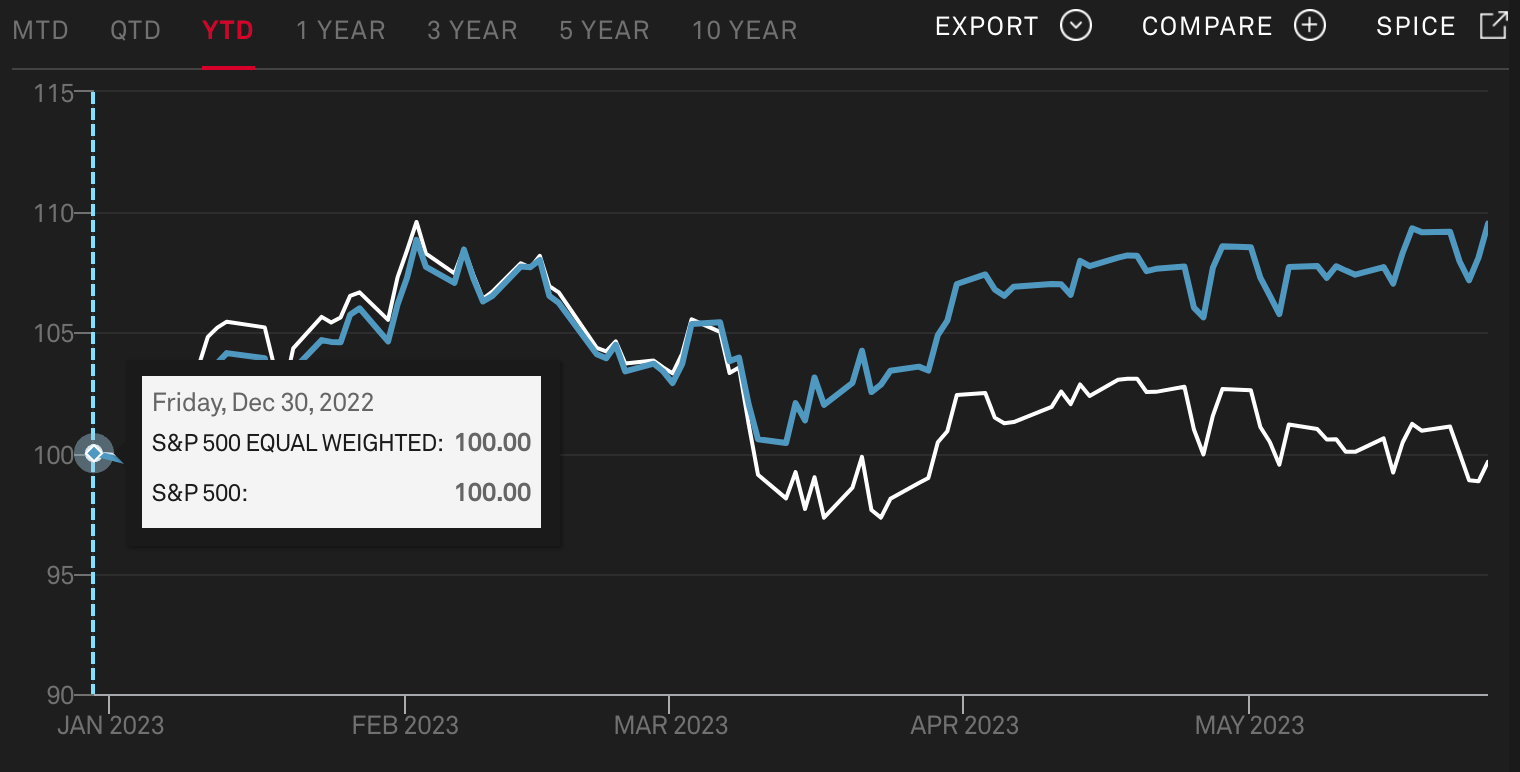
On the stock market side, giants in almost every industry are getting bigger, such as technology, banking, energy, retail, healthcare, defense, etc., so we see that the ordinary market capitalization-weighted S&P index is rising, while the equities However, the general index has fallen. This trend has been particularly obvious since March. Since the current round of rise is driven by AI, the efficiency or performance benefits it brings will not be reflected in a wide range of industries in the short term. AI and technology There is a possibility of a bubble in the track, especially considering that the PE of big technology companies is more than twice that of ordinary companies. Is the market still able to deal with stocks with increasingly expensive valuations?
Contradiction three:
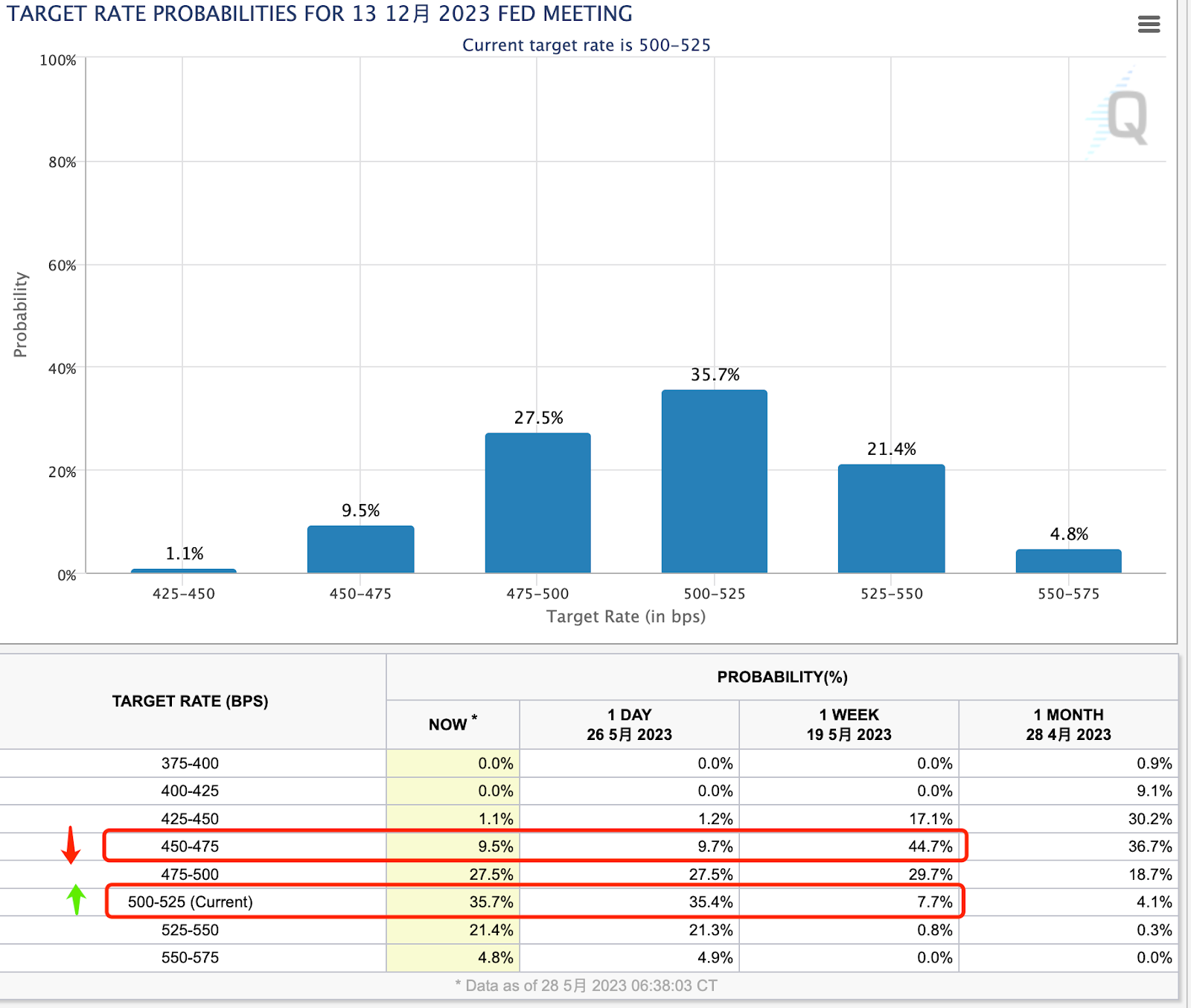 Recently, Fed officials have made a lot of hawkish remarks. As the economic data continues to be hot, interest rate futures in the second half of 2023 continue to fall. Earlier this month, the market predicted a rate cut of close to 100 basis points, and now it is expected that no rate cut will be made. (Already consistent with the Fed's March dot plot). This rapid shift occurred only last week, and its lasting effects can be considered as yet to be fully fermented.
Contradiction 4:
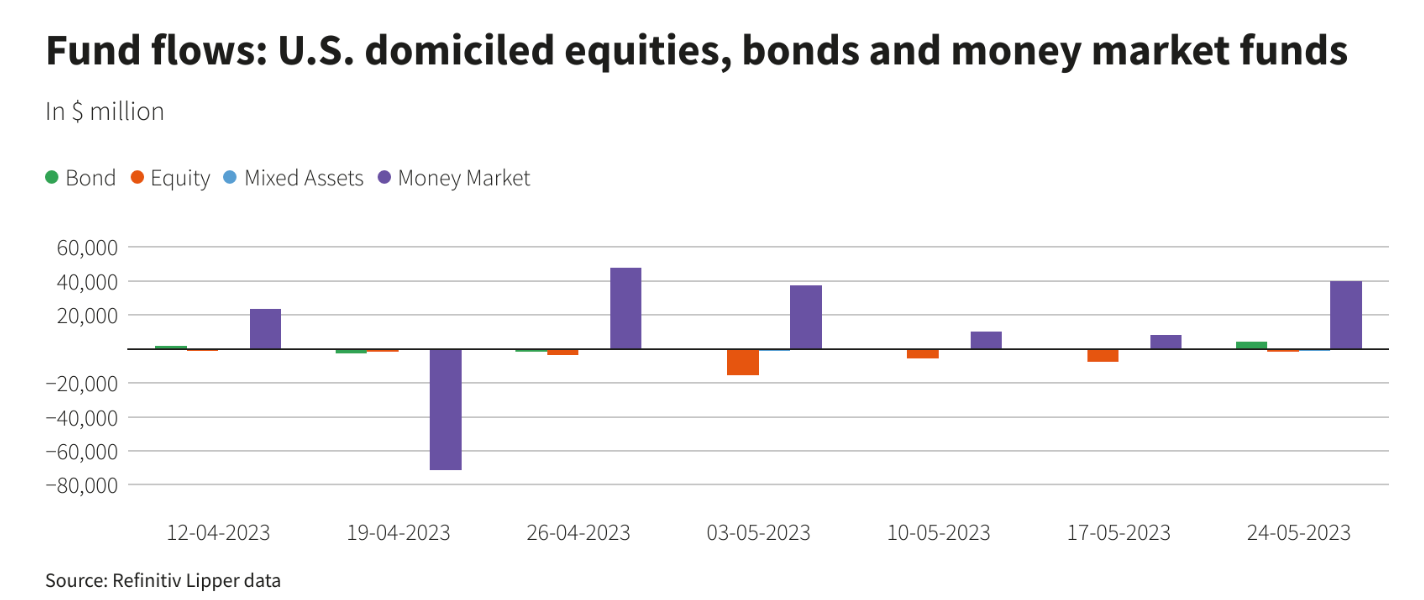
Despite upbeat sentiment in equities, U.S. money market funds saw massive inflows last week (+39.9 billion, the highest in five weeks), showing the strong appeal of fixed income to funds, which is set against a backdrop of dissipated expectations for rate cuts this year The next few months will remain stable.
In summary, most stocks did not participate in the rally, and the current trend is strongly influenced by the technology industry, especially those companies closely related to AI and chips. Dominance by a few large-cap tech stocks could leave the market vulnerable, and any setbacks for "MAGMA" or "NYFANG," such as disappointing earnings or changes in industry regulations, could have a significant impact on the overall market.
There is also the possibility that more stocks will start to follow the rise of big technology, so that the bull market can last for a long time, but this needs to be supported by tangible earnings data. Artificial intelligence has indeed reduced investors' reliance on changes in interest rates. It can be expected that many companies will start to embrace the concept of AI in the next few months, but it will take time to observe which industries can really get the light of AI. Share price gains based on performance or rising dividends are vulnerable.
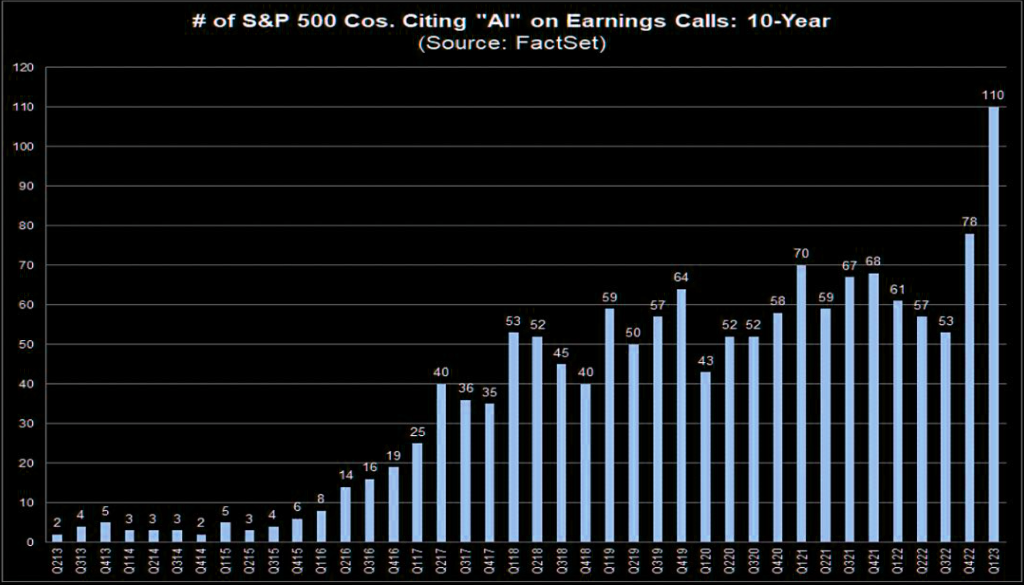
For example, according to Factset, only 110 S&P 500 companies mentioned AI in their latest conference call:
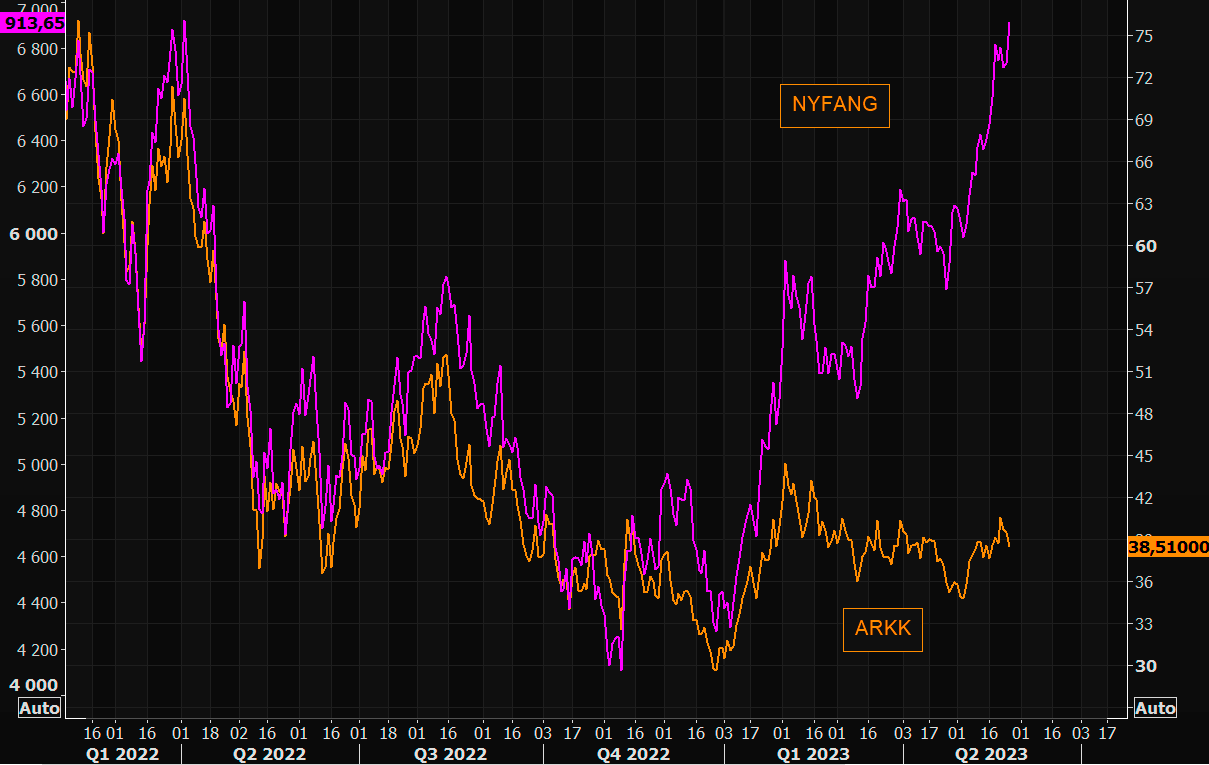
For example, even the so-called ARKK, which bets on innovation, is far behind NYFANG:
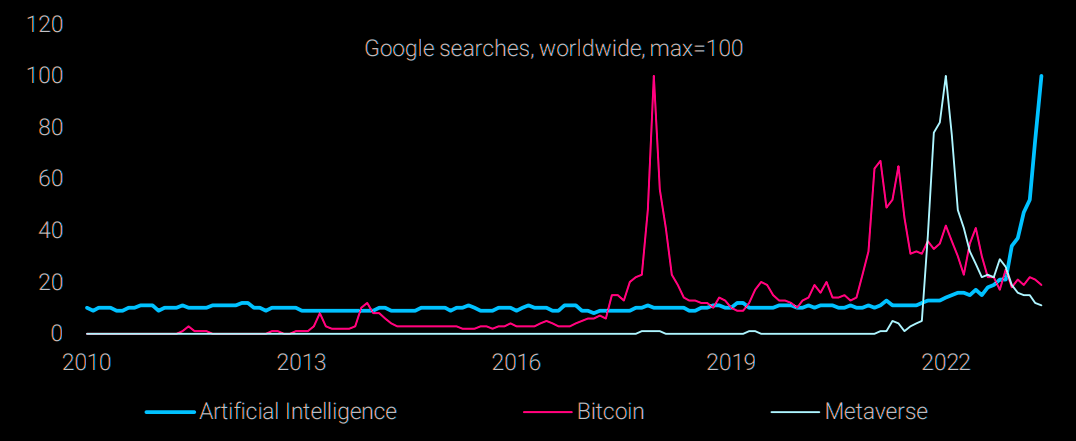
In the development of the AI field, it feels that a large number of investors have not fully participated in it. Although the valuations of related companies are expensive, they are far from outrageous. We expect to see AI-related investment targets in the next few months. Bubbles, even the evolution of MEME, for example, last week the WSB community was extremely excited about the concept of AI.





