






Business Status, Opportunities and Challenges of Liquity, the Leader of Decentralized Stablecoins


Author: Lawrence Lee
1 Introduction
Recently, with the cessation of issuance of BUSD and unanchoring of USDC, and the launch of LQTY on Binance, decentralized stablecoins and Liquity have once again become market hotspots.
We have been following Liquity since its launch in 2021 and have completed"Liquity: A Rising Star in the Stablecoin Market"one article. One and a half years have passed now. Although Liquity, which adheres to the concept of no governance, has not updated the protocol level, there are also Lego products such as Chicken Bonds based on its own underlying layer.
In this article, we will analyze Liquity's business development and its competitive advantages and disadvantages compared to other stablecoin protocols, hoping to bring readers more perspectives on Liquity and stablecoins.
This article was written by the author based on the project information and market background at the time of writing. Limited by the author's cognition and information limitations, the content of the article may contain errors in data, facts, and analysis and deduction. All content in this article does not constitute investment advice.
2.1 Project business scope
2.1 Project business scope
secondary title
2.2 Project History and Roadmap
Here are the highlights of the Liquity project since its inception, as of March 2023.
2019.12 The project was established.
2020.5 Liquity released the first version of the white paper, and the core framework of the entire project (including 110% mortgage rate, stable pool, recovery model, redemption system, interest-free lending) was built in the initial version.
2020.9 Completed the seed round financing led by Polychain Capital.
2021.2 An updated version of the white paper was released. The new white paper focuses on liquidation and stability: the recovery model has been redesigned and the incentives for liquidators have been modified.
2021.3 Audits by Coinspect and Trail of Baits completed.
2021.3 Completed the A round of financing led by Pantera Capital.
2021.4.5 Liquity was successfully launched on the ETH main network. Except for the redemption function, all functions were launched normally, and the token LQTY was also launched.
2021.4.19 The redemption function is launched, the protocol TVL exceeds 1 million ETH, and the circulation of LUSD exceeds 1.2 billion.
2021.5.19 Liquity, which has been online for a month, ushered in the 519 extreme market. The circulation of LUSD decreased from 1.6 billion to 500 million, and the security of the protocol was initially verified.
2021.6 Liquity was integrated by the asset management platform DeFiSaver.
2021.8 Liquity is integrated by asset management platform Instadapp.
2021.8 Chainlink began to provide quotations for LUSD.
2021.11 Insurance agreement Insurance began to provide insurance services to Liquity.
2021.11 LUSD online lending agreement Rari.
2021.11 Stablecoin protocol Fei buys $100 million in LUSD.
2022.1 LQTY listed on Coinbase and Huobi.
2022.4 Liquity cooperates with Bitcoin Suisse to launch a loan service.
2022.8 LUSD online lending protocol Aave.
2022.9 Liquity launched Chicken Bonds, a protocol-guided liquidity (POL) mechanism, and LUSD Chicken Bonds.
2022.11 LUSD online lending agreement Euler.
2022.11 Angle Protocol, a stablecoin protocol, introduces LUSD as collateral.
2023.2 LQTY listed on Binance.
2.3 Core Team
Liquity is a real-name team with two core members based in Europe. The founder is Robert Lauko, who was previously a researcher at Difinity and was mainly responsible for the overall protocol design. Another co-founder is Rick Pardoe, who is mainly responsible for research and development. The overall team size is around 10 people.
More team information can be learned in the [Team Information] section of the previous Liquity research report, which will not be repeated in this article.
secondary title
3.1 Track Analysis
Liquity belongs to the stablecoin-decentralized stablecoin track.
Stablecoin is the track with the most network effect in the DeFi field, and it has also achieved a development that significantly exceeded the industry's average growth rate in the last cycle. For the value of the stablecoin track, we have no ideaReflexer Research ReportThere has been a detailed analysis in , and our core points are as follows:
Due to the convenience of settlement and more in line with the habits of the general public, stablecoins have replaced BTC/ETH as:
Base settlement currency for spot transactions
The settlement currency of new derivatives such as perpetual contracts, which are very popular in the market
The settlement currency for most project parties and venture capital institutions to conduct investment and financing activities
It is reflected in the data that the increase in the market value of stablecoins exceeds the average increase in the encryption market, and the correction rate is also smaller than the market average.
The positioning of stablecoins as the basic settlement currency of cryptocurrencies has been firmly established in the minds of all market participants. Its market size will at least develop synchronously with the overall size of cryptocurrencies, and there is still a huge room for development.
In the past February-March, two more important events that affected the stablecoin market structure occurred:
At the end of February, the New York Department of Financial Services (NYDFS), the regulator of the stablecoin issuer Paxos, asked it to stop the issuance of BUSD. Facing charges from the SEC for illegally issuing securities. After that, on the one hand, Binance looked for partners around the world to issue stablecoins, and turned to support TUSD. On the other hand, it also aimed at decentralized stablecoins: Liquity's LUSD is currently one of the few in the Ethereum network. A fully decentralized stablecoin, Binance also launched LQTY on February 28.
In early March, the US banking crisis was sparked by the bankruptcy of Silicon Valley Bank (SVB). Since Circle has 3.3 billion US dollars stored in SVB, this incident also caused the USDC to be unanchored to below 0.9, and decentralized stablecoins such as DAI and FRAX, which are highly dependent on USDC, also unanchored, and projects in the entire stablecoin market There have been huge fluctuations. Although the U.S. Federal Deposit Insurance Corporation (FDIC) quickly took over SVB, the Federal Reserve also launched the Bank Term Funding Program (BTFP) to deal with banking industry risks, and USDC quickly returned to the anchor. However, due to the high penetration rate of USDC, DAI, and FRAX in the DeFi world, this incident has sparked many discussions on the decentralization of stablecoins. Affected by this incident, the circulation of LUSD also increased from 230 million US dollars to 260 million US dollars.
Both of these things have triggered a crisis of confidence in the market for centralized/semi-decentralized stablecoins, and have also triggered a revaluation of decentralized stablecoin protocols.
In short: the stablecoin business has a solid foundation, a vast space, and still has great potential.
secondary title
3.2 Business Situation
Due to the non-governance feature, Liquity has very few updates at the protocol level after its launch. In the nearly 2 years since its launch, only LUSD Chicken Bonds, which was launched at the end of September 2022, is a major update at the use case level. Let’s start with Take a brief look at Chicken Bonds.
3.2.1 Chicken Bonds
The Chicken Bonds launched by Liquity is strictly speaking a set of solutions that can motivate POL (Protocol Owned Liquidity, the liquidity owned by the protocol). Its first product module is Chicken Bonds of LUSD. The goal of Chicken Bonds is to help the agreement guide liquidity at the lowest possible cost while giving users more robust principal protection. Chicken Bonds plans to launch a version that can be applied to other protocols in Q2 of this year. In order to simplify understanding, the Chicken Bonds we mentioned below refer to the Chicken Bonds of LUSD.
Within the Chicken Bonds product are the following concepts:
bLUSD: boosted LUSD (enhanced LUSD), is the share unit of Chicken Bonds. Through a series of settings of Chicken Bonds, bLUSD can provide more benefits than LUSD, which is also the origin of its name. bLUSD can always be redeemed for LUSD from Chicken Bonds.
LUSD bond NFT: LUSD bond, which can be exchanged for bLUSD according to the preset time-yield curve.
Chicken Bonds internally divides funds into three pools:
Pending pool: Pending Bucket, all funds participating in Chicken Bonds will first enter the pending pool.
Reserve pool: Reserve Bucket, a concept in Chicken Bonds' internal bookkeeping process. The LUSD in the pool can obtain the income generated by all LUSD in Chicken Bonds (including the pending pool, permanent pool and LUSD in the reserve pool). The LUSD in the reserve pool corresponds to bLUSD redemption.
Permanent pool: Permanent Bucket, the LUSD in this pool does not belong to the user, but to the Liquity protocol.
For its detailed meaning in business, we will use the example of Alice participating in Chicken Bonds with 10,000 LUSD to illustrate:
1. The first step to participate in Chicken Bonds is to use LUSD to purchase bonds. After buying bonds with 10,000 LUSD, Alice will not get bLUSD directly, but will get LUSD bond NFT. At the same time, all the LUSD invested by Alice will be deposited into the stable pool (Liquity's Stability Pool) through B.Protocol, and B.Protocol will regularly convert the LQTY rewards and ETH liquidation income obtained by the stable pool into LUSD to achieve compound interest. In Chicken Bonds’ internal bookkeeping, all LUSD participating in Chicken Bonds are initially in the pending pool, but its income is allocated to the bLUSD in the reserve pool (Alice does not have bLUSD at this time, which is equivalent to transferring the LUSD income to it).
image description
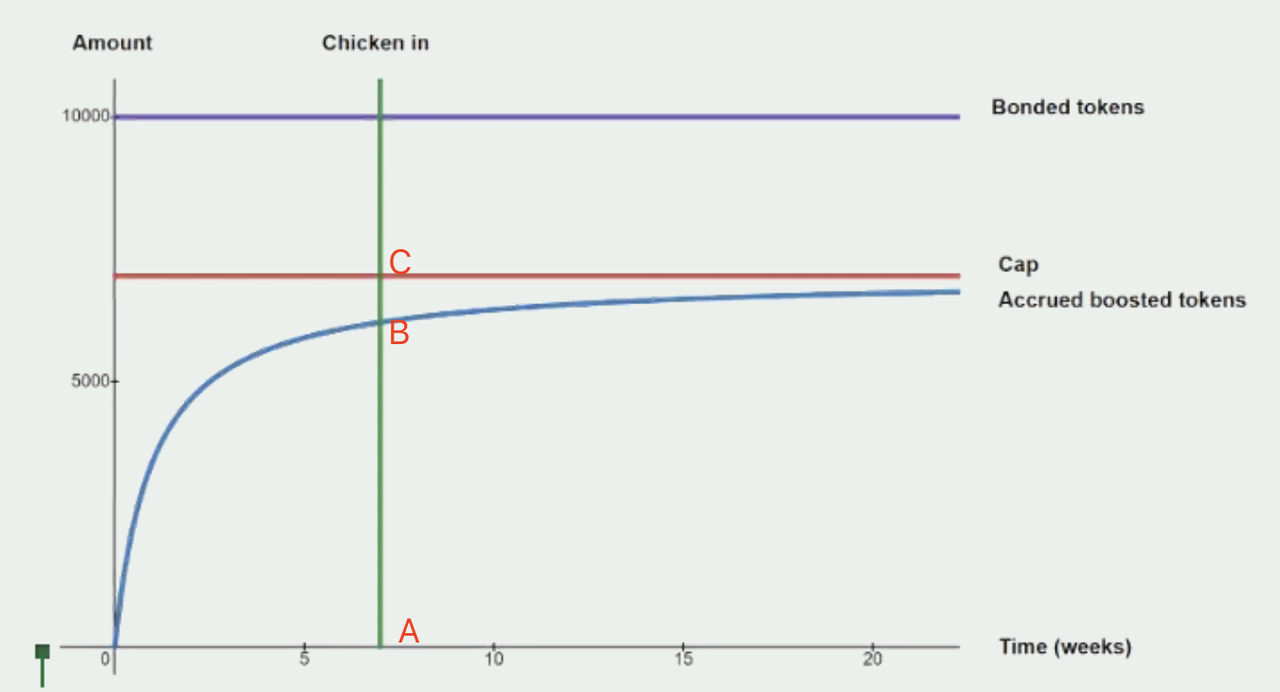
Receive the corresponding income curve sourcehttps://docs.chickenbonds.org/faq/economic-design
3. If Alice pays a 3% handling fee to claim, she will get the corresponding bLUSD according to the curve (that is, the line segment AB in the figure). At this time, although Alice's 10,000 LUSD is still unchanged in the stable pool, in the internal bookkeeping of Chicken Bonds, the part of LUSD corresponding to Alice's bLUSD has entered the Reserve Bucket from the pending pool, and 3% The handling fee and the LUSD given up for early withdrawal (that is, the line segment BC in the figure) enter the permanent pool (Permanent Bucket).
Although from the point of view of a single user, the later you receive bLUSD, the more bLUSD you can get, but from the perspective of overall income, it does not mean that the later you receive bLUSD, the higher the income, because bLUSD itself is also increasing in value (from all three pools) LUSD mining income), users who receive bLUSD too late will receive less income from the increase in the net value of bLUSD. Therefore, logically, the most ideal time to receive bLUSD should be when the growth rate of the bLUSD that can be received (that is, the rising speed of the curve in the above figure) = the growth rate of the net value of bLUSD, but this is not a result that can be calculated by a certain formula, but It is the result of the free game of the participants.
4. After obtaining bLUSD, Alice can redeem (Redeem) bLUSD or sell bLUSD. The result of both is to convert bLUSD into LUSD, but the redemption corresponds to the ratio of LUSD principal and income from the reserve pool Get it back together, and sell it through the bLUSD+LUSD-3 CRV LP officially incentivized by Chicken Bonds.
5. Alice can also choose to cancel the bond (Chicken Out) before receiving it. After the cancellation, Alice can get the 10,000 LUSD she invested, and the funds will flow out of the system directly from the pending pool, but Alice’s 10,000 LUSD in the stable pool will not gain It will be returned to Alice, but distributed to other people in the reserve pool.
6. The liquidity of the permanent pool is owned by the agreement, but the agreement only owns the principal, and the income generated by the assets in the permanent pool also belongs to the reserve pool. Perpetual pool funds are in stable pool and YearnAccording to the scheme that is more beneficial to the stability of the protocolto allocate. If you invest through Yearn, you will put the obtained LUSD-3 CRV LP tokens into Convex, and the income will also be converted into LUSD regularly to achieve compound interest.
From the above, we can see that the key reason why bLUSD can generate higher returns is that the returns generated by all three pools will be given to the reserve pool. Since the reserve pool corresponds to the net value of bLUSD, this allows bLUSD to obtain higher returns than simply depositing LUSD into the stable pool. At the same time, when the pending pool and permanent pool account for a higher proportion of the total TVL, the APR of bLUSD will be higher (because there is more principal to generate income). For example, when Chicken Bonds was first launched, the APR of bLUSD once exceeded 50%, but as time passed, the APR of bLUSD gradually decreased as the TVL in the pending pool decreased. Since most of the users in the pending pool are users who have just deposited into Chicken Bonds, this also makes Chicken Bonds have a certain Ponzi attribute: the more new users, the higher the income of old users; the more new users, the higher the income of old users; If new users stop entering the market, the rate of return of old users will also decrease.
image description
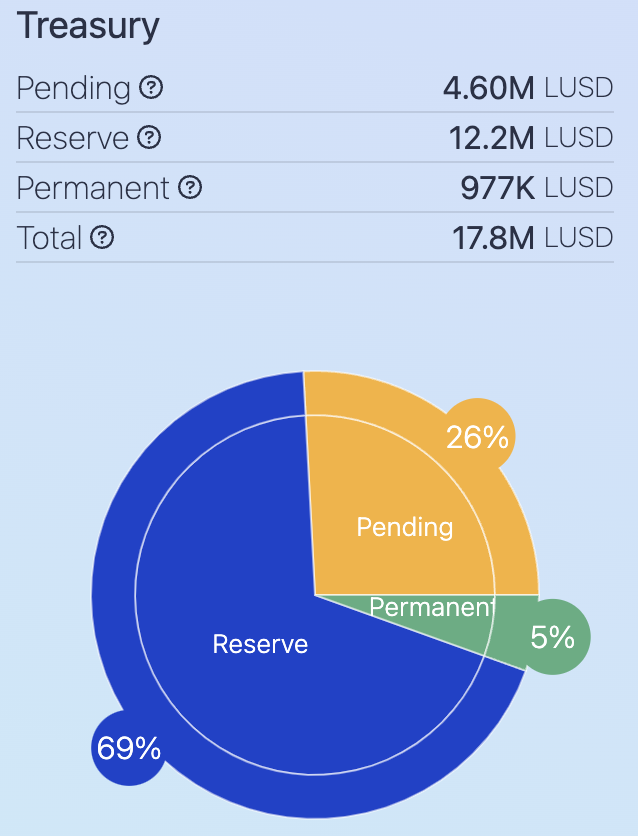
LUSD Chicken bonds Fund Distribution Sources https://liquity.app/#/bonds
The TVL of the reserve pool accounts for 69% of the total TVL of Chicken Bonds. As we said earlier, all the income generated by LUSD stored in Chicken bonds will be given to the reserve pool, that is to say, 69% of the LUSD has obtained all the benefits of LUSD. bLUSD amplifies the income of the underlying asset (LUSD stored in the stable pool) by 1.44 times (100/69). The current stable pool LUSD has an APR of 7.35% and bLUSD has an APR of 11%. The ratio of the two is also very close to 1.44.
If we put aside the concept of the reserve pool, stable pool and permanent pool in Chicken Bonds’ internal bookkeeping, and observe the actual flow of LUSD deposited by users, we can see clearly:
Chicken Bonds is essentially a fund, and the only asset accepted by the fund is LUSD. Most of the fund's funds are invested in the stable pool, and a small part is invested in Yearn and Convex. The main purpose of the fund is to bring higher returns to users while helping to maintain the stability of the Liquity protocol and improve the liquidity of LUSD. The fund share is represented by bLUSD, but the user does not get the share immediately after buying, but needs to go through a series of mutual games. This game can help maintain the stability of the fund scale on the one hand, and on the other hand Increase earnings for certain users. The fund allows users to redeem shares at any time, and the fund shares also have a secondary market with good liquidity. Finally, the amount in the perpetual pool is the fund management fee.
image description
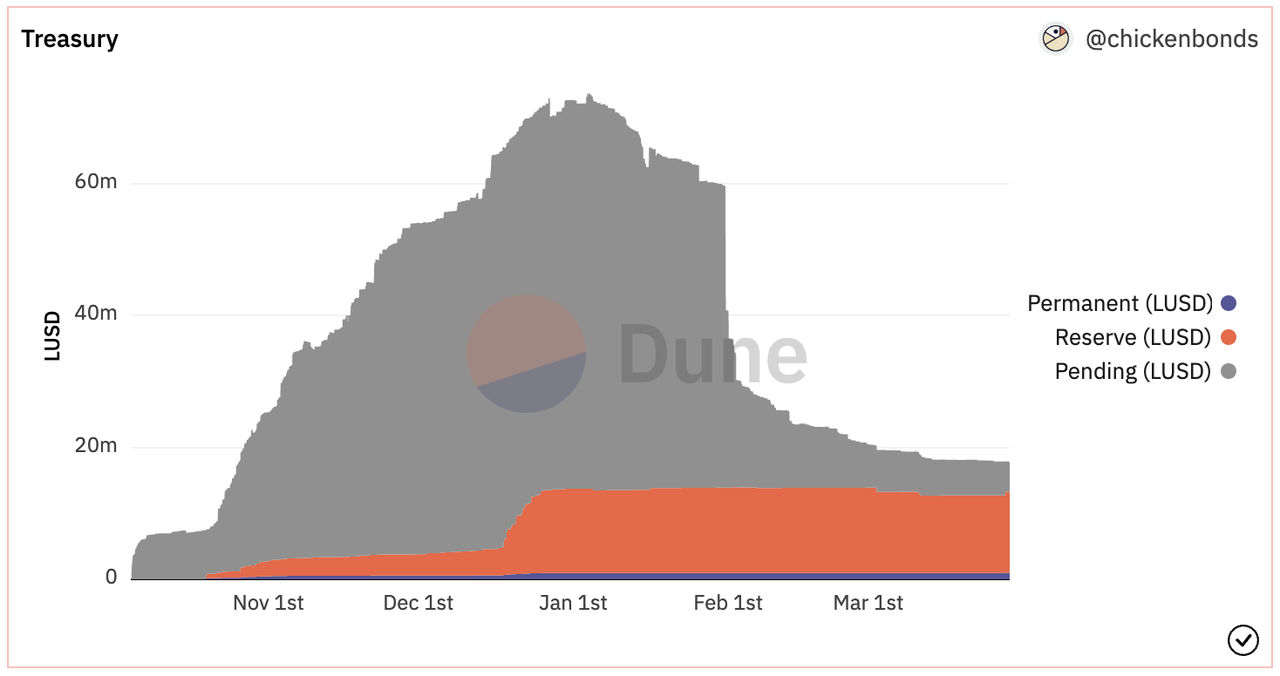
Sources of Funding Changes for Chicken Bonds 3 Pools https://dune.com/chickenbonds/lusd
This can also be confirmed from the overall distribution and change of TVL:
In the early days, due to the fact that there were very few bLUSD in the reserve pool (because receiving bLUSD in the early stage would cause losses), the TVL of Chicken Bonds grew rapidly under the attraction of the extremely high bLUSD APR, and the TVL was in a straight-up state before January this year;
Around January this year, a lot of LUSD chose to receive, and the received bLUSD increased, and the rate of return of bLUSD also decreased. At this time, the overall TVL slowly climbed to the top;
Since January, more and more users have begun to chicken out bLUSD, which is reflected in the continuous reduction of TVL, especially around February 1st, the TVL of the entire Chicken Bonds dropped rapidly from 60 million US dollars to 30 million US dollars About, the current TVL is less than 20 million US dollars. And Chicken Bonds' new user growth has plateaued.
And under the Chicken Bonds mechanism, so far, the vast majority of participating users of Chicken Bonds (including those who have not yet received bLUSD, those who have received bLUSD, and those who have canceled the claim) are less likely to simply deposit into the stable pool. state of loss. In the initial stage of Chicken Bonds, there is a long-term and huge negative feedback for all participating users, which will seriously affect the expansion of Chicken Bonds products. As shown in the figure below, the earnings of Chicken Bonds users (that is, all users of Chicken Bonds) who received and canceled are respectively. The red dot represents the participant's loss, the green dot represents the participant's profit, and the size of the dot represents the size of the position. We can see that now, half a year after the operation of Chicken Bonds, the vast majority of participants are still losing money, or have already lost money.
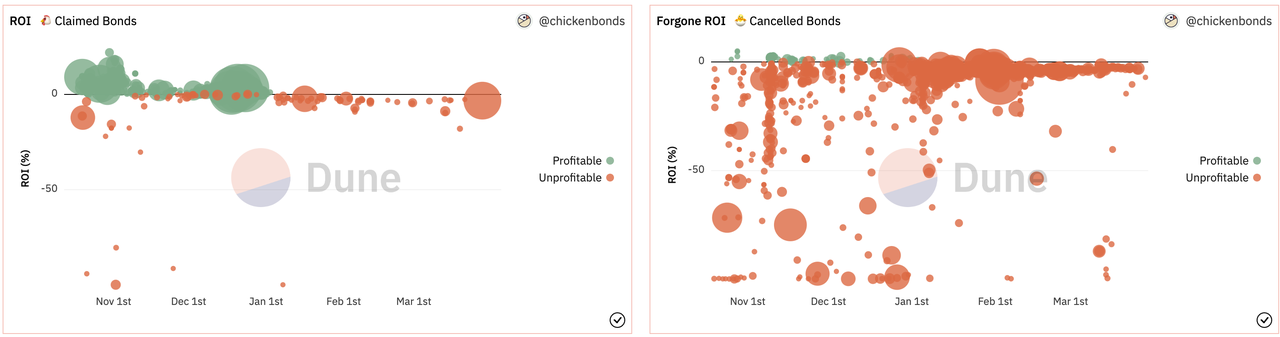
Chicken Bonds ROI situation source for claiming users and canceling usershttps://dune.com/chickenbonds/lusd
In addition, as the name reveals, Chicken Bonds has certain bond attributes, and users need to obtain benefits at the cost of a periodic loss of liquidity, but for Chicken Bonds products, the benefits brought by the loss of liquidity are not high (In the DeFi world, 10% APR without lock-up is not particularly difficult to obtain) and this kind of income may become lower and lower over time (because the proportion of the reserve pool to the total TVL will continue to rise), This is also an important factor that may limit the future development of Chicken Bonds.
Regarding Chicken Bonds, the Liquity team has quitedetailed documentationAvailable for reading, interested readers can go to study.
3.2.2 Liquity Business Development
In this section, we mainly analyze the historical development of LUSD through the historical data of LUSD circulation and the distribution of LUSD.
image description
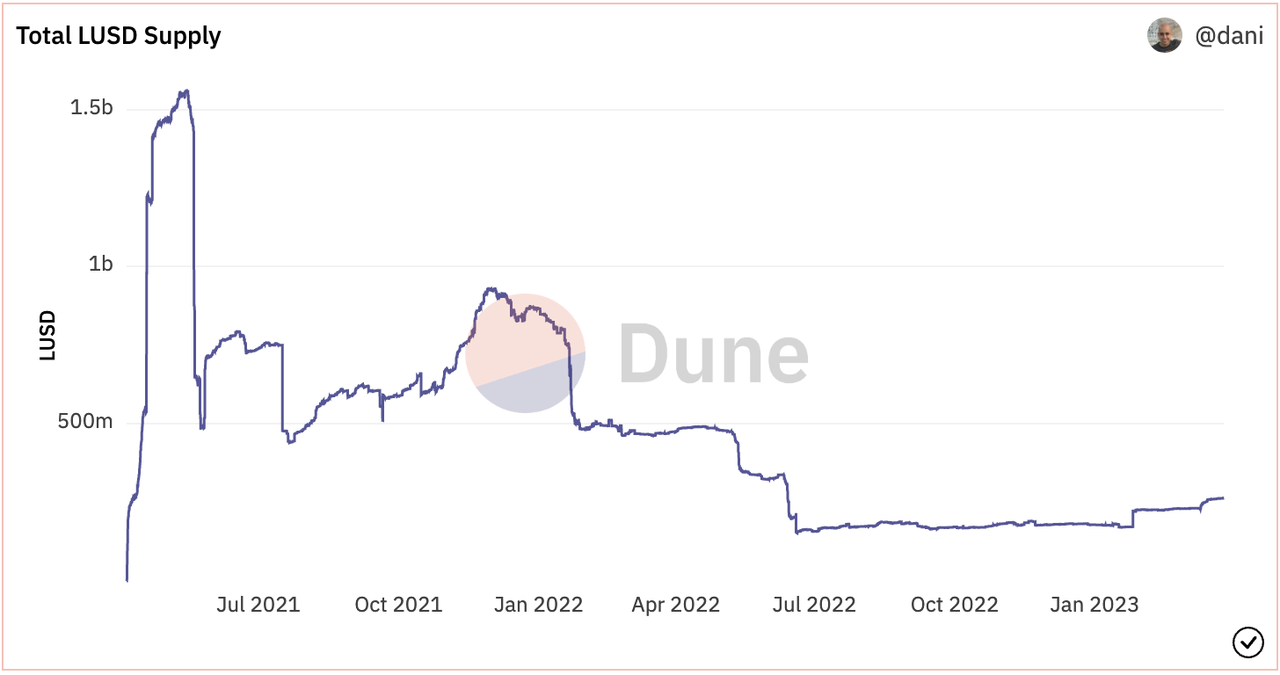
LUSD Supply History Sources https://dune.com/dani/Liquity
The ensuing 5.19 market crash verified the core mechanism of Liquity, but it also caused the TVL of the protocol to drop sharply, and the number of LUSD in circulation fell to less than 500 million. Since then, the circulation of LUSD has gradually increased as the market has risen again. At the end of November 2021, the circulation of LUSD has reached 930 million US dollars. In the ensuing 22-year encryption bear market, the circulation of LUSD also dropped to about 500 million. Then, from May to July 22, UST, Sanjian, and Celsius fell one after another, and the market experienced a serious liquidity crisis. LUSD The minimum circulation of the platform has dropped to 158 million, which is less than 1/10 of the high point. Of course, the entire decentralized stablecoin track has suffered a major blow at this stage, and the issuance scale of stablecoin protocols has declined.
image description
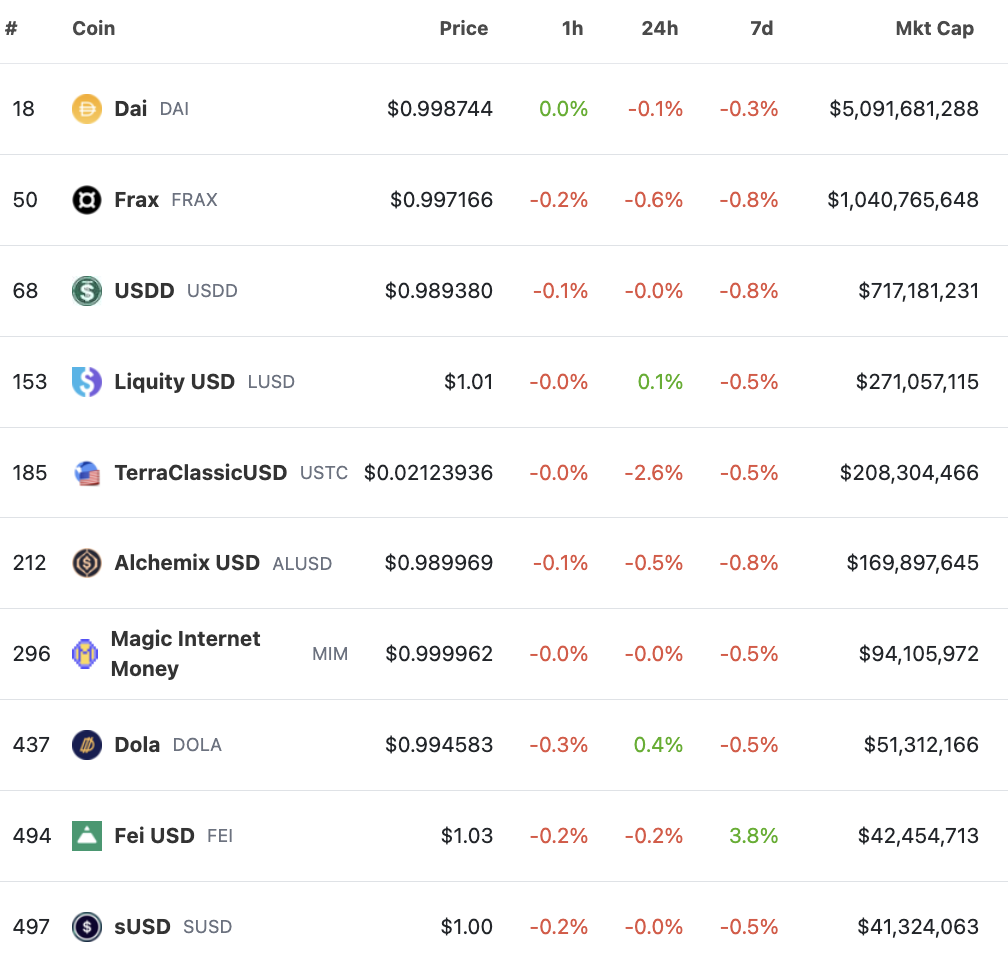
The current top ten decentralized stablecoins by market value, source: Coingecko
image description
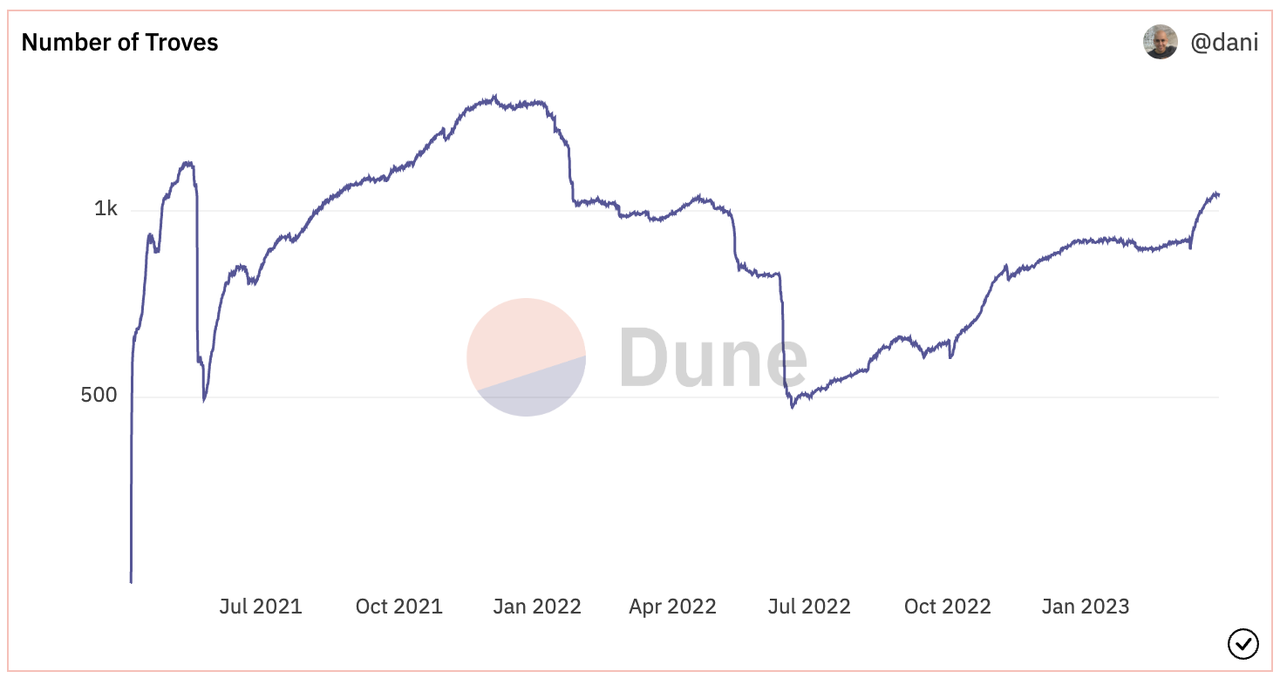
sourcehttps://dune.com/dani/Liquity
However, the use case expansion of LUSD is relatively general and has not seen significant results.
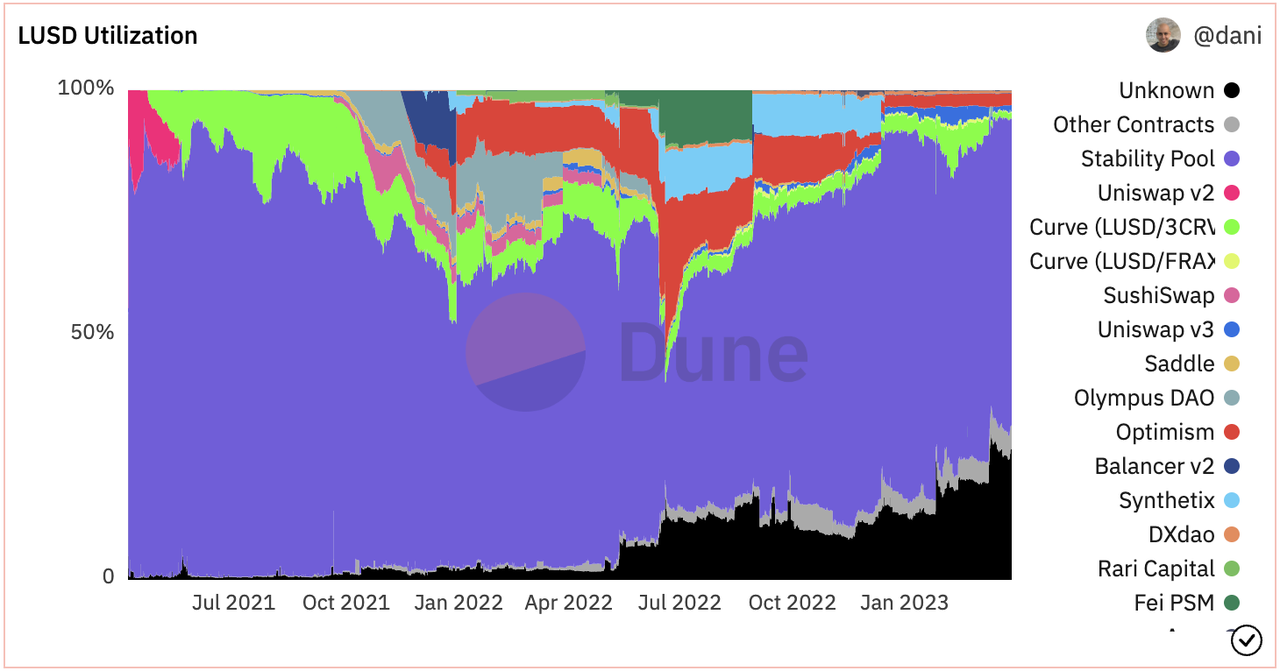
sourcehttps://dune.com/dani/Liquity
From the perspective of LUSD distribution: At present, a total of 64.6% of LUSD exists in the stable pool. Although the income in the stable pool includes the liquidation reward of ETH in addition to the LQTY token incentive, Liquity has liquidated a total of 1378 ETH since its launch, and the LQTY token The number of incentives is close to 24 million, no matter when the price of ETH/LQTY is calculated, there is at least an order of magnitude difference between the two. It shows that there is a stable pool for users to generate LUSD, mainly to earn additional LQTY rewards. That is to say, currently the largest use case of LUSD is not "organic", especially in the case of subsequent LQTY reward reduction, whether Liquity's stable pool can maintain this scale is also questionable, and we will discuss this in detail in 3.4.3.
In addition to the stable pool, the Optimism network with a large distribution of LUSD (accounting for 2.4%, Liquity has received a lot of official Optimism OP token incentives), Uniswap V3 (accounting for 1.3%) and Curve's LUSD-3 CRV pool (accounting for than 1.2%). The overall proportion of LUSD in these scenarios is not high. To some extent, it is also because most of the incentives of liquidity are used for the incentives of the stable pool, and there are not many incentives for other scenarios.
At present, no centralized exchange supports LUSD as a trading pair, and there are not many use cases for LUSD in offline payments. We also counted the daily average transaction volume, transfer volume, and number of holders of LUSD, and compared it with DAI and FRAX, which are both decentralized stablecoins. At the same time, we also selected the most active stablecoins on the ETH network— — USDC as a comparison.
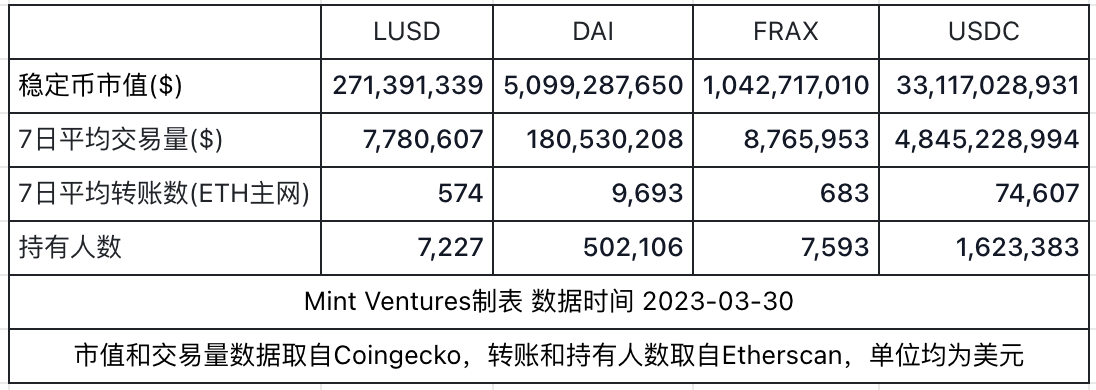
We can see that LUSD is very close to FRAX, which currently has a circulation of 1.04 billion, from the data of transaction volume, number of transfers, and number of holders. Of course, this is also related to the fact that FRAX currently has approximately 785 million circulation from AMO. After excluding this part of FRAX, the actual amount of FRAX held by users is about 255 million, which is very close to the circulating market value of LUSD. Compared with DAI, the current leading decentralized stablecoin, there is a gap of about 20 times in the transaction volume and number of transfers of LUSD compared to DAI, and the gap in the number of holders is even greater. This also shows the first-mover advantage brought by the stablecoin track due to the obvious network effect.
Compared with USDC, even DAI has an order of magnitude gap in terms of transaction volume and transfer activity. On the one hand, this shows that the centralized stable currency is indeed a stable currency that is more in line with user habits. Centralize the space of the stablecoin track.
secondary title
3.3 Liquity's Competitive Advantages
image description
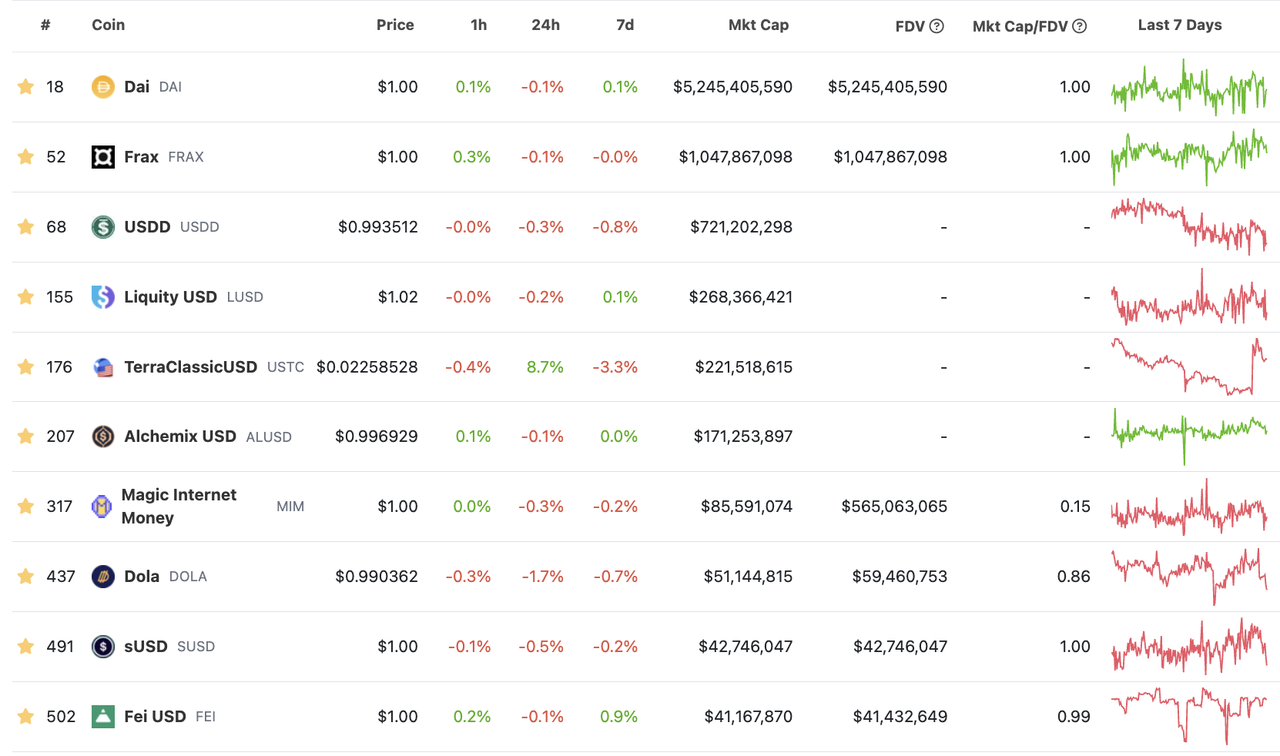
The current top ten decentralized stablecoins by market value, source: Coingecko
3.3.1 Decentralization
Complete decentralization is the most obvious advantage of Liquity and LUSD. The current LUSD is only generated by the over-collateralization of ETH. ETH is a completely decentralized asset, so LUSD is also a completely decentralized asset. We can clearly feel the advantages of decentralization from the regulatory events mentioned above in the past two months:
Stablecoin issuer Paxos has been suspended by its regulators from issuing stablecoin BUSD, and BUSD will "return to zero" within the next 1 year. Whether it is LUSD or DAI and FRAX, none of them has a regulatory agency that can require them to completely stop their business. Although MakerDAO and Frax may have/will have RWA (real world assets) business, they may be more likely to be regulated, but still , on this issue of the life and death of the stablecoin business, the anti-fragility of any decentralized stablecoin is much higher than that of a centralized stablecoin.
The USDC unanchoring event shows the advantages of a fully decentralized stablecoin like LUSD over a semi-decentralized stablecoin like DAI/FRAX. USDC has always been far superior to USDT in terms of compliance and transparency, which is why DAI and FRAX chose USDC, but this time the de-anchor due to the risk of its RWA is unexpected by most market participants. On the other hand, it also shows that risks always appear in unexpected places. In terms of mechanism, LUSD does not have any reliance on other centralized stablecoins, so it can avoid the operational risks of any centralized stablecoin issuers, their own credit risks, and the operational risks faced by their real-world assets. risk and so on possible risk.
In addition to sUSD and LUSD, other decentralized stablecoins in the above list have a considerable degree of dependence on other centralized stablecoins:
DAI currently has more than 60% reliance on centralized stablecoins;
The centralized stable currency assets of FRAX collateral account for more than 75% (according to the Decentraliazition ratio given by Frax);
Decentralized stablecoins such as alUSD, DOLA, agEUR, etc., more than half of their collateral composition comes from other stablecoins (USDT, USDC, DAI) or the income certificates of stablecoins in other DeFi protocols. For centralized stablecoins The degree of dependence also exceeds 60%.
Regarding the significance of decentralization, the market already has a relatively full understanding, especially after Binance launched LQTY, which is also an excellent advertisement for Liquity. Looking into the future, under the obvious strong regulatory trend in the United States, any regulatory action against stablecoins may be an opportunity for Liquity, and Liquity will still benefit from its decentralized attributes in the long run.
3.3.2 Excellent mechanism design
exist*"Liquity: A Rising Star in the Stablecoin Market"*In the article, we have introduced the overall mechanism of Liquity in detail, and we are quite optimistic about the overall mechanism design of Liquity. Even though nearly two years have passed, we still haven’t seen a new stablecoin product that can approach Liquity in terms of mechanism design. To sum up, the excellent mechanism design of Liquity lies in:
From the protocol level, Liquity fixes the price of LUSD roughly between [0.995 ~ 1.1], and provides all users in the market with very convenient arbitrage opportunities outside the range, thus achieving comparison under the premise of complete decentralization. Rigid price stability, this kind of price stability will give all market participants good stability expectations.
Thanks to the stable pool, and the stable pool pre-agreed to be the liquidator, Liquity achieves real-time liquidation without the need for complicated and cumbersome auction processes. Real-time clearing can avoid potential security risks to the system caused by network congestion in extreme cases, and more effectively guarantee the security of the protocol. At the same time, the stable pool also brings a natural use case for LUSD. Since the stable pool can obtain liquidation penalties, when the market drops sharply, the LUSD in the stable pool can usually obtain higher returns. In addition to the stable pool, Liquity's liquidation system has also designed a debt redistribution-recovery model to make up for possible deficiencies in the liquidation pool, thereby achieving a considerable degree of security, which Liquity has successfully survived the market since its launch 2 years ago The sharp fluctuations can also be corroborated. Reflecting the level of token use cases, LQTY does not need to act as a lender of last resort to the system like MKR and FLX.
Since the security of the protocol can be fully guaranteed by the stable pool-debt redistribution-recovery model, Liquity can allow users to make loans with an overcollateralization rate of 150% (in fact, the risk assessment agency Gauntlet recommends that Liquity change this value to 130%) , resulting in high capital efficiency. Therefore, at a certain level, Liquity has realized the impossible triangle of stablecoins (decentralization-price stability-capital efficiency): at the core mechanism level, Liquity has chosen price stability and decentralization, but Liquity also allows some users to Starting from its own needs, it has achieved a capital efficiency of up to 89% (110% minimum mortgage rate) at a specific stage, which has almost reached the upper limit of capital efficiency that decentralized stablecoins can support.
secondary title
3.4 Liquity's Competitive Disadvantages
Compared with other stablecoin projects, Liquity's own protocol has many innovations, and some features are also controversial, which also brings certain competitive disadvantages to the protocol.
3.4.1 No governance
No governance is a feature of Liquity that is worth discussing. Liquity's insistence on no governance is very thorough, including that the team itself does not run any front-ends, and protocol parameters are updated by pre-written algorithms. It is impossible for anyone to update the code of the Liquity protocol, so the token LQTY There is no governance function, but only a share of revenue from protocol minting and redemption fees.
No governance of course brings Liquity a number of benefits, including:
Avoiding conflicts between the behavior of individuals or small groups and the long-term goals of the entire agreement can also avoid boring agreement politics. There are countless examples of the former, such as Uniswap’s DeFi education fund incident, SushiSwap and the trust issues in the Abracadabra team, etc.; the typical example of the latter is the entire process of cross-chain bridge selection when Uniswap cross-chain to BNB Chain, different interests Group discussion and voting around choosing between Layerzero and Wormhole.
Protocol security has been further guaranteed. Liquity has been in operation for 2 years and has never had any security incidents. This can be said to be very rare in lending/stable coin protocols. As stable as Compound, it has also caused excessive issuance of COMP due to problems with incentive parameters. And since Liquity doesn't update the code, it becomes less and less likely to break the code as time goes by.
Further decentralization at the protocol level. In the current Dapp architecture, the front-end module still depends more or less on the centralized service, and since Liquity does not run any front-end, the dependence on the centralized service can be further exempted from the protocol level. Starting from real-life examples, the obvious benefit of this is that Liquity can avoid the Tornado Cash incident similar to OFAC sanctions,Protocols such as Uniswap and Aave have accidentally banned some users due to errors by some API providerssituation.
The author said that no governance may be the shortcoming of Liquity, mainly because the characteristics of no governance will limit the use case expansion of the Liquity protocol and its ability to adapt to new changes.
As mentioned above, the current use case expansion of LUSD is not considered successful, which is also caused by lack of governance to some extent. The reserve LQTY tokens reserved by Liquity are only 2 million, and the remaining LQTYs have been specified in the code and cannot be changed. This makes it insufficient for Liquity to carry out more use case expansion and operational activities. For example, Liquity basically did not participate in the Curve war-the biggest narrative in the stablecoin field in 2022.
For another example, after ETH Merge and Shanghai upgrade, ETH will be more and more involved in staking, and a large part of ETH circulating on the main network may exist in the form of pledged derivatives (Liquid Staking Derivatives). In this case, for all stablecoin protocols that use ETH as collateral, whether to support LSD and how to support LSD are issues that need to be discussed, but under Liquity's no-governance mechanism, unless Liquity issues a new version, Otherwise, the agreement cannot adapt to these new changes. But if you don’t adapt to this change, there may be 40% -50% (assuming the ETH pledge rate is 40% to 50%) of ETH will not be able to be used as collateral for LUSD, which will further limit the Liquity that only uses ETH as collateral. ceiling.
The author believes that willingness to govern is also a manifestation of the team’s willingness to take responsibility for project development at a certain level. Although the DeFi world currently has some clear business models, there are already absolute leading agreements in various territories, but If we take a five-year or even ten-year perspective, the development and innovation of DeFi is still very rapid, and competitors in various fields are still emerging. In the ever-changing external environment, a team that works hard and has a deep understanding of the industry is the key to the long-term success of any project.
From the development of DeFi OG, it is not difficult for us to see the importance of governance & team:
When Uniswap had already dominated the market in V2, it still launched the V3 version of the product, and since then began to expand NFT transaction-related businesses;
From the initial Peer 2 Peer lending product of ETHLend, to Peer 2 Pool product, to the later Aave v3 and the newly issued stable currency GHO, the business form and boundaries of Aave have been changing;
Synthetix went from the v1 version of the stable currency to the v2 version on the ethereum mainnet in the derivatives trading market, but there were only less than 50 people trading in the long-term, to the Optimism network with a daily trading volume of up to 500 million US dollars, and then to the newly designed v3 version, although the product There is still a gap between the form and their imagination;
Curve’s entire protocol is designed around governance, and the team has launched the v2 version of Curve to cut into the transaction of non-value assets, and is also preparing to launch crvUSD;
The current leading "decentralized" stablecoin protocols MakerDAO and Frax Finance, the team is also actively adjusting the protocol to deal with changes:
MakerDAO's stablecoin has changed from SAI (single-mortgage version of DAI) to DAI, and then launched Stable Vault and PSM (Price Stabilization Module) after 312 to stabilize the price, and launched D 3 M (DAI direct deposit model) to actively adjust the supply and demand of the market, and Promote the implementation of RWA (Real World Assets). Recently, MakerDAO is preparing to expand its lending business and enter the LSD market, and has carried out organizational changes-making MakerDAO split into more sub-DAOs, in order to promote business progress faster. Although the promotion of PSM and RWA business has made MakerDAO more and more deviated from decentralization and trustlessness, for the holders of DAI and MKR, they have made choices that are more beneficial to the agreement at that moment.
Frax was originally launched as an algorithmic stable currency. When the narrative of algorithmic stable currency was no longer recognized by the market, Frax launched the AMO (algorithm-based market operation controller) module in time to undertake supply and demand adjustments. Since then, it has also expanded its business to FPI, Fraxswap, Fraxlend and Staking business, and actively participated in Curve War. The business boundary has continued to expand, and the market value ranking of FXS tokens has also risen all the way.
Changes in the business direction of the protocol or updates to the protocol modules, such as the above, are difficult for Liquity without governance. The author believes that no governance can be the ultimate pursuit of the stablecoin protocol. When the entire protocol has reached a mature state of development, no governance can help the protocol better maintain security and avoid various problems that may arise from the rule of man. However, when the vigorous development of the entire DeFi and even Web3 fields has only started less than 5 years ago, it will be difficult to deal with subsequent environmental changes and fierce competition from latecomers if they voluntarily give up the right to change.
3.4.2 Agreement fee structure
Another issue worth discussing about Liquity is interest-free lending and the overall fee structure of the agreement brought about by interest-free lending. Interest is not charged for borrowing and lending in Liquity, but a handling fee is charged for casting and redemption. This handling fee ratio is controlled by a pre-set algorithm, but it is 0.5% most of the time when the Liquity protocol is running.
Looking at all decentralized stablecoin protocols, we can find that (excluding liquidation revenue) there are 3 common ways they obtain revenue as follows:
By charging interest. This is easier to understand. Mortgaging other assets to generate stable coins can be understood as mortgage loans, and loans need to pay interest. This is also the most traditional charging method for stablecoins, such as MakerDAO's DAI, except for the DAI generated by the PSM module, all other DAIs need to pay interest (stability fee, Stability Fee), each different Vault charges different interest, Interest parameters can be modified through governance.
By charging a minting/redemption fee. Users only need to pay a certain percentage of fees to the protocol when minting stablecoins or redeeming collateral. Such protocols that take this approach to fees usually encourage users to hold their stablecoins for a long time.
through open market operations. It means that the stablecoin protocol party has mastered a certain method of directly minting or destroying its stablecoin, and after casting the stablecoin, send it to the corresponding mining pool to obtain income, such as the D 3 M of MakerDAO and the AMO module of Frax Finance.
Let’s take a look at the methods of obtaining protocol income for several decentralized stablecoins:
MakerDAO's income acquisition methods are 1 and 3
Frax Finance's income earning methods are 2 and 3
In the fiery DeFi 2.0 concept at the end of 21 and early 22, the abracadabra (stable currency is MIM), which represents the stable currency protocol, has income acquisition methods of 1 and 2
Another DeFi 2.0 representative is relatively special to the stable currency protocol Alchemix (the stable currency is ALUSD). The protocol does not directly charge users interest or fees, but divides 10% of the income generated by user assets. This method can also be regarded as 1 in essence, but the payment of interest is changed to a different form
Liquity's income acquisition method is 2
Another fully decentralized stablecoin Reflexer Finance earns income is 1
Only 2. There are many problems in this charging method. On the one hand, its income is usually jumpy, and the income is not stable; Sustained profitability at scale.
For the stablecoin project party (or the holder of the governance token), from the perspective of the balance sheet of the stablecoin agreement, the stablecoin in circulation is their liability, and the agreement needs to bear the responsibility of redemption; while the user's collateral is is their property. If they cannot benefit from the scale of stablecoins, it means that the increase in their debt scale does not correspond to the increase in their income level, but the increase in debt scale actually implies a larger scale of risk-taking, and there is an obvious difference here. The unequal risk and benefit is very unfavorable to the agreement owner (LQTY holder).
as we were beforeReflexer Finance research report*It has been estimated that Liquity's fee structure makes its P/S valuation much higher than MakerDAO and Reflexer.
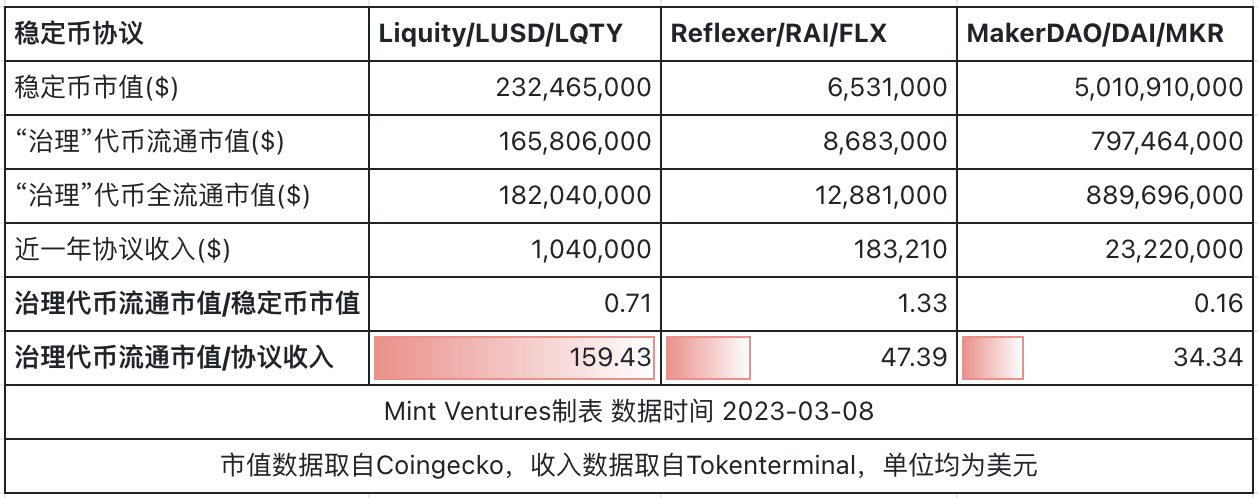
image description
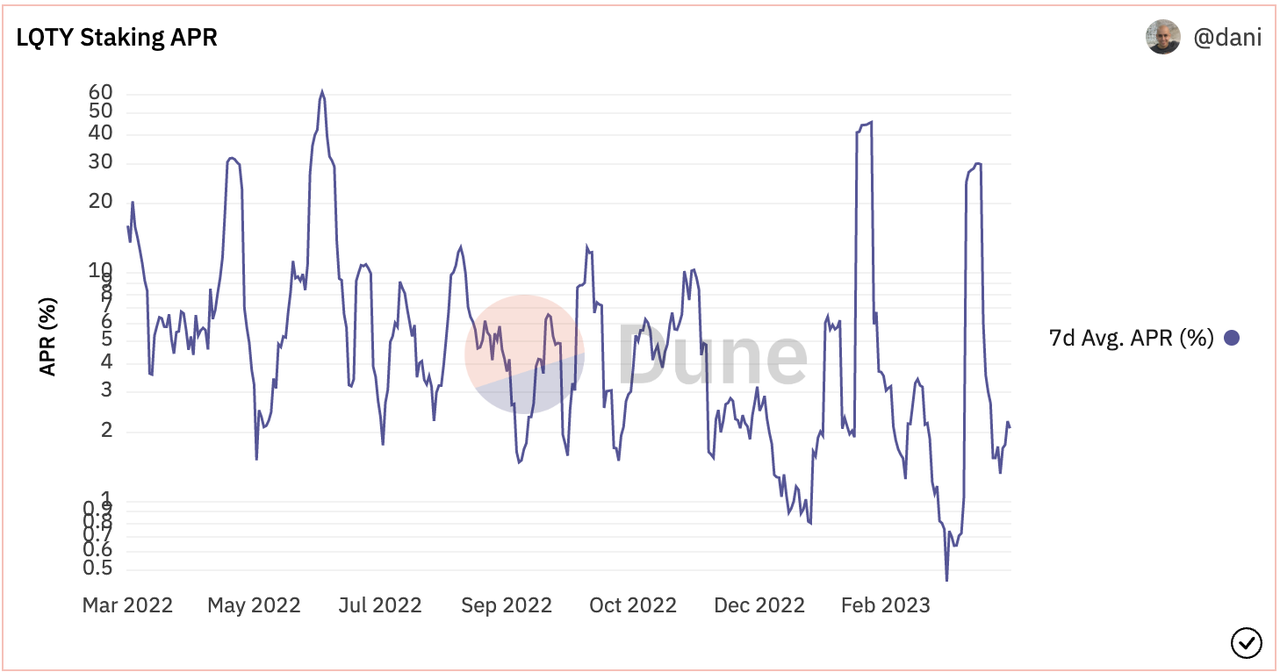
Source of LQTY Staking APR in the last year https://dune.com/dani/Liquity
image description
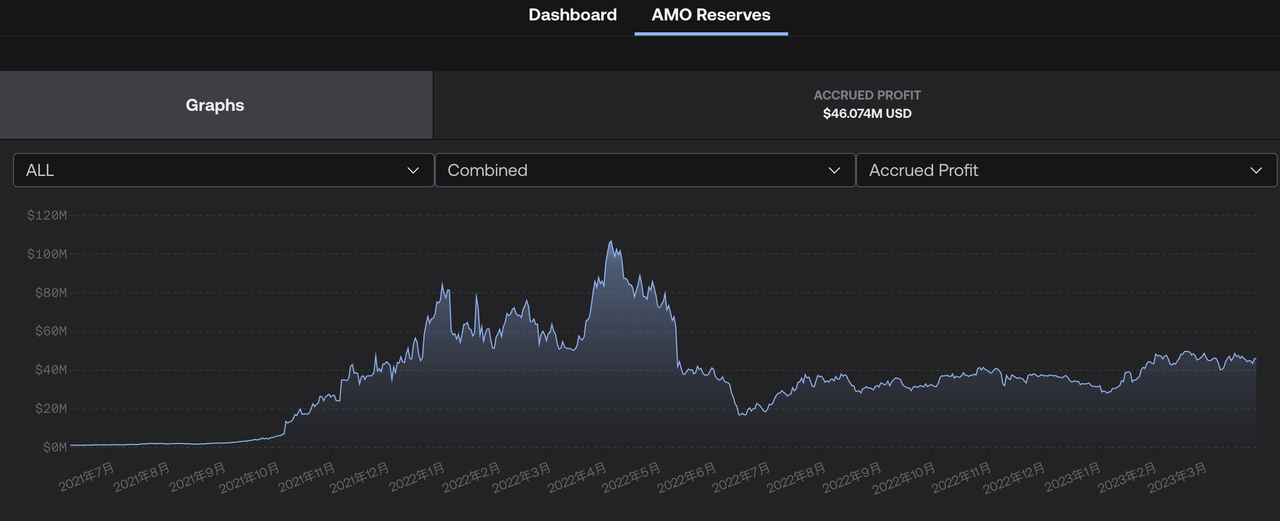
FRAX Protocol Revenue Data Sources https://app.frax.finance/amos
image description
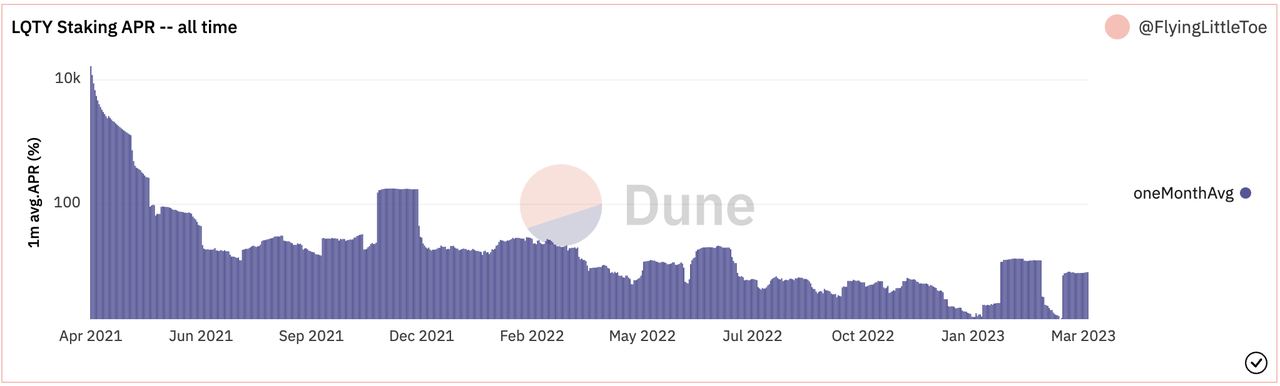
QTY historical staking APR (30-day average APR) sourcehttps://dune.com/FlyingLittleToe/liquity
Unfortunately, under Liquity's no-governance model, similar adjustments are not possible.
3.4.3 Insufficient future incentives
Regarding the incentive issue, we need to review the token distribution of LQTY. The total amount of LQTY is 100,000,000 (100 million), which will be released when the Liquity mainnet is launched on April 5, 2021, of which 35.3% will be allocated to the Liquity community, including:
32, 000,000 LQTY are allocated to the LQTY reward pool. These tokens are used to incentivize stable pool deposits, and the cumulative issuance follows the function: 32,000,000 ( 1 – 0.5 ^n ), where n is the number of years since issuance. That is, the circulation is gradually reduced, with 16 million distributed in the first year and 8 million distributed in the second year;
1, 333,333 LQTYs were allocated to the LPs of the LUSD-ETH Uniswap pool, and were distributed within six weeks after the protocol went live;
2, 000,image description
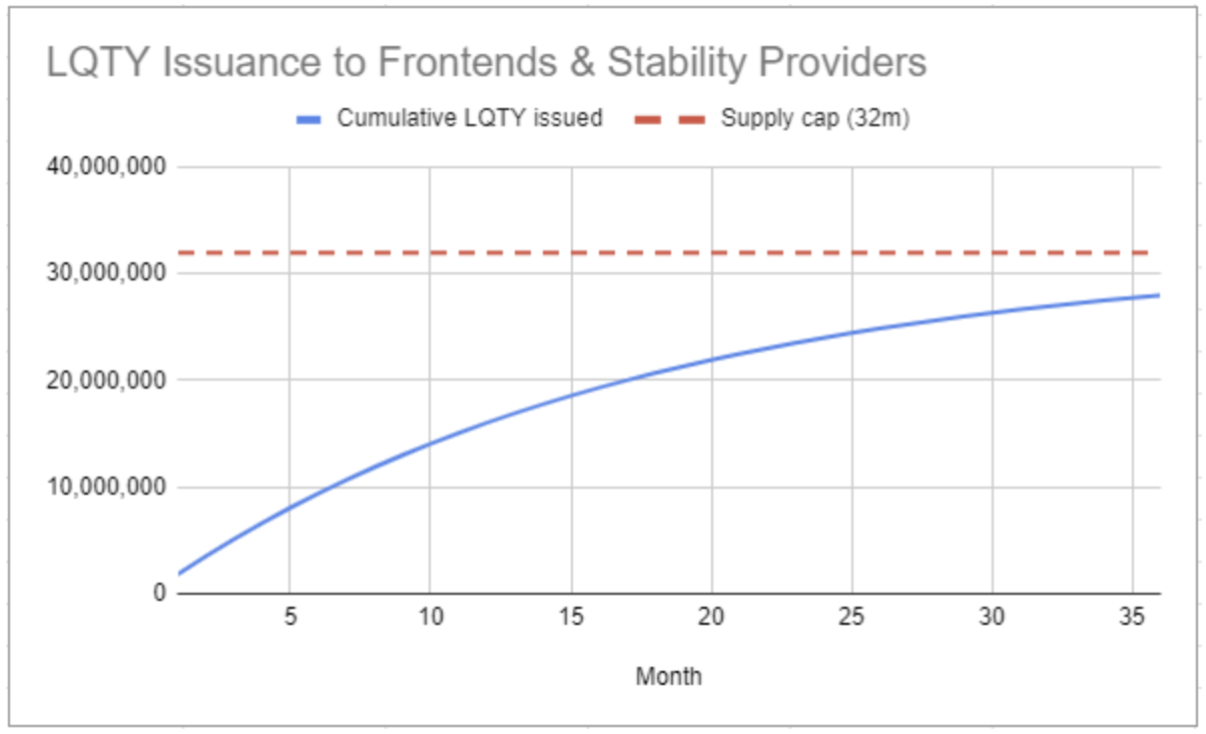
Stable pool reward distribution details https://medium.com/Liquity/Liquity-launch-details-4537c5ffa9ea
image description
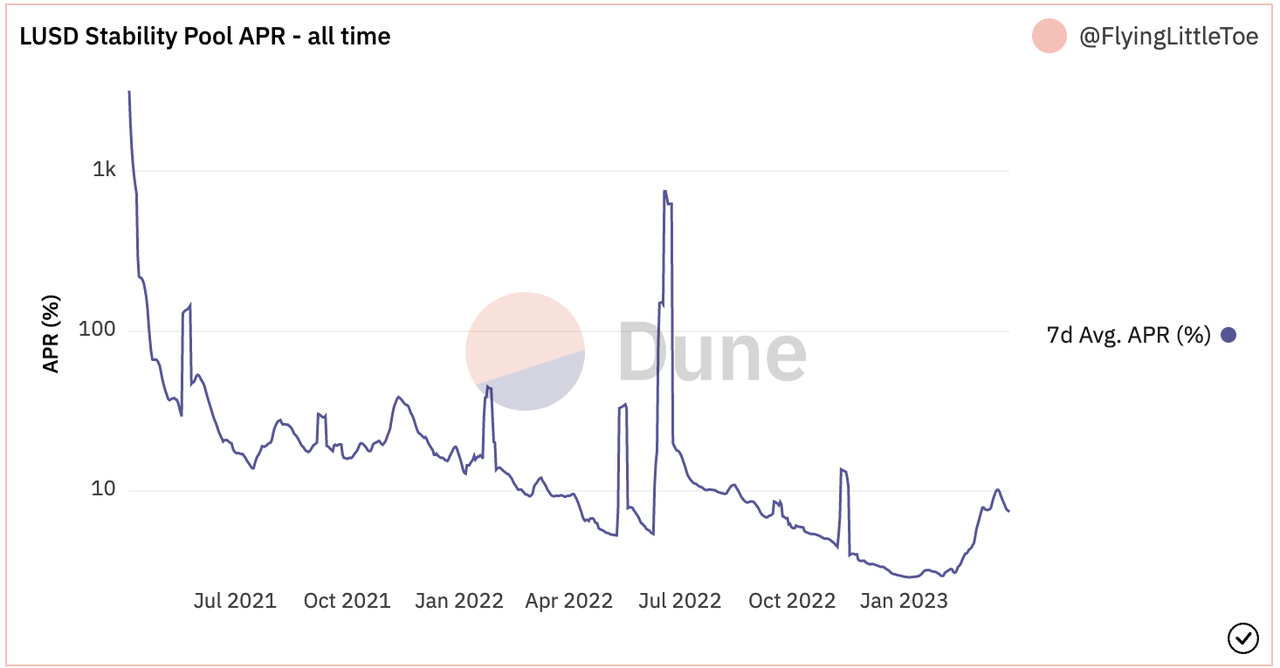
Stable Pool Historical APR Source https://dune.com/FlyingLittleToe/liquidy
At present, Liquity has been online for nearly 24 months. There are only 8 million LQTYs reserved for the above-mentioned stable pool. From April 2023 to April 2024, 4 million LQTYs can be released. Calculated at the current price of 2.2 U, in the next year The LQTY used for the incentives of the stable pool is only 8.8 million US dollars; while the current circulation of LUSD is 268 million pieces: on the one hand, the incentive effect of LQTY on the LUSD already in the stable pool is weakening, and the APR will be lower than 10% or even 5%. It will be normal (8.8/268 = 3.7%), and the current main income scenario of LUSD is to deposit in the stable pool. It is doubtful whether the same scale can be maintained under such a low APR; Incentives It will also become more difficult to motivate more users to participate in the Liquity protocol.
The author believes that the Liquity protocol has not grown to the point where it can maintain the same scale without incentives (let alone growth), but LQTY has no inflation plan, and subsequent development may face more challenges.
3.5 Summary
In this article, we analyzed the product logic and development of Liquity's innovative product Chicken Bonds, as well as Liquity's business development. In general, Liquity has successfully survived the two years of violent market fluctuations, and is now the top four decentralized stablecoins in terms of issuance scale. This achievement is not easy. However, from the perspective of use case expansion, the results achieved by Liquity are relatively mediocre.
In addition, we analyzed the pros and cons of Liquity's competition: In the current stablecoin market, with a completely decentralized narrative and excellent product mechanism design, the gradual increase in stablecoin regulation can be regarded as a continuous benefit to Liquity, because Liquity can To provide the market and users with more encrypted and decentralized stablecoin options. However, Liquity’s non-governance and fee structure problems also affect the expansion of LUSD’s use cases and the agreement’s higher income. There are not many incentives reserved for the future by superimposing LQTY, and Liquity’s future development still faces considerable challenges.
4. Reference content





