






ARK Bitcoin Monthly Report: The macro situation is unstable, and Bitcoin bucks the trend


Original title:THE BITCOIN MONTHLY
Original title:
Original compilation: Qianwen, ChainCatcher
1. Summary
secondary title
Cryptocurrency assets are more resilient
Despite the temporary decoupling of USDC, the DeFi ecosystem remains resilient, with the Maker Protocol using USDC as collateral still functioning effectively.
secondary title
Macro market reveals uncertainty
Bank deposits fell 4.1% in March, the biggest drop since 1948.
The Fed increased its balance sheet by $300 billion, launched a loan bailout program for banks and reversed six months of quantitative tightening.
secondary title
Cryptocurrencies such as Bitcoin remain stable
During Silicon Valley Bank’s bankruptcy, Bitcoin appreciated 49%, from a low of $19,500 on March 10 to $29,150 on March 30.
Regulators should not blame cryptocurrencies for banking crises, nor should they block decentralized, transparent, auditable financial platforms with no centralized points of failure. Instead, regulators should focus on the failures caused by the centralization of the traditional banking system.
2. Judgment on the Trend of Encrypted Assets
Bitcoin Still a Safe Investment: Bullish
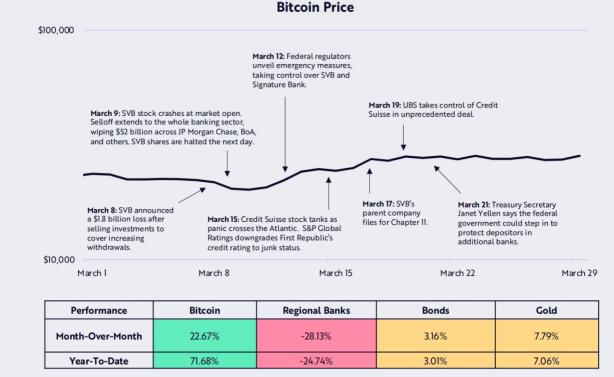
image description
Data as of March 29, 2023
Despite tightening regulations and frequent bank storms, Bitcoin was unaffected and continued to grow, with (monthly) gains (22.67%) even surpassing bonds (3.16%) and gold (7.79%).
Demand for more transparent, auditable and decentralized financial services has soared. Cryptocurrencies can serve as a solution to the failures, opacity, and regulatory failures that come with centralization.
secondary title
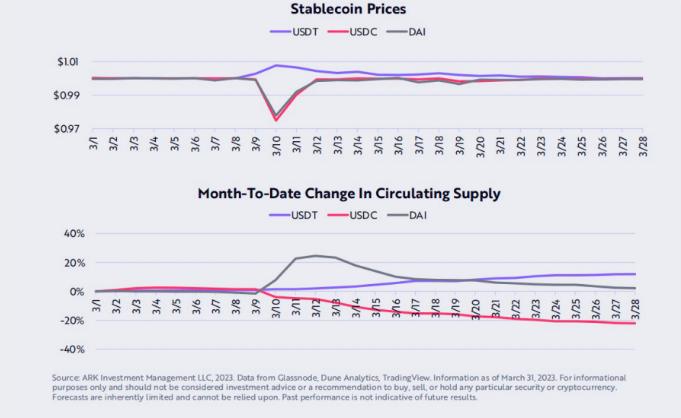
USDC vs DAI: Neutral
Banking Panic Causes USDC and DAI to Unpeg, But Tether and DAI Still Post Some Gains
Circle disclosed that around 8% of the assets backing USDC are held in unsecured accounts at Silicon Valley Bank, sending the stablecoin’s price down to $88 during the day. The price of decentralized stablecoin DAI has dropped below $1 as part of its supply is backed by USDC.
Amid market instability, DAI supply increased as holders sought decentralized alternatives, including public creation and redemption outside U.S. banking hours, unlike USDC.
3. The fundamentals of Bitcoin are stronger
secondary title
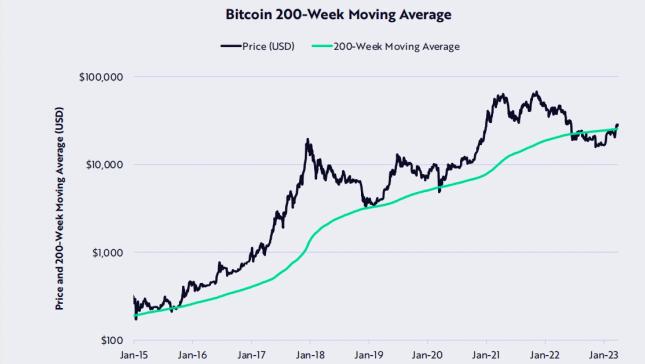
Bitcoin closes above 200-week moving average
Bitcoin posted gains despite bank runs and regulatory crackdowns.
This marks the longest period in history for Bitcoin to fall below a key support line.
secondary title
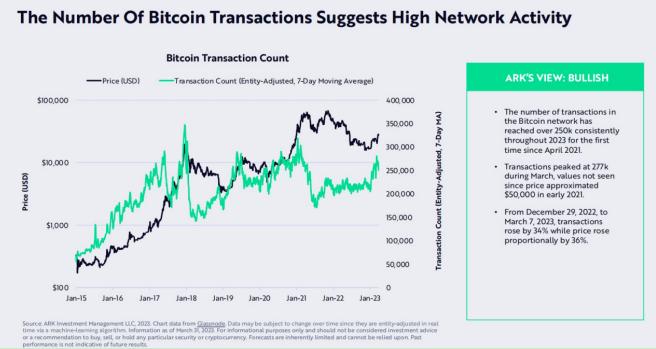
Number of Bitcoin Transactions Suggests High Network Activity
The number of transactions on the Bitcoin network will remain above 250,000 in 2023 for the first time since April 2021.
From December 29th, 2022 to March 7th, 2023, the transaction volume increased by 34% and the price increased by 36%.
secondary title
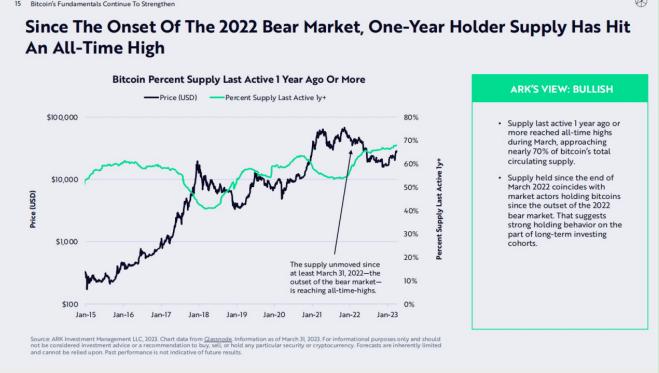
Bitcoin holdings hit new high in one year
Since the start of the bear market in 2022, the number of one-year holders has reached a new high. Holdings that have only seen action a year or more ago reached an all-time high in March, approaching 70% of Bitcoin’s total circulating supply.
This shows that there is a long-term investment group focused on holding Bitcoin.
secondary title
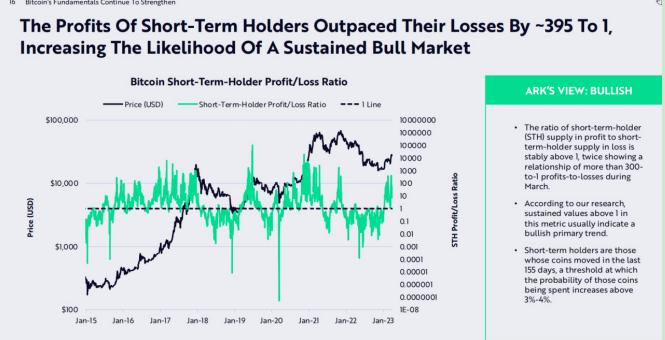
Short-term holders realize profits, and a continuous bull market may come
The ratio of profitable short-term holders (STH) holdings to loss-making short-term holders held steady above 1, with the data showing more than 300 to 1 on two occasions during March.
Short-term holders are those who have bought or sold tokens in the past 155 days. Based on 155 days, the longer the holding time, the greater the probability that these tokens will be sold.
4. Uncertainties appear in the macro market
secondary title
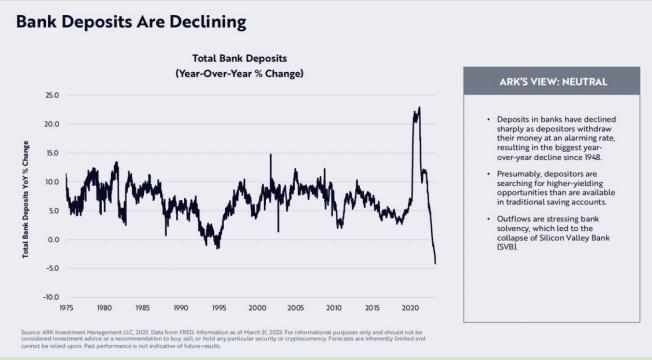
bank deposits fall
Depositors rushed to withdraw funds, leading to a sharp decline in deposits at banks, the largest year-on-year decline since 1948.
Capital outflows put pressure on bank solvency, indirectly leading to the collapse of Silicon Valley Bank
secondary title
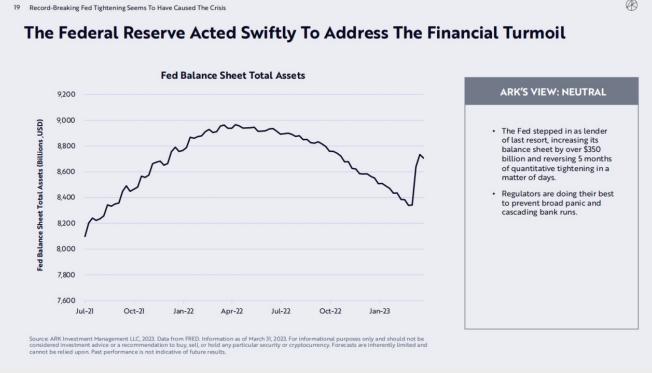
Fed moves swiftly to counter financial turmoil
Regulators are doing what they can to prevent the spread of panic and cascading bank runs.
secondary title
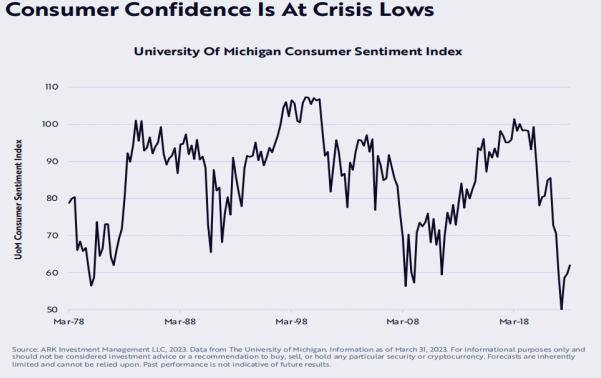
Consumer Confidence Hit Lows: Bearish
Affected by the recent banking crisis and low savings rates, consumers seem to lack the will and means to achieve significant consumption growth.
secondary title
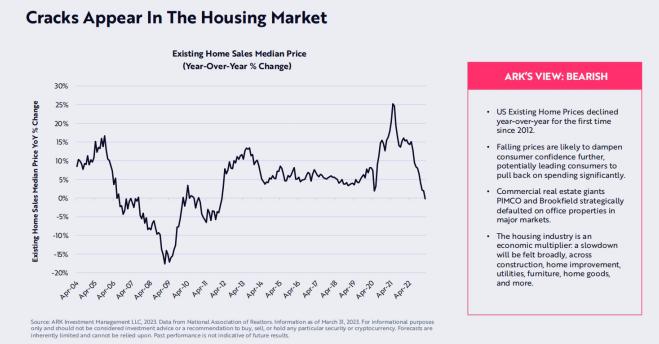
Real Estate Market Problems Reveal: Bearish
Prices of U.S. home inventory fell year-over-year for the first time since 2012.
Falling prices could further weigh on consumer confidence, potentially causing consumers to cut back on spending significantly.
Commercial real estate giants PIMCO and Brookfield are strategically defaulting on office properties in major markets.





