


Selected Speeches in the First Three Days of Devcon VI in Bogotá (Part I)


The Devcon VI event is already halfway through. Here are some selected speeches from Day 1 - Day 3. The topics are: zero-knowledge proof, cryptocurrency regulation, public goods, Rollup, Ultra Sound Money, etc.
Table of contents
Table of contents
✦ Scroll Pre-Alpha Testnet Upgrade
✦ Hardhat & Nomic Foundation: Creation of Ethereum non-profit organization
✦ Ultra Sound Money
✦ AMM Mechanism Overview
✦ The Impact of Cryptocurrency Regulation on Open Blockchain: Opportunities and Challenges
✦ Expand Ethereum
✦ Rollups are the safest bridge
✦ Ethereum is sunpunk
✦ Improve oracle infrastructure on Ethereum
✦ Panel: What to know about zero-knowledge proofs
✦ Significance of the Ethereum Foundation
✦ New application of quadratic financing
✦ Design public goods using ZKP
✦ Explore Ethereum's commercial readiness for 2022
✦ Great talk from RollupDay
secondary title
Day 3
Scroll Pre-Alpha Testnet Upgrade
compile | ECN
On October 14th, Beijing time, the Scroll team, which stood out from many zkEVM project competitions, introduced Scroll's architecture and future roadmap in the Devcon VI session. The keynote speaker is Ye Zhang, co-founder of Scroll.
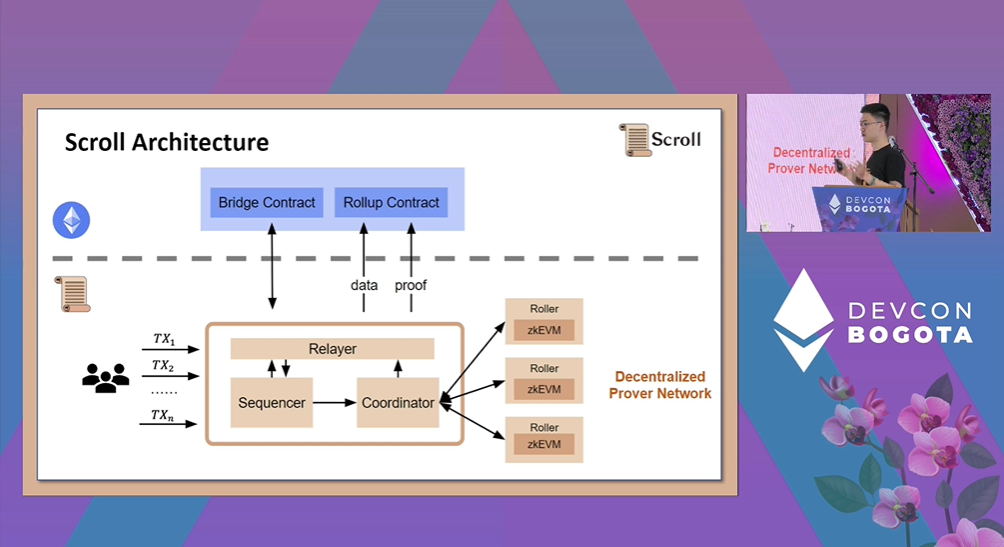
The speech is divided into four parts: Scroll's architecture, Scroll's workflow, Scroll Pre-Alpha testnet upgrade, and future roadmap.
Ye Zhang first introduced the traditional zkRollup operation process. The user sends the transaction to the L2 node, and the node will run a certain zk algorithm and generate zk proofs, which will be verified by the smart contract on L1.
Generally speaking, there will be a sequencer in Rollup that sorts user transactions and lets prover generate zk proofs. Scroll has a particularly prominent design: a decentralized proof network. This network consists of a group of Rollers running zkEVM (similar to miners in the PoW network). They generate validity proofs for transactions, and then return the proofs to the coordinator, and the relays receive the proofs and send them to the Rollup contract on the main network.
“Three months ago, we released the user-facing testnet. Users can interact with pre-deployed applications on the testnet through Metamask;<->Bridge assets between L2; transaction status can be viewed through a browser. ” said Ye Zhang, “More than 10,000 users have tested the bridge and the above applications. We are very grateful to the community for actively participating in the testing and providing us with useful feedback. "
Before the start of Devcon VI, Scroll released an upgraded version of the Pre-Alpha test network, which is open to developers for any contract deployment test.
Speaking of Scroll's roadmap, Ye said that Scroll is mainly advancing their deployment in five phases. The first stage is the Pre-Alpha test network; the second stage is the Alpha test network, which is different from the first stage, developers can join the test without permission at this stage; the third stage is L2 proof outsourcing, that is, open the work of proof generation to the proof community, Anyone can run their own machine and become a member of the prover network; the final stage is the zkEVM mainnet in phase four and the decentralized sequencer in phase five.
secondary title
Hardhat & Nomic Foundation: Creation of Ethereum Non-Profit
compile | ECN
On October 14th, Franco Zeoli, co-founder of the Nomic Foundation, presented his organization and project - the development tool suite Hardhat - at Devcon VI. The organization has transformed into a non-profit organization on Ethereum since 2021. Franco said that this is not only because of his team's love for Ethereum, but also because the developer experience they create is crucial to Ethereum, and The non-profit transformation itself may also have a certain social impact.
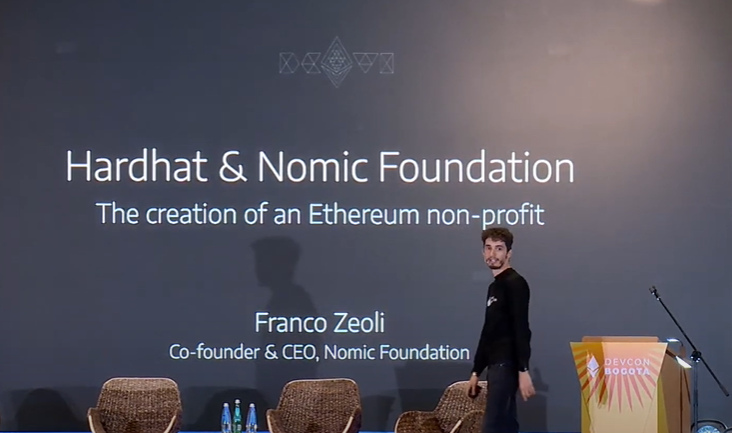
In his speech, Franco reviewed the development of the Nomic Foundation team all the way. He said, "Everything we have been doing has been to promote the development of Ethereum. These experiences have been rewarding, but also very challenging." Until now, they have received $22 million in funding from EF, Vitalik Buterin, Uniswap, Coinbase, Consensys, The Graph, Chainlink, Polygon, Gnosi and other donors.
These grants will serve developers to build the decentralization of the network. For this, the Nomic team has a corresponding long-term and short-term development roadmap. In the short term, they are mainly focusing on the expansion and development of the Hardhat series of tools, including their CLI task runner Hardhat Runner, developer node network Hardhat Network, source code editor Hardhat VSCode and their upcoming deployment solution HardHat Ignition.
In the long-term, they are focusing on two projects, the Solidity compiler Slang and the development tool network Rethnet. Also, they are recruiting for developers who can build compilers in Rust or improve Hardhat together.
secondary title
Day 2
Ultra Sound Money
Compile | Pablo @Plancker
Review | ECN
On October 13, 2022, Beijing time, Ethereum researcher Justin Drake gave the only keynote speech on ETH as an asset in Devcon VI - UltraSound Money.
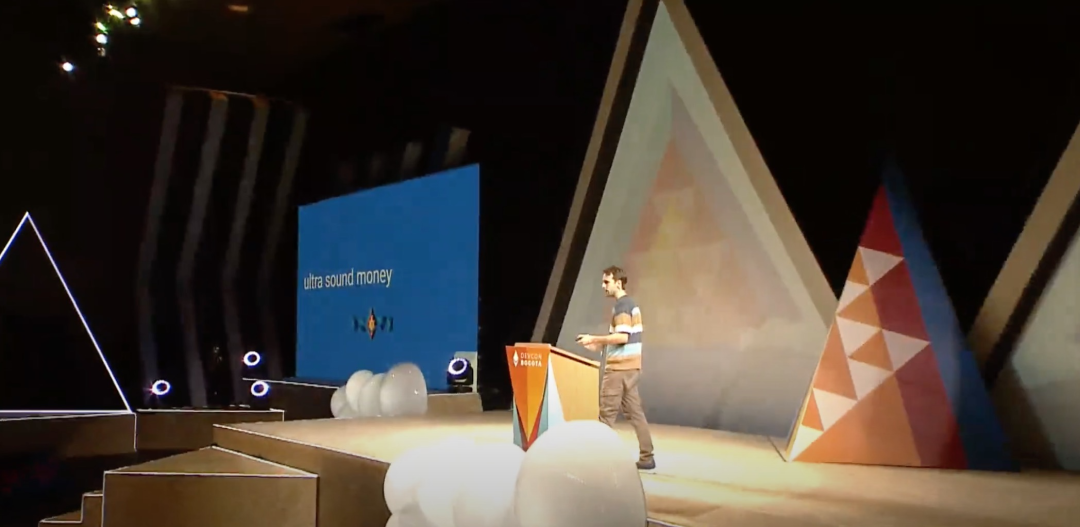
Justin took everyone to understand the Ethereum protocol from the perspective of assets. Ethereum as an asset is crucial to the success of the entire Ethereum ecosystem. The ecology of Ethereum is inseparable from ETH. If Ethereum is the settlement layer of the Internet, ETH is the currency of the Internet.
Justin uses the currency temperature (velocity of circulation) as a metaphor. In the first-tier network, staking is like freezing currency from a liquid state to a solid state, and gas burning is like changing from a liquid state to a gas state, which is quickly consumed. In the second-tier network, the situation is similar. ETH can be bound as collateral in DeFi, and ETH can also be used as currency in transactions.
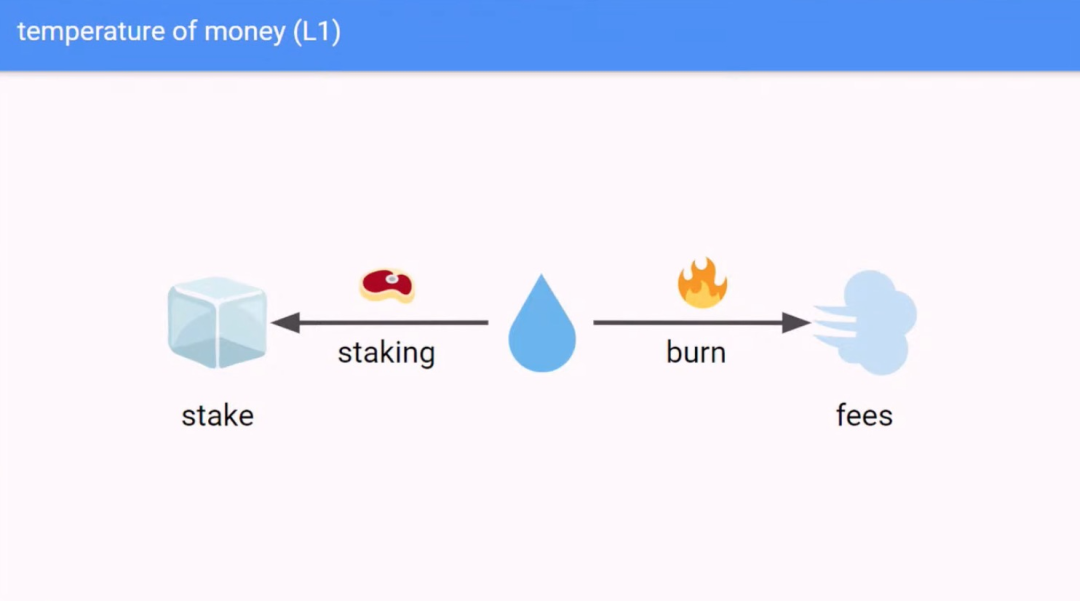
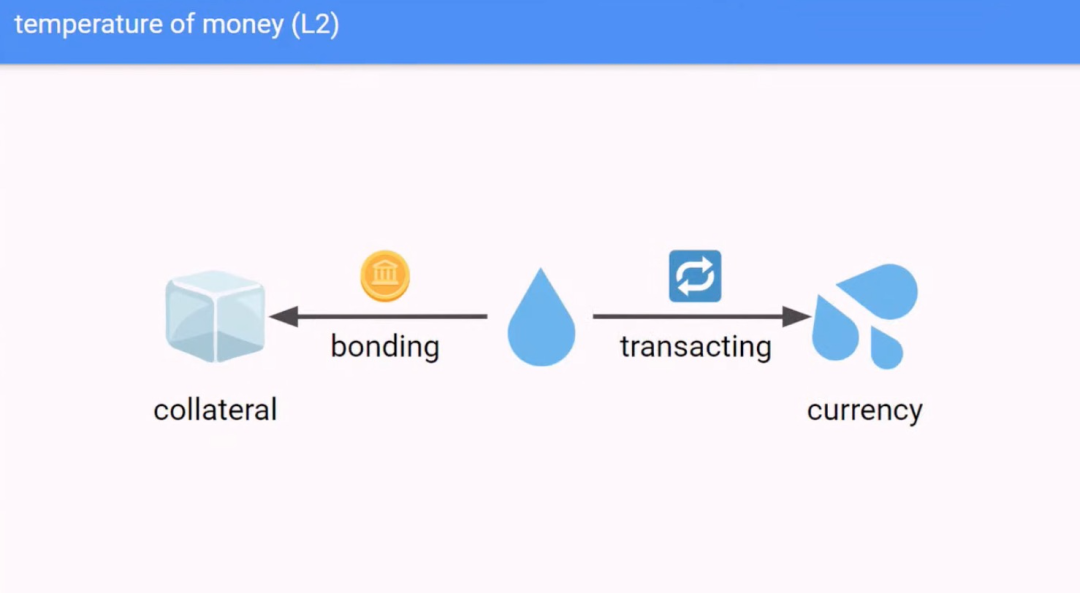
When people think of currency, high velocity use cases usually come to mind. In the Ethereum ecosystem, low-flow scenarios should not be ignored, because they are also very important. ETH, as a programmable currency, can be programmed into different things to promote the development of Ethereum, it can be programmed as a deposit to provide protocol security, and it can be programmed as a base fee to maintain the sustainability of Ethereum , can be used as economic bandwidth in scenarios such as DeFi, and can be used for transactions to drive more economic activities.
ETH plays an important role in both the "cold economy" (security and bandwidth) and the "hot economy" (providing sustainability and supporting economic activity).
Justin proposed that the security rate of Ethereum can be calculated by the security value of all guaranteed values/economic ecology. The existing safety rate is 20 times, which is a relatively healthy data. In the past two years, the pledge of ETH has been growing at a relatively healthy rate, with a growth rate of about 20K ETH a day. As of this month, about 14.2M ETH has been pledged. In addition to the above cold economic behavior of staking to ensure network security, Ethereum also has a hot economic behavior by issuing staking rewards.
Then, Justin discussed how ETH as an asset can help Ethereum become the settlement layer of the Internet in four aspects: security, sustainability, bandwidth, and economic activities.
1. Security
As the settlement layer of the Internet, Ethereum’s economic security cannot be overwhelmed by the economic value on Ethereum. The economic value carried on the Internet is huge, so an important concept is needed - security ratio
Safety factor=total value secured/economic security
At present, the safety factor of Ethereum is very healthy, which is 20.0x. The lower the factor, the healthier it is. Today Ethereum provides security for $20 billion worth of assets, but in the future, Ethereum will provide security for trillions of dollars worth of assets. Since the safety factor is as low as possible, there are currently more than 14 million ETHs pledged in Ethereum. How many ETHs are expected to be pledged in the long-term future?
This needs to look at several indicators that motivate everyone to participate in the pledge:
Additional revenue
The price of ETH
Minimum Viable Additional Issue
2. Sustainability
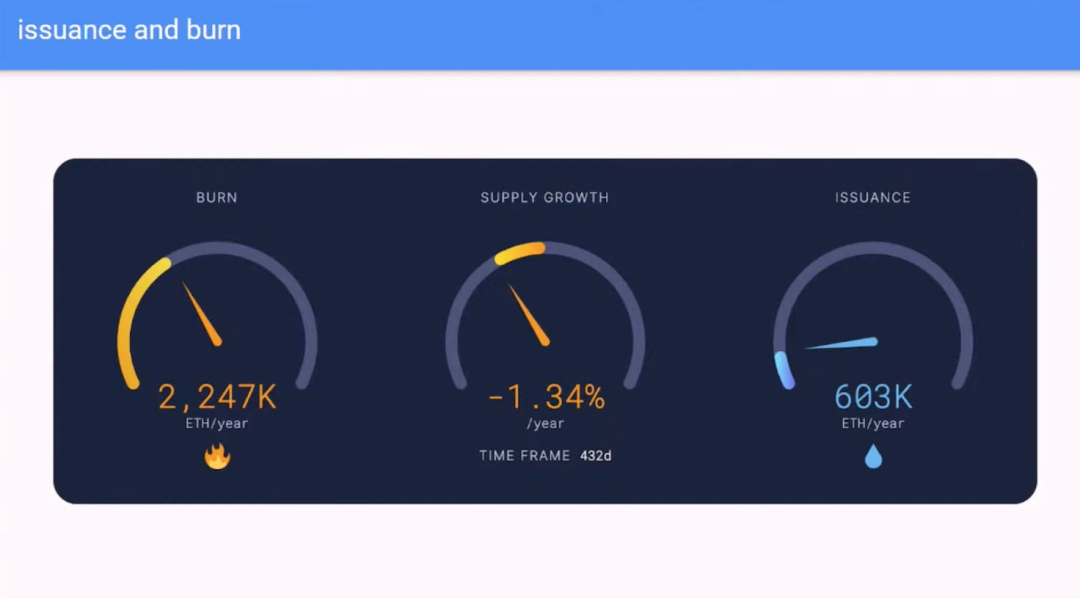
If Ethereum is regarded as an enterprise, its product is block space, a very secure block space. Profit = income - expenses, when the profit is positive, the enterprise can be sustainable. Then on Ethereum, profit = block space sales - security expenses = burned ETH - additional ETH. After the merger, although security spending has been reduced a lot, it is not in a sustainable state, which means that Ethereum's block space sales are not enough to pay for its security. But the good news is that the difference in unsustainability is small, less than 0.1% per year. If you analyze it carefully, you will find that free from EIP-1559, the burning rate of ETH is getting faster and faster, and the burning amount is 3.5 times the current additional issuance, so the supply growth of ETH is expected to be negative.
If sound money (sound currency) refers to a currency with a capped supply, such as Bitcoin, then ultrasound money (ultra-sound currency) refers to a currency whose supply is constantly decreasing, such as the current Ethereum.
3. Economic bandwidth
On the application layer, ETH is used as economic bandwidth on DeFi. DeFi protocols such as MakerDAO and AAVE use ETH as collateral, because ETH has no contract risk, no custody risk, no oracle risk, no bridge risk, no governance risk, and the only risk is price volatility. Justin believes that in the foreseeable next ten years, ETH will still be used as an important decentralized stablecoin collateral, and the scale will increase from the current 2M ETH to 30M ETH.
Justin proposed the concept of illiquidity multiplier, which corresponds to the aforementioned "cold economy" and "hot economy". He believes that one way to evaluate the market value of Ethereum is: ETH market value = [market value of liquid ETH] x [1/proportion of liquid ETH], where [1/proportion of liquid ETH] is illiquidity multiplied by number. For liquid ETH, we have analysis tools such as models. We understand the market value of ETH through the liquid ETH. This part is equivalent to seeing Ethereum as a technology company, but we can use it to understand the market value of the entire Ethereum, and this proportional coefficient is the illiquidity multiplier. Today, Ethereum's illiquidity multiplier is small - 1/80% = 1.25x, but when most of the ETH is used as collateral, say 80%, the illiquidity multiplier can reach 5x. If the circulating ETH and block space sales are $1 trillion, then the market value of ETH as an asset will reach $5 trillion.
4. Economic activity
Economic activities refer to various transactions that occur on Ethereum with liquidity, diversity, and vitality. To achieve this, the most important thing is the scalability of Ethereum. The good news is that Ethereum is poised to scale from 10 transactions per second to 10 million transactions per second through a combination of technologies. And in this case, how much handling fee is required for each transaction to realize that the income of Ethereum is enough to cover its security expenses, and ETH becomes ultrasound money? Justin believes that the cost of each transaction will drop from 3 million Gwei to 3 Gwei, and when the price of ETH is high, 3 Gwei will be very little money.
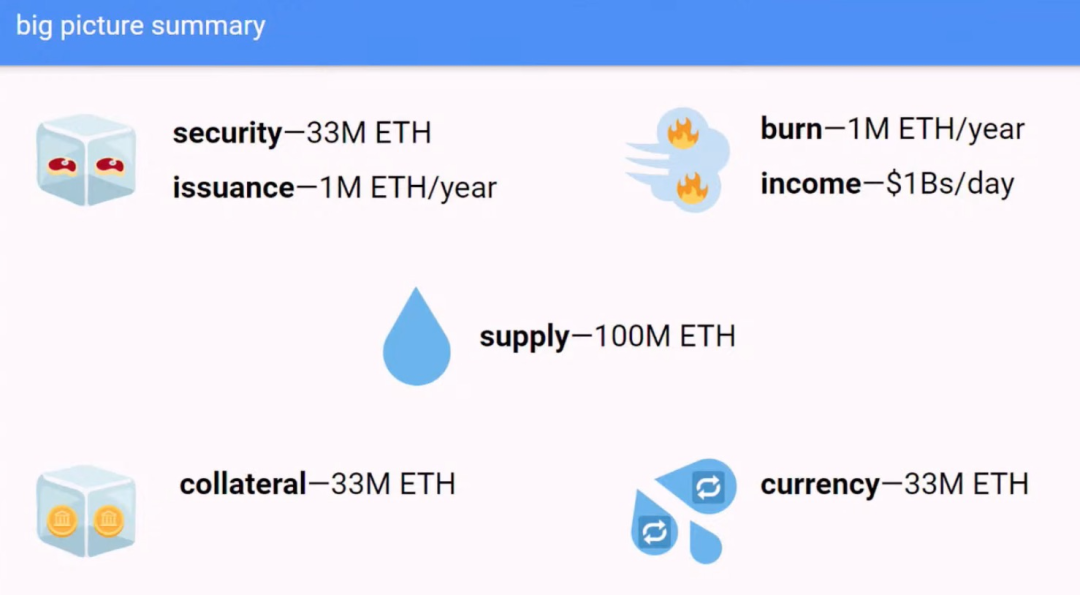
Justin finally predicted that the overall supply of ETH will reach 100M, of which 33M will be used as a pledge to ensure safety, so that 1M will be issued every year as a pledge reward, and 1M will be burned through block space sales every year, and the other 33M will be used as collateral for DeFi products to issue decentralized stability currency, etc., and finally 33M is used as a liquid currency.
secondary title
Overview of the AMM Mechanism
Compile | Pablo @Plancker
image description
cr: @0xsamgreen
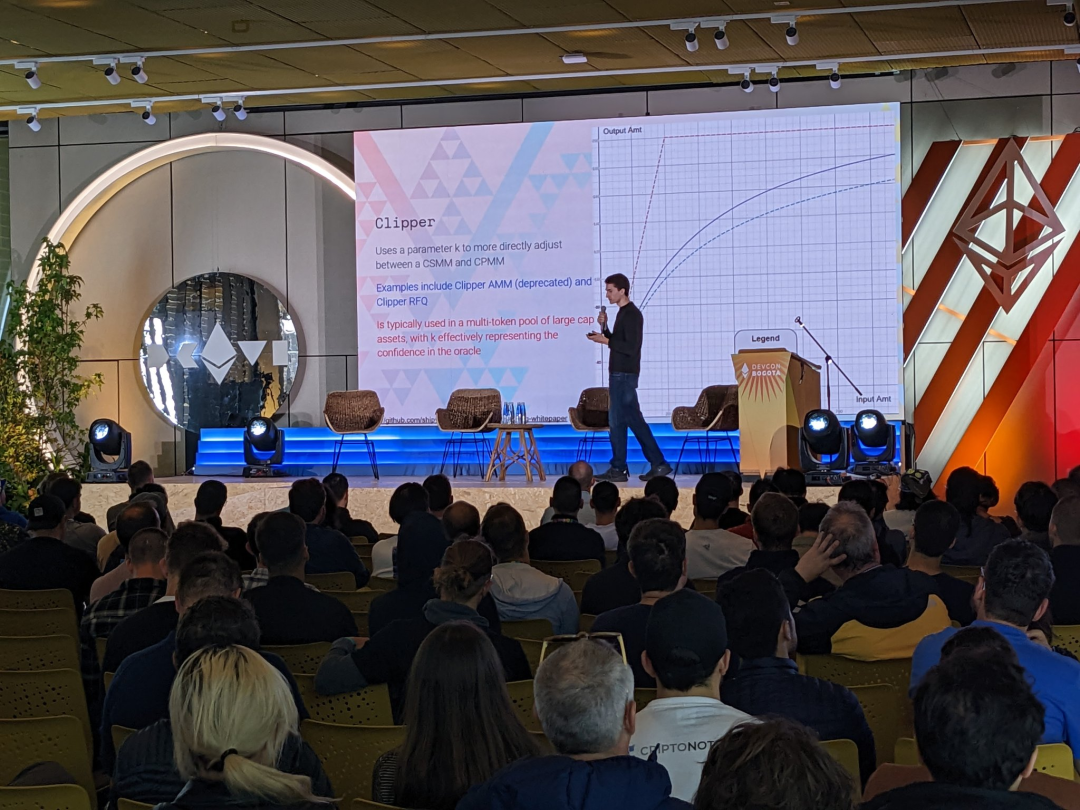
Matt first divided the existing AMM products on the market into three categories, the basic constant product and constant sum AMM, the hybrid AMM, and the virtual liquidity AMM. The purpose of the market maker is to earn income for the asset portfolio by providing trading liquidity. The market maker in the AMM earns profits through the price difference, but also faces the risk of depreciation of the asset portfolio itself.
Constant product AMMs are suitable for price discovery in long tail markets. Constant-sum AMMs are suitable for short-tail markets and rely on external price oracles. The middle ground between the two may be the best solution, that is, hybrid AMM, by introducing new parameters to find the best price curve between the constant product and constant sum curves. If virtual liquidity can find the corresponding liquidity provider, it is a very efficient AMM solution.
Finally, Matt pointed out that the RFQ quotation system under the chain can well bridge the quotation resources under the chain and the settlement on the chain, and improve the composability. Traders have to face multiple types of AMMs, and need Dex aggregators to use off-chain optimization to provide the best price while maintaining atomic transactions, slippage protection, on-chain settlement and asset self-custody. Odos even considers more complex scenarios such as one-off multi-asset transactions.
secondary title
The Impact of Cryptocurrency Regulation on Open Blockchains: Opportunities and Challenges
compile | ECN
image description
@EFDevcon
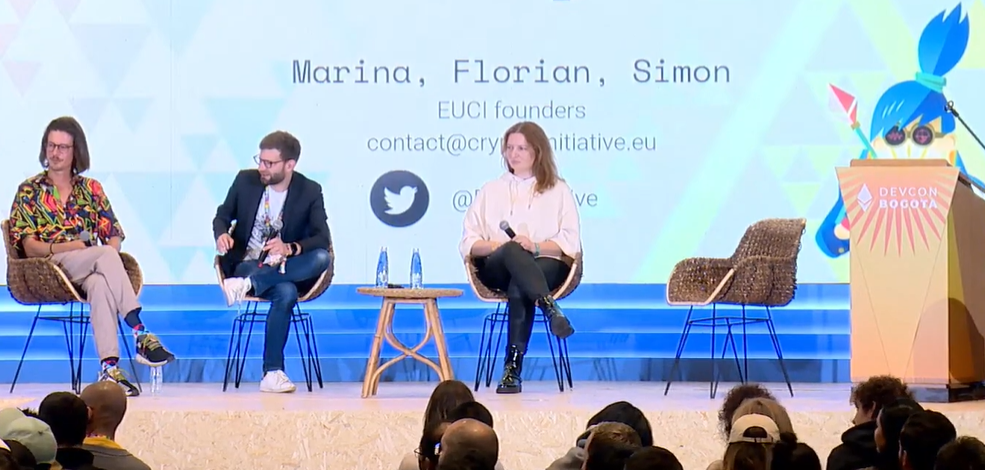
Just on October 5, the European legislature passed MiCA (Encrypted Assets Market Act), a new cryptocurrency regulation. This comprehensive regulation aims to bring the crypto asset class under the supervision of ESMA (European Securities and Markets Authority) and EBA (European Banking Authority). At the same time, European finalized regulations include the TFR (Funds Transfer Regulation), which was proposed last year.
This makes people have to look back at the wave of global cryptocurrency regulation that has emerged in the past two years, the SEC’s provisions for the Luna crash, and OFAC’s regulatory crackdown on Tornado Cash. It is worth noting that these regulations are carried out collaboratively, and it occurs widely at the level of the international community, such as Europe and the United States. Marina believes that in the next two years, we will see more regulatory reports.
These regulations have a great impact on the blockchain field. The following takes Europe as an example. For encrypted asset service providers, they need to join the European Union and obtain CASPs (encrypted asset service provider) licenses, comply with anti-money laundering laws, etc. For crypto asset issuers, the issuance of tokens is equivalent to a "small" IPO (initial public offering), they need to join the EU and follow its corresponding issuance "white paper". In terms of the supervision of encrypted stablecoins, decentralized stablecoins are prohibited from being issued, and at the same time, they need to submit quarterly transaction reports to the EU. The European Union has set a daily limit of $200 million for stablecoin payment transactions, beyond which the license of the issuer will be withdrawn. In addition to stablecoins, Simon believes that regulation will continue to target privacy protocols.
In addition, for the blockchain community, it is necessary for them to improve the neutrality of their network and construct a set of decentralization and privacy protection mechanisms to deal with supervision, and this is inseparable from the participation of every community member.
secondary title
Scaling Ethereum
Compile | Pablo @Plancker
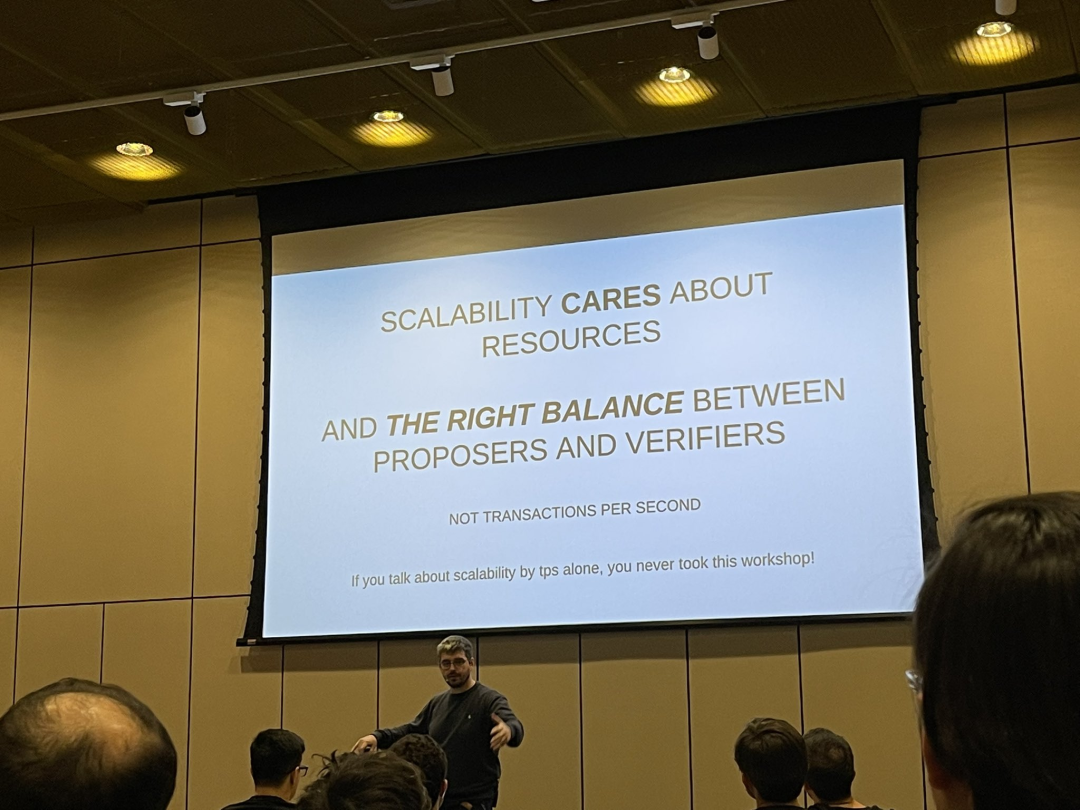
On October 12, Beijing time, Patrick McCorry from Infura introduced the expansion of Ethereum in the form of a light talk. From the basic concepts of blockchain including: block broadcaster, verifier, peer-to-peer network, expansion to three basic nodes of Ethereum: full node, archive node, and pruning node, the relevant knowledge was popularized for the audience.
Patrick mentioned that although executing contracts in memory consumes computing resources, reading and writing databases is the current bottleneck. The bottlenecks of Ethereum expansion include storage, computing, and bandwidth. The two goals of capacity expansion are to reduce the fork rate and lower the node threshold.
image description
cr:@audrtyw
Finally, Patrick summed up three ideas for combating expansion bottlenecks:
Assign a purpose to each resource and address it: data availability layer, settlement layer, execution layer.
Scaling through bridging (roll-up-centric roadmap)
Data Availability + State Transition Integrity for Bridges
secondary title
Rollups are the safest bridge
compile | ECN
l2beat.com has become the most trusted community resource for evaluating the security assumptions of different Ethereum scaling solutions. Each scheme has a "native" bridge that allows users to transfer tokens onto L2, but there are plenty of other bridges available to end users beyond the native bridge. How do they compare to "native" bridging? What risks do users face when sending tokens through these bridges?
In the main venue on October 13th, Bartek Kiepuszewski, founder of Maker DAO and l2beat.com, gave a speech entitled "Rollups Are the Most Secure Bridges".
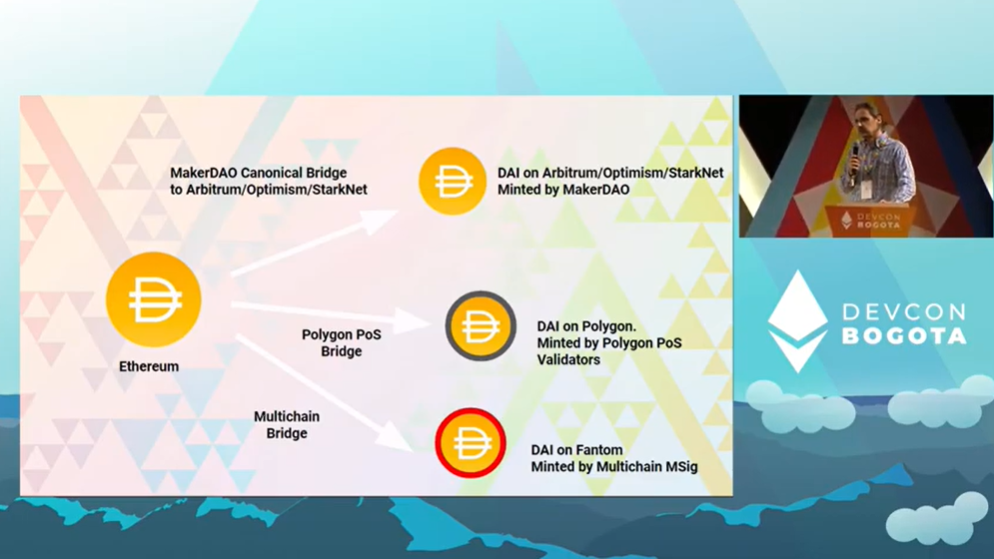
"Two years ago, I started working on Maker DAO's multi-chain strategy project. At that time, we asked ourselves a question, how do we transfer DAI to different chains? This problem is not easy, we have to investigate all chains and their security, and how to transfer DAI securely enough”, Bartek recalls how he started the l2beat.com website, “I first posted a comparison table on the Maker DAO website, but no one responded. Apparently , everyone needs some more concise and intuitive data. So I started to make the l2beat website.”
In addition to various data collection and risk assessment for each L2 expansion solution, they recently launched a bridge analysis section. In this section, the TVL, 7-day lock-up change, market share, validator, and bridge type of each bridging scheme are listed.
Risk assessment has always been an important part of the l2beat website, so Bartek specially evaluated the security of different bridging schemes from two aspects.
First of all, there are several types of bridging:
liquidity network
liquidity network
hybrid bridging
Token bridging has unlimited liquidity; tokens are stored on the destination chain, and the design of token bridging verifiers has certain risks; it is slow and expensive. The liquidity of the liquidity network is limited; the tokens are stored on the destination chain, and the verifiers of the liquidity network have no risk, but the token bridge related to it will bring risks to it; fast and cheap.
The second evaluation angle is "who will verify the transaction information", which are:
third party
Optimistic verification mechanism (the default information is valid unless the information is proven wrong)
Verified by validators of the original chain
Verified by Ethereum, trustless
To sum up, after comparing bridge types and transaction information verifiers, Rollup, which uses native bridges and is secured by Ethereum, has the best security.
secondary title
Ethereum is sunpunk
compile | ECN
On October 13, Gitcoin co-founder Kevin Owocki explained a series of punk metaphors in Ethereum in his speech "Ethereum is Cypherpunk" on the second day of Devcon VI: Cypherpunk, Sunpunk, Moonpunk, Terrapunk.
Cypherpunk emerged in the 1990s, and "A Crypherpunk's Manifesto" by Eric Hughes is the root of the movement. Typically, a cypherpunk is a class of people who strongly advocate the use of cryptography and privacy-enhancing technologies as their way of changing society and politics, devolving power to the individual.
Ethereum is sunpunk. The concept of solar punk has only emerged in recent years. It was born out of climate warming, dictatorship, disinformation, and fragmented international social order, aiming to allow humans to collaborate on a network scale. In essence, sunpunk is a fictional picture of what the future world might look like if contemporary issues of sustainability and coordination failures were addressed. As such a platform, Ethereum can make the world a better place by achieving carbon neutrality, increasing network carbon credits, and creating collaborative capabilities.
At the same time, Ethereum is also moon punk. This concept is the product of cypherpunk combined with solar punk. Its idea is to fund those public goods that protect privacy. Moonpunk is seen as an aesthetic that is fraternal to sunpunk, but with a more universal character, referencing concepts of witchcraft, futuristic design, nature, renewable energy, and the cycle of life. For more about Moon Punk, you can watch the video:
https://www.youtube.com/watch?v=QA3YZVDUN5s
Beyond that, Ethereum is Terrapunk. Terrapunk is a concept that tends to increase the population, create more "earths", control nature, promote technology, and expand human life into the universe. Kevin believes that Terrapunk is another expression of solar punk, but it is a kind of human maximalism, which is different from solar punk's human minimalism. The article "The Terrapunk Manifesto" can help you understand Terrapunk in depth.
It can be said that Ethereum is a mirror, reflecting the values we have constructed. It is a product of collaboration and promotes the continuous evolution of the ecology. It is also the Schelling point that human beings hope for, building a transparent, immutable, programmable foundation for global finance and collaboration, and building a new system. Through web3, humans can use collective wisdom to establish a collaboration mechanism to solve the most difficult collaboration problems that cannot be ignored by humans.
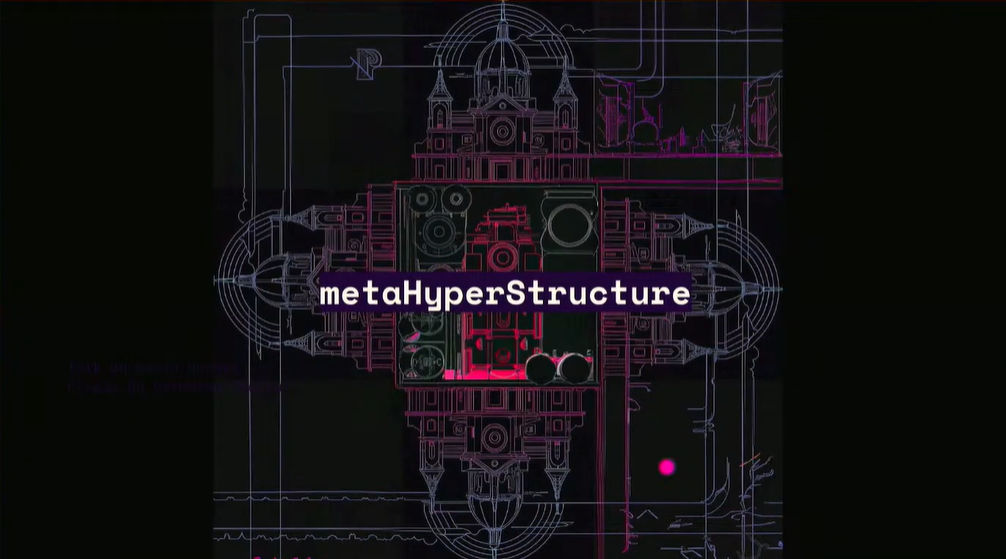
The builders of Ethereum have been committed to building a Hyperstructure mechanism on Ethereum to meet everyone's common needs. Ultimately, Ethereum will build a collection of superstructure institutions - metaHyperstructure (metaHyperstructure), these institutions will achieve interoperability with each other in a modular way, so that Ethereum users can achieve common values.
secondary title
Improving oracle infrastructure on Ethereum
Compile | Pablo @Plancker
On October 13, 2022, Beijing time, Lorenz Breidenbach, R&D Director of Chainlink Labs, delivered a speech titled Improving Oracle Infrastructure on Ethereum.
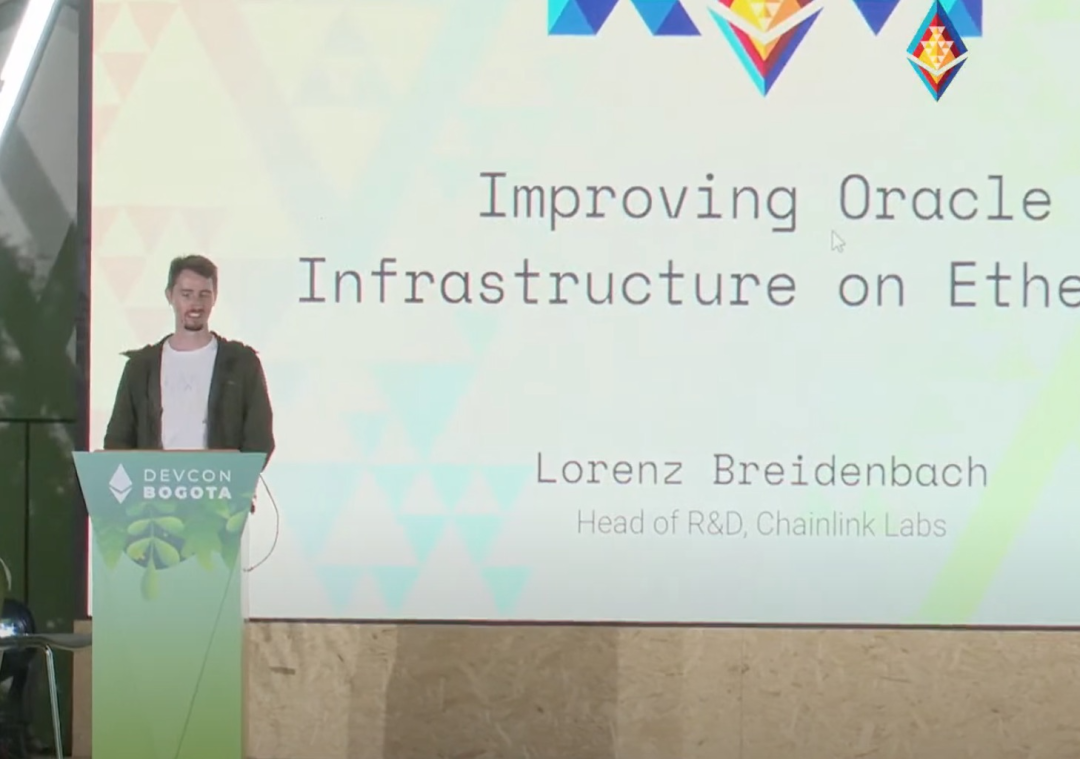
The oracle machine continues to promote the development of Ethereum and the second-layer ecological network. In order to build dApps that serve real-world use cases, from DeFi, DAOs to NFTs and more, Ethereum developers need access to a secure oracle network. In this talk, Lorenz takes us deep into the latest oracle innovations and demonstrates new capabilities that enable Ethereum developers to build scalable, secure, feature-rich applications for a wide range of applications.
Chainlink's classic oracle network uses an off-chain reporting protocol to provide data streams to developers. In addition to data flow, oracles can help achieve a variety of functions, including proof of reserve, secure randomness, contract automation, cross-chain interoperability, fair ordering, outsourced computing and storage, triggering real-world actions through APIs, and Privacy-preserving access to web2.0 data.
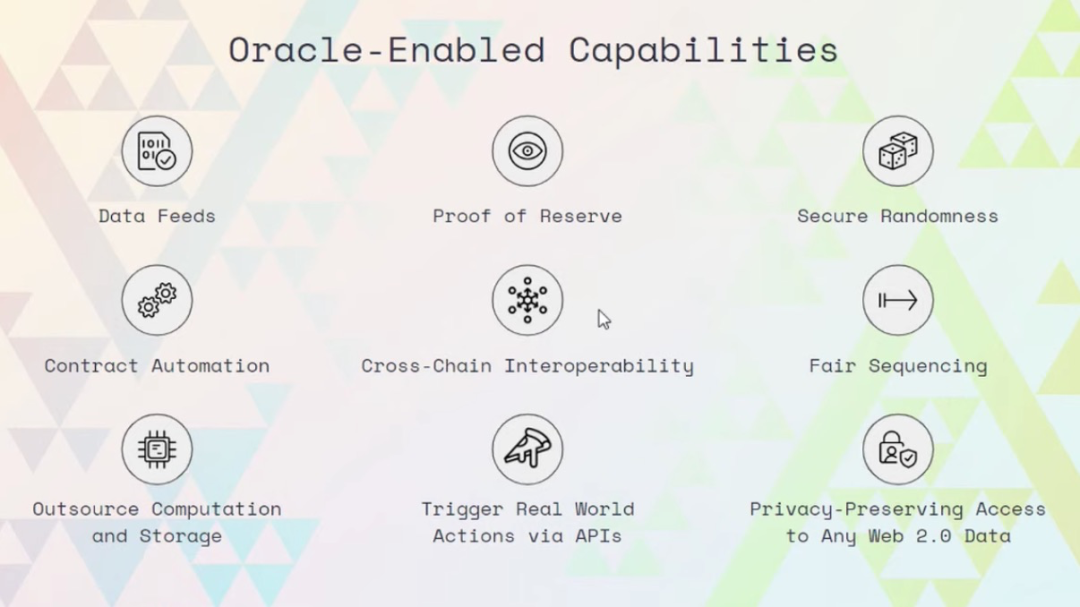
For example, a classic application is to implement secure random numbers on the chain through VRF and oracles. In addition, the automatic execution of contracts is also an important application of oracle machines. Since contracts cannot be executed on the chain, a reliable off-chain oracle network can well expand contract functions through contract self-execution functions and improve user interaction experience.
As a senior researcher, Lorenz took everyone to look forward to the future usage scenario of the oracle machine - cross-chain programmable bridge. The oracle can bridge the gap between chains and chains, and help contracts send messages from Ethereum to other chains. In addition, private access to any Web2 data will also be a major application scenario. The verifier promises to verify the user's Web2 private information through cryptography, and uses zkp to synchronize user information with the oracle.
Finally, Lorenz summarized three important information about the oracle:
Safety and reliability are paramount for oracle networks
Oracles are more than data streams
Oracles can make smart contracts more powerful than ever
secondary title
Day 1
Panel: What to Know About Zero-Knowledge Proofs
compile | ECN
image description

cr: @EFDevcon
At the beginning, Albert Li said: "With the continuous development of the encryption ecosystem, the word "Crypto" has been extended from pure cryptography to countless fields, including cryptocurrency and so on. The technical term zero knowledge It is also no longer limited to the technical category, it extends some broader use cases using zk proof technology, these use cases include these properties: accuracy and simplicity."
Regarding Albert's question "How will ZK complement Ethereum in the future?", Vitalik said, "I think ZK is naturally a supplement to the blockchain. The reason why I say this, first of all, I think the anti-censorship features provided by the blockchain are At the expense of the two very important properties of 'scalability' and 'privacy'. And zk-SNARKs is a technology tailored for these two properties."
Gubsheep, the founder of Dark Forest, cited a use case to illustrate that some applications may be very useful in the future. "Assuming that some traditional Web2 companies such as Facebook and twitter provide each account with a state root, they do not need to display the data contained in this state root, but they will at least publish the Merkle tree composed of these state roots .What users can do is to generate zk proofs for these data, so that others can verify that the information is correct without revealing the information itself. For example, you can prove that you are a member of Facebook, what reputation you have, and Being able to transfer those reputations from one platform to another. I think it's a very interesting interaction between the Web2 and Web3 worlds."
When the host Albert asked about everyone's future predictions in this field, Barry Whitehat, a member of the Foundation's PSE (Privacy and Scaling Explorations) team, joked (seriously) and said: "My prediction is that by 2040, someone will Research using zero-knowledge technology for which he won the Nobel Peace Prize."
secondary title
Significance of the Ethereum Foundation
compile | ECN
image description

cr: @EFDevcon
Ethereum is a complex ecosystem that takes on the roles of financial systems, developer platforms, cutting-edge research fields, political campaigns, new countries and jurisdictions, long-term and decentralized global projects, and more.
EF A not-for-profit community formed by various teams that provide grants or raise funds for external organizations. These teams are responsible for maintaining the Ethereum system, funding public goods, moving political campaigns forward, addressing issues and opportunities, research, advocacy, and more. It aims to help the ecology to develop independently, not to gather its own influence, but to gradually reduce its impact on the ecology in the process.
EF follows a philosophy of subtraction, reduces intervention in the ecology, and promotes the creation of new independent institutions; at the same time, it adopts a layered allocation strategy to integrate the community into the development of the ecology.
But the entire Ethereum ecology is definitely not only maintained by EF, but also by the entire Ethereum ecosystem outside it to face ecological challenges and adapt to new things. EF is only responsible for helping people set up new organizations, such as DAO Research Collective, 0xPARC, Nomic Foundation, etc., and "decided not to do specific things", for example, not to develop a consensus layer client that belongs to EF.
EF hopes to use the community of team method (community of team method, that is, the community is composed of teams), and the distribution strategy by layer to create an organization with multiple independent decision makers and a flexible internal structure. They integrate more decentralized independent decision-making teams into the ecology. When new problems arise, these teams will consciously do their own work; on the other hand, they will also provide corresponding support for each team with specific strengths Funding, such as Gitcoin, clr.fund.
secondary title
New Applications of Quadratic Financing
compile | ECN
image description
cr: @EFDevcon
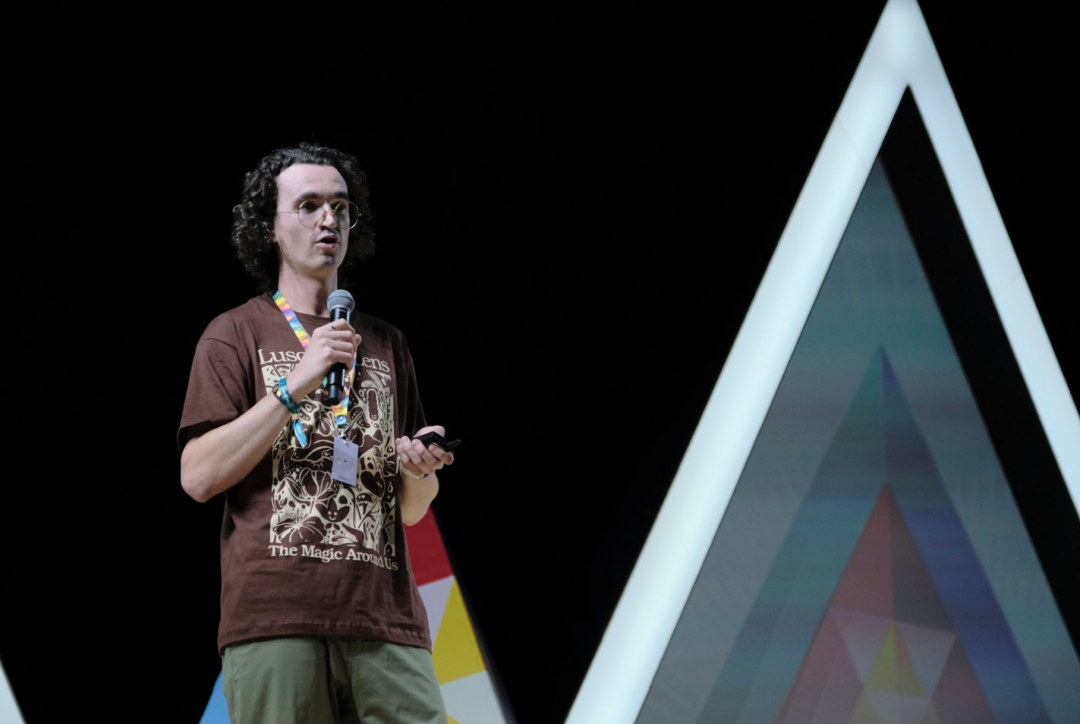
The quadratic funding mechanism (Quadratic Funding, QF) was proposed by Ethereum founder Vitalik, Harvard University's Zoe Hitzig, and Microsoft researcher E. Glen Weyl in the paper "A Flexible Design for Funding Public Goods".
In layman's terms, the QF mechanism refers to calculating the amount of funding provided for a specific project by taking the square root of each donation. Technically, it refers to a mathematically optimal way to fund public goods in a democratic community. All in all, this funding mechanism focuses on the number of people who donate, and the more people donate, the more matching funds the project receives. The public goods here refer to non-rival and non-exclusive public goods, such as open source software that can clean the environment.
Looking back at Gitcoin Grants along the way, so far, all its QF mechanism financing rounds have been run based on a centralized stack. In this regard, Gitcoin's initiatives on the road to decentralization include: a permissionless agreement, a flexible identity system, community curation, and self-service product functions, as well as building a decentralized identity system with Gitcoin Passport, incentivizing community creation, and TCR (Token Curated Registries, token curated list) and other new primitives and tools.
Connor mentioned that the current QF is not really a mathematical QF. This is because the matching pool and matching time limit of QF are fixed, which means that when the matching pool is saturated, the expansion or reduction of the matching scale will cause the matching pool to be oversaturated or undersaturated. As a result, QF cannot be matched in place, that is, it cannot provide more funds for matching or cannot match the funds in the fund pool.
In this regard, he proposed a series of coping mechanisms. The first is Pairwise Matching, which prevents contributors from colluding to donate to each other. When the mutual correlation between contributors in a pool is weak, the pool can get more matches, and when the correlation is high, the matching amount is reduced. Or use Plural Pair Matching to combine social distance with identity credentials such as DID/SBT/VC to measure the distance between contributors and their contribution network.
In addition, he also compared other new public goods financing mechanisms: the MACI (Minimal anti-collusion, minimum anti-collusion) mechanism adopted by clr.fund, and the retroactive public goods financing mechanism (Retroactive Public Good Funding) adopted by Optimism And the dominant guarantee contract mechanism (Dominance Assurance Contract). MACI voting is private, avoiding collusion and paid voting by contributors. The retrospective public goods fundraising mechanism is an expert-driven retrospective fundraising mechanism for excellent open source projects that have been funded in the past. It is actually a "white list" fundraising mechanism, not QF. The dominant guarantee contract mechanism is a product of game theory. This mechanism will motivate all members of the community to contribute to funding a public good, and return the donation when the donation threshold (a specific amount or a specific number of donors) is not reached, avoiding free-rider problem.
Connor also talked about Gitcoin's plan to upgrade to a fully decentralized new funding protocol in the future, which will promote the adoption of the QF mechanism in new areas, allowing non-encrypted native users to use Gitcoin's network. In addition, he expressed the hope that more project parties can use Gitcoin Grants to start their projects.
secondary title
Designing Public Goods Using ZKPs
compile | ECN
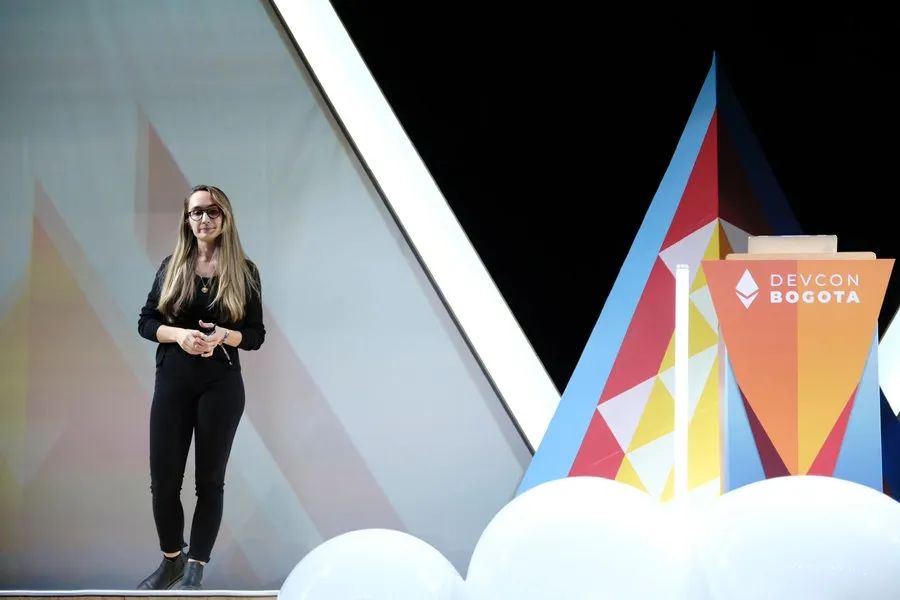
On October 12th, at the opening ceremony of Devcon VI Bogota, Rachel from the PSE team gave a speech entitled "Designing Public Goods Using ZKP".
image description
cr: @EFDevcon
In the speech, Rachel first explained why products should be designed for privacy.
"Have you ever wanted to prove something true without revealing who you are?"
Rachel believes that zk proofs allow us to choose what to reveal and what to hide in our interactions in the digital world.
Then, she listed the challenges their team faced when designing zk and gave their respective solutions. These challenges are:
How to balance accessibility and transparency
How to allow users to choose the degree of disclosure of their privacy
How can we create an environment of mutual trust for anonymous users
How we represent identities in communities of anonymous individuals
Finally, Rachel gave three models of their thinking mode in design, namely: the implementation model reflecting the technology, the performance model reflecting the designer's vision, and the mental model reflecting the user's vision.
secondary title
Explore Ethereum's commercial readiness for 2022
Compile | Pablo @Plancker
On October 12, 2022, Beijing time, the EEA (Enterprise Ethereum Alliance) released its report on Devcon6. Except for cryptocurrencies, NFT and DeFi, most people don't understand the commercial application of Ethereum (consortium chain).
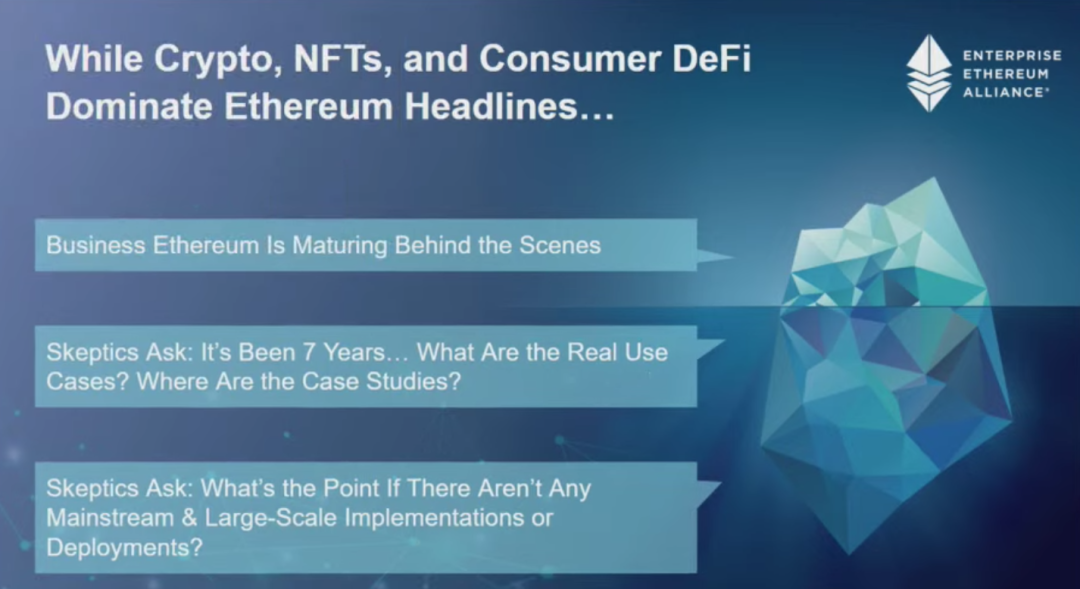
The EEA collected data from 118 commercially oriented Ethereum projects, analyzed the projects using 7 technical indicators and 3 non-technical indicators, and concluded that Ethereum is still in the early stages of commercial application.
In the commercial application of Ethereum, several common application directions include asset tokenization, payment solutions, trading market and supply chain. In the report, 9 user cases were investigated in depth, and the meeting did not share them one by one, but EEA strongly recommends readers to read them and get some inspiration from them.
The EEA concludes with some conclusions on this topic:
The increasing opportunities of public chains attract the attention of the business sector
A decentralized business model makes sense for many scenarios
Private and public chains are merging
Commercial applications will continue to rely on L2 and sidechains
Technological advances are addressing privacy concerns
Ongoing mainnet upgrades are addressing commercial application issues
Regulation remains a roadblock, but not for all use cases
NFTs show the future path to digital assets today
Ultimately, the EEA expressed its belief that the Ethereum ecosystem is ready for commercial applications. Any business that requires trust is an opportunity for the future of Ethereum.
Report download link:https://entethalliance.org/download-business-readiness-report/
Welcome to contact the author to add the relevant cases you have applied to next year's report.
first level title
secondary title
Great talk from RollupDay
compile | ECN
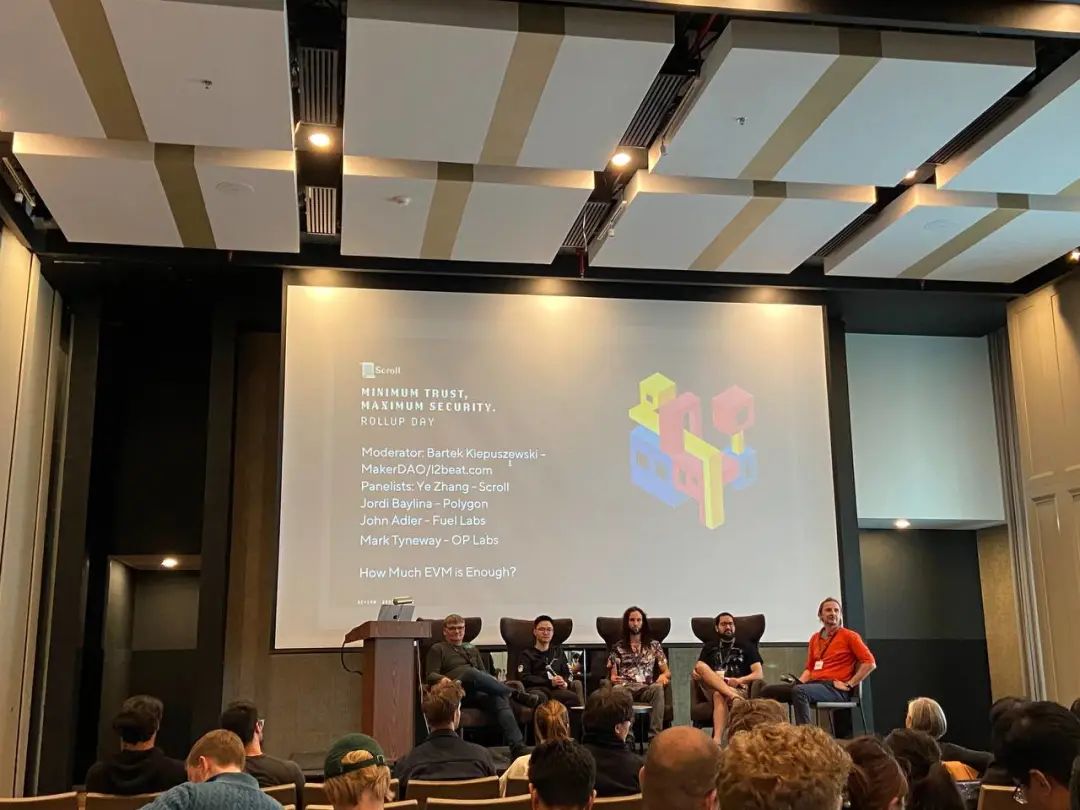
Christine Kim, a researcher at Galaxy, attended the Devcon VI side event #RollupDay hosted by Scroll, and shared three panels "Using rollup to build new applications", "How much EVM is enough?" and "MEV in L2"image description
cr: @christine_dkim
1. Currently, none of the production rollups are censorship-resistant, which means that rollup leader election is permissionless and smart contracts are not upgradeable. — @tyneslol
2. When thinking about how to move towards decentralized rollup and implement a decentralized sequencer, there is an under-discussed problem: the large number of MEVs generated from the coordination of multiple fork selection rules. — @tarunchitra
3. PBS (enshrined PBS) written into the protocol It is unclear whether it will actually be written on the Ethereum protocol. Whether PBS will interact with other potential protocol changes (eg, single slot finality) or have other drawbacks remains to be answered. — @ObadiaAlex
4. Unlimited Data Availability (DA) is possible on Ethereum, but not what everyone wants. In order to achieve infinite DA, Ethereum will have to sacrifice the characteristics of long-term data preservation and throw away unused or low economic value data after a certain period of time. — @dankrad
5. The DA layer should diversify its revenue model so that they are not subject to user demand and can only charge congestion costs in the form of transaction fees. Operating and capital costs are two other revenue streams that the DA layer should consider. — @sreeramkannan
secondary title
Vitalik in Bogota 2022: Using multi-provers to strengthen the Rollup system
compile | ECN
image description
cr: @bozo_eth
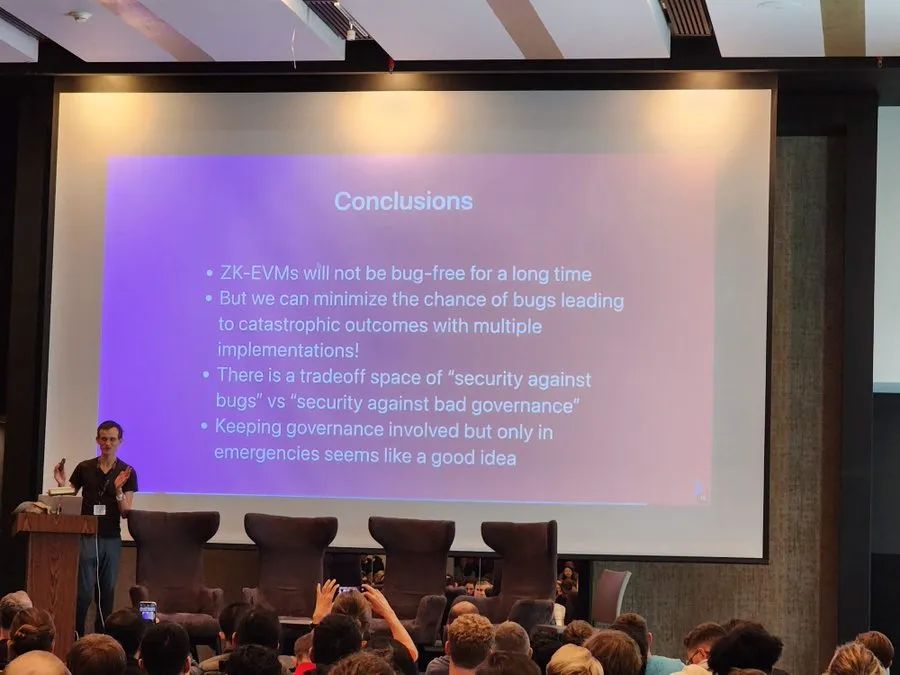
Vitalik believes that almost all Rollup solutions are still in the stage of using "training wheels", which means that the rollup at this stage has not yet achieved trustlessness or trust minimization.
A very important reason why these rollups still use "training wheels" is that overly complex codes will increase the attack surface of their systems. Taking the ZK-EVM circuit developed by the PSE team as an example, its code has 34,469 lines.
In view of the fact that in the short to medium term, it is difficult for rollup code to be completely bug-free, Vitalik listed several alternatives to promote rollup to be more trust-minimized or even de-trusted.
Option 1: The high-threshold governance solution decides to override the code. Assume a 6/8 multi-signature scheme to decide whether to rewrite a bug in the code. This high-threshold governance scheme can achieve a certain level of trust minimization, but there is still a risk of collusion.
Solution 2: Multiple provers (multi-provers). Drawing lessons from the multi-client mechanism on Ethereum, using a multi-proof system (multiple implementations of fraud proofs or multiple implementations of zkEVM) can prevent network downtime.
Scheme 3: Two provers ((fraud proof vs. zk proof) plus governance group, 2/3 mechanism (two-provers plus governance tie break). The benefits of this method are: no need to trust governance (it cannot be combined with proof contradictory); when a vulnerability occurs in one proof system, the other system is not affected; ideally, the two proof programs should have very different structures to minimize the chance of simultaneous vulnerabilities.
Lecture presentation slides: https://hackmd.io/@vbuterin/zk_slides_20221010#/
Source: https://youtu.be/Os10Ln8sMOc?t=6171





