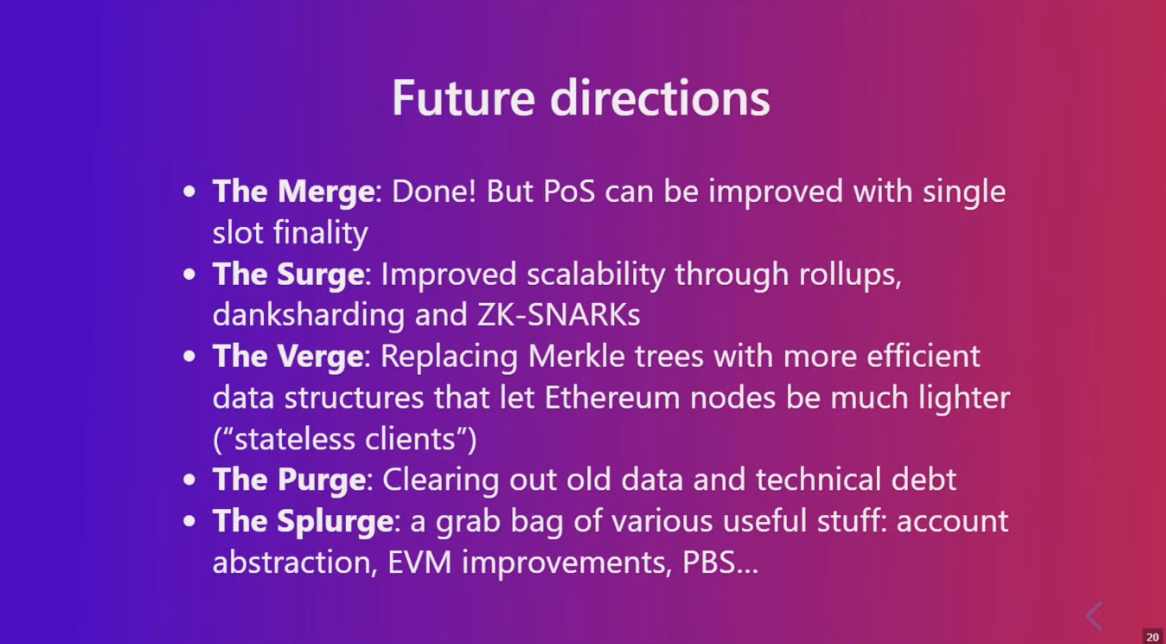
What V God said at the opening ceremony of Devcon6


Devcon is an annual offline gathering hosted by the Ethereum Foundation, which gathers the largest and most core developers in the Ethereum community. Its history can even be traced back to one year before the launch of the Ethereum blockchain in Berlin, Germany. A small meetup (Devcon- 0) was held.
However, due to the impact of the epidemic, the new Devcon has been postponed one after another. It has been three years since the last Devcon5 held in Osaka, Japan. Today, Devcon6 is finally held in Bogota, the capital of Colombia from October 11th to 14th as scheduled. Bogota, as one of the most active and popular cities in Latin America, has attracted many developers and industry practitioners from new regions to join this event. During the event.
This year's Devcon6 will provide a huge stage for the builders of Ethereum. Everyone can talk about the latest breakthroughs in fields from technology research to application design, so as to push Ethereum beyond the present and continue to move towards the future. At the same time, this is an opportunity not to be missed, so many builders, educational entities, local business leaders and decision makers arrived early to participate in the warm-up activities.
V God, who is the co-founder of Ethereum, will naturally not be absent from this conference. So at the opening ceremony of the first day of Devcon6, what V God said, BlockBeats organized and compiled it for readers as follows:
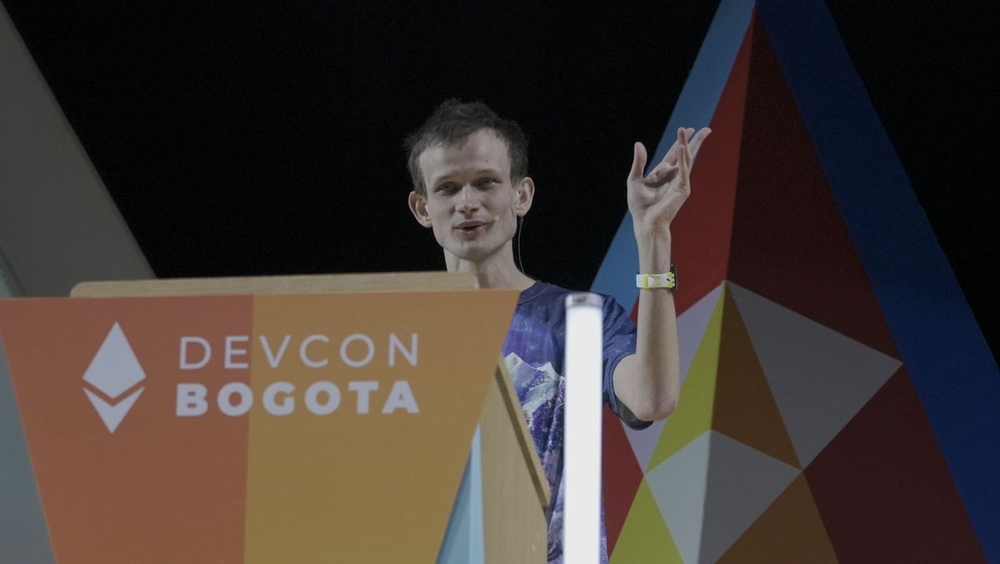
1) Ethereum is a general-purpose blockchain platform.
Compared with the anti-censorship of general blockchain networks, avoiding reliance on centralized parties, promoting interaction between distrustful people, and improving openness and transparency, a general-purpose blockchain platform can also be used in different types of Creating stronger network effects between apps and continually lowering barriers to entry ultimately turns out to be far more useful than creators initially imagined.
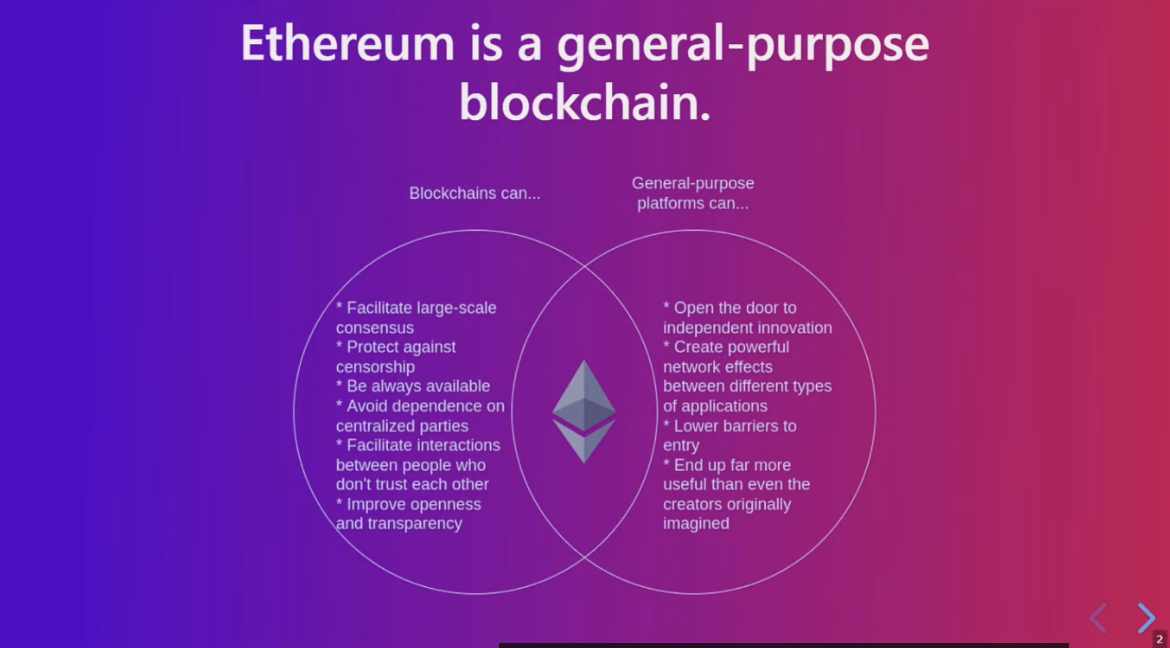
2) But now almost every new blockchain is a general-purpose blockchain.
The blocks of these blockchains contain a series of transaction information, and the generation of each block needs to be confirmed by many nodes to reach a consensus.
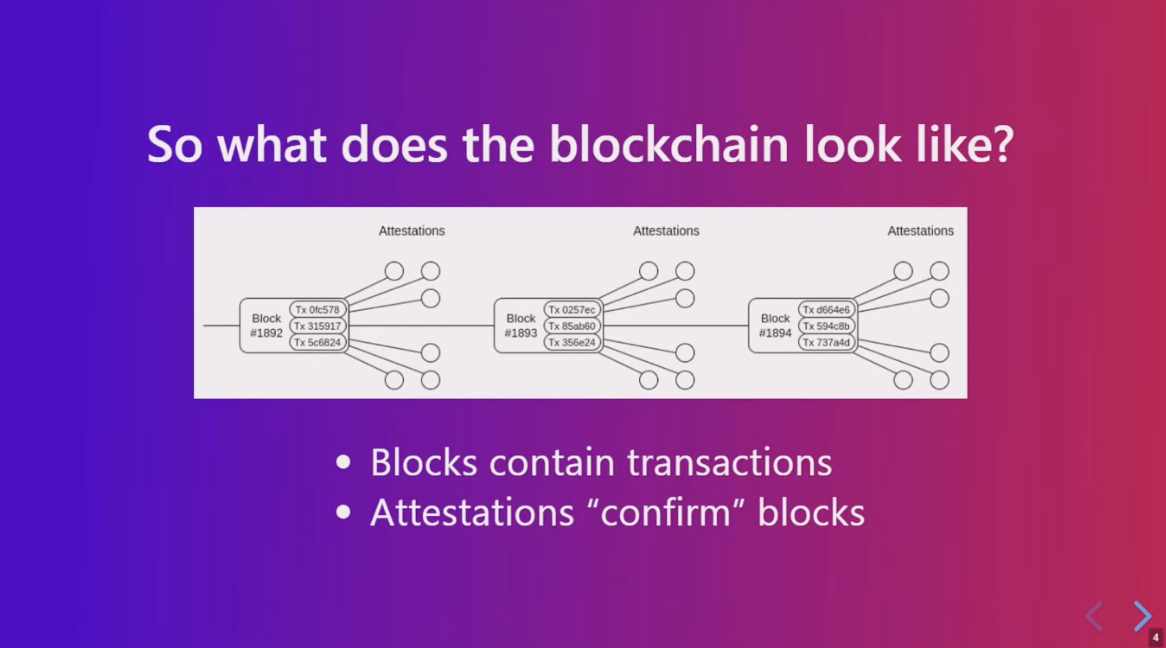
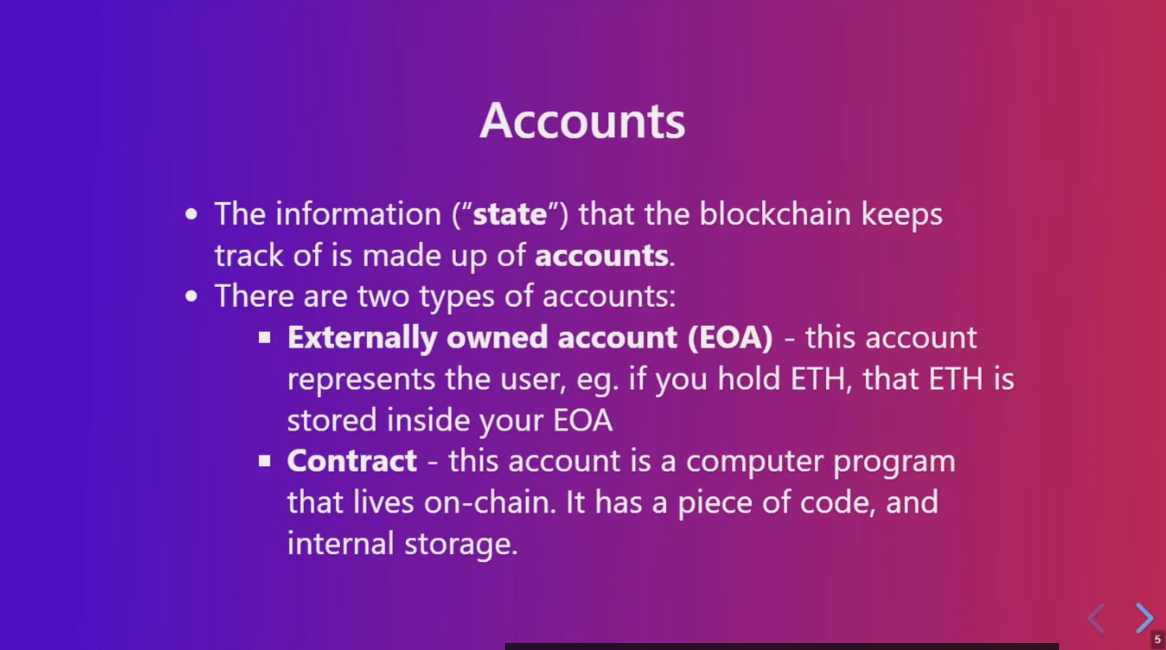
3) The information (state) tracked and saved on the blockchain consists of a series of accounts.
These accounts are of two types, externally owned accounts (EOA) and contract accounts. The EOA account represents the user. If the user holds ETH, the ETH is stored in its EOA; the contract account is a computer program that exists on the chain, which has a piece of code and internal storage.
The specific contract accounts are as follows:
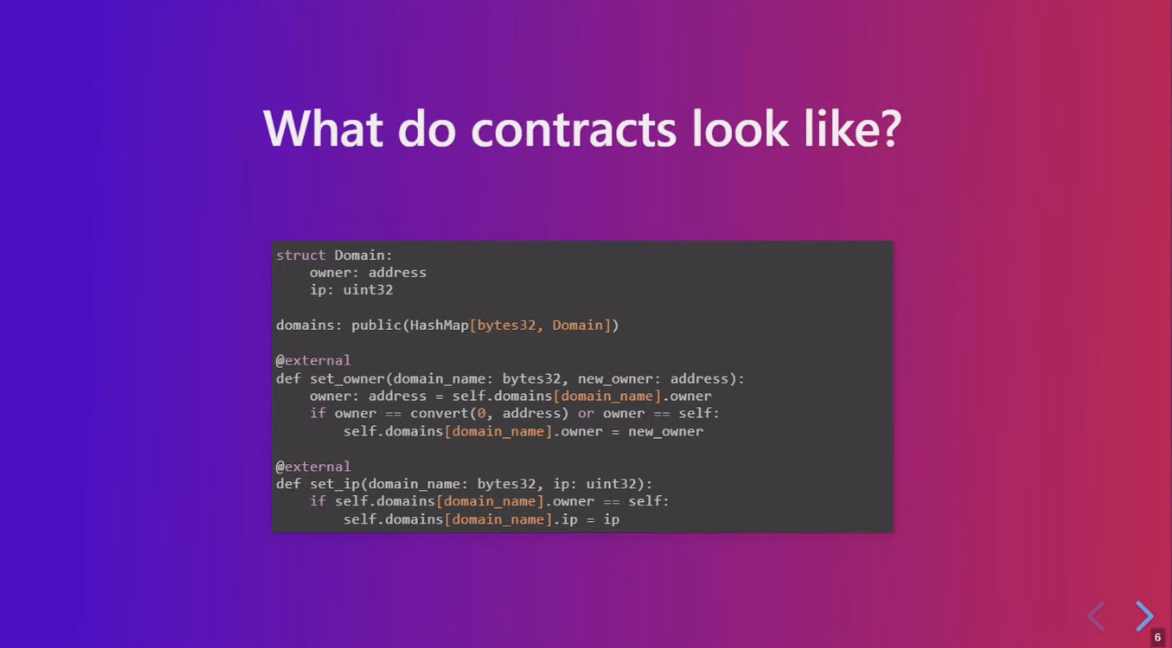
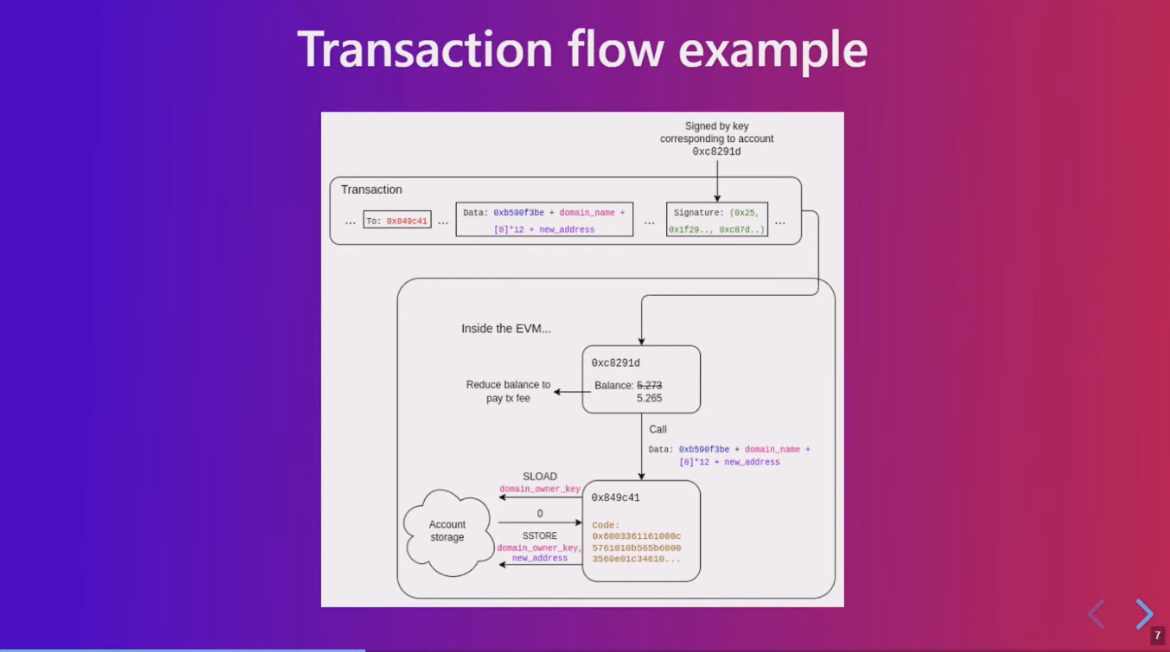
Example of transaction information packaged in a block.
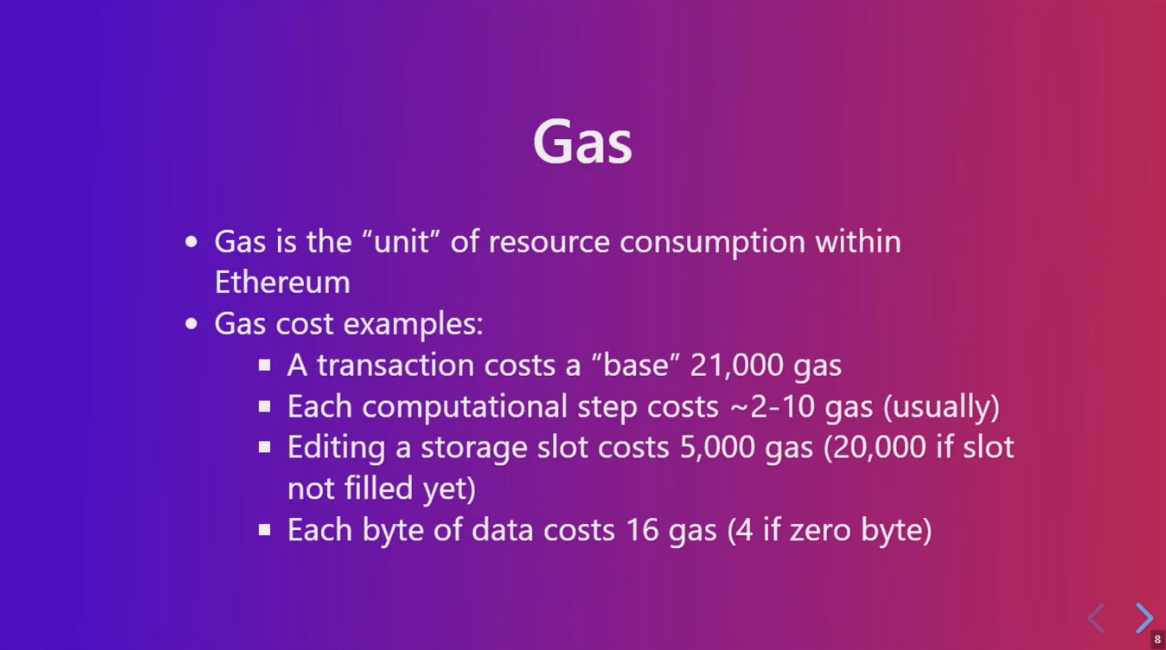
4) Gas is the "unit" of Ethereum resource consumption.
Several situations of Gas consumption:
- A basic transaction generally costs 21,000 Gas;
- Usually a calculation will consume about 2-10 Gas;
- It takes 5000 Gas to edit storage once;
- The data consumption of each byte is 16 Gas, and zero bytes are 4 Gas.
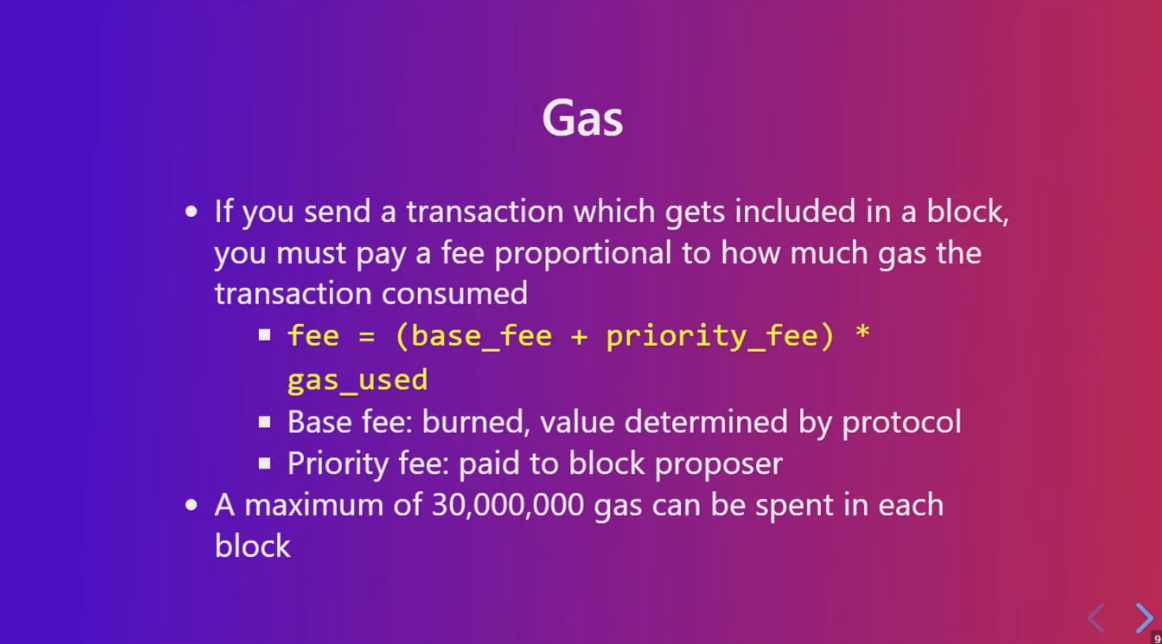
If the transaction information sent by the user has been stored in the block, you must pay a fee proportional to the Gas consumed by the transaction, mainly the basic fee and the fee you want to package and pay first.
The basic Gas fee will be destroyed, and the value is determined by the agreement; the priority fee will be paid to the block proposer; each block can consume up to 30 million Gas.
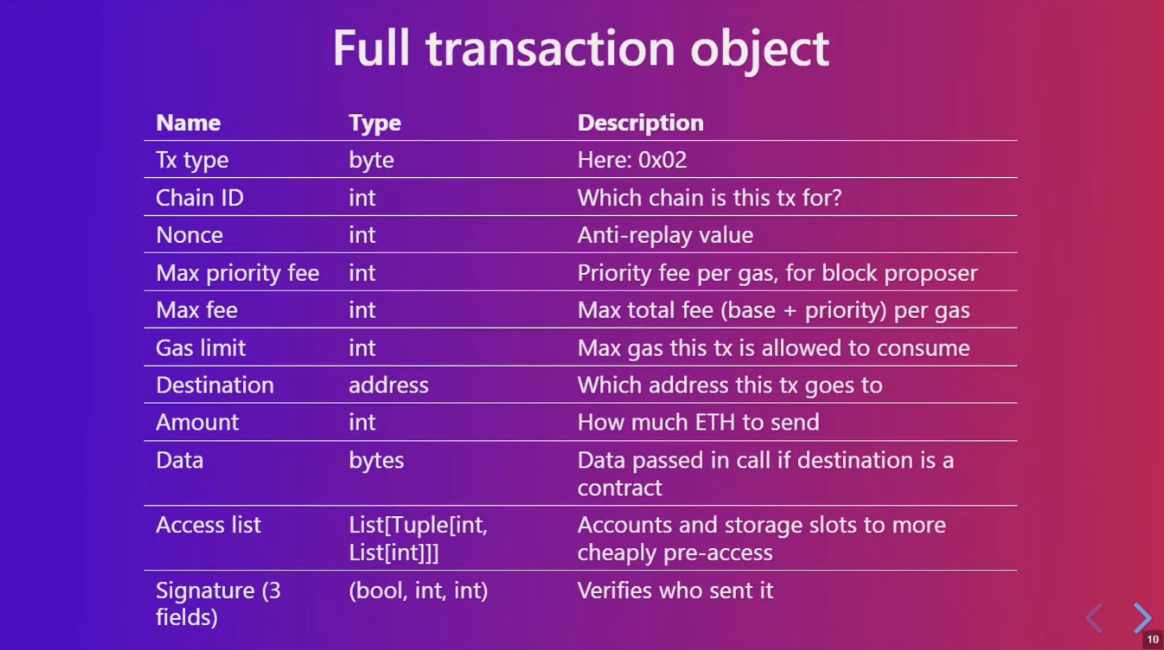
5) All the information in the block of a transaction
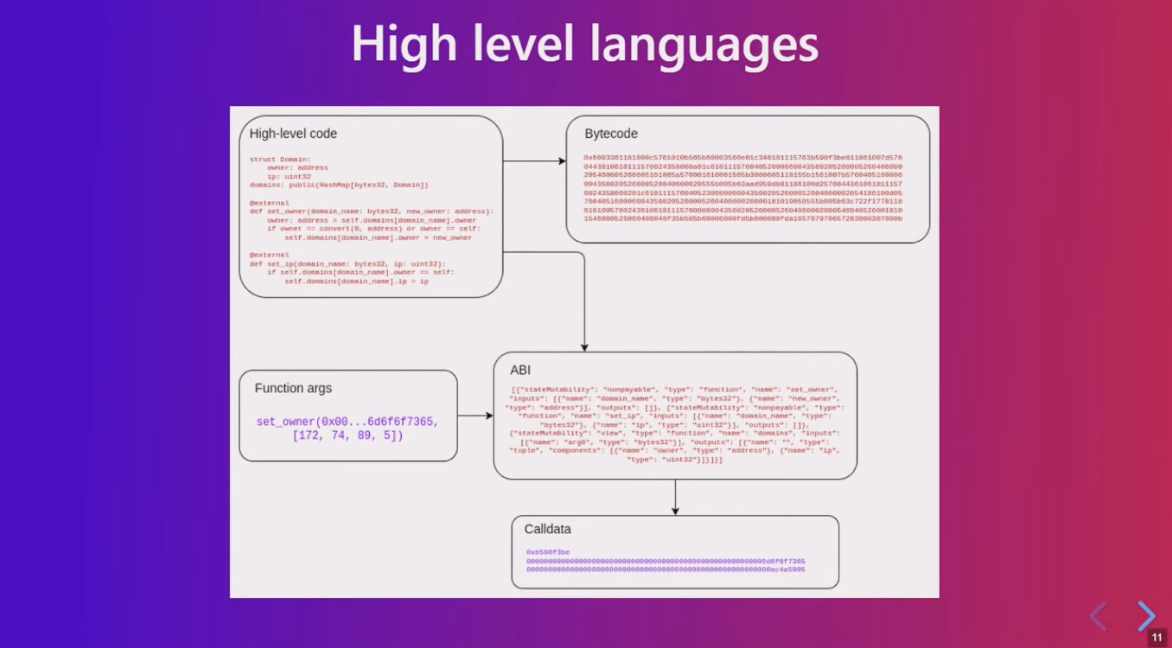
6) Advanced programming language
7) PoS consensus mechanism
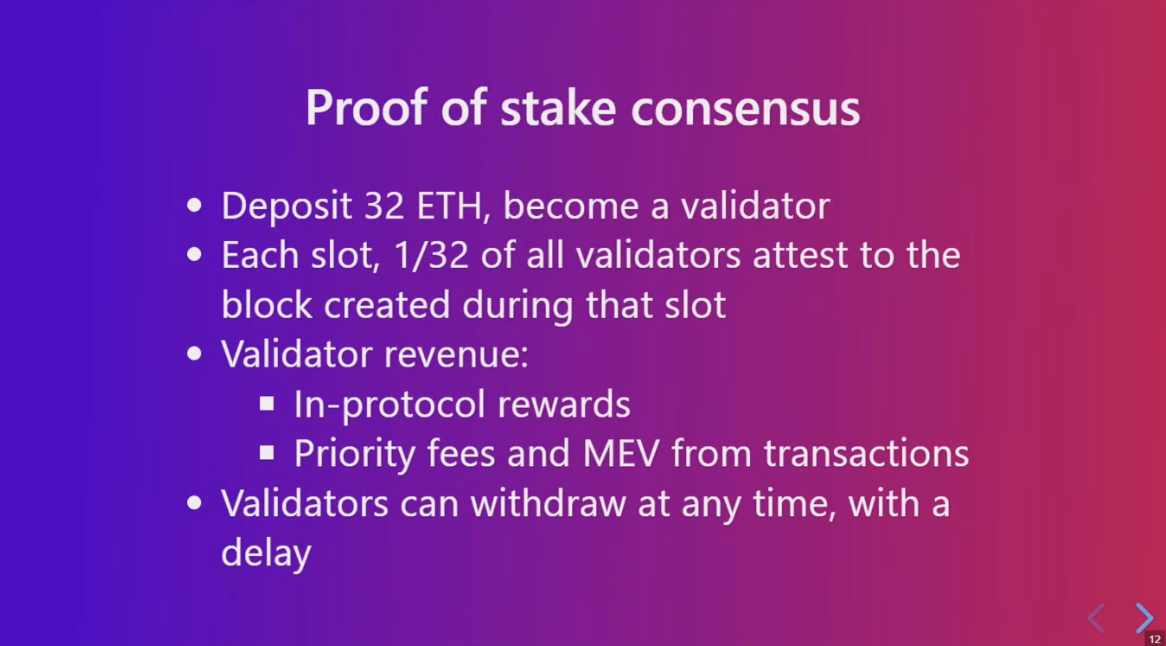
Deposit 32 ETH to become a verification node. Time on Ethereum is counted in units of 12 seconds, called "slots". Each slot is assigned a different validator to propose a new block, and if it fulfills its task, a valid block will fill the slot, otherwise the slot will be passed empty.
The income of the verification node comes from the rewards in the agreement, the priority fee of the transaction and MEV, and the verification node can withdraw at any time.
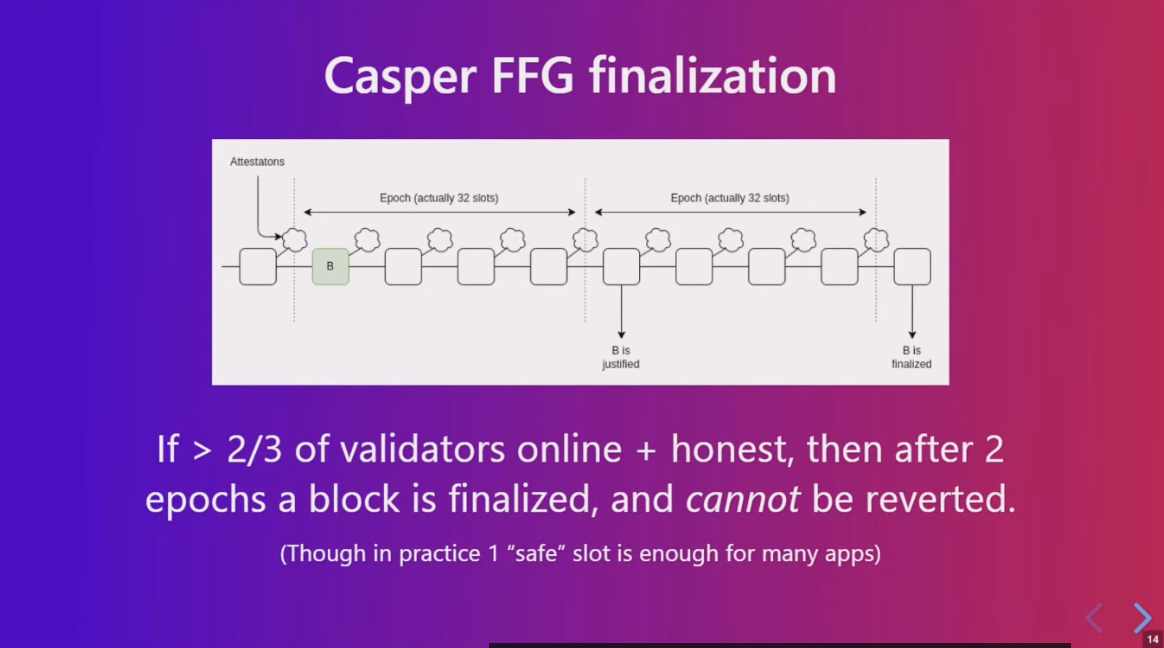
8) Casper FFG is a "deterministic tool", which means that Casper FFG regulates the certainty rules of blocks and can check the certainty of blocks after an event occurs. The FFG mechanism is decoupled from the growth of the chain and can be attached to any available blockchain protocol as an independent component to provide block certainty.
An epoch contains 32 slots, which are the votes of the entire network. After the proof, the second supermajority vote of the verification nodes will confirm the epoch, and Finalization is the security guarantee of ETH.
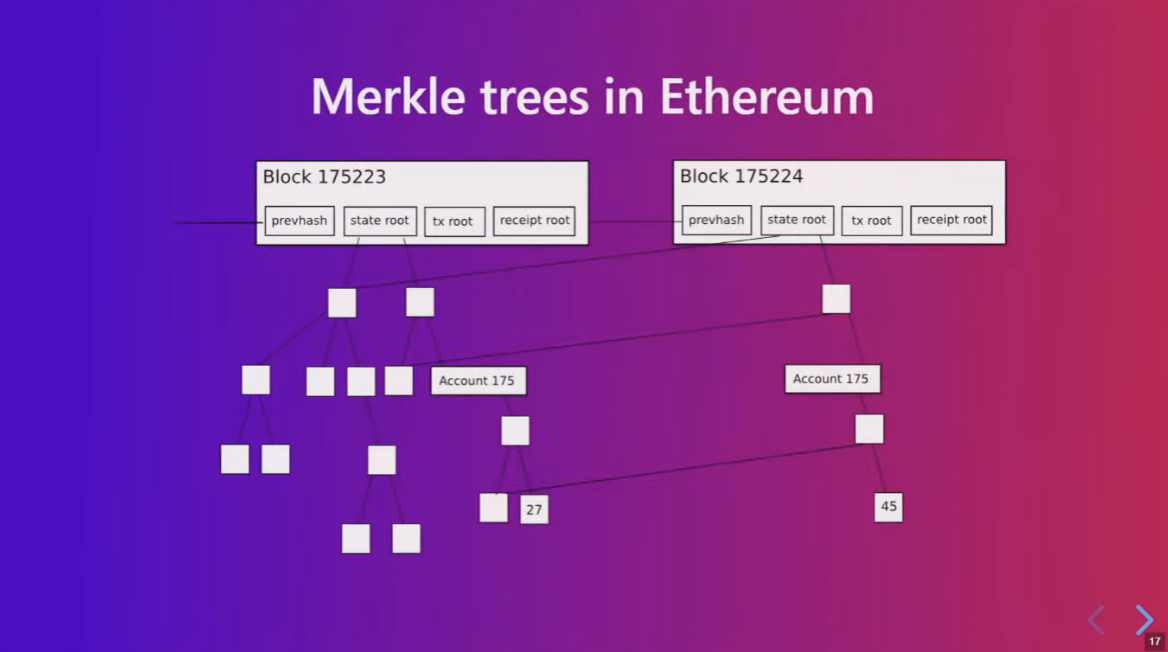
9) Merkle trees are a tree-shaped data structure in cryptography and computer science. Each leaf node uses the hash of the data block as a label, and nodes other than leaf nodes use the encrypted hash of their child node labels as a label. Merkle trees enable efficient and secure verification of the contents of blockchain data structures.
Merkle trees on Ethereum can efficiently verify some things that happen on the block.
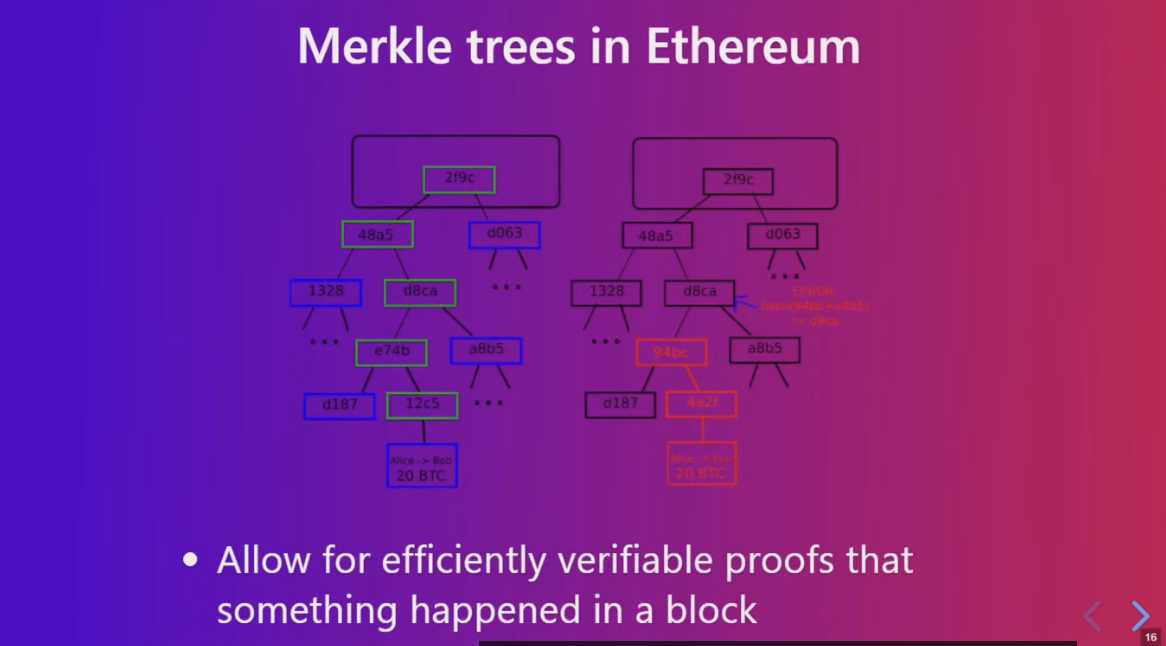
Any changes to the data pointed to by Merkle trees will cause changes in the node hash. Since the hash value stored in each parent node depends on the data contained in the child node, the change of the data in the child node will cause the change of the hash value of the parent node, and this effect is a chain reaction, from the leaf node directly to of the root node.
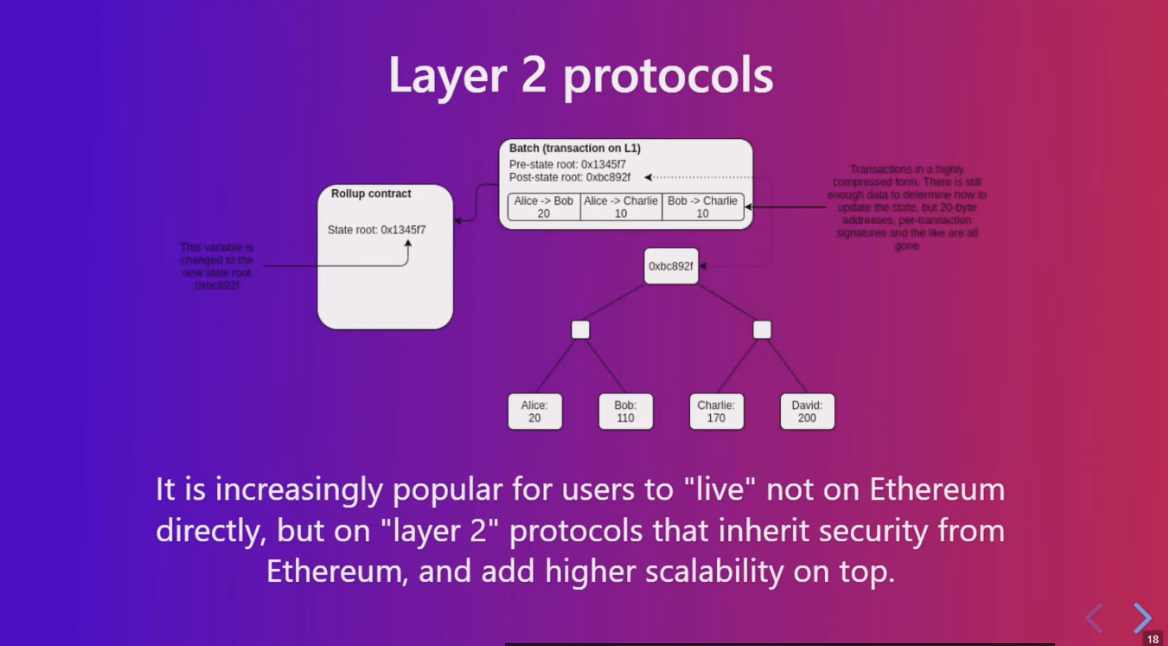
10) For users, the current L2 protocol is becoming more and more popular, transferring part of the information that needs to be processed by L1 to L2 for processing, and inheriting the security of L1, while L1 will obtain higher scalability.
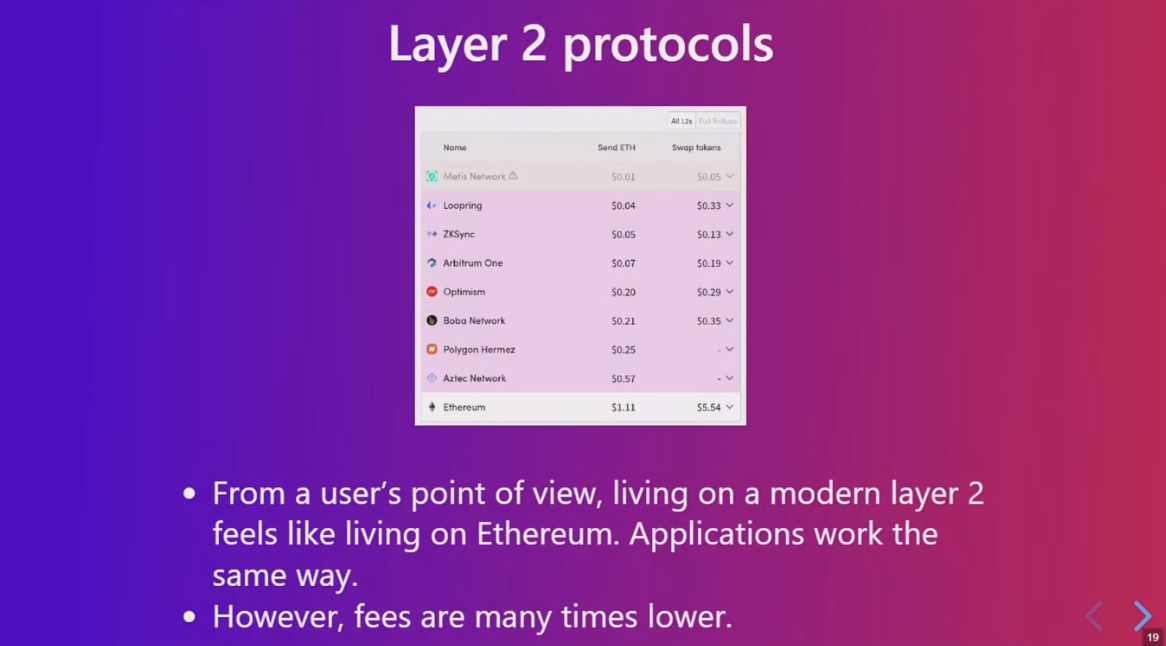
Currently from a user perspective, the experience at L2 is as efficient as at L1, and the application works the same way, but at a much lower cost.
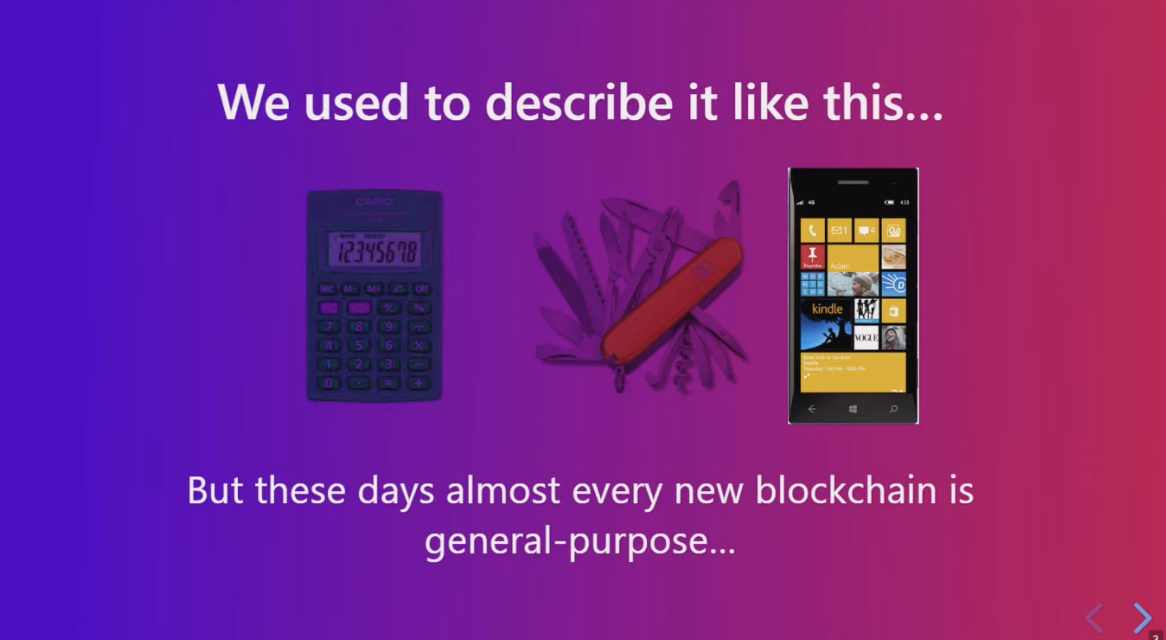
11) Future direction
- The Merge has been completed, but the PoS mechanism can be improved through the finality of slots;
- The Surge: Improving scalability through rollups, danksharding, and ZK-SNARKs;
- The Verge: Replace Ethereum Merkle trees with more efficient data structures, making Ethereum nodes lighter (stateless clients);
- The Perge: for cleaning up old data and technical debt;
- The Splurge: A useful toolkit, account abstraction, EVM improvements, PBS, and more.