


Panoramic analysis of the Ethereum pledge stack: who are the important ecological participants?


Original title: "Mapping the Ethereum Staking Ecosystem"
Original Author: Staking Rewards
Compilation of the original text: Peter Pan @BlockBeats
After the merger, Ethereum has switched to the PoS consensus mechanism. PoS has fostered a staking ecosystem composed of participants who play an important role in securing the Ethereum network.
In this article, Staking Rewards breaks down the Ethereum staking stack in detail, shows all the active parts in the Ethereum Staking ecosystem, and clarifies the operating mechanism of related staking methods. So understanding the subtle differences between these stacks and staking options will help users make better decisions when staking their ETH.
first level title

Ethereum protocol
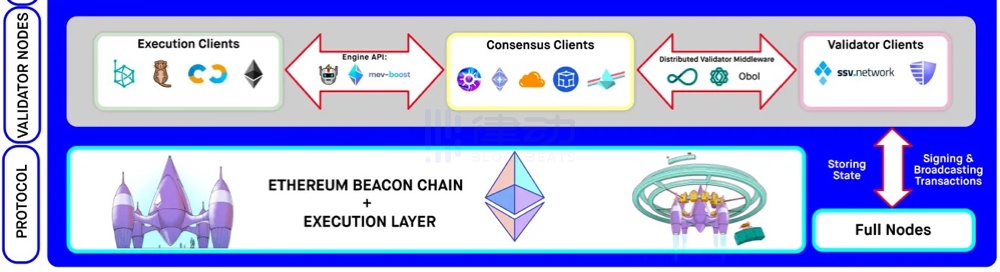
The Ethereum protocol is the set of rules that run on Ethereum nodes, which embody the core infrastructure of thousands of decentralized applications.
Transactions on Ethereum are signed by full nodes, who broadcast signed transactions to a network of validators, who execute transactions (execution layer), verify their eligibility and reach consensus on state (consensus layer/beacon chain). The new agreed state is then stored again in the full node with the latest block.
The execution layer is managed by execution clients running on thousands of computers around the world. They maintain the overall state of the Ethereum blockchain and use the Ethereum Virtual Machine to complete transactions.
first level title
client software

Ethereum is a distributed network of computers (nodes) running software that validates block and transaction data. To participate in the Ethereum network, users need to install software called a client on their computer to turn it into an Ethereum node.
A "node" is any instance of the Ethereum client software that connects to other computers of the Ethereum software to form a network. But not all nodes on Ethereum are the same, mainly divided into full nodes and verification nodes:
1) Full node
Full nodes enforce the consensus rules of the Ethereum protocol so that they cannot be tricked into accepting blocks that do not follow them, nodes will:
- sign the transaction
- Store complete blockchain data
- Validate all blocks and states
- Broadcast signed transaction to validator nodes
2) Verification node
Validator nodes receive broadcast transactions from full nodes, then execute the transactions, verify their eligibility and reach consensus on the state (at the consensus layer).
All nodes only work and interact with the protocol due to the client software. Clients are implementations of Ethereum that validate data according to protocol rules and keep the network secure. Every validator in the Ethereum network must use these clients, whether the user is staking at home or through some kind of service, the clients need to use and interact with the Ethereum protocol, they form the first level of the staking stack .
The merged Ethereum has two parts: the execution layer and the consensus layer, both of which run different clients and play specific roles.
1) Execution Client (execution client)
Listens for new transactions broadcast in the network, executes them in the Ethereum Virtual Machine (EVM), and keeps a database with the latest state of all current Ethereum data. The following are some of the main execution clients of Ethereum:
2) Consensus Client (consensus client)
secondary title
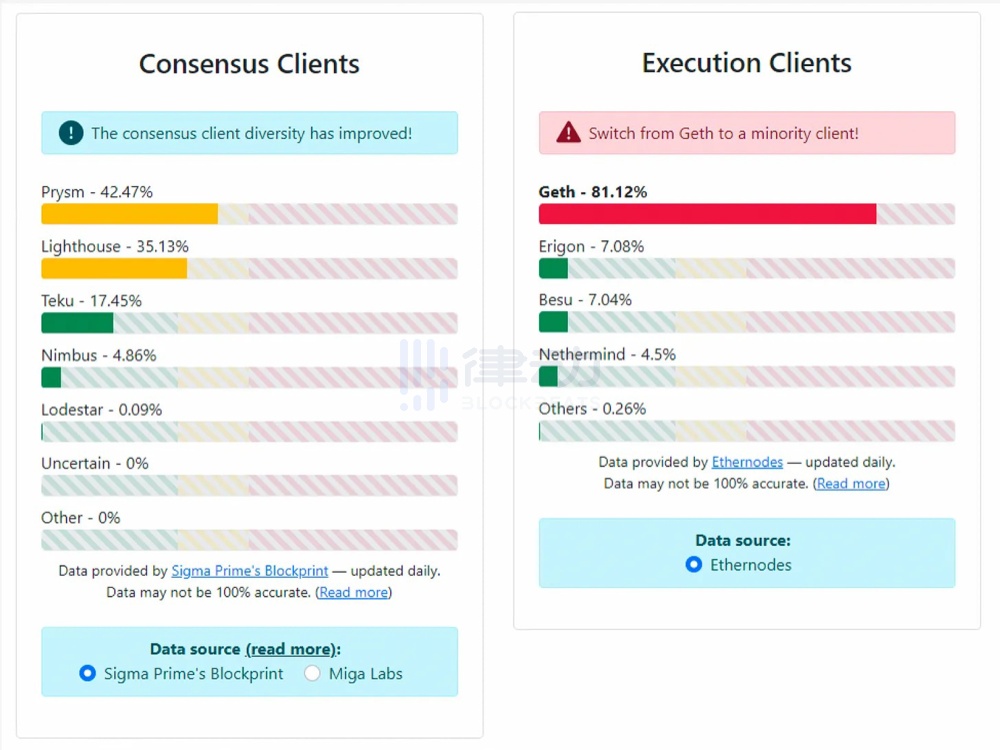
Lighthouse、Lodestar、Nimbus、Prysm、Teku
Client diversification
Client diversity is an important part of building a resilient network. By having a variety of clients used by a node, it limits the impact of a bug or attack on a single client and secures the network. If more than 66% of validators use a single client, and that client is attacked or encounters a critical bug, it poses a risk to the entire Ethereum network and could lead to blockchain disruption and huge losses for node operators.
To achieve finality on the network, 66.6% of validators are required. If the client owns more than 66.6% of the market and they fork to their own chain, they will be able to complete it. Once the fork occurs and is finalized, the verifier will not be able to return to the original (real) chain and will not be penalized; if 66.6% of the chain is slashed at the same time, the slashing penalty is 32 ETH.
first level title
Flashbots / MEV
Maximum Extractable Value (MEV) is the maximum value that can be extracted from block production in excess of standard block rewards and gas fees by changing or excluding the order of transactions in a block, a concept originally coined by Proof of Work (PoW ) of the miner application.
secondary title
How did the MEV opportunity arise?
MEV opportunities primarily come from market participants using and interacting with the entire DeFi ecosystem.
1) Liquidation
Lending protocols are very popular in the DeFi ecosystem. Lending protocols allow users to deposit some collateral (ie ETH) and then borrow assets against that collateral. The value of this collateral (ETH) fluctuates with the market value of ETH, and if the value of the collateral falls below a certain threshold, the protocol will allow anyone to liquidate the collateral (to pay back the borrowed asset). If a position is liquidated, there is usually a liquidation fee involved that is shared with the liquidator - this is where the MEV opportunity comes in, and the Seekers are racing to find a liquidation transaction and submit it first to earn the liquidation fee.
2) Dex arbitrage
Arbitrage trading is the act of buying tokens on one exchange (such as Uniswap) and then selling the same tokens at a higher price on another exchange (such as Sushiswap). Due to the mechanism of the blockchain, users can complete this transaction in one go, and searchers will monitor the price difference of DEX and look for opportunities to execute such transactions.
3)Sandwich trading
secondary title
Where did Flashbots come from?
In addition, some searchers will:
- watch the mempool (where transactions are located) for profitable transactions;
- copy potentially profitable transactions and replace them with their own addresses;
- Once the leader confirms that the transaction is indeed profitable, they increase the gas price of the transaction to get ahead of the original transaction and capture the MEV found by the original seeker.
In response, new services emerged. Flashbots is an independent project that extends the Go-ethereum client with a service that allows seekers to submit MEV transactions to miners without revealing transactions to the public mempool, which solves the problem caused by leaders and has Helps reduce high gas prices.
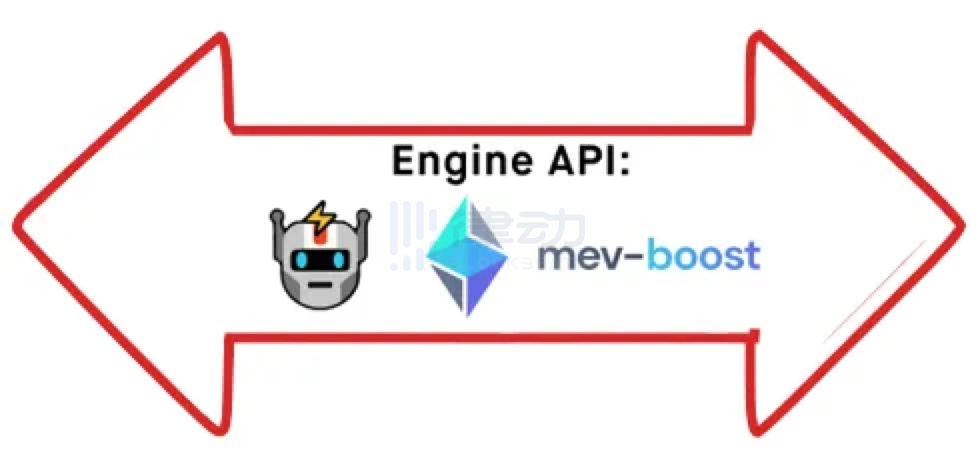
MEV-Boost is an open source middleware that validators can run to enter the highly competitive block building market. The middleware allows validators to access blocks from the builder market, MEV-boost will simply plug into the user's consensus client, allowing it to outsource specialized block building without knowing the technical details of how it works, these builders generate Blocks contain transaction order streams and block proposal validator fees.
first level title
Distributed verification technology
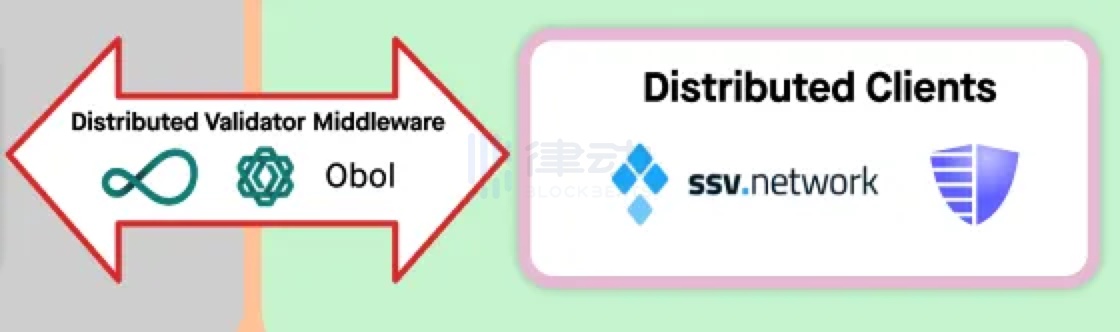
Distributed Validation Technology (DVT: Distributed Validator Technology) refers to an Ethereum validator running on multiple untrusted nodes to improve fault tolerance and security. It eliminates the single point of failure problem, if <33% of participating nodes in a DVT cluster go offline, the remaining active nodes can still reach a consensus on what to sign and generate valid signatures for their staking responsibilities.
The core goals of DVT technology or distributed clients:
- Provide delegators with a slash-free decentralized security layer while earning staking rewards;
- Simplifies the process of setting up a validator for those with little or no technical knowledge or previous exposure to cryptocurrencies;
- Build the foundation for the Ethereum staking community, ensuring that the spirit of decentralization remains at the heart of the network.
secondary title
Risks involved with traditional validator clients
A validator client is software that acts on behalf of a validator, attesting to the state of the chain by holding and using its private key. A single validator client can hold many key pairs, controlling many validators.
Validators sign messages with their staked private key, which is only accessible by the validator client software, which is used to arrange the creation and signing of messages according to the responsibilities assigned to validators. The main risks of this setup are:
- Staking private keys are in one (centralized) location, and if someone has unauthorized access to this private key, a conflict message may be generated, which may result in a validator's ETH being slashed;
- If the user does not operate his own validator, he needs to hand over the pledged private key to the operator the user is using, and this requires an assumption that the user must trust the operator to store the pledged private key safely and reliably;
- If validator client software does not create messages in a timely manner to perform validator duties, validators will suffer activity leaks which will reduce their ETH balances, which can be caused by software bugs, internet downtime, hardware issues and power outages, etc. of.
secondary title
SSV Network
SSV provides the infrastructure for splitting and distributing validator private keys into multiple "KeyShares" to run Ethereum validators across multiple untrusted nodes.
Currently, validators must run on a single node, which creates a single point of failure. If the node needs maintenance or goes offline due to a problem, it may be slashed. SSV splits the node's validator private key into multiple KeyShares and distributes them to each node. If a node goes offline due to one of the above reasons, the remaining nodes holding the KeyShares will respond and operate the validator to ensure no downtime .
secondary title
Obol Labs
Obol Labs is a research and software development team building PoS infrastructure, focusing on internet bonds, DVT and multi-operator verification. The Obol network facilitates trust-minimized staking with multi-operator verification, which opens the door for adoption of low-trust access to Ethereum staking, which can be used as a core building block for various Web3 products.
first level title
Solo-Staking
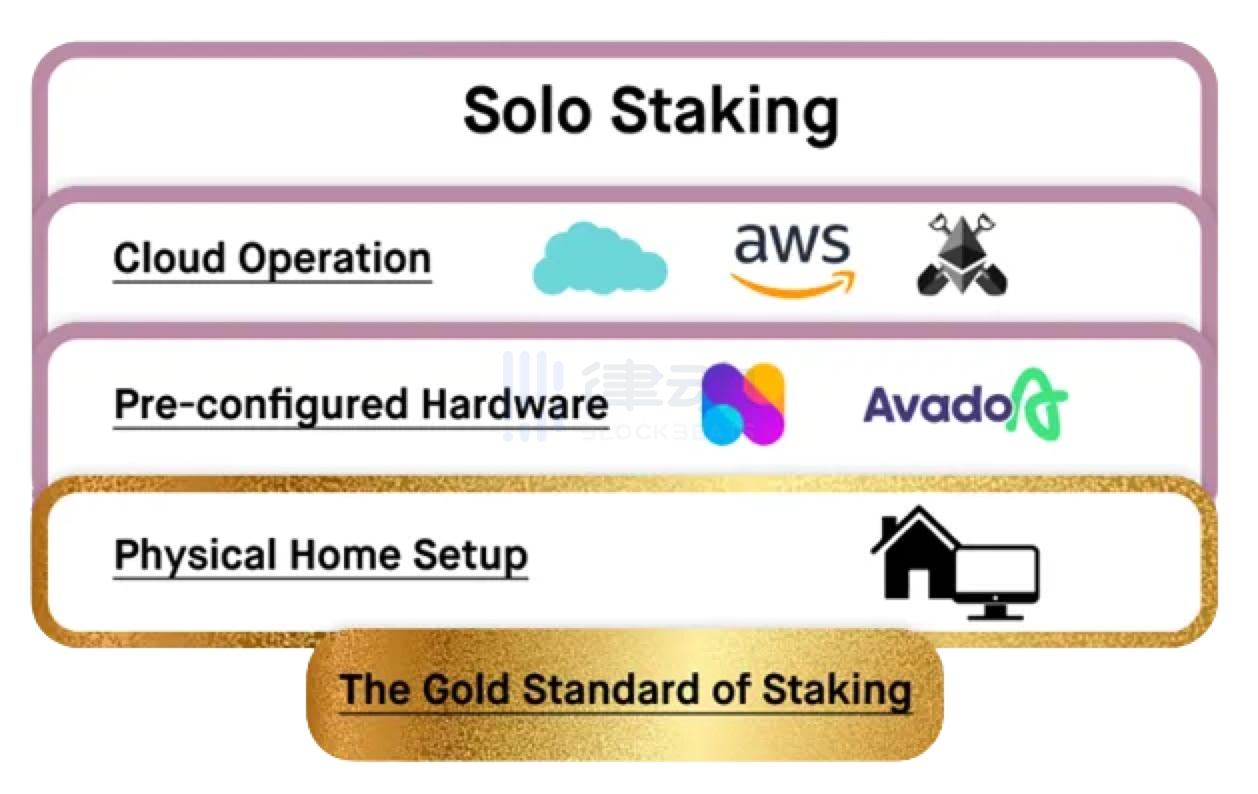
Personal staking is called "Solo-Staking," and users need to deposit at least 32 ETH to activate the validator software. As a validator, this user will be responsible for adding new blocks to the blockchain, processing transactions, and storing data, while securing the entire network in the process, and will be rewarded with new ETH.
Solo staking on Ethereum is, in our opinion, the best staking method that provides adequate participation rewards, improves network decentralization, and never requires users to trust other parties with their funds.
In addition, users can also run physical dedicated hardware at home, which is called "Home-Staking", which will be connected to the Internet 7x24 hours and have a stable power supply.
Home-Staking is widely regarded as the gold standard of staking, with key advantages including:
- Earn maximum rewards directly from the protocol to keep your validators up and online;
- Completely eliminate trust and never give up control of the funds key;
- Security and decentralization that can be run on home hardware and added to the Ethereum network in person;
- the best way to promote decentralization;
Disadvantages:
Disadvantages:
- give up the convenience of handing over the operation to another person;
- Machines and networks must be physically prepared, maintained and potentially troubleshooted.
Recommended hardware requirements for Solo-staking at home:
- Fast CPU with 4+ cores
- 16GB+ memory
- 1+TB fast SSD
- 25+ M/Bits bandwidth
However, depending on which client the user chooses, the required hardware will vary slightly. The biggest bottleneck people usually face is disk space, even after syncing with the Ethereum blockchain, it is better to use an SSD with a lot of extra space.heresecondary title
Cloud-Staking
Cloud-staking refers to using a cloud server to run a node, which may be easier than building and maintaining your own home server. It offers high server uptime and a static public IP address, and can be more cost-effective.
Advantage:
Advantage:
- The provider offers high server uptime and static public IP addresses;
Disadvantages:
Disadvantages:
- trust in a centralized third party - the server provider;
first level title
Staking Providers
Staking Providers are one of the larger categories entering the Ethereum staking ecosystem, setting up, maintaining and running hardware and day-to-day validator operations. They are considered the back-end operators who run all the computer and physical infrastructure that makes the PoS blockchain work.
Staking Providers is also the general term for institutions that provide Staking services, mainly including the following pledge providers:
- Infrastructure provider
- Verifier-as-a-Service (VaaS), including institutions providing institutional verification services
secondary title
infrastructure provider
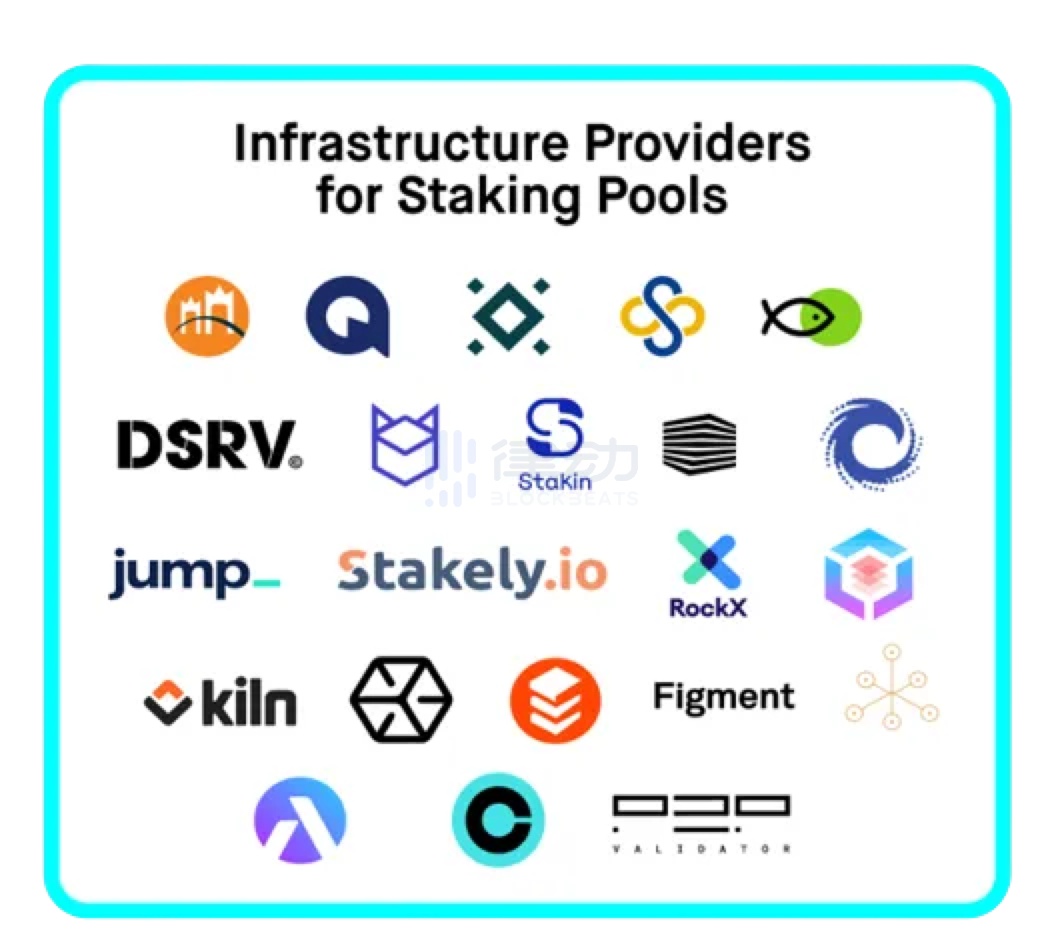
The infrastructure provider of the staking pool directly provides verification services to the staking pool, they have dedicated hardware to maintain and operate the nodes set up through the staking pool, and focus on large-scale operations and provide scalable solutions to meet the needs of staking pools.
secondary title
VaaS (Verification as a Service)
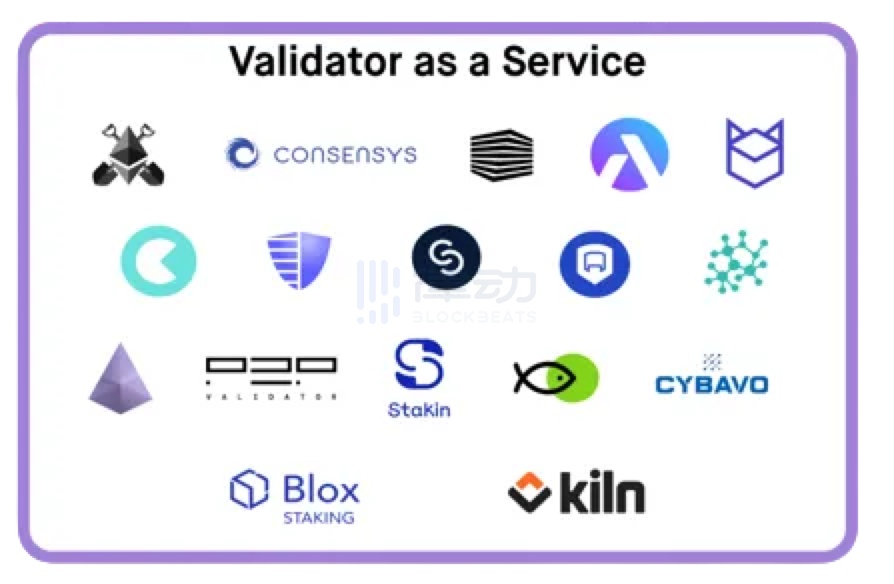
Validation as a service, also known as staking as a service (SaaS), represents a category of staking services where users can deposit 32 ETH and generate keys for validators. But in this case, the user delegates node operations to a third party. Also, instead of running hardware at home or using pre-configured nodes (Solo staking), users use third-party providers for hardware or cloud setup, maintenance, and upgrades.
How is this different from cloud staking? The key difference is that in Cloud Staking, the user is the one who has opted into the cloud service and is still doing the whole setup, monitoring and upgrading of validator nodes. Whereas in VaaS, users don't need to manage, monitor or run any operations of nodes, they just need to bring their 32 ETH to VaaS and pay a monthly fee for their services.
VaaS has three main advantages:
1) Still the user's own authenticator
Users get their own set of signing keys and, of course, withdrawal keys and can create a dashboard through the service they are using to monitor progress. It is semi-custodial in nature, as keys are shared between the user and the VaaS.
2) Easy to use
VaaS providers help users through the entire process from start to finish, and users can forget about hardware specs, setup, maintenance, and any upgrades that need to be done.
3) Limits risk
Users are generally not required to provide a withdrawal key, which prevents the service from withdrawing, transferring or spending their funds.
secondary title
Staking pool service
A staking pool is a collaborative approach that allows many different users with small amounts of ETH to acquire the 32 ETH needed to activate a set of validator keys. This makes it possible for smaller players to participate in staking on the network and leads to the establishment of more validating nodes.
It is worth noting that the Ethereum protocol itself does not support pledge pool services, so a shared service solution was built separately to meet this need, which has three main advantages:
1) Low barriers to entry
Most staking pools allow users to stake with as little as 0.01 ETH, which is easier to achieve than meeting the 32 ETH requirement for staking alone.
2) As simple as Token exchange
Users don't need to worry about maintaining and setting up a node, and the process of depositing into a pool is often as simple as exchanging one token for another.
3) Liquidity Token
Staking pools usually provide users with Tokens representing their staked ETH. The token can be used like any other token, enabling investors to earn staking rewards while being able to transfer, store, trade and earn yield across decentralized finance protocols. Liquidity tokens will be discussed further under "Liquidity Staking Agreement" below.
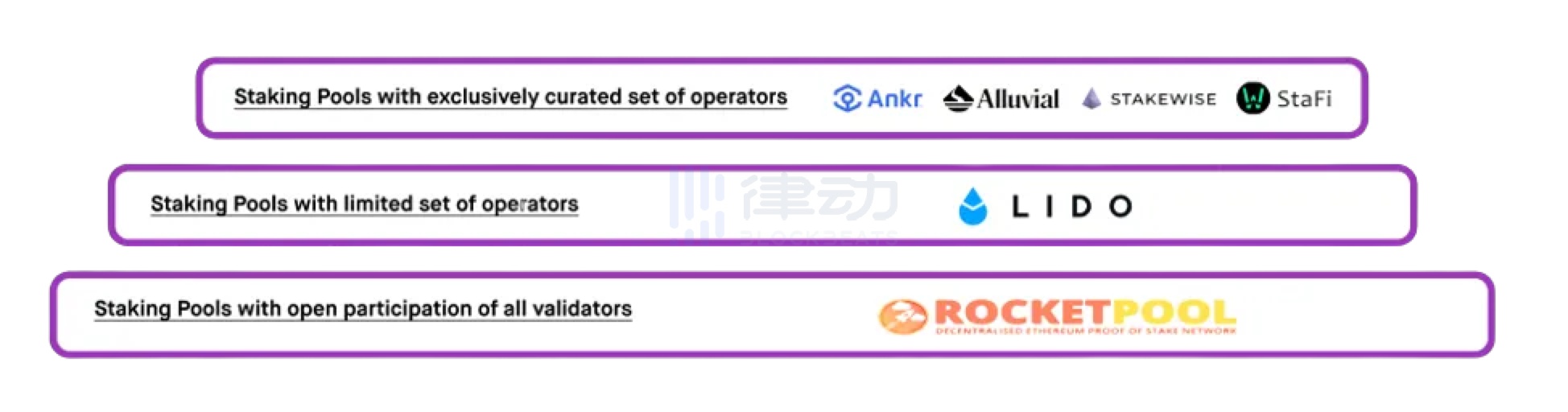
Additionally, staking pool services typically run using smart contracts, where funds are deposited to manage and track users' stakes and issue Tokens to represent the stakes in the contract. Staking pools can be further divided into three categories, separating them based on whether they allow open, limited or specially curated validator sets.
1) Public participation as a validator
Open participation for validators means that everyone can participate in the consensus process and become a node operator in the network, whether you are an institution or an individual. It does not rely on a voting process to decide who can or cannot be a validator on the network, users are treated like any other node operator.
This democratized staking system does not take sides and is the epitome of permissionless staking, an example of using this protocol isRocketPool。
2) Limited curated validator set
A limited set of validators refers to the approach taken by some protocols where professional validators are carefully selected to maximize yield and limit slashing penalties. The protocol has a committee to select top-notch validators to minimize staking risk, which means a group of decision makers decide who can be a validator, making it a permissioned protocol.
But the possible problems with this method are:
- Once the operator is in the set, there is little incentive to improve;
- There are not many professional node operators running their own infrastructure, which may cause the protocol to exhaust the candidate pool.
Furthermore, if this selection process continues over the long term, it could create a full-fledged cartel and lead to a dystopian outcome for Ethereum. While unlikely, centralizing decision-making power in the hands of a small number of token holders is not the best outcome for Ethereum, and in the long run, it does not end well for networks that choose this path, where An example isLido Finance。
3) A staking pool with an exclusively curated set of validators
first level titleAnkr Staking、Alluvial Finance、Stakewise、Stafi。
Liquidity Staking Solution
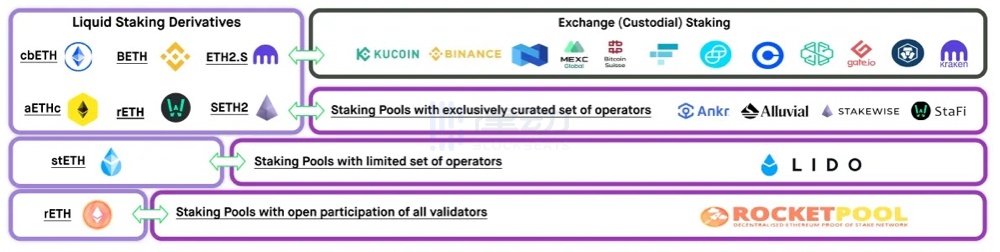
A unique proposition of Staking Pools is that they issue liquidity tokens, which represent staked ETH and allow users to trade or spend that token in DeFi applications, as well as in return for new trading/investment opportunities. The concept of issuing liquidity tokens for pledged assets is called liquid staking, and this is what most staking pools offer their users.
Traditionally, staking on PoS-based projects involves a lock-up period during which a user's assets cannot be traded or withdrawn. Taking Ethereum as an example, until the Shanghai upgrade is complete, funds cannot be withdrawn from validators on the beacon chain, which limits the ability of users to actually redeem their own liquidity tokens for ETH rewards locked in the consensus layer.
This is why liquid staking is so popular with investors, as it allows them to withdraw their ETH without actually removing the ETH from the staking contract.
The main benefits of liquid staking are:
- Make the staking process simple, requiring no management or setting up hardware;
- There is no limit to the deposit size, which allows smaller players to participate;
- Liquidity pools allow users to participate in other DeFi protocols.
Some common examples:
- Decentralized
Lido Finance(stETH)、RocketPool(rETH)、Ankr Staking(aETHc)、Alluvial Finance、Stakewise(SETH2)、Stafi(rETH);
first level title
Binance(BETH)、Kraken(ETH2.S)、Coinbase、cbETH。
Custodian

first level title
secondary title
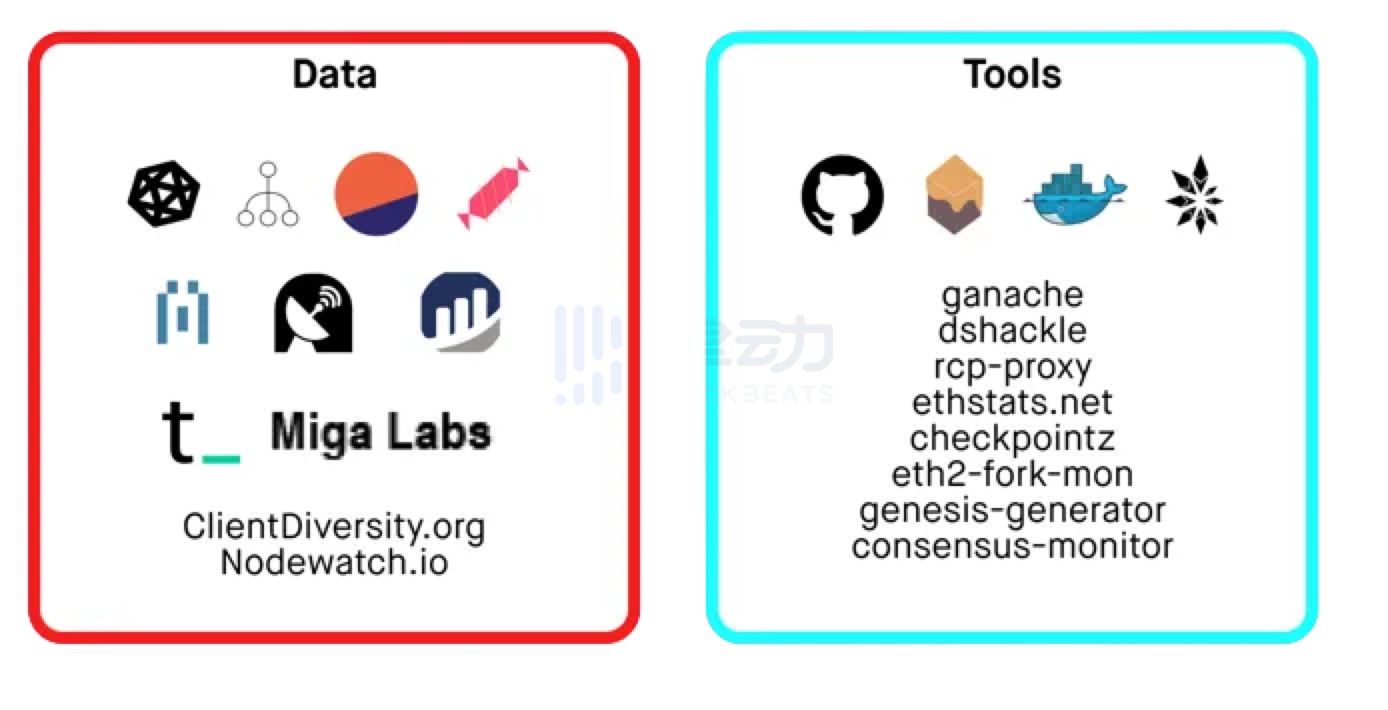
data provider
A data vendor is an organization or business that provides data for use by third parties. Some data vendors provide access to datasets for free, others sell data for a fee, and some data vendors provide a mix of free and fee-based data services.
The vast majority of Ethereum data providers provide their services for free and strive to provide insights to the community through unbiased and real-time staking market data. Furthermore, data providers can be divided into:
1) Investor Data
Staking Rewards: Central information center and data aggregator for crypto-staking industry
Dune: Community-Based Blockchain Ecosystem Analysis
Token Terminal: Aggregating revenue data analysis of blockchain and decentralized applications
2) Validator data
Rating.Network:Validator Rating
Nodewatch.io:Ethereum Node Analysis
Ethernodes.org:Ethereum Node Explorer
Clientdiversity.org: Customer Diversity Analysis
Migalabs: Ethereum Analysis
Eth2-fork-mon: a fork monitor for a set of configurable beacon nodes
Ethstats: Web UI for tracking execution layer node status
3) other
Beaconcha.in:Beacon Chain Block Explorer
Beaconscan: Official Etherscan Beacon Chain Explorer
Blockscout:tool
tool
The Ethereum community has developed tools to make the staking process more secure, efficient, and scalable. Most of these tools are open source and can be found on Github:
Consensus-monitor: Checks the user's Web UI of the Ethereum consensus layer node through its beacon API
dshackle: Fault Tolerant Load Balancer for Blockchain APIs including Ethereum RPCfauceth, EIP1559 Compliant Network Faucet using Hcaptcha
ganache: Simulator for executive layer development and testing purposes
genesis-generator: A tool for generating and exposing genesis files for executive and consensus layer clients
rpc-proxy: Proxy, Rate Limiting and Method Filtering for Web3 JSONRPC
testnet-faucet: A web faucet that can be used to distribute testnet ETH to users
testnet-homepage: Simple website that can be used to display useful information about user testnets
ethereum-metrics-exporter: prometheus exporter for ethereum execution and consensus clients
checkpointz:first level title
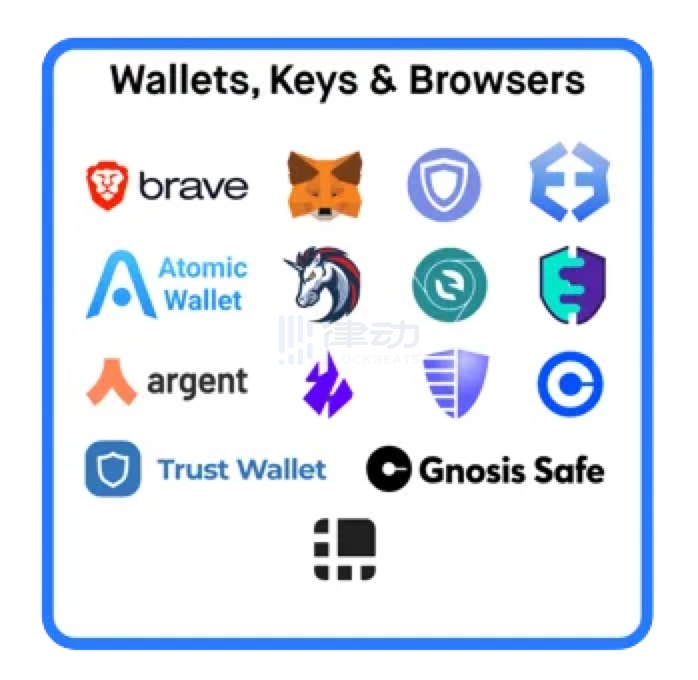
wallet and browser
first level title
Escrow pledge

Custodial staking means that users pledge cryptocurrency through a centralized entity (ie Binance, Kraken, Coinbase), but it means that the exchange is the custodian of the user's assets, and the user entrusts the management of the private key to the exchange and is subject to it. bound by the terms.
But this option is not recommended as the first choice for users, because it requires a large trust assumption and is not conducive to the decentralization of the network. If users don't like to use self-hosted wallets and prefer to use centralized exchanges, that's another matter. However, users are always encouraged to support decentralization and learn how to use other options.
Summarize
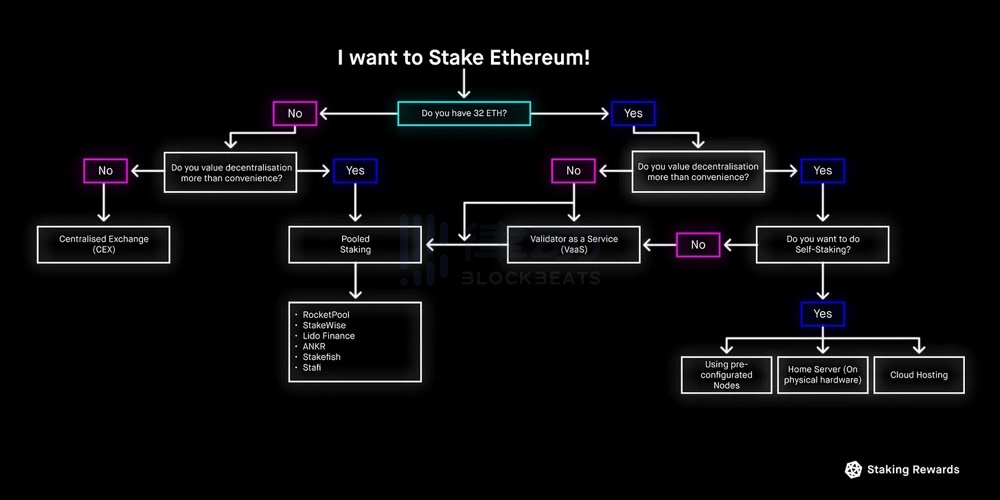
Summarize
Original link





