






Discuss the market changes after the merger of Ethereum from four aspects


first level title
Original compilation: Block unicorn

trend of the week
ETHW (Ethereum’s fork token) price plummeted as selling pressure increased and miners left.
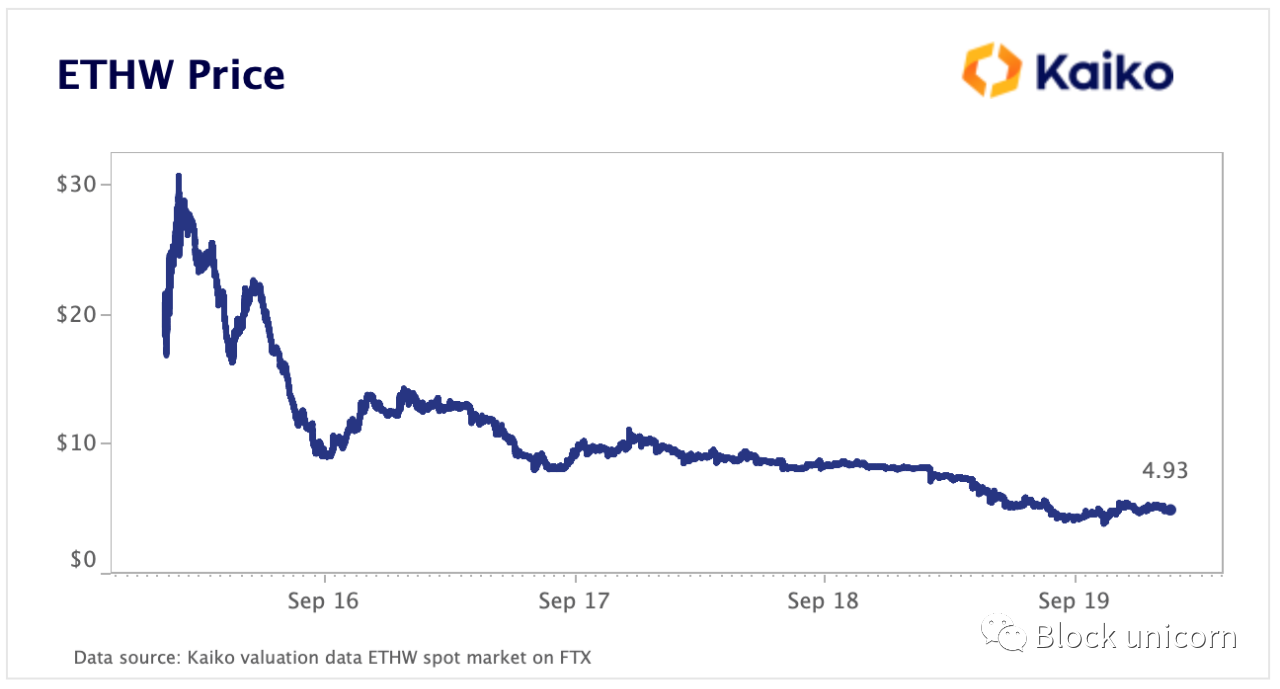
Ethereum's Proof-of-Work (Proof-of-Work) got off to a rough start. ETHW, the token representing the new hard fork of the ethereum network, has fallen more than 80% since its listing on FTX. The network’s generally poor launch has been exacerbated by glitches and the emergence of a competing fork called EthereumFair, which is backed by exchange Poloniex.
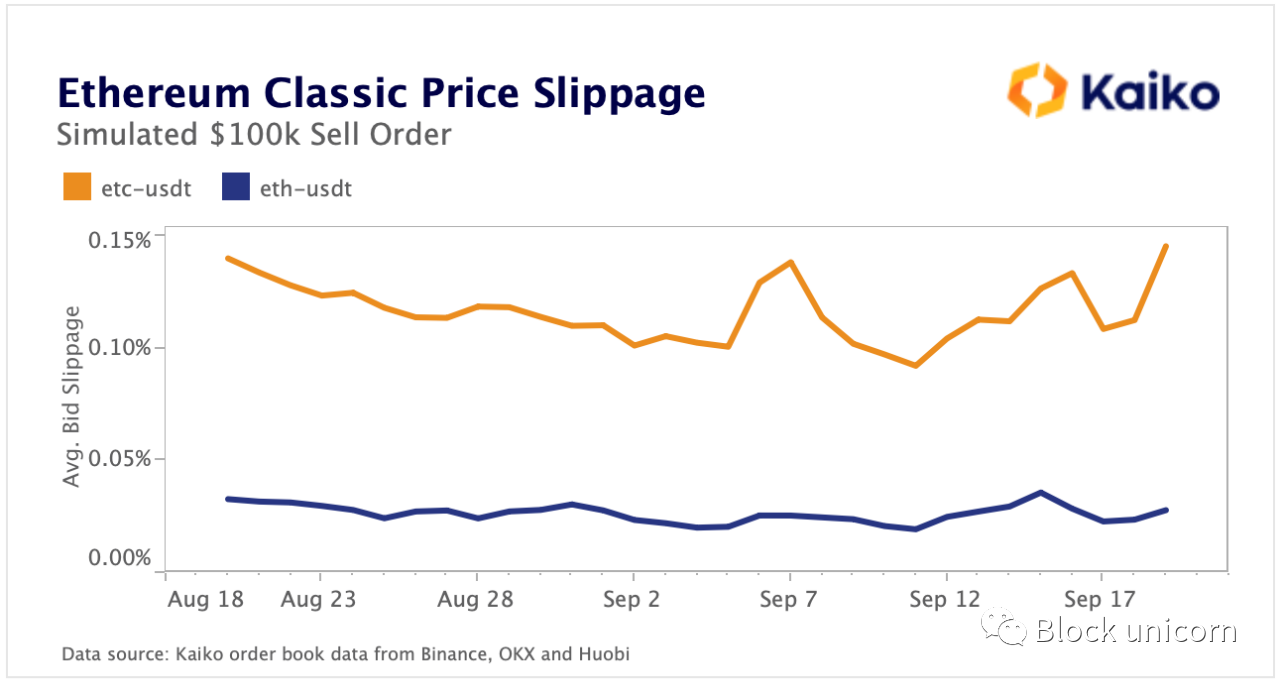
Meanwhile, the ethereum network, one of the first to hard fork, saw a surge in hashrate as miners transitioned to mining ETC after a successful merger. Ethereum Classic forked in 2016 but failed to gain significant market share or usage over the years. ETC is down 25% this week and has very illiquidity on centralized exchanges, which could pose problems for new miners looking to cash out.
first level title
secondary title
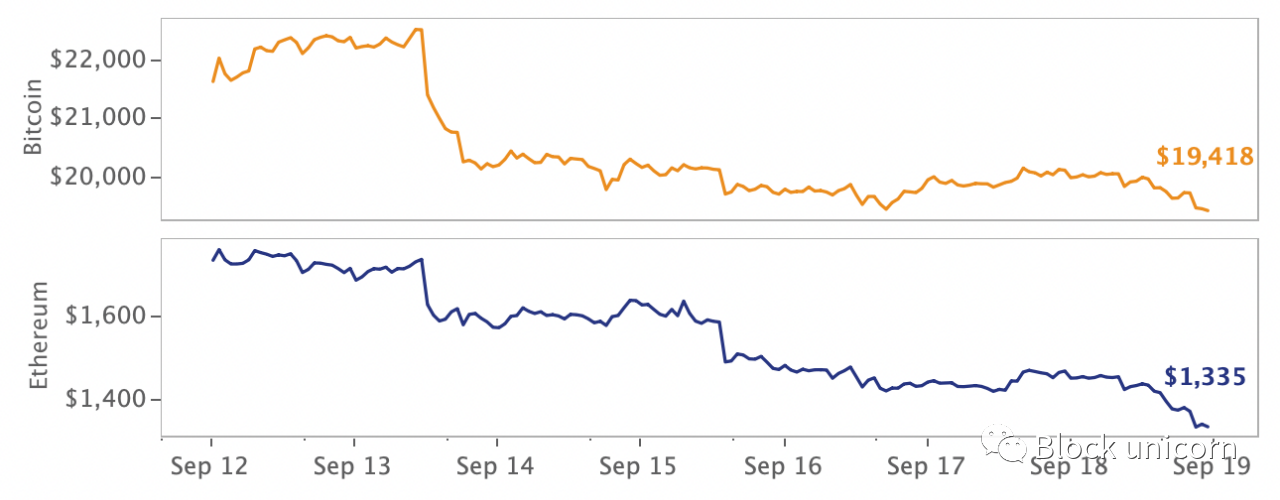
Post-merger sell-off sweeps markets
secondary title
ETH discount rate narrows to lowest level since May
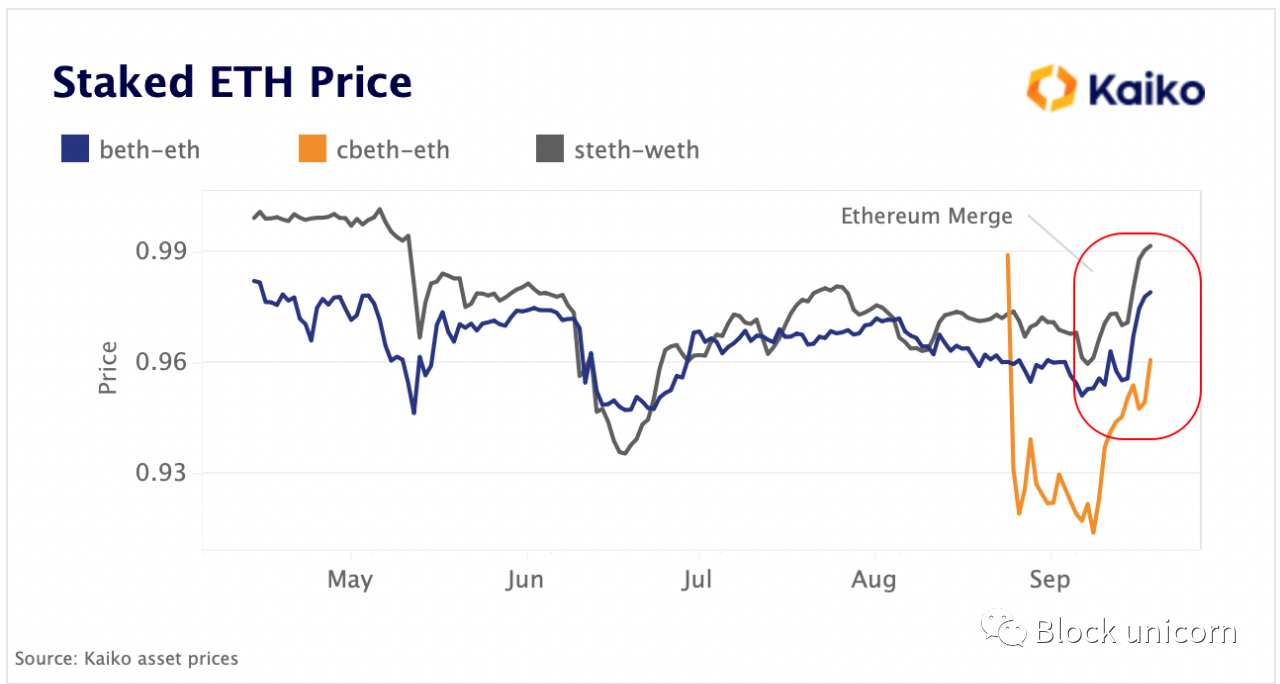
The discount of staked ETH tokens relative to spot ETH has narrowed to its lowest level since May, a trend first seen hours after the ethereum network successfully transitioned to proof-of-stake. Liquid staking derivative tokens such as Coinbase’s cbETH, Binance’s bETH, and Lido’s stETH are wrapped versions of Ether staked on the Ethereum consensus layer (Beacon chain). They are not pegged to ETH and their market prices take into account some regulatory and smart contract risks. For example, if a validator is involved in being "punished" by the Ethereum network in the event that the validator has a bad problem, then those tokens involving the penalized portion of the Ethereum staked nodes may be at risk.
first level title
secondary title
The U.S. dollar remains the dominant fiat currency among cryptocurrencies
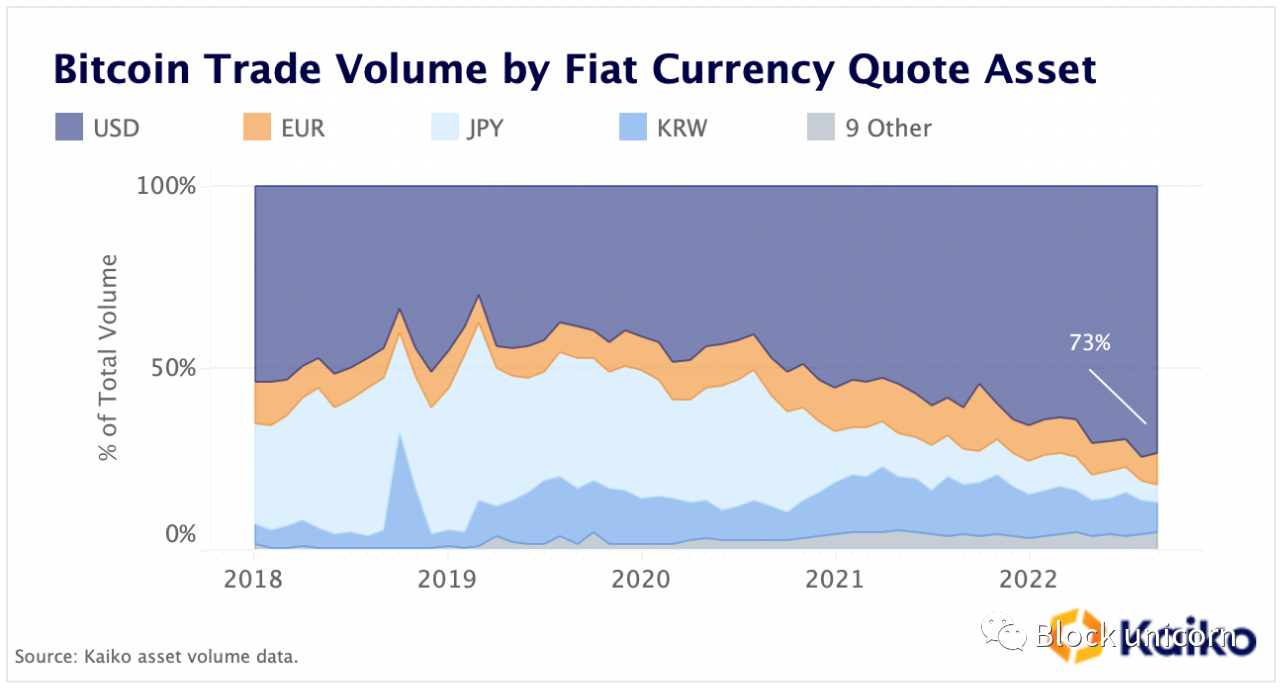
While most cryptocurrency transactions are currently conducted using stablecoins, fiat currencies remain a key conduit for entry and exit. The U.S. dollar has historically been the most important fiat currency in cryptocurrencies, but how has its role changed over time? Since 2018, the share of bitcoin traded against the U.S. dollar has increased significantly, with the U.S. dollar now surpassing the bitcoin 70% of currency transaction volume.
This trend can be explained by the growing institutionalization of the market, as large investors generally prefer to trade in dollars. However, a closer look at the breakdown by fiat currency reveals that local regulation may also have played a role. It is worth noting that the volume of Bitcoin transactions in the Japanese market has dropped significantly. After the $ 97 million hack and stricter regulation in Japan, the annual transaction volume of the Japanese exchange Liquid fell by 5% between 2018 and 2021. times. In contrast, bitcoin trading volumes in the U.S. dollar market have increased by 30% over the same period.
secondary title
ETH market share hits all-time high during post-consolidation sell-off
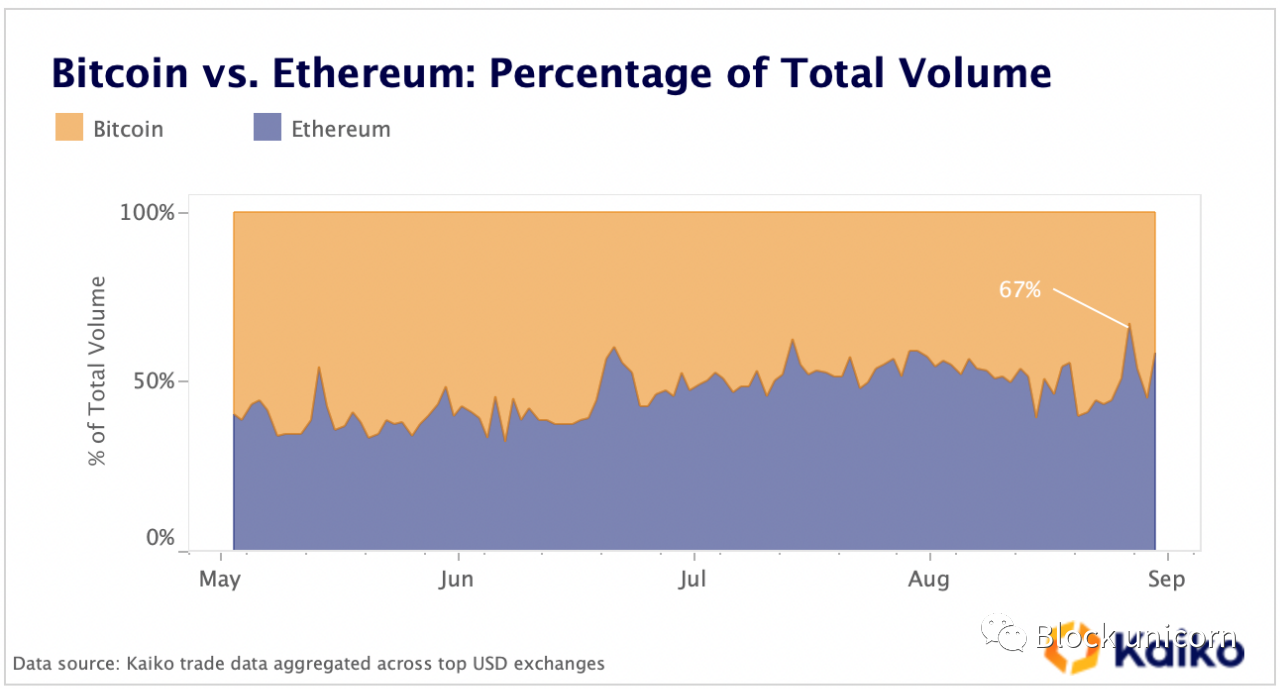
Ether’s market share of trading volume hit an all-time high in last week’s post-consolidation sell-off, approaching 70% of Bitcoin’s trading volume. The massive unwinding of leveraged long positions in the derivatives market exacerbated the drop in spot prices, leading to a surge in spot trading volumes. Overall, ETH’s market share has more than tripled since 2020, indicating that the market structure is shifting from BTC to another.
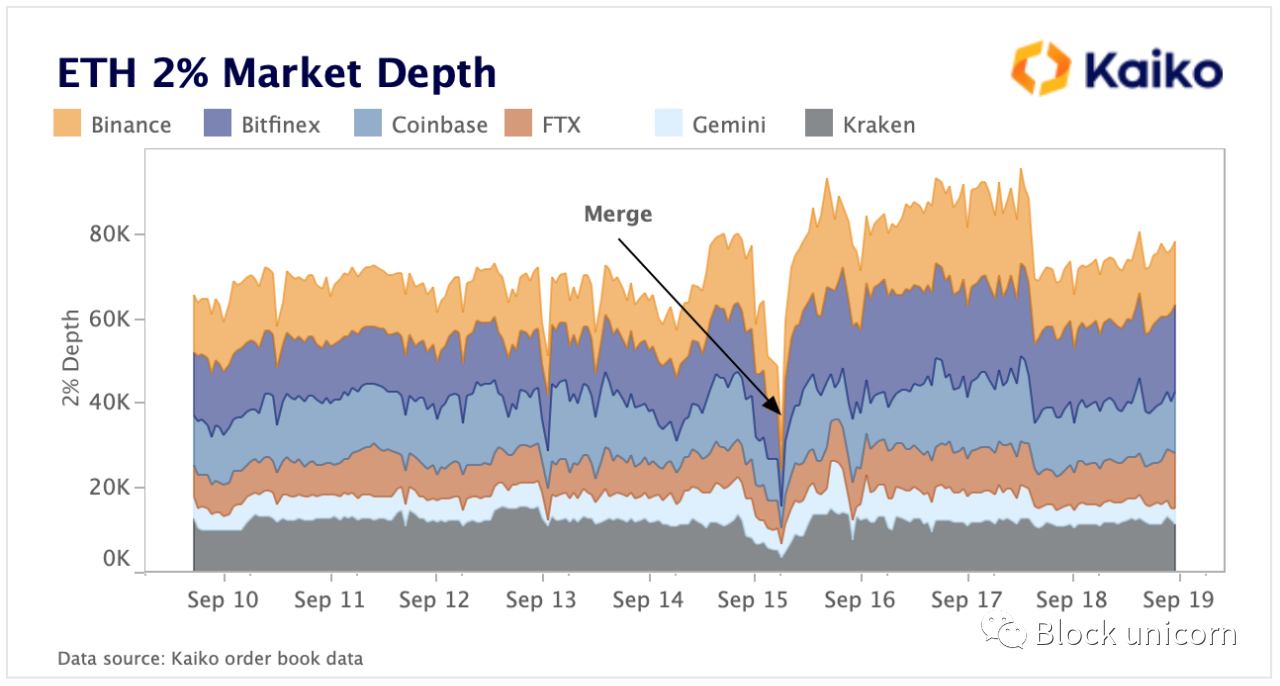
Liquidity evaporated in the ETH spot market as trading volumes surged, as measured by the volume of buy and sell orders within 2% of the mid-price in ETH- usd (T) order books. That suggested market makers were getting jittery and reducing liquidity to avoid getting caught up in merger-related volatility. Liquidity increased rapidly after the merger and is now only slightly higher than it was before the merger.
secondary title
Binance reverses the trend of trading volume
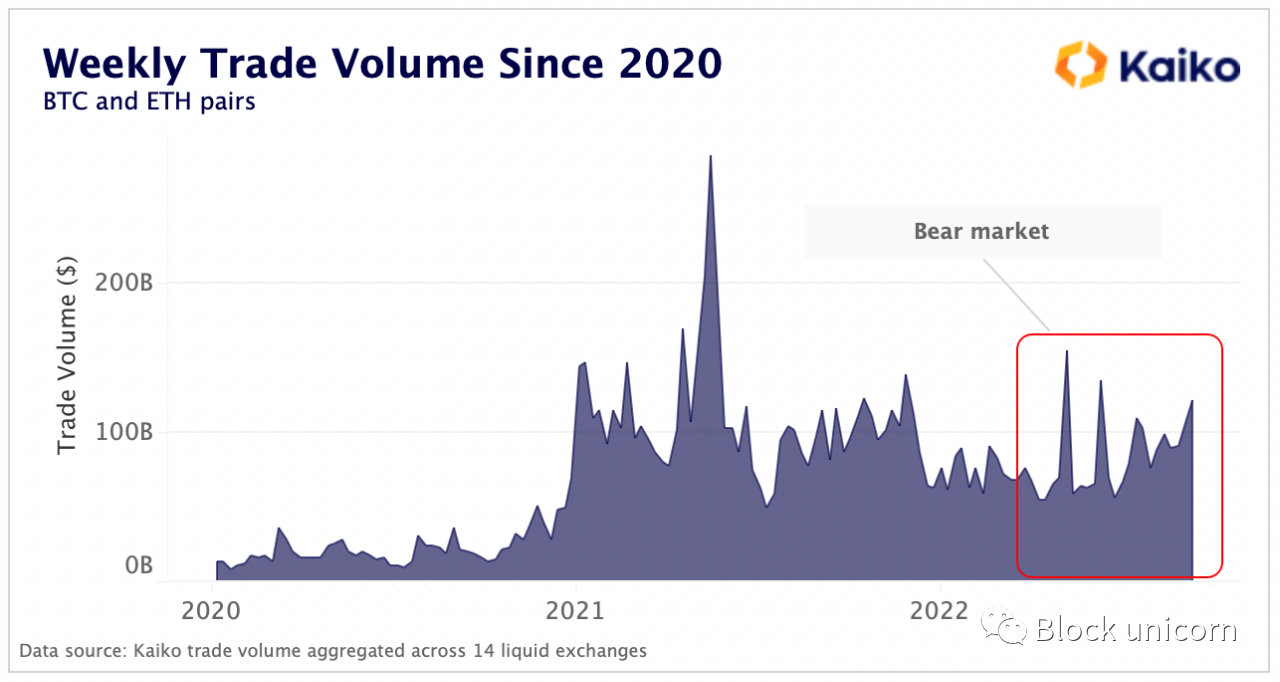
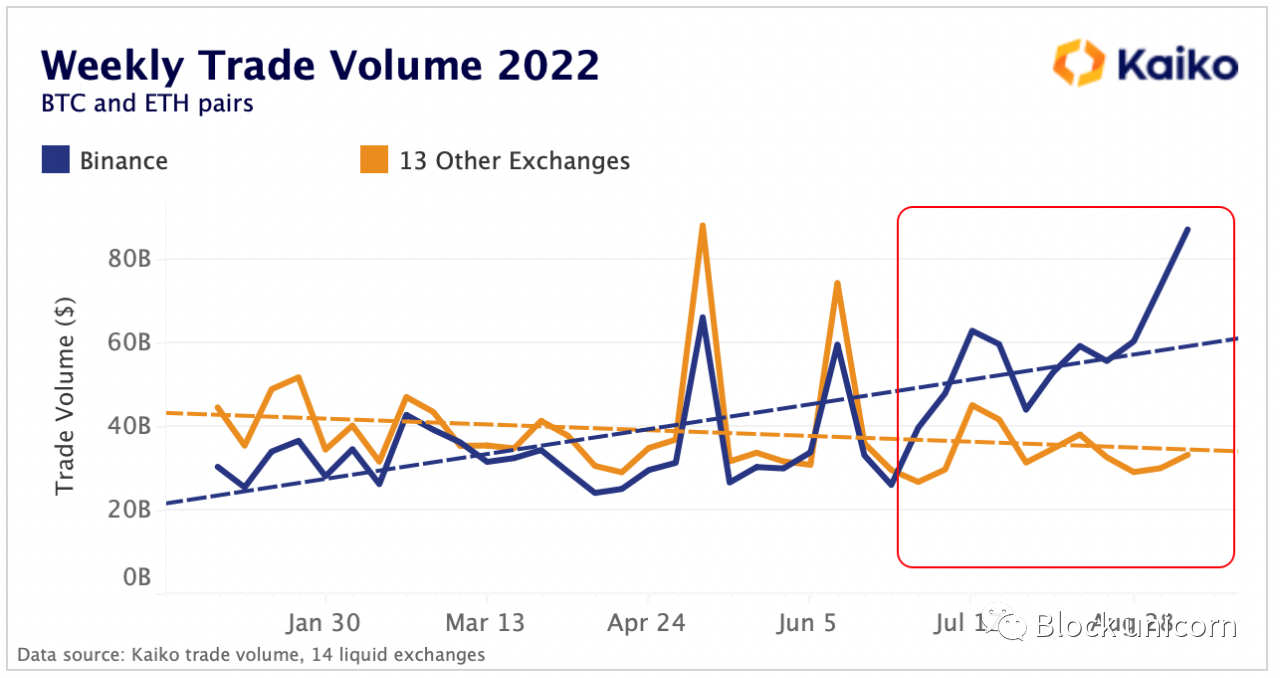
Trading volume is one of the best indicators of a long-term bear market. The initial price slide is often followed by a surge in volume as traders take advantage of (or suffer from) volatility. However, as days turned into weeks, and into months of depressed prices, volumes on most exchanges began to decline. However, when looking at aggregated volumes for the most liquid BTC and ETH pairs, we can observe no such trend since the start of the bear market in May. While weekly trading volumes remain well below all-time highs, there has actually been a slight uptick in activity over the past few months.
Unfortunately, aggregated data can confound trends at the exchange level. When breaking out Binance from this aggregated data set, we can see a big difference in activity between the world's largest exchange and the other 13 exchanges. Since Binance removed transaction fees for the BTC/ETH pair, the trading volume of the BTC/ETH pair has skyrocketed. For the first time, Binance’s market share far exceeds the combined trading volume of 13 other exchanges (including Coinbase, FTX, Huobi, Okex, etc.). Since the beginning of 2022, volumes on all exchanges except Binance have actually trended downward, in line with our expectations for a bear market.
first level title
secondary title
ATOM open interest surges amid bullish run
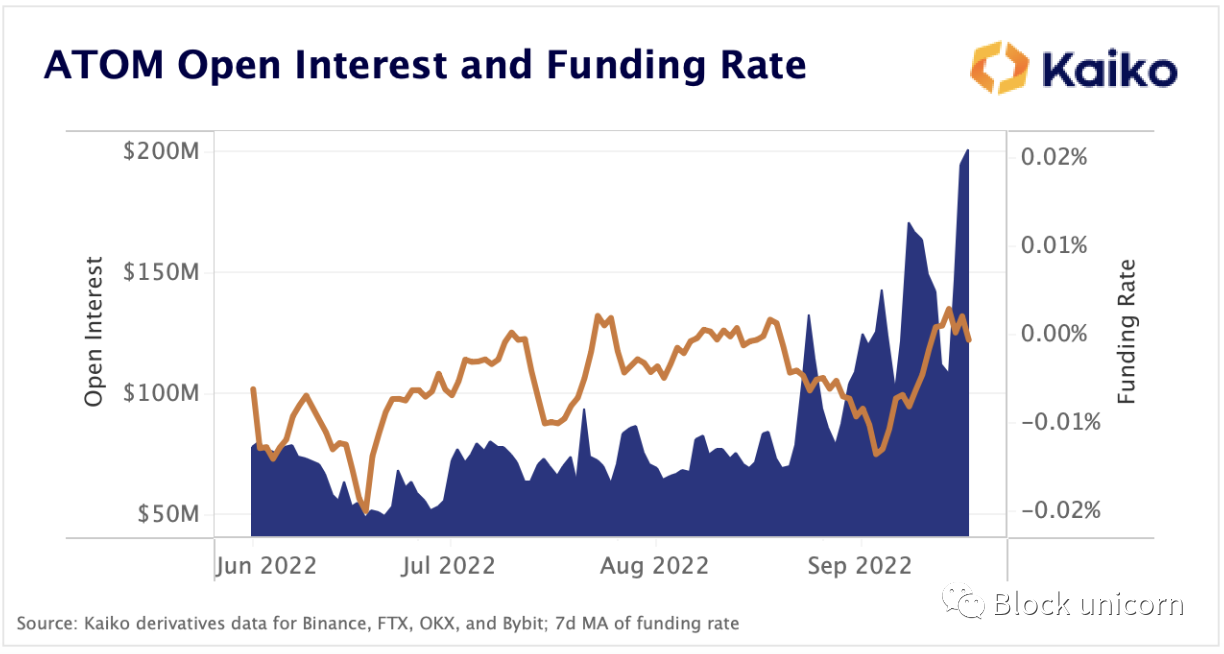
Cosmos’ token, ATOM, has been one of the few bright spots in a sluggish few months for cryptocurrency prices. Cosmos is a decentralized network of independent and interoperable blockchains that aims to be the "Internet of Blockchains", enabling them to share data and tokens across their ecosystems.
secondary title
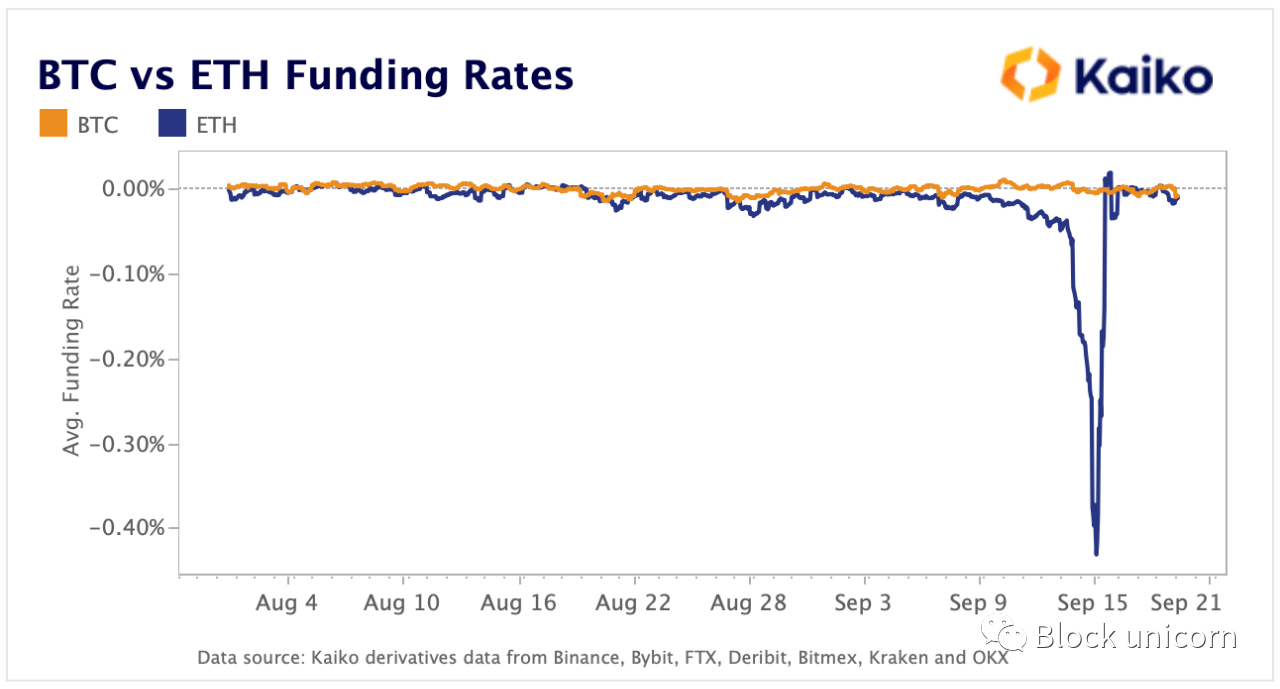
ETH financing rate has risen sharply
first level title
secondary title
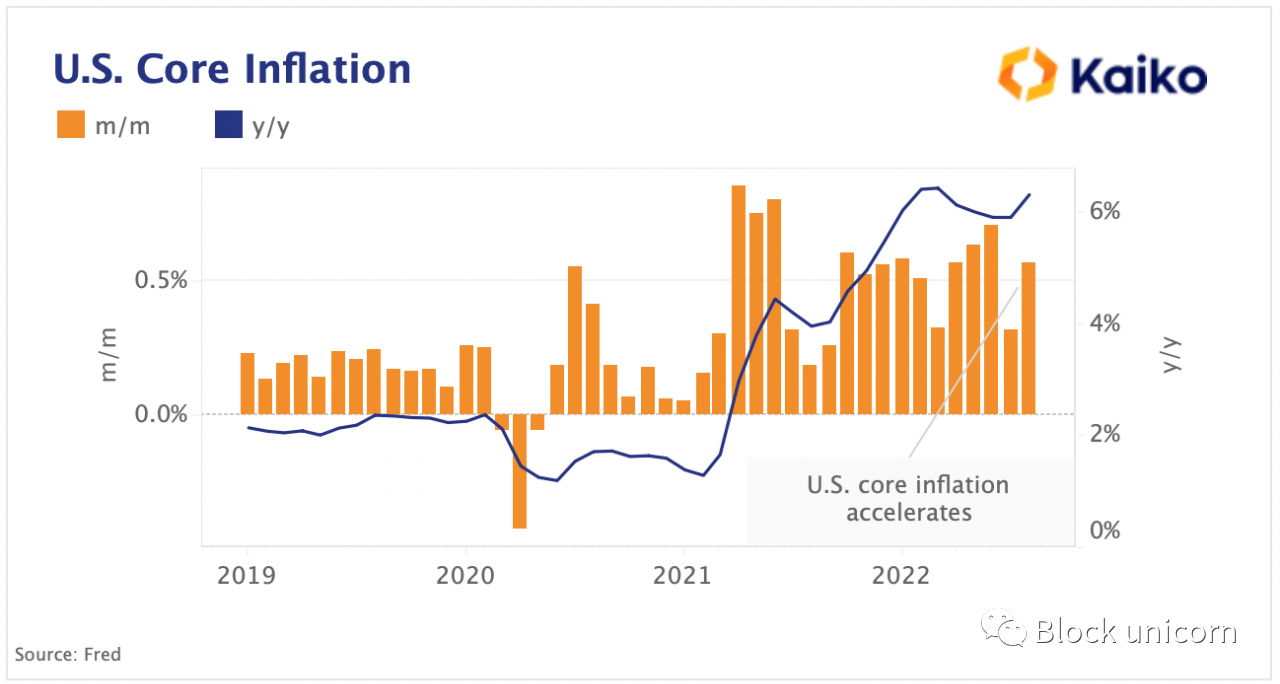
Higher-than-expected U.S. inflation heightens Fed rate hike bets
secondary title
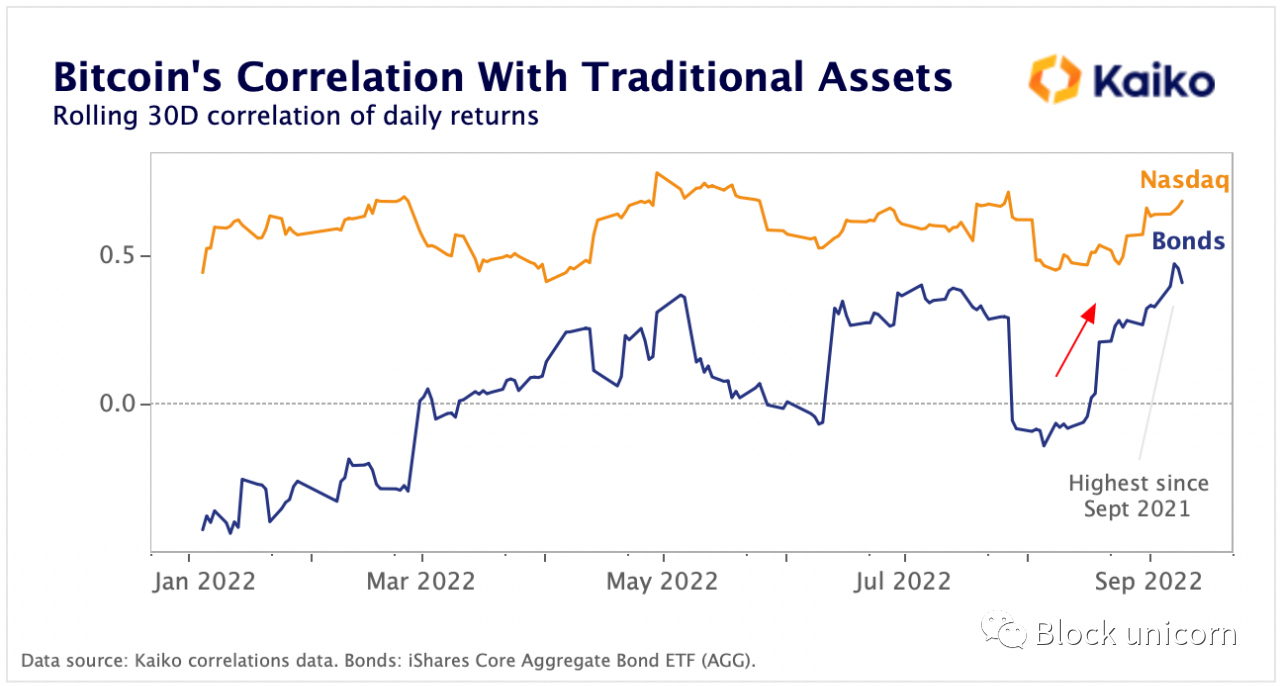
Bitcoin's Correlation With Bonds, Stocks Rise In September
Original link





