


Odaily Frontline|Report: USDT may surpass BTC and become the dominant currency of the public chain


This article comes fromDecryptOdaily Translator |
Odaily Translator |
secondary title
Main points of the article:
The monetary base of stablecoins increased by $3.8 billion last quarter to $12 billion.
More than 80% of the stablecoin market capitalization is controlled by USDT.

Ethereum is the blockchain that issues the most USDT, accounting for more than 85% of stablecoin transactions.Messari Analyst Ryan Watkins
Likely to be tweeted by various @ and comments by bitcoin maximalists.Posted by WatkinsStablecoin Q2 Assessment Report
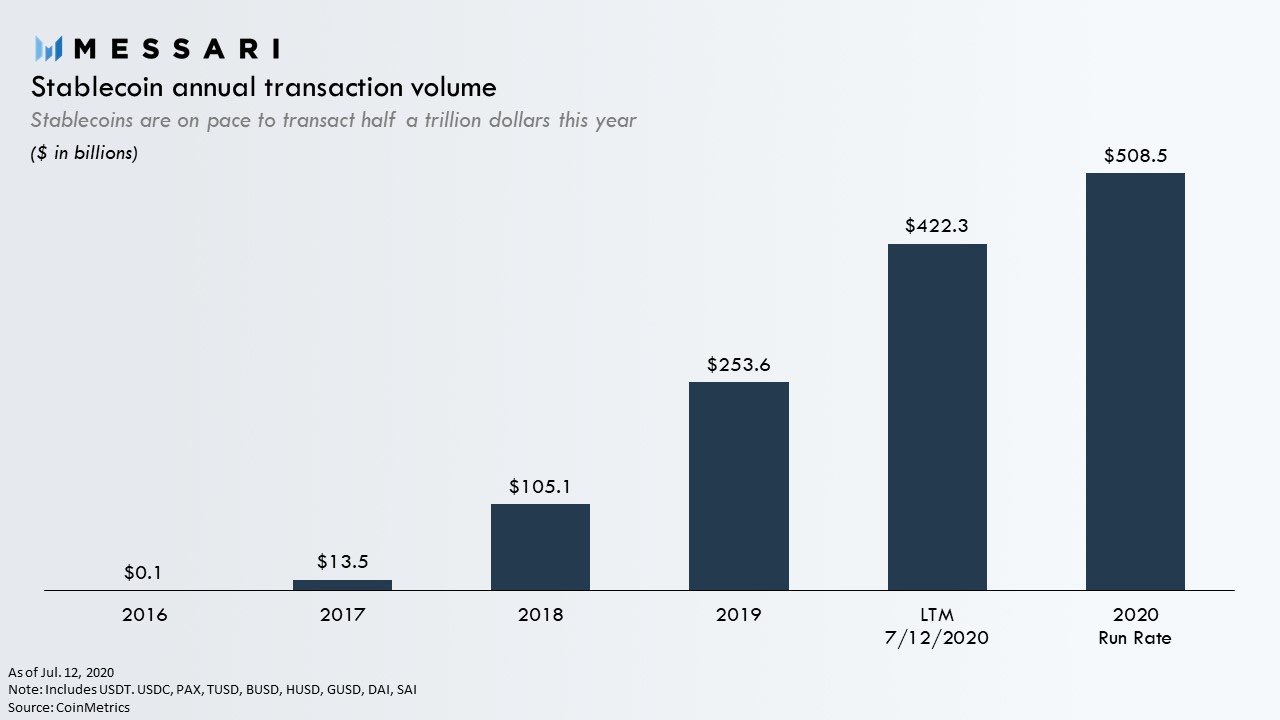
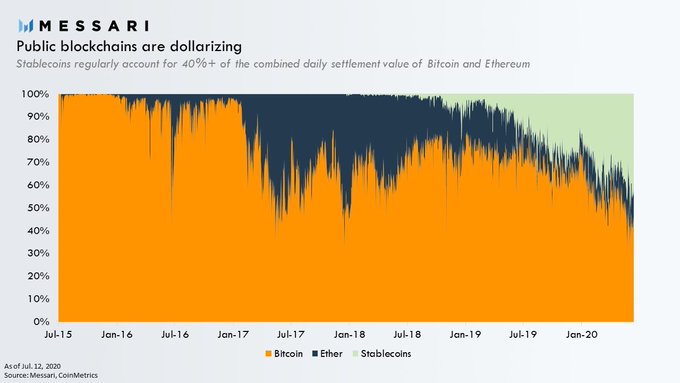
, DeFi is rapidly bringing more stablecoin value to Ethereum. In Q2 2020, public blockchains settled $144 billion in stablecoin transactions. Including the 12 days after the end of Q2, public blockchains have settled $270 billion in stablecoin transactions year-to-date and $422.3 billion in stablecoin transactions in the last 12 months (LTM); this means that 2020 Total transaction volume for the year is expected to exceed $508 billion. In recent months, stablecoin transactions have regularly accounted for more than 40% of the total daily settlement value of Bitcoin and Ethereum.
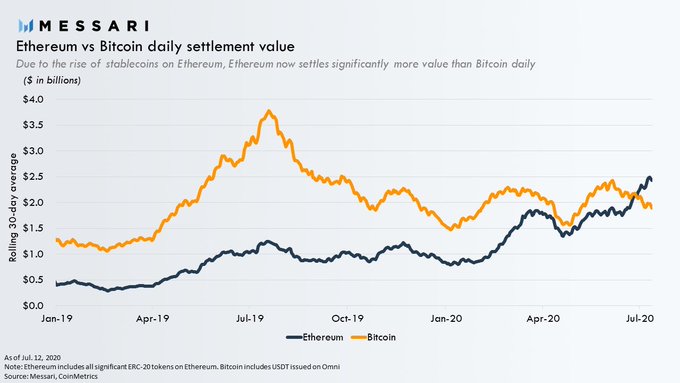
After nearly equaling Bitcoin in daily settlement value in the first quarter of 2020, Ethereum’s daily settlement value has “surpassed Bitcoin” in the second quarter.
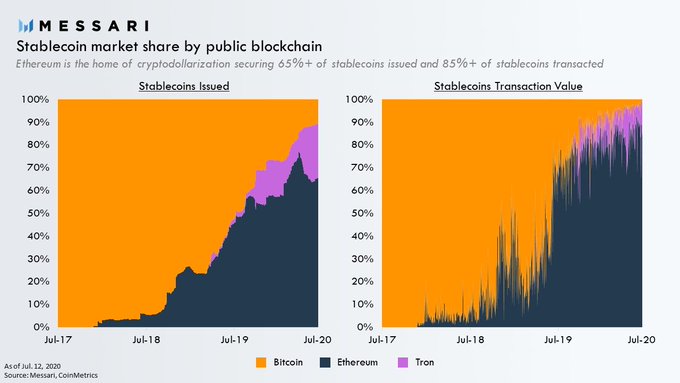
These settlement data are the excellence achieved by Ethereum. Ethereum has been the main public blockchain for stablecoins. The ethereum blockchain issues more than 65 percent of all stablecoins and accounts for more than 85 percent of stablecoin transaction value, Watkins said.
According to Watkins’ analysis, stablecoin trading volumes correspond to two recent trends. The first is the financial panic related to COVID-19. Total stablecoin circulation increased by $3.8 billion in Q2, compared to $2.4 billion in Q1.
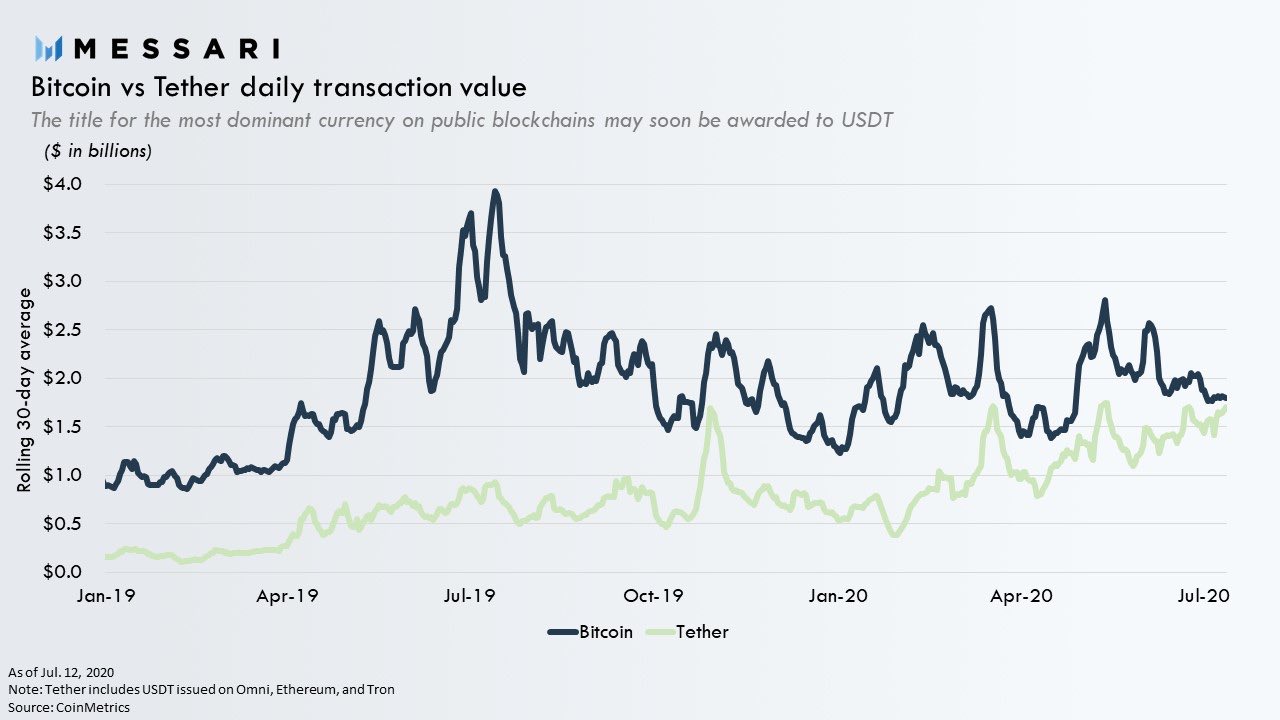
Most of this growth came from USDT ($3.5 billion increase). The total market value of stablecoins has reached 12 billion U.S. dollars, while USDT accounts for more than 80% of the market value (more than 10 billion U.S. dollars). The more disturbing news for most Bitcoin maximalists is that “USDT alone may soon overtake Bitcoin as the dominant currency on public blockchains.”
sUSD, which was launched by Synthetix in January this year, and Binance stablecoin BUSD, which started trading last September, have also shown relatively strong growth. They still have some way to go before they catch up to Tether, though.
While Tether was originally issued on the Bitcoin blockchain, it began issuing on the Ethereum blockchain back in 2017. Tether issues a small amount of USDT on the TRON blockchain.
If stablecoin settlement figures are up, it seems like good news for stablecoins and the blockchains that issue them, Watkins said, and that’s because it is.
Watkins pointed out that the data for the first quarter of 2020 shows that the growth of stablecoins in the last quarter was not just a result of financial market turmoil caused by the new crown virus pandemic causing people to cash out their funds. Instead, stablecoins offer a better payment and savings solution in some ways.
The surge in demand for stablecoins doesn’t just coincide with the timing of the COVID-19 pandemic. The use of stablecoins has also been linked to the DeFi boom. Watkins cites developments in DeFi in Q2: DEX volumes at times hit $500M a week, Compound’s liquidity mining program resulted in $800M in outstanding loans, and over $2B in value locked In DeFi tokens. At the same time, the prices of those tokens also increased.
“Stablecoins are at the center of all this activity, which helps build their utility beyond the payments use case,” Watkins noted.





