


Odaily Frontline | BIS Report: Central Bank Digital Currency Can Safeguard Payment Competition


This article comes fromLedger Insights
Odaily Translator |

This article comes from
Odaily Translator |
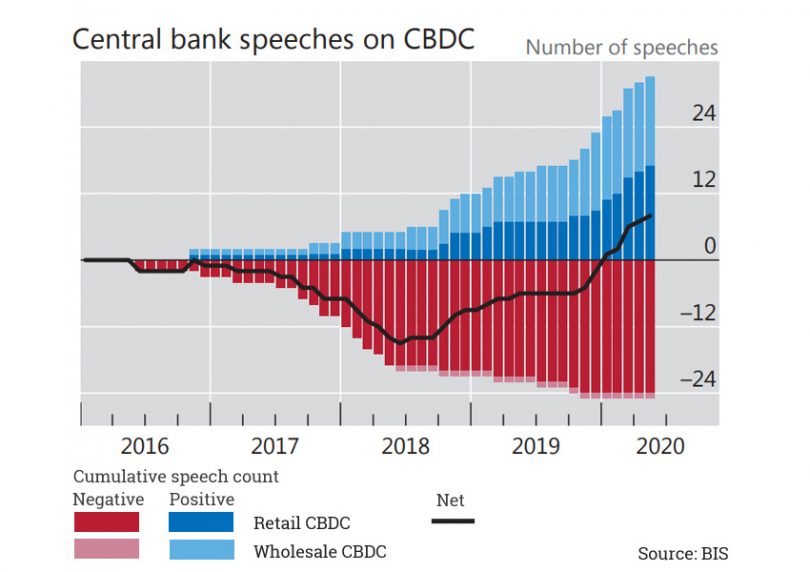
On June 24, the Bank for International Settlements (BIS) published the chapter "Central banks and payments in the digital era" of its annual report. This section covers Central Bank Digital Currency (CBDC) as an increasingly likely option. In particular, the BIS chapter sees central banks as guardians of competition in payments in the private sector.
“CBDCs could provide a new, secure, trusted and widely used method of digital payments,” the report states. But their impact could be more far-reaching, as they could foster competition among private sector intermediaries and set high standards for security , and be a catalyst for continued innovation in payments, finance and overall commerce.”
The report briefly outlines private sector attempts to address the need for faster and cheaper payments, and mentions bitcoin and other cryptocurrencies, the Libra stablecoin, and the entry of big tech and fintech companies into financial services.
2. Improve the security of the Libra payment system with a robust compliance framework;
1. Add single-currency stablecoins, and the originally designed multi-currency stablecoins will become the new token LBR supported by these single-currency stablecoins;
2. Improve the security of the Libra payment system with a robust compliance framework;
3. Abandon the future transition to a permissionless system while maintaining its main economic attributes;
4. Build stronger safeguards into the design of the Libra reserve assets.
3. Abandon the future transition to a permissionless system while maintaining its main economic attributes;
4. Build stronger safeguards into the design of the Libra reserve assets.
This was further evidenced by Brazil’s central bank announcing the suspension of the newly launched WhatsApp Pay on the same day. Brazil's central bank has asked MasterCard and Visa to stop processing WhatsApp transfer payments. The central bank stated that it needs to maintain a sufficiently competitive environment and needs to evaluate the application's impact on Brazil's financial sector. The Central Bank of Brazil also stated that the payment function may be integrated with the upcoming blockchain-like digital payment system PIX of the Central Bank of Brazil. A WhatsApp spokesperson backed this up.
Earlier, WhatsApp, a chat application owned by Facebook, officially announced on the 15th that it had launched an electronic payment service in legal tender. The service is first launched in Brazil and serves approximately 120 million Brazilian users.
But this competitive message isn't just for Facebook. The BIS highlighted the network effects of payment systems, which by their nature lead to the dominance of a small number of players. Visa and MasterCard in the West, Alipay and WeChat Pay in China are good examples that are not explicitly mentioned.
A metaphor repeated in the BIS paper is that of a town market, where public squares provide a basis for competitors to display their wares. Likewise, central banks provide payment infrastructure so that payment service providers can compete and innovate. The backbone of a CBDC is such a platform.
In addition, the report believes that large technology and fintech companies will pose a major threat to incumbents. The BIS believes that public intervention may be needed to ensure interoperability, citing open banking as an example.
To ensure open competition, the report stresses that new technologies and players must be held to the same regulatory standards as everyone else.
When it comes to CBDCs, the BIS acknowledges that availability is essential and best provided by the private sector. It also wants to address the risk of money leaving commercial banks during the crisis by lowering interest rates or limiting retail holdings of CBDC. Data portability and privacy between providers need to be balanced with anti-money laundering needs.
According to news on June 23, Brian Brooks, acting director of the U.S. Office of the Comptroller of the Currency, also said that the design of CBDC should be led by the private sector, because the technology field is most suitable for building currency, and the role of the government is to supervise currency.
Brooks pointed out that the issue of central bank digital currencies must be solved, but does not believe that government leadership is necessary for the United States to take the lead. Instead, he sees the government’s role in projects like stablecoins as creating guardrails and navigating market dynamics, leaving it to profit-driven innovators to create.
Ultimately, the BIS envisions a two-tier system of CBDC based on central bank operating infrastructure, positioning CBDC as a complementary means of payment to address specific use cases and market failures, and to foster innovation.





