


Stablecoins are becoming another moat for the Ethereum ecosystem


In the past 30 days, the transaction fee of stablecoin on Ethereum can account for about 35% of the transaction fee of the entire network, and even close to 50% of the transaction fee of the entire network of Ethereum at a high level.
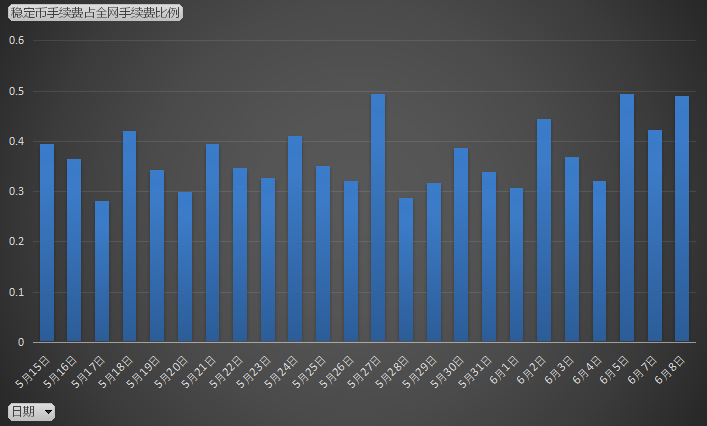
Taking the activity data of three stablecoins USDT, USDC and PAX on Ethereum as an example, we can see that stablecoins are becoming an important source of transaction fees on Ethereum.
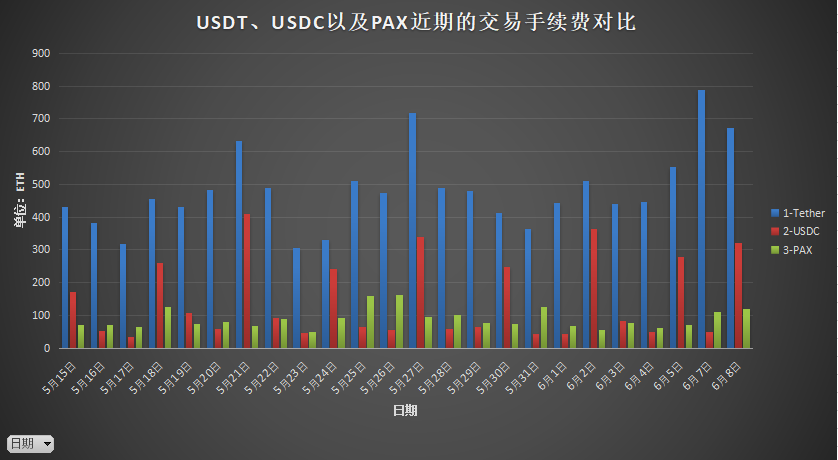
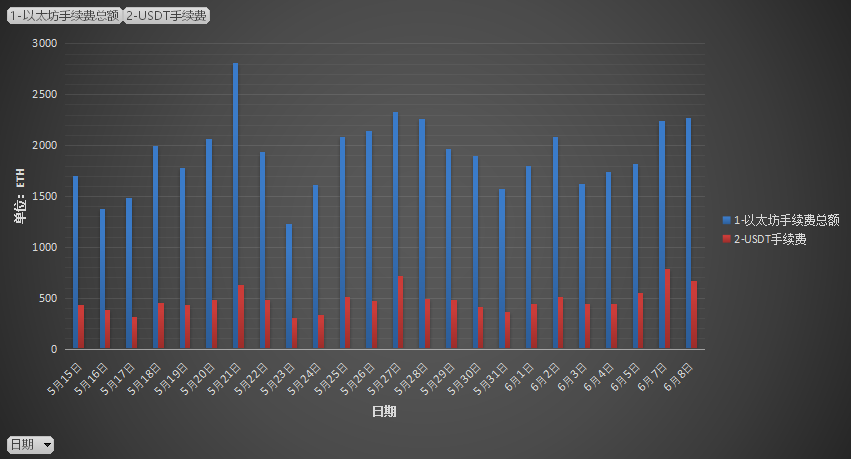
Viewed separately, USDT is still a big brother in the stablecoin ecosystem. The daily handling fee generated by USDT transactions on Ethereum is in the range of 350-700 ETH, accounting for about 25% of the total daily handling fees of the entire network of Ethereum.
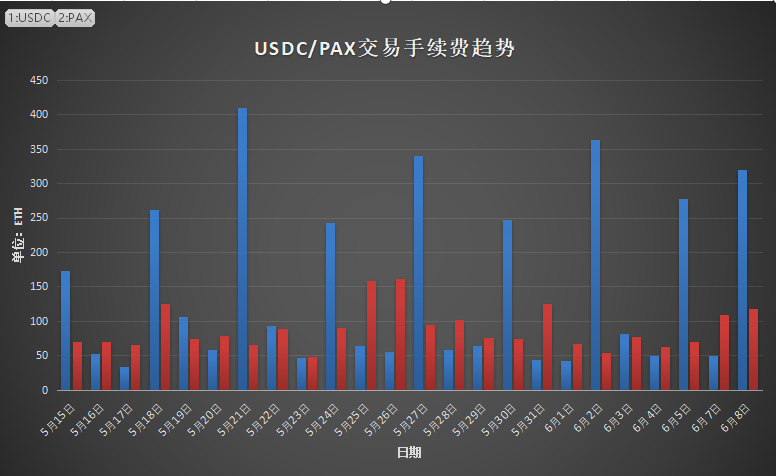
The handling fees of USDC and PAX are slightly lower than those of USDT. The average handling fee of USDC in the past 14 days is 164.32 ETH, and that of PAX is 102.93 ETH.
On the other hand, we also sorted out the number of recent transactions of the above three stablecoins on Ethereum, and also drew some interesting conclusions.
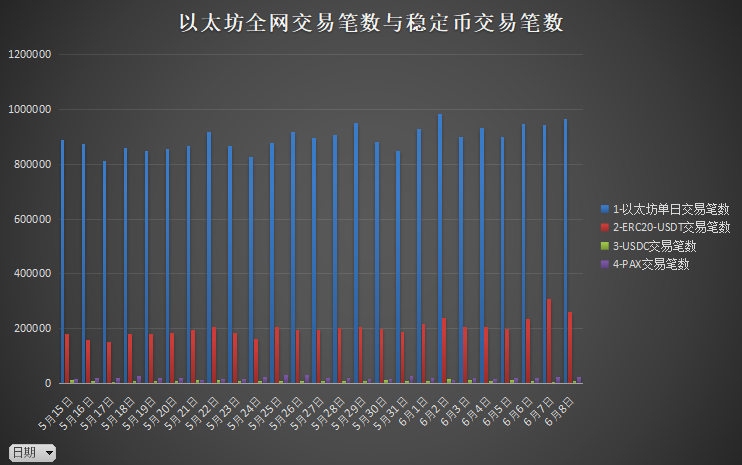
In the past month, the number of transactions on the Ethereum chain has been steadily rising, and it is close to the yearly high in mid-June last year. The proportion of stablecoin transactions is also on the rise, and the main source of the increase is still that ERC20 USDT transaction activities are heating up.
Recently, the average daily number of transactions on the Ethereum chain is about 895,400, of which 202,500 are USDT transactions, accounting for 22.61%; while USDC and PAX transactions are 10,100 and 20,900 respectively.
There may be many reasons for this situation. Compared with Bitcoin or Ethereum, the biggest feature of stablecoins is that they have almost no volatility. This feature has become the biggest advantage for stablecoins led by USDT to gradually step out of the currency circle and expand application scenarios.
In addition, we have also seen that OMNI-USDT, which was once widely adopted, has been gradually eliminated, indicating that the biggest demand of users for stablecoins is fast transaction speed and low transaction fees.
In the future, if there is a platform with a performance that exceeds that of Ethereum and is sufficiently decentralized, perhaps stablecoins will migrate again. But at the moment, Ethereum is still the first choice for stablecoin issuers, and this trend will bring sufficient barriers and moats to Ethereum as the number of users and time go by.





