HIP-4 開放無許可部署,Hyperliquid 能終結 Polymarket 嗎?


- 核心觀點:Hyperliquid 宣布開放 HIP-4 預測市場的無許可部署,試圖複製 HIP-3 永續合約市場的成功,但其當前規模遠遜於 Polymarket,且面臨質押門檻高、錯失世界盃時機等問題,顛覆預測市場格局難度較大。
- 關鍵要素:
- HIP-4 市場自 2026 年 5 月上線以來表現慘淡,過去 3 個月累計交易量僅 2.16 億美元,日均活躍用戶最高 7000 人;而 Polymarket 一個月交易量達 45.87 億美元。
- HIP-4 無許可部署要求質押 50 萬 HYPE(約 3000 萬美元),高門檻可能將小型創業團隊拒之門外,限制可交易事件數量和創新能力。
- Hyperliquid 錯失 2026 年世界盃這一關鍵時間窗口,而 Polymarket 僅單場決賽(阿根廷對西班牙)交易量就達 8375 萬美元。
- HIP-3 永續合約市場的成功得益於美伊衝突引發的週末交易需求,當前缺乏類似催化劑支撐 HIP-4 市場發展。
Original|Odaily (@OdailyChina)
Author|Golem (@web3_golem)
Right after the World Cup ended, Hyperliquid dropped a "nuclear bomb" on the prediction market track.
On July 20, Hyperliquid announced that HIP-4 will support permissionless deployment in the future, just like HIP-3. The staking requirement for HIP-4 deployers is also 500,000 HYPE, which will be locked for 6 months. HIP-4 deployers can set a fee share of up to 50% in deployed markets. This feature will first be available on the testnet before going live on the mainnet.
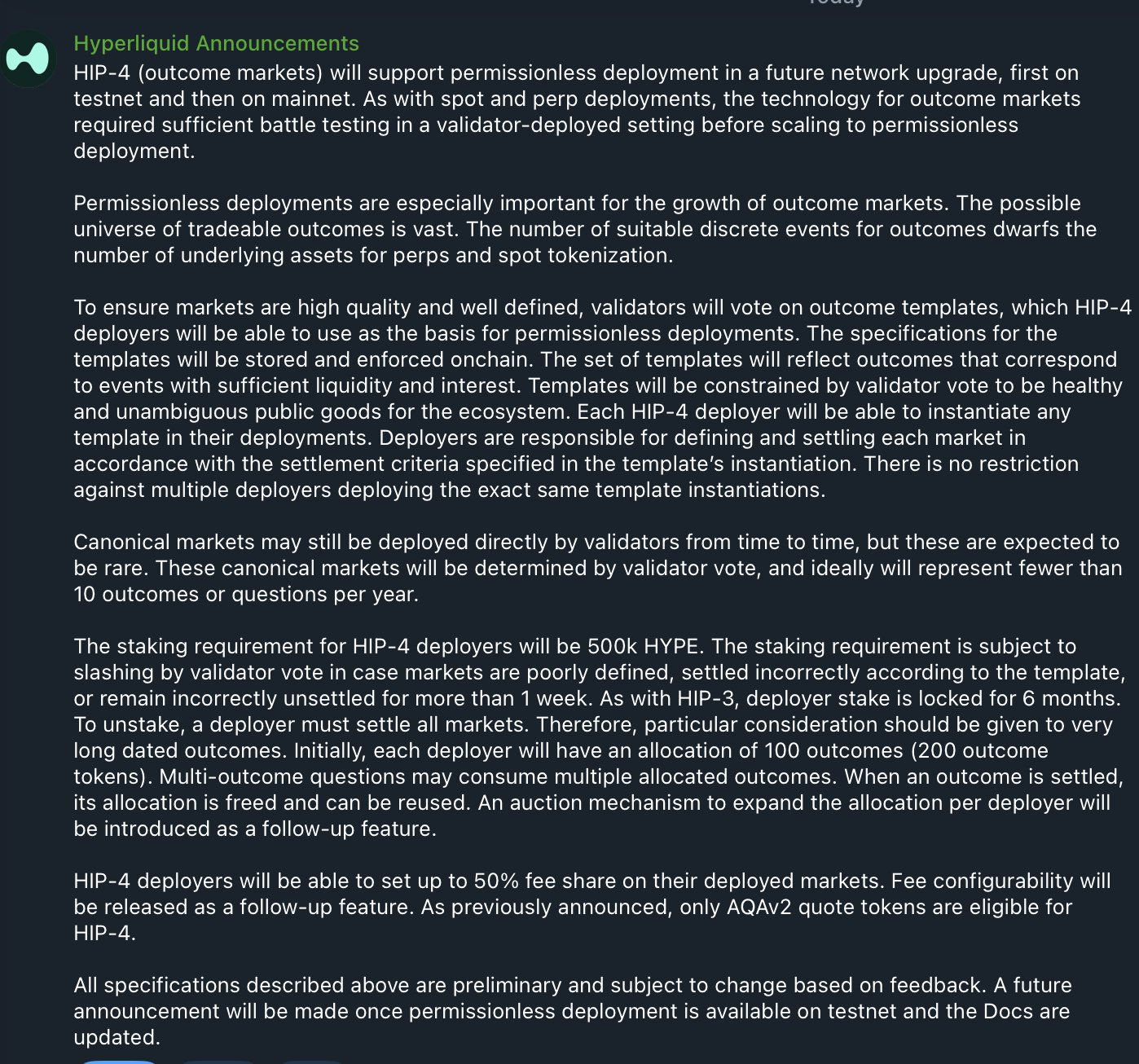
Hyperliquid announces permissionless deployment for HIP-4
Although this is just a preliminary announcement and the specific timeline for HIP-4 permissionless deployment has not been finalized, the market has already become excited following the news.
The reason Hyperliquid has become the world's largest platform for equity tokens and on-chain commodity perpetual contracts, and even beat traditional financial markets to price IPOs for companies, is due to its launch of HIP-3 in October 2025, which opened up permissionless creation of perpetual contract markets for third parties.
Therefore, this time, investors believe Hyperliquid can once again leverage the power of "decentralization" to surpass all leaders in the prediction market track.
Who Will Be the Next Trade.xyz?
Hyperliquid launched the HIP-4 market on May 2, 2026, marking its official entry into the prediction market arena. Before the launch, the market generally expected it to become the next core narrative for Hyperliquid. However, nearly three months since its actual launch, its performance can be described as poor.
According to Hyperliquid's official data, the HIP-4 market has accumulated a trading volume of only $216 million over the past three months, with an average daily volume of just $10 million, a peak daily active users of only 7,000, and total fee revenue of merely $442.38. In contrast, Polymarket's trading volume in the past month alone reached $4.587 billion, with fees of $50 million, according to DeFiLlama data.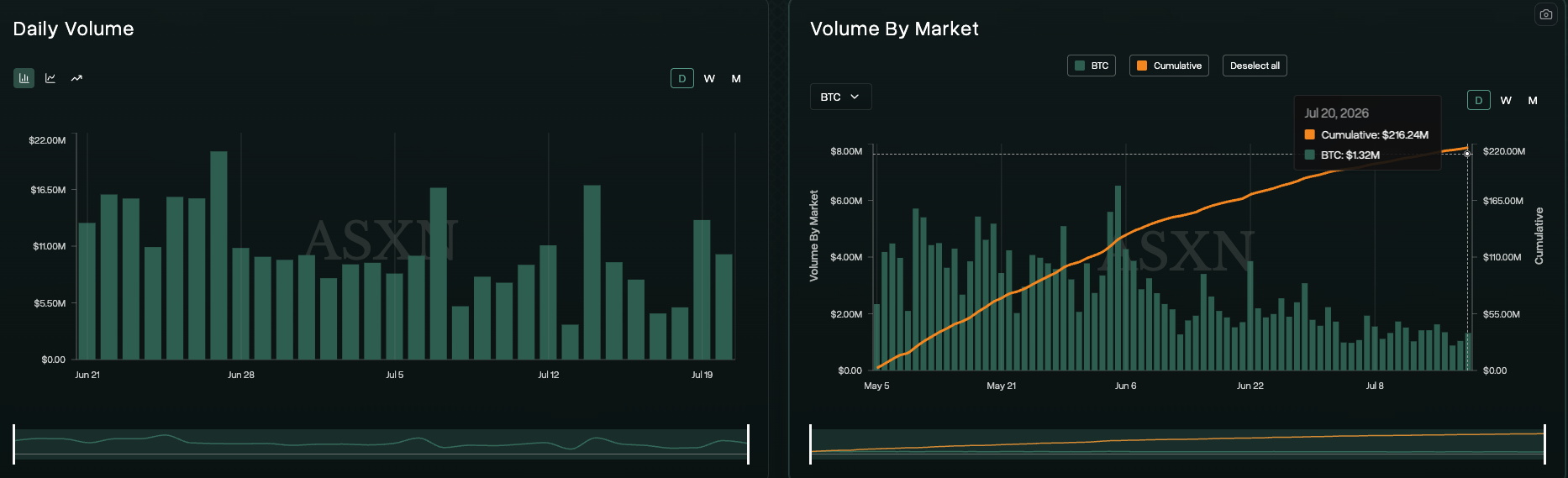
HIP-4 average daily volume and total volume
Not only are users and trading volume low, but the events with tradeable outcomes on HIP-4 are also quite scarce. Currently, the entire HIP-4 market has only 6 prediction markets, which is a drop in the bucket compared to Polymarket in terms of both quantity and variety.
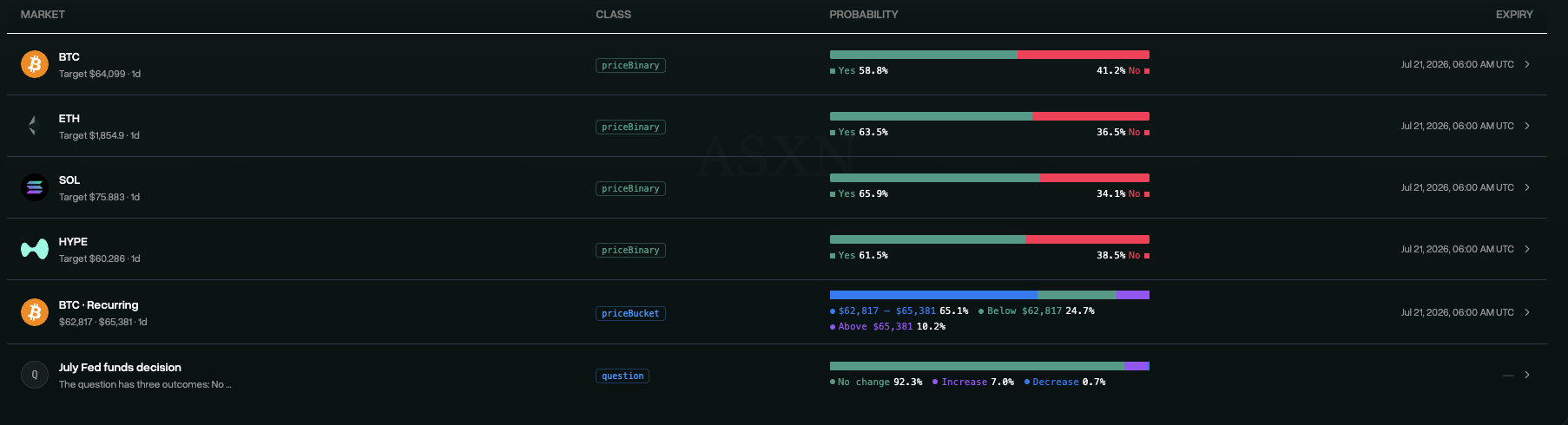
Currently tradeable events on HIP-4
Given this vast disparity in scale, Hyperliquid has chosen path dependency, following the successful blueprint of HIP-3. Since it couldn't build it alone, it hands the stage to the community to create another Trade.xyz within HIP-4.
Hyperliquid opening up permissionless deployment for the HIP-4 market is akin to Polymarket allowing users to autonomously create prediction market events. Hyperliquid founder Jeff also stated that permissionless deployment is particularly crucial for the growth of the outcomes market (HIP-4), because the range of tradeable outcomes is extremely broad, and the number of independent events suitable for outcome trading far exceeds the number of underlying assets available for derivatives and real-world asset tokenization.
Furthermore, having the community or third parties deploy prediction market events offers greater flexibility. Currently, the creation of prediction market contracts is mainly handled by the team launching or reviewing community proposals. This process lacks decentralization, and team members cannot comprehensively cover every domain. This model inevitably slows down the time from reacting to market hotspots to final execution and launch, especially for real-world breaking events.
In the HIP-4 market, as long as enough HYPE tokens are staked, third parties can list prediction market events according to their own standards without needing approval from the Hyperliquid team. Hyperliquid also stipulates that it will not restrict multiple deployers from simultaneously deploying identical events. This will incentivize healthy competition in the HIP-4 market, where only those providing users with more comprehensive events and deeper liquidity can succeed.
Hyperliquid consistently adheres to a win-win strategy in its product philosophy. The HIP-3 market has already nurtured the behemoth Trade.xyz, which holds over 90% market share in the HIP-3 market, with the trading volume of its first 10 perpetual contract assets each exceeding $10 billion.
Perhaps many teams are already sharpening their tools, and when Hyperliquid's mainnet opens permissionless deployment for HIP-4, we might witness a lively "Clash of the Titans."
Can Hyperliquid Disrupt the Prediction Market Landscape?
But can Hyperliquid really rely on this single successful tactic repeatedly?
First, Hyperliquid is not what it used to be. The HYPE price is now stable above $60, and the requirement for HIP-4 market deployers to stake 500,000 HYPE (approximately $30 million) effectively locks out small startup teams. Many crypto projects today might not even raise $30 million in a single funding round. Prediction market projects capable of raising $30 million would likely be more inclined to develop their own prediction market platforms.
Therefore, the excessively high staking threshold for HIP-4 deployers could drastically reduce the number of third-party competitors. Ultimately, only "financially capable" prediction market projects might come as guests to drive traffic. This will also limit the number of independent tradeable events, severely hindering the innovation momentum of the entire HIP-4 market.
Second, Hyperliquid's timing for launching HIP-4 permissionless deployment has missed even the last train. A major reason why 2026 has become a year of opportunity for the development of the prediction market track is the abundance of sports events in recent years, especially catching the quadrennial World Cup. Various prediction markets are focusing on World Cup matches. On Polymarket, the total trading volume for the Argentina vs. Spain match on July 20 alone reached $83.75 million.
However, Hyperliquid completely missed this crucial World Cup window, which is undoubtedly a significant strategic oversight. Even the success of the HIP-3 market involved a perfect confluence of timing, geographical advantages, and human factors. The volatility in international crude oil prices caused by the US-Iran conflict earlier this year served as a key catalyst for the development of the HIP-3 market. The war broke out on a weekend. With traditional markets closed, traders needing to adjust positions and hedge urgently had to find new tradeable markets. Hyperliquid's HIP-3 market became the top choice.
When Hyperliquid launched HIP-3, it did not emphasize its purpose for tokenizing stocks and commodities, but it ultimately led to the rise of Trade.xyz and Hyperliquid's current leading position in the tokenized asset market. Had Hyperliquid not seized the opportunity presented by the US-Iran conflict, there might be no place for Hyperliquid in today's tokenized trading market.
Similarly, having missed the World Cup opportunity, how confident can Hyperliquid be in disrupting the prediction market giants now?