高盛美股业务负责人访谈:美股牛市还能走多远?


Host: Chris Hussey, The Markets
Translation: Peggy
Editor's Note: As US stocks approach historic highs, AI trades remain crowded, and interest rate expectations are once again disrupting valuations, market discussions are shifting from "Can tech stocks still rise?" to "What is structurally supporting this rally?" With buying the dip becoming almost a conditioned reflex for investors, a more critical question emerges: Is the current rally driven by short-term sentiment, or has it formed a deeper cycle of capital, earnings, and supply-demand dynamics?
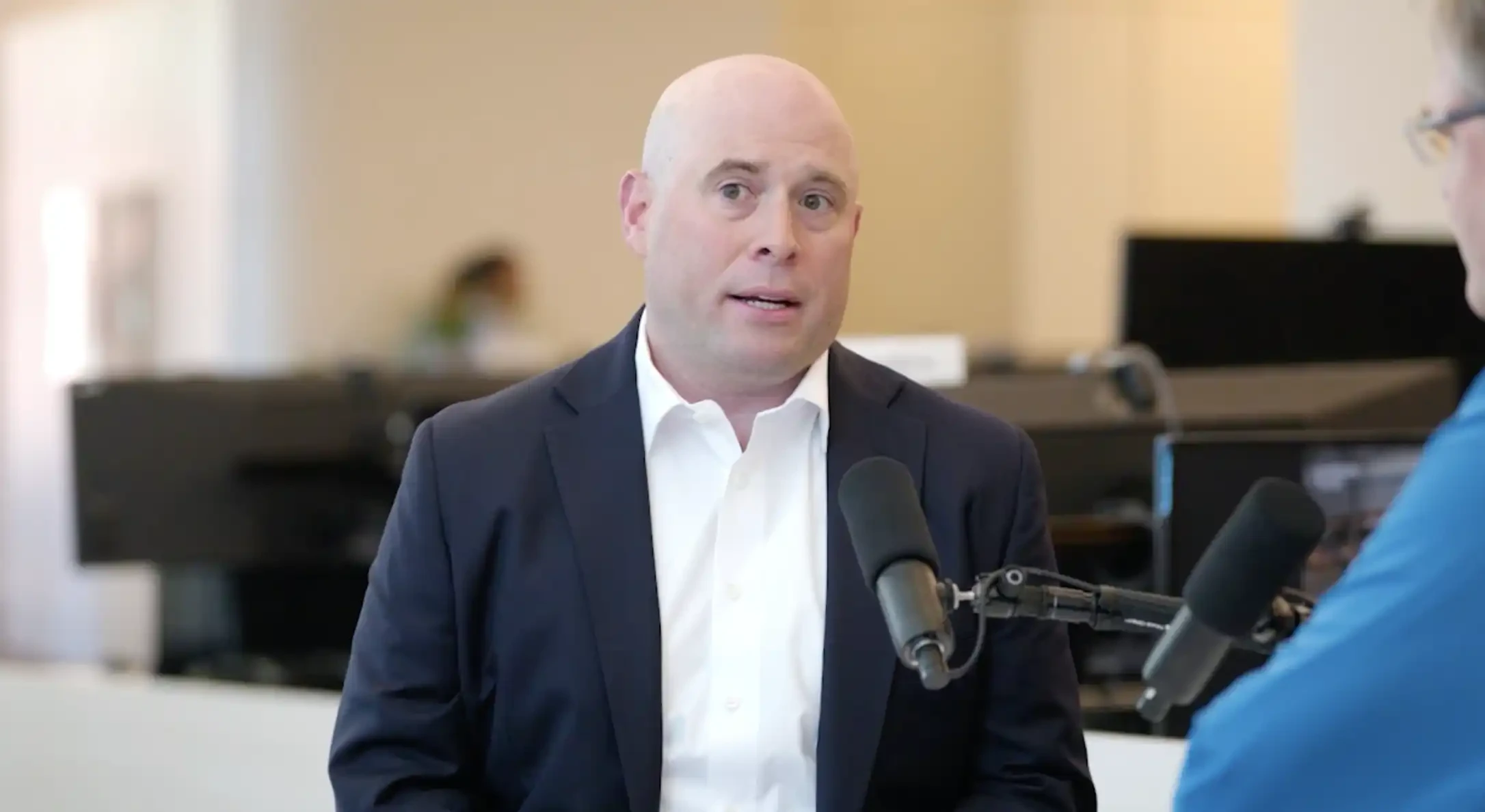
This article is compiled from a conversation on the Goldman Sachs podcast "The Markets." In the episode, host Chris Hussey and John Flood, Head of Americas Equity Sales Trading at Goldman Sachs Global Banking & Markets, discuss US stock volatility, IPO supply, share buybacks, semiconductor trading, interest rate risks, and earnings momentum.
In this conversation, John Flood's core thesis breaks down the question "Can US stocks continue to rally?" into a set of more fundamental structural issues: whether capital is still willing to absorb supply, whether earnings will continue to deliver, whether interest rates will disrupt the valuation balance, and whether the crowded AI trade has been invalidated.
First, volatility has shifted from a risk signal to a result of capital reallocation. In the past, surging volume and market volatility were often seen as precursors to a weakening trend. But in Flood's view, recent volatility doesn't necessarily indicate cracks in tech stock trading. The US market saw a record single-day volume of 34 billion shares, reflecting not a single directional panic but instead a simultaneous portfolio adjustment by retail investors, institutions, and corporate funds. Especially ahead of technical events like the Russell Index reconstitution, volatility appears more like an external manifestation of portfolio restructuring. This suggests that as long as capital continues to rotate within the market, pullbacks may not signal the end of a trend and could continue to offer buying opportunities.
Second, supply pressure hasn't overwhelmed the market, indicating that the buy-side structure is stronger than it appears. Earlier, IPOs and large-scale financing were often interpreted as draining liquidity from the secondary market. However, two high-profile issuances in June totalled a combined notional size of $140 billion, yet the market showed almost no significant strain. This indicates that new supply is being absorbed by strong demand. More importantly, retail investors have been a consistent source of buying this year, and institutions have also demonstrated clear demand for large issuances. Simultaneously, corporate buybacks are spreading from the Magnificent Seven to a broader range of S&P 500 companies. The buyback power once dominated by a few tech giants is now broadening horizontally, making the supply-demand structure of US stocks less reliant solely on top tech names.
Third, AI-related trades remain crowded, but crowding itself is not yet a reason for a reversal. Over the past year, semiconductors, memory, semiconductor equipment, and the Asian tech chain have become the market's clearest themes, with capital expressing AI trades through exposure to places like South Korea and Taiwan. However, in Flood's view, crowded trades remain crowded precisely because they are still delivering results. The current risk isn't that the market doesn't know this theme is already popular; it's that until AI earnings momentum is proven false, capital struggles to find a more compelling alternative. The fact that some of the Magnificent Seven are being used as a funding source for repositioning could, in fact, create new entry points.
Fourth, interest rates remain the most clearly destructive variable for this bull market. Previously, the market focused primarily on growth and earnings. However, with the Fed's meeting leaning hawkish and the market pricing in roughly 40 basis points of rate hikes within the year, interest rates have re-emerged as a key constraint on the valuation system. Flood's judgment on this is not aggressive: if there are no further rate hikes this year, the market might re-interpret "staying put" as a form of easing. In other words, the real risk of interest rates is not just their absolute level, but whether they deviate from the path the market has already priced in.
Fifth, earnings remain the hardest underlying logic of the bull market. Past tech rallies were often attributed to sentiment and multiple expansion. But first-quarter median S&P stock earnings grew by 14%, one of the strongest quarterly performances in decades. The market expects roughly 9% year-over-year growth in the second quarter. If earnings season continues to approach this level, then the rally isn't just about valuation expansion, but the result of continued earnings upgrades. Whether the S&P 500 can break through 8,000 points ultimately depends on whether this earnings curve continues to validate.
If this conversation were condensed into one judgment, it would be: the current strength of US stocks stems not only from the AI narrative, but from structural support formed by the confluence of capital supply and demand, corporate buybacks, earnings growth, and interest rate expectations. In this sense, the subject of this discussion is no longer just a Goldman Sachs trader's view on short-term markets, but the question of how a bull market sustains itself amidst high valuations, high crowding, and high interest rate uncertainty.
The following is the original content (edited for readability):
TL;DR
· Increased US stock volatility does not equal a trend reversal; Goldman Sachs traders tend to view pullbacks as buying opportunities following capital reallocation.
· The surge in IPO supply hasn't overwhelmed the market, suggesting current buying isn't just from a few tech stocks but is supported collectively by institutions, retail, and corporate funds.
· Buyback demand is spreading from the Magnificent Seven to a broader range of S&P 500 companies, making the supply-demand structure of US stocks more resilient than the apparent "issuance pressure" suggests.
· Semiconductors, memory, and the Asian tech chain remain the most crowded trades, essentially because AI earnings momentum has yet to be disproven, and capital remains willing to tolerate volatility.
· Interest rates are the biggest risk variable for US stocks currently. If the Fed doesn't raise rates again this year, the market might re-price "holding steady" as a positive.
· The core of this bull market remains earnings, not sentiment. As long as Q2 earnings continue to deliver growth, the logic for the S&P 500 to challenge 8,000 points remains intact.
Conversation Content
Chris Hussey: This is The Markets. I'm Chris Hussey. It's Thursday, June 25th. I'm on the Goldman Sachs trading floor with John Flood, Head of Americas Equity Sales Trading at Global Banking & Markets. Floody, thanks for coming on.
John Flood: Thanks for having me.
Volatility Will Continue, But US Stocks Remain in "Buy the Dip" Mode
Chris Hussey: Okay, I know you're watching a lot of things, and we'll get to them all. But let's start with this week's market, because volatility seems to be picking up again. How are you seeing it? Are we starting to see cracks in tech trading? Or is this actually a buy-the-dip opportunity?
John Flood: I still think it's a "buy the dip" tape. Reminder, tomorrow is Russell reconstitution, and we typically see waves of volatility leading into that.
Also, a week ago, so a week ago from today, while we were talking about the Knicks parade—which was amazing, Go Knicks—we traded 34 billion shares across all US stock exchanges that day. That's the most active day in stock market history. It broke the record from "Liberation Day" in 2025.
That tells me all types of investors are repositioning their portfolios, whether it's retail, institutional, or corporate cash. Everyone is reallocating. So, I think we'll continue to see volatility, but the overall tape continues to go higher. Pullbacks will continue to offer decent entry points.
Chris Hussey: That's amazing. I didn't realize that. So you had two million people watching the Knicks parade in Lower Manhattan, and at the same time, the stock market had its biggest volume day ever.
That's fascinating. Glad we don't have to physically handle those orders on the NYSE floor anymore. That would have been a tough day.
Okay, let's talk about supply, because it's a big factor in the market right now. IPOs are clearly heating up. What do these recent high-profile new issues mean for the market?
IPO Supply Surges: Why the Market Can Still Absorb It?
John Flood: Yeah, we saw two high-profile trades in June within a span of two weeks. Combined, their notional size was $140 billion. Those are the largest and second-largest primary market financings in US history over a two-week period. Incredible.
But the equity market has barely budged. On our desk, we saw clear institutional demand for these issues. And more importantly, on the retail side—we talk to clients a lot about this—retail has been the most consistent buyer of equities all year. As these high-profile IPOs get done, my sense is retail buying is accelerating. I expect that to continue for the rest of the year.
Chris Hussey: Good. The other side of the supply coin, of course, is the flip side of issuance, which is buybacks and M&A. M&A environment seems strong, and buybacks, you might be less sure about given how much the market has already run. Are they sufficient to offset these issuances?
John Flood: The answer is: sufficiently. And this might surprise a lot of people because in the past when we talked about buybacks, we used to say the Magnificent Seven dominated most of the activity.
But on our corporate buyback desk, we are seeing that buying is broadening out, which is a positive sign. Two years ago, if the buyback desk had an active day, maybe they had 10 buyback programs running. This year it's more like 50 to 60.
That means across the broader S&P 500, relatively smaller companies, beyond the Mag Seven, are starting to participate in buybacks. I see this trend continuing.
My gut feeling is that even if some of the Mag Seven pause their buybacks this year, based on the notional amount and the number of companies involved, we could still have a record year.
Semiconductors, Memory, Asia
Chris Hussey: Makes sense. Okay, John, enough on supply. Let's get into the themes. You've got a lot of irons in the fire. What's catching your eye right now?
John Flood: I'm still focused on semiconductors and semiconductor equipment. That's where everyone is, and it's where everyone still wants to be.
We are seeing a lot of money expressing this trade through Asian exposure, particularly South Korea and Taiwan. As we said, when a trade gets crowded, gets popular, and has worked well, there's going to be volatility. But I think the upward trend continues.
Semiconductors, memory, and Asia. Those are the keywords.
At the same time, we are also seeing supply come into some of the Mag Seven because they are funding some of the semiconductor, other tech, and IPO-related trades. So, I actually think there are some attractive entry points in the Mag Seven space right now. Because you're seeing hedge funds shorting the Mag Seven, or using it as a source of funds to make room for this new supply.
Can the S&P 500 Hit 8,000? The Key is Earnings and Interest Rates
Chris Hussey: Yeah, that's a great point. Mag Seven is almost a Top 10 now, with three big semiconductor stocks having market caps over a trillion dollars.
Okay, let's put our interest rate hats on. I know you're an equities guy, but the other big theme in the market is the Fed. Warsh presided over his first FOMC meeting in June. How do you see rates, and how do they affect stocks?
John Flood: Actually, I started my career in 2006 as a rates trader at Lehman Brothers.
Chris Hussey: Oh.
John Flood: It didn't end well.
Chris Hussey: I didn't know that. I started at Lehman too.
John Flood: That was a long time ago.
Now the market is worried about rates going higher. I just walked over from the desk. The market is currently pricing in about 40 basis points of rate hikes between now and year-end.
Chris Hussey: Wow.
John Flood: I'd say this is the number one concern to potentially break this tape: higher inflation, higher rates than expected. I think this Fed meeting was more hawkish than the market anticipated.
But I also think we have the best economics team on Wall Street. They don't believe we'll get a rate hike this year. So, if we see rates stay right here between now and year-end, I think the market will actually interpret that as a rate cut.
However, I do think we need to keep a close eye on rates. It's the variable everyone is really worried about. I'm aligned with our economists that we won't get a hike. That would be positive for the stock market.
Chris Hussey: Yes, if the market has priced in 40 basis points of rate hikes and they don't materialize, I think that would be very positive.
Okay, let's get back to the present. It's hard to believe that next week we close the first half, the second quarter, and June. On the earnings momentum front, what's the sentiment heading into the upcoming earnings season?
John Flood: Earnings have been the driver of this bull market. We think earnings will continue to push the market higher. That's really the core of our bullish argument.
In Q1, median stock earnings in the S&P grew by 14%. That's one of the best quarters in decades. With Q2 earnings coming up, the market currently expects median stock earnings to grow about 9% year-over-year.
If the actual results come close to that and clear that bar, which we think they will, then earnings still tell the same story: the fundamental backdrop continues to support this market moving higher.
So, earnings have been fantastic. We think they're going to continue to be good. Let's see what Q2 delivers.
Chris Hussey: That's a great point. We just had one of the strongest quarters of earnings growth. If anyone is wondering why stocks are making all-time highs, that's the simple answer.
Okay, let's wrap up. What's your favorite trade right now?
John Flood: My favorite trade right now is to stay with what's working.
High momentum trades are crowded, but they're crowded for a reason. I think that includes semiconductors, and it includes semiconductor equipment. I think certain parts of South Korea and Taiwan will continue to do well.
So, between now and year-end, I like sticking with the trades that have proven themselves. I also think the S&P 500 has a good chance to break 8,000 in the near term. Because as we said, there are a lot of technical factors creating tailwinds. Most importantly, earnings are very good and should stay good.
Chris Hussey: I have to ask, though, because you mentioned South Korea. It was down 10% one day this week. That didn't shake you?
John Flood: No.
Chris Hussey: I like that answer. That's FOGO – Fear Of Getting Out. Okay, what are you watching for next week, as we close out the first half and head into July?
John Flood: I don't want to sound like a complete bull.
So, next week, as we said, the first half of the year is coming to a close. There are some technical factors that could be short-term headwinds for the market. One of them is pension rebalancing. Essentially, pensions need to adjust their portfolios back to target allocations between stocks and fixed income.
Given that stocks have massively outperformed fixed income, this pension rebalancing will bring about $30 billion in US stock selling. June 29th and 30th are the last two trading days of the first half. This creates a short-term headwind.
So, I wouldn't be surprised to see some weakness early next week. But again, it might offer a decent entry point.
Chris Hussey: That's a very interesting catalyst that not everyone is watching. I love that observation.
Last question, because July brings the World Cup knockout stage. I know you're a fan of all sports. Who do you think wins the World Cup?
John Flood: USA all the way, baby.
Chris Hussey: Good, why not? Also, next week is the 4th of July. That's it for this episode of The Markets. I'm Chris Hussey, thanks for listening.