加密PAC橫掃德州,1000萬美元改寫了誰的政治命運?


- 核心觀點:2026年5月德克薩斯州初選中,以Fairshake為首的加密產業政治行動委員會投入超1000萬美元並實現6戰全勝,反加密議員被擊敗;同時特朗普公開支持CFTC獨家監管預測市場,兩事件標誌加密政治影響力進入主流,並加速了監管框架的成型。
- 關鍵要素:
- Fairshake等PAC在德州初選投入逾1000萬美元,支持6名候選人全部勝選,包括擊敗反加密的民主黨議員Al Green。
- Fairshake資金儲備約1.93億美元,為美國最大單一產業政治資金網絡之一,資金向共和黨傾斜趨勢明顯。
- 特朗普表態力挺CFTC而非SEC監管預測市場,將加密政策與國家競爭力掛鉤,為Clarity Act等立法路徑背書。
- Clarity Act(市場結構法案)已通過參議院銀行委員會審議,若通過將使多數數字代幣劃歸CFTC監管,降低合規成本。
- 加密政治資金從「防守型」轉向「進攻型」,旨在為Clarity Act等立法植入盟友,系統性降低「監管風險」折扣因素。
Overview
On May 27, 2026, the Texas primary runoff election night fundamentally reshaped the political landscape for the U.S. cryptocurrency industry. The crypto industry's political action committees (PACs), led by Fairshake, collectively invested over $10 million in this round of Texas primaries. All six candidates they supported emerged victorious, achieving a perfect track record.
Simultaneously, less than 24 hours after the primary voting concluded, U.S. President Donald Trump publicly stated on Truth Social that he supports the CFTC having exclusive regulatory authority over prediction markets, directly linking this stance to maintaining America's status as the global "crypto capital."
These two events together send a clear signal: the political influence of the crypto industry has moved from the fringes into the mainstream, and the direction of the regulatory framework is accelerating alongside the changing composition of Congress.
Key Takeaways
- Fairshake's affiliated PACs spent over $10 million in the Texas primary elections, with all six supported candidates winning their races.
- Anti-crypto Representative Al Green, a prominent Democrat critic, was defeated by crypto-friendly candidate Christian Menefee, ending his 20-year congressional career.
- Crypto industry political funding is distinctly shifting toward the Republican Party. Fellowship PAC (linked to Tether and Cantor Fitzgerald) spent $500,000 supporting Republican Senate candidate Ken Paxton.
- Fairshake currently holds approximately $193 million in reserves, making it one of the largest single-industry political funding networks in the U.S.
- Trump publicly endorsed the CFTC's exclusive regulation of prediction markets, framing crypto policy as a matter of national competitiveness.
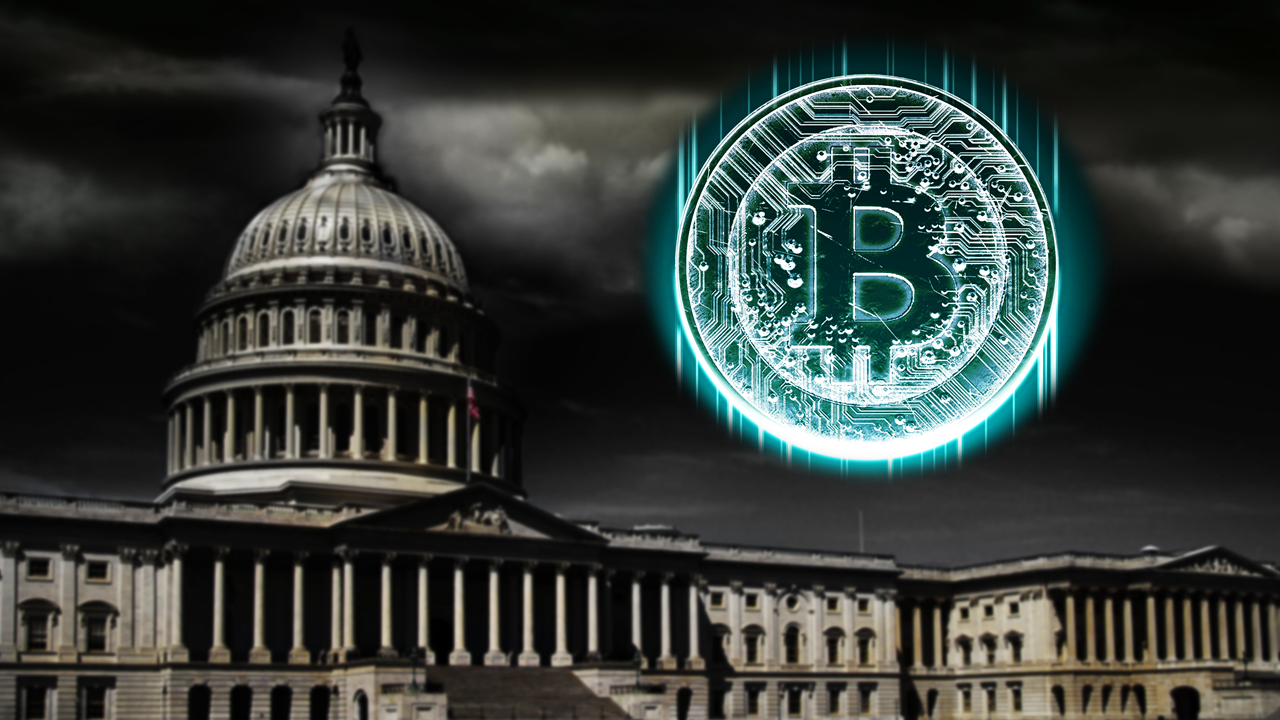
Texas Primary: A Landslide Victory for Crypto PACs
The Most Significant Battle: The End of Al Green
Among the many district races in Texas, the most symbolic took place in Houston. Incumbent Democratic Representative Al Green is one of the most vocal critics of the crypto industry on Capitol Hill, receiving an "F" rating from the advocacy group Stand With Crypto.
To win this race, Fairshake's affiliated PAC, Protect Progress, invested approximately $7.8 million—roughly $5 million to support challenger Christian Menefee and about $2.8 million for advertisements targeting Green. Consequently, Green's 20-year congressional career came to an end. Bitcoin policy advocate Dennis Porter commented on social media: "A pro-crypto Democrat just defeated an anti-crypto Democrat who has been in office for 20 years."
Comprehensive Deployment on the Republican Side
On the Republican front, industry funding was equally intensive. According to FEC disclosures, Fairshake's Republican-aligned PAC, Defend American Jobs, provided financial support to four Republican candidates: Jon Bonck, Tom Sell, Carlos De La Cruz, and Alex Mealer—all of whom won their primary runoffs.
Another notable new force is the Fellowship PAC. This organization, linked to Tether and Cantor Fitzgerald, invested approximately $500,000 to back Texas Attorney General Ken Paxton in his challenge against incumbent Senator John Cornyn. Paxton ultimately won with over 63% of the vote.
The Strategic Logic Behind a "Perfect Six for Six"
CryptoTimes reported that crypto PACs achieved a perfect 6-0 record in this Texas primary. Prediction market Kalshi gave Menefee roughly a 91% chance of winning before the election, and Polymarket offered a similar figure—indicating that capital flows had already anticipated the outcome, rather than merely following it.
This strategy of "precise targeting and high returns with low costs" is a tactic Fairshake had already validated in the 2024 cycle: concentrating resources on a few low-turnout runoff races. Once a candidate secures the party nomination in a strongly Republican district, winning the November general election is almost guaranteed.
Structural Shift in Political Funding: Why the Increasing Sway Toward Republicans?
Fairshake's "Bipartisan Bet" Is Fraying
Fairshake's official stance is as a cross-party organization, and its funding allocation in 2024 did indeed cover both parties. However, a recent analysis by CoinDesk points out that as the 2026 midterm elections approach, overall political funding from the crypto industry is distinctly shifting toward the Republican Party, with independent, Republican-specific crypto PACs rapidly emerging.
The underlying logic is straightforward: Since the Trump administration, the Republican Party has generally adopted a more lenient stance towards crypto regulation. Furthermore, the progress of the GENIUS Act (stablecoin regulatory framework) and the passage of the market structure bill (Clarity Act) through the Senate Banking Committee by a 15:9 vote have shown the industry a viable path toward legislation under a Republican-led Congress.
The Emergence of New PACs and a More Complex Funding Ecosystem
Reporting from The Nation reveals that the crypto industry's political spending ecosystem extends far beyond just Fairshake in 2026. Fellowship PAC (linked to Tether/Cantor Fitzgerald), the Blockchain Leadership Fund, and a dedicated Republican PAC supported by the Winklevoss brothers together form a more specialized and aggressive political funding network.
According to CNBC, Fairshake's overall cash reserves are approximately $193 million, including large donations from key contributors like Coinbase, Ripple, and a16z in the second half of 2025. This figure is nearly equal to Fairshake's total fundraising for the entire 2024 election cycle, underscoring the exponential growth in the industry's political spending.
[In the crypto regulatory discussions followed by MEXC, political funding flows have always been a crucial leading indicator for gauging regulatory direction.]
Trump's Statement: CFTC to Lead Prediction Markets, Crypto Sovereignty Cannot Be Violated
Less than a day after the Texas primary results were released, Trump posted on Truth Social on May 26, endorsing the CFTC:
"The CFTC's exclusive authority over prediction markets is critical and must be maintained. Under my leadership, we are establishing 'gold standard' rules for the states."
As reported by Bloomberg, this statement came amid litigation between the CFTC and several state governments over the jurisdiction of prediction markets. States governed by Democrats, such as New York, Illinois, and Wisconsin, argue that prediction market contracts are essentially gambling products subject to local laws.
In the same post, Trump tied crypto policy to national competitiveness: "Other countries are trying to replace us (as the crypto capital), but we won't let that happen." This represents one of the most explicit presidential-level endorsements of the crypto industry to date.
CFTC vs. SEC: The Deeper Meaning of the Regulatory Power Struggle
The core logic of the Clarity Act is to place regulatory authority over most digital tokens under the CFTC, not the SEC. The CFTC's regulatory framework is generally seen as more lenient towards the industry, whereas the SEC is known for its aggressive enforcement actions.
By supporting the CFTC's role over prediction markets, Trump is essentially providing political endorsement for this legislative path. If the Clarity Act passes, it will directly impact the compliance costs and development prospects for the entire digital asset sector.
The White House is currently reviewing a CFTC-proposed federal rule for regulating prediction markets, which has been submitted to the Office of Management and Budget (OMB) for review, suggesting the implementation of a formal regulatory framework might be faster than the market anticipates.
Market Impact: Can Political Wins Translate into Price Catalysts?
The crypto industry's major victory in the Texas primaries implies that the pro-crypto faction in Congress could expand further after the November general election. For market participants, the implications of this political signal merit careful evaluation:
In the short term, market sentiment may receive a boost. Political tailwinds typically bolster the confidence of both institutional and retail investors to enter the market, especially for assets directly correlated with regulatory exposure, such as tokens from stablecoin issuers, DeFi protocol tokens, and the stock prices of publicly listed crypto companies like Coinbase.
In the medium term, focus on the legislative progress of the Clarity Act. The Senate Banking Committee has completed its mark-up; the timeline for a full chamber vote will be the core variable. If the bill passes before the midterm elections, it would mean the removal of the uncertainty discount, a move markets often price in advance.
In the long term, the politicization of the crypto industry is a double-edged sword. While increased political influence helps secure favorable legislation, it also means the correlation between crypto asset prices and political winds will continue to rise—a trend observable over the past few years, which will only deepen during the 2026 midterm cycle.
To seize trading opportunities during the policy game's window of opportunity, you can explore over 2,000 trading pairs on MEXC and respond to market movements in real-time.
Exclusive Insights from the MEXC Crypto Pulse Research Team
The Texas primary results represent a significant milestone in the politicization of the crypto industry, but their meaning extends far beyond simply "winning a few more elections."
From a funding structure perspective, the crypto political funding network, centered on Fairshake and supplemented by Fellowship PAC, is completing a strategic transformation from "defensive" to "offensive." In 2024, funds were primarily used to "punish" anti-crypto lawmakers. In 2026, the funding is more proactive, aiming to place pro-crypto allies in key committee seats to pave the way for legislation like the Clarity Act.
We noticed a specific detail: the largest investment was made in Al Green's district. Green is not only a crypto critic, but his TX-18 district, after redistricting, featured a peculiar scenario of "two incumbent Democrats facing off against each other." Fairshake's decision to heavily invest in this already volatile race was not just about "unseating" Green, but also about ensuring that the victor, Menefee, establishes a pro-crypto precedent for the Houston area.
From a broader perspective, the crypto industry's political funding has evolved into a complete ecosystem: pre-election probability calibration using prediction markets (Kalshi, Polymarket), mid-election voter influence through targeted advertising, and post-election legislative lobbying to convert political capital into regulatory dividends. In terms of efficiency, this closed loop rivals traditional large-industry lobbying groups, while its transparency—all FEC disclosures are publicly available—paradoxically serves as a source of credibility.
For crypto investors, this means: the "regulatory risk" discount that has long suppressed crypto market valuations is being systematically reduced. However, it's crucial to note that the influx of political capital also introduces "policy expectation volatility." Should legislative progress stall or the political winds shift, market disappointment could be equally intense. During the most heated periods of policy games, continuous tracking of macro-policy trends is an indispensable task for every crypto market participant.
FAQ
Q1: What is the Fairshake PAC? Where does its funding come from?
Fairshake is currently the largest crypto industry political action committee in the U.S. It is positioned as a cross-party organization, with major contributors including Coinbase, Ripple, and venture capital firm a16z. It operates two affiliated PACs: Protect Progress for Democrats and Defend American Jobs for Republicans. As of early 2026, Fairshake held total cash reserves of approximately $193 million.
Q2: Why is Al Green's defeat so important for the crypto industry?
Al Green was one of the most vocal critics of the crypto industry in Congress. During his tenure, he repeatedly opposed crypto-related legislation and received the lowest "F" rating in the Stand With Crypto rating system. His defeat not only removes a key obstacle but also sends a clear political warning signal to other lawmakers with similar stances.
Q3: What does Trump's support for the CFTC regulating prediction markets mean for the crypto industry?
This statement has dual significance. First, it reinforces the CFTC's dominant role in digital asset regulation. Second, the CFTC's traditional approach to industry oversight is more accommodating than the SEC's. Therefore, this stance is widely interpreted by the market as a positive signal for the crypto industry, particularly for DeFi and prediction market-related projects.
Q4: What is the Clarity Act? What is its current status?
The Clarity Act is a crypto market structure bill currently being debated by the U.S. Congress. Its core objective is to clearly assign regulatory authority over most digital tokens to the CFTC, rather than the SEC. The bill recently passed the Senate Banking Committee and will now proceed to a full chamber vote. Whether it can be enacted before the 2026 midterm elections is a critical milestone for the industry.
Q5: How should ordinary investors respond to the politicization trend in the crypto industry?
Politically-driven market movements typically exhibit "short event windows and high volatility." Investors are advised to focus on legislative milestones (e.g., bill committee passage, full chamber vote dates) and asset classes directly related to regulation (stablecoins, DeFi, publicly listed crypto company stocks). You can track the market dynamics of relevant assets in real-time on MEXC.
Q6: How can I trade crypto assets affected by policy on MEXC?
Visit MEXC to register an account and search for the target asset among over 2,000 spot trading pairs to start trading. MEXC simultaneously supports spot and futures trading, and provides real-time market data and news feeds.
Disclaimer
This article is for informational purposes only and does not constitute any investment advice or financial guidance. The cryptocurrency market is highly volatile, and investing involves significant risks, including the potential loss of principal. Past performance is not indicative of future results. The political event analysis contained herein represents only the research views of the MEXC Crypto Pulse team and does not constitute an endorsement of any political stance. Before making any investment decisions, investors should conduct their own thorough research and due diligence, and consider seeking advice from professional financial advisors.