






6月,中心化交易所迎來大考


- 核心觀點:2026年6月,加密交易所的流量爭奪焦點轉向美股代幣化(SpaceX IPO)和預測市場(世界盃),並面臨來自傳統券商被罰資金外溢及去中心化永續合約協議Hyperliquid競爭的多重壓力。
- 關鍵要素:
- 市場增量共識:2026年加密交易所爭奪的流量增量主要來自美股代幣化(如SpaceX Pre-IPO)和預測市場(如世界盃競猜),前者製造FOMO情緒,後者提供短平快交易體驗。
- SpaceX流動性壓力:SpaceX IPO(6月12日)預計引發用戶拋售BTC/ETH/SOL換取穩定幣並出金參與,構成對加密市場的流動性壓力測試。
- 券商監管紅利:富途、老虎、長橋被罰導致境內投資者購買美股渠道變窄,這部分資金可能外溢至港資券商或中心化交易所,為後者帶來增量用戶。
- 交易所競爭維度:核心較量在於上線速度(搶在第一波流量洪峰)、系統穩定性(應對瞬時高併發)、產品優化(簡化交易路徑)及運營活動(創造FOMO氛圍)。
- Hyperliquid威脅:作為Perp DEX代表,Hyperliquid憑藉小團隊、高決策效率,已提前佈局SpaceX永續合約和世界盃預測合約,對中心化交易所構成速度挑戰。
- 世界盃與交易所策略:交易所通過外接預測市場協議引導用戶使用Web3錢包,旨在提升鏈上活躍度,世界盃被視為長期運營戰而非單日流量洪峰。
In the first half of 2026, the crypto market can only be described in two words: painful.
The once "blue-chip assets" like BTC, ETH, and SOL are in a relentless decline, public chain ecosystem activity is slumping, and the community has lost its ability to create new hotspots. Meme coins are tirelessly putting on a show of "news – pump – dump" chopping action; retail investors have barely jumped in before the project team is already popping champagne.
When the market is bad, it's not just users who suffer; exchange bosses are also troubled. If users lose money in spot trading, their trading frequency drops; lower trading frequency means fees naturally shrink; and when fees shrink, the bosses' OKRs start flashing warning signs. The feedback from futures is even more direct: in a bear market, after one liquidation, users are likely to give up, and the cost to win back a high-value client is extremely high.
Acquisition, retention, activation – the operational chain of the internet industry over the past few years is now turning slower and slower in the crypto industry. Essentially, because investor attention is limited, and without a wealth effect in the crypto space, investors naturally shift their focus to other profitable sectors.
Thus, one question stands before every exchange: Where is the next wave of growth?
US Stock Tokenization and Prediction Markets
The market has now largely reached a consensus that the growth drivers for 2026 will mainly come from two directions: US stock tokenization and prediction markets. The former is responsible for creating FOMO sentiment, while the latter generates dopamine. Storage stocks like SanDisk, SK Hynix, and Western Digital have surged with strong profit-making effects, leading many crypto users to realize for the first time that "US stocks are actually easier to profit from than altcoins." Prediction market trading, on the other hand, is quicker and more straightforward – users don't need to analyze on-chain data, they just place a bet: Will the Strait of Hormuz remain open? Will the Fed cut rates? Compared to the long-term agony of holding BTC and ETH through volatile swings, prediction markets are clearly more addictive.
Consequently, US stock tokenization and prediction markets have quickly become new battlegrounds for major exchanges, with competition intensity constantly rising. June is not only the critical month for high school students taking the college entrance exam to change their destiny but also serves as a major "test" point for major exchanges.
SpaceX IPO
First up is the biggest IPO in human history, the most outstanding work of the Silicon Valley iron man, the creator of the Starlink era, the igniter of the space AI narrative, the super-beast valued at nearly $2 trillion – SpaceX.
The SpaceX IPO is not just a major event on Wall Street but also a liquidity stress test for the entire crypto industry. It's foreseeable that many users will start selling BTC, ETH, and SOL, converting them into USDT or USDC; then withdrawing from exchanges into dollars to rush into the secondary market for SpaceX.
In other words: for the past few years, exchanges have been figuring out ways to turn dollars into stablecoins; now, SpaceX might cause stablecoins to turn back into dollars.
But within great crises often lie great opportunities. Bitget has provided its answer: listing SpaceX's Pre-IPO shares ahead of time. (This is really not an ad, just stating facts; other exchanges will be mentioned later.)
This move has already put Bitget a step ahead of other exchanges, funneling traffic towards it. For many ordinary users, the real barrier isn't knowledge, but the complicated procedures like US dollar accounts, cross-border brokerages, and compliance processes. What exchanges do is: "You don't have to leave the crypto world to participate in SpaceX." But new problems arise. The SPV shares released by SpaceX are simply too few. The total quota is only $61 million. As a result, there are a lot of people on the market wanting to buy, but the sellable tokens are quite limited.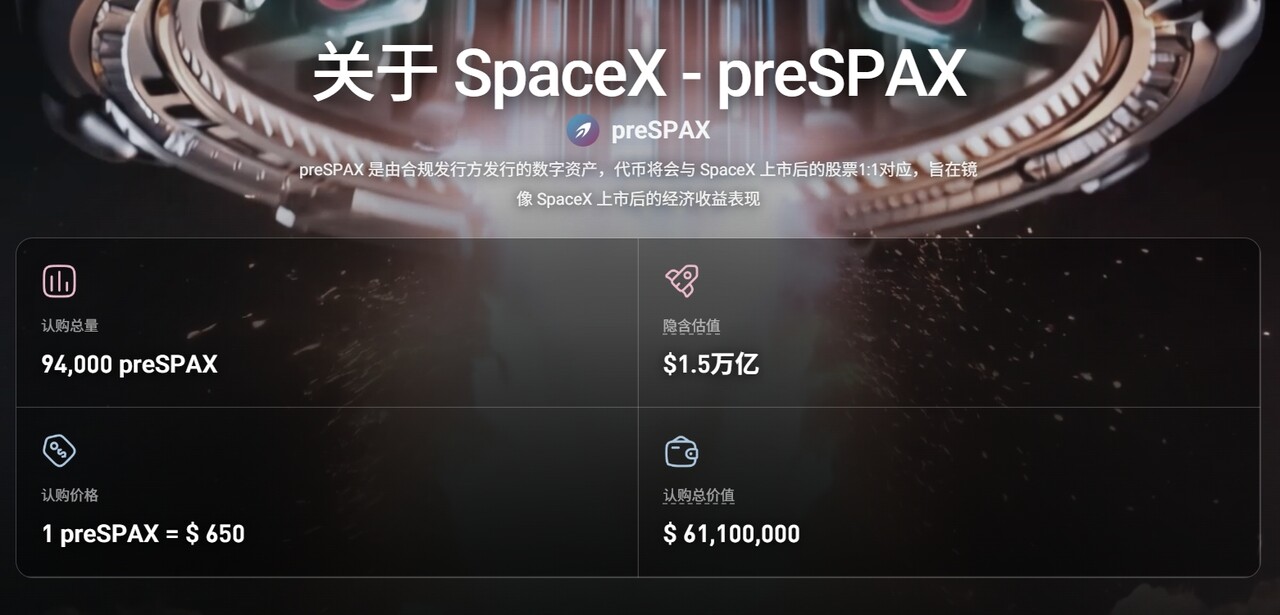
How Can Exchanges Capture SpaceX Traffic?
Personally, I think Bitget has made a good move, but what truly determines which exchange captures the biggest traffic dividend is not the Pre-IPO, but the day SpaceX officially goes public on June 12th.
First, it's about listing speed. Whoever can list SpaceX-related spot products first will capture the most ferocious initial wave of traffic. This logic is similar to the MEME war from back in the day. Why did TRUMP bring huge new user growth to exchanges? Because user FOMO is strongest in the first few hours. Whoever lists first, feasts; whoever is half a beat late, users have already opened accounts elsewhere. Of course, how quickly SpaceX stock can be tokenized also depends on Ondo and xStocks. For these two, the SpaceX IPO might determine who becomes the top player for on-chain US stocks.
Secondly, on the research and development side, the pressure from the SpaceX launch is a tough battle for exchanges. No user wants to miss out on IPO day due to app lag, K-line delays, or inability to place orders. But such incidents have not been uncommon among exchanges in recent years. When a major event occurs, a massive influx of users simultaneously refreshes quotes, places and cancels orders, and opens leverage, instantly putting immense pressure on the backend's quote push, matching system, database reads/writes, and WebSocket real-time communication. Any slight issue, and the user experience is ruined.
Thirdly, on the product side, how to make transactions smoother for users directly determines the conversion rate. For every extra click a user makes, the conversion rate drops by half. How to design the trading interface to make it easier for users to buy SpaceX, reduce slippage, and provide a better trading experience is something product managers need to consider. Details like how the homepage resources are laid out, whether the quote page allows one-click trading, whether the order placement process is short enough, and whether users can "mindlessly buy" after looking at the K-line all affect the final transaction volume.
Finally, the key on the operations side is how to turn "SpaceX" into a nationwide FOMO event. Trading competitions, airdrop rewards, deposit rebates, referral programs, and KOL collaborations will surely all appear simultaneously. Major exchanges have a natural advantage in operations – higher exposure and more distribution channels. But smaller exchanges aren't without a chance. If they can design activities that truly resonate with users, they can also achieve massive growth. Users may not remember who listed SpaceX first, but they will definitely remember on which platform they made their first fortune.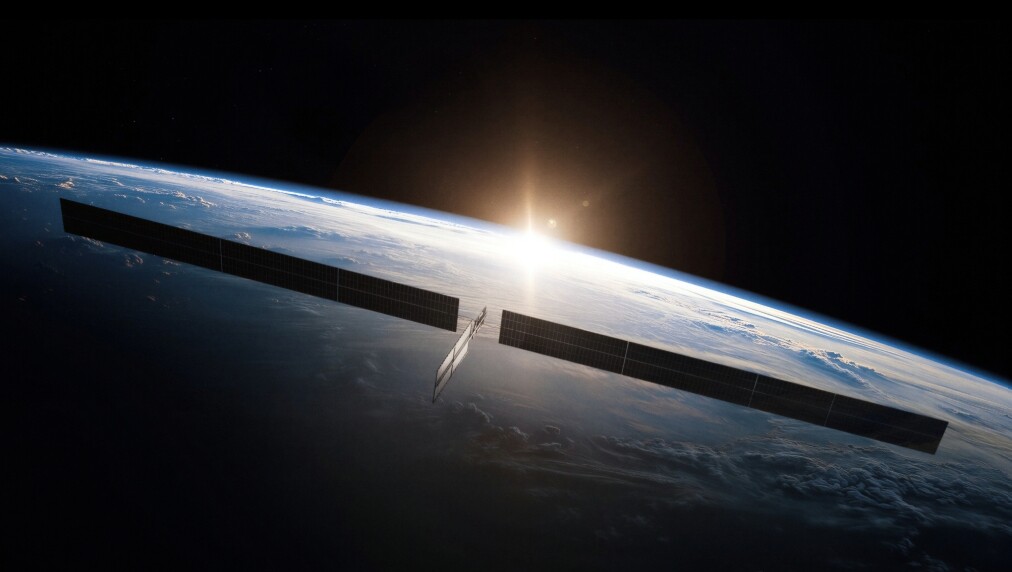
Futu, Tiger, and Longbridge Fined: Where Will Onshore US Stock Investors Go?
At the end of May, three internet brokerages – Futu, Tiger, and Longbridge – received regulatory penalties. For many domestic users, the impact of this is actually greater than imagined. Simply put, existing users can only sell, not buy, for the next two years, and the platforms cannot onboard new domestic users. Many people's first reaction is: "Isn't this just a brokerage rectification?" But if you put this together with the SpaceX IPO, things start to get interesting.
In the past few years, a large number of domestic investors went through the hassle of getting Hong Kong bank cards and opening overseas accounts, essentially for one reason: to buy US stocks. And this year, SpaceX just happens to be one of the strongest wealth narratives globally. Many were waiting to jump in on IPO day. But now, the traditional internet brokerage route is suddenly tightening. This means a large amount of capital originally destined for the US stock market hasn't disappeared; it's just looking for a new outlet. However, a lot of this capital won't flow back into Chinese A-shares. So, a very realistic question arises: Who can catch this overflow of capital?
The answer is relatively clear: Hong Kong-funded brokerages, and centralized exchanges.
Both have their advantages. The biggest advantage of Hong Kong-funded brokerages is that they offer a "complete US stock market." Although platforms like xStocks and Ondo have tokenized quite a few US stocks, they currently mainly cover the most liquid core assets like Tesla, Nvidia, and Google. Compared to the tens of thousands of stocks in the entire US market, the tradable assets currently cover less than 5%. This means if users want to buy relatively niche Chinese concept stocks like KE Holdings, Full Truck Alliance, Atour, or even some small-cap growth stocks, they ultimately have to return to the traditional brokerage system.
But exchanges also have their own killer app: User Experience. As mentioned above, user conversion drops by half with every extra step in the trading process. Most Hong Kong-funded brokerage apps require about 6-7 clicks to navigate to the US stock trading page, and US stock trading permissions need to be activated separately. In contrast, centralized exchanges often place US stock trading in the most prominent position. Users can trade tokenized US stocks within a maximum of 3 clicks. Most users' selection criteria tend towards: Which one is simpler, faster, and feels more like an internet product?
Of course, both opening accounts with Hong Kong brokerages and registering on exchanges fall into a gray area. Users need to rely on their own means, which we won't elaborate on here. You know what I mean.
When the World Cup Collides with SpaceX
What a coincidence; the 2026 World Cup kicks off on June 12th, exactly the same day as the SpaceX IPO. As for whether this timing by the US was intentional, you be the judge. One is the most anticipated IPO in human history, the other is the world's biggest traffic-attracting sporting event. When the "rocket" and the "football" collide on the same day, the global spotlight will be on America.
The commercial value of the World Cup needs no elaboration; it is already the world's largest gateway for betting traffic. According to Forbes, global betting stakes during the 2022 World Cup reached as high as $160 billion. By 2026, the World Cup will be even crazier. On one hand, the tournament has expanded from 32 to 48 teams, significantly boosting the number of matches, discussion volume, and betting demand. On the other hand, the on-chain prediction market is no longer dominated solely by Polymarket; platforms like Kalshi, Myriad, and Predict.fun have all entered the fray. In other words, the 2026 World Cup is very likely to be the first truly "large-scale user education" event for on-chain prediction markets.
Exchanges certainly won't miss out on this piece of the pie. However, regulatory risks for such businesses always exist, as gambling is a highly sensitive area in many regions. Therefore, most exchanges won't operate prediction markets themselves directly, opting instead for a "roundabout approach." Many exchanges, including Binance, OKX, and Bybit, currently prefer to connect to prediction market protocols like Polymarket, Kalshi, and Predict.fun, allowing users to participate in World Cup guessing games via their Web3 wallets. What exchanges truly want is not just the guessing game itself, but to cultivate users' habit of using Web3 wallets.
Because in most exchanges, the proportion of users who actually frequently open their Web3 wallets is quite low. If users start getting used to connecting their wallets, signing transactions, and interacting on-chain for the World Cup, then the activity on the exchange's own on-chain Dapps will naturally follow. Especially after the heat around on-chain products like Binance Alpha and OKX Boost has gradually cooled down, the World Cup might become the catalyst for many users to reopen their Web3 wallets.
Of course, from the challenge perspective for exchanges, the World Cup and SpaceX are not on the same level of magnitude. Even for an exchange like Gate that aggressively promotes prediction markets, it essentially directs users to Polymarket, meaning the stress is on the prediction market protocol itself, not the exchange backend. Secondly, most World Cup bets can be placed well in advance; it's not like the SpaceX IPO requiring users to frantically grab orders at a single moment. Therefore, for exchanges, the World Cup is more like a "steady and long-term" operational battle, rather than a sudden traffic surge on a single day. Compared to a one-day stress test, exchanges need to think more about: how to sustainably convert World Cup buzz into user engagement and on-chain trading volume over the next 40 days.

Hyperliquid Lurking
Today, the competition for centralized exchanges is no longer just among themselves. What truly keeps them up at night might be Perp DEX unicorns like Hyperliquid.
If you compare giants like Binance, OKX, and Bybit to elephants, then Hyperliquid is more like a cheetah lurking in the shadows. It's not huge in size, but extremely fast. It is often more sensitive to hot topics and responds more quickly to market conditions compared to major exchanges. Many times, while a centralized exchange is still in a meeting assessing risks, Hyperliquid has already launched the product.
Regarding the two most important hot spots for June – the SpaceX IPO and the World Cup – Hyperliquid has already prepared in advance. For SpaceX, Hyperliquid launched a SpaceX pre-listing perpetual contract (SPCX-USDC) via Trade.xyz, allowing users to trade with leverage even without actually holding SpaceX shares. For the World Cup, on May 26th, the Hyperliquid HIP-4 testnet went live with a "2026 World Cup Winner" prediction contract, signaling Hyperliquid's official entry into the on-chain prediction market and gambling sector.
Hyperliquid has always been known for its "small team, high efficiency." In the crypto industry, smaller organizations often mean fewer processes, shorter decision-making chains, and faster product response times. Many centralized exchanges might still be waiting for legal, risk control, operations, and marketing approvals, while Hyperliquid has already built the trading market.
But elephants have their advantages too. The massive operations, customer service, content, and channel teams of centralized exchanges can still cover a wider range of ordinary users. For many newcomers, they may not care whether it's on-chain native or about "decentralization." They care more about: how to register, how to buy, why they can't buy, and who to call when liquidated. Often, a customer service agent who can respond promptly might be more important than the narrative of "full decentralization."
Even though the HYPE token has outperformed significantly in 2026 while exchange tokens like OKB, BGB, and KCS have performed weakly overall, I still don't believe Hyperliquid will one day completely replace all centralized exchanges. Because whether in the stock market or the crypto market, truly professional high-frequency traders and quant funds have always been a minority. The vast majority of users are still ordinary retail investors.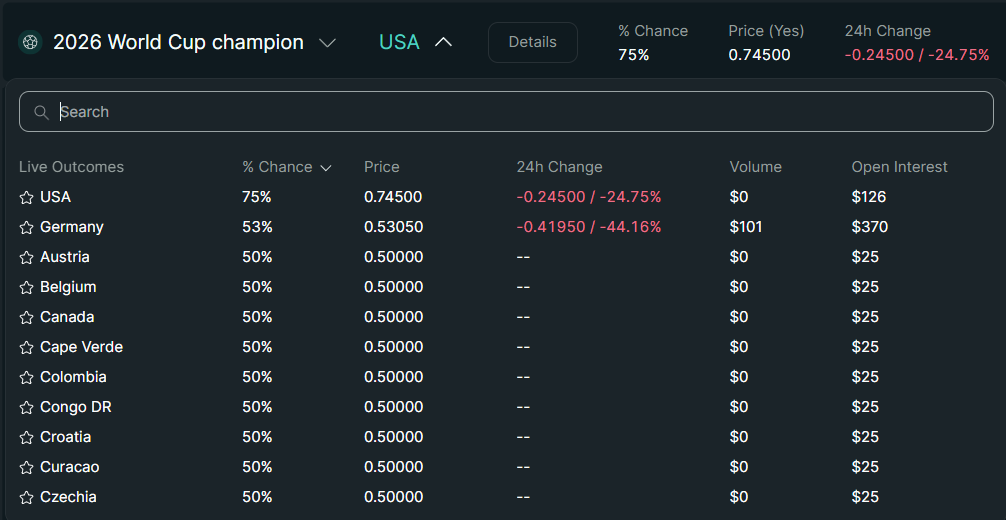
Epilogue
US stock tokenization is undoubtedly one of the important branches of RWA. It has high standardization, high liquidity, and relatively significant volatility, making it naturally suitable for the Crypto world. Prediction markets, in a sense, are on-chain mirrors of real-world events. From the US election to the World Cup, it's essentially about moving real-world sentiment, opinions, and odds onto the chain for trading.
This concept of RWA: In 2023, everyone in the space was talking about 5% on-chain US Treasury yields; in 2024, BlackRock issued an on-chain US Treasury fund, BUIDL; in 2025, stablecoins, on-chain US stocks, and on-chain gold began entering mainstream financial view.
Soon, the real-world "rocket" and "football" are coming to Web3.
The traffic battle for exchanges begins with the opening whistle in June.


