A Conversation with the Chairman of the Ethereum Community Foundation: Should the EF Be Responsible for ETH's Price?


- Core Viewpoint: The core contradiction for Ethereum currently lies in the misalignment between the EF's (Ethereum Foundation) governance model, the asset value of ETH, and competitive pressures within the ecosystem. The EF needs to transition from being "value-driven" to a more professional and accountable organization, while simultaneously acknowledging the core role of ETH's price for network security. Otherwise, it risks losing its long-term advantage in the short-term competition against rivals like Solana.
- Key Elements:
- Due to the departure of executives like Tomasz, restrictive CROPS loyalty pledges, and documents with peculiar styles (such as a comic manifesto), the EF has been criticized for opaque decision-making and being out of touch with reality, weakening community trust.
- Zak Cole believes the EF should introduce external diverse talent from DeFi, institutions, and open-source communities into its board, rather than relying on an internal promotion system (i.e., the "family business" model).
- The decline in ETH's price (currently around $2100, down over 50% from its $5000 peak) has directly exacerbated community pessimism. Zak points out that under PoS, ETH's value is the foundation of network security, and the EF's long-term neglect of its price is a strategic mistake.
- Bankless host David Hoffman liquidating his ETH holdings and seasoned researcher Dankrad proposing the creation of another $1 billion organization (focused on enhancing ETH's value) reflect internal division within the ecosystem and a lack of "fighting spirit."
- Ethereum's on-chain revenue is being diverted by Solana, Tron, Hyperliquid, etc. The EF is accused of failing to effectively respond to competition. The CROPS values may struggle to attract users outside the crypto circle in the short term, posing a risk of "losing the long term by losing the short term."
- The EF holds approximately 0.16% of the ETH supply, and its budget is constrained by the price decline. Layoffs and team spin-outs are seen as measures for the EF to contract and refocus on research, but they may weaken execution efficiency.
Compiled & Translated by: Deep Tide TechFlow
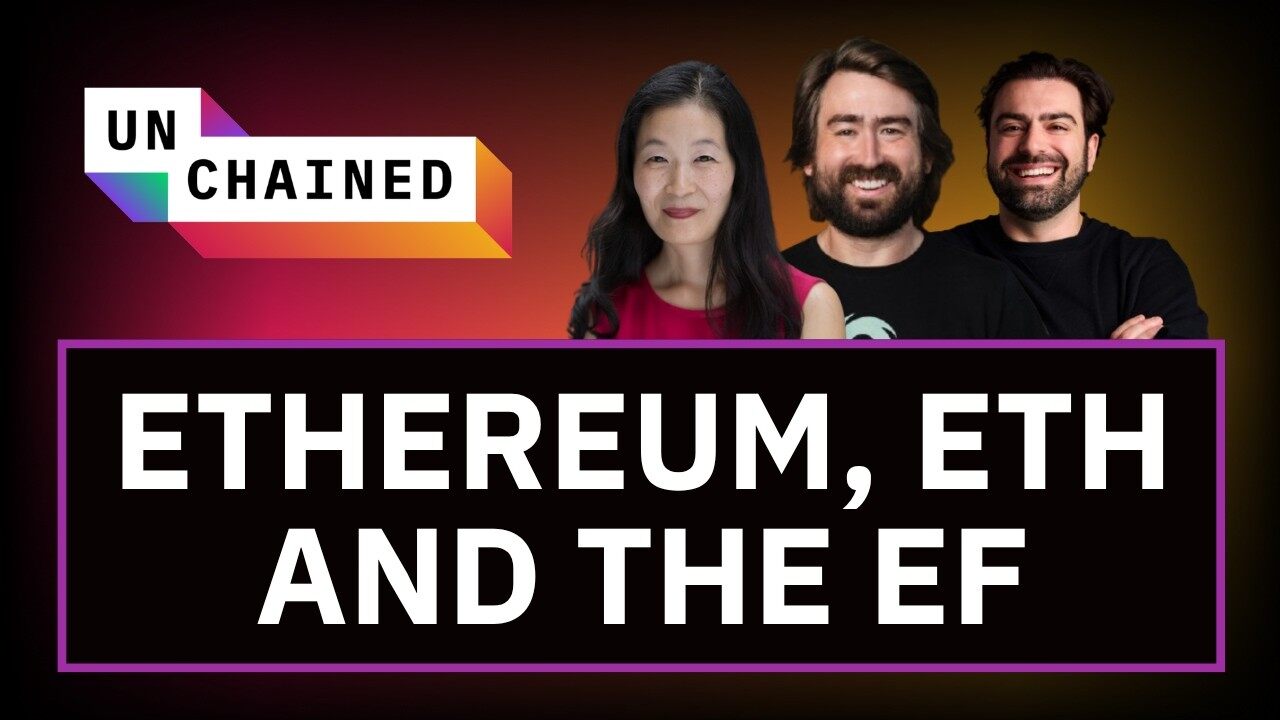
Guests: Zak Cole (President of the Ethereum Community Foundation), Greg Markou (Co-founder & CEO of Sprinter, Co-founder of ChainSafe)
Host: Laura Shin
Original Title: The EF Is Shrinking. What Does It Mean for Ethereum and ETH?
Podcast Source: Unchained
Air Date: May 26, 2026
Editor's Introduction
The core contradiction of Ethereum today isn't just the EF (Ethereum Foundation) "downsizing" or senior departures, but the misalignment of responsibilities and rights between ETH as an asset, Ethereum as public infrastructure, and the EF as a coordinating center.
Zak Cole (President of the Ethereum Community Foundation) and Greg Markou (Co-founder & CEO of Sprinter, Co-founder of ChainSafe) have both been building within the Ethereum ecosystem for a long time. One represents a more radical "ETH asset value" faction, and the other represents an engineering and infrastructure perspective. Their disagreements precisely reveal the underlying tension of this conversation: Should Ethereum continue as a values-driven cypherpunk network, or must it, like a mature company, acknowledge price, governance, ecosystem cooperation, and competition?
The most valuable aspect of this conversation is that it threads together Vitalik's proposal that "EF will be a smaller ship," the CROPS values (Censorship Resistance, Open Source, Privacy, Security), senior employee departures, David Hoffman liquidating his ETH, Dankrad Feist's suggestion to establish another $1 billion organization, and the diversion of on-chain revenue by Solana, Tron, and Hyperliquid into a single narrative.
Key Quotes
Ethereum is No Longer an Early-Stage Startup
- "Ethereum is no longer a startup project; it's a mature and massive ecosystem, backed by billions or even trillions of dollars in interests. Many people's careers and livelihoods depend on it."
- "The EF says it's not the center, but if there's a contentious fork, Circle and Tether will likely follow the chain the EF chooses. In reality, that makes the EF the de facto center."
- "There's no shame in admitting responsibility. On the contrary, I hope the EF truly takes responsibility, diversifies its board, and brings in people who understand products, companies, markets, and communication."
- "An organization can be professional, clear, and scalable while still upholding principles like censorship resistance, openness, privacy, and security."
Price is Not Just Noise, It's Part of Security
- "After the transition to PoS, the value of ETH is part of network security. The lower the ETH price, the lower the network security."
- "You can't build an economic system and then, a decade later, say maybe economics does matter. ETH's monetary premium is itself a mechanism to attract users, generate security, and create value."
- "If there's a scoreboard on the field, it means you're in a game where people care about scores. If a team doesn't care about winning, they should go back to the playground."
- "It's not that the EF can't adhere to CROPS values. The problem is it hasn't used ETH and the ETH price as tools to advance these principles."
The Real Problem Isn't Departures, But Who Makes Decisions
- "Personnel turnover in a mature organization isn't strange, unless these people start collectively moving to other ecosystems. Currently, most seem likely to continue working within the Ethereum ecosystem."
- "Bastian might be a great person, but for someone in a central position at Ethereum, the outside world barely knows who he is or why he gets to make these significant decisions."
- "If important EF employees are indeed responsible for large projects, but even deeply involved ecosystem participants don't know what they're doing, that's also a failure of the EF to communicate clearly."
Ethereum Isn't Facing the Next Round of "ETH Killer" Noise
- "Every past cycle had so-called ETH killers, but many were vaporware. The problem now is that someone has finally built a car that looks cooler and is faster."
- "It's impossible the EF is completely unaware that competitors like Solana, Tron, and Hyperliquid are capturing revenue and users, but many within it might not truly care."
- "CROPS might win in the long run, but it might not win in the short term. The issue is that if you lose in the short term, you might also lose the chance to win in the long term."
A Smaller Foundation is Possible, But the Board Can't Be a Family Business
- "The EF can continue to get smaller and focus on research, but it must hand over a lot of execution work to external organizations better suited for it."
- "The board shouldn't be a system of internal promotions and old boys' network. It should bring in external people from DeFi, open source, institutions, products, and communication."
- "Ethereum needs to increase its surface area for luck. Winning requires many factors, including luck. Expanding your surface area is itself a way to increase your odds."
Recent Turbulence in the Ethereum Community
Laura Shin: Over the past week, the Ethereum community has been shaken by the departure of several foundation members, especially some senior members, sparking concern. Meanwhile, David Hoffman, co-host of Bankless (an Ethereum-focused crypto media and podcast), announced he sold his last ETH. ETH is currently around $2,100, after being near $5,000 last summer and fall.
On Sunday, Vitalik stated that "EF will be a smaller ship" and reiterated that Ethereum's CROPS values are its guiding principles. CROPS stands for Censorship Resistance, Open Source / Openness, Privacy, and Security.
The community has long worried Ethereum is losing to other chains. This concern was somewhat alleviated when Tomasz Stańczak was appointed co-executive director of the EF in 2025, but he left after 11 months. Now, the community feels Vitalik and the EF seem to be reverting to old patterns that previously caused significant anxiety. Before diving into details, I'd like to hear your overall take on this turmoil. Zak, you go first.
Zak Cole: I've been banging this drum for a long time, criticizing the EF's performance and its attitude towards the broader ecosystem. I think they took a few steps in the right direction, but now seem to have stepped back. Generally, though, the sentiment towards the EF is almost directly correlated with the ETH price. If ETH were still at $5,000, I don't think as many people would be complaining about what the EF did or didn't do.
So I don't want to be overly harsh on the EF. A lot of the emotion comes from price performance, which isn't entirely within the EF's control. Of course, I'm not saying the EF shouldn't consider the price, or that price shouldn't be seen as part of network security. I just think a good chunk of this is likely bear market sentiment.
Laura Shin: Greg, your thoughts?
Greg Markou: I also think the bear market and current price definitely affect the overall sentiment. However, I'd also say the EF has matured quite a bit since Tomasz joined. Back then, Danny Ryan was seen as a potential leader, and there was a lot of turmoil inside and outside the foundation. Tomasz at least tried to recalibrate where the EF should focus.
Now he's left, and others are leaving sequentially. It's complicated. Many who left have been at the EF for four, five, six years; they might just need a break, a change of direction, or to pursue other things. Overall, the EF did a lot to mature and cut some things the community complained about for years, and transparency improved. As for the recent CROPS news, I think there's some validity to it.
But after Tomasz left, things have indeed shifted a bit towards the current state. Overall, I still feel things are moving in a positive direction. Vitalik's post yesterday even slightly changed my view.
Laura Shin: You say things are moving in a positive direction. What specifically?
Greg Markou: I mean the EF is starting to realize it needs to mature, realize where the priorities should be, and realize it has to rely on other teams to hold the line in certain areas.
Zak Cole: My concern is that we've heard this before. They gave Tomasz a try, and it went badly. Now it seems they want to retreat to what they know: talking endlessly about the Infinite Garden, funding longevity research, doing a bunch of stuff no one cares about except Vitalik and his inner circle. I'll be blunt, the EF is completely out of touch with reality.
Of course, after criticizing them, I can also say, at least they admitted other organizations need to step up. But the question is whether they are genuinely willing to cede power to more capable and grounded organizations. Ethereum isn't a startup anymore; it's a mature, resilient ecosystem. You can't act as capriciously as you could six or ten years ago. Now there are billions or trillions of dollars at stake, people's livelihoods depend on it. My entire career is on Ethereum. If it fails, what do I do?
Laura Shin: You both mentioned earlier that many recent departures from the EF are senior, well-known members. To me, that doesn't look optimistic; it's worrying. But it sounds like you're not that worried. How do you see it? To me, several of them are true Ethereum evangelists.
Zak Cole: I don't find it particularly worrying. Mature organizations have turnover, and these people have been there a long time.
Laura Shin: Even if they all happened after Tomasz left? Basically within three months?
Zak Cole: I'm not saying it's optimistic. I'm just saying it might be a sign of ecosystem maturation. Or maybe it's not the EF maturing, but the EF regressing from Tomasz's approach. I don't know. Regardless, the ecosystem itself is growing. If these people are misaligned with the EF's internal direction, them leaving to do their own thing might be better. I believe they will continue working in the Ethereum ecosystem, or at least I hope so. It's hard to judge the long-term outcome now because I haven't talked to them and I don't know how they feel.
Laura Shin: I didn't list names earlier, but this includes Tim Beiko, Barnabé Monnot, Josh Stark, Trent Van Epps, Carl Beekhuizen, Julian Mauduit, etc. These are familiar community names.
Zak Cole: They are indeed well-known. But with respect to their past contributions, I have to ask, what have they done recently? What have they contributed to the EF and the broader ecosystem lately?
Laura Shin: Maybe their work isn't always bylined. Are you saying you don't think they're that important?
Zak Cole: I'm not saying they're unimportant. I just think they might have achieved a kind of "tenure" and started pursuing passion projects. If they are indeed responsible for big things and major projects, then it's another failure of the EF to not communicate to the outside world what these people are leading.
Personally, I don't know what the EF is doing, I don't know what each employee is doing, and I don't know what the board is doing. I only know what Vitalik says, and that's about it. As someone deeply involved in the ecosystem, if I can't articulate what they're doing, except for Trent working on Protocol Guild (a mechanism to fund Ethereum protocol contributors), then the EF has failed in showcasing and explaining its work.
Laura Shin: Greg, your take?
Greg Markou: It's not optimistic, but I'm not at the point of worrying. Unless we start seeing these people flow en masse to other ecosystems.
My gut feeling is this isn't like Max Resnick's very public departure from Ethereum to the Solana camp. From what I've heard, most will continue working on Ethereum, just not within the EF. This seems more like healthy churn. We should only worry when an organization enters a negative spiral, and everyone is being poached by other ecosystems.
If they start building on Solana, then we should worry. Peter Szilagyi's departure last year was an example. His output had been declining over six to twelve months, maybe one or two PRs a month, and he eventually left naturally. I might be underestimating his contribution, but it felt like natural churn. This batch hasn't seen such an acrimonious exit yet.
Laura Shin: What about Tomasz's departure? He joined only 11 months ago, in response to community demands for change and dissatisfaction. He was well-liked, praised across the timeline. He was open, talked to as many builders as possible. So his quick exit was shocking. The community feels it means the EF is going back to ignoring the community. Why do you think it happened?
Zak Cole: I think the EF succumbed to community pressure and put Tomasz in that position, but it didn't truly want to give up control. He was still just a co-executive director, co-managing with Hsiao-Wei Wang, so he didn't have full freedom to implement real organizational change. When he tried to push those changes, I think he was pushed out because he didn't fit the EF's Infinite Garden culture.
After he left, they installed a mysterious figure, Bastian Aue, almost no one knows or has seen. Then the EF released a so-called mandate document, with a visual style like something from DeviantArt. It could have been a clear blog post explaining the CROPS principles, but they made it look like a comic book manifesto. This made me very pessimistic. I don't want an organization that affects my child's financial future putting out something like this.
Laura Shin: We should put it on screen for the audience. We were laughing at it earlier. It certainly has a unique aesthetic and strange font choices.
Zak Cole: I'll be blunt, Tomasz wouldn't have released this. Greg, I know you're trying to stay un-pessimistic, but it's hard to look at this document and say it's suitable for a financial future, that institutions will feel comfortable putting money in. It says things like "If we fail, may the EF fall on its sword." The weird design is one thing, but the copy is equally out of touch.
Laura Shin: You mean that small comic at the bottom of page 11, right? It is indeed crazy.
Let's jump to Vitalik's Sunday post, because one point bothered me. He said Bastian is leading this EF transformation. Do you think this mandate document came from Bastian, or from Vitalik? Or does it not matter?
Zak Cole: The EF has a board, and Vitalik has the majority influence on that board. No matter