Gate 加密產業就業發展趨勢白皮書


- 核心觀點:2026 年第一季,加密產業在熊市慣性收縮與 AI 驅動的組織結構重組雙重壓力下,進入結構性轉型期。AI 工具取代基礎職位,穩定幣與合規領域成為最確定的人才需求來源,掌握「AI 工具 × 行業認知」的複合型人才成為市場稀缺資源。
- 關鍵要素:
- 行業裁員加速,但驅動力出現分化。Crypto.com、Gemini 等明確裁撤 AI 易取代的職位,但大部分裁員實為 Restaking、DePIN 等賽道萎縮所致,AI 僅是敘事包裝。
- 穩定幣是唯一大規模落地應用案例。市值突破 3,000 億美元,年交易量達 33 萬億美元,圍繞其合規、支付和銀行對接的職位需求幾乎不隨週期波動。
- 「AI 就緒度」成為個人職業分水嶺。目前僅 16% 從業者達到高 AI 就緒度。企業招聘中,14% 的 Web3 職位描述已明確要求 AI 工作流程技能,具備 AI 技能的職位薪資溢價顯著。
- 人才虹吸效應加劇。頂尖技術人才從加密領域流向 AI 原生公司(如 OpenAI),反向流動極少。加密產業招聘職位同比暴跌 80%,而字節跳動等 AI 原生企業大規模招聘。
- 薪酬呈現兩極分化。AI 原生量化與合規職位薪資最高,供需比失衡,技術類職位溢價超過 40%;基礎運營和客服職位因 AI 替代及全球遠端競爭面臨壓價。
Report Summary
• AI is reshaping workflows across all industries. The crypto industry is simultaneously bearing the dual pressures of a bear market cycle and AI transformation—yet the sectors genuinely creating value are still growing.
• Skill sets determine survival: Compound talents with "AI tools × deep vertical industry knowledge" are becoming the scarcest, highest-premium group in the market.
• This is not an industry recruitment data report—it is an action guide for individuals, helping every professional find their place in the AI era.
In Q1 2026, the crypto industry is undergoing two things simultaneously: the inertial contraction of the bear market cycle and an AI-driven organizational restructuring. The superposition of the two has created a talent market unlike any seen in the past decade.
Core judgment of this article: The impact of AI has already reached crypto, faster than most expected.
1. Crypto.com laid off 12% of its workforce, explicitly attributing it to AI; Gemini cut 30% of its staff. Crypto hiring is down 80% year-over-year. This is no longer "someone else's problem."
2. However, the real driver of most Crypto layoffs is the demise of specific tracks, not AI substitution. Areas like Restaking, DePIN, and homogeneous L2s are shrinking overall, with projects cutting costs to survive. AI is a genuine organizational change driver in some companies, but merely a narrative wrapper for layoffs in many others. Distinguishing between the two is a prerequisite for making correct talent decisions.
3. Stablecoins are the only proven large-scale use case in the Crypto industry and currently the most certain source of talent demand. With a market cap exceeding $300 billion and annual transaction volume of $33 trillion, regulatory frameworks are taking shape globally. Roles in stablecoin compliance, payments, and banking connections are among the few areas that don't fluctuate dramatically with market cycles.
4. "Lay off and rehire" is becoming a reality. 32% of companies that conducted AI-related layoffs have already rehired over a quarter of the eliminated positions. AI is replacing tasks, not jobs—companies that understand this distinction will "avoid many detours."
5. For individuals, "AI Readiness" is the biggest differentiator right now. Currently, only 16% of professionals have high AI readiness. Those who master AI tools first may not necessarily win, but those who don't will likely lose.
1. Introduction: Key Variables in the Global Job Market, Q1 2026
From December 2025 to March 2026, the global job market experienced a period of concentrated shocks, with an intensity rarely seen in recent years.
The Large Model Race Enters a Dense Explosive Phase
From the second half of 2025 to Q1 2026, the world's leading large language models underwent a collective leap. Both closed-source models and open-source ecosystems made significant progress in reasoning capabilities, multimodal understanding, and agentification. Below is an overview of the major LLM landscape as of March 2026:
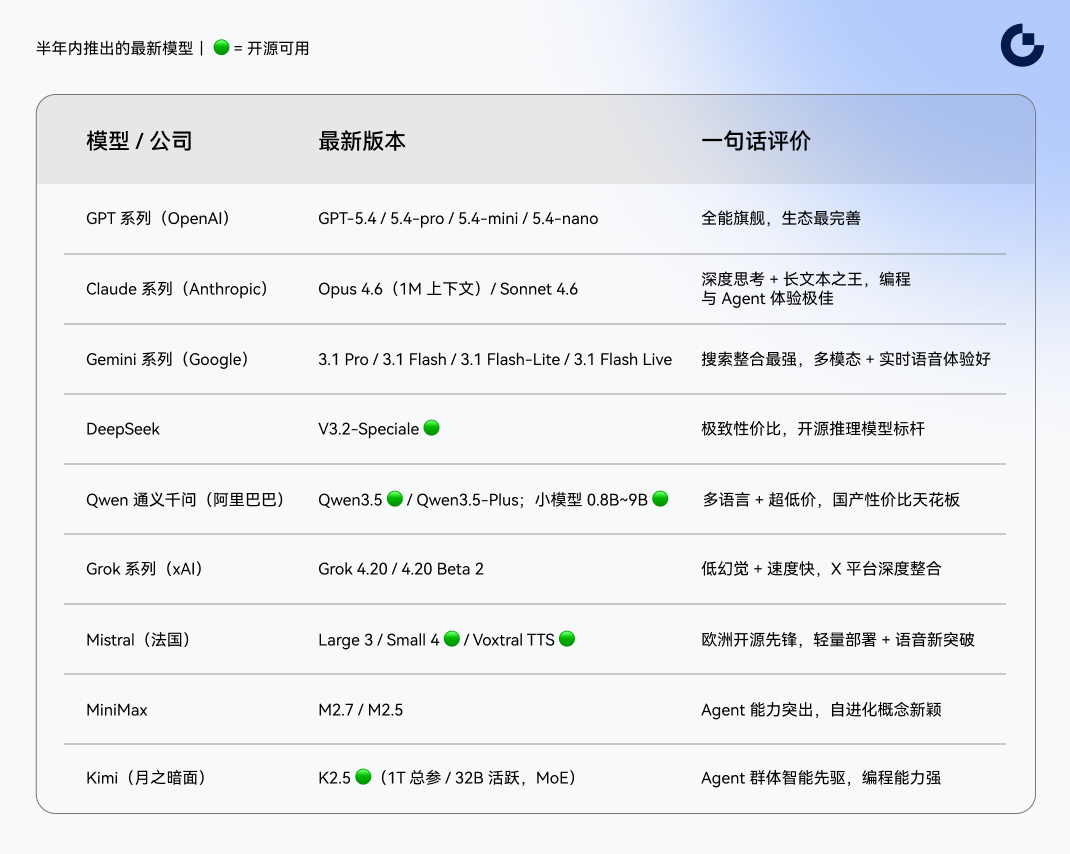
(Sources: OpenAI, 2025.08; Anthropic, 2026.02; Google AI, 2026; DeepSeek GitHub, 2025; Alibaba Cloud, 2026.02; Meta AI, 2025.04; xAI, 2026.02; Mistral AI, 2025.12)
AI Agents Move from Concept to Reality
If the parameter race in LLMs was an "arms race," then agentification is the "last mile" where this competition truly changes the way we work.
• Gartner predicts that by the end of 2026, 40% of enterprise applications will incorporate task-specific AI Agents (up from less than 5% previously); enterprise inquiries for multi-agent systems have surged 1,445% over the past year.
• GitHub Copilot Agent mode can autonomously complete the entire workflow from code writing to PR submission; Cursor has surpassed 2 million users.
• Amazon Q Developer uses agent clusters to batch-modernize thousands of legacy Java systems.
• ServiceNow CEO Bill McDermott predicts: In the coming years, unemployment among new graduates could climb to over 30%, because AI Agents will automate a large number of entry-level jobs.
(Sources: Gartner, 2026.01; Fortune, 2026.03.17 https://fortune.com/2026/03/17/servicenow-ceo-bill-mcdermott-gen-z-graduates-face-30-unemployment-next-couple-of-years-ai-takes-over/)
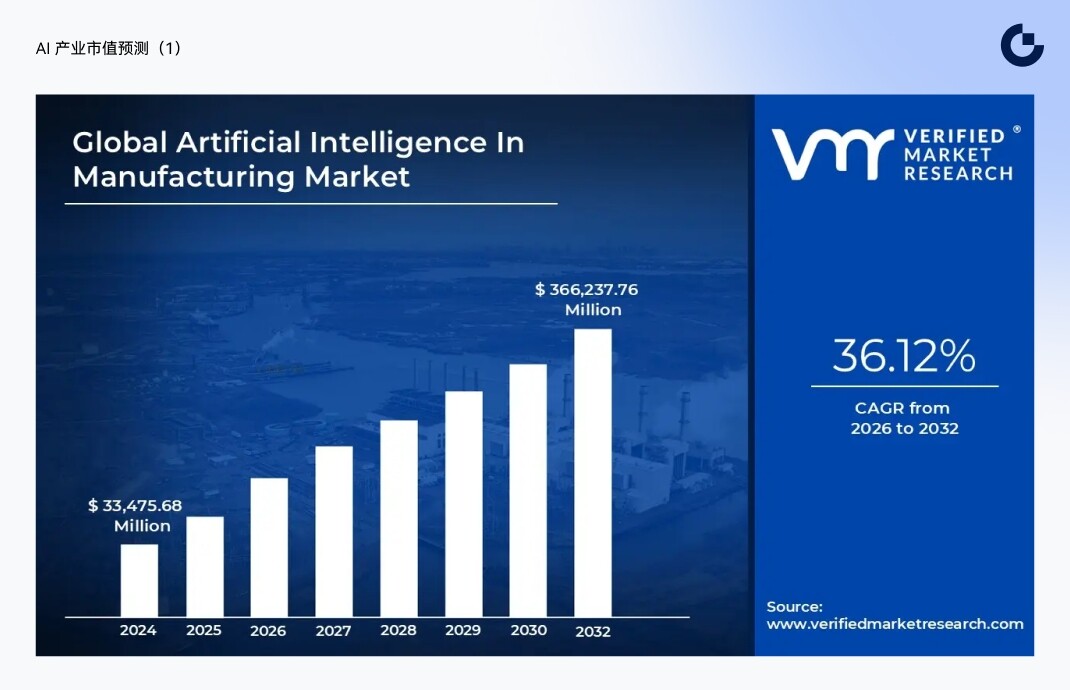
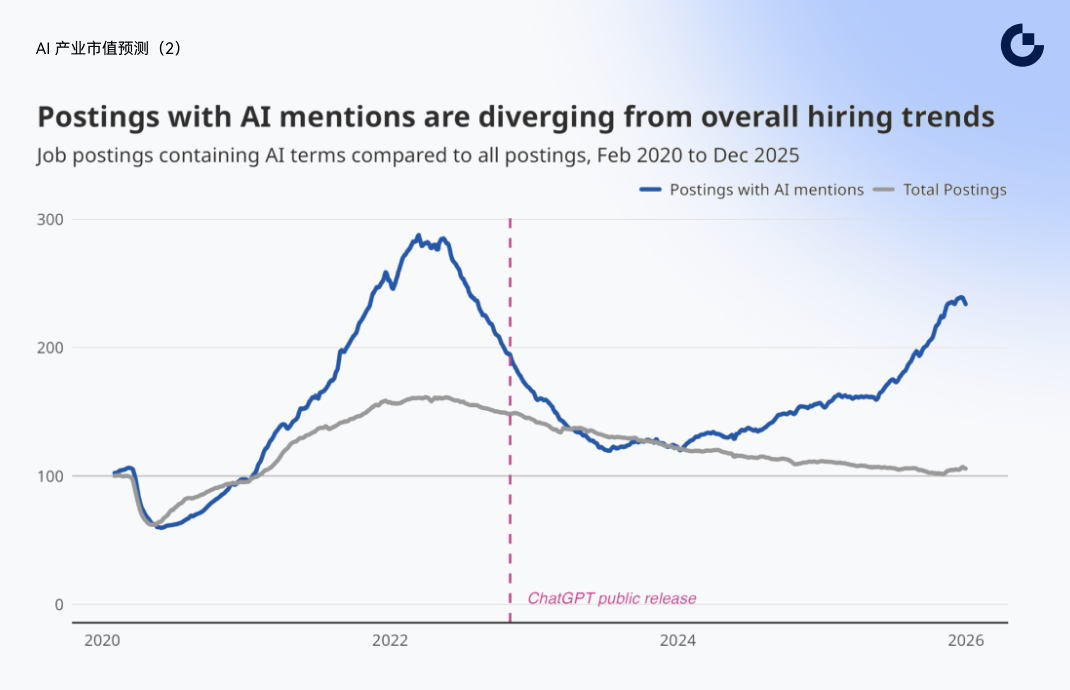
Tech Industry Layoff Wave and One-Way Talent Flow
Hot on the heels of the AI platformization wave, Block announced a 40% workforce reduction on February 26, cutting 4,000 employees. This is the largest layoff in tech history explicitly attributed to AI. Notably, Block's Q4 gross profit grew 24% year-over-year during the same period—this was not cost-cutting for survival, but a proactive management choice at a performance peak. The market voted with its feet: the stock surged 24% on the day. (Source: CNBC, Block Q4 Earnings)
Layoffs then spread densely: Amazon cut 16,000, Atlassian cut 10%, HSBC considers cutting 20,000 back-office roles over 3-5 years. By the end of March, the tech industry had laid off approximately 59,000 people in 2026. An anonymous CFO survey indicates that AI-attributed layoffs in 2026 could reach 9 times last year's number.
(Source: NBER / Duke CFO Survey, reported by Fortune)
The other side of the coin: ByteDance is launching its largest-ever internship recruitment, targeting over 7,000 interns for the class of 2027, including over 4,800 R&D offers with a conversion rate exceeding 50%. While traditional enterprises contract, AI-native companies are expanding. Talent is flowing one-way. (Source: Sina Tech, 2026.03.06 https://finance.sina.com.cn/tech/discovery/2026-03-06/doc-inhpzvnr2495717.shtml)
These events are crucial because they fundamentally change the definition of "human resources" within organizations. To discuss employment trends in any industry without talking about what happened in these three months is like discussing a world that no longer exists.
Under Macro Disruptions and Capital Revaluation, the Crypto Industry Enters a New Phase
From Q4 2025 to Q1 2026, the external environment for the crypto industry is significantly more complex and mature than the previous cycle. On one hand, global markets continue to trade on rate cut expectations. The Fed lowered the federal funds rate target range to 3.50%-3.75%, with marginal improvements in liquidity boosting risk asset valuations. On the other hand, geopolitical tensions repeatedly pushed up volatility in safe-haven assets like energy and gold. In March 2026, Brent crude spiked ~9% in a single day due to Middle East conflict, subsequently surging past $110/barrel, making geopolitical risk a key variable in global capital allocation once again.
(Sources: Fed FOMC Statement 2026.03.18; CNBC Brent Crude Report 2026.03.01)
Against this backdrop, traditional financial institutions' participation in the crypto market is no longer limited to trading but extends to ETFs, custody, stablecoin payments, and on-chain financial infrastructure. Consequently, the crypto ecosystem is transitioning from a single price-driven narrative to a richer phase driven by new narratives like AI, stablecoins, and prediction markets.
2. Transmission Path: From Tech Industry Restructuring to Structural Shock in Crypto
At the beginning of the year, many crypto professionals still felt that "the story above" was "a Web2 thing." Data from March proved otherwise. (The following content is excerpted from public information releases)
Crypto layoffs have begun. On March 19, Crypto.com laid off 12% (~180 people). CEO Kris Marszalek’s wording on X left no room for doubt: "Companies that don't immediately transform for AI will die." The layoffs focused on the Growth and CRM departments—precisely the roles most easily replaced by AI tools. Gemini was more aggressive, having cut 30% since the year began, reducing its workforce from ~630 to 445. In a letter to shareholders, they wrote: "Not using AI is like bringing a typewriter to work." During the same period, the Algorand Foundation cut 25%, OP Labs (Optimism) cut 20%, and Messari shrank from a target headcount of 1,000 to ~140 after three rounds of layoffs (Source: CoinDesk, comprehensive report March 21, 2026).
But the real driving force behind the layoffs is much more complex than "AI replacement." Dan Eskow, founder of crypto recruiting firm Up Top, offers a more sober assessment: most layoffs have little substantive relationship with AI. Tracks like Restaking, DePIN, and L2s, once talent-intensive, have "basically ceased to exist." Companies are cutting costs to buy survival time. Algorand cut community management and BD roles—these are not jobs easily replaced by AI. Hiring data is even more telling: In January 2026, major crypto job boards added only about 6.5 new positions per day, a staggering 80% drop year-over-year (Source: Dan Eskow / FinanceFeeds; CoinDesk interview).
So, the reality is two logics operating in parallel: the market downturn is compressing overall space (cyclical), while AI is accelerating structural adjustments within organizations (structural). For hiring managers, distinguishing whether a role disappeared because the track shrank or because it was redefined by AI determines whether you should freeze hiring or adjust the JD. For job seekers, this distinction determines whether you should wait for the market to recover or pivot immediately.
The talent drain effect is intensifying. Top technical talent is flowing from crypto to AI-native companies. The compensation, technological frontier appeal, and growth prospects offered by companies like OpenAI, Anthropic, and DeepSeek currently far exceed the average level in the crypto industry. Reverse flow—from AI to crypto—is extremely rare. The talent appeal that the crypto industry once built through token incentives and remote culture is being diluted as AI companies also embrace global remote hiring and offer highly competitive compensation.
The Shocking Number from the Anonymous CFO Survey:
An anonymous survey conducted by the U.S. National Bureau of Economic Research (NBER), covering 750 CFOs of US companies, shows: AI-attributed layoffs in 2026 are expected to reach approximately 502,000, nine times the previous year's figure (~55,000). In Q1, 23% of layoffs already explicitly cited AI automation as a reason. (Sources: Fortune, 2026.03.24; CFO Dive 2026.03)
Broader industry data is more alarming: Crypto hiring is down 80% year-over-year—only about 6.5 new positions per day. Entire tracks are dying: restaking, DePIN, homogeneous L2s, once-hot areas, have "basically ceased to exist." (Sources: InCrypted 2026; crypto.news)
The Talent Drain Effect is Intensifying
Top technical talent is flowing from crypto to AI-native companies. The compensation, technological frontier appeal, and growth prospects offered by companies like OpenAI, Anthropic, and DeepSeek currently far exceed the average level in the crypto industry. Reverse flow—from AI to crypto—is extremely rare. The talent appeal that the crypto industry once built through token incentives and remote culture is being diluted as AI companies also embrace global remote hiring and offer highly competitive compensation.
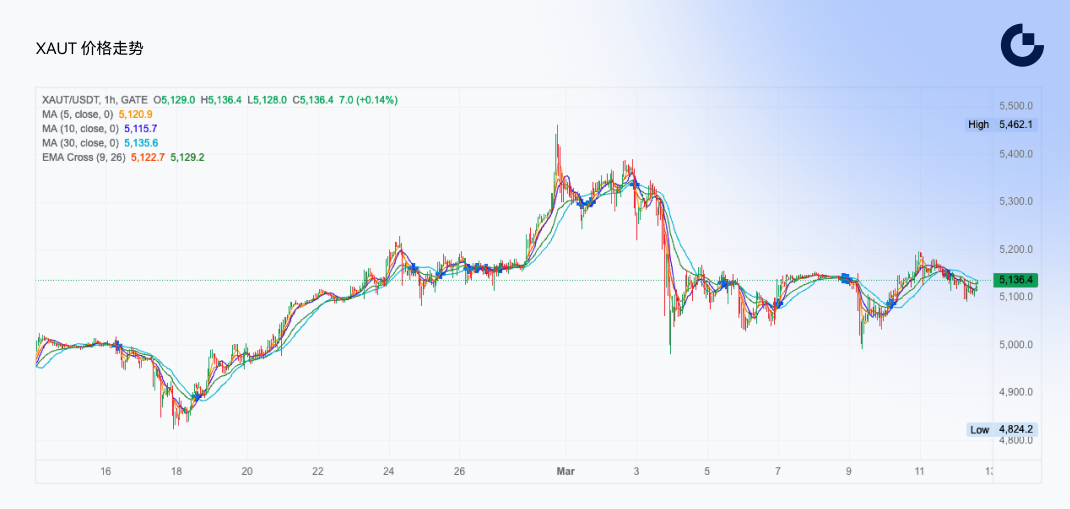
Current Crypto Market Status: High Retreat, Industry Phase Enters a Bear Market
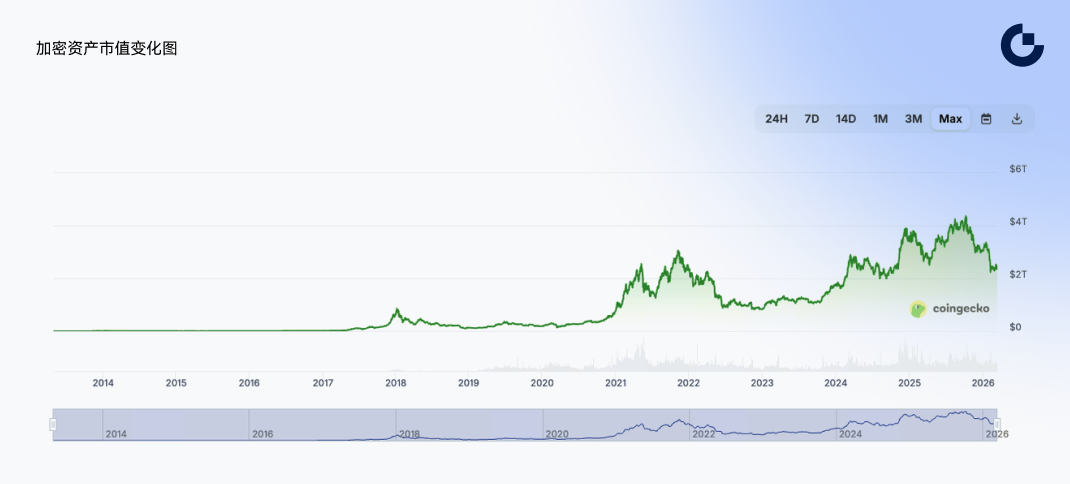
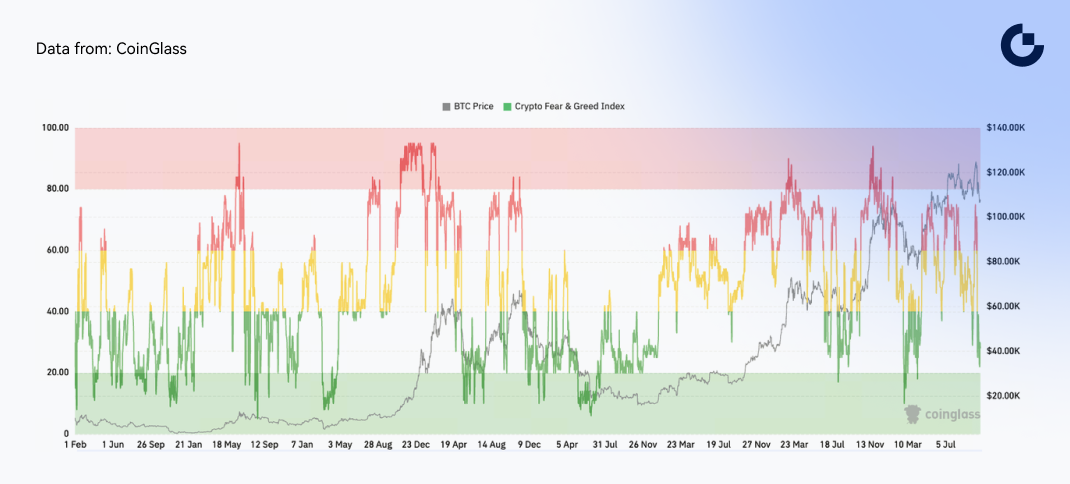
After a significant rally, the crypto market recently hit a temporary high but quickly retreated. The current price center is noticeably lower than the peak, market volatility has increased, and risk appetite has declined. The crypto industry has likely entered a stage bear market. In this context, corporate expansion usually slows down, and hiring demand shifts from pursuing growth to emphasizing efficiency and core roles. (Source: CoinGecko public market price data)
3. Who is Hiring: Employer Structure and Recruitment Focus Across Four Major Tracks
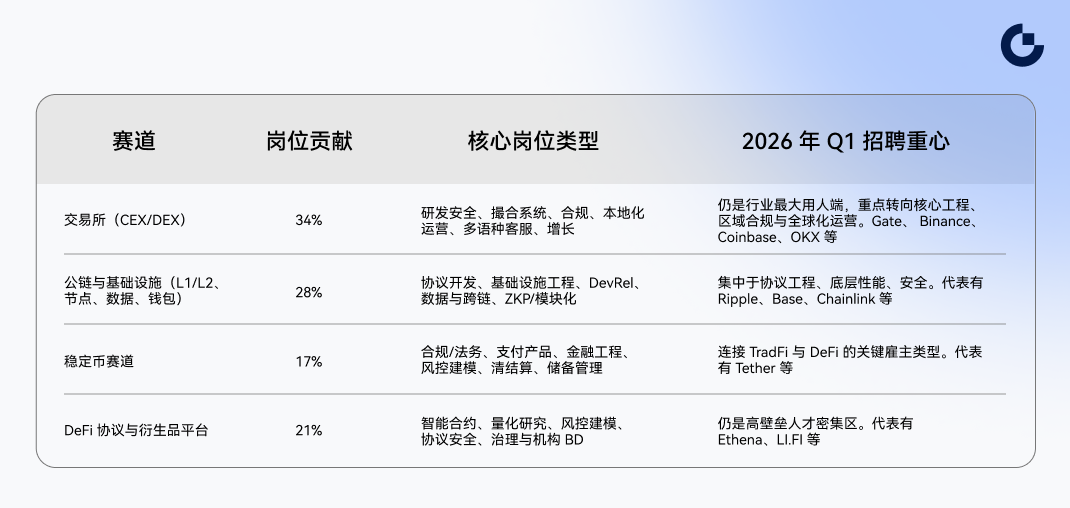
The industry is contracting, but not all directions are shrinking. Distinguishing between "dying tracks" and "tracks generating real demand" is the most important judgment right now. Broken down by major employer type, the Q1 2026 crypto job market has formed four major parallel tracks: Exchanges, Public Chains & Infrastructure, Stablecoins, and DeFi & Derivatives:
Zooming into the Specific Job Market, the Demand Structure is Changing
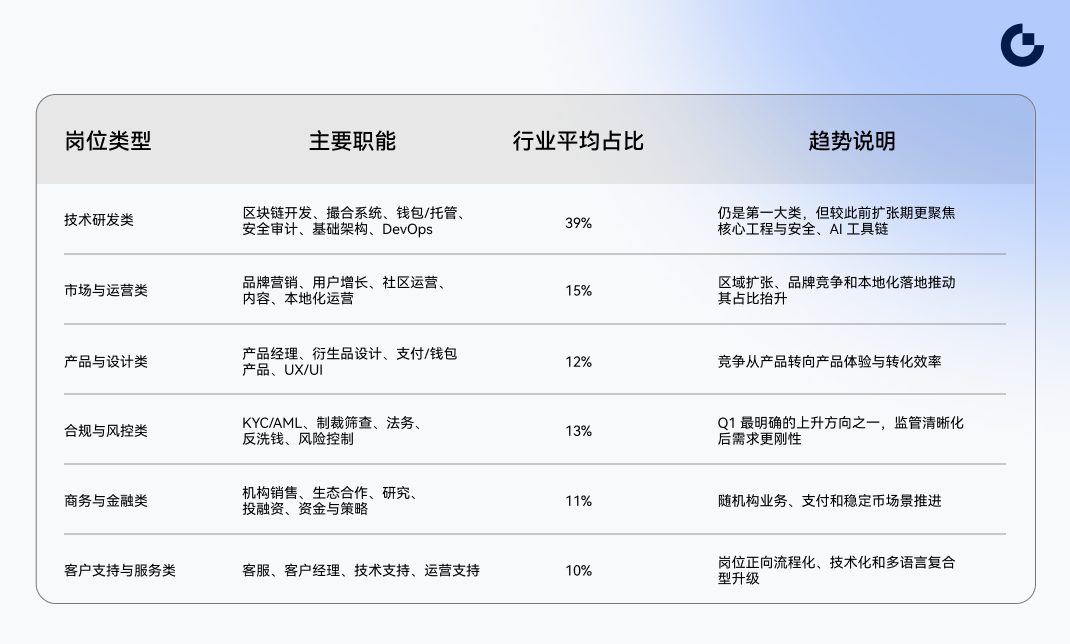
New hiring in Q1 was cautious and slow, but this does not mean demand has receded. The proliferation of AI and the refinement of the regulatory environment are simultaneously reshaping job standards: on one hand, requirements for low-barrier, execution-heavy, process-driven roles are being compressed; on the other hand, the thresholds for key roles in engineering, security, compliance, product, and commercialization continue to rise.
(Sources: Web3.Career Intelligence Report 2025; Edgen.tech; Crypto Jobs List)
New Job Posting Data for Q1 2026
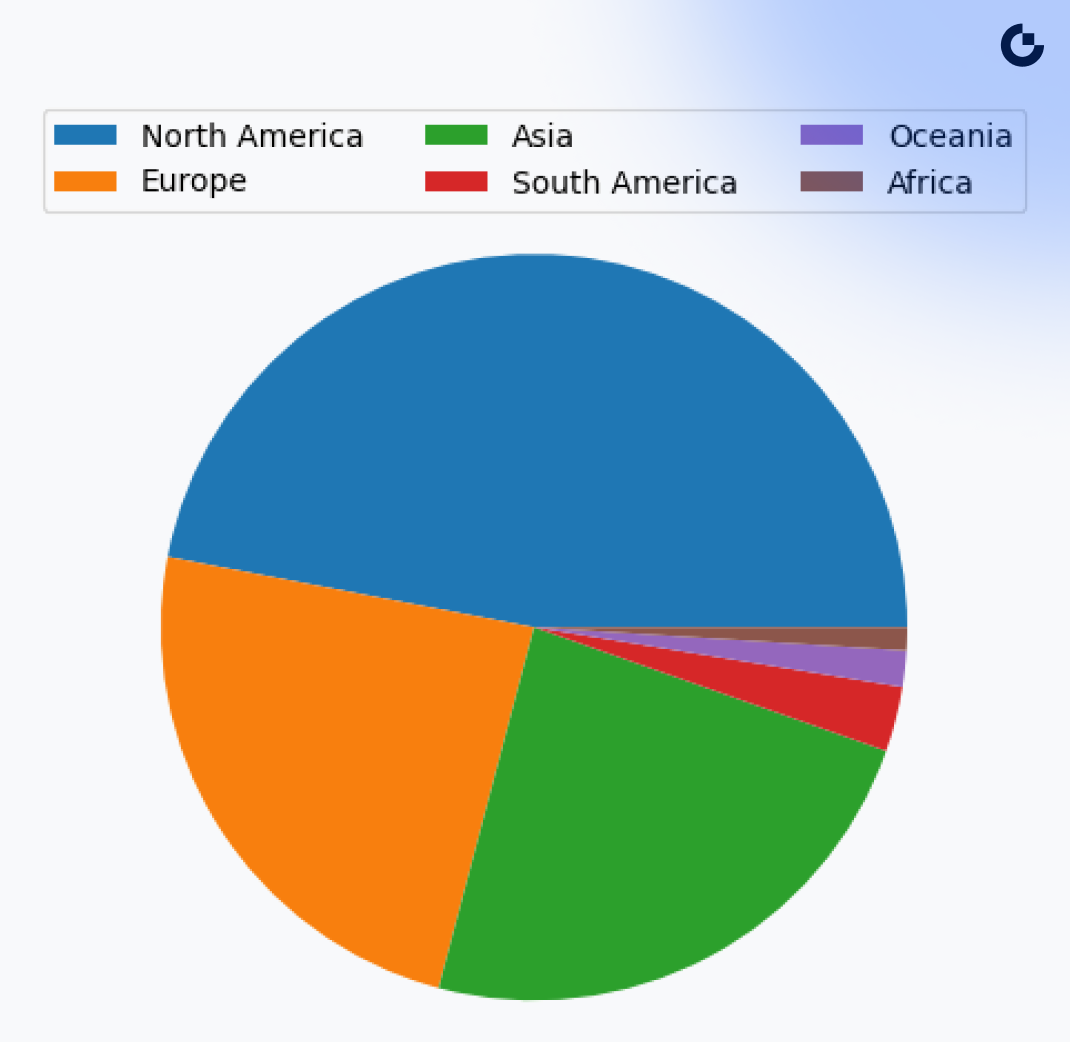
In Q1 2026, approximately 2,167 new Web3 and crypto-related positions were created, including about 328 new Web3 developer roles. North America leads significantly with 25,000 positions; Europe and Asia each have about 12,000; South America, Oceania, and Africa combined have fewer than 3,000 positions. Remote crypto positions reached 15,000. (Source: web3.career)
Who is Most Competitive Now: Skill Combinations Are More Valuable Than Single Skills.
What the crypto industry has rarely lacked is "people who can write Solidity," but rather compound talents who "understand financial product logic + can code + understand the compliance framework." In the AI era, add another requirement: the ability to proficiently use AI tools to amplify output. This is not a plus; it's the baseline.
Tech roles still account for over 50% of the crypto job market. Blockchain development, security auditing, and smart contract engineering are core needs. ZKP engineers and Rollup designers are becoming scarce, high-paying roles. But the definition of tech roles is changing rapidly—Gemini's layoff statement indicated AI is turning "10x engineers" into "100x engineers." The implication: the space for pure execution coding roles is shrinking dramatically. Architectural ability, systems thinking, and judgment in solving ambiguous problems are the real hard currency. (Sources: Web3 Jobs; CoinDesk 2026.03.21)
Non-tech roles show a clear polarization. The compliance track continues to grow due to strengthening global regulation. Product managers and ecosystem operations still have opportunities in emerging markets like Southeast Asia and the Middle East. However, Crypto.com's recent layoffs were concentrated in its Growth and CRM departments—highly repetitive roles like basic operations, customer service, and data entry face the highest risk of AI replacement.
For Cross-Industry Job Seekers: You Don't Need a "Crypto Native" Background.
Over half of the newcomers in the past year came from Web2, AI, finance