专访Robinhood加密负责人:代币化打通全球市场正在路上,美股上链只是第一步


- 核心观点:Robinhood 加密业务负责人 Johann Kerbrat 认为,资产代币化将是下一个爆点,旨在打通全球市场,同时预测市场已爆发式增长,而公司正计划通过整合链上协议和监管合规路径扩展永续合约业务。
- 关键要素:
- 预测市场在Robinhood上涨320%,能对冲AI、美联储决议等事件,是普通投资者过去接触不到的投资方式。
- Robinhood已在欧洲上线12个永续合约(最高10倍杠杆),正与CFTC对话,一旦美国监管明朗可随时推出。
- 代币化将把美股、私募股权、大宗商品等资产上链,使跨洲交易和合格投资者限制问题得到解决。
- Robinhood通过自托管钱包整合DeFi协议(如Lighter),后台处理跨链和gas费,降低用户使用门槛。
- Clarity法案若通过,稳定币奖励可合法传导给用户,并统一美国各州监管规则,促进产品全国推广。
- 与Hyperliquid无直接竞争:Robinhood是持牌中心化业务,Hyperliquid完全去中心化,Robinhood已列出其代币HYPE。
Compiled & Translated by: TechFlow
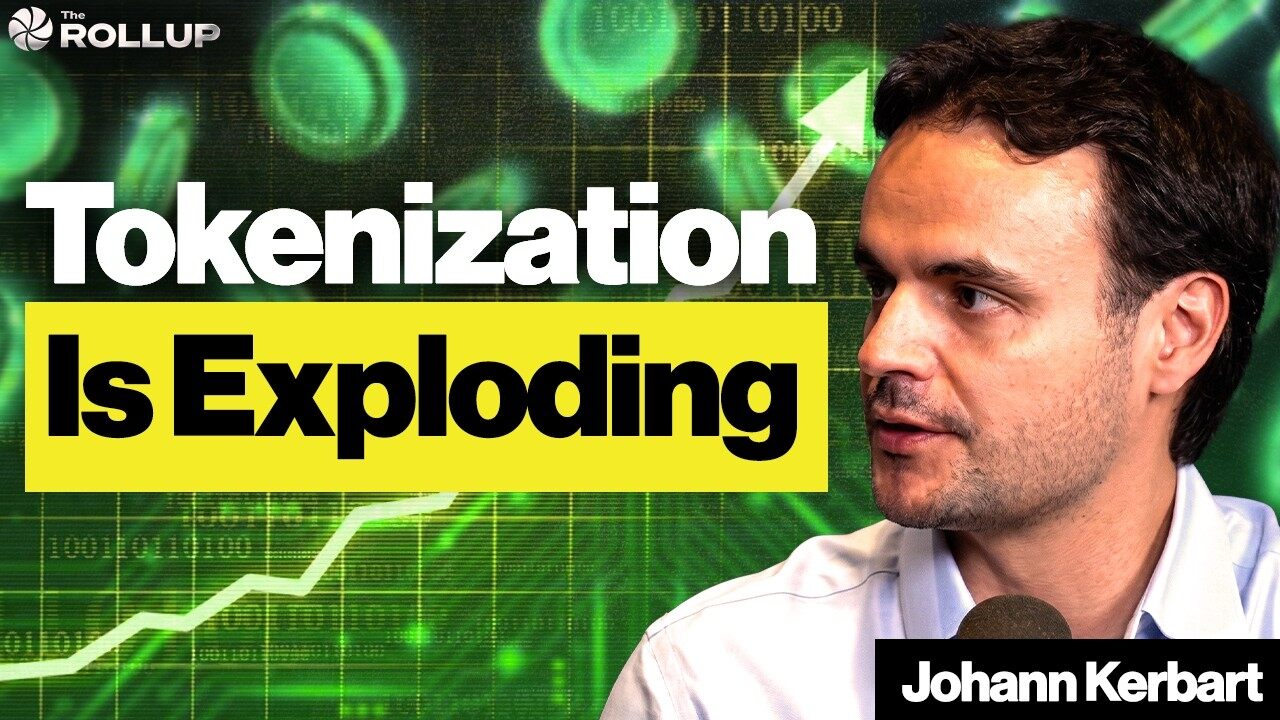
Guest: Johann Kerbrat (Robinhood Crypto VP & GM)
Podcast Source: The Rollup
Original Title: Is Robinhood About to Become the World's Financial Super App?
Air Date: May 6, 2026
Editor's Note
In this podcast interview, Johann Kerbrat, Robinhood Crypto VP & GM, stated that perpetuals are already viable in Europe and that tokenization will be the next explosive trend, including bringing US stocks, private equity, and commodities on-chain. Johann also directly addressed the comparison between Robinhood and Hyperliquid, arguing they are fundamentally different businesses – "licensed centralized" vs. "fully decentralized" – and thus incomparable. However, he noted that Hyperliquid's token HYPE is currently available for purchase on Robinhood.
Key Quotes
The Explosion of Prediction Markets
- "It's a brand new way to invest. Previously, ordinary people couldn't hedge against the Fed's interest rate decisions, the future direction of AI, or which company would build the best model. Prediction markets and event contracts let you truly hedge your portfolio along these dimensions."
- "If you want to bet on AI, instead of picking a stock between Nvidia, AMD, and Microsoft, you can just buy an event contract on AI. This is a type of instrument that was previously completely inaccessible to retail investors, and only open to specific institutions."
- "In our view, exchanges are basically commodities. We connect any of our products to multiple exchanges; crypto, stocks follow this logic, and prediction markets are the same."
Perpetual Contracts and Regulation
- "Perpetual contracts are a simpler product in many ways. You don't have to manage expiration dates, worry about specific funding mechanisms, and settlement is continuous."
- "We've already launched about 12 perpetual contracts in Europe, with up to 10x leverage. We've been in constant dialogue with the CFTC, and the Chairman has repeatedly said this is one of their top agenda items. Once the US regulatory framework is clear, we can launch immediately."
- "Our stance has always been clear – stablecoin rewards are not the same as FDIC-insured bank accounts or savings accounts. But we also don't want to penalize users who hold stablecoins merely for fast transfers between their wallet and the platform."
Tokenization
- "Tokenization will be the next major explosion. It's currently difficult for ordinary users to buy international stocks, and difficult for international users to buy US stocks. Crossing continents is even more complex, with lots of taxes and few secure channels for yield."
- "We see people in many countries buying USDC, USDT, simply for a safe USD exposure. What you can do with stablecoins, you'll be able to do in the future with assets like commodities, stocks, and private equity."
- "An average American wanting to invest in private equity either can't get in because they're not an accredited investor, or they can't access quality allocations. Tokenization can level the playing field."
- "Tokenization is the next stage of technological evolution. Adapt or be eliminated. No one wants to go back to the old system."
Robinhood's Product Logic
- "We want to use crypto rails to gradually replace some of the outdated backend systems. In Europe, we've already listed 2000 tokenized US stocks and ETFs, offering customers everything tokenized assets can provide: 24/7 trading, fractional shares, instant settlement."
- "Interacting with these DeFi protocols for the first time has a high barrier for many people. Users constantly have to worry about cross-chain bridging and gas fees. But in the Robinhood wallet, these complexities are handled in the background; users don't need to manage them."
Regarding Hyperliquid
- "One side is a licensed, regulated business; the other is fully decentralized. These two things cannot be directly compared. What we do is centralized. If something goes wrong, you can sue Robinhood, you can file a complaint with regulators. It's a different world."
- "We don't see each other as 'sworn enemies' or competitors. You can buy Hyperliquid's token HYPE on Robinhood right now."
Robinhood's Super App Vision
Host: Robinhood Crypto has grown from an experiment a few years ago into a full-fledged market. What's the experience been like building this business at Robinhood over the past two years?
Johann Kerbrat: It's pretty cool. We started in 2018, during the crypto winter. Many people asked us why we bothered to list BTC and ETH. Our thinking was simple: we want our users to have access to all the financial products they care about, and crypto is one of them. Since then, we've listed many assets, enabled staking in most states, added transfer features, launched the self-custody Robinhood Wallet, and expanded to Europe. Last year alone, the crypto segment generated over $1 billion in revenue. Now that the market has calmed down a bit, we're polishing new features users will need when the next bull run arrives.
Host: You say the market is calm, but prediction markets are doing great. I have a stat – prediction markets on Robinhood are up 320%. Why the frenzy over prediction markets?
Johann Kerbrat: I think it’s a brand new way to invest. Before, ordinary people couldn’t hedge against the Fed’s interest rate decisions, the future of AI, or which company would build the best model. Prediction markets and event contracts let you hedge your portfolio along these dimensions. For example, to bet on AI, you previously had to pick a stock among Nvidia, AMD, or Microsoft. Now you can directly buy an event contract on AI. This was a concept previously inaccessible to retail investors, only open to specific institutions. It's also one of Robinhood's fastest-growing businesses, demonstrating the value of our super app – everything done within one app, no transfers between platforms, from buying stocks to crypto to event contracts.
Robinhood's Product Logic
Host: A follow-up on prediction markets. Given this product's success and Robinhood's super app approach, will you do deeper vertical integration in prediction markets? You have a lot of order flow on Robinhood, but I understand some contract settlements still happen on other exchanges. Will Robinhood internalize market execution?
Johann Kerbrat: In our view, exchanges are essentially commodities. We connect any of our products to multiple exchanges; this applies to crypto, stocks, and prediction markets. Besides Kalshi, we also connect to ForecastEx, and we announced a joint venture with CBOE to set up an exchange specifically supporting the types of event contracts we care about. This is important to us, ensuring we have an outlet for all the products we want to offer customers.
Host: Speaking of integrating these underlying products, would you describe Robinhood as an aggregator of various crypto protocols and products? Competitor Coinbase has done this, using Morpho for Bitcoin-backed loans. Users can deposit BTC and borrow stablecoins. I hear you have either integrated or are integrating with Lighter for perpetual contracts. How do you view building a crypto business using different product lines and directly leveraging underlying on-chain protocols? Will Robinhood's crypto business eventually become a front-end aggregating all on-chain protocols, funneling order flow to them?
Johann Kerbrat: This is exactly what we've been doing. That's why we launched the Robinhood Wallet, a self-custody option. The goal is to let users accustomed to Robinhood's UX also get on-chain and use DeFi. You're right, interacting with these DeFi protocols for the first time is a high barrier for many. Users constantly worry about cross-chain bridging and gas fees. But in the Robinhood wallet, these complexities are handled in the background; users don't need to manage them. But we can do more. For example, we haven't integrated Lighter yet, but we've invested in them and will build on it in the future.
Another thing we want to do is use crypto to replace some legacy backend systems. In Europe, we've listed 2000 tokenized US stocks and ETFs, giving customers everything tokenized assets offer: 24/7 trading, fractional shares, instant settlement. This is crucial for us: gradually replacing traditional systems with crypto rails and bringing these benefits to users. For example, in the European market, due to time zone differences, European users are asleep when US markets open, but tokenized stocks can be traded anytime.
The US Perpetuals Path
Host: Options are one of Robinhood's biggest businesses. I saw a figure of around $4 billion a year, whether as a counterparty or providing liquidity. Many in the crypto space think perpetuals are a better product than options. Do you agree? If so many people are essentially trading zero-dated options (0DTE), why not let them use perpetuals? How do you compare perpetuals and short-dated options? And how do perpetuals fit into Robinhood's product lineup?
Johann Kerbrat: We are already selling perpetuals in Europe, which has clear regulation. We have about 12 contracts, with up to 10x leverage. In many ways, perpetuals are indeed a simpler product: you don't constantly manage expiration dates or worry about specific funding mechanisms. Settlement is continuous. That's a big differentiator, which is why they do so well in many places. Another reason is the wide variety of products perpetuals can create. For instance, some decentralized exchanges in Singapore have great commodity perpetuals. The logic is simple: the world doesn't stop for weekends. When something happens in the Middle East, people want to be able to hedge and invest.
We think perpetuals are a great product, and we've been in constant dialogue with the CFTC about bringing them back to the US. But we need clear regulation. The Chairman has repeatedly said this is one of their top agenda items, so we are hopeful. Once regulatory clarity arrives, we can launch immediately.
Clarity on Stablecoin Yields
Host: On regulation, your CEO Vlad has been very vocal on Twitter about "unlocking stablecoin yields," referring to the stablecoin yield portion of the Clarity Act. There was significant progress over the weekend, with regulators making a clearer distinction between "rewards" and "interest," effectively assigning interest to banks. Idle stablecoins can't directly generate interest. My understanding is that users would have to click a button to deposit them into some yield opportunity. How will this be presented product-wise on Robinhood? For me, as a stablecoin holder, would it mean "Earn yield with Robinhood Gold" or "Earn interest on Robinhood Stablecoins," requiring an active choice rather than being default?
Johann Kerbrat: We'll have to see the final text. We should be cautious until legislation is passed, but it sounds like a good compromise can be found. Our stance has always been clear: stablecoin rewards are not the same as FDIC-insured bank accounts or savings accounts. We never intended to blur that understanding. However, as Vlad mentioned, we also don't want to penalize users who hold stablecoins merely for fast transfers between their wallet and the platform. So we hope they can earn rewards while holding stablecoins. Based on these recent developments, there should be room to pass on some rewards to users.
If the entire Clarity Act passes, it's a huge positive for users because we'll be able to develop products for the entire US market, instead of being fragmented state-by-state with different rules and products. The Clarity Act would allow us to unify all products nationwide.
Bold Prediction: Asset Tokenization Will Bridge Global Markets
Host: I want to ask a broader question. Between the Clarity Act, stablecoins, prediction markets, perpetuals, and DeFi, everyone is looking for the next big thing. What is your boldest prediction? What do you think will explode at Robinhood or in the broader ecosystem in the next year?
Johann Kerbrat: Tokenization will be the next major explosion. It's currently difficult for ordinary users to buy international stocks, and difficult for international users to buy US stocks. It's relatively easier within the Northern Hemisphere, but crossing continents is much more complex, with lots of taxes and few channels for secure yield. Stablecoins are an example: people in so many countries buy USDC and USDT just for a safe USD exposure. We think this isn't just possible with currencies. Commodities, stocks, private equity – these assets are destined to be tokenized. Users won't just hold them in a portfolio; they'll be able to borrow, lend, mortgage, and even use them as collateral for home loans.
These things are possible in the US today if you have a large enough portfolio. But an average person wanting to invest in private equity either can't get in because they're not an accredited investor, or they can't access quality allocations. Tokenization can level the playing field for everyone.
Host: One thing I'm particularly interested in: the Korean stock market is booming, people are excited, but you can't trade it on-chain. And now you can finally buy some pre-IPO shares of US AI companies, but there's still a huge amount of Chinese AI pre-IPO shares you can't access. How fast can you push this forward? As the buzz around tokenization grows, how quickly can Robinhood list tokenized assets and expand into different jurisdictions? How much friction is involved in actually launching a new tokenized asset on the frontend?
Johann Kerbrat: It depends on the asset and regulation. But overall, we have the technology. We've been building for the past 10 years. I personally believe our engineering team is one of the best in Silicon Valley. So as long as regulation gives the green light, we can move very fast. For instance, I think Robinhood is one of the brokerages most embedded with AI systems. When you open the detail page for a coin or stock, you see a market summary. This was one of the most requested features from users. They get a notification about a price change and want to know why. We also built the Cortex assistant, which you can chat with to discuss strategies and find areas for improvement. All this shows that once Robinhood decides to do something, we can push it very quickly.
Host: Speaking of tokenization, the DTCC suddenly announced its own tokenization service, with over 50 companies initially participating, including Robinhood, planning to launch in October 2026. What does this DTCC tokenization service mean for Robinhood?
Johann Kerbrat: Working with institutions like this has always been important to us. For a long time, we've been loudly advocating that T+1 settlement is too slow; it needs to be much faster, enabling 24/7 trading. So we are willing to support any such initiative. But ultimately, tokenization is the next stage of technological evolution. Adapt or be eliminated. No one wants to go back to the old system. So these companies need to realize this and start building products based on this technology.
Robinhood vs. Hyperliquid
Host: Many people on Twitter like to compare Robinhood and Hyperliquid – comparing revenue, valuation, user count, scale, etc. What do you think of the rise of Hyperliquid's purely on-chain perpetual stack? They aim to be a center for on-chain price discovery, bringing off-chain prices on-chain. What does this mean? Is Hyperliquid a future competitor for Robinhood Crypto, or do you not pay them much