






多头逼近「天花板」:比特币突破8万关口,直逼8.5万美元关键阻力


- 核心觀點:比特幣突破8萬美元關鍵阻力位後,市場呈現結構性復甦跡象,但上方8.5萬美元附近供應壓力與高位虧損實現成為上行主要制約,需現貨需求持續跟進才能確認持久向上延續。
- 關鍵要素:
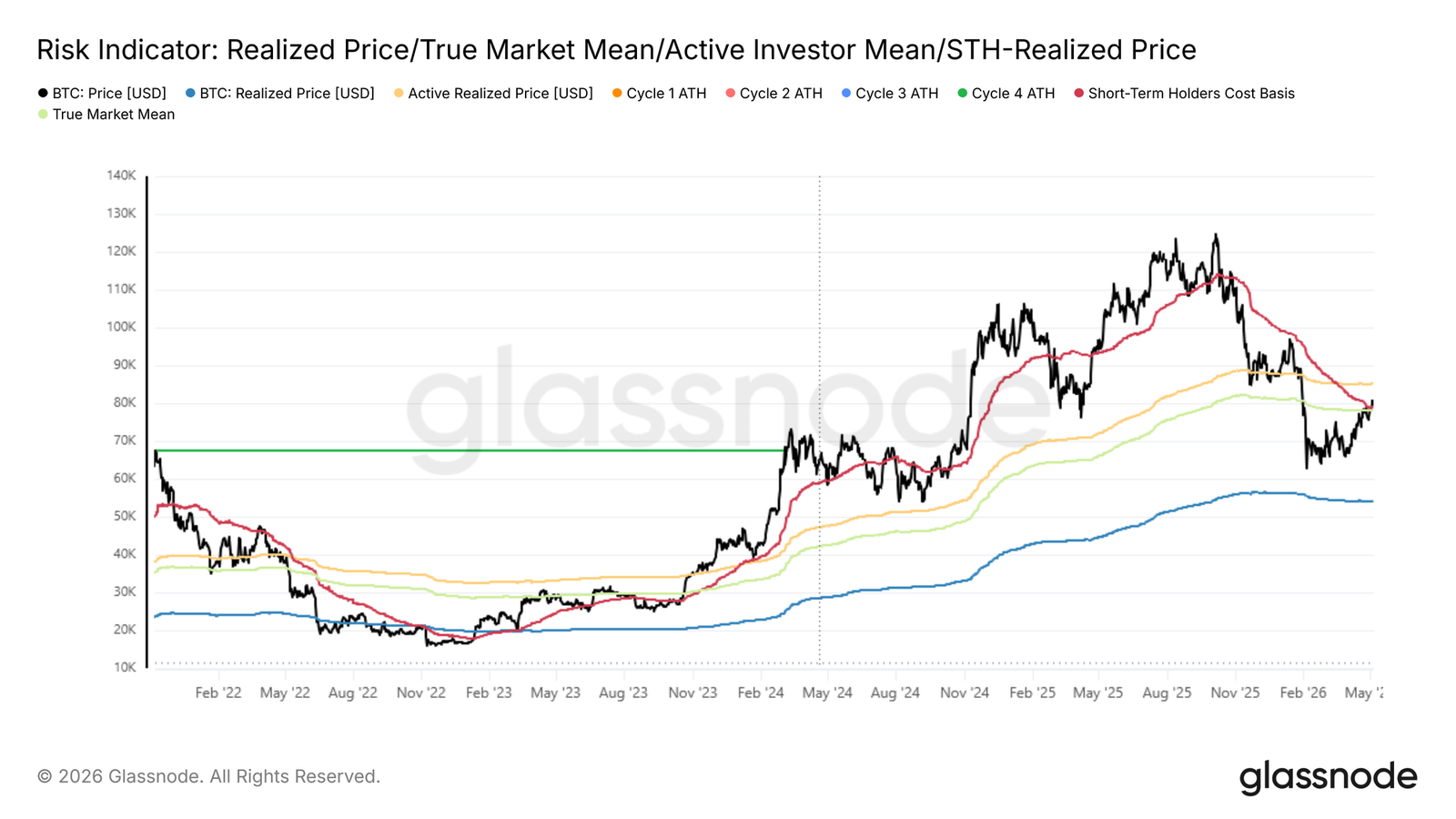
- 比特幣已突破真實市場均值7.82萬美元和短期持有者成本基礎7.91萬美元,下一個關鍵阻力位於8.52萬美元的活躍已實現價格附近。
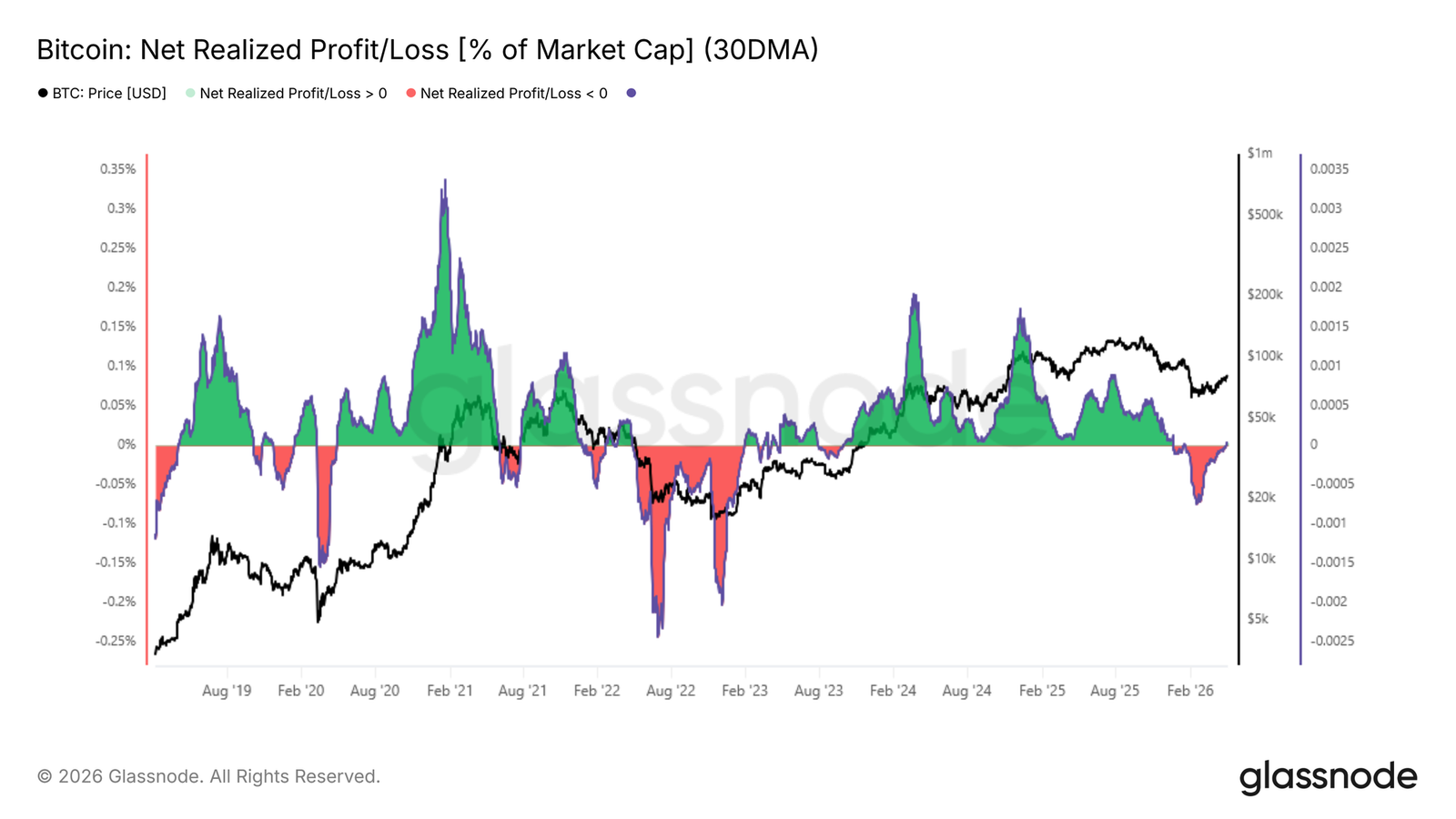
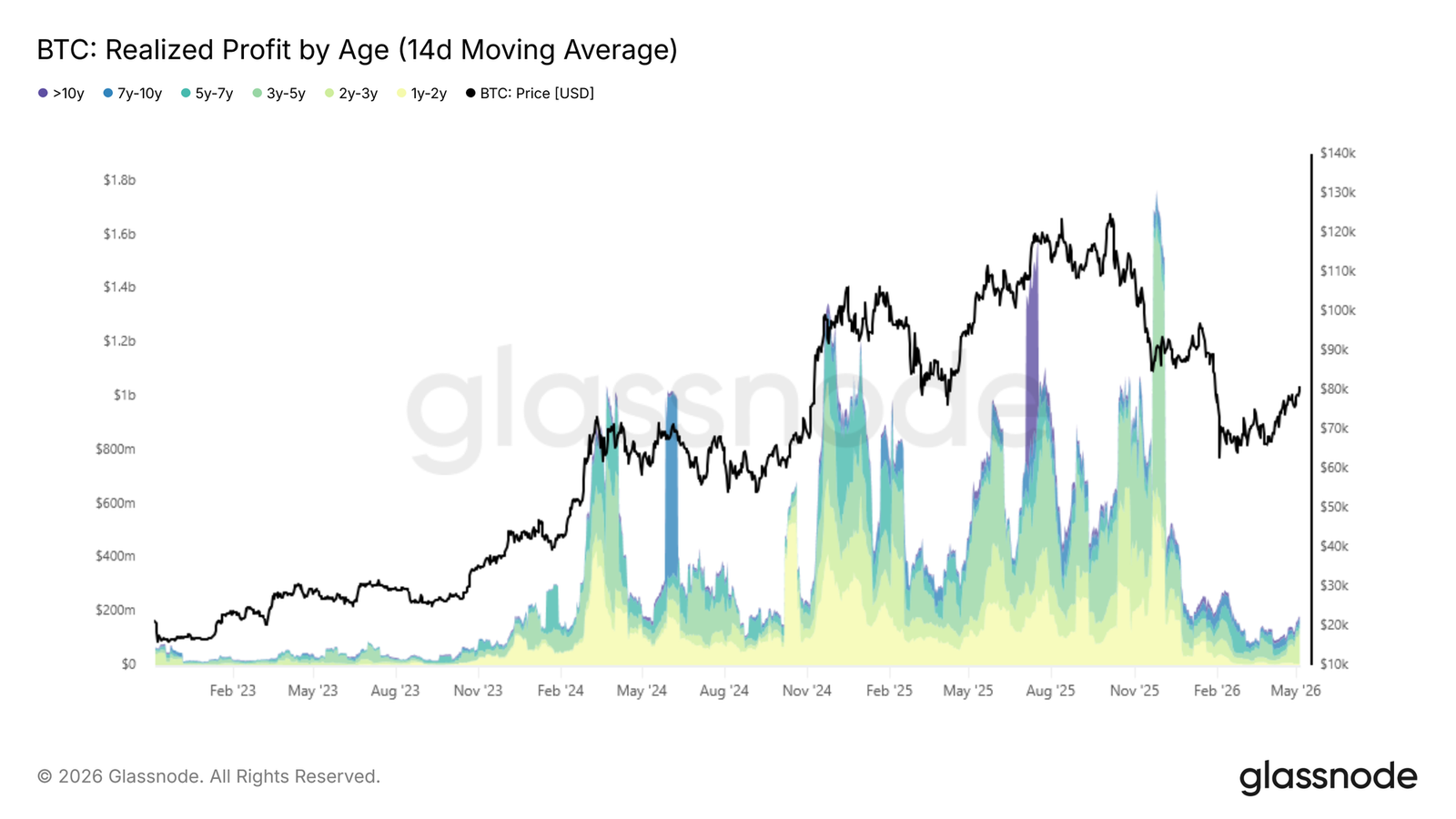
- 30日淨已實現盈虧轉為正值(占市值0.003%),長期持有者獲利了結升至每日1.8億美元,但遠低於週期峰值每日10億美元水平。
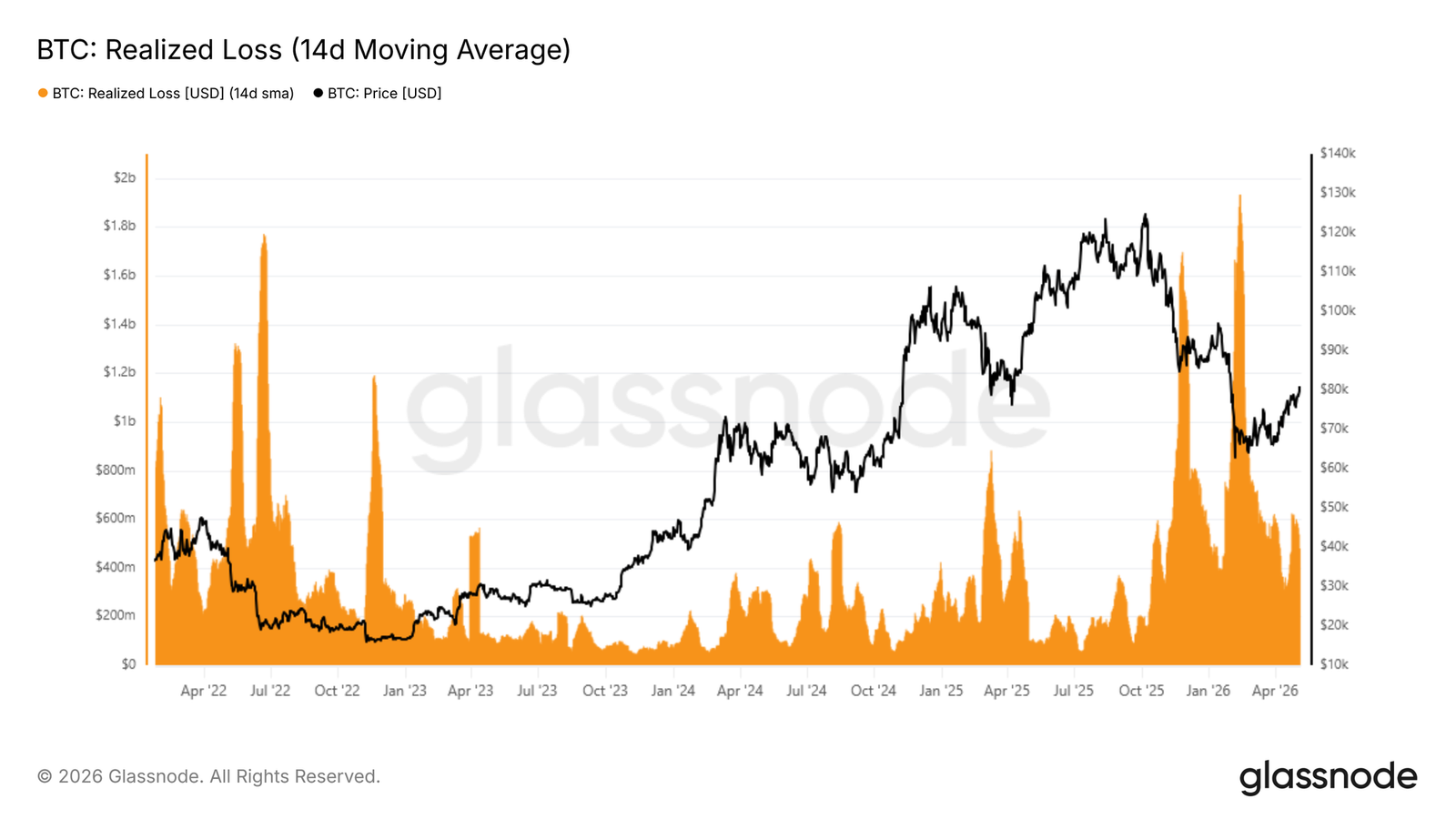
- 總已實現虧損仍高達每日4.79億美元,較週期基線高出140%,需壓縮至每日低於2億美元才能確認賣壓耗盡。
- 美國現貨ETF資金流在30天基礎上轉為正值,機構需求回暖支持價格重返8萬美元區域。
- 永續合約資金費率仍以負值為主,顯示空頭倉位持續存在,可能透過擠壓空頭帶來進一步上行潛力。
- 8.2萬美元附近存在近20億美元短期期權Gamma集群,做市商對沖流動可能在此區間放大價格波動。
- 期權偏度正向中性壓縮,1週偏度接近零,表明下行對沖需求減少,倉位轉向更加平衡。
Original Author: Glassnode
Original Translation: Aididiao JP, Foresight News
Bitcoin has broken through $80,000, advancing towards the key resistance near $85,000, with bulls in control. ETF demand is recovering, and short positions persist, but overhead supply may limit further upside unless spot buying momentum strengthens further.
Summary
- Bitcoin has broken above the Real Market Price of $78,200 and the Short-Term Holder Cost Basis of $79,100. Holding these levels suggests the recent deep-value phase was brief. The next key resistance lies at $85,200.
- The 30-day SMA of Net Realized Profit/Loss has turned positive at 0.003% of market cap, while Long-Term Holder profit-taking has risen to ~$180 million per day, still far below the cycle peak of over $1 billion per day.
- Realized losses remain elevated at $479 million per day, ~140% above the cycle baseline. Sustained compression to below $200 million per day is needed to confirm a more durable recovery pattern.
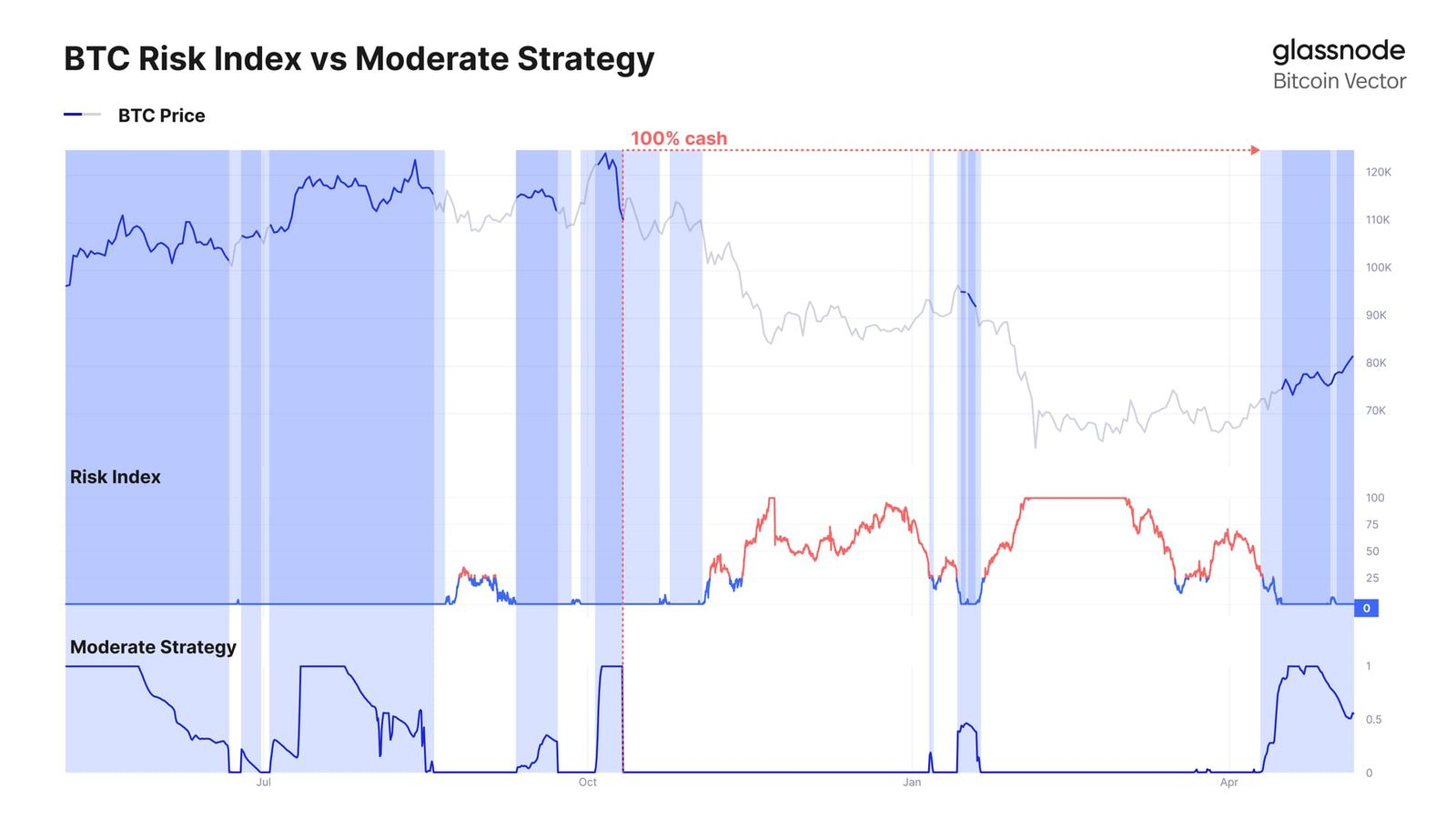
- Glassnode's neutral strategy re-entered the market after Bitcoin reclaimed ~$76,000, capturing the recent upside while maintaining a focus on downside protection.
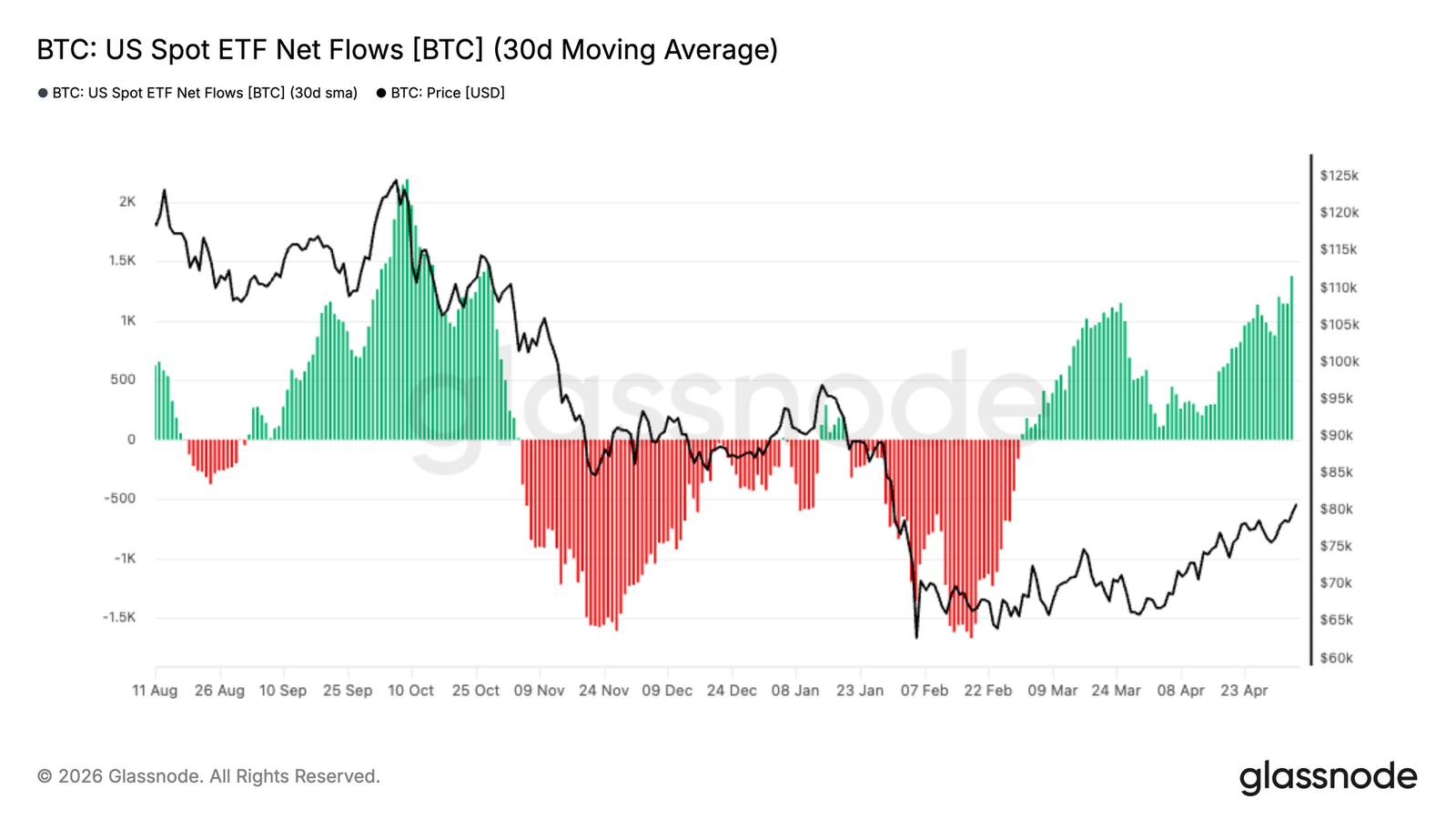
- US spot ETF flows turned positive on a 30-day basis, indicating a revival in institutional demand, supporting the price's return to the $80,000 region.
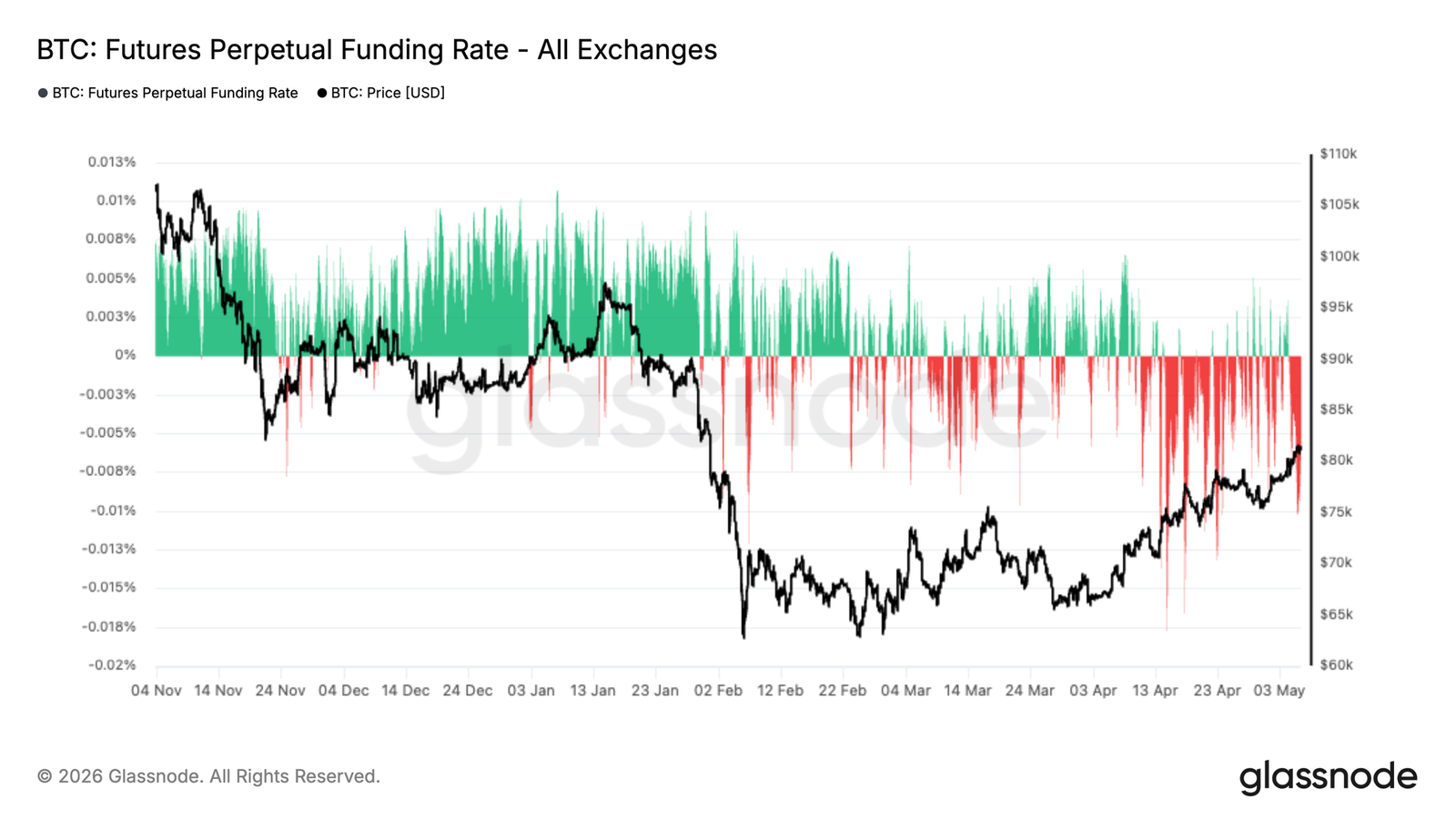
- Despite the rally, perpetual funding rates remain predominantly negative, suggesting persistent short positioning, which could fuel further upside through short squeezes.
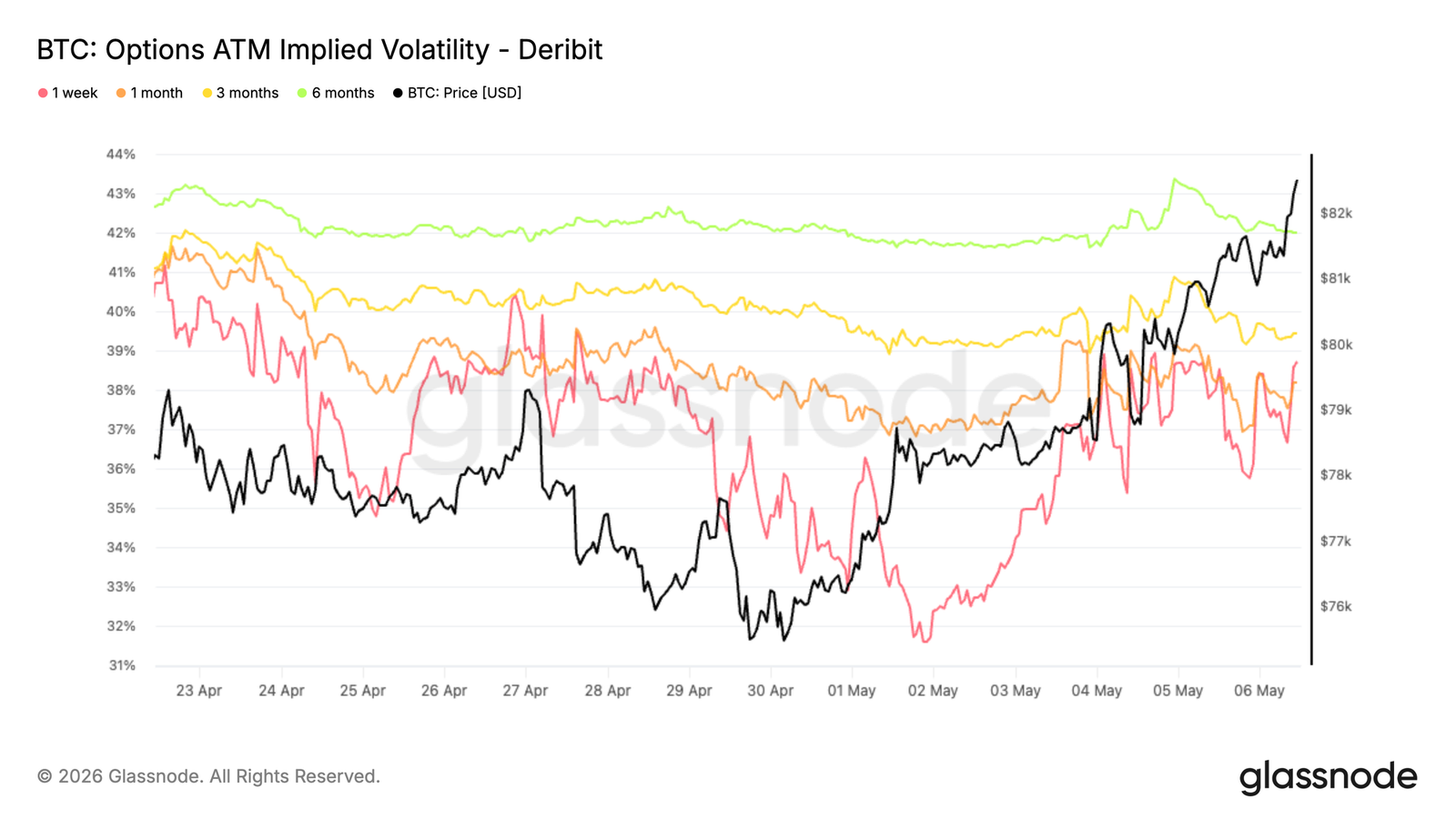
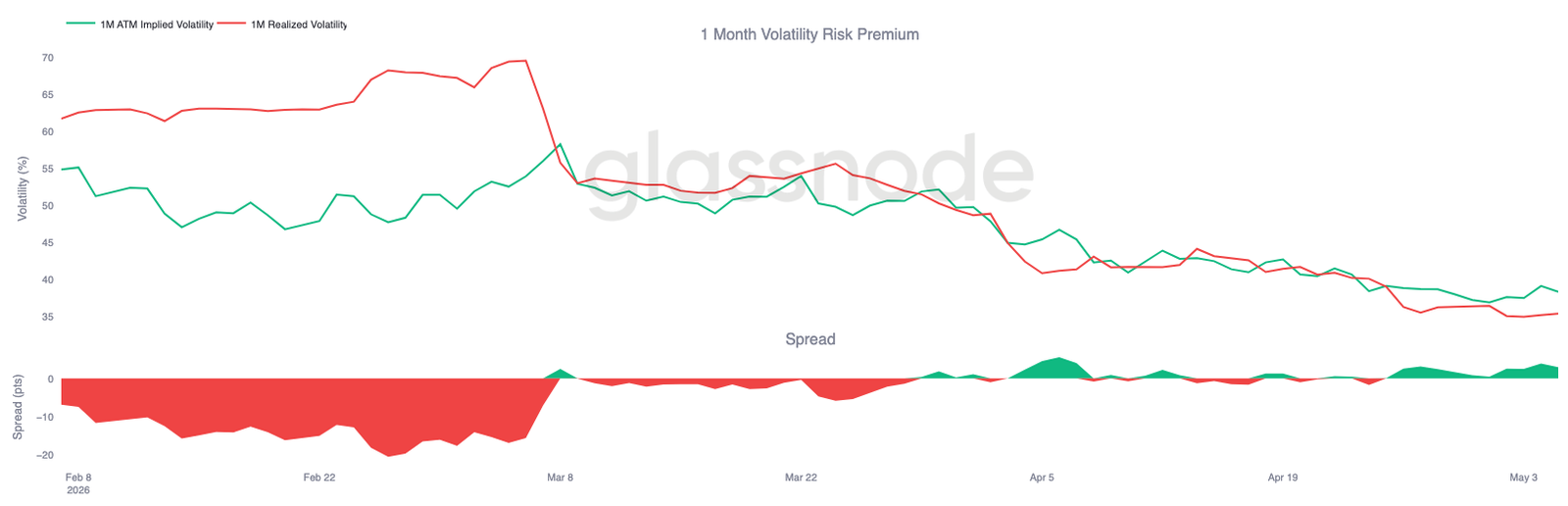
- Front-end implied volatility has repriced higher following the breakout, while realized volatility lags. A positive volatility risk premium is being rebuilt.
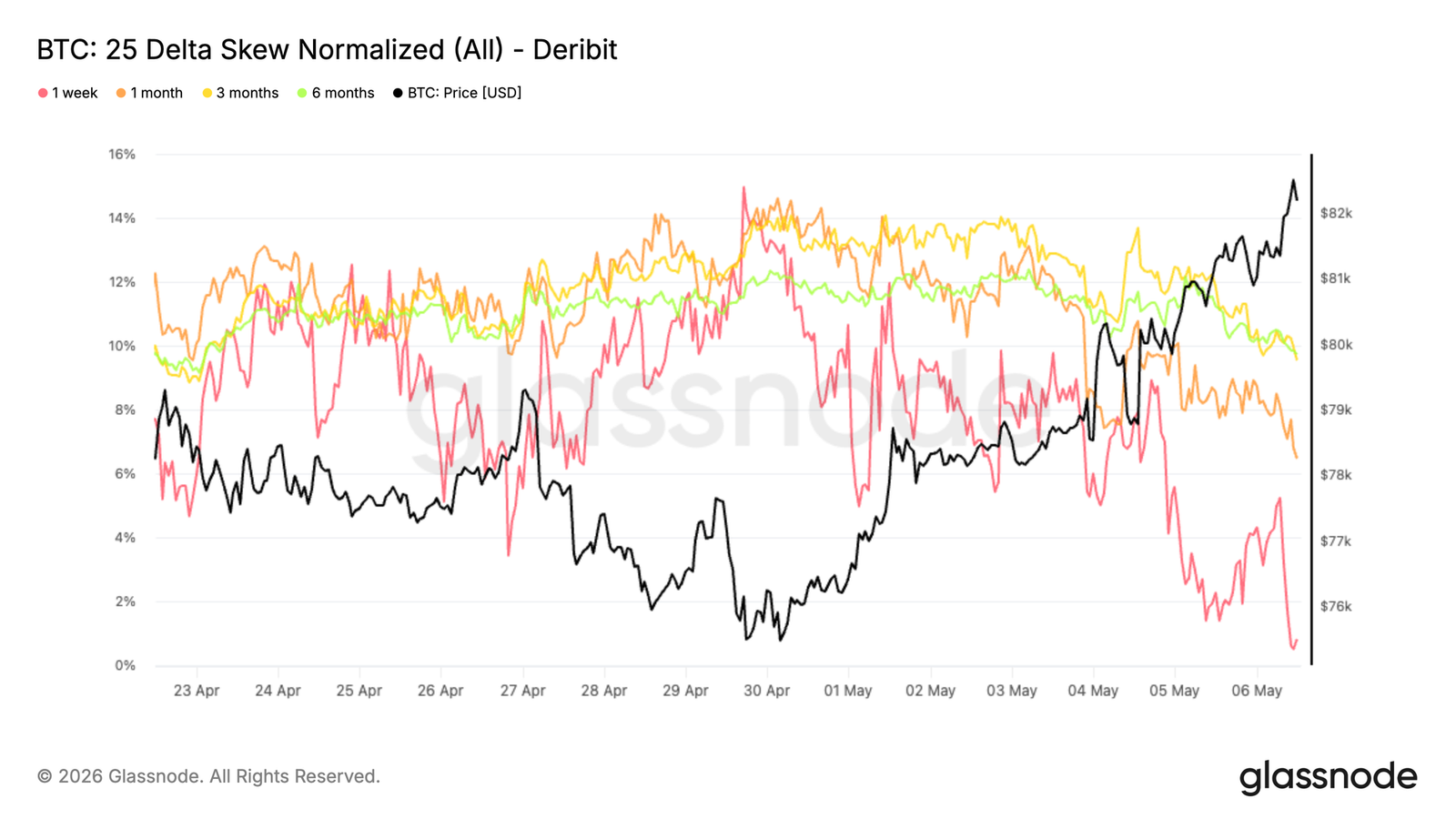
- Options skew is compressing towards neutral, indicating reduced demand for downside hedges and a shift towards more balanced positioning.
- A large cluster of short-dated options hedges exists near $82,000, increasing price sensitivity. Dealer hedging flows could amplify volatility while spot trades in this range.
On-Chain Insights
Breaking Above Key Averages
Last week, this report noted that rejections at the Real Market Price and Short-Term Holder Cost Basis confirmed short-term resistance, while a dense accumulation cluster between $65,000 and $70,000 provided a base to support a bounce towards the $84,000 supply zone. This bounce has materialized: Bitcoin pushed to $81,000, breaking above the Real Market Price of $78,200 and the Short-Term Holder Cost Basis of $79,100, clearing the average entry price of all actively traded supply and recent buyers over the past 155 days.
If the price can hold above these levels in the coming week, the deep-value phase from early February 2026 will be among the shortest of its kind in Bitcoin's market history. Attention now turns to the next major resistance – $85,200 near the Active Realized Price, which tracks the cost basis of all non-dormant supply. This is the next structural threshold the market must face.
Profitability Turns Positive
With the breakout above the Real Market Price, the improved price structure is now reflected in profitability metrics. The 30-day SMA of Net Realized Profit/Loss (the difference between on-chain realized profits and losses divided by market cap) has turned positive, currently at 0.003% of market cap.
This broad metric indicates whether spending investors are, on aggregate, exiting with profit or loss. Its return to positive territory after a prolonged period of loss dominance is a constructive signal. The metric reached a low of -0.027% of market cap in mid-February – a notable negative value, but relatively shallow in depth compared to the extreme loss events observed during the 2022-2023 bear market. In hindsight, this limited negative depth aligns with the historically brief duration of the recent deep-value phase mentioned above.
Long-Term Holders Begin to Stir
As Net Realized Profit turns positive, the key question shifts to whether buyer liquidity can withstand the increasing wave of Long-Term Holder distribution. Realized profits from addresses with a holding period over one year (14-day SMA) have risen to approximately $180 million per day following the recent rally, comparable to levels seen in September 2024 and December 2022.
This cohort endured the entire recent bearish phase and now faces increasing incentives to take profits as prices return to more favorable levels. If the current expansion continues, this distribution pressure is likely to intensify. Importantly, the metric has not yet approached the >$1 billion per day seen during peak conditions earlier in this cycle, suggesting Long-Term Holder selling remains moderate rather than aggressive at this stage. Whether the market can absorb this gradually increasing supply while maintaining prices above the Real Market Price will be a decisive test of the structural integrity of the current recovery.
Loss Realization Remains Elevated
While Long-Term Holder profit-taking remains below concerning levels in the early stages of a potential regime shift, realized losses in the broader market act as a more immediate drag on momentum. Total Realized Losses (14-day SMA) currently sit at $479 million per day, roughly 140% above the $200 million per day baseline observed during more stable periods of this cycle. This reflects investors eager to exit with smaller losses as prices recover.
Sustained compression of this metric back below $200 million per day would serve as strong on-chain confirmation of selling exhaustion and a genuine shift towards a healthier demand regime. Until that threshold is reached, the dual pressure of Long-Term Holder profit-taking and topping buyers distributing at marginal losses could anchor the current rally, especially in the absence of substantial catalysts for new buyer participation in the near term.
Off-Chain Insights
Following the recovery from the ~$66,000 low and a solid breakout above the ~$76,000 zone, systematic strategies began to reintroduce risk. Glassnode's neutral strategy (which uses off-chain market data to manage exposure) has re-entered allocation, participating in the recent rally towards the $80,000 region.
This strategy, designed with a focus on downside protection, typically lags in sharp rallies but seeks to avoid deeper drawdowns and re-enter as conditions improve. This recent shift reflects a more constructive market backdrop, with prices reclaiming key levels and directional momentum rebuilding.
ETF Demand Regains Momentum
Demand for US spot Bitcoin ETFs has seen a notable revival, with the 30-day moving average of net flows turning decisively positive after an extended period of outflows. This shift marks a clear inflection point in institutional appetite, following significant outflows during the late 2025 to early 2026 decline.
The recent acceleration in inflows closely aligns with Bitcoin's recovery from the ~$66,000 low back to the $80,000 region, suggesting a resurgence in conviction among traditional investors. If this trend persists, ETF demand could once again act as a structural tailwind, reinforcing spot market strength and supporting further upside.
Persistent Short Pressure
Despite the recovery from the ~$66,000 low and the retest of the $80,000 region, perpetual funding rates remain predominantly negative. This sustained negative funding indicates that short positioning continues to dominate, with traders willing to pay a premium to maintain bearish exposure despite the recent price advance.
Historically, such conditions often emerge during phases of skepticism, where rallies are met with short additions rather than aggressive long accumulation. The combination of negative funding rates and rising prices suggests the market may be "climbing a wall of worry," with potential for further upside if short positions continue to face pressure.
Front-End Volatility Reprices After Local Lows
Implied volatility bottomed over the weekend, with levels across tenors reaching their lowest since October 2025, just before the 10/10 event.
Since then, Bitcoin broke through resistance, bringing volatility back into the market. The 1-week tenor has recovered approximately 6 volatility points from its low, driven by upside demand and repositioning.
This move was amplified by Gamma sellers rolling their exposure, buying back short-dated options and selling further out on the curve. Consequently, the front-end repriced sharply, while longer tenors moved only modestly, rising 1 to 2 volatility points.
This reflects renewed demand for short-dated options, but not a broader shift in long-term volatility expectations.
Volatility Risk Premium Rebuilding as Implied Volatility Leads
Bitcoin's realized volatility continues to drift lower, with 1-month RV currently at 35.38%, even as prices moved significantly higher over the past week.
This creates a clear divergence. Implied volatility has repriced faster than realized volatility following the breakout. The volatility risk premium has returned to positive territory, with the spread approaching 3 volatility points, reflecting renewed demand for short-dated options. This indicates that realized volatility has not yet caught up with recent price action. Implied volatility is leading, driven by positioning and front-end demand, while realized volatility remains relatively contained.
This setup still supports the upside, but the widening spread suggests the market is beginning to price in more volatility ahead than has occurred so far.
Skew Normalizes, Downside Demand Fades
Skew across tenors is reversing towards neutral, reflecting a clear shift in positioning. After an extended period of elevated put premiums, the 25D skew is now compressing, though it remains in put territory.
This move is most pronounced on the front-end, where 1-week skew is now approaching zero as downside demand fades. Since this metric is calculated as puts minus calls, this downward move indicates that the premium for puts relative to calls is eroding. Longer tenors are also moving lower, albeit more gradually, though they retain a put premium even after compression.
This suggests that protection is being unwound rather than added, especially for the near-term. As prices recently broke out, traders are reducing hedges and shifting towards directional exposure. Skew is no longer signaling strong demand for downside protection.
Large Short-Dated Gamma Cluster Drives Spot Sensitivity
Gamma positioning shows a clear concentration of short-dated Gamma near the $82,000 strike, with nearly $2 billion in exposure sitting at the current spot level.
Short-dated Gamma means that dealer positioning forces them to hedge in the direction of the price move – buying as prices rise, selling as they fall. This creates a feedback loop that can accelerate price action, which helps explain the recent push towards $83,000.
This effect is reinforced by strong call buying, which accounted for approximately 40% of volumes over the past 24 hours, adding pressure into the zone.
With spot sitting right on top of this large short-dated Gamma cluster, the market enters a high-sensitivity zone where small moves can trigger outsized reactions. Prices could remain highly reactive here, with the potential for sharp moves in either direction as hedging flows amplify.
Conclusion
Bitcoin is showing early signs of a structural recovery, advancing towards overhead resistance near $85,000 while reclaiming key on-chain cost basis levels. Spot demand and ETF inflows are rebuilding, suggesting bulls remain in control, but the market is now approaching a critical ceiling where overhead supply may begin to re-emerge.
Meanwhile, derivatives positioning remains skewed short, creating conditions where further upside could be driven by short pressure. Options markets are resetting, with short-dated Gamma near the current price level increasing the likelihood of amplified volatility as the price tests resistance.
In summary, the trend looks constructive and bullish momentum remains intact, but the market is now entering a more reactive phase. Sustained resistance breakthroughs, supported by persistent spot demand and easing selling pressure, will be required to confirm a more durable upward continuation.


