






Bitcoin Bottoming in Progress: Long-Term Holder Selling Pressure Eases, ETF Outflows Slow


- Core View: The Bitcoin market bottom is in the process of forming. The capitulation sell-off by long-term holders is cooling, and buying demand absorbed the June lows, pushing the price to test key resistance from below. However, the recovery lacks follow-through from spot buying, and a breakout requires more confirmation signals.
- Key Factors:
- Bitcoin's reaction to weak inflation data was stronger than that of major stock indices, indicating seller exhaustion and buyers waiting for catalysts. The macro driving logic is shifting from risk appetite to liquidity.
- Profit-taking by long-term holders has decreased significantly, with their selling primarily consisting of loss-making positions—a typical characteristic of the late bear market phase. The entity-adjusted realized loss indicator has retreated from its cycle peak.
- During the June lows, a broad and strong wave of buying (ranging from small wallets to large ones) effectively absorbed the sell pressure. However, buying intensity has weakened since prices stabilized, and the market has entered a waiting mode.
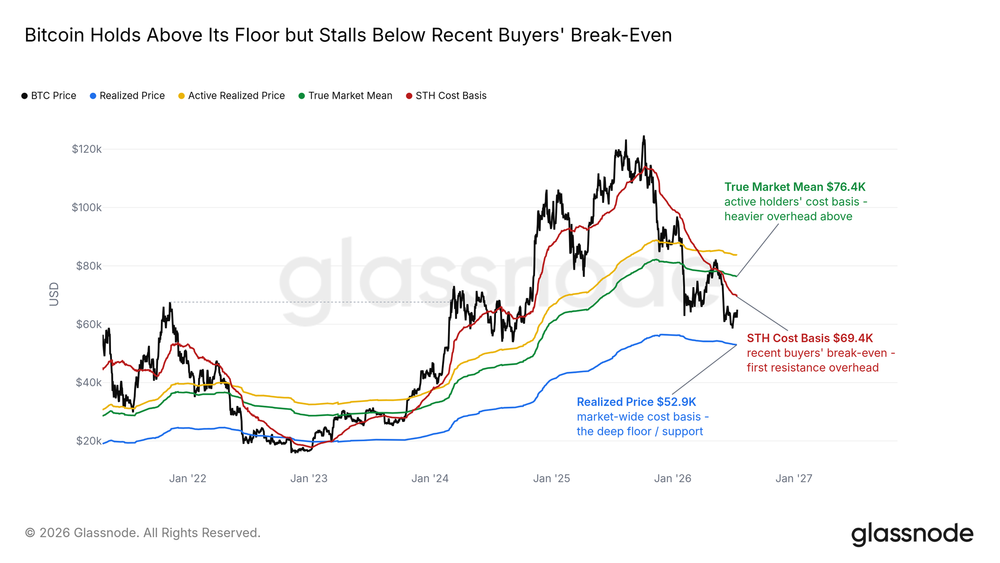
- The cost basis of short-term holders, near $69,000, represents the next significant resistance level. The first touch is likely to trigger a strong reaction; above this level lies a large number of trapped buyers waiting to break even.
- The outflow rate from US spot ETFs has slowed from the extreme levels seen in June, with the trend pointing towards stabilization but not yet a reversal. Institutions are in a state of having stopped fleeing but not yet started buying.
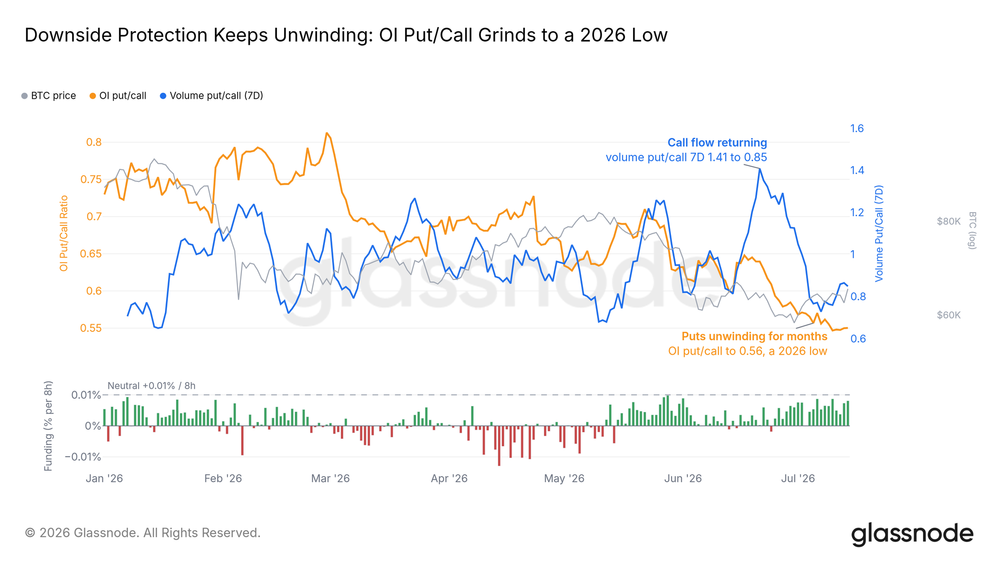
- Bearish bets are being exited in the derivatives market (the put/call ratio has dropped to a year-to-date low), but the closing of these positions has not translated into spot buying. Funding rates are near neutral, lacking signals of long crowding.
- Bitcoin's volatility index is near its one-year low, with the market in a compressed state. Historically, this often sets the stage for the next decisive directional move.
Original Author: Glassnode
Original Compilation: AididiaoJP
The bottom for Bitcoin is still being built, but its characteristics are quietly shifting. The capitulatory selling by long-term holders is starting to cool down, buy orders have successfully absorbed the June lows, and the price is gradually recovering, challenging the zone that previously suppressed it.
Executive Summary
- The market has begun to test the resistance level above.
- Bitcoin's reaction to weak inflation data has been far stronger than any major stock index, the most positive response to good news in weeks.
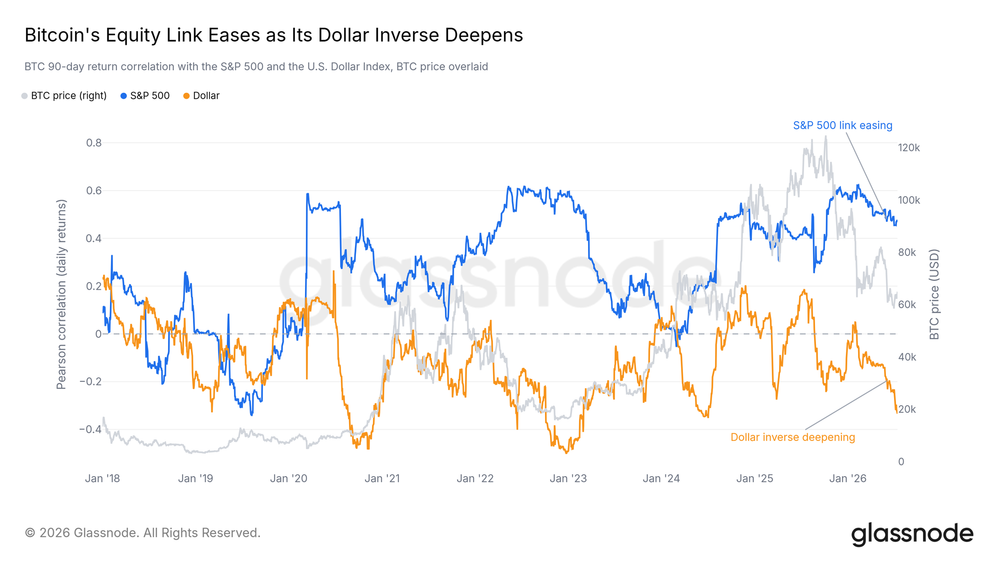
- The correlation with the stock market is loosening, while the inverse linkage with the US dollar is deepening further—the current driving factor is liquidity, not risk appetite.
- Selling by long-term holders—the main source of selling pressure this year—has fallen from its peak.
- Profit-taking has decreased significantly, as buy orders have fully absorbed the selling at the June lows, reducing the supply pressure on each rebound.
- The cost basis of short-term holders is near $69,000, the breakeven point for recent buyers, which will become the next major resistance; a strong reaction is expected there.
- Derivatives traders are unwinding short positions, but spot buying has not yet followed suit, a missing piece in the current recovery.
Macro Insights
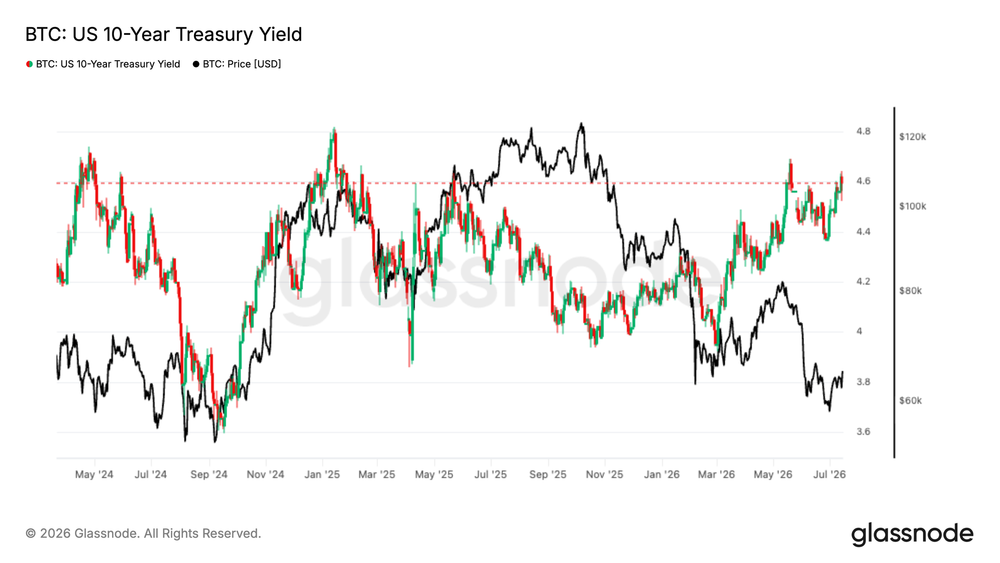
The pressure Bitcoin faces this quarter is essentially a story of real interest rates, not risk aversion. The 10-year real yield has risen to near 2026 highs, and the US dollar has been holding above its 200-day moving average since May. However, broader risk assets show no signs of stress: stock markets are near highs, credit spreads are low, and volatility remains subdued.
Bitcoin Leads the Rebound
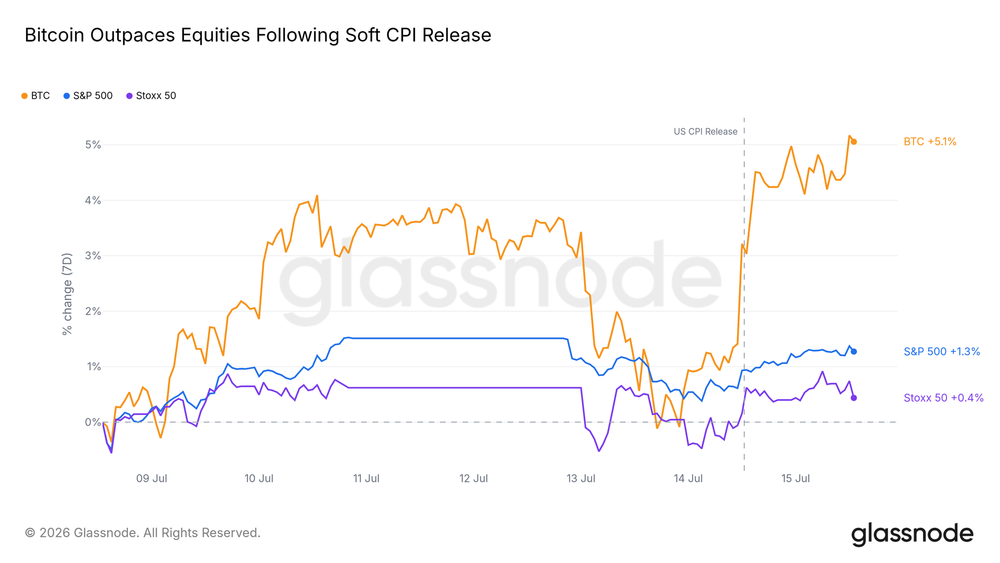
Following Tuesday's moderate inflation data, Bitcoin's gains outpaced all other major assets. It surged immediately after the data release, and its weekly performance significantly outperformed US and European equities. After a month of sideways trading at lows, the market has begun to react positively to good news again.
This sensitivity is itself a signal: a market eager to rally on just one inflation report often indicates sellers are exhausted and buyers are merely waiting for a reason.
Shift in Macro Driving Logic
Beneath the rebound, Bitcoin's driving factors are changing. Its correlation with US stocks has been weakening since winter, while its inverse relationship with the US dollar has been deepening. Bitcoin is acting less like a stock proxy and more like an asset that strengthens when the dollar weakens.
It hasn't detached from the risk asset category, but the dollar and liquidity channels now have more influence than stock market sentiment. If the macro environment eases from here, this channel is the most likely to transmit first.
On-Chain Insights
Between Floor and Ceiling
The cost basis chart accurately depicts the current position. Bitcoin's price is above the overall market Realized Price—a natural support floor in bear markets—while below the short-term holder cost basis (near $69,000), the average entry price for buyers over the past five months. The current recovery is climbing towards this breakeven resistance level, above which many trapped buyers await their chance to exit.
The first touch of this level is likely to trigger a strong reaction, as those most inclined to sell are precisely those about to break even. A successful reclamation would open space for a recovery; rejection would extend the range-bound consolidation pattern.
Sellers Stop Taking Profits
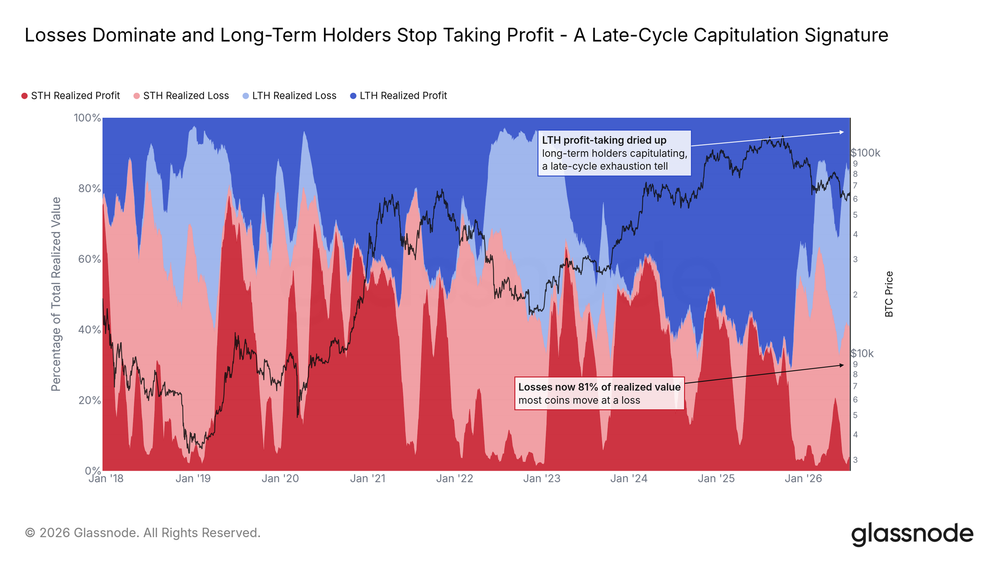
The Long/Short-Term Holder Realized Profit/Loss Ratio categorizes all on-chain selling into four types: veterans and newcomers, each selling at a profit or loss. For most of this cycle, profit-taking by long-term holders dominated the sell-side. This flow has now nearly completely dried up; veterans are now primarily selling at a loss.
Loss-selling by both groups constitutes the main on-chain transaction characteristic, a typical signal of a late bear market. The key change is that the selling share of long-term holders has stopped growing. The wave of selling pressure that met every rebound since the start of the year is no longer expanding.
Capitulatory Selling Begins to Cool
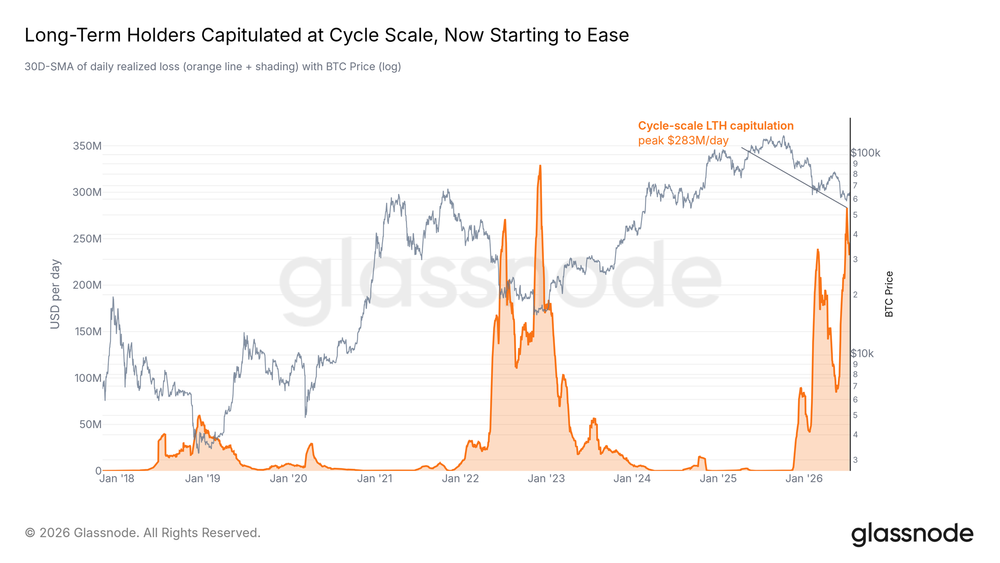
This capitulation pace is the single most important indicator currently. The entity-adjusted realized loss metric for long-term holders filters out internal transfers, reflecting the daily volume veterans are actually relinquishing. This metric hit a cycle peak two weeks ago; last week's report clearly stated that its cooling was a prerequisite for any lasting recovery.
It has now begun to decline. A single decline doesn't confirm total exhaustion; new shocks could restart selling. However, for the first time this cycle, the core indicator defining the bottoming process has shifted from rising to falling. The primary seller driving this bear market is, at the margin, drying up.
Demand Absorbs Low-Point Selling
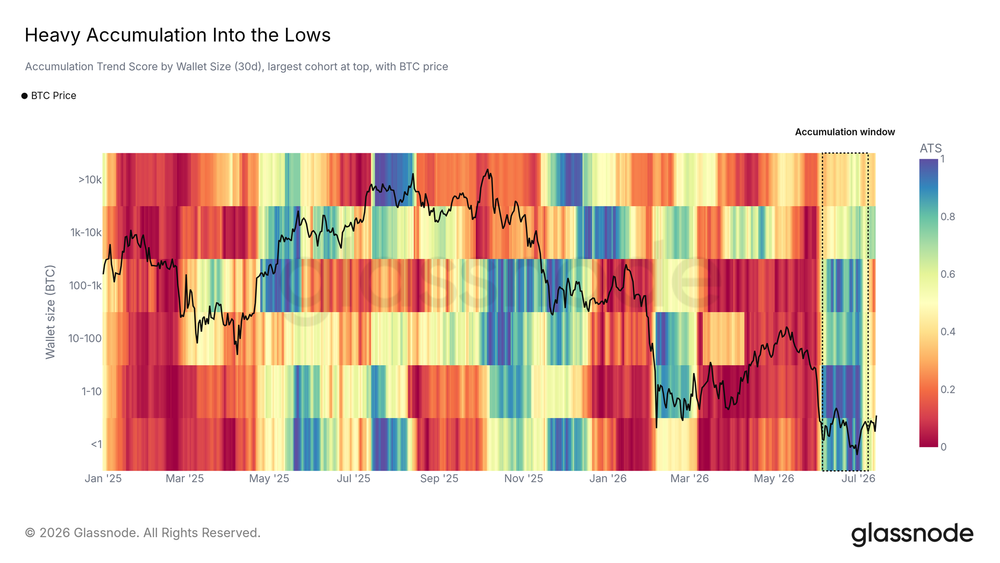
Simultaneously with the veterans' capitulation, buyers entered the market in time. The Accumulation Trend Score by wallet size shows a broad and strong wave of buying during the June lows, covering wallets from small to large. This intensity has waned since the price stabilized, putting the market into a waiting mode.
The coins sold at the lows found takers. Whether these buyers return with equal force during the next fluctuation will determine if this bottom can hold.
Off-Exchange / Derivatives Insights
ETF Outflows Slow
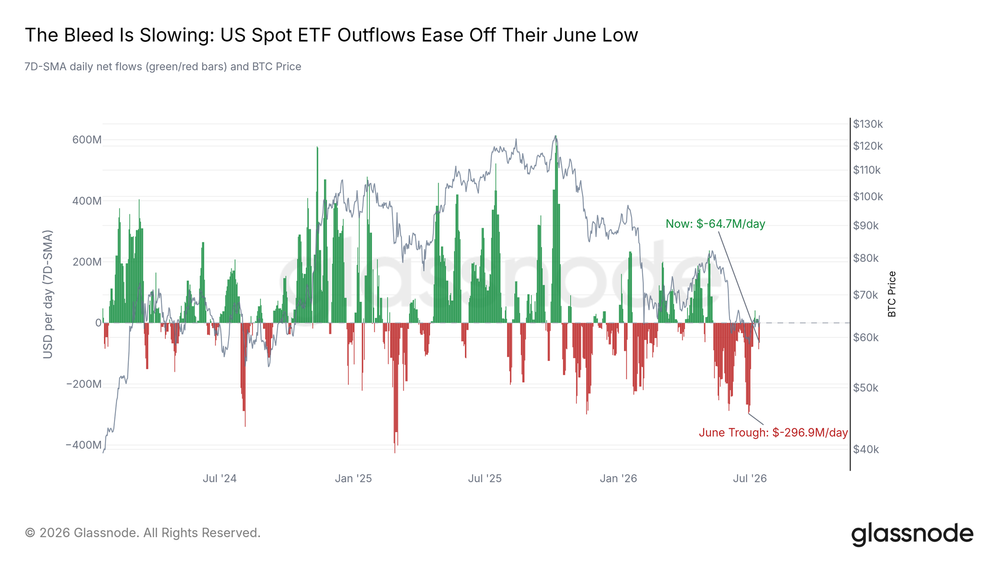
US spot ETFs tell the same story of easing but unresolved pressure. Redemption pressures have fallen significantly from their extreme June levels, with the trend pointing towards stabilization. However, the channel is not fully repaired yet: a week saw the largest single-day outflow in weeks, partially reversed the next day.
Until genuine inflows return and hold, this remains a market where institutions have stopped fleeing but haven't started buying.
Shorts Capitulate
The derivatives market has been moving in the opposite direction for weeks. The options Put/Call ratio has fallen to its lowest this year, with traders letting bearish protection expire; perpetual swap funding rates are only slightly above neutral, far from crowded long levels. Bearish bets are being quietly and steadily unwound.
But this covering hasn't translated into actual buying. Position adjustments by futures and options traders do not equate to capital entering the spot market—this is the clearest warning sign of the current recovery.
Panic Premium Softens
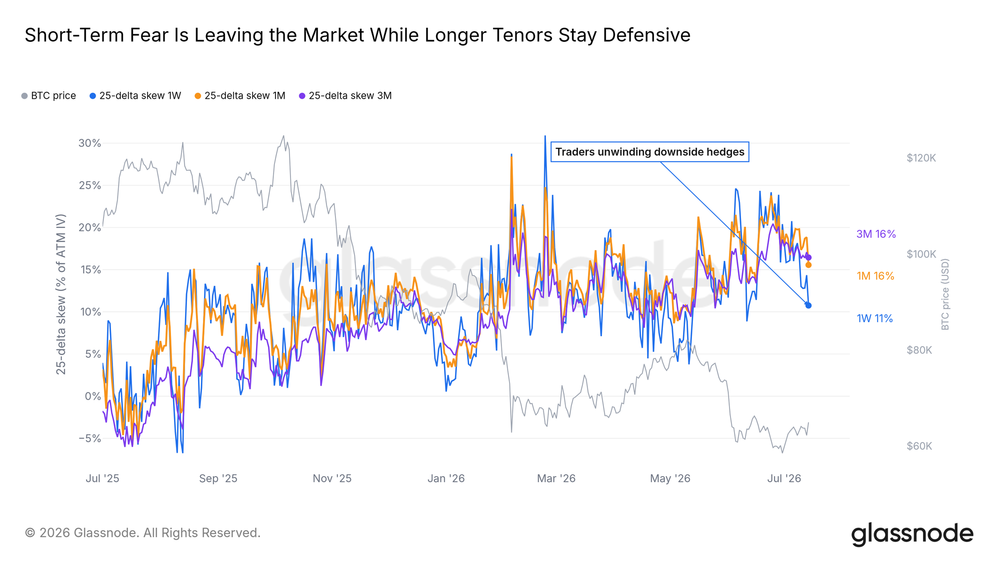
The premium for crash protection in the options market (measured by the 25-Delta Skew) spiked during the June selling pressure and has been steadily declining since, now far below the extreme levels seen in February. The cost of hedging against a potential drop is significantly lower than a month ago.
Demand for protection still exists—as it should when lows are unconfirmed—but the overall direction is towards normalization.
Approaching Max Pain
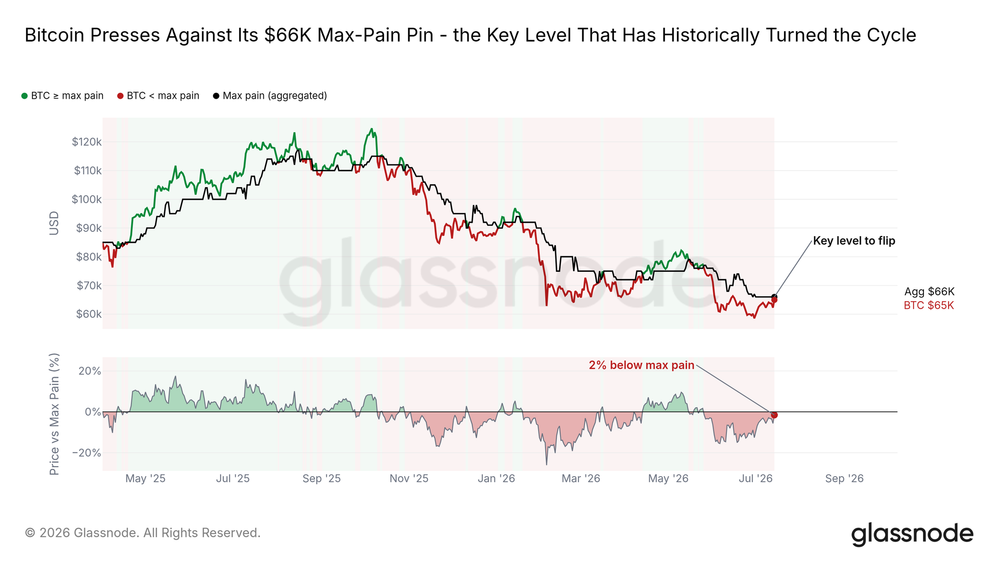
Max Pain, the price at which the largest share of open options expires worthless, has been a pivot point for the spot price throughout this year. Bitcoin is currently just below this level and, for the first time in weeks, is challenging it.
Historically, reclaiming Max Pain often coincides with a shift towards a more favorable market environment, although the transition takes time. A clean break above this level would be the first structural signal of an upward breakout from the range; rejection would confirm the caution still priced into the options market.
Cost of Crash Protection Declines
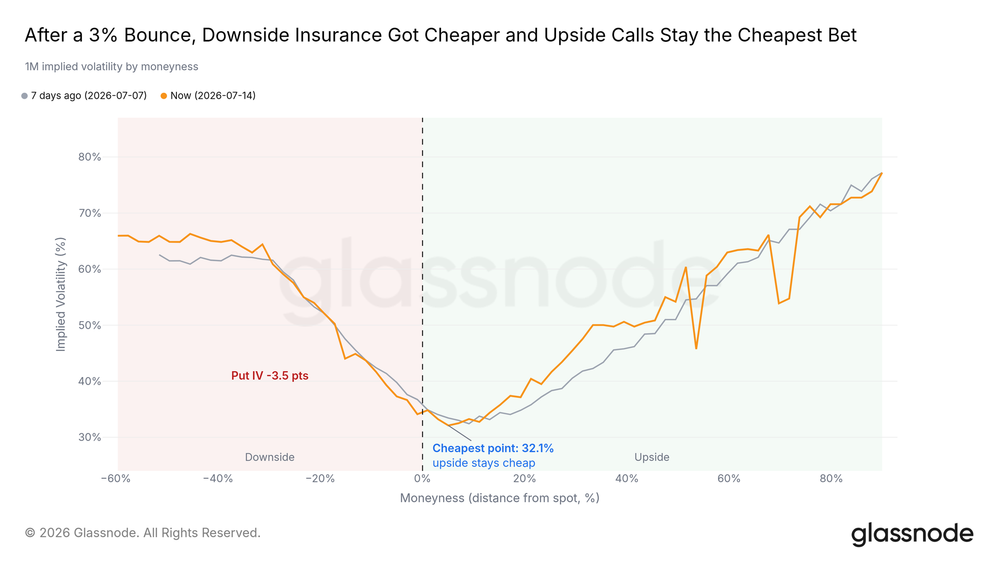
The absolute cost of protection also confirms the easing trend. During the recovery, the price of one-month crash protection has steadily declined, indicating reduced hedging demand. The market still pays a premium for the downside, but much less than at the lows.
Volatility Enters a Calm Period
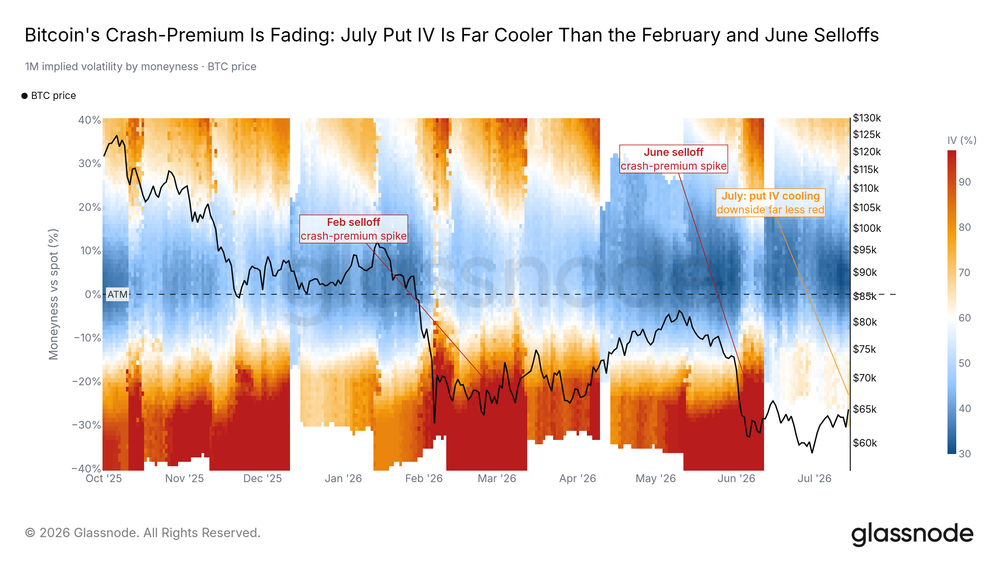
A longer-term perspective shows how calm the market has become. Bitcoin's volatility index (DVOL) is near its one-year low, and the deep bearish pressure that erupted in February and June has receded from the volatility surface. Such compression is rarely persistent; it often serves as the backdrop before the next decisive move.
Conclusion
The bottom is still being built, and this week it began to respond. Long-term holder capitulation has fallen from its peak, profit-taking has dried up, and the June lows were absorbed by widespread buying. Bitcoin's reaction to macro positives has been stronger than other assets, it is approaching Max Pain from below, and it is nearing the short-term holder cost basis above—which will be the first real test for the recovery.
Confirmation signals have yet to appear: ETF outflows, though slowing, haven't reversed; derivative unwinding lacks spot market follow-through; and volatility compression awaits a catalyst. The key signal that would change the assessment is spot-driven buying powering a price break and hold above the short-term holder cost basis. If long-term holder losses accelerate again, or the price is pushed back towards the Realized Price, the market will return to range-bound trading.
The foundation has been laid. The follow-through has yet to arrive.


